Welcome to Osaka. You’ve found your apartment, you’ve figured out the train system, and you’re starting to feel the city’s electric rhythm. But then comes the first true test of your integration, the final boss of daily life in Japan: taking out the trash. You’re standing in your kitchen, staring at a small pile of debris from your first home-cooked meal, and in your hand is a multi-colored, grid-lined chart that looks more complicated than the Tokyo subway map. It’s a moment every new resident faces—the sudden, overwhelming realization that garbage here isn’t just garbage. It’s a system. A language. A social contract written in plastic bags and neatly tied bundles of cardboard. In Osaka, how you dispose of a plastic bottle says more about you than the clothes you wear or the neighborhood you live in. It’s a public declaration of your competence, your consideration for others, and your willingness to participate in the silent, intricate dance of urban life. This isn’t just about keeping the city clean; it’s about understanding the fundamental operating system of an Osaka neighborhood. It’s your first and most important lesson in the concept of shared space, a principle that governs everything here. The rules are your entry point, and the local garbage station is your first stage. Before we dive into the sacred texts of waste disposal, let’s ground ourselves in the city’s administrative heart, where these policies are born.
This silent, intricate dance of urban life is perhaps best observed in the daily rhythms of your local shopping arcade.
The Sacred Calendar: Decoding Osaka’s Garbage Bible
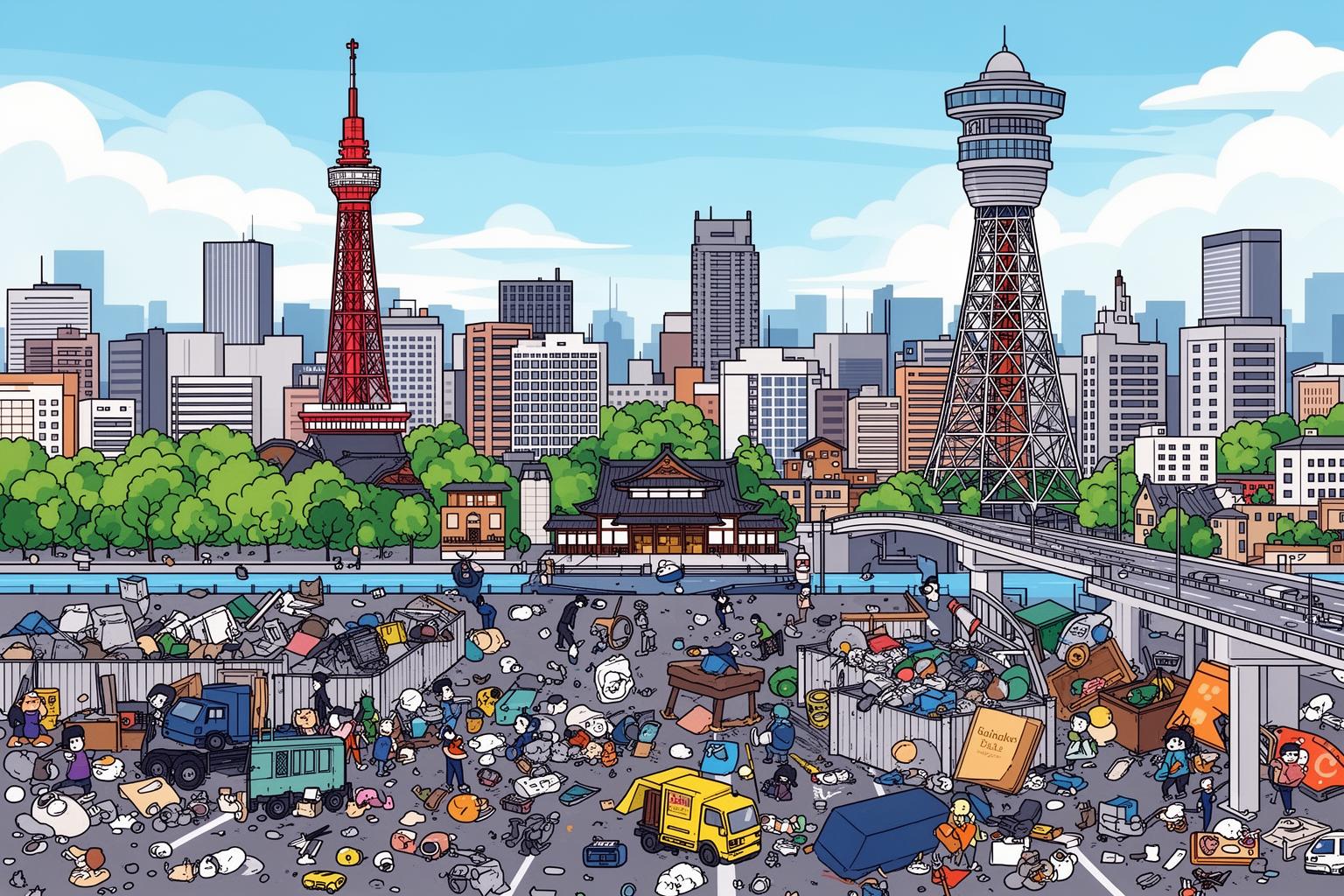
Your first crucial piece of literature in Osaka won’t be a novel or guidebook, but rather the official garbage collection calendar from your ward office. This document, often adorned with cheerful mascots pointing to trash diagrams, is the definitive authority that governs the pace of your week. Soon, you’ll schedule your meals around it: “Ah, tomorrow is burnable garbage day, time to toss those chicken bones,” or, “Plastics won’t be collected for another three days, I better rinse this yogurt container before it turns into a science project.” This calendar isn’t merely a friendly recommendation; it’s the law, upheld by the silent scrutiny of your neighbors and the real chance of a collection worker tagging your improperly sorted bag with a bright yellow rejection sticker. The system demands precision and categorization. Forgetting isn’t accepted, and ignorance is a temporary state that must be corrected immediately. This is daily life in Osaka—a sequence of small, mindful actions contributing to a larger, efficient whole. The city sets the rules, but the people keep it running with a consistency that is both daunting and reassuring.
More Than Just Burnable: The Four Pillars of Osaka Trash
At its heart, Osaka’s waste system focuses on a few primary categories. Although specific terms and collection days vary slightly by ward, the core principles remain the same. Mastering these categories is your essential first step. It means retraining your mind to see waste not as a single mass but as various materials, each with its own fate. This detailed approach may seem tedious but stems from a practical desire to reclaim every bit of value from discarded items and reduce strain on the city’s infrastructure. It embodies the Osaka way: practical, straightforward, and resource-conscious.
KANEN-GOMI (普通ごみ – Futsuu Gomi): The Everyday Waste
This is your main category, the one you’ll handle most often, usually collected twice weekly. Known officially as “Futsuu Gomi,” or ordinary garbage, this is where anything that can’t be recycled or reused belongs. Food scraps—daikon peels, fish bones from dinner, coffee grounds—go here, along with items too dirty or complicated for other processing: soiled paper towels, used tissues, old leather goods like a worn belt or shoes that have seen better days. Small, non-recyclable plastics such as broken pens, disposable razors, or snapped plastic hangers also end up here. The essential rule is that you must use the city-designated, semi-transparent orange-ish bags, available at supermarkets or convenience stores, which include a small fee supporting waste management. Transparency is key—it allows collection workers to quickly spot, say, a stray aluminum can among food scraps, and your neighbors to observe compliance. This isn’t about invading privacy but ensuring collective responsibility. It’s a subtle, visual enforcement tool. Bags must be put out by around 8 or 9 AM on collection days. Miss that deadline, and last week’s smelly garbage becomes your roommate until the next pickup. The garbage truck’s morning rounds become a consistent city sound, a reminder of the unstoppable urban cycle.
SHIGEN-GOMI (資源ごみ – Recyclables): Clean and Sorted
Typically collected once weekly, this category marks your entry into mindful disposal. “Shigen Gomi,” meaning “Resource Garbage,” signals that these items are not trash but resources awaiting new life. It includes metal cans (both drink and food), glass bottles, and small metal objects like empty spray cans or old cookware. A strict rule applies: everything must be clean. This is often the biggest challenge for newcomers—you can’t just toss an empty tomato can into the bag; it has to be thoroughly rinsed, same with glass jam jars or beer bottles. This rule is rooted in the principle of avoiding “meiwaku,” or trouble for others. Dirty items can spoil an entire batch of recyclables, wasting neighbors’ efforts. Washing recyclables becomes a small civic ritual—even standing at the sink rinsing soup cans until they’re spotless. PET bottles usually share the collection day but require special preparation: remove and recycle the plastic cap separately, peel off the label (recycled with plastics), and rinse the bottle. Only the clean, label-free bottle itself goes into the PET category. Such detailed care may seem extreme but perfectly exemplifies the Japanese ethos: if a job’s worth doing, it’s worth doing perfectly.
Yoki-Hoso PLASTIC (容器包装プラスチック – Plastic Containers and Packaging): The Crinkly Kingdom
This is the largest and most confusing category, collected once a week, for plastics used as containers or packaging. The golden rule is to look for the “Pura” (プラ) mark—a small recycling symbol. Clean items with this mark belong here. The variety is immense: the crinkly wrap from your onigiri, plastic trays from supermarket sushi, styrofoam boxes from natto, shampoo bottles, dish soap containers, and shopping bags. Cleanliness remains crucial; styrofoam trays must be washed free of residue, shampoo bottles emptied and rinsed, and instant ramen bowl lids wiped clean if marked with the Pura symbol. Many foreigners trip here, instinctively dumping all plastics into this bag. But a plastic toy or file folder? Those go into burnable waste, as they lack the Pura mark. This distinction seems arbitrary at first but is based on the chemical composition that Japan’s recycling plants can process. Following this rule shows you’ve moved beyond surface sorting to classification, reflecting Osaka’s mindset of avoiding waste. If a material can be reused, failing to prepare it properly is a neglect of duty.
KAMI-KOZA (古紙・衣類 – Used Paper and Clothing): Bundled Treasures
Collected weekly or biweekly, this category feels like a step back in time. It covers all paper forms—newspapers, magazines, cardboard, milk cartons—as well as used clothing. The key is the method: bundling. Newspapers must be neatly stacked and tied with plastic string, cardboard flattened and bundled, not just for tidiness but to ease collectors’ work. On paper day, residential neighborhoods display compact, sculptural bundles of paper awaiting pickup. In commercial areas like Umeda or Namba, tall stacks of cardboard testify to the city’s goods flow. Milk cartons require special treatment: cut open, washed flat, and dried before bundling. Used clothing goes into clear plastic bags to reveal contents. The idea is to give materials a ready path to their second life; a well-tied newspaper bundle is prepped for recycling rather than a chaotic mess. This system relies on individual effort upfront to streamline the entire recycling process, applying a practical, assembly-line mentality to household waste.
Beyond the Basics: The Irregulars and the Giants
Once you’ve gotten the hang of the weekly routine for the four main categories, you will inevitably come across items that don’t fit. A broken toaster, a worn-out mattress, an old television—these require a different, more intentional process. You can’t simply leave them at the collection point and hope for the best. Doing so is illegal dumping and is taken very seriously. This is where the system calls for not just routine, but active participation. You need to make a plan, place a call, and pay a fee. It’s an added layer of the social contract, governing the final farewell to your larger possessions.
SODAI-GOMI (粗大ごみ – Oversized Garbage): The Scheduled Farewell
“Sodai Gomi” refers to anything too large to fit into standard garbage bags, generally items over 30 centimeters on one side. This includes everything from a small microwave to a full-sized wardrobe. The process is multi-step and requires planning. First, you must contact your local ward’s Oversized Garbage Reception Center. You’ll need to describe the item you wish to discard and sometimes provide its measurements. The operator will inform you of the fee—a small charge for a chair, a higher one for a refrigerator—and set a specific collection date, usually one or two weeks later. Next, step two is to visit a designated vendor, often a nearby convenience store or post office, and purchase the corresponding “Sodai Gomi disposal fee stickers.” These stickers serve as proof of payment. You write your name or a reception number on the sticker and prominently attach it to the item. Finally, on the morning of your scheduled pickup, you place the item at your designated garbage spot. No sticker, no pickup. Wrong day, no pickup. It’s a strict, transactional system that requires you to take direct responsibility for disposing of your large items. This sharply contrasts with the “free-for-all” bulk pickups common in some other countries. Here, the space your old sofa takes up in the waste stream has a specific, prepaid cost. It’s a clear acknowledgment that disposal isn’t free; it has a real impact that someone must pay for—and that someone is you.
The Forbidden List: Things You Absolutely Cannot Throw Away
Certain items are considered so hazardous or difficult to process that they are completely excluded from the regular municipal garbage system. The most notable examples are the four key appliances covered by the Home Appliance Recycling Law: televisions, refrigerators, washing machines, and air conditioners. The law requires that manufacturers and retailers take responsibility for recycling these products. When you buy a new refrigerator, the store will usually take your old one for a fee. If you’re only disposing of one, you must contact the retailer where you purchased it or a designated collection agent to arrange disposal, which you will pay for. This “cradle-to-grave” responsibility is central to Japan’s resource management philosophy. The cost of an item’s eventual disposal is part of its lifecycle. The same rule applies to computers and monitors. Other prohibited items include batteries, fluorescent light bulbs, and other hazardous materials like cooking oil. These cannot be thrown in the regular trash. Instead, they must be taken to designated collection boxes, often found at ward offices, community centers, or specific electronics stores. This requires an additional trip, adding an extra step of effort. It acts as a filter for commitment. The system makes it easy to do the right thing but just inconvenient enough that you must consciously choose to comply, reinforcing the importance of proper disposal.
The Unspoken Code: Navigating Your Chonaikai and Neighborhood Rules

Grasping the city’s official regulations is only part of the challenge. The other part involves navigating the unwritten, hyper-local rules specific to your neighborhood, typically overseen by a mysterious group known as the “chonaikai.” This is where the abstract policies of city hall intersect with the tangible reality of your street corner. It’s where living in Osaka shifts from merely following instructions to engaging in a social experience. Your interaction with the garbage station is, in many respects, your main connection to your immediate community. It’s a daily test of your awareness and consideration, and everyone takes note of how you handle it.
What Exactly is a Chonaikai?
A “chonaikai,” or neighborhood association, is a volunteer-run, self-governed group of residents from a defined, often very small area—sometimes just a few blocks. It’s not an official government body but works closely with the local ward office. The chonaikai is the driving force behind grassroots community life. It organizes local festivals (matsuri), conducts child safety patrols, distributes city information, and most importantly for everyday life, manages the local garbage collection station. Whereas neighborhood associations in many Western cultures might focus on property values or social gatherings, in Osaka the chonaikai’s role is much more practical and immediate. It acts as the steward of shared public spaces, with its most visible responsibility being the smooth, harmonious management of waste disposal. Although membership is technically voluntary, there is strong social pressure to join (and pay a nominal annual fee). Opting out is often perceived as opting out of the community itself, a refusal to share the communal burden.
The Gomi Station: Your Neighborhood’s Social Test
The physical garbage station, or gomi station, is the chonaikai’s territory. It may be a designated spot on a street corner, marked only by a sign, or a simple metal frame holding a large yellow or blue crow-proof net (karasu-netto). In some places, it might be a permanent, cage-like structure. Regardless of the form, this small piece of pavement is a shared resource, maintained through the collective responsibility of local residents. The chonaikai decides its exact location and often organizes the cleaning schedule. This setup contrasts with living in a large, modern Tokyo apartment complex, where you might have a dedicated, 24/7 garbage room in the basement maintained by a cleaning company as part of the building fees—anonymous and service-oriented. In an Osaka residential area, garbage disposal is communal and public. You place your bag under the net alongside those of your neighbors, such as the Sato family next door and the Tanaka family across the street. This proximity fosters a sense of constant, mutual observation. It’s not meant to be intrusive but is ongoing. If you put out your trash too early, a neighbor might kindly remind you it attracts cats and crows. If you use the wrong bag, someone might leave a polite note or even visit your door to explain the correct procedure. Foreigners often misunderstand this behavior; it isn’t meant to be confrontational but rather a form of community care—a gentle yet firm effort to preserve local harmony, or wa.
The Dreaded Gomi Toban (Garbage Duty)
In many neighborhoods, the chonaikai coordinates a rotating cleaning duty for the garbage station, called gomi toban. A schedule is circulated, and when it’s your turn, you are responsible for keeping the station clean on collection days. The tasks are simple but vital. After the garbage truck has passed, you need to sweep the area, picking up any debris that may have escaped the bags. You may have to hose down the pavement if something has leaked. You are also responsible for neatly folding the large crow net and putting it away or ensuring the enclosure’s gate is locked. It’s thankless and unglamorous work, but participating in gomi toban without complaint is a key rite of passage. It shows you are not just a passive resident but an engaged, active member of the local ecosystem. It signals your understanding that the privilege of having a convenient trash drop-off comes with the responsibility to maintain it. This system exemplifies the Osaka spirit: pragmatic, fair, and deeply communal. The responsibility isn’t handed off to an anonymous municipal workforce but handled by the residents themselves. It serves as a constant reminder that the street in front of your home is not merely public property but a semi-private space, an extension of your shared living room.
Osaka vs. Tokyo: The Subtle Art of Taking Out the Trash
At first glance, the garbage rules in Japan’s two largest cities appear similar. Both demand careful sorting and strict adherence to schedules. However, the everyday experience of taking out the trash can feel quite different, and these differences reveal much about the distinct characters of Osaka and Tokyo. The contrast often boils down to a simple question: is garbage disposal a transaction with the city or a relationship with your neighbors? The answer reveals a lot about what living in each place feels like.
The Bag and the Box
One of the most immediate, tangible differences lies in the bag itself. In Osaka, the use of city-designated, fee-based bags for burnable and plastic waste is standard throughout the city. The system is uniform and transactional: you purchase the bags, openly contributing to the cost of the service. It’s a very direct, clear-cut, almost commercial arrangement, reflecting Osaka’s history as a city of merchants. In Tokyo, the situation is more fragmented. Many of its 23 special wards don’t require designated bags for burnable trash. As long as the bag is semi-transparent, allowing collectors to see the contents, it’s generally acceptable. This makes the system feel a bit less rigid and more anonymous. The financial contribution is included in residential taxes rather than paid at the supermarket checkout. Osaka’s method makes the cost—and user participation—explicit with every bag used.
Community Pressure vs. Building Management
A deeper difference lies in enforcement and social dynamics. Tokyo, especially in its central wards, is dominated by large, modern apartment buildings and high-rises (“mansions”). These buildings almost always have their own internal, often 24-hour, garbage disposal rooms. The rules are set and enforced by building management. If you sort incorrectly, you might receive a notice from the manager. The interaction is professional, contractual, and relatively impersonal. Your primary relationship is with the management company, not your neighbors. This system provides convenience and anonymity. In contrast, Osaka’s residential landscape, particularly in its older, more established neighborhoods, consists of smaller apartment buildings, duplexes, and single-family homes. Here, the chonaikai and the public “gomi station” hold sway. Enforcement comes not from a company but from the watchful eyes of your neighbors. The pressure is social, not contractual. This creates a much stronger—and sometimes more stressful—sense of community interdependence. Your actions have immediate, visible consequences for those around you. This is a key reason why living in Osaka can feel more intimate and less anonymous than living in Tokyo. You’re not just an invisible resident in a concrete tower; you’re part of a street-level community, with your participation judged daily at the garbage net.
Common Mistakes and How to Avoid Looking Like a Helpless Newbie
Every newcomer to Osaka makes garbage mistakes—it’s a rite of passage. However, understanding common pitfalls can help you get through your first few months with fewer embarrassing moments and fewer yellow rejection stickers. Avoiding these errors is the quickest way to show your neighbors that you’re making an effort, that you respect the system, and that you’re a valuable member of the community.
“But it’s mostly plastic!” – The Pizza Box Problem
This one is classic. You finish a pizza and are left with a large cardboard box. Since cardboard is recyclable, you might assume it belongs in the paper and cardboard pile. Actually, no. The grease and cheese soaked into the box contaminate it. A greasy pizza box cannot be recycled; it must be broken down and placed in the burnable trash bag. This rule applies to everything: a paper cup stained with coffee, or a plastic bento box that can’t be completely cleaned. The general rule is: if food has soiled it, it’s burnable, regardless of the material. Grasping this logic is a major step toward sorting mastery. It requires you to suppress your instincts and follow the processing plant’s logic, not just that of the material.
The Wrong Day Fiasco
This is the cardinal sin of garbage disposal. You wake up on a Tuesday, see your neighbors putting out trash, and hastily throw your bag of plastic bottles out with them. The problem: Tuesday is burnable trash day. Your plastic bottles will be left behind, lonely on the pavement. To make matters worse, a collection worker will likely stick a bright yellow notice on your bag explaining why it wasn’t collected. Your mistake becomes a public spectacle until the correct collection day arrives. The fix is simple but requires attention: get your local ward’s garbage calendar, tape it to your fridge, or take a picture on your phone. Many municipalities also have apps that send reminders the night before collection days. Treat this schedule as sacred—there’s no flexibility or margin for error.
The Crowpocalypse: The Battle Against the Black-Winged Menace
Japan’s crows are large, intelligent, and bold. They are the main reason why rules about collection times and protective nets are so strict. Putting out garbage the night before is like inviting a crow feast. They skillfully tear bags open, scattering food scraps and trash all over the street. The mess usually falls to the person on `gomi toban` duty or the resident who caused it to clean up. That’s why you must only put out your bags on the morning of collection—and why using protective nets is mandatory. Your bag must be entirely covered by the net with its edges weighed down. A bag carelessly placed at the edge of the pile is a prime target. The battle against crows is a daily, shared responsibility, and these rules are the neighborhood’s main defense. Ignoring them is a betrayal of your fellow residents in this urban struggle.
Why It Matters: Garbage as a Gateway to Understanding Osaka
Placing so much significance on something as ordinary as taking out the trash might seem ridiculous. However, in Osaka, this everyday task reflects the entire social structure of the city. It serves as a practical, hands-on lesson in the core principles that sustain Japanese society. Mastering the garbage system is more than just maintaining cleanliness and orderliness as a resident; it’s about adopting a local perspective and understanding the unspoken values that drive life in this vibrant, pragmatic city.
It begins with `meiwaku`, the fundamental concept of avoiding causing trouble or inconvenience to others. The entire sorting system is a practice in avoiding `meiwaku`. You rinse your plastic containers to prevent odors or pests that would bother neighbors and waste collectors. You neatly bundle your cardboard to make it easier for someone else to pick up. You place your trash outside at the correct day and time to avoid leaving a mess for others to clean up. Every rule is designed to minimize the negative impact on the community.
This system also reflects Osaka’s renowned pragmatism. The city’s residents are known for being practical, efficient, and straightforward. Though complex, the garbage system is viewed as the most logical and effective solution to the significant challenge of urban waste management. It’s not primarily about high-minded environmental ideals—though those are a bonus—but about a practical, collective process that works. The prevailing mindset is “let’s get this done right”: here is the problem, here is the solution, now let’s all carry it out properly.
Lastly, the rules foster a sense of community and shared space. In a densely populated urban area, the garbage station is one of the few physical places where all residents intersect. Careful sorting is a quiet way to show neighbors that you are thoughtful. Taking part in the `gomi toban` duties is a visible expression of civic involvement. These small, repeated acts lay the groundwork for trust and mutual respect, helping the neighborhood function smoothly—not through laws or enforcement, but through a collective commitment to common rules. When you stop seeing the garbage calendar as just a chore list and begin to feel it as the natural rhythm of your week—knowing intuitively that Wednesday is for plastics and that your cardboard must be tied for Friday—you’ve crossed a significant threshold. You’re no longer just a foreigner living in Osaka; you’re starting to think like a local. And it all began with a single, well-rinsed milk carton.