
Walk through Osaka, and your senses get a workout. There’s the sizzle of takoyaki on a hotplate, the clatter of a thousand bicycles, the boisterous laughter spilling out of a standing bar. You see the famous stuff—the Glico Running Man, the towering Osaka Castle, the endless arcades of Shinsaibashi. You start to think you’ve got a handle on this city. It’s loud, it’s proud, it’s a little rough around the edges, and it’s obsessed with food. But you’re only seeing the highlight reel. You’re seeing the carefully curated, tourist-facing performance. To understand the real, beating heart of Osaka, the daily rhythm that defines life for millions, you have to look past the famous restaurants and fancy department stores. You have to look for the light. Not the warm, inviting glow of a traditional lantern, but a chaotic, eye-searing, almost radioactive blaze of neon that screams a single name: Super Tamade.
For the uninitiated, stumbling upon a Super Tamade for the first time is a culture shock of the highest order. It looks less like a grocery store and more like a pachinko parlor that had a baby with a Las Vegas casino from the 1980s. Blinking lights, garish yellow and red signage, and promises of mind-bogglingly low prices cover every square inch of its facade. Your first instinct might be to dismiss it as a gimmick, a bizarre anomaly. But that would be a mistake. Super Tamade, and other hyper-local, budget supermarkets like it, are not just places to buy groceries. They are a philosophy. They are the engine room of the Osakan kitchen. They are the most honest expression of the city’s core values: pragmatism, resilience, and a deep, abiding love for a good deal. This isn’t just about saving money. This is about a way of life, a daily game of strategy and skill that separates Osaka from the polished, predictable consumerism of Tokyo. To understand why your Osakan neighbors can eat so well, so often, without breaking the bank, you have to understand the art of the Tamade run. Forget what you think you know about Japanese grocery shopping. We’re going in.
This unique approach to commerce is a key part of the city’s Akindo spirit, which values pragmatism and a good deal above all else.
What in the World is Super Tamade? The Neon Beacon of Osaka’s Kitchens

Let’s make one thing clear. A Tokyoite, used to the calm aisles of Kinokuniya or the sleek minimalism of Seijo Ishii, would probably have a complete meltdown upon entering a Super Tamade. It’s an assault on the senses, and that’s exactly the intention. The experience starts even before you walk through the automatic doors. The exterior bursts with color, a visual frenzy designed to catch your eye from a block away. Picture every design rule a tasteful branding expert would warn against, then crank it up a thousandfold. Flashing LED signs, hand-painted posters announcing daily specials in bold, dripping characters, and the iconic, almost maniacally cheerful logo—it’s pure, unfiltered visual chaos. It doesn’t just welcome you; it challenges you.
Inside, the sensory overload persists. The lighting is harsh, fluorescent, and relentless, reflecting off the linoleum floors and merchandise stacked high to the ceiling. There’s no soothing background music. Instead, you hear a repetitive, high-pitched jingle interrupted by rapid announcements from an employee shouting into a microphone about a limited-time deal on eggs or a flash sale on frozen squid. The aisles are narrow, unbelievably so. They’re packed with shoppers—grandmothers with sharp elbows, determined students, salarymen grabbing late-night bentos—all moving with focused, purposeful urgency. This is no place for casual browsing. This is a retail battleground.
And then there are the prices—the heart of the Tamade legend. You’ll spot signs that look like mistakes. A carton of tofu for 19 yen. A bunch of bananas for 88 yen. And the most famous of all: the “1-yen sale.” Yes, you read that right. For one yen (less than a US cent), you can buy a specified item, usually if you spend a minimum amount around 1,000 yen. It might be a can of coffee, a packet of instant noodles, or a single daikon radish. From a purely economic view, it’s almost pointless. But that misses the entire point. The 1-yen sale isn’t about the product; it’s about the triumph. It’s a symbol, a trophy that says, “I played the game, and I won.” It’s a small dopamine hit that powers the whole experience. Osakans schedule their shopping trips around these deals, seeing them not just as discounts but as entertainment. The thrill of the chase is just as valuable as the savings. This is a key misconception outsiders have. They see the chaos and the bargain prices and assume it signals desperation. In truth, it’s a celebration of savvy—a theater of commerce where the customer is both the audience and the star player.
The Tamade Mindset: More Than Just Cheap Groceries
To truly understand the essence of Super Tamade, you need to step back from individual products and consider the philosophy it embodies. Shopping here isn’t a passive act of consumption; it’s an active expression of Osakan identity. It’s founded on pragmatism, a sharp sense of value, and a social contract that feels far removed from the polite, sterile atmosphere of supermarkets in other parts of Japan.
Pragmatism over Polish: The Gospel of Kospa
In Tokyo, presentation takes precedence. Fruits are often individually wrapped, vegetables are perfectly shaped, and packaging is crafted like art. The underlying message is one of perfection, quality, and aesthetic appeal. In Osaka, especially at a place like Tamade, the guiding principle is kospa—cost performance. The question isn’t “Does it look beautiful?” but “Does it serve its purpose at the best possible price?”
This is evident in many ways. You’ll find misshapen carrots, slightly bruised apples, and fish fillets that aren’t perfectly uniform. Tokyo shoppers might view these as defects and reject them. Osakan shoppers see them as opportunities. A crooked cucumber tastes the same as a straight one once chopped. A slightly dented can of mackerel is still a can of mackerel. This isn’t about lowering standards; it’s about prioritizing differently. Value lies in substance, not appearance. An Osakan will proudly share the story of the ridiculously cheap but perfectly edible cabbage they purchased, seeing it as proof of their savvy shopping. There’s no embarrassment in choosing the imperfect item; the real shame would be overpaying for a prettier one. This practical, no-frills outlook permeates life in Osaka, from business deals to personal relations. It’s a city that prizes what works over what merely looks appealing.
The Art of the Daily Hunt: Shopping as Sport
Another noticeable contrast is the rhythm of shopping. In many Western countries and even suburban Tokyo, the weekly or bi-weekly “big shop” is the norm. You make a list, go to a large supermarket, and stock up for the coming days. Life in Osaka, for many, doesn’t follow this pattern. Shopping is a daily or near-daily event. It’s unplanned, improvised. You don’t arrive at Tamade with a strict shopping list; you come to see what Tamade has. The entire evening’s meal plan is crafted on the spot, shaped by the day’s specials.
This turns a routine task into a lively, strategic game. Experienced Tamade shoppers know the store’s rhythms well. They know which days feature the best produce discounts. They know the prime time for discounted bento and sushi is after 7 PM when “wari-biki” (discount) stickers start appearing. They scan the meat section in seconds, calculating price per 100 grams to spot the real bargains. It’s a skill refined over years. There’s a shared energy in the store fueled by this quest. Everyone’s on the hunt. You’re not just a shopper; you’re a strategist. This spontaneity and flexibility are deeply Osakan. While Tokyoites might plan dinner menus days ahead, Osakans are more likely to say, “Let’s see what’s cheap at the supermarket and decide from there.” It’s a resourceful, adaptable approach to life that values quick thinking and making the most of the moment.
Conversation as Currency: The Social Supermarket
Perhaps the most striking difference for someone accustomed to the quiet, anonymous self-checkouts of a modern Tokyo supermarket is the level of human interaction. Tamade is anything but quiet. Beyond the loud announcements, there’s the buzz of customer chatter. People comment on prices to no one in particular. Strangers might point out a hidden bargain. A grandmother may offer unsolicited advice on how to cook a particular fish you’re examining. It’s a communal space.
The staff are often very different from their counterparts elsewhere. They aren’t the prim, bowing, ultra-polite employees you might expect. They are efficient, quick, and sometimes blunt. But they are also genuinely human. The cashier might remark on how much you’re buying, joke about the weather, or recognize you from a previous visit. This is where the cliché “Osaka is friendly” takes on real meaning. It’s not superficial politeness dictated by customer service manuals. It’s a grounded, peer-level acknowledgment. It’s the understanding that you’re all part of the same community, sharing the daily challenges and victories of feeding yourselves and your families. The supermarket extends the neighborhood’s spirit, a place where unwritten community rules still hold. In the orderly quiet of a Tokyo store, you are a customer. In the noisy, chaotic world of Super Tamade, you’re a neighbor.
Decoding the Aisles: A Guide to the Tamade Treasure Map
To genuinely grasp the brilliance of a place like Super Tamade, you need to understand what fills its shelves. The product selection directly reflects the needs, tastes, and eating habits of the working-class Osakan. It’s a carefully chosen array of survival tools for the urban budget warrior. Navigating it feels like learning a new language that reveals much about the city’s soul.
The Bento and Sozai Kingdom: Powering the City
Most importantly, you must pay tribute to the prepared foods section. This is the store’s heart, the engine driving a large part of the city’s workforce. The volume and variety of bento (lunch boxes) and sozai (pre-made side dishes) are staggering, and the prices nearly unbelievable. For 200 or 300 yen, you can have a full meal: a piece of grilled fish, a fried pork cutlet, or a mountain of stir-fried noodles, all served with rice and some pickles. These aren’t gourmet dishes. They are sustenance, plain and simple. They make it possible for the local construction worker to afford a hot lunch, the student to eat more than instant ramen, and the single parent to provide a complete meal after a long day at work.
The sozai selection reveals even more. You’ll find everything from single croquettes and pieces of karaage chicken for less than 50 yen each, to small packs of kinpira gobo (braised burdock root) and hijiki seaweed salad. This supports a modular approach to meal-building. Maybe you have rice at home but no time to cook a main dish. You can stop by Tamade, grab a couple of fried items and a small vegetable side, and your dinner is ready for a few coins. This reflects the daily reality of eating for many Osakans. It’s not about cooking elaborate meals every night; it’s a practical blend of cooking from scratch when you have time and money, and relying on the efficient sozai economy when you don’t. This section isn’t a convenience; it’s essential infrastructure.
The Mystery of “Mystery Meat” and Questionable Produce
Let’s be frank. If you’re seeking free-range organic chicken or locally sourced heirloom tomatoes, Super Tamade isn’t your store. This often causes anxiety and confusion among foreigners. The meat section can be intimidating. You’ll find large trays of thinly sliced meat, often of unclear origin, at astonishingly low prices. The produce section may offer vegetables that look a bit wilted or oddly shaped. The initial reaction is often suspicion: Is this safe? Is it even genuine?
The answer is yes, it’s safe. It all complies with Japan’s strict food safety standards. But it follows a different logic. The aim is to provide maximum protein and calories at minimum cost. The meat might be imported from halfway across the globe. It might be a less popular cut. The vegetables might be close to their sell-by date. But for the savvy Osakan shopper, this is part of the calculation. They know that slightly soft tomatoes are perfect for making sauce tonight. They understand that cheap ground meat, cooked with strong flavors like garlic and soy sauce, turns out delicious in a stir-fry. They have a deep, practical food knowledge that lets them see potential in ingredients others would discard. They don’t buy for appearance or prestige. They buy for function. The Osakan mindset is one of transformation: taking humble, inexpensive ingredients and using skill and creativity to make something delicious. This is the very core of Osaka’s culinary identity.
Konamon Culture on a Budget: Flour’s Foundation
Look closely at the dry goods aisle, and you’ll find the foundation of Osaka’s soul. Huge bags of flour, bottles of okonomiyaki sauce, tubs of pickled ginger, and packets of bonito flakes are sold in bulk and at low prices. This is no accident. This is the supply chain behind Osaka’s beloved konamon or “flour things”—okonomiyaki, takoyaki, and negiyaki.
In many parts of Japan, these dishes are something you eat out at a restaurant. In Osaka, they are staple home-cooked meals. Stores like Tamade make this possible. Core ingredients—flour, cabbage, eggs, tenkasu (tempura scraps)—are consistently among the cheapest items in the store. This affordability allows families to make a large, satisfying okonomiyaki dinner for just a few hundred yen. It democratizes the city’s iconic cuisine. Takoyaki parties are common social gatherings in Osaka homes, casual and extremely affordable ways to entertain friends. The humble, ever-present bag of flour on Super Tamade’s shelves quietly enables this entire culture. It’s a direct link between the city’s economic reality and its culinary heart—you can’t separate one from the other.
The Ecosystem of Frugality: Tamade and the Neighborhood
Super Tamade doesn’t exist in isolation. It stands as the apex predator within a complex and captivating ecosystem of budget-conscious neighborhood retail. Grasping this broader network is essential to comprehending the daily rhythm of life in many areas of Osaka. This city is built on a human scale, where bicycles and pedestrians still dominate in numerous residential neighborhoods, and shopping habits mirror this reality.
Alongside Tamade, there are other important players. Take ‘Gyomu Super’ (Business Supermarket), which, despite its name, welcomes the public and serves as a haven for bulk-sized frozen goods and imported items offered at wholesale prices. This is where people stock up on pantry staples: a kilogram of frozen chicken, a giant bottle of cooking oil, an enormous bag of pasta. Then you have the even more local, often family-operated yaoya (vegetable shops) and natto-ya (butcher shops). These small, independent stores may not always match Tamade’s prices on every item, but they survive by providing fresher produce, superior cuts of meat, and, most importantly, a personal connection with their customers. A savvy Osakan shopper doesn’t confine themselves to one store. Instead, they maintain a portfolio. They know to get frozen gyoza at Gyomu, daily vegetables and tofu at Tamade, and perhaps that special pork cut for tonight’s tonkatsu from the local butcher they’ve trusted for years. It’s a complex, multi-stop dance of bargain hunting.
This everyday shopping pattern fundamentally influences the neighborhood’s character. Because people are out on foot or by bike daily, the streets feel livelier. The shotengai (covered shopping arcade), a feature disappearing in many parts of Japan, remains a vital hub in Osaka. It’s a place not only for shopping but also for bumping into neighbors, catching up on local gossip, and experiencing a sense of belonging. This stands in stark contrast to the car-dependent, weekly-shopping culture prevalent in many suburbs—both in Japan and abroad—where local shopping streets have been replaced by soulless strip malls or massive, impersonal hypermarkets on the town’s outskirts. The Osakan model, driven by budget shopping necessities, has the unintended yet wonderful effect of fostering a more cohesive and interactive community. Choosing to pop out to Tamade for some cheap cabbage is, in a small but meaningful way, an act of community building.
This daily quest also shapes the nature of meal planning. An Osakan homemaker’s fridge is often less stuffed than that of their Tokyo counterpart. This isn’t a sign of scarcity—it’s a sign of efficiency. Why stockpile food that might spoil when the supermarket is just a five-minute walk away and deals change daily? The question “What’s for dinner?” isn’t answered in the morning; it’s answered at 5 PM in the supermarket aisles. The discovery of a half-price slab of salmon or a huge bag of bean sprouts for 10 yen sparks the creativity that drives the entire meal. This requires a level of culinary adaptability and resourcefulness deeply embedded in local culture. It’s a mindset of responding to opportunity rather than following a fixed plan. It’s less science and more art.
Osaka vs. Tokyo: The Supermarket Showdown
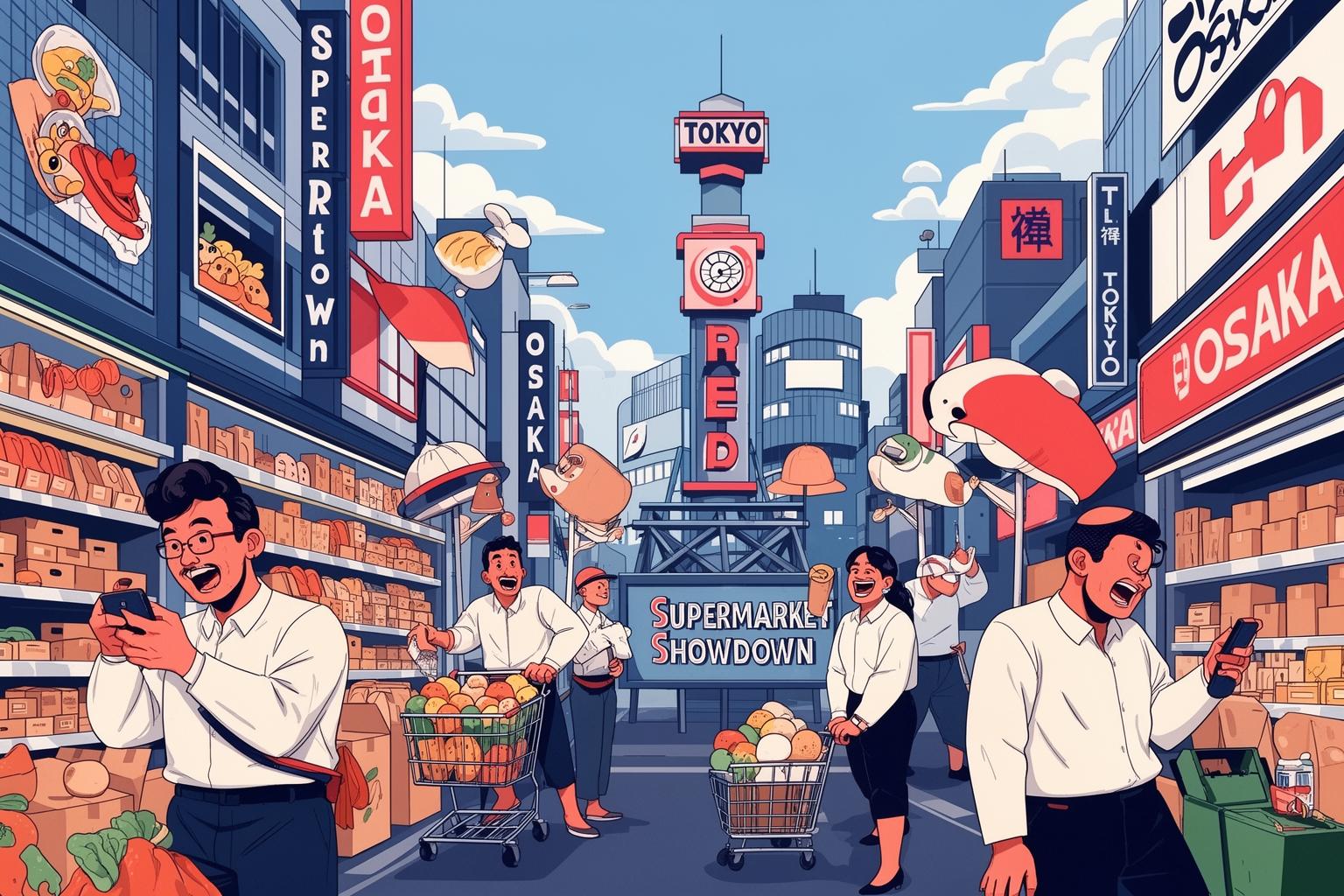
The cultural divide between Osaka and Tokyo, Japan’s two major urban centers, can be seen through various perspectives: language, history, comedy, baseball. Yet, the contrast is clearest and most tangible in their supermarkets. Visiting a typical grocery store in each city reveals two fundamentally different philosophies toward food, commerce, and life itself.
Tokyo: The Temple of Perfection
A Tokyo supermarket, particularly a mid-range or upscale one like Precce, Queen’s Isetan, or a department store basement food hall (depachika), resembles a temple devoted to the pursuit of perfection. The lighting is soft and warm; the aisles, wide and uncluttered. Gentle music, often classical or light jazz, fills the air. The entire shopping experience is crafted to be calm, clean, and orderly.
Products are displayed like precious gems. Apples gleam with a polished shine, strawberries rest in cushioned trays to avoid bruising, and fish are arranged in neat, symmetrical rows. The focus is on visual appeal and flawless quality. You pay not only for the food but for the assurance of perfection. Employees embody Japanese omotenashi (hospitality): unfailingly polite, impeccably dressed, and quietly efficient. Their role is to ensure a smooth, seamless transaction. The atmosphere is deliberate, curated, and serene. Shopping here is a planned, refined event—you come with a list, select your ideal ingredients, and leave. It is a beautiful but often impersonal experience.
Osaka: The Festival of the Bargain
An Osaka supermarket, with Super Tamade as its flagship, is a lively festival. It’s loud, chaotic, and unapologetically commercial. The lighting is harsh and functional; the aisles are narrow and crammed with merchandise, conveying an overwhelming sense of abundance. The soundtrack blends upbeat store jingles with shouted encouragements from the staff. The experience is intended to be exciting, stimulating, and a bit competitive.
Displays focus on one thing above all: price. Handwritten signs in bright markers shout the day’s deals. Bins overflow with produce, inviting customers to sift through and pick the best. The emphasis is on volume and value—you pay for the raw material, not the presentation. Staff are part of the spectacle, not quiet facilitators but energetic barkers and salespeople, sometimes even performers, using their voices to generate urgency and excitement. The environment feels like a free-for-all, a treasure hunt. Shopping is spontaneous and opportunistic—you arrive open-minded, discover bargains, and leave with stories to share. It is messy but deeply human.
By analogy, a Tokyo supermarket is like an art gallery: you admire carefully curated works from a respectful distance, appreciating their form and quality. An Osaka supermarket resembles a bustling street market: you are immersed in the action, jostling with others, haggling, and absorbing the raw, vibrant energy. Neither style is superior; rather, they reflect the distinct spirits of their cities. Tokyo prizes order, beauty, and quiet elegance; Osaka treasures energy, practicality, and a friendly, competitive zest.
What Foreigners Get Wrong (And How to Shop Like a Local)
For many non-Japanese residents, local budget supermarkets are equally fascinating and intimidating. The unwritten rules, chaotic environment, and unfamiliar products often create a steep learning curve. Overcoming this challenge is a rite of passage, marking a key step from visitor to true resident. Let’s explore some common misconceptions and provide practical tips for mastering the Osaka grocery run.
Misunderstanding: “The food must be low quality or unsafe.”
This is the most common and significant concern. It’s important to distinguish between ‘quality’ in terms of appearance and ‘quality’ regarding safety. All food sold in Japan, regardless of price, complies with some of the strictest food safety standards in the world. The inexpensive meat at Tamade isn’t unsafe; it might simply be less tender, flavorful, or visually appealing. The emphasis is on providing affordable calories and protein. You aren’t purchasing a gourmet experience; you’re buying practical fuel. The local expertise is in transforming these modest ingredients into delicious dishes. So, stop worrying about safety and start thinking like an Osakan cook: how can you make that 100-yen pork belly tasty? The answer usually involves lots of ginger, soy sauce, and creativity.
Misunderstanding: “The store is so messy and disorganized.”
What looks like mess to an outsider is often functional density to locals. Narrow, crowded aisles maximize product display within limited space, keeping costs low. The seemingly random stacks of goods are often deliberately placed ‘loss leaders’ designed to draw you further inside. The chaos is intentional, not accidental. It creates a treasure-hunt feeling that makes shopping enjoyable. Rather than get frustrated by the lack of order, try to embrace the spontaneity. You might reach for a can of tomatoes and find a hidden sale on curry roux behind it. Learn to go with the flow instead of resisting it.
Misunderstanding: “The staff and other customers are rude.”
Osakan communication is known for its directness, which can be mistaken for rudeness by those used to the more indirect, nuanced politeness of Tokyo or Western cultures. In a busy supermarket, this directness is heightened by the need for speed. People aren’t there for small talk; they are focused on their tasks. If someone grabs something ahead of you, it’s not personal—they just saw an opportunity and took it. If the cashier seems brusque, it’s because they’re trying to move the long line quickly. The warmth of Osaka isn’t in formal politeness but in shared experiences and occasional spontaneous moments of connection. Don’t confuse efficiency with hostility.
How to Shop Like a Pro: Practical Tips
- Time Your Visit: The best time is usually in the evening, after 7 PM. This is when staff start placing discount stickers (waribiki shīru) on perishables like sushi, bento, and bakery items. Discounts often begin at 20% and can reach 50% or more later on. This is your chance to get a great deal on dinner.
- Bring Your Own Bags: Always bring reusable bags. While some stores charge a small fee for plastic bags, it’s customary to carry your own. Experienced shoppers often use bicycles with large front baskets ready to be loaded.
- Embrace Imperfect Produce: Don’t avoid oddly shaped carrots, lumpy potatoes, or slightly bruised apples. They taste the same but cost less. This is the core principle of kospa (cost performance).
- Cash is Still King: Though cashless payments are growing in popularity, many smaller or local stores still prefer cash. Always carry enough yen to avoid any awkward moments at checkout.
- Learn the Deal Lingo: You don’t need fluency, but recognizing key words helps. Look for 半額 (hangaku – half price), 割引 (waribiki – discount), and お買得 (okaidoku – bargain). These signs are your treasure map markers.
Beyond Tamade: The Philosophy in Action

Once you grasp the philosophy of Super Tamade, you begin to notice it everywhere throughout Osaka. The principles of pragmatism, value, and cheerful, unpretentious energy are the city’s genuine cultural exports. They are intricately woven into the fabric of daily life, business, and social interaction.
Consider the city’s merchant heritage. Osaka has always been regarded as the nation’s kitchen and its commercial center, a place where business thrived on shrewd negotiation and a focus on results. The spirit of the Tamade shopper—calculating, resourceful, always seeking an advantage—is the same spirit that built the wealth of Osaka’s prominent merchant families. It’s a culture that values earned success and street smarts over inherited status.
Think about how Osakans communicate. The directness, humor, and lack of pretense all align with the Tamade experience. There’s no room for the subtle, unspoken social codes that dominate much of Tokyo’s social life. An Osakan is more likely to openly share their thoughts, often with a joke, to get straight to the point. This communication style stems from a desire for efficiency and genuine connection, rather than mere politeness.
Lastly, observe the city’s aesthetic. Areas like Shinsekai and Dotonbori, with their flashy, oversized, and slightly eccentric signage, embody Super Tamade on a grand scale. This aesthetic rejects minimalist refinement in favor of maximum impact. It’s loud, chaotic, designed to catch your eye and promise a good time at a fair price. It doesn’t aim for elegance; it’s about being vibrant and alive.
To live in Osaka is to eventually and inevitably find yourself in a place like Super Tamade. You might enter hesitantly, overwhelmed by the noise and lights. But if you linger long enough, you begin to understand. You start to appreciate the beauty in the bargains, the community in the chaos. You find yourself rejoicing over the small victory of a half-priced croquette. In that moment, you realize you’re not simply buying groceries—you’re taking part in a ritual that defines this remarkable city. You’re learning to think, and to live, like an Osakan.