

It’s a quiet Tuesday morning in a sleepy residential corner of Higashisumiyoshi Ward. The air is still, save for the distant rumble of the JR line and the chirping of sparrows. But on one specific street corner, under a power line humming with the city’s waking energy, a small, beautiful ritual is unfolding. A dozen or so transparent bags sit in a perfect, neat rectangle. They are bound by a crisp blue net, weighed down at the corners by plastic water bottles, a community-sourced solution against the morning breeze. Inside the bags, you see the remnants of daily life, but they’re not just trash. They are sorted, cleaned, and presented with an almost reverential tidiness. Washed-out yogurt containers sit next to flattened milk cartons. PET bottle labels and caps have been dutifully removed and bagged separately. This isn’t a dump; it’s a display of civic discipline, a silent, coordinated dance that every resident knows by heart. To an outsider, it might seem excessive. To an Osakan, it’s just Tuesday. It’s the baseline of a functioning neighborhood.
Now, imagine you’re the newcomer in the small apartment building overlooking this scene. You’ve just moved in, still wrestling with jet lag and the mysteries of your new gas stove. You have a bag of trash—a chaotic mix of takeout containers, empty chip bags, and maybe a stray banana peel. You see the collection point. You think, “Great, a place for trash.” You wander down in the evening, toss your black convenience store bag onto the pile, and walk away. You’ve just committed a social crime of the highest order. You haven’t just broken a rule; you’ve violated a deeply ingrained social contract, and by sunrise, you will have announced to your entire neighborhood that you are either ignorant, lazy, or—worst of all—inconsiderate. In the dense, interwoven fabric of Osaka’s residential life, your garbage bag is your first handshake with your neighbors. And you just gave them a limp, dirty one. This isn’t about recycling logistics; it’s about navigating the intricate, unwritten rules of community living in a city where personal space is a luxury and shared space is sacred. Understanding the curb is the first step to understanding Osaka.
For those considering a move to Osaka, understanding these local customs is as crucial as keeping up with the region’s economic developments, such as the new direct flight route connecting Kansai and Seoul.
More Than Just Trash: The Philosophy of the Shared Collection Point

To truly understand what’s happening on that street corner, you need to fundamentally change your perspective. This isn’t simply about finding a bin to throw your waste into—it’s about engaging in a system of shared responsibility. The rules aren’t mere bureaucratic obstacles; they are the grammar of a language spoken through actions rather than words, a language that maintains harmony in a densely populated city.
The Collection Point as Shared Community Space
That small patch of pavement where the bags accumulate isn’t a no-man’s-land. It is a designated, shared, and managed piece of community property. In many neighborhoods, the local chōnaikai, or neighborhood association, acts as the unofficial steward of these collection points. They determine where the spot is located and handle any complaints if it becomes untidy. The familiar blue or green nets aren’t provided by the city; they are usually purchased and maintained by residents themselves. The same is true for the collapsible metal cages, gomi-bako, used in some areas. These items are physical representations of a mutual agreement: we will keep this space orderly together.
This sharply contrasts with systems in many Western countries where each household has its own large, lidded bin, wheeled to the curb once a week. Your trash remains private until collection day. In Osaka, your trash becomes public the moment you step outside. It sits beside your neighbor’s waste in a transparent bag, visible to all. It’s a moment of radical transparency. Your consumption habits, cleanliness, and rule adherence are all on display. The system isn’t designed for privacy but for accountability. When you place your bag down, you send a silent message: “I am a responsible member of this community. I have done my part.” A dirty, poorly sorted bag says the opposite—and that message is unmistakably clear.
Osaka vs. Tokyo: A Nuanced Difference in Approach
Anyone who has lived in Japan knows strict garbage rules are a nationwide standard. Yet, the style of enforcement and the community dynamics differ between Osaka and Tokyo. Tokyo feels more formal and anonymous. The rules are absolute, delivered as gospel by the ward office. If you slip up, you might find a polite but firm multilingual sticker on your bag—a bureaucratic reprimand. The system feels vast and impersonal.
Osaka, while equally strict, functions on a more personal and sometimes more intimidating social level. The city thrives on its network of tight-knit neighborhoods that feel like small villages even with skyscrapers looming overhead. The enforcement here is less likely to be a sticker and more likely to be the silent, watchful eyes of Tanaka-san upstairs, or a “friendly” word of advice from the old woman running the corner tobacco shop. The pressure doesn’t come from government officials; it comes from the people who live right beside you. This is arguably more intense. Government notices can be ignored; the quiet disappointment of neighbors cannot.
There’s a certain pragmatism at work here—a classic Osaka trait. People focus less on abstractly following rules from a handbook and more on the practical results: Is the street clean? Are crows being attracted? Is it creating a problem for others? The Osaka mindset is less about rigid obedience and more about avoiding meiwaku, or trouble, for the group. This raises the social stakes considerably. Your actions have immediate, visible consequences for those around you, and in a city built on relationships and mutual dependence, that’s a powerful incentive.
The Cardinal Sins: How to Become a Neighborhood Pariah Overnight
To integrate smoothly into your Osaka neighborhood, there are several crucial mistakes you absolutely must avoid. These are not just minor slip-ups; they are considered serious violations of the social contract. Making these errors is the quickest way to earn a reputation that’s hard to shake.
The Crime of the Wrong Day
Every ward in Osaka provides residents with a garbage calendar—a colorful, intricate document resembling a high-stakes bingo card. This is your most important paper, even more critical than your lease. It sets the rhythm of your week: Monday might be burnable waste, Wednesday plastics, and every other Friday cans and bottles. Memorize it, laminate it, put it on your fridge. Putting out burnable trash on plastics day is no simple mistake; it’s an act of civic negligence.
Why is this so serious? Because the bag won’t be collected. The Wednesday truck is equipped only for plastics, leaving your kitchen scraps behind. They’ll sit on the curb for days until the next burnable collection day. In Osaka’s humid summer, it will start to smell, attracting the city’s notoriously clever and aggressive crows, who will tear the bag apart with surgical precision, scattering coffee grounds and fish bones across the street. It becomes a public health hazard, an eyesore, and an obstruction. You have single-handedly degraded a shared space. Your neighbors, who carefully follow the schedule, will have to walk past your decomposing mistake for days. It’s a loud, smelly announcement of your carelessness.
The Heresy of Improper Sorting
This is where true character is tested. Anyone can remember collection days, but only the truly dedicated master the art of sorting. The rules require effort—not just separating plastic from paper, but properly preparing each item for recycling. Failure to do so contaminates the entire batch, undoing everyone else’s efforts.
The PET Bottle Tragedy
A plastic beverage bottle isn’t just one item; it’s three materials. First, remove the plastic cap—made of a harder plastic and recycled separately. Next, peel off the thin plastic label wrapping around the bottle’s waist, which is another material. Finally, rinse out the bottle and, if possible, crush it to save space. Putting the bottle into the recycling bag with its cap and label still attached marks you as an amateur. It shows a lack of understanding or care for the system’s purpose, creating extra work at the sorting facility and demonstrating disrespect for the process.
The Styrofoam Surprise
Those white foam trays holding your supermarket fish, meat, or vegetables are a major category. The rule is simple: rinse them clean and let them dry before placing them in the plastics bag. This may seem tedious, but it’s necessary. Any food residue, even in tiny amounts, will rot and fester inside the bag, creating a foul odor that fills the collection point. It attracts flies and other pests. Washing your trays is a small act of consideration for the collectors and neighbors sharing that space—a basic hygiene practice elevated to civic duty. Delivering a bag of pristine, white, dry styrofoam trays signals you’ve attained a certain level of local mastery.
The Mystery Bag
Osaka mandates the use of specific, transparent or semi-transparent bags for recyclables for accountability. The collection crew must be able to see inside for a quick visual check. Using an opaque shopping bag or, worse, a black garbage bag, is a cardinal sin. It instantly raises suspicion—what are you hiding? Are you sneaking burnable waste into the plastics collection? A black bag is the garbage equivalent of wearing beachwear to a formal event. Collectors often refuse to take it, placing a yellow violation sticker on it and leaving it behind for all to see. Your anonymous bag becomes a public monument to your mistake, shaming you until it’s retrieved.
The Sin of the Early Bird (and the Night Owl)
Timing is everything. The rule is to put your garbage out on the morning of collection, usually within a window like 6:00 AM to 8:30 AM. Putting it out the night before is a major taboo. The reasons are practical: overnight, bags are vulnerable. Crows are most active at dawn and will attack unattended bags. Stray cats investigate. Wind can scatter light bags. Late-night passersby might trip over them. The street is dynamic, and leaving trash out for ten to twelve hours invites chaos.
The designated morning window is a carefully balanced compromise. It gives everyone time to place their bags before collection trucks arrive while minimizing how long garbage sits on the street. This keeps the neighborhood looking clean and orderly for as long as possible. Respecting this timeframe shows you’re in tune with the neighborhood’s rhythm and actively maintaining its quality of life.
Reading the Unspoken Cues: Neighborhood Forensics

To truly succeed, you need to become an observer and a student of your immediate surroundings. The rules are posted on the city ward’s website, but local customs are expressed through the actions of your neighbors. Learning to interpret these signals is essential for smooth integration.
The Watchers on the Balcony
In the densely packed residential areas of Osaka, you are never completely alone. Apartment balconies face one another, windows overlook the street, and life is lived in close quarters. You must assume that you are always being watched—not in a creepy, Orwellian way, but in a casual, community-minded manner. The obachan (older woman) tending carefully to her potted plants on her balcony at 7 AM has a wide view of the street. She notices who walks their dog, which children are late for school, and absolutely observes how and when you place your garbage out.
These watchers are the informal guardians of neighborhood norms. They are the living memory of the community. Their approval is a valuable form of currency. You earn it not with grand gestures, but through quiet, consistent reliability. A simple, friendly “Ohayō gozaimasu!” (Good morning!) as you set your neatly sorted bag on the pile means more than you might think. It acknowledges their presence, signals you consider yourself part of the community, and shows respect for its customs. It turns you from an anonymous tenant into a neighbor.
Decoding the Collection Point
Pay close attention to the collection point itself—it is a living social space with its own etiquette. Don’t just drop your bag and leave. Observe how the bags are arranged. Often, residents form neat, stable piles, with heavier bags at the bottom and lighter ones on top, creating a compact, orderly shape. Follow this example. Place your bag thoughtfully, contributing to the structure rather than disturbing it. A carelessly thrown bag that rolls into the street is a sign of disrespect.
Take note of the net or cage. Is it already in place when you arrive? If so, be sure to lift it, place your bag inside, and secure it again afterward. Who folds the net or collapses the cage after collection? This duty often falls to a volunteer or rotates among residents closest to the spot. While newcomers may not be expected to do this immediately, understanding that someone takes on this extra responsibility for the group’s good is important. It highlights that the system relies on the quiet, unpaid efforts of dedicated residents. If you stay long enough, one day that person might be you.
If you ever experience the ultimate embarrassment—the yellow sticker of rejection on your bag—you must act quickly. Don’t leave it there. The “walk of shame” to retrieve your rejected bag in full view of the neighborhood is a rite of passage for many newcomers. Take it back inside, consult the calendar again, re-sort carefully, and wait for the proper day. Leaving the rejected bag on the curb is a challenge. It signals that you are not only careless but also unwilling to correct your mistakes—a far worse offense in a society that values harmony and personal responsibility.
The Osaka Way: Practical Solutions and Earning Your Stripes
Navigating this system can feel overwhelming, but the Osaka mindset itself equips you with the tools for success. The culture rests on pragmatism, direct communication (when needed), and a strong sense of social responsibility. Embracing these cultural currents will help you not only follow the rules but also flourish.
When in Doubt, Ask (But Ask the Right Person)
If you find yourself genuinely confused—which is easy to do—the worst move is to guess. The best approach is to ask for help. However, who you ask is important. Contacting the ward office is an option, but it’s formal and impersonal. The Osaka way relies on your immediate network.
Your first contact should be your landlord, the building manager (kanrinin-san), or the real estate agent who helped you find your apartment. They have a vested interest in ensuring their tenants are good neighbors. Approach your question with humility and a genuine wish to do the right thing. A phrase like, “Sumimasen, chotto wakaranai node oshiete kudasai” (Excuse me, I don’t quite understand, so could you please teach me?) works wonders. It shows respect for local knowledge and presents you as a willing learner rather than an entitled foreigner.
If comfortable, you can also ask a neighbor directly. Choose a moment when you see them taking out their trash, as this shared context makes the question natural. Despite their reputation for being loud, Osaka people value politeness and sincerity. They’d much rather spend two minutes explaining the difference between a paper carton and other paper products than deal with the mess of a mistake afterward. This direct, practical problem-solving approach is quintessentially Osaka.
The Power of a Clean Space
Want to truly impress your neighbors and build social trust? Go beyond simply managing your own trash. Take responsibility for the shared space. If you arrive at the collection point and notice litter fallen from another bag, pick it up and put it where it belongs. If the wind has blown the net partially off the pile, pause to straighten and secure it.
These small acts carry immense impact. They are noticed. They clearly communicate that you care about the community. You are not just a transient resident focused on your own business; you are an active contributor to maintaining the neighborhood’s quality of life. In a culture that values giri (social duty or obligation), these minor acts are a way of paying your dues. You demonstrate that you create order rather than consume it. This is how you earn respect at the most basic level.
Large Items (Sodai Gomi): The Final Boss
Eventually, you will need to dispose of something too large for a bag: a broken chair, an old microwave, a worn-out rug. This category, called sodai gomi (large-sized garbage), follows a strict and non-negotiable process. Under no circumstances can you simply leave a large item at the collection point.
To do it properly, first contact your local ward’s sodai gomi center. Tell them what you want to discard, and they’ll inform you of the cost and schedule a pickup day. Then, purchase special stickers (shori-ken) for the quoted amount at a designated convenience store or post office. Affix the sticker to your item and place it only at the specified spot on the morning of your scheduled pickup. Although bureaucratic, this system aims to prevent illegal dumping. Trying to bypass it by covertly leaving your old toaster oven by the curb is one of the worst offenses you can commit. It’s seen as shirking personal responsibility and financial obligations onto the community, and almost certainly guarantees a stern visit from your landlord.
Why It Matters So Much: The Deep Roots of the Garbage Rules
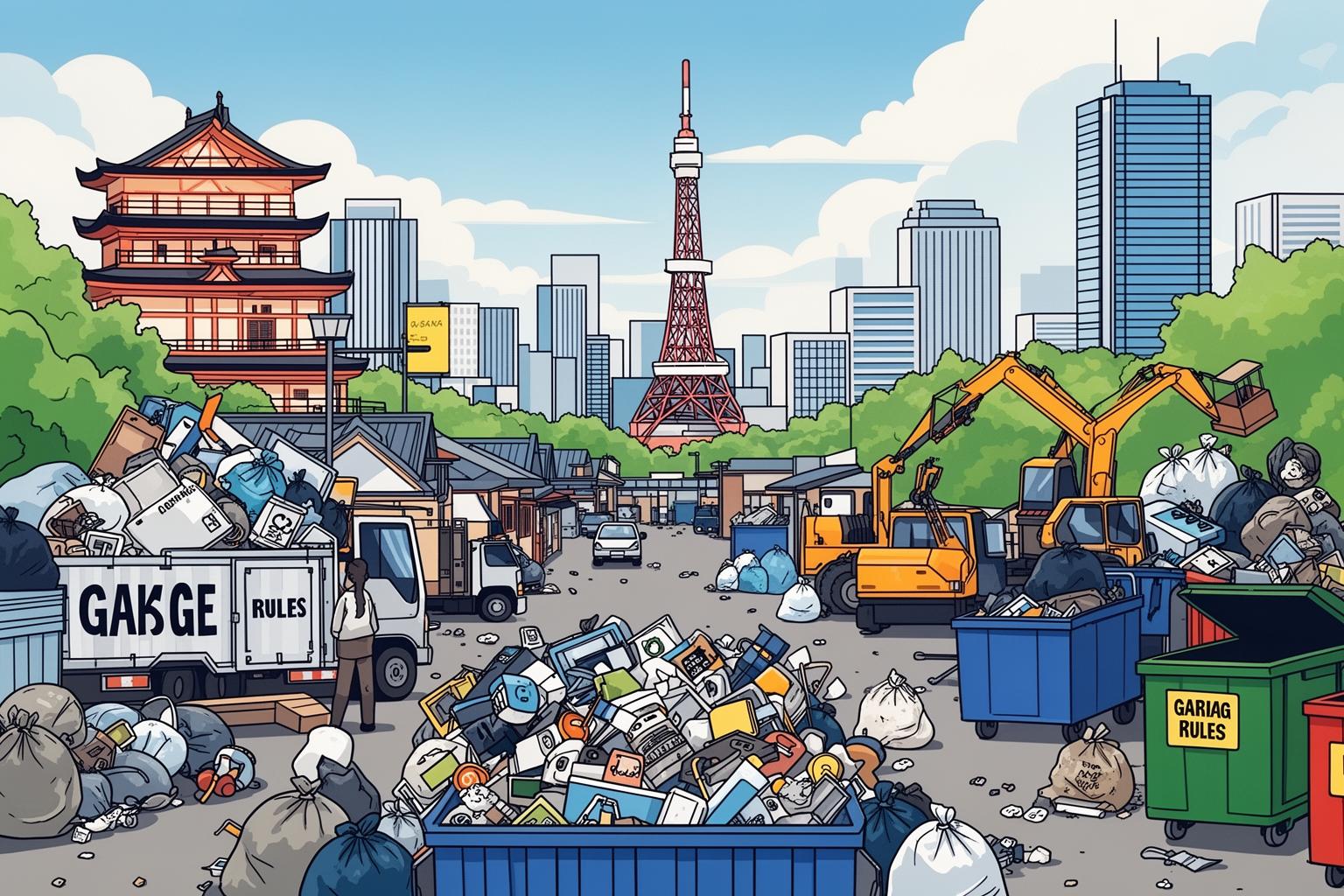
Understanding the rules is one thing; understanding why they are followed with such dedication is another. These practices are not random. They represent a logical and deeply cultural response to the physical and social realities of urban life in Japan, especially in a densely populated and practical city like Osaka.
Hyper-Density and the Lack of Space
Take a look at any residential area in Osaka. There are no expansive front yards or back alleys cluttered with dumpsters. Houses and apartment buildings are built right alongside narrow streets. The public street effectively serves as everyone’s front yard. This close proximity means that any disruption, mess, or unpleasant odor immediately affects dozens of people. There is no buffer zone.
As a result, public space is a valuable and fiercely protected resource. The garbage rules create a detailed system aimed at minimizing the negative impact of waste on this shared environment. The specific collection days, the morning timing, the use of clear bags, and washing containers—all these rules serve to reduce odors, pests, and visual clutter. It is a highly practical solution to the immense challenge of keeping a city of millions clean and livable when there is simply nowhere to hide the refuse.
The Group Over the Individual
At its core, the Japanese garbage system teaches the cultural value of putting the group above the individual. Personal convenience comes second to the smooth operation and harmony of the neighborhood. Is it inconvenient to keep a bag of smelly kitchen scraps in your small apartment for three days if you miss the morning collection? Yes. But that minor personal trouble is far less significant than the collective nuisance of having that bag rot on the street corner for everyone to see and smell.
This concept can be difficult for those from more individualistic cultures, but it is the unseen force that keeps Japanese society functioning. Every time you rinse a milk carton or separate a bottle cap, you perform a small act of solidarity, affirming your commitment to the group. This principle is strong throughout Japan, but in the pragmatic, straightforward neighborhoods of Osaka, it is felt very tangibly. It’s less an abstract philosophy and more a practical agreement among neighbors: we all do our part so that life here improves for everyone.
A Reflection of Character
Ultimately, how you manage your garbage is viewed as a direct reflection of your character. It is a public display of your inner qualities. Are you a thoughtful person (omoiyari ga aru)? Are you responsible and detail-oriented? Can you be counted on to fulfill your obligations? Can you consider the needs of others alongside your own?
To your neighbors, the answers are plainly visible in that clear plastic bag. A neatly sorted, clean bag of recyclables signals that you are trustworthy and conscientious. A messy, jumbled bag implies the opposite. In a society where reputation and social harmony are essential, this carries great weight. Mastering local garbage rules is more than just avoiding a yellow sticker or a neighbor’s complaint. It is about passing a fundamental social test. It is about demonstrating, in the most ordinary yet most important way, that you deserve to be part of the community. It is how you move from being a temporary resident to becoming a true neighbor.








