You’ve heard the word before you even arrive, a piece of local folklore that sticks to Osaka like the sweet, smoky sauce on a sizzling slab of okonomiyaki. Kuidaore. It’s whispered in guidebooks and shouted from the mouths of TV presenters standing under the glittering neon glow of the Dotonbori canal. The official translation is something like “to eat oneself into ruin” or “to eat until you drop,” and it conjures images of endless feasts, of tables groaning under the weight of takoyaki, kushikatsu, and ramen, of a city engaged in a perpetual, joyous act of culinary indulgence. And yes, on the surface, that’s part of the picture. This is, after all, the city nicknamed Tenka no Daidokoro—the Nation’s Kitchen.
But if you’ve chosen to live here, to move beyond the tourist trail and weave your life into the fabric of this vibrant, unapologetic city, you quickly realize that kuidaore is not an event. It’s not a holiday binge or a special occasion. It’s a philosophy, a deeply ingrained operating system that governs the daily rhythm of life for millions of Osakans. It’s a mindset that shapes not just where they eat, but how they shop, how they socialize, and how they measure the value of a day. It’s far less about gluttony and far more about a relentless, sharp-eyed pursuit of satisfaction. It’s the quiet wisdom behind a salaryman’s 500-yen lunch, the unspoken criteria for a family’s neighborhood udon shop, and the communal energy buzzing in a standing bar after work. To understand kuidaore is to understand the soul of Osaka itself—a soul that is pragmatic, community-oriented, and fiercely dedicated to the idea that a good life is built upon a foundation of good, honest food. Let’s pull back the curtain on the grand theater of Dotonbori and look at the real, everyday stage where this principle truly comes to life.
This philosophy of finding satisfaction in daily life even extends to how locals seek a weekend reset in Osaka’s countryside.
Deconstructing ‘Kuidaore’: More Than Just a Slogan

The tourist-friendly definition of kuidaore is catchy, but it misses the essence. It’s not about quantity; it’s about quality. To an Osakan, eating oneself into ruin doesn’t mean going broke over a Michelin-starred tasting menu. It means spending your hard-earned money on something that isn’t worth it. A meal that is overpriced, disappointing, or insincere is the real path to ruin. At its core, the kuidaore mindset is a defensive instinct developed in a city of merchants—a finely tuned sense for authenticity, quality, and, above all, fairness.
‘Umaku te, Yasukute, Hayai’ – The Holy Trinity of Osaka Eating
Step into nearly any local eatery away from the main tourist areas, and you’ll sense an unspoken creed in the air: umakute, yasukute, hayai. Delicious, affordable, and fast. This is not a marketing tagline; it’s a set of uncompromising commandments. In Tokyo, prestige often takes center stage. People book months ahead, pay premium prices, and sit in reverent silence for meals that depend as much on the chef’s fame as on the food itself. Osaka does have upscale dining, but the city’s true heartbeat is found in venues perfecting this holy trinity.
“Cheap,” however, is the most misunderstood term here. Outsiders might associate it with low quality, like a fast-food dollar menu. In Osaka, “cheap” means outstanding cost performance, or kosupa as it’s called locally. The question an Osakan asks isn’t “How little can I pay?” but “How much exceptional quality can I get for this price?” They are connoisseurs of value. They’ll gladly queue for a 700-yen bowl of curry if it offers 2,000 yen worth of satisfaction in its rich, nuanced spices and perfectly cooked rice. By contrast, they’ll mock a 3,000-yen pasta dish that tastes like it came from a box. The price tag is meaningless without the context of the experience.
That’s why the city abounds with legendary standing-room-only udon shops tucked into train station corners. Businesspeople in sharp suits stand shoulder-to-shoulder with construction workers, slurping a bowl of kitsune udon that costs less than a fancy coffee yet delivers a soul-warming burst of flavor from its kelp-based dashi broth. It’s delicious, affordable, and you can be in and out in under ten minutes. That’s the genius of the Osaka system: a meritocracy where the food speaks for itself, and a long line of locals is the only Michelin star that truly counts.
The Merchant’s Mindset: Food as a Transaction of Trust
To understand why kosupa is so fundamental, one must look back at Osaka’s history. This was never the city of samurai and shoguns—that was Edo (Tokyo). This was a city of merchants, the financial engine of Japan, where rice and goods from across the country were collected and traded. The merchant class, the chonin, built this city. Merchants are, by nature, pragmatic. They understand numbers, deals, and that long-term success depends on reputation and trust, not a single flashy sale.
This commercial DNA is embedded in the city’s approach to food. A restaurant is a business, and a meal is a transaction. Yet, it’s not an anonymous one. When a local finds a good place—a spot that serves fantastic food at a fair price—they don’t just become customers; they become loyal advocates. They tell friends, family, and coworkers. That restaurant earns their trust. The owner isn’t just a chef; they’re a fellow merchant who has proven they can deliver an honest product. This builds a remarkably strong bond.
On the flip side, a restaurant that tries to cut corners—by skimping on ingredients, hiking prices without better quality, or relying on fancy decor to hide mediocre cooking—commits the ultimate sin. It’s seen as a betrayal of this unspoken merchant’s contract. Word spreads quickly, and locals abandon the place. Tourists often wonder why some restaurants in prime spots remain empty while a tiny, run-down venue down a dark alley is packed. The answer is trust. The empty restaurant sells location; the busy one sells a promise kept night after night, for decades.
The Rhythm of a Day: How ‘Kuidaore’ Plays Out from Morning to Night
The grand concept of kuidaore is best understood not as one large feast but as a series of small, strategic choices made throughout the day. It’s a rhythm of measured satisfaction, a way of moving through the hours with an eye always on the next great-value bite. The daily eating routine of an Osakan perfectly exemplifies this philosophy.
The Osaka Breakfast: Fueling the Daily Hustle
Despite the city’s indulgent reputation, the typical Osaka breakfast is a model of efficiency. The aim is to fuel up with quality food without wasting time or money. This is where the culture of the kissaten, the classic Japanese coffee shop, shines. While modern cafes selling expensive lattes exist, the core of the morning belongs to the mōningu sābisu, or “morning service.”
For the price of a single cup of coffee, usually around 400 or 500 yen, a local kissaten offers a small meal for free. The standard set features a thick slice of toasted bread (shokupan), a hard-boiled egg, and sometimes a tiny salad. This is the essence of kosupa. You come for the coffee; the food is a token of goodwill, a thank you for your patronage. It’s a savvy business tactic rooted in the merchant spirit—give a little extra to build loyalty. The atmosphere is practical yet cozy: salarymen reading newspapers, elderly couples speaking softly, the aroma of dark-roast coffee and toast. It’s a communal, unpretentious way to start the day.
For those even more pressed for time, a quick bowl of udon or soba at a station stand, or an onigiri (rice ball) from a specialty shop is common. But even here, the kuidaore mindset persists. It won’t be just any onigiri; it’ll be from a shop known for premium rice and generous fillings. It’s a small, affordable purchase made with the same discerning eye as a major investment.
The Lunchtime Battleground: Speed, Value, and the Salaryman’s Quest
Nowhere is the philosophy of umakute, yasukute, hayai more evident than during lunch in business districts like Umeda, Honmachi, or Yodoyabashi. At exactly noon, office buildings empty, and an unspoken city-wide contest begins: the hunt for the best lunch deal.
The gold standard is the 500-yen “one coin” lunch. The creativity and quality restaurants manage to pack into this price are astounding. It might be a chicken nanban teishoku (set meal) with a crispy breaded cutlet slathered in tartar sauce, accompanied by rice, miso soup, and pickles. It might be a filling bowl of beef curry or a comforting oyakodon (chicken and egg over rice). The competition is so fierce that restaurants must deliver incredible value to survive, operating on razor-thin margins and relying on high volume and repeat business from local office workers.
For foreigners, the lunchtime scene can feel overwhelming. The pace is frantic. Lines form and move rapidly. Service is very efficient; you order, receive your food within minutes, eat, pay, and leave. Lingering over a post-meal coffee is a luxury reserved for cafes, not for a crowded lunch counter with waiting patrons. This isn’t impolite; it’s part of a social contract. You get an excellent meal at an unbeatable price, and in return, you respect the time of the restaurant and other hungry customers. It is the kuidaore system perfected—a fast, high-value exchange benefiting everyone.
The Afternoon Interlude: The Culture of Snacking and ‘Kona-mon’
Kuidaore extends beyond mealtimes. The spirit of opportunistic eating thrives in the afternoon, largely fueled by kona-mon, the flour-based dishes foundational to Osaka’s snack culture. This is where the city’s most famous culinary ambassadors appear: takoyaki and okonomiyaki.
A common misconception is that these are purely tourist foods, enjoyed only in Dotonbori. This is far from the truth. Takoyaki stands are everywhere—outside supermarkets, in quiet residential shotengai (shopping arcades), near train stations. They are part of everyday life. Schoolchildren grab a boat of six on their way home; a mother might purchase a dozen as a treat for the family before dinner; office workers may share an order as a quick afternoon pick-me-up. The price is low, the satisfaction high. It’s a hot, savory, and deeply comforting snack.
Another Osaka staple is the butaman (steamed pork bun) from 551 Horai. Their distinctive red-and-white paper bags are a common sight on trains, as people carry these fragrant buns home. Lines at their counters, especially in major stations like Namba or Umeda, testify to their popularity. This isn’t a tourist gimmick; it’s a cherished local institution. It’s a perfect example of the Osaka mindset: they discovered a product consistently delicious, reasonably priced, and convenient, and they rewarded it with loyal, multi-generational patronage.
The Evening Meal: Where Community and Cuisine Converge
When the workday ends, the kuidaore philosophy shifts from pure efficiency to a balance of value and social connection. The evening meal is where the community dimension of Osaka’s food culture shines, whether during a lively night out or a carefully prepared meal at home.
The Neighborhood Izakaya and Tachinomi
While Tokyo boasts many sophisticated cocktail bars and exclusive restaurants, Osaka’s social heart after dark beats strongest in its numerous izakaya (pubs) and tachinomi (standing bars). These are not spots for quiet reflection. They are loud, lively, and unapologetically informal. The focus is on creating a space to relax, converse, and share good food and inexpensive drinks.
At the pinnacle of this culture is senbero—a blend of sen-en (1,000 yen) and berobero (drunk). It’s both a challenge and a badge of pride: the ability to get pleasantly drunk and have a few bites for a single 1,000-yen coin (or bill). Areas like Tenma, Kyobashi, and Namba’s backstreets abound with tachinomi catering to this. For 500 yen, you might get a drink set with a beer and two small dishes. The food is simple but expertly prepared—simmered daikon, a few grilled chicken skewers, a small portion of fresh sashimi. It’s kosupa at leisure. You pay as much for the atmosphere and camaraderie as for the food. The counter becomes the stage, and the taisho (master) the director, remembering regulars’ orders and sparking conversations among strangers. It’s worlds apart from the formal, reserved dining style often found elsewhere in Japan.
Home Cooking: The Hidden Side of ‘Kuidaore’
It’s mistaken to think Osakans eat out every night. The kuidaore mindset thrives at home too, beginning with grocery shopping. Locals are discerning shoppers who don’t just visit the nearest supermarket. They frequent vibrant shotengai, the covered shopping arcades forming the lifeblood of neighborhoods.
Strolling through Tenjinbashisuji Shotengai, Japan’s longest, you see this philosophy in action. People don’t buy all their groceries in one spot. They have a trusted fishmonger for the freshest catch, a specific tofu shop making it fresh daily, a vegetable stall with the best prices and reliable quality. It’s a network of trusted merchants. They know how to spot a bargain, but more importantly, how to identify quality.
Kansai-style home cooking reflects this focus on good ingredients. The flavor profile is famously anchored by dashi, a subtle broth usually made from kombu (kelp). Unlike the stronger, soy-heavy flavors of the Kanto region, Osaka cuisine often aims to enhance, not mask, natural ingredient tastes. A simple dish of simmered winter melon or a clear fish soup showcases this beautifully. It is a quieter, more reflective form of kuidaore, celebrating the inherent deliciousness of perfectly fresh ingredients bought at fair prices from trusted local vendors.
The Osaka Palate vs. The Tokyo Standard
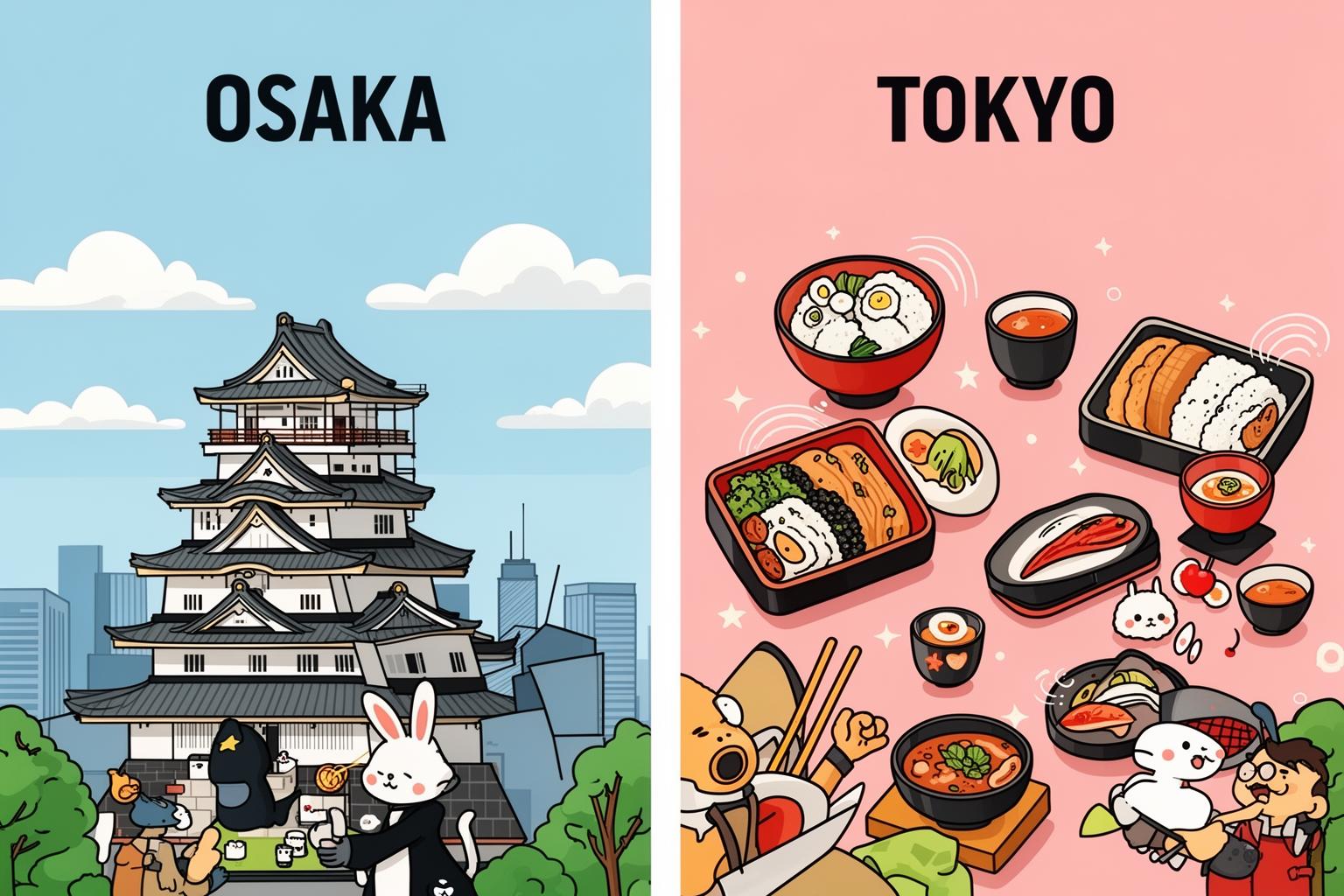
For those who have experienced living in both Tokyo and Osaka, the contrasts in everyday food culture are striking and fundamental, reflecting a historical and cultural split that you can genuinely taste. It goes well beyond merely favoring takoyaki over sushi; it concerns the very essence of flavor and the social setting in which food is enjoyed.
Dashi and the Subtle Art of Kansai Flavor
The deepest distinction lies in dashi. This simple broth forms the heart of Japanese cuisine, with regional differences that are pronounced. In Tokyo and the broader Kanto area, dashi tends to be strong and robust, heavily relying on katsuobushi (dried bonito flakes) and dark soy sauce (koikuchi shoyu). This creates a dark, salty, and richly savory flavor profile, ideally suited to the region’s cherished soba noodles.
In contrast, Osaka and the Kansai region embrace a different approach. Their dashi is lighter and more refined, based mainly on high-quality kombu. While katsuobushi is still used, it assumes a supporting role. The soy sauce of choice is light soy sauce (usukuchi shoyu), saltier yet lighter in color, allowing the broth’s clear, golden shade to remain visible. The intention is to craft a deep, balanced umami that enhances ingredients without overwhelming them. A classic example is kitsune udon, where the broth is so clear you can see through it, yet it bursts with complex, satisfying flavor. To newcomers, it may seem bland, but to Kansai natives, the Kanto style tastes harsh and flat. This difference is a proud source of regional identity and ongoing discussion.
A Culture of “Mixing”: Okonomiyaki and the Democratic Meal
Each area’s signature dishes also tell a unique story. Tokyo’s culinary emblem is arguably Edomae sushi: a flawless slice of pristine fish atop carefully prepared vinegared rice. It embodies minimalism and purity, highlighting a single perfect ingredient. It reflects a culinary hierarchy where the chef’s expertise is paramount, and the ingredient reigns supreme.
Osaka’s famed dish, okonomiyaki, stands in vivid contrast. Its name means “grill what you like.” It’s a delightful medley of flour, cabbage, egg, meat or seafood, and any other desired ingredients, all mixed together and cooked into a savory pancake. It is a democratic dish where no single element takes precedence; the magic arises from their combination. Hearty, affordable, and endlessly flexible, it’s often prepared at the table, turning cooking into a shared, lively experience. This dish mirrors Osaka’s spirit: straightforward, cooperative, and focused on creating something delicious and fulfilling from simple, everyday ingredients. The difference from the formal precision of sushi is striking.
The Social Etiquette of Eating: Talk, Laugh, and Share
The ambiance of dining venues frequently reflects these culinary philosophies. Tokyo’s upscale restaurants can feel like temples of gastronomy, where conversation softens and diners concentrate fully on the chef’s artistry. There is a strong sense of performance and respect.
In Osaka, dining is rarely a quiet event. It serves as a social lubricant, with restaurants—especially izakaya and local spots—expected to be lively. Laughter, animated chatter, and the clinking of glasses contribute to the atmosphere. The boundary between staff and guests is often delightfully blurred. It’s common to strike up a chat with the person next to you at the counter or to engage warmly with the chef as they prepare the meal. This tradition stems from the merchant culture, where dining offers a chance to forge connections, share moments, and build relationships. The food is the medium, but the real message is community.
Common Misunderstandings and How to Live Like a Local Eater
For a foreign resident, exploring Osaka’s food scene can be delightful, but it’s easy to fall into a few common pitfalls or misunderstand the cues. To move beyond the city’s surface-level image, you’ll need to slightly adjust your expectations and be open to deeper exploration.
Misconception 1: “It’s All Fried Street Food”
Because takoyaki and kushikatsu (deep-fried skewers) are internationally renowned, many newcomers assume Osaka’s cuisine is heavy, greasy, and best eaten on the move. While these dishes are beloved and culturally significant, they only represent a small part of the culinary landscape. Osaka is also the birthplace of kappo dining, a more casual take on the intricate kaiseki multi-course meal, where diners sit at a counter and interact directly with the chef who prepares exquisite seasonal dishes right before them. The city’s commitment to high-quality dashi means the soups and simmered dishes are incredibly delicate and refined. Though not as famous as Tokyo for seafood, Osaka’s offerings are exceptional. The kuidaore philosophy embraces the full range of food, from 100-yen skewers to 10,000-yen kappo courses, as long as they deliver on quality and value.
Misconception 2: “You Have to Go to Dotonbori to Experience Kuidaore”
Dotonbori is a spectacular sight—the giant mechanical crabs, the glowing Glico Running Man, and the dense cluster of food stalls make for an overwhelming and exhilarating sensory adventure. It’s certainly worth visiting. However, it represents the theme park version of kuidaore, tailored for tourists and nightlife. The everyday, genuine experience of kuidaore takes place elsewhere.
It’s found in local shotengai, where butchers greet you with a friendly nod. It’s in the basement of a Umeda office building, where a tiny curry shop serves the same delicious recipe it has offered for forty years. It’s at a standing bar in Kyobashi, where regulars swap their day’s stories over cheap beer and grilled fish. To truly grasp the concept, you need to step away from the neon-lit main streets and explore the neighborhoods where daily life unfolds.
A Practical Guide for the Foreign Resident
Explore Train Stations and Basements: The extensive underground networks of Umeda, Namba, and Tennoji stations are much more than transit points; they are culinary treasure troves. Filled with incredible eateries—from tachinomi bars to bakeries to upscale restaurants—they serve the bustling crowds. Likewise, the basement food halls of department stores, known as depachika, offer a paradise of prepared foods, bento boxes, and delicacies, showcasing a vibrant cross-section of the city’s food scene.
Learn the Magic Word: ‘Okan’: Many of the best small local establishments are run by a single woman, often an older, motherly figure affectionately called the Okan. Discovering an Okan’s shop feels like finding a second home. The food is simple, comforting, and made with care. If you become a regular, she’ll remember your order, inquire about your day, and make you feel like part of the neighborhood family. This embodies the heart of community dining.
Follow the Line, But Be Smart: A queue of Japanese people, especially at lunchtime, almost always indicates excellent food and good value. Don’t be intimidated—the line moves quickly. However, use your judgment. If a line in a major tourist spot consists mainly of people holding guidebooks and speaking foreign languages, it might be famous but not necessarily the most authentic local experience.
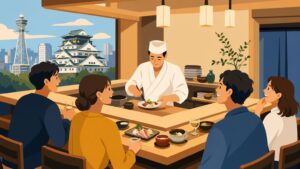
Embrace the Counter Seat: Whenever you can, choose a seat at the counter. It offers a front-row view of the action. You can observe the chef’s skill, learn about the ingredients, and engage in conversation if both you and the chef are willing. This turns a simple meal into an interactive, educational, and far more memorable experience.
Conclusion: ‘Kuidaore’ as a Philosophy for Life
Ultimately, kuidaore isn’t truly about eating until you collapse—that’s merely its dramatic presentation. At its heart, it’s a way of life rooted in a practical merchant city that has always prioritized substance over style and community over exclusivity. It embodies the tireless quest for the greatest joy from the resources at hand, a daily pursuit of the ideal balance between quality, price, and satisfaction.
It encourages you to become a more discerning consumer, to look beyond superficial appearances and evaluate things based on their genuine value. It celebrates the small, independent business owners who consistently provide honest products. It reminds you that a meal is more than just nourishment; it’s an occasion for connection—with the person who prepared the food, with those you share it with, and with the city itself.
Living in Osaka means gradually embracing this mindset. You begin to notice the subtle variations in the color of udon broth. You find yourself mentally calculating the kosupa of your lunch set. You develop steadfast loyalty to a particular takoyaki stand. You learn that the greatest culinary treasures often lie not in shining towers but in humble basements and quiet, lantern-lit alleys. Food stops being merely food. It becomes the lens through which you perceive the city, the language through which you understand its people, and the rhythm that marks the passage of your days in the Nation’s Kitchen.