
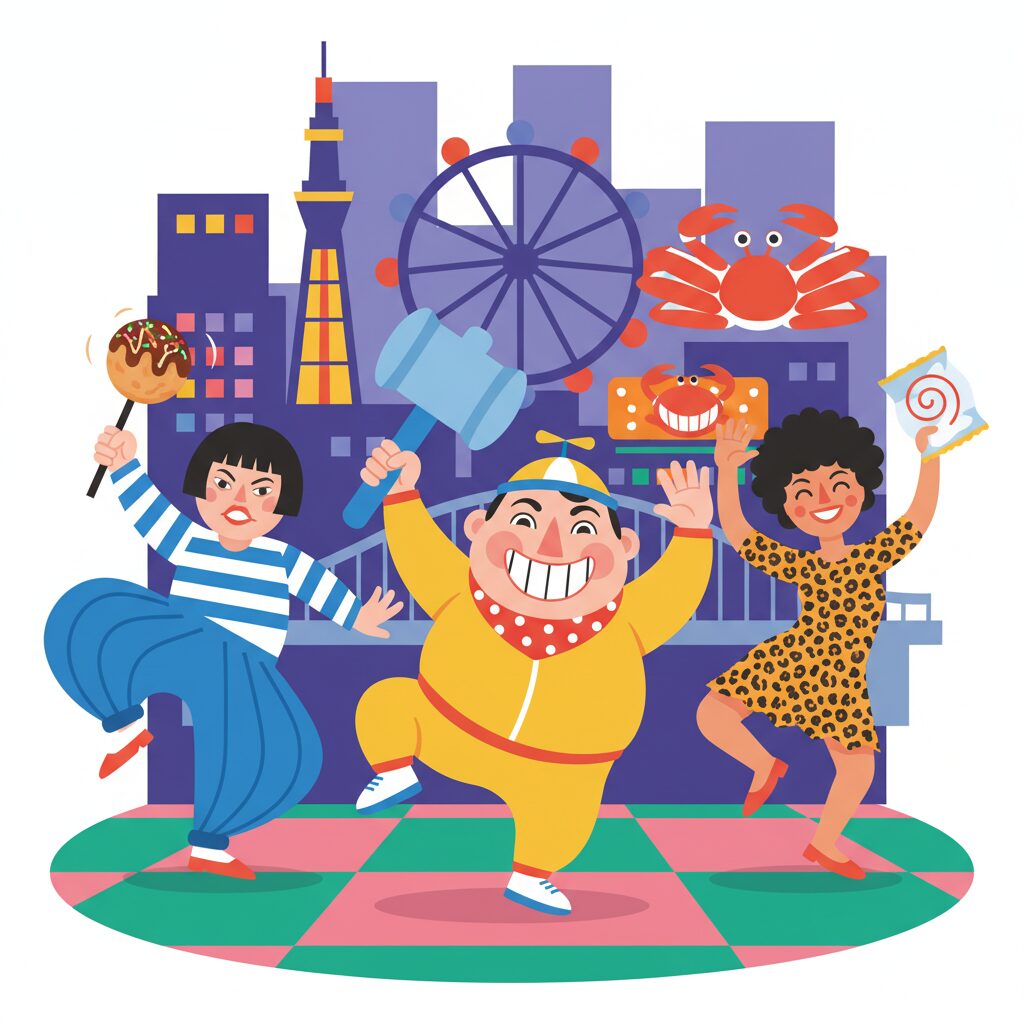
The first time it happened, I was utterly lost. I’d been in Osaka for maybe a week, standing at a tiny, steaming takoyaki stand tucked into an alley in Namba. The old man running it, his face a roadmap of laugh lines, scooped the piping hot octopus balls into a paper boat. As he handed them to me, he gestured at my tote bag, which had a goofy-looking anime cat on it. “You carry that around? Aren’t you a little old for cartoons?” he asked, his voice a gravelly rumble. My Japanese was still shaky, but the meaning was clear. I felt a hot flush of embarrassment. Was he being rude? In America, a stranger commenting on your age and your taste like that would be an immediate red flag. I mumbled a thank you, paid, and scurried away, confused. It wasn’t until weeks later, after a dozen similar interactions, that I finally understood. He wasn’t insulting me. He was inviting me in. He was playing the opening notes of Osaka’s unique communication rhythm, a song of humor and directness that, once you learn the steps, is one of the most rewarding parts of living in this city.
Forget everything you’ve read about Japanese communication being universally indirect, built on layers of unspoken meaning and a deep-seated fear of causing offense. That might be the operating system for Tokyo or Kyoto, but Osaka runs on different software. Here, conversation is a contact sport, a lively performance where humor is the currency and directness is a sign of respect. It’s a city that talks, loudly and with its whole chest. For a foreigner trying to build a life here, cracking this code isn’t just helpful; it’s essential. It’s the difference between feeling like a perpetual outsider and feeling like you’re finally part of the show. This isn’t a guide to tourist hotspots. This is a look under the hood at the engine that drives daily life in Osaka: the unwritten rules of its wonderfully baffling, endlessly entertaining, and deeply human way of speaking.
To truly understand this unique communication style, it’s helpful to explore the social pressure to be funny in Osaka.
The Holy Trinity of Osaka Banter: Tsukkomi, Boke, and Nori
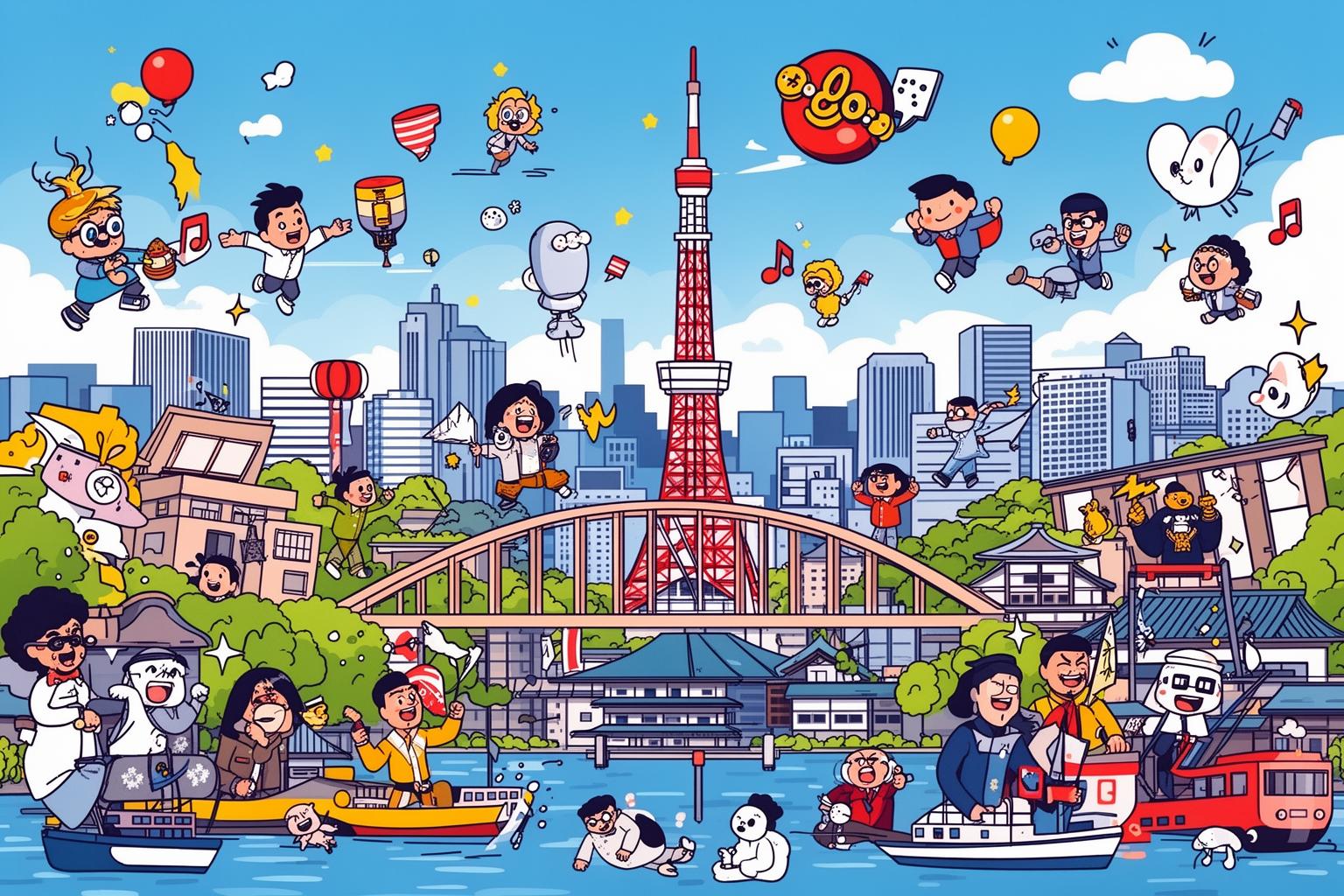
At the core of Osaka’s conversational style lies a comedic structure so deeply embedded in the culture that people use it instinctively. This framework underpins manzai, Japan’s renowned two-person stand-up comedy, yet it extends far beyond the stage. It unfolds on subways, in supermarkets, and over drinks at izakayas. Grasping this structure—a sort of sacred triad—is the key first step to deciphering local interactions. It consists of the boke, the tsukkomi, and the crucial nori that binds them together. This isn’t merely about humor; it’s a fundamental way to build rapport and test social chemistry.
Boke (The Fool): More Than Just Acting Silly
The boke (ボケ) serves as the setup, involving saying or doing something foolish, absurd, or slightly off-kilter to purposely open a comedic space. The person who does this is the boke. But this isn’t about genuine cluelessness. A skilled boke is a carefully planned gesture, a subtle form of performance art. It’s like tossing a tennis ball, waiting for a return. It can range from understated to wildly exaggerated. For instance, if you’re looking at a deer in Nara Park, your Osakan friend might turn to you with a straight face and say, “Wow, the dogs in Nara are huge.” This is classic boke. Both of you know it’s a deer, yet they deliberately mislabel reality to see your reaction.
The purpose of the boke is to ease the formality of conversation. It acts as social lubricant, a playful nudge that says, “Let’s not be so serious.” When someone offers a boke, they’re inviting you to connect on a more casual, genuine level. It’s a test of your social agility. Can you spot the game? Are you willing to join in? Responding literally to the Nara Park remark with something like, “That’s a deer, a member of the Cervidae family,” kills the flow. You’d come across as stiff, perhaps even arrogant—someone lacking good nori. The boke is a gift, an opening for interaction, and your response defines the direction of the conversation.
Tsukkomi (The Straight Man): The Craft of the Comeback
If the boke is the setup, the tsukkomi (ツッコミ) is the punchline. It is the quick, sharp, witty reply that highlights the boke’s absurdity. The person who delivers this retort is the tsukkomi. The quintessential tsukkomi phrase is “Nandeyanen!” (なんでやねん!), roughly meaning “Why the hell?!” or “What the heck are you saying?!” Often, this comes with a light, mimed slap to the head or shoulder. While “Nandeyanen!” may seem like a stereotype, its spirit infuses every true tsukkomi response. It’s the verbal “correction” that completes the comedic loop.
In response to the deer-as-a-dog boke, the proper tsukkomi might be, “That’s a deer, you idiot! Since when do dogs have antlers?” The feigned irritation is essential; it’s theatrical, not sincere. This comeback acknowledges the absurdity, amplifies it, and brings the joke to a satisfying close. A skillful tsukkomi isn’t just a correction; it’s an endorsement. It tells the boke player, “I get what you’re doing, I’m in on the joke, and I’m joining the fun.” Ignoring a boke in Osaka is like leaving someone hanging for a high-five; it’s awkward and borderline rude. It signals social cluelessness or unwillingness to engage. The real offense isn’t the sharp tsukkomi, but the silence following a failed boke. This sharply contrasts with Tokyo, where a similar direct retort to a stranger or colleague might be seen as aggressive or disruptive to group harmony (wa, 和). In Osaka, this verbal sparring embodies harmony itself.
Nori (The Vibe): Riding the Flow of Comedy
Boke and tsukkomi are the mechanics, but nori (ノリ) is the conversation’s soul. It’s a hard word to translate precisely, encompassing the mood, rhythm, flow, and shared energy of an interaction. Having good nori (nori ga ii, ノリがいい) means being on the same wavelength with everyone else—you understand the jokes, contribute to the energy, and are enjoyable company. Having bad nori (nori ga warui, ノリが悪い) means being a buzzkill, killing the vibe by being too serious or analytical when lightheartedness is needed.
Nori is the collective improvisation that springs from a group’s shared understanding of the boke/tsukkomi dynamic. A conversation with good nori builds momentum. One person delivers a boke, another follows with a tsukkomi, and a third might top that with an even more absurd boke, creating a cascade of laughter. It’s about being present and in tune with the room’s emotional current. You don’t have to be the funniest person, but you must be willing to ride the wave. For foreigners, sensing the nori is a major breakthrough—it’s when you stop dissecting every sentence literally and start responding to the underlying energy. It’s the difference between translating words and feeling the music. When a whole train car of strangers bursts into laughter because someone made a funny remark about a delayed train and another person responds with the perfect tsukkomi, you’re witnessing peak Osaka nori. It’s a spontaneous, shared moment of connection that turns the city into a community.
Directness vs. Rudeness: Decoding Osaka’s “Unfiltered” Communication
Beyond the nuanced interplay of humor, another cornerstone of Osaka communication that often surprises newcomers is its striking directness. The Western stereotype of the eternally polite, indirect Japanese person who speaks in layers of subtlety quickly falls apart here. Osakans, shaped by commerce and practicality, frequently forgo the delicate verbal nuances typical of other regions in Japan. This directness does not arise from a desire to be rude; rather, it reflects a different cultural value system that prioritizes clarity, efficiency, and a pragmatic intimacy over formal politeness. Recognizing this distinction is essential to avoid misinterpreting a well-meaning remark as a personal attack.
The Myth of Japanese Indirectness
The ideas of honne (本音, one’s true feelings) and tatemae (建前, the public façade) are often seen as key to understanding Japanese culture. The notion is that Japanese people seldom express their true thoughts openly to maintain social harmony. While this framework holds true, particularly in Tokyo’s political and corporate worlds, applying it wholesale to Osaka misses the mark. Osaka’s history is different. It was once Japan’s kitchen—the commercial hub where merchants, not samurai or aristocrats, shaped the cultural norms. In a marketplace, ambiguity is bad for business. You need to haggle, quote your price, and evaluate the quality swiftly and honestly. There is no room for fluff.
This mercantile spirit still runs deep in Osaka. Osakans often view indirect speech as inefficient and even somewhat dishonest. Why have someone guess your meaning? This outlook fosters a communication style that can feel surprisingly direct. But this directness comes from a desire for clarity and genuine connection. They don’t hide their honne behind a wall of tatemae; instead, they often lay it all out openly, expecting you to do the same. This straightforwardness may be disarming but is also refreshingly honest once you get accustomed to it. You rarely have to wonder where you stand with someone from Osaka.
“How Much Did You Pay For That?”: Money, Bargains, and Practicality
This directness is most evident in discussions about money. In many cultures, asking how much someone paid for their shoes, rent, or meal is a major social taboo. In Osaka, it’s often a conversation opener. Compliment someone’s new coat, and you might hear, “Thanks! I got it 30% off in Shinsaibashi! Can you believe it?” This isn’t seen as intrusive but as communal information sharing.
The principle behind this is jitsuri (実利), or practical benefit. Getting value for money is a deeply held virtue. Scoring a good deal is a source of pride, a victory to celebrate and share. When someone asks your price, they’re not judging your finances; they’re gathering information, learning from your experience, and enjoying your savvy. It’s a way of saying, “We’re both navigating this consumer world—let’s help each other win.” This attitude is evident everywhere, from haggling cries in Kuromon Market to shopkeepers steering you towards cheaper, better-value items. To Osakans, concealing a price would be odd—why wouldn’t you want to share the joy of a bargain with a friend?
Straight to the Point: Feedback, Opinions, and Getting Things Done
This practical directness goes well beyond shopping. It influences feedback in both personal and professional contexts. If you cook for an Osaka friend, they won’t say “It’s delicious” if it isn’t. They might say, “It’s good, but maybe a little less salt next time.” This isn’t criticism but constructive feedback offered in a spirit of genuine help. Their honesty signals respect, with the underlying message, “I want you to succeed, and here’s how you can improve.”
At work, this can be a shock for those used to Tokyo’s style of management, where criticism is often wrapped in praise and softened by vague, non-confrontational language. An Osaka boss is more likely to say, “This part is confusing. Redo it,” without hesitation. There is no ambiguity. The focus is on the problem and its swift resolution, saving time and effort that would otherwise be wasted decoding polite euphemisms. Although blunt at first, this approach builds a unique kind of trust. You know the feedback is honest and aimed at improving results rather than protecting feelings. The relationship centers on a shared goal of accomplishing the task well, with straightforward communication as the most effective means.
The Foreigner’s Survival Guide to Osaka Conversations
Grasping the theory of boke/tsukkomi and the philosophy behind Osakan directness is one thing; putting it into practice is another. For a foreigner, navigating this lively, fast-paced conversational scene can feel daunting. The fear of misspeaking, misinterpreting a joke as an insult, or seeming like a humorless outsider is very real. However, the encouraging news is that Osakans are generally forgiving and deeply value anyone who tries to engage with their culture on its own terms. You don’t need to become a comedy expert overnight—just a few basic tools and a willingness to join in are enough.
To Joke or Not to Joke: Your Role in the Banter
Your main goal isn’t to steal the spotlight but to show that you recognize the show is happening. You don’t need to create a brilliant boke out of nowhere. Self-deprecation is the easiest entry point. Lightheartedly joking about your own struggles is a perfect, low-risk boke. For example, if you’re having trouble with chopsticks, you could say, “I think these chopsticks are broken.” It’s a simple, absurd comment that invites a friendly tsukkomi reply, like, “No, your hands are broken!” This quickly breaks the ice and signals that you’re approachable and don’t take yourself too seriously.
Even more important than making jokes is learning how to recognize them. When an elderly woman at the bus stop tells you your Japanese is so good you must be a spy, she isn’t genuinely accusing you of espionage. She’s giving you a boke. Your role is to provide a simple tsukkomi. You don’t need a sharp comeback. A laugh, a wave of the hand, and a simple “Muri, muri!” (No way, impossible!) or “Bikkurishita!” (You surprised me!) will do more than enough. It completes the exchange, showing you got the joke and appreciate the interaction. The key is to respond with warmth and amusement, not with a literal or defensive explanation. Your reaction matters more than your words.
Reading the Room: When Humor Ends and Seriousness Begins
Of course, life in Osaka isn’t a nonstop comedy show. People have serious conversations, conduct important business, and share moments of genuine vulnerability. The essential skill is learning to read the contextual cues signaling a pause in the playful banter. The same person who teases you mercilessly about your favorite baseball team can, moments later, listen with deep empathy as you discuss a personal problem.
Notice the non-verbal signals. When the joking stops, the tone changes. The loud, laughing energy quiets, replaced by a calmer, more focused intensity. Eye contact becomes more direct and sustained. The playful physicality disappears. These are moments for sincere listening, not for seeking a comedic opening. In a business meeting, there might be light banter at first to build rapport, but when the discussion turns to contracts or deadlines, the atmosphere shifts to sober professionalism. Humor is the default social lubricant—the pathway to connection—but Osakans can switch it off when the situation demands seriousness. Recognizing that shift is a sign of true cultural fluency.
The “Ame-chan” Phenomenon: Kindness Behind the Curtain
Perhaps the most defining and endearing trait of Osaka communication is the balance between a gruff, teasing exterior and a deeply warm, caring interior. This is perfectly captured by the “ame-chan” (candy) culture. You might be talking with an “obachan” (a middle-aged or elderly woman) who grills you with direct questions or teases you about your clothes. Then, just as you start to feel a bit overwhelmed, she suddenly grins, says, “Here, for you,” and presses a handful of hard candies into your palm, drawing from a seemingly endless stash in her purse.
This is the quintessential Osaka interaction. Banter and directness make up one half of the equation; the small, unsolicited act of kindness is the other. The teasing isn’t meant to be hurtful; it’s a way to quickly close the gap between strangers and treat you like family. The ame-chan is proof of that—a tangible sign of the affection behind the playful jabs. This pattern shows up in countless ways: the butcher who mocks your poor Japanese but gives you an extra slice of pork at no charge; the neighbor who complains about your noisy footsteps but leaves a bag of homegrown vegetables at your door. The directness breaks down formal barriers, and the kindness that follows builds a genuine, sturdy bridge of human connection. It’s a relationship founded not on polite distance but on shared laughter and generous acts.
Osaka vs. Tokyo: A Tale of Two Tapes
To fully understand the distinctive character of Osaka’s social fabric, it’s nearly indispensable to compare it with Tokyo. These two cities stand as the twin pillars of modern Japan, and the contrasts in their communication styles consistently fuel domestic fascination and friendly rivalry. This difference is palpable in the atmosphere, audible on the streets, and evident in every everyday exchange. If Tokyo is like a finely tuned orchestra performing a complex symphony of unspoken rules, Osaka resembles a lively jazz club, improvising its way to a joyous noise.
The Escalator Rule as a Metaphor
One of the first things people notice is the escalator rule. In Tokyo, and most places worldwide, people stand on the left and walk on the right. In Osaka, it’s reversed: people stand on the right and walk on the left. While it seems like a small detail, it serves as a powerful metaphor for Osaka’s mindset. It represents a deliberate choice to differentiate itself from the capital, a stubborn refusal to simply conform to the national standard. It reflects a city with a strong, independent identity that isn’t afraid to do things its own way. This spirit of contrarianism and local pride influences everything, including language. Tokyo sets the standard for formal, “correct” Japanese, while Osaka proudly speaks its own lively dialect, Kansai-ben, which is faster, more melodic, and filled with unique playful expressions.
The Sound of a City: Volume, Laughter, and Public Space
The auditory environments of the two cities differ profoundly. On the Yamanote Line subway in Tokyo, you’ll notice the relative quiet. People keep to themselves, conversations happen in hushed tones, and loud laughter is uncommon. It’s a space of shared, quiet solitude. In contrast, on the Osaka Loop Line, the volume is turned up to the maximum. Friends laugh heartily, strangers chat openly, and the air buzzes with lively human interaction. This isn’t due to Osakans being inconsiderate, but because their understanding of public space differs. In Tokyo, the public sphere often serves as a place for quiet, individual passage. In Osaka, it extends the community living room, a stage where life is meant to be expressed out loud. Laughter isn’t disruptive; it’s a welcomed, contagious sound. This embrace of public emotion and interaction makes the city feel more approachable and less anonymous.
Service with a Side of Personality
Customer service offers another sharp contrast. Tokyo provides arguably the most polished, perfect customer service in the world—impeccable, respectful, and carried out with robotic precision following a strict script. Though flawless, it can sometimes feel impersonal. The server is performing a role, and a clear, formal distance exists between customer and clerk. In Osaka, service is just as attentive, but the formality is often replaced by personality. A convenience store clerk might comment on the weather or ask about your day. A small restaurant owner might not just take your order but sit down to chat, offer recommendations, and tease you about your choices. These moments aren’t found in any manual; they are spontaneous human connections. While a Tokyo department store employee might give a perfect, deep bow, an Osaka shopkeeper in a shotengai (shopping arcade) could crack a joke and give you an extra potato with your purchase. One reflects formal respect; the other expresses warm, personal connection. It’s this human touch, this belief that every transaction is an opportunity for real interaction, that truly captures the spirit of everyday life in Osaka.








