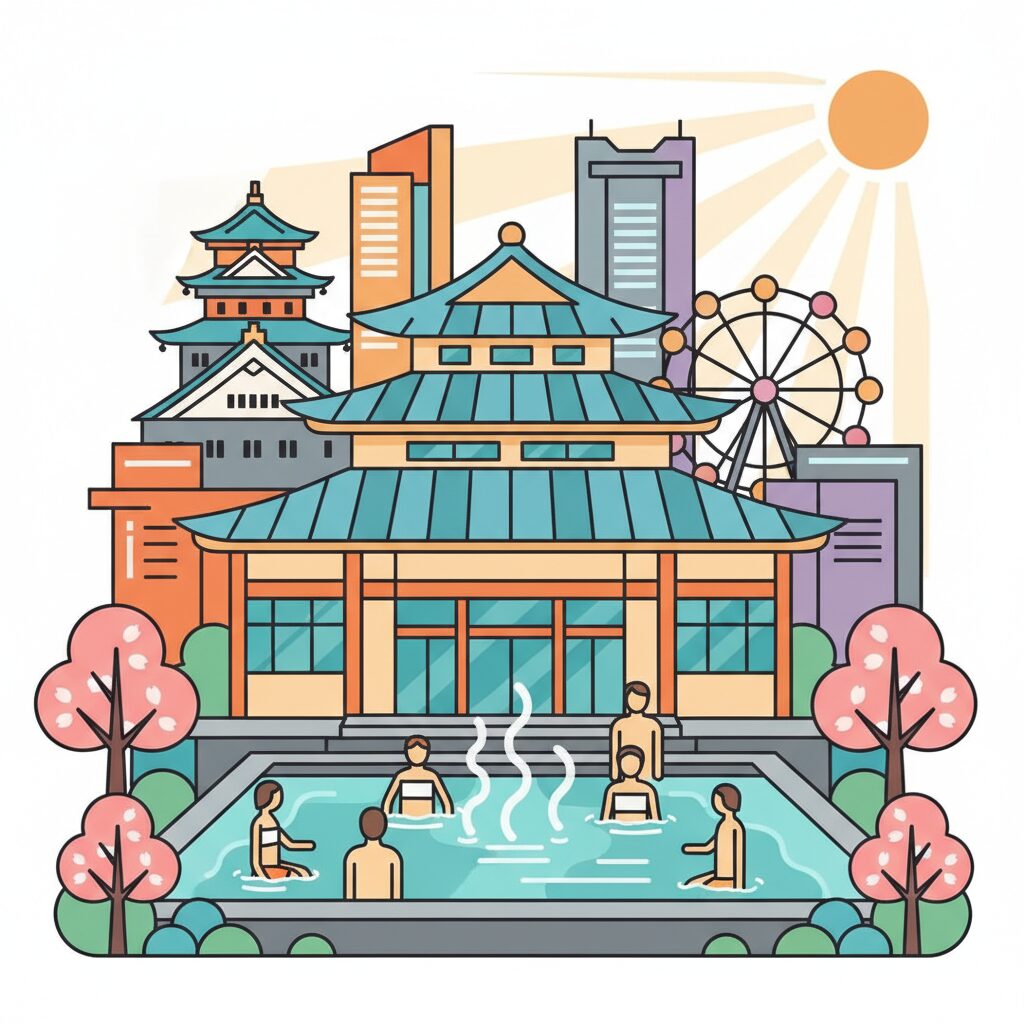
You hear about Japan, and you picture a quiet, serene getaway. You imagine yourself soaking in a natural hot spring, an onsen, nestled deep in the mountains. Snow falls gently outside a cypress wood bath, you’re gazing at a perfectly manicured garden, and the only sound is the trickling of water. It’s the postcard image, the one that sells plane tickets and fills travel blogs. It’s beautiful, it’s tranquil, and for most people living in the urban sprawl of Osaka, it’s a once-a-year luxury, if that.
Now, let me tell you about a real Osaka weekend. It’s loud. It’s crowded. And it’s centered around a place that looks less like a zen retreat and more like a water-based theme park. Welcome to the Super Sento. This isn’t your grandfather’s quiet neighborhood bathhouse, nor is it the exclusive mountain ryokan. The Super Sento is a sprawling, multi-story complex of entertainment built around the simple act of bathing. It’s a phenomenon that tells you more about the soul of Osaka than any temple or castle ever could. It’s where the city’s obsession with value, its loud and unfiltered community spirit, and its pragmatic approach to life all converge in a cloud of steam. Forget the delicate art of the tea ceremony; to understand the heart of this city, you need to understand the art of spending eight straight hours in a glorified bathhouse for less than the price of a movie ticket. This is where Osaka comes to relax, to connect, and to be unapologetically itself.
This vibrant, community-focused approach to relaxation is a hallmark of the city, much like the spontaneous connections forged at Osaka’s standing bars.
What Even Is a Super Sento? The Onsen’s City Cousin
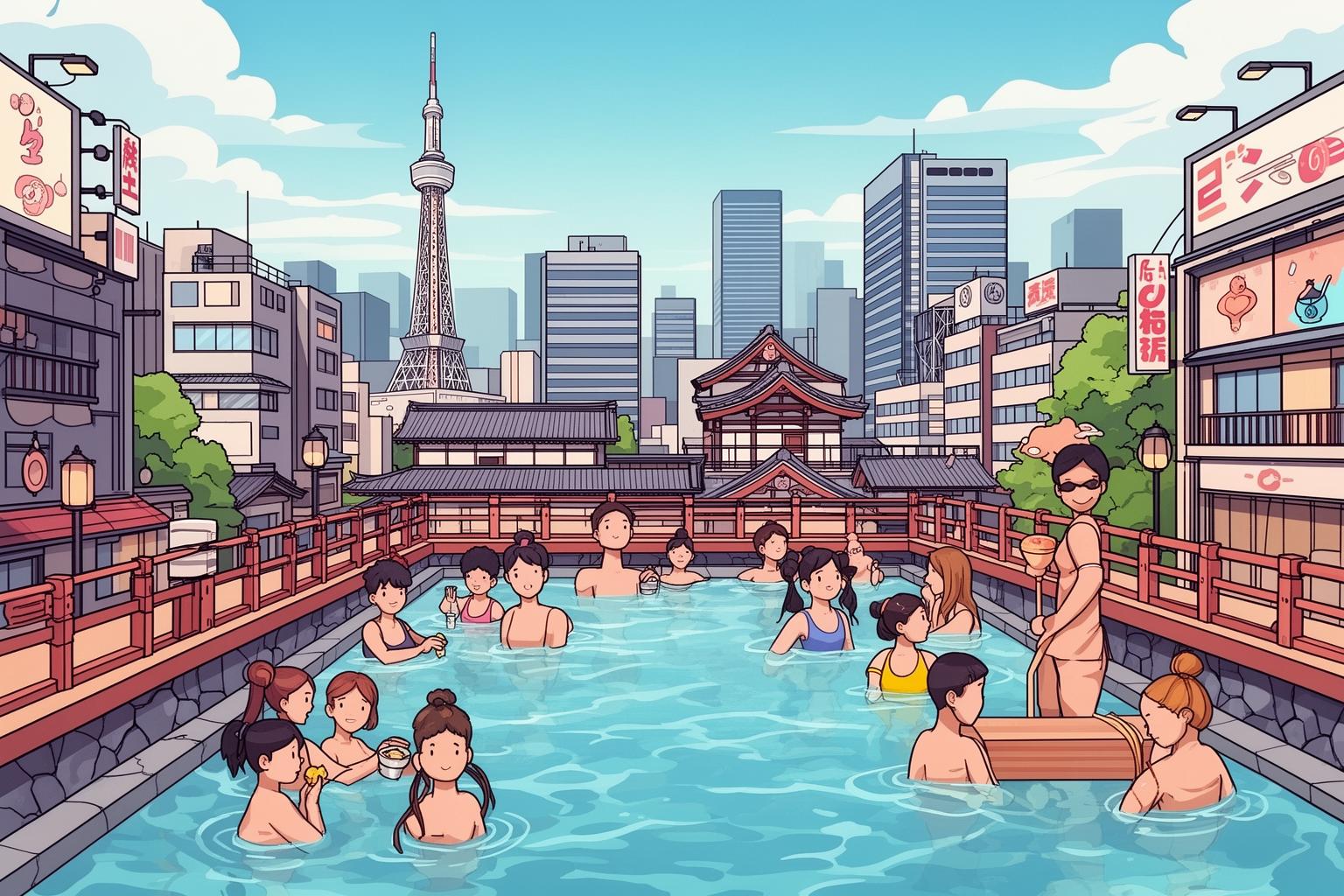
First, let’s clear up the confusion. Japan has a hierarchy of public bathing, which foreigners often mix up. At the base is the classic sento—a local, no-frills neighborhood bathhouse where you go to get clean, maybe have a quick chat with the elderly lady next to you, and be home within an hour. It’s functional and has been a part of daily life for generations, though its numbers are shrinking.
At the top of the hierarchy is the onsen. These are the aristocrats of bathing, defined by their use of natural, geothermally heated spring water with specific mineral properties. Often located in scenic, rural areas, they are destinations usually attached to expensive ryokan (traditional inns). Visiting an onsen is an event, a planned trip, and a considerable expense.
The Super Sento exists in the broad, vibrant space between these two extremes. It’s the ambitious, entrepreneurial middle child. It may use natural onsen water trucked in from a famous spring, or just heated city water infused with various minerals and herbs. The water source is secondary; the main attraction is the overwhelming variety of experiences. The Super Sento took the basic idea of a public bath and amplified it with Osaka’s distinctive commercial energy.
More Than Just a Bathhouse
Walking into a Super Sento for the first time is a sensory overload. After paying an entry fee—typically a surprisingly low ¥1,000 to ¥2,500—you receive a wristband with a barcode, your key and wallet for the next several hours. You store your shoes, then enter a massive locker room to shed your street clothes—and, symbolically, the pretenses of the outside world.
The bathing area is where the “super” element shines. It’s not just a single tub but a dozen. There’s the silky bath with microscopic bubbles turning the water milky white; the carbonated bath that covers your skin in a tingly fizz, said to boost circulation; powerful jet baths designed to knead out knots in your back; and the dreaded denki buro, or electric bath, which sends a low-level current through the water—a bizarre rite of passage for newcomers. Outside, in the rotenburo (open-air baths), you might find baths with TVs so you don’t miss the Hanshin Tigers baseball game while soaking. There are individual pot-shaped baths, shallow lounging baths for lying down, and baths infused with everything from wine and coffee to seasonal herbs like yuzu or iris leaves.
And that’s only the water. The sauna facilities offer their own world: a traditional dry sauna, steam sauna often infused with salt or mud for self-application, and increasingly, specialized saunas for “löyly” or “Aufguss,” a thermic performance we will explore later. This is not just about getting clean; it’s about crafting a personal spa day from a dizzying array of options.
The “Cost Performance” Obsession in Action
Why is this model so successful in Osaka? It boils down to a defining principle of the Osaka mindset: kosupa, or cost performance. While Osaka residents are sometimes labeled kechi (stingy), this is a misconception. They are not necessarily cheap—rather, they are passionate, almost religious in their pursuit of value. They want the absolute maximum return on every yen spent. The Super Sento is the zenith of kosupa.
Consider this: in Tokyo, a weekend afternoon might mean meeting a friend at a trendy cafe in Daikanyama, paying ¥1,500 for a slice of cake and a latte, chatting for 90 minutes, then going back out into the street. In Osaka, that same ¥1,500 secures entry into a Super Sento. For that price, you can spend the whole day. You can soak in ten different baths, sweat it out in three distinct saunas, nap in a silent, climate-controlled relaxation room with a personal TV, and read from an on-site manga library rivaling a small bookstore’s collection.
After bathing, you don a comfortable set of provided lounge wear (samue or jinbei), entering the second act of the Super Sento experience. Full-service restaurants offer everything from ramen and curry to sushi and ice-cold draft beer. There are massage parlors, barbershops, and game arcades. Rows of reclining lounge chairs, each with a blanket, host dozens of people—salarymen, students, housewives—fast asleep. They are not merely relaxing; they are extracting every last drop of value from their entry fee. It’s simultaneously an entertainment complex, restaurant, spa, and public living room all in one. For Osaka locals, this logic is undeniable: why pay separately for multiple activities when you can enjoy them all under one roof for a single low price? This pragmatic, value-driven approach is quintessential Osaka.
The Social Fabric of the Super Sento: Community Unfiltered
If the business model of the Super Sento reflects Osaka’s economic mindset, the atmosphere inside reveals its social spirit. There’s a Japanese concept called hadaka no tsukiai, meaning “naked communion” or “naked friendship.” The idea is that by shedding your clothes, you also shed social status, titles, and inhibitions, paving the way for more sincere and open communication. While this concept exists throughout Japan, in Osaka it is practiced with a marked lack of restraint.
The Naked Truth About Osaka Communication
A Tokyo onsen experience is often one of quiet reflection. People soak in silence, respecting each other’s personal space even in communal settings. An Osaka Super Sento, to say the least, is not like that. It is loud. It is boisterous. It is a bubbling cauldron of chatter and laughter.
In the bathing area, you’ll notice groups of middle-aged women (obachan) catching up on the week’s gossip, their voices reverberating off the tiled walls. You’ll see fathers playfully splashing their children. Old men in the sauna loudly debate the local baseball team’s performance or offer unsolicited (yet usually well-meaning) advice to younger men on how to endure the heat. The invisible barriers of privacy that define much of Japanese public life seem to dissolve in the steam.
Don’t be surprised if a complete stranger starts a conversation with you. They might ask where you’re from, what you think of the water, or suggest their favorite bath. This sharply contrasts with the Kanto region, where speaking to strangers in such settings might be viewed as intrusive. In Osaka, it’s simply part of the communal experience. The Super Sento is a social space first and a bathing space second. It reflects a culture that values direct, unfiltered human connection over strict formality. The city’s reputation for friendliness isn’t just a stereotype; it’s a lived reality seen in its most candid moments here.
From the Bath to the Beer Garden
The social ritual doesn’t end once you dry off. For many, that’s when it truly begins. After changing into lounging clothes, the next stop is almost always the dining area. The first priority is nearly always a frosty, towering mug of draft beer. There’s a belief that after sweating out toxins in the sauna and baths, your body absorbs the beer more efficiently. Whether that’s scientifically accurate doesn’t matter; it’s a cherished part of the culture. Pairing that beer with salty, greasy fare like karaage (fried chicken), gyoza (dumplings), or a bowl of spicy ramen is considered the pinnacle of post-bath pleasure.
The Super Sento dining hall on a Saturday night feels like a large, chaotic family reunion. Televisions blare variety shows or sports. Kids run between tables. Groups of friends grow louder with each round of drinks. Salarymen nap on tatami mats in the corner. It’s a judgment-free zone. Here, Osaka’s social structure appears at its most relaxed and egalitarian. Everyone wears the same simple lounge wear uniform. The company president might share a table with a construction worker, both enjoying a beer and some noodles. The barriers that shape daily life outside are temporarily forgotten. This shared public space functions like a private living room, where the city collectively comes to unwind.
A Practical Guide to Blending In (and Not Freaking Out)
For a foreigner, experiencing the Super Sento can be quite intimidating. The nudity, the intricate rituals, the unspoken rules—they can all feel somewhat overwhelming. However, understanding the etiquette is essential to fully enjoy the experience, much of which is grounded in the city’s practical and community-focused mindset.
The Unspoken Rules of the Osaka Bath
First, let’s discuss tattoos, the top concern for many visitors. Traditionally, tattoos in Japan are linked to the yakuza, or organized crime. As a result, many public baths, especially traditional onsen, enforce strict “no tattoo” policies. Yet Osaka, known historically as a mercantile and port city, has always been somewhat more cosmopolitan and pragmatic. Many Super Sento here have more flexible rules. Some allow tattoos freely; some require small tattoos to be covered with waterproof patches, often sold at the front desk; others maintain a full ban. The key is to check the facility’s website in advance. There is no universal rule, and this is not about being anti-foreigner but stems from deep cultural associations. The fact that many places provide cover patches is very much an Osaka-style solution—striking a practical compromise to keep things running smoothly.
Next is the washing ritual, which is non-negotiable and the most important rule. Before even entering the bathwater, you must wash your entire body thoroughly. You’ll find a designated area with rows of shower stalls, each equipped with a stool, a handheld showerhead, and supplies like soap, shampoo, and conditioner. You sit on the stool (washing while standing is rude, as you might splash others) and scrub yourself clean. The baths are meant for soaking and relaxation, not washing. Entering a communal tub dirty is the ultimate social mistake. It’s a core rule of hygiene and respect, the foundation of the communal bathing experience.
Then there’s the matter of the small towel. You’ll receive a large bath towel for drying off in the locker room and a small washcloth-sized towel for use in the bathing area. This small towel serves two purposes: modesty and utility. You can use it to scrub yourself while washing. When walking around the bathhouse, you can hold it in front of you for modesty. Once in the water, never let the towel touch the bathwater, as it’s considered unclean. Most people either place it on the side of the tub or, in a classic move, fold it and balance it on their head. Though it might feel odd at first, everyone else does it too.
The Sauna Game: Endurance and Entertainment
Sauna culture has surged in popularity in Japan recently, and Osaka’s Super Sento are leading the way. This isn’t the quiet, meditative sauna experience typical in Scandinavia. Here, it can be a theatrical performance. Many locations host “löyly” or “Aufguss” shows at scheduled times. During these, a staff member called the Nesshi-shi or “heat master” enters the sauna carrying a bucket of water infused with aromatic oils. They pour it over the hot stones to create a massive steam blast, then vigorously whip the hot air around the room with a large towel in a dance-like performance, directing waves of intense heat at attendees. It’s part endurance challenge, part entertainment.
The ritual that follows is equally important. After enduring the sauna’s intense heat, you immediately move to the mizuburo—the cold water bath. The shock of the icy water is essential to the experience. After about a minute in the cold bath, you leave to sit on a chair or bench in the open-air area for gaikiyoku, or the “outside air bath.” This forms the holy trinity of sauna: heat, cold, rest. The aim is to achieve a blissful, light-headed state called totonou. In Osaka, you’ll often see groups of friends doing this together, timing their sauna spells, challenging each other to stay longer in the cold bath, then collapsing side-by-side into chairs, sharing the euphoric sensation. It’s a collective challenge, a communal journey toward ultimate relaxation.
Super Sento as the Great Equalizer: Why It’s So Osaka
To truly understand why the Super Sento is so essential to modern life in Osaka, you need to grasp the city’s physical and social environment. It’s more than just a place to bathe; it addresses several challenges of urban living and reflects the city’s straightforward, egalitarian spirit.
Escaping the Urban Jungle
Living in a major Japanese city is compact. Apartments, even for families, are often small, with thin walls and limited personal space. The average Osaka resident lacks a spacious backyard or a large living room to relax in. The streets are crowded, trains are packed, and finding a moment of real peace and quiet can be difficult. The bathroom in a typical apartment may be a tiny, prefabricated unit where you can barely stretch out.
The Super Sento offers a straightforward, affordable solution. For a few hours, you can leave your cramped apartment and enjoy a vast, open space. You can soak in a giant bath, recline comfortably, and experience a freedom that daily life rarely provides. For a family in a small 2LDK apartment, the Super Sento is a weekend lifesaver. It’s a place where children can play in the game corner or splash around while parents take a much-needed break without spending a fortune. It serves as a “third place,” an important community hub beyond home or work, offering a physical and mental outlet from the pressures of dense city living.
“Anything Goes” Mentality
Above all, the Super Sento embodies Osaka’s famously informal and practical culture. There is a clear absence of pretension here, which can be refreshing compared to Tokyo’s more image-conscious atmosphere. In Tokyo, where you go and what you wear often sends a message. In Osaka, comfort, value, and enjoyment usually take precedence over appearances.
The Super Sento perfectly represents this mindset. Social status, job titles, and wealth are all left behind in the locker. When everyone dons similar simple lounge wear, CEOs and convenience store clerks stand as equals. You might see a young woman with brightly dyed hair reading manga beside an elderly man watching a baseball game. Nearby, tattooed construction workers laugh over beers next to a family celebrating a birthday. It’s a true melting pot, where Japan’s usual strict social hierarchies become flexible.
This “anything goes” spirit is deeply connected to Osaka’s history as a merchant city, where practicality and results have always mattered more than rigid formality. The Super Sento isn’t about putting on a show of relaxation; it’s about achieving it in the most efficient, enjoyable, and affordable way possible. Who you are outside those walls doesn’t matter. Inside, you’re simply someone seeking comfort, a good soak, and a cold beer. It’s a space founded on shared vulnerability and a common goal, making it one of the most genuinely democratic spaces in all of Japan.
Conclusion: More Than a Soak, It’s a Lifestyle
So, when you spot a massive, brightly lit building along a highway in Osaka displaying the sign 湯 (yu – hot water), don’t assume it’s just a public bath. It’s much more than that. It serves as a community center, a family restaurant, a library, a spa, and a sanctuary all in one. A weekend visit to a Super Sento isn’t merely a way to wash away the week’s dirt; it’s an immersive experience into the cultural rhythms of Osaka.
It functions as a living museum of the city’s core values: a relentless focus on cost performance, a social life that is loud, direct, and communal, and a pragmatic approach to wellness that favors comfort over tradition. It’s a place where the unspoken rules of Japanese society loosen, where strangers engage in conversation, and where sharing a bath becomes a powerful social bond.
If you truly want to understand how Osaka operates, how its people live, and what they cherish, here’s my advice: skip the tourist hotspots and fancy restaurants one weekend. Pack a small bag, find your local Super Sento, and spend the day there. Don’t hurry. Soak in the baths, endure the sauna, savor the ramen, drink the beer, and simply observe the life unfolding around you. It is the most genuine, unfiltered, and steamy insight into the heart of this remarkable city you will ever experience.