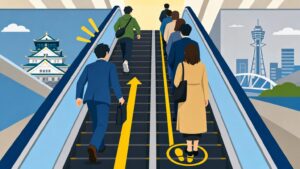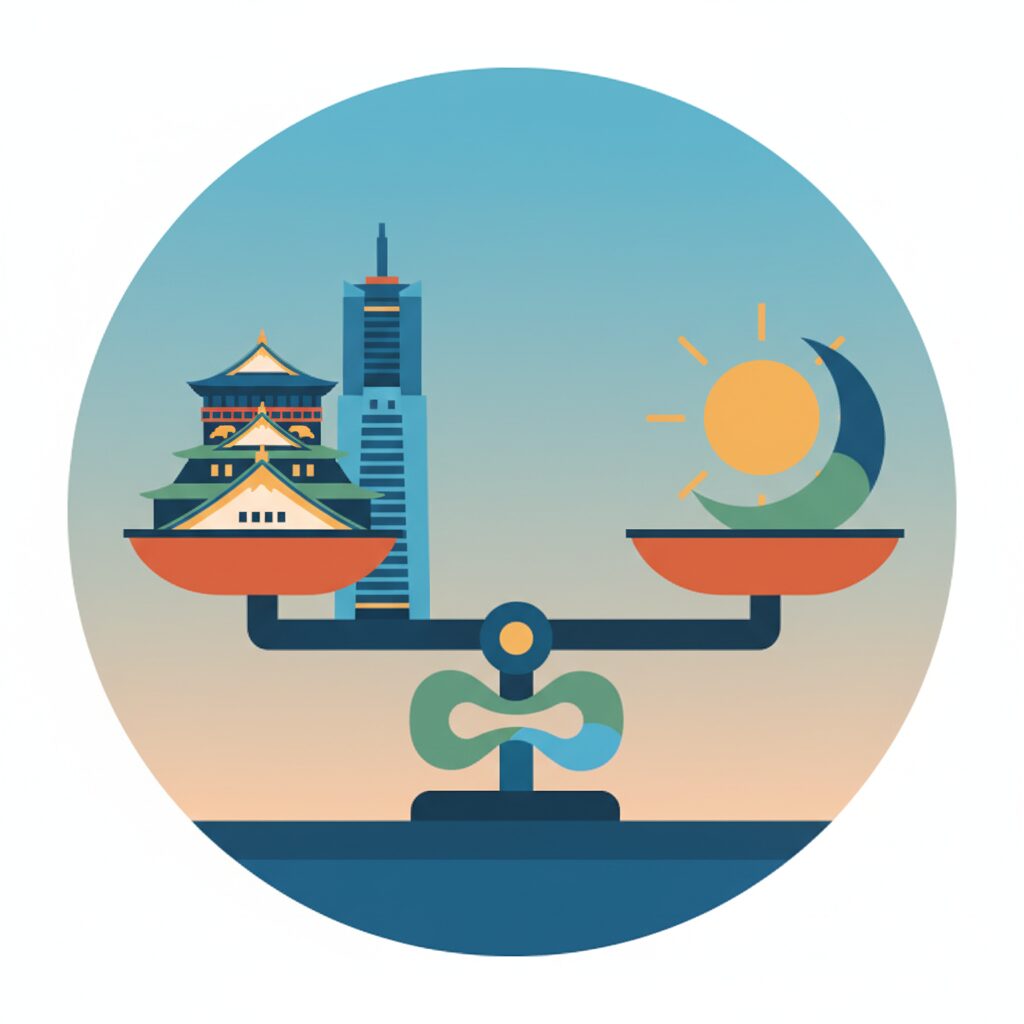
There’s a ghost that haunts the global perception of Japan, a specter in a dark suit, clutching a briefcase, forever marching between a sterile office and a train car packed to the breaking point. It’s the ghost of the tireless salaryman, a figure who lives to work, for whom the company is family, and the office is a second home. Before I moved to Osaka, this was the image burned into my mind. I pictured long, stoic hours, mandatory after-work drinking sessions fueled by obligation, and a life where personal identity was neatly folded and tucked away behind a corporate ID badge. I prepared myself for a culture of professional endurance, a marathon with no finish line. And then, I arrived in Osaka, and the ghost vanished. It didn’t just disappear; it felt like it had never been welcome here in the first place. What I found instead was a city that operates on a profoundly different, almost shockingly sensible, principle: you work to live. You don’t live to work. This isn’t just a catchy phrase; it’s a deeply embedded cultural practice, a philosophy with a name: Koujitsu (公私). This word, a combination of the characters for ‘public’ (公) and ‘private’ (私), represents the clear, bright line drawn between your professional life and your personal life. In Osaka, this line isn’t just respected; it’s sacred. For any foreigner, especially a remote professional trying to navigate the currents of Japanese work culture, understanding Koujitsu is the key to understanding the soul of this city. It’s the unspoken rule that dictates why the streets buzz with a different energy at 5:01 PM, why your boss might not ask about your weekend, and why you might just find the healthiest work-life balance you’ve ever experienced. Osaka isn’t a city that works less; it’s a city that works smarter because it cherishes what comes after.
To truly embrace this philosophy, consider how locals cultivate their personal lives in spaces like Osaka’s traditional coffee shops, where community and connection are central to the daily ritual.
Unpacking the Myth: The Salaryman Stereotype and the Osaka Exception

Before exploring the mechanics of Osaka’s mindset, we must first confront the obvious issue: the widespread perception of Japan as a nation of workaholics. These stories are legendary and often accurate in certain situations. The concept of karoshi, or death from overwork, is a genuine and tragic social problem. The pressure to stay late until the boss leaves, the never-ending nomikai (drinking parties) that focus more on hierarchical bonding than real enjoyment, and the blurring of boundaries between personal time and company time all characterize a work culture present in Japan. Tokyo, as the country’s political and corporate hub, frequently serves as the stage where this drama unfolds most intensely. Its history is rooted in the samurai code of loyalty and service to a lord, which has evolved in the modern era into a bureaucratic and corporate culture that prizes presence, dedication, and the collective over the individual. It’s a top-down culture where FaceTime and visible effort are sometimes valued as much as actual results. Foreigners arriving in Tokyo often find themselves navigating this complex dance of unspoken rules, where leaving on time can be seen as a sign of insufficient commitment.
However, Osaka is different. Its spirit was not shaped in government halls or imperial courts; it was forged on the floors of rice exchanges and in the lively stalls of merchant houses. This is not a city of bureaucrats but of traders, artisans, and entrepreneurs. The difference is fundamental. A bureaucrat’s loyalty is to the system, while a merchant’s loyalty lies with the deal, efficiency, and the bottom line. This pragmatism infuses every part of life here, especially work. The Osaka mindset dismisses performative labor. Staying late just for the sake of it is, in local terms, ahonkusai—completely foolish. It’s inefficient. It costs the company money in overtime and electricity, and it costs you something far more precious: your own time. The aim isn’t to appear busy; it’s to complete the work effectively and go home. This practical, results-focused approach naturally guards against the extremes of the ‘live to work’ culture. It’s not that people in Osaka are lazy or less committed; rather, they are uncompromisingly efficient. Their dedication is concentrated into the eight hours they’re paid for, enabling them to fiercely protect their personal time.
The Hard Stop: Witnessing Koujitsu in Daily Practice
The most concrete expression of Koujitsu is what I refer to as ‘The Hard Stop.’ It marks the official end of the workday, and the shift in the city’s atmosphere is distinctly noticeable. It’s not a slow fade-out; it’s an instant change. One moment, the city hums with focused effort, and the next, it bursts into the vibrant flow of personal life.
The 5 PM Shift
Stroll through the business districts of Umeda or Yodoyabashi at 4:55 PM, and you’ll observe the typical scenes of any corporate center. But by 5:01 PM, everything changes. The daily uniform—the ever-present dark suit—is discarded at remarkable speed. I’ve witnessed men in station restrooms rapidly swapping their work clothes for a Hanshin Tigers baseball jersey, their entire vibe switching from serious employee to devoted fan in less than ninety seconds. Colleagues leave the office together, but the conversation isn’t a rundown of the day’s meetings. It’s brief and clear. The phrase “Otsukaresama deshita” (a nuanced expression of mutual appreciation for hard work) is spoken with a sense of closure. It’s the verbal seal shutting the workday’s door. There’s no hanging around, no casual chatter to curry favor with the boss. The separation is immediate. Once the phrase is uttered, you cease to be Tanaka-san from accounting; you become Tanaka-san heading to his daughter’s piano recital or to a standing bar in Kyobashi to catch up with a university friend. Mandatory, obligation-driven nomikai sessions are far less daunting here. Of course, company parties occur but tend to be less frequent and genuinely celebratory. Invitations are just that—invites, not commands. Declining due to other plans usually meets a simple, “Okay, see you tomorrow,” rather than silent judgments about your team commitment.
The Sanctity of the Digital Divide
For a remote worker used to the Western ‘always-on’ mentality, Osaka’s digital boundaries can be both refreshing and surprising. The hard stop applies not only to physical presence but also to your digital availability. Expectations to respond to emails, Slack messages, or Line chats from your boss late into the evening are basically nonexistent. Your work phone, if you have one, is for work hours; your personal phone belongs to your private life. The two rarely overlap. I recall talking to a local friend who runs a small design firm, genuinely baffled when I explained the American habit of checking emails before bed and first thing in the morning. “But why?” he asked, not critically, but out of genuine curiosity. “The office is closed. The work will still be there tomorrow. Your brain needs rest. Your family needs your rested mind.” This perspective isn’t about ignoring emergencies; it’s rooted in the fundamental belief that creativity, productivity, and well-being thrive on true downtime. Constant connectivity signals poor time management, not dedication. It suggests you couldn’t complete your tasks within working hours, marking inefficiency. This respect for digital off-hours creates a liberating mental space, allowing deep focus during work while ensuring your evenings and weekends are genuinely yours, safeguarded by an unspoken social pact.
The Question You Rarely Hear
One of the most striking social differences is the minor importance placed on your profession. In many Western cultures, and especially in status-conscious Tokyo, a typical first question when meeting someone new is, “So, what do you do?” Your job is your key identifier. In Osaka, however, this question can feel intrusive, almost too personal for a first encounter. It’s not that people don’t care, but your worth isn’t tied to your job title. Icebreakers here focus on shared human experiences: “Where are you from?” “That’s a great shirt, where did you get it?” “Have you tried the takoyaki from that little place by the station? It’s the best.” Or the ultimate Osaka test: “Are you a Tigers fan?” People care more about what you love, what you eat, and where you come from than your profession. Work is part of your life, but it doesn’t define it. This social norm mirrors the internal practice of Koujitsu. When meeting at a festival, neighborhood bar, or community event, you meet people in their ‘private’ role. Bringing their ‘public’ work identity into that space is a breach of that sacred boundary. It’s a refreshing social environment where you’re welcomed based on personality, humor, and your appreciation for a good bowl of ramen—not your place on the corporate ladder.
The Merchant’s DNA: Historical Roots of Osaka’s Pragmatism
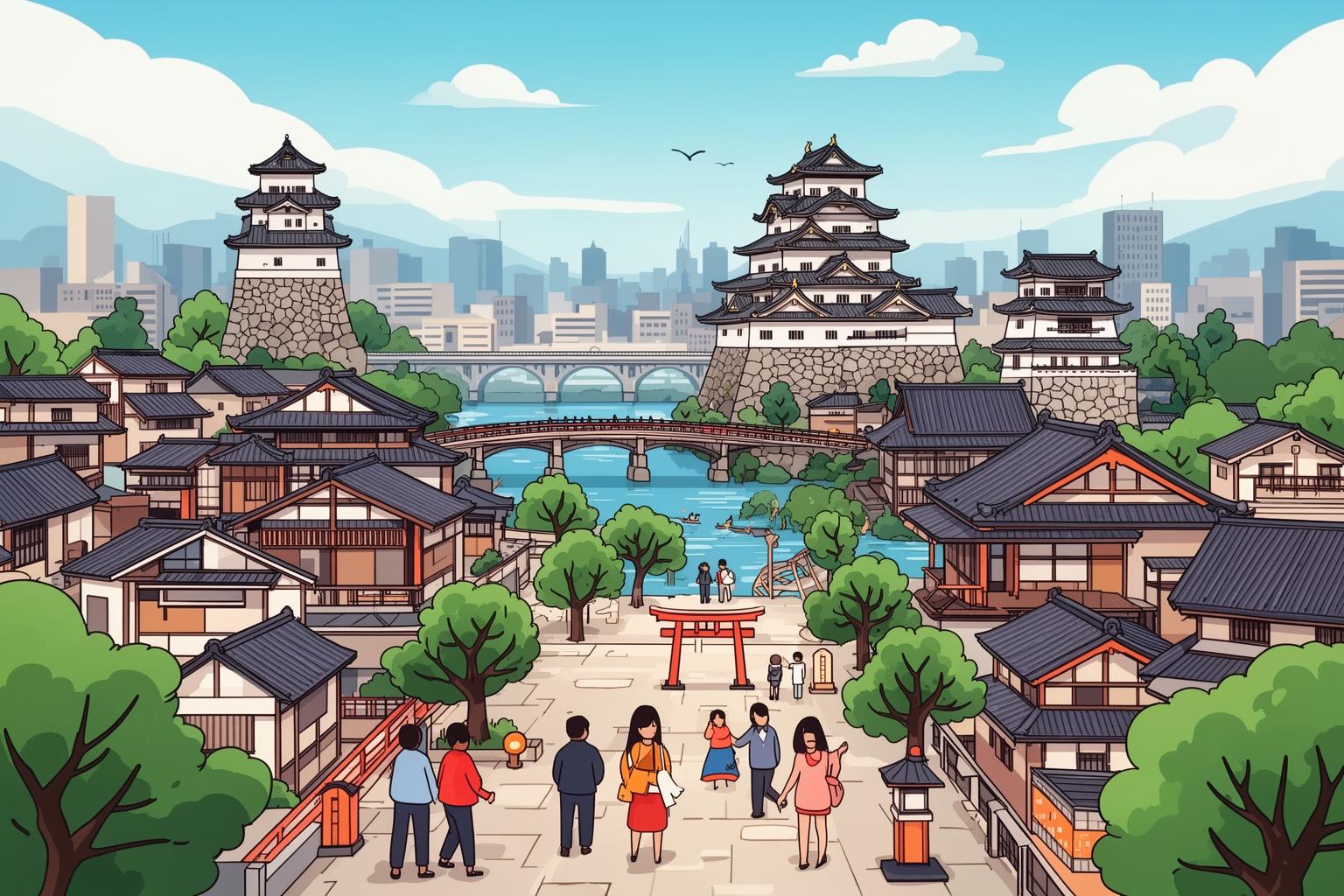
To truly understand why Osaka functions as it does, you need to look back in history. The city’s identity wasn’t forged by feudal lords demanding unquestioning loyalty; it was shaped by merchants bargaining over the price of rice. Osaka earned the nickname tenka no daidokoro, the “nation’s kitchen,” a vast commercial center where goods from across Japan were traded. This background fostered a distinctive civic character grounded in pragmatism, rationality, and a healthy skepticism of authority.
Time is Money, and So Is My Free Time
The spirit of the shonin (merchant) runs deeply through every Osakan. The merchant’s perspective is essentially practical. Time is money. Efficiency is crucial. A good deal is worth celebrating. This economic mindset is directly reflected in the modern workplace. Wasting time is seen as the ultimate sin. A meeting that could have been an email is considered a bad deal. Staying late just to appear busy is a waste of resources. The reasoning is straightforward: a well-rested, happy employee with a fulfilling personal life is more productive and efficient during working hours. The company gains better returns on its investment. This isn’t a sentimental, humanistic management philosophy; it’s cold, hard merchant-class logic. The emphasis is on output, not on labor for labor’s sake. This sharply contrasts with a more bureaucratic culture, where following procedure and showing loyalty through long hours can be regarded as virtues on their own. In Osaka, the virtue lies in completing the job well and efficiently, allowing everyone to get on with living their lives. This mindset also encourages a certain directness in communication that can surprise foreigners used to the layers of politeness found elsewhere in Japan. An Osaka boss is more likely to say, “That’s not working, try it this way,” instead of wrapping feedback in numerous layers of apologetic language. This is not rudeness; it’s efficiency. They are addressing the process, not the individual, and they expect you to recognize that difference.
The Primacy of Community Over Corporation
Another cornerstone of Osaka life is the strong loyalty people feel toward their local communities, which often outweighs any allegiance to a company. Your identity goes beyond being an employee of company X; it includes being a resident of the Tenma neighborhood, a frequent visitor to a certain shotengai (shopping arcade), and an active participant in the local Tenjin Matsuri festival. Life is experienced on a human scale. The most meaningful connections are often with the local butcher who remembers your usual order, the elderly woman who runs the corner fruit stand, and the neighbors you encounter at the local sento (public bath). While the corporation provides a paycheck, the community offers a sense of belonging. This is a vital distinction. When your primary social and emotional bonds exist outside the workplace, the job naturally takes on a more functional and less all-encompassing role in your life. It’s simply where you go to work. Your real life, your watashi life, happens elsewhere. This prevents the company from becoming the sole focus of social interactions, friendships, and self-worth — a situation that can foster unhealthy dependence and difficulty in disconnecting. In Osaka, people have a rich, pre-established social network to return to the moment they clock out. That is what they are working for: to support and enjoy that very life.
A Remote Professional’s Haven? Navigating the Landscape
For a foreigner, especially a remote professional, the culture of Koujitsu can be an incredible blessing, making Osaka a uniquely appealing place to build a life. However, it comes with its own set of rules and potential misunderstandings.
The Immense Upside: Genuine Separation and True Integration
The most apparent advantage is the ability to experience a true work-life separation that often feels like a distant dream in many other global cities. The cultural expectation is that you will disconnect, granting you both the permission and motivation to cultivate a full, vibrant life beyond your professional sphere. Since your colleagues aren’t your default social circle, you’re naturally encouraged to engage more deeply with your new surroundings. You’ll need to find hobbies, join a local pottery class, sign up for the community center’s language exchange, or become a regular at the neighborhood café. This is how authentic integration occurs. You begin to form relationships based on shared interests rather than shared projects. You become known as “Amelia, the Australian woman who makes charmingly wobbly pottery,” not simply “Amelia from marketing.” This path offers a much more genuine and rewarding experience of living in Japan. You transition from being an expat trapped in a corporate bubble to a resident, a neighbor, and part of the local community. The firm digital boundaries also mean you can work a US or European schedule remotely without constant overlap from a Japanese office routine, which is a significant benefit for digital nomads and international staff.
The Potential Pitfalls: Misreading the Boundaries
However, this clear separation can feel unsettling or even cold if you’re unprepared. If you come from a work culture where colleagues feel like family and office banter easily flows into after-hours messaging groups, the Osaka approach might seem distant. Osakans are famously friendly, but this operates within the Koujitsu framework. People are warm, open, and very humorous, but they may avoid discussing personal matters like marital issues or financial worries at work. The boundary goes both ways; they respect your privacy and expect the same respect for theirs. Pressing for overly personal connections in a professional setting can be seen as breaking this unspoken contract. It’s not about being unfriendly but about keeping boundaries intact. Moreover, the direct, no-nonsense communication style, driven by a focus on efficiency, can sometimes be mistaken for harshness. It’s important to recognize that feedback typically targets the task, not the individual. Learning to depersonalize constructive criticism and view it as a tool for improvement is essential to thriving in an Osaka workplace. Warmth and camaraderie will develop, but usually in social contexts, after work is done and the ‘public’ masks are removed.
Daily Snapshots: Seeing Koujitsu on the Streets of Osaka
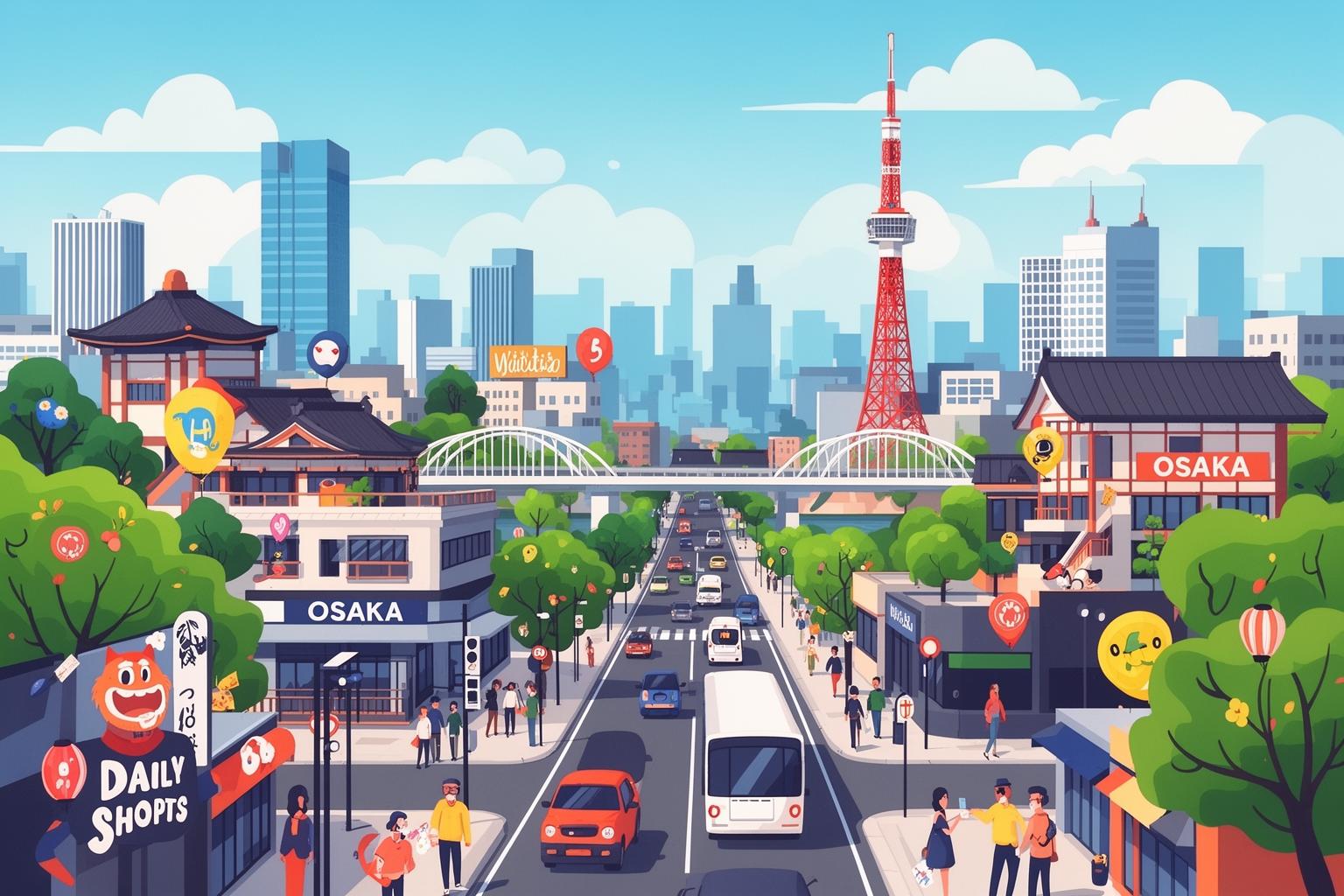
The principles of Koujitsu are not merely abstract theories; they are embedded in the daily rhythms of the city. You just need to know where to look.
The After-Work Ecosystem
Take a stroll through Namba or Tennoji after 6 PM on a weekday. The atmosphere is electric, yet it’s a vibrant and varied energy, not a monotonous sea of suits. Sure, you’ll spot groups of colleagues at an izakaya, but they’re usually gathered for a specific reason—a project celebration, a farewell party—and the mood is one of relaxation, not obligation. Look more closely, and you’ll notice so much more. You’ll see people in workout gear heading to a bouldering gym. You’ll see women dressed in elegant kimonos en route to a tea ceremony class. You’ll see a father and son, still in their work and school uniforms, queuing up for a quick bowl of ramen before going home. You’ll see groups of friends, clearly not coworkers, laughing uproariously at a standing bar over cheap beer and skewers. The city’s ‘third places’ are alive and well. These are the spaces that are neither work nor home, filled with people following their passions. This is what draws people out of the office. Life doesn’t pause until the weekend; it begins the moment the workday ends.
The Protected Kingdom of the Weekend
When the weekend arrives, it becomes a fiercely guarded realm. Work has no place here. Your work inbox is completely silent. Instead, the city’s parks and transit hubs pulse with people determined to live fully. Families flock to sprawling parks like Expo ’70 Commemorative Park or Nagai Park, armed with elaborate bentos and pop-up tents. Groups of young people embark on day trips to the mountains of Nara, the beaches of Wakayama, or the port city of Kobe. Home centers brim with people taking on ambitious DIY projects. The covered shotengai arcades, the neighborhoods’ lifeblood, bustle with shoppers making their weekly rounds, chatting with vendors by name. There’s a strong sense that these two days are earned, and no moment is wasted on work-related concerns. This is the ultimate reward for the efficiency and focus of the workweek. It’s the payoff. It’s the whole purpose.
Living, Not Just Working, in the Nation’s Kitchen
Returning to the ghost of the overworked salaryman, it becomes clear why he finds no place to rest in Osaka. This city is too pragmatic, too vibrant, too busy living to be haunted by the specter of an unlived life. The philosophy of Koujitsu is Osaka’s greatest gift to those who choose to call it home. It acts as a cultural immune system, shielding against the intrusion of work into every aspect of your life. It’s a simple yet radical idea: your time belongs to you, your identity is more than your job title, and the purpose of work is to create a life you love. This mindset doesn’t stem from laziness or a lack of ambition; it arises from the merchant’s ultimate wisdom—the understanding of the true value of your assets. In Osaka, the most valuable asset you hold is your own life. For any foreigner struggling with burnout, seeking a more balanced existence, or simply hoping to find a place where the end of the workday is genuinely recognized and respected, this city offers a compelling, practical, and profoundly human alternative. It’s a place where you can finally stop living to work and truly start working to live.