
You see the pictures before you even arrive. Brightly lit stalls, sizzling griddles, and lines of eager tourists clutching little paper boats filled with steaming, sauce-drenched spheres. This is Dotonbori. This is the postcard image of Osaka, a city seemingly powered by takoyaki, the famous grilled octopus balls that have become its most recognizable culinary export. It’s a fantastic sight, a whirlwind of energy and flavor that defines the city’s vibrant, unapologetic public face. But after living here, after stepping away from the neon-soaked canals and into the quiet residential streets of neighborhoods like Tenma or Nakazakicho, you start to ask a fundamental question. Is this dazzling street performance the whole story? Is Osaka’s deep, abiding love for flour-based food—a category known collectively and affectionately as konamon—really just about quick, cheap eats consumed on the go? The answer, you soon discover, is a profound and resounding no. The street stall is just the opening act. The real drama, the heart of this culture, unfolds behind closed doors, in the kitchens and living rooms of ordinary Osaka homes. Here, konamon is not a snack; it’s a language, a ritual, and the very architecture of social life. It’s the tool used to build friendships, the canvas for family traditions, and the truest expression of the city’s pragmatic, communal soul. Forget the tourist maps for a moment. To truly understand what makes an Osakan tick, you don’t need to find the best takoyaki stand. You need to get invited to a takoyaki party. This is where the city’s identity is mixed, grilled, and shared, one floury, delicious, and beautifully imperfect bite at a time.
While the city’s soul is found in its home kitchens, its global appeal is also reflected in the ongoing luxury hotel boom driven by international tourism.
The Konamon Trinity: More Than Just a Meal
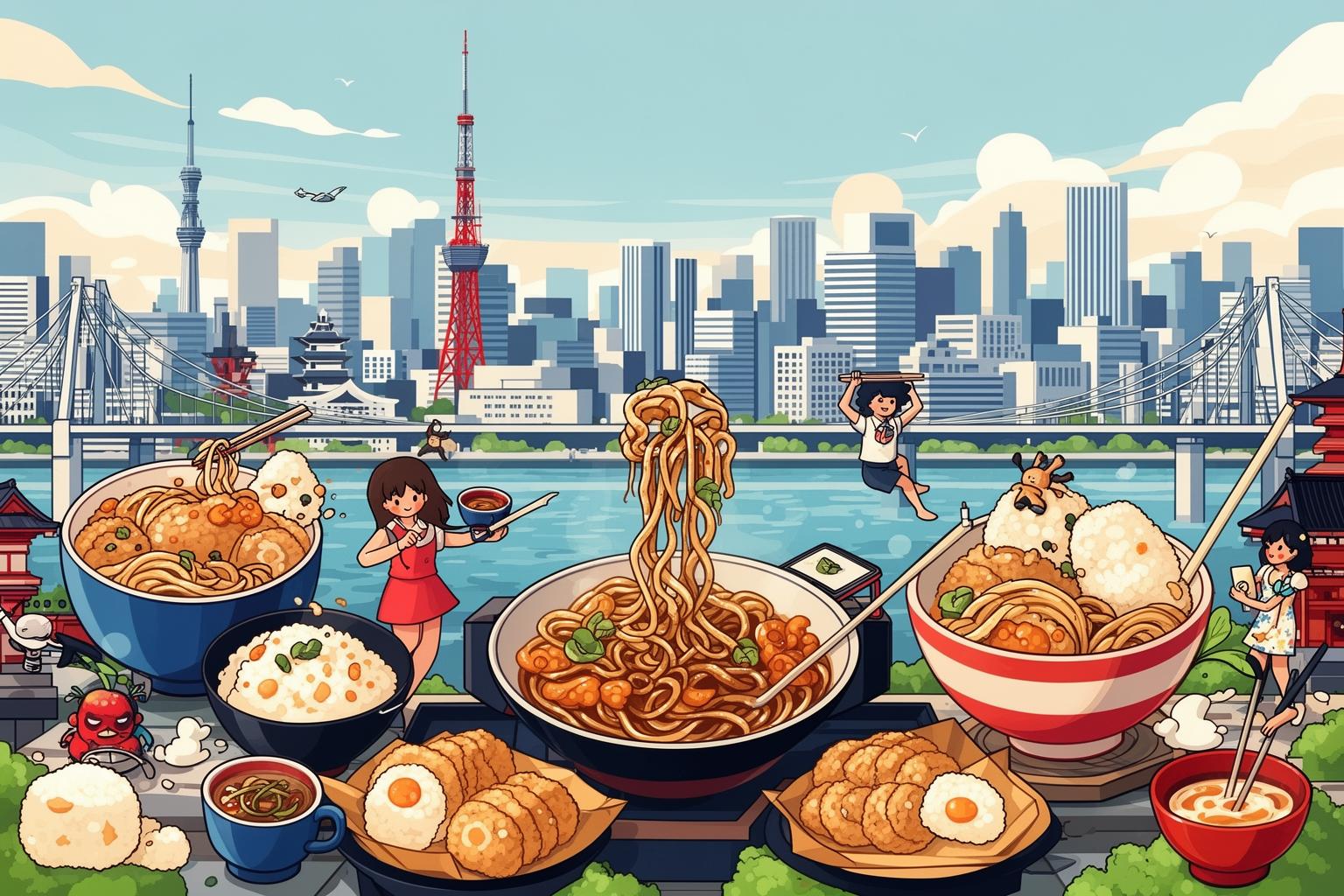
In the vast cathedral of Osaka home cooking, a sacred trinity reigns: takoyaki, okonomiyaki, and yakisoba. While all share a common flour-based origin, each fulfills a distinct role, contributing uniquely to the flow of daily life and social interaction. They are not simply different dishes; they represent varied social technologies, each crafted to nurture a specific form of human connection. Treating them as interchangeable overlooks the subtle yet vital nuances of Osaka’s culture. They embody a spectrum of social engagement—from the lively, collaborative energy of a party to the quiet, personal comfort of an everyday meal. Understanding this trinity is the key to unlocking the city’s culinary code.
Takoyaki: The Social Spark
In Tokyo, gatherings might center around curated playlists, refined cocktails, or a polite hot pot where ingredients are added with care. In Osaka, the focus often falls on a sizzling cast-iron griddle punctuated by hemispherical molds. This is the revered ground of the Tako-Pa, the takoyaki party, the cornerstone of casual socializing. When first invited, you may expect the host to serve perfectly shaped, ready-to-eat octopus balls. This is a common misconception. A Tako-Pa is not a simple dinner service; it is a shared, hands-on, often chaotic creative endeavor. The host provides the essentials: the grill, the batter—usually from a closely guarded family recipe or a preferred pre-made mix—and the key ingredient, octopus. Guests contribute to the joyful chaos, arriving with bags of alternative fillings. Classics appear fast: melting cheese, mochi chunks, spicy kimchi, sausages, sweet corn. Suddenly, takoyaki becomes a playground for improvisation.
Participation is unspoken but compulsory. Standing aside and waiting to be served is a social misstep. You’re expected to grab a pair of long bamboo skewers and stake out your section of the grill. This is where the magic unfolds. The process levels the social playing field: job titles, age, or status all dissolve in the heat of flipping tiny, molten spheres at just the right moment. There’s a tangible rhythm—pour, sizzle, scrape, turn. A seasoned pro moves with fluid, wrist-snap grace, producing flawless globes effortlessly. A novice fumbles, crafting lopsided “bombs” affectionately. In this shared challenge, barriers fall. Conversations flow, energized by the grill’s sizzle and friendly competition. Debates ignite over technique: who’s the best flipper? When to turn? Was that one overstuffed? This is not conflict—it’s intimacy. It’s loud, messy, and gloriously egalitarian. The company president and new intern alike become aspiring takoyaki artisans, equals united by the quest for perfection. This interactive, chaotic ritual perfectly mirrors Osaka’s more straightforward, less hierarchical social vibe. It is a social catalyst masquerading as a snack—a way to turn strangers into friends through a shared plate of delicious, self-made blunders.
Okonomiyaki: The Palette of Personal Identity
If takoyaki is the communal ceremony, okonomiyaki is the assertion of personal and familial identity. The name itself embodies its philosophy: okonomi meaning “as you like it,” and yaki meaning “grilled.” It’s the ultimate improvisational dish, a savory pancake that doubles as a practical kitchen solution. While Osaka restaurants offer polished versions, the true soul of okonomiyaki lives in home kitchens, solving the universal leftover problem. Half a bag of bean sprouts, the last pork belly slices, weekend squid, wilting cabbage—all find purpose mixed into the batter. This practice reflects Osaka’s core value of shimatsu: a deep respect for frugality and an aversion to waste. It’s not about being cheap; it’s about resourcefulness, a trait forged over centuries in this merchant city.
The regional rivalry between Osaka and Hiroshima styles is well known across Japan. Hiroshima’s version is a carefully layered construction—batter, cabbage, meat, noodles, and egg cooked separately, then stacked. It’s architectural. Osaka’s style is a joyous jumble. Cabbage, meat, tenkasu (crispy tempura bits), and pickled ginger are mixed directly into the batter before hitting the hotplate. It’s a vibrant mess, reflecting the city’s energetic, all-in-one-place character. No ingredient reigns above another; all combine into a harmonious whole. This approach is friendlier for home cooks and aligns with Osaka’s lively spirit. The family dynamic weaves through the process, as children learn early to mix and flip. Each family’s subtle variations—a secret dashi powder, a dash of soy sauce, preferred cabbage-to-flour ratios, or particular mayonnaise decoration—create foundational flavors of home. Preparing okonomiyaki on a Friday night is a quiet ritual marking the week’s end, transforming humble fridge odds and ends into a meal both personal and deeply comforting.
Yakisoba: The Reliable Workhorse
Yakisoba, fried noodles, rounds out the konamon trinity. While a festival and street food staple, its true role is as Osaka’s dependable everyday workhorse. It answers the question, “What’s for dinner on a busy Tuesday?” Quick, filling, and embodying the same “use what you have” mindset as okonomiyaki, it’s tossed with any mix of meat and vegetables, then stir-fried with noodles and its signature sweet-savory sauce. Yakisoba exemplifies Osaka’s pragmatic spirit, delivering bold flavor and satisfaction with minimal fuss and cost. Its versatility is a core strength—it can be the main dish, a side, or a bento box filling fueling students or office workers through the day. It’s like a steady friend—always dependable, never demanding.
Yakisoba’s brilliance also shines in its synergy with its konamon counterparts. This fusion showcases Osaka’s love for abundance and value. Enter modan-yaki (modern-yaki), a clever dish where a full serving of yakisoba is cooked then wrapped in an okonomiyaki pancake. It’s a hefty, carb-rich indulgence that defies the delicacy favored elsewhere but perfectly suits an Osaka appetite seeking fullness and flavor. Another innovation is soba-meshi, from nearby Kobe, where yakisoba noodles are chopped and stir-fried with rice and sauce. This textural marvel exemplifies resourceful invention. Such hybrid dishes are not mere novelties; they’re proof of a culinary culture that constantly innovates to craft meals that are more satisfying, filling, and delicious from the same cherished ingredients. Yakisoba is the humble base—the trusty foundation upon which Osaka’s bold konamon dreams are built.
The Konamon Kitchen: An Osaka Household’s Arsenal
Step into a typical Osaka apartment, and you’ll find a kitchen stocked with a basic set of tools: a rice cooker, a microwave, an electric kettle. But if you look more closely, you’ll almost certainly discover the appliances and ingredients that make up the dedicated toolkit of the konamon enthusiast. This isn’t specialized gourmet gear; it’s the everyday equipment for a culinary tradition deeply woven into the fabric of home life. The items in these cupboards and pantries tell a story about priorities, identity, and what it truly means to establish a home in Osaka. For many, these are not optional extras; they are as essential as the pots and pans themselves.
The Essential Appliance: The Takoyaki Maker
Outside Osaka, a takoyaki maker might be viewed as a quirky novelty, something bought on a fun trip and used once before being tucked away in a closet. In Osaka, however, it is a non-negotiable, standard household appliance. Its presence is as natural as a refrigerator. People receive them as wedding gifts, a symbolic blessing for a future filled with joyful communal gatherings. University students moving into their first small, one-room apartment will find room for a compact, inexpensive model in their limited kitchenette. It’s a rite of passage, a declaration that you are now officially running an Osaka household. To admit to an Osaka friend that you don’t own one is to invite looks of genuine shock and pity, as if you’d confessed to not owning a single pair of chopsticks. The question isn’t if you have one, but often which kind you have. There are simple electric hotplates, perfect for a casual Tako-Pa with a few friends. Then there are more serious, gas-powered models connected to a portable butane canister, prized by aficionados for their ability to reach a higher, more consistent heat, producing a crispier outer shell and a perfectly molten interior. Some families even own multiple plates with different-sized holes or combination plates that can cook both takoyaki and okonomiyaki. This isn’t just about cooking; it’s a commitment to a lifestyle. The takoyaki maker promises future parties, symbolizes hospitality, and serves as a tangible link to the city’s most beloved social ritual. In Tokyo, owning one makes you an intriguing host; in Osaka, not owning one makes you a cultural outsider.
The Pantry Essentials: Flour, Sauce, and Dashi
A walk down the flour aisle in an Osaka supermarket is an education in itself. You won’t find just a single bag of all-purpose flour. Instead, you’ll see a dazzling—and to newcomers, bewildering—array of specialized konamon mixes. There’s takoyaki flour, okonomiyaki flour, and sometimes even negiyaki (a thinner, scallion-focused pancake) flour. These aren’t mere marketing ploys. Each blend is carefully crafted by competing brands, containing a precise mix of flour, dashi (bonito and kelp stock) powder, and often grated yamatoimo (mountain yam) powder. The yamatoimo is essential, lending a distinctive fluffy yet moist texture to the final product that plain flour and water cannot replicate. The seriousness with which people approach this base is profound. Families pledge fierce loyalty to a particular brand of okonomiyaki mix, insisting it produces superior flavor and texture.
Then there’s the sauce. The sauce section is equally extensive, dominated by giants like Otafuku, with its sweet, fruity notes, as well as regional favorites like Doro Sauce, which offers a spicier, more complex kick. The choice of sauce is a deeply personal statement. It defines the final flavor profile of a family’s konamon, with many having a specific brand known simply as “our sauce.” But the flavor profile doesn’t stop there. An entire ecosystem of supporting ingredients is essential. Tenkasu, crunchy scraps of tempura batter, aren’t optional garnish; they’re vital to the batter, creating pockets of air and richer flavor. Aonori (green seaweed powder) and katsuobushi (dried, shaved bonito flakes) are sprinkled on top, adding umami and a briny aroma. And beni shoga (red pickled ginger) provides a sharp, acidic contrast that cuts through the richness of the batter and sauce. To an Osakan, takoyaki without these elements is incomplete—like a sentence missing its punctuation. These ingredients aren’t exotic; they are the salt, pepper, and olive oil of the Osaka pantry, the fundamental building blocks of the flavors of home.
Konamon as a Mindset: Unpacking the ‘Osaka-rashisa’

To truly appreciate the significance of konamon, you must look beyond just the ingredients and cooking tools. You need to understand that this cuisine represents a philosophy, a concrete representation of Osaka-rashisa—the core of what it means to be Osakan. It’s a mindset forged by history, economics, and a distinctive way of socializing. When an Osakan proudly proclaims, “Kona wa bunka ya!” (“Flour is culture!”), it’s no exaggeration. It is a sincere declaration of identity, linking them to the city’s history and shaping its present. This simple blend of flour, water, and dashi serves as a vessel for the city’s most treasured values: pragmatism, community, and a straightforward, unpretentious approach to life and joy.
‘Kona wa Bunka ya!’: Flour is Culture!
This proud statement has deep historical origins. Osaka has long been known as Tenka no Daidokoro, the “Nation’s Kitchen.” During the Edo period, it was the center of Japan’s rice trade, a city of merchants and warehouses that supplied food across the country. While the samurai and aristocrats dealt in rice, Osaka’s growing merchant and working classes based their sustenance on something more accessible and affordable: flour. Wheat and buckwheat were staples that stretched further and could be turned into satisfying dishes like udon noodles and eventually the grilled specialties enjoyed today. This history gave konamon a distinct populist pride. It was and remains the food of the people, not the elite. This identity deepened in the post-war period. Amid scarcity, okonomiyaki and takoyaki were essential. They were inexpensive, filling, and could be made from whatever limited ingredients were at hand. They symbolized resilience—creating something wonderful out of almost nothing. This history remains alive, fueling a strong, almost defiant pride in these humble dishes. It’s a culinary legacy born not from imperial courts or tea ceremonies, but from the practical needs of a thriving commercial city. This pride also shows itself in a playful yet serious rivalry with other regions. An Osakan will zealously defend the superiority of their okonomiyaki over the Hiroshima style or mock how takoyaki is made in Tokyo. This is about more than food; it’s about protecting a cultural heritage.
The Economics of Happiness: Cost Performance and Pragmatism
One of the first things you notice about the Osaka mindset is its focus on “cost performance.” It’s not about being cheap, but about being savvy—demanding and valuing real worth for your money. This principle influences everything from buying electronics to closing business deals, and finds its purest culinary expression in konamon. These dishes exemplify economic efficiency. With a bag of flour, some cabbage, eggs, and scraps of meat, you can feed a whole family a delicious, hearty, and thoroughly satisfying meal. This pragmatism brings great satisfaction. While beautifully plated, tiny portions at upscale Tokyo restaurants might impress for their artistry, many Osakans would respond with a skeptical frown, silently asking: “But will it satisfy my hunger? Is it worth the price?” Konamon always answers these questions with a confident “yes.” It is unapologetically generous. This appreciation for value explains cultural quirks that surprise outsiders, such as the common practice of eating okonomiyaki or yakisoba alongside a bowl of rice. The “carbs-on-carbs” combination shocks many from Tokyo and abroad, yet it perfectly fits Osaka’s cost-performance logic. The konamon serves as the okazu, the flavorful main dish, while the rice ensures complete satiety. It’s a meal designed for maximum energy and satisfaction at minimal expense. This isn’t simplicity for lack of refinement; it’s a different kind of sophistication—one where intelligence is shown by resourcefulness, and happiness is a full belly without a stretched budget.
Communication, Not Cuisine: The Social Glue
Ultimately, konamon’s greatest role in Osaka isn’t nutritional but social. The food itself is secondary to the shared experience of making it. A Tako-Pa isn’t just a meal; it’s a social event. The entire process encourages breaking down barriers and fostering a direct, informal way of interacting. You can’t be formal while trying to prevent your octopus balls from burning. You need to talk, coordinate, and laugh off your mistakes. There’s a natural theatricality—the dramatic flip, the artistic drizzle of mayonnaise and sauce. It invites a lively, cheerful chaos, the opposite of the quiet, reserved dining etiquette valued elsewhere in Japan. Contrast the atmosphere of a takoyaki party with the solemn reverence of a luxury sushi counter in Ginza or the meticulous calm of a Kyoto kaiseki meal. Those are moments of passive appreciation. Konamon is about active involvement. It’s loud, interactive, and sometimes messy. It perfectly reflects the communication style of Osaka’s people, known for their directness, openness, and expressiveness compared to Tokyoites. Konamon acts as the social glue that connects people, a collective activity that fosters easy camaraderie. It’s the ideal icebreaker because the focus is on the shared task rather than forced conversation. In essence, it’s a delicious excuse to be together, create something as a group, and enjoy the results of that slightly chaotic, perfectly imperfect collaboration.
Common Misunderstandings and How to Navigate Them
For a foreigner living in Osaka, konamon offers one of the most accessible and enjoyable ways to connect with the local culture. However, its widespread presence can sometimes lead to key misunderstandings. Viewing it merely as street food or missing its social context means overlooking its deeper significance. To truly appreciate konamon, one must understand not only the food itself but also the unwritten cultural norms and assumptions that surround it. Getting these nuances right can be the difference between feeling like a temporary visitor and becoming a genuine member of the community.
Misconception: It’s Just “Cheap Junk Food”
Due to its low price and association with street stalls and lively parties, outsiders often dismiss konamon as simple, unhealthy “junk food.” This overlooks the subtle craftsmanship and nutritional thought behind these dishes. Take okonomiyaki, for example. Essentially, it’s a pancake packed with a large amount of shredded cabbage, providing fiber and vitamins. Depending on the ingredients, it can also include protein from pork, squid, or egg, making it a surprisingly balanced meal in one dish. Serious practitioners place great importance on ingredient quality. The batter isn’t just flour and water; the addition of dashi and yamatoimo powder shows a dedication to achieving complex flavors and a pleasing texture. Mastering the right batter consistency, the correct griddle temperature, and the perfect moment to flip a heavy cabbage-filled pancake without breaking it requires real skill. Even drizzling mayonnaise in a neat lattice pattern is a carefully crafted aesthetic touch. From my perspective as someone from China, konamon shares a spiritual connection with staple foods like jianbing (savory crepes) or scallion pancakes. These are far from junk food in China; instead, they are beloved everyday staples enjoyed across society. To label konamon as junk fundamentally misrepresents its role as a cornerstone of the Osaka diet—it is essential food, not fast food.
Misconception: Rice Is Unimportant in Osaka
This is perhaps the most common and surprising misunderstanding, not only among foreigners but even some Japanese. Watching locals eagerly eat flour-based pancakes and noodles, many assume rice is less important in Osaka’s cuisine. Nothing could be further from the truth. The existence of okonomiyaki teishoku (set meals) and yakisoba teishoku only confirms rice’s crucial role. In Osaka, konamon is often served as the okazu—the flavorful main dish meant to be eaten with rice. Rice acts as the neutral, starchy foundation of the meal. The rich, sauce-heavy flavors of okonomiyaki and yakisoba perfectly complement a bowl of plain white rice. This combination reveals much about the Osaka palate—an ingrained craving for meals that are filling and satisfying. It’s a celebration of abundance. While it might seem like an excessive carb overload to the Tokyo taste, for an Osakan, it’s the perfect balance of flavors and textures, delivering the energy needed for a busy day. Understanding and embracing the “konamon with rice” principle is essential to grasping the local culinary mindset. When you see it, don’t be surprised; accept it as a fundamental part of Osaka’s food culture.
Navigating Your First ‘Tako-Pa’ Invitation
Being invited to a takoyaki party marks an important social milestone—it means you’re welcomed into an inner circle. To navigate this experience smoothly, a few tips can help you show cultural understanding. First, think about what to bring. Drinks are always appreciated, but bringing a potential filling is a savvy move, demonstrating your grasp of the collaborative and improvisational spirit of the event. Get creative: pre-cooked shrimp, avocado, various cheeses, spicy cod roe (mentaiko), or even something from your own country that might work well. Such a contribution makes you an active participant from the moment you arrive. Second, once grilling starts, don’t stay on the sidelines. The host appreciates help and doesn’t want to cook alone. Show interest, ask for a demonstration, then grab skewers and give it a go yourself. Your first attempts might be clumsy—you’ll break some pieces or fumble flips—but that’s perfectly fine. In fact, trying is better than not trying at all. The effort signals your willingness to engage and be part of the lively, hands-on process. Finally, embrace the atmosphere fully. Compliment the host’s setup, admire the resident expert’s skills, join in lighthearted debates, and laugh at your own mistakes. A Tako-Pa is about shared experience. By participating actively and enthusiastically, you’re not just eating food; you’re helping create the very sense of community and camaraderie that make the event—and the city—so special.
The Evolution of Konamon: Tradition Meets Modernity
While konamon is deeply rooted in history and tradition, it is by no means a fixed culture. Much like Osaka itself, it is continuously evolving, adapting, and discovering new ways to express its identity. The city’s chefs and home cooks refuse to merely replicate the past; they actively innovate, ensuring their cherished flour-based dishes stay relevant and exciting for future generations. This combination of profound respect for tradition and a daring willingness to experiment is what keeps konamon culture vibrant and integral to the city’s character.
Gourmet Konamon and Diversification
Although konamon culture thrives most intensely in homes and neighborhood mom-and-pop shops, there is a rising trend of sophisticated, gourmet interpretations. In upscale restaurants situated in areas like Kitashinchi or Fukushima, chefs are elevating these simple dishes to new heights. You might encounter okonomiyaki crafted with premium wagyu beef, adorned with foie gras sauce or drizzled with black truffle oil. Takoyaki vendors experiment with fillings inspired by global cuisines, such as gorgonzola with honey or shrimp in a rich, garlic-infused oil. These innovations are not a rejection of tradition but rather a celebration of its versatility. They prove that the core principles of okonomiyaki and takoyaki are sturdy enough to serve as a foundation for culinary creativity. This diversification is also visible at the grassroots level, with social media flooded with home cooks sharing their latest Tako-Pa experiments, from dessert takoyaki filled with chocolate and fruit to fusion okonomiyaki featuring Thai or Mexican flavors. This ongoing experimentation confirms konamon is not a relic; it is a vibrant, living facet of Osaka’s contemporary culture, as dynamic and inventive as the city itself.
The ‘Konamon’ Diaspora: How Osaka’s Soul Food Spreads
Konamon is more than mere food; it’s a portable piece of home, a cultural anchor for Osakans wherever they go. When people from Osaka relocate to Tokyo for work or move overseas, one of the first things they seek is the taste of home. This has created a “konamon diaspora,” with takoyaki and okonomiyaki shops serving as unofficial cultural embassies throughout Japan and beyond. Often run by individuals with strong Osaka roots, these establishments function both as restaurants and gathering spots for fellow expatriates, providing a place to converse in the cherished Kansai dialect and reconnect with their identity. The takoyaki maker is essential luggage for many Osakans living away. It’s a lifeline, a remedy for homesickness, and a way to share their culture with new friends. Hosting a Tako-Pa in a Tokyo apartment is more than preparing a meal; it’s exporting a social ritual, showcasing an alternative way to gather, and sharing the warm, communal spirit of their hometown. The spread of konamon is a testament to its power—a power to foster a sense of place and belonging, one delicious, flour-based bite at a time, no matter how far from home.
To live in Osaka is to recognize that flour and water, in skilled hands, become more than just food. They become the medium of community. Konamon is the city’s operating system, the code running its social programs. It’s heard in the sizzle of the hotplate at weekend parties, felt in the comforting heft of an okonomiyaki on a weeknight, and seen in the resourcefulness of transforming leftovers into a feast. It answers countless questions: What should we do tonight? How do we welcome the new neighbor? What can we make that’s affordable, simple, and delicious? To dismiss it as mere street food is to gaze at Dotonbori’s bright lights and miss the warm glow from countless apartment windows just blocks away. Behind each window lies a story of connection, ingenuity, and a profound love for a culture built on the humble foundation of flour. To truly understand this city, one must look beyond the postcard. They must listen for the rhythmic clatter of skewers on iron, the laughter sparked by a perfectly flipped takoyaki, and the contented silence that follows a satisfying meal. That is the sound of Osaka’s heart beating—a rhythm defined by the simple, profound, and enduring power of its konamon culture.