

You see her before you really register her. A flash of gold and brown, a shock ofパーマ (paama), a voice that cuts through the market chatter like a warm knife. She’s the Osaka “obachan,” a figure so iconic she borders on caricature. In the mind of a newcomer, especially one from the hushed avenues of Tokyo, she is a cultural landmark, as recognizable as the Glico Running Man or Tsutenkaku Tower. She’s the woman in the leopard print blouse, pressing a small, hard candy—an ame-chan—into your hand with a grin, speaking a dialect that tumbles out too fast to follow but feels, somehow, like a welcome. This image is not wrong, but it is dangerously incomplete. It’s the cover of a book, not the story inside. To stop at the stereotype is to miss the point entirely. To live in Osaka and not understand her role is to be a tourist in your own neighborhood. These women are not just a colorful local flavor; they are the city’s load-bearing walls. They are the social glue, the informal government, the keepers of a communal spirit that feels increasingly rare in modern Japan. They are the living, breathing answer to the question of why Osaka feels so fundamentally different. It’s not just the food or the dialect; it’s the invisible social infrastructure that they maintain with every loud greeting, every piece of unsolicited advice, and every shared laugh on a street corner. This is an attempt to look past the print and see the pattern, to understand the powerful, essential role of Osaka’s middle-aged women in shaping the daily rhythm of this vibrant, unapologetic city.
This social infrastructure is deeply intertwined with the city’s unique merchant spirit, which influences everything from daily interactions to economic attitudes.
Deconstructing the “Obachan”: More Than Just a Word

The term “obachan” alone encompasses a whole universe of meaning. In standard Japanese, it is a fairly neutral word referring to a middle-aged woman or aunt. But in Osaka, it represents a title, a role, and a badge of honor. It denotes a woman who has graduated into a certain social authority, one who is no longer confined by youthful expectations of modesty and restraint. She has earned her voice and fully intends to use it. To understand this figure, one must break down the sensory overload she often presents into its essential elements: the sound, the appearance, and the gesture.
The Sound of Osaka: Voice and Volume
In Tokyo, public spaces are often characterized by a carefully maintained quiet. Conversations on trains are hushed, and social interactions adhere to a soft-spoken decorum. The first thing that stands out in Osaka is the volume. The leading voices in this auditory scene are the obachan. Their voices carry far. They don’t simply speak to the person beside them; they broadcast. A conversation can stretch across the length of a shotengai shopping arcade, a running dialogue between a shopkeeper and a customer already twenty paces away. This isn’t rudeness or thoughtlessness. It is a different philosophy of public space—one that believes the distance between people should be bridged, not maintained as an empty barrier. Their directness serves as a tool for efficiency and connection. Questions are posed without preamble. Opinions are offered openly. This verbal bluntness can be surprising. A remark about your groceries—“Ah, you got the good daikon today!”—or your child’s clothing—“Is he warm enough in that?”—is not criticism but an invitation. It’s an act of noticing, acknowledging shared existence in a bustling urban environment. It transforms strangers into potential participants in a city-wide conversation. This is the sound of a community that is actively, audibly connected with itself.
The Visual Language: Beyond Leopard Print
Yes, leopard print is part of the picture. So are bright purples, sparkling sequins, and boldly styled hair. But to dismiss this as merely garish is to miss the deeper meaning. The fashion of the Osaka obachan is a statement of presence. It is a confident refusal to blend into the background, sharply contrasting with the subdued palettes of beige, navy, and grey common elsewhere. This style is rooted in the city’s history as a hub of merchants and performers. It’s a bit of theatricality for the everyday stage. The aim isn’t to conform to a high-fashion ideal but to be visible, memorable, and unapologetically oneself. Look more closely, and you’ll notice the pragmatism woven into the flamboyance. The shoes are comfortable, designed for walking and standing. The handbags are large enough to carry the day’s shopping, a thermos of tea, and a stash of candies. The bicycle, often a sturdy, electric-assist mamachari, is customized for practicality with baskets front and back. This isn’t fashion for fashion’s sake; it’s a uniform for managing household and community duties. It declares that one can be both practical and fabulous, showing that daily responsibilities don’t require sacrificing personal style. It’s a vibrant, visual rejection of the notion that women of a certain age should become invisible.
Ame-chan Culture: The Currency of Connection
If you’ve spent any time in Osaka, you’ve probably been offered candy by a woman you’ve never met. This is ame-chan, the city’s most fundamental social exchange. The small, cellophane-wrapped candy is a pocket-sized peace offering, an instant icebreaker, a gesture that disarms and connects. It’s given to a fussy child on the bus, a cashier at the supermarket, a fellow patient in a clinic’s waiting room, or a lost-looking foreigner. Gifting ame-chan carries deep social meaning. It says, “I see you.” It says, “We are sharing this space, this moment.” It says, “Here is a small kindness, with no strings attached.” In an increasingly transactional and digital world, ame-chan is a fiercely analog gesture of goodwill. It costs almost nothing yet buys immense social capital. It opens the door to conversation, eases awkward moments, and reinforces an underlying assumption of mutual friendliness. Refusing ame-chan is not a serious insult, but accepting it with a smile and a slight bow is to join the city’s most basic ritual of community building. It is a tangible expression of the belief that strangers are just neighbors you haven’t shared candy with yet.
The Neighborhood Network: Unseen Social Infrastructure
The most crucial work of the Osaka obachan takes place away from grand narratives, in the quiet, everyday upkeep of the neighborhood. They create a decentralized, highly effective network of information and support that operates like a pre-digital social media feed, fueled by conversation and observation. This network is the main reason why many Osaka neighborhoods, even in the city’s core, maintain a small-town atmosphere.
The Keepers of Local Knowledge
Before turning to Google Maps or restaurant review apps, try asking the woman watering plants down the street. The obachan hold hyper-local, practical knowledge that no algorithm can match. They know which fishmonger had the best catch this morning and may even give you a little extra. They know which fruit stand offers the sweetest melons and which butcher’s korokke are worth making a detour for. This knowledge goes beyond commerce. They understand which local clinics are best suited for a child’s cold versus an elderly parent’s chronic condition. They know the intricate rules of garbage and recycling separation by heart and will kindly correct you if you put out your can on the wrong day. This information isn’t kept to themselves; it’s shared freely. A chance meeting at the market turns into an intelligence briefing on the day’s best deals. A chat while sweeping the sidewalk becomes a consultation on where to get a key copied. This constant flow of practical information strengthens community bonds and supports local businesses, creating a cycle of mutual reliance that maintains the health of the neighborhood ecosystem.
The Eyes on the Street: Informal Neighborhood Watch
The idea of “eyes on the street,” central to urban theorist Jane Jacobs’ vision of a safe city, is a lived reality in Osaka’s neighborhoods, and the obachan are its chief practitioners. Their daily activities—shopping, socializing, tending storefronts or gardens—keep them active in public spaces. From their spots on benches, in shops, and at front windows, they form a passive yet highly effective surveillance network. This isn’t about being nosy or intrusive; it’s about ambient awareness. They notice unfamiliar cars parked too long. They observe if an elderly neighbor hasn’t opened their shutters by mid-morning. They recognize strangers’ children and ask if they’re lost. Their presence creates a strong sense of accountability and safety. Potential troublemakers know they are being watched. Children walking home from school are under collective watch. New residents are quickly spotted and often welcomed into the community. This informal system offers a level of security and social cohesion that official patrols or cameras cannot provide. It’s a human-powered network rooted in familiarity and a shared responsibility for collective well-being.
Mediators and Connectors
Within this network, obachan frequently act as social facilitators. They serve as hubs linking different parts of the community. They introduce new families to established ones, making connections based on shared interests or children’s ages. “You have a five-year-old? Tanaka-san three doors down does, too; you should meet!” They mediate minor disputes before they escalate, using their social influence and good judgment to broker compromises on issues like noise, parking, or property lines. They organize local events, encouraging participation in neighborhood festivals (matsuri), cleanup days, or fire drills. They perform a significant amount of unpaid, often invisible emotional and organizational labor that keeps the community running smoothly. They are the living equivalent of a community center, providing connections and resolving frictions that naturally arise from close living quarters.
Economic Engine of the Everyday: The Power of Local Commerce
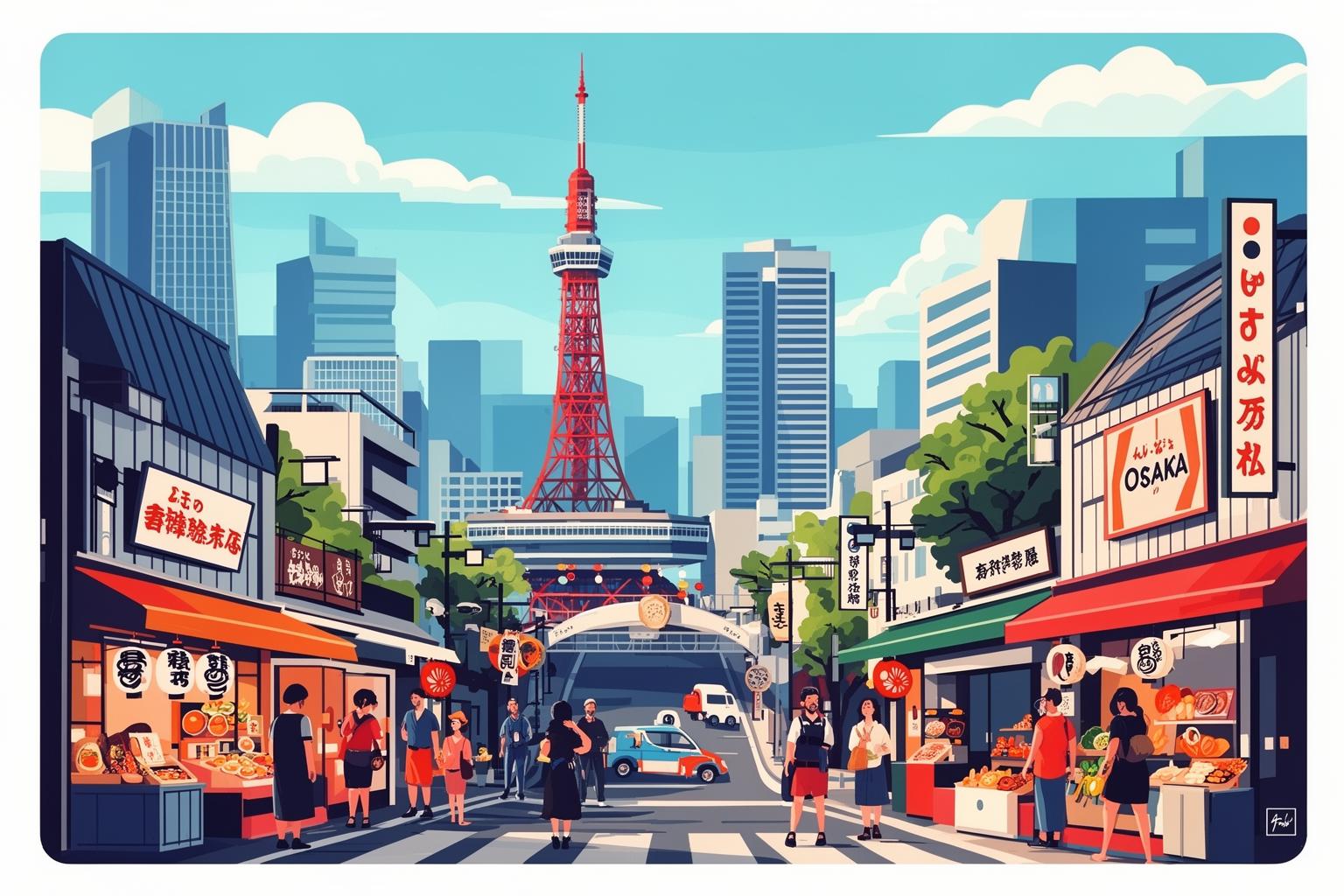
While their social role is vast, the economic impact of the Osaka obachan is equally significant, especially at the local level. They are the main drivers of the neighborhood economy, and their consumer behaviors shape the commercial landscape of the city, sustaining a form of commerce that has disappeared in many other regions.
The Shotengai’s Lifeblood
The covered shopping arcade, or shotengai, is a hallmark of Osaka, and its vitality is maintained by the daily visits of the city’s middle-aged women. These women show fierce loyalty to local merchants, many of whom they have known for years. Their interactions with shopkeepers go beyond mere transactions; they represent an ongoing relationship. This is where the famed Osaka practice of negeru (haggling) plays a role. To outsiders, it may seem like a genuine dispute, but more often it is a kind of performance, a ritual that reinforces the bond between buyer and seller. It is a playful exchange of wit and humor. The obachan makes an offer, the shopkeeper pretends surprise and indignation, some theatrical back-and-forth follows, and usually a small discount or a little extra (omake) is given. This ritual is about much more than saving money; it’s about engagement and being recognized as a valued, savvy customer. This daily interaction nurtures strong loyalty that enables small, independent businesses to survive and flourish despite competition from impersonal chain supermarkets. These women act as patrons of a living museum of commerce, preserving not just shops but an entire way of life.
Masters of Practical Economics
There is a stereotype that Osakans are kechi, or stingy, but a more fitting description is pragmatic. The obachan are the foremost practitioners of this pragmatism. They possess an expert understanding of household economics and value. They know the market price of every vegetable by season and can distinguish genuine bargains from marketing tricks instantly. They are masters of resourcefulness, wasting nothing and making use of everything. This mindset arises not necessarily from hardship but from a profound respect for value, a fundamental principle of the merchant city’s spirit. They share information about sales with a fervor typically reserved for major news. A line forming outside a store signals to other obachan that a big deal is at hand, sparking a ripple effect. Their collective pursuit of value is both a competitive sport and a collaborative art. Their financial savvy and disciplined spending form the foundation of their family’s economic security. They are the household CFOs, managing budgets with expertise that would rival any corporate accountant.
Navigating the Social Code: A Guide for Foreign Residents
For a non-Japanese resident, engaging with the influential social force of the Osaka obachan can be both delightful and perplexing. Their interaction style is unique, and grasping the unwritten rules is essential to integrating into local life and truly appreciating the city’s distinctive warmth.
Understanding the Directness
In cultures where personal questions from strangers are taboo, the straightforwardness of an Osaka obachan can seem like an interrogation. “How old are you?” “Are you married?” “How much is your rent?” These inquiries, however, are seldom meant to be intrusive. They serve as data points—a way to understand who you are and how you fit into the local environment. They reflect genuine curiosity. Likewise, unsolicited advice should be seen as a sign of care. When a woman tells you to take your laundry inside because it looks like rain, she isn’t criticizing your judgment; she’s showing the same protective instinct she would offer her own family. The best response is a smile and a simple, “Thank you.” You don’t have to follow the advice, but acknowledging its intent is important. Viewing it as an expression of community care rather than intrusion is the first step to decoding these interactions.
The Invitation to Engage
The obachan social network is not closed off. It is surprisingly welcoming to newcomers who demonstrate a willingness to participate. The biggest error a foreigner can make is to withdraw into a bubble of polite, Tokyo-style reserve. This reserve may be misunderstood not as politeness, but as coldness or disinterest. The solution is straightforward: engage. When offered an ame-chan, accept it with a smile. When buying vegetables and the woman beside you comments on your selection, ask how she plans to prepare hers. Use your local shotengai and greet the shopkeepers. Even limited Japanese is sufficient for these small gestures, which are noticed and reciprocated. This is how you become woven into the neighborhood fabric—how you shift from being an anonymous resident to a recognized community member. Osaka’s friendliness is not passive; it thrives on interaction, requiring your participation to be fully experienced.
When Boundaries Differ
It’s important to realize that the distinction between public and private is drawn differently in Osaka. Physical closeness is common, conversations are easily joined, and personal space may feel more limited. This can take some adjustment. An obachan might move you aside to reach a shelf or stand very close while speaking. This behavior is almost never aggressive; it’s simply a more tactile, informal way of sharing space. If you need to end a conversation, it’s perfectly fine to do so politely. A simple, “I have to go now, thank you!” (sorosoro ikimasu, arigatou!) paired with a smile and bow is usually enough. They understand busy schedules. The key is to remain friendly and open, while also politely asserting your own boundaries when necessary.
The Osaka Obachan vs. The Tokyo Okusama: A Tale of Two Cities
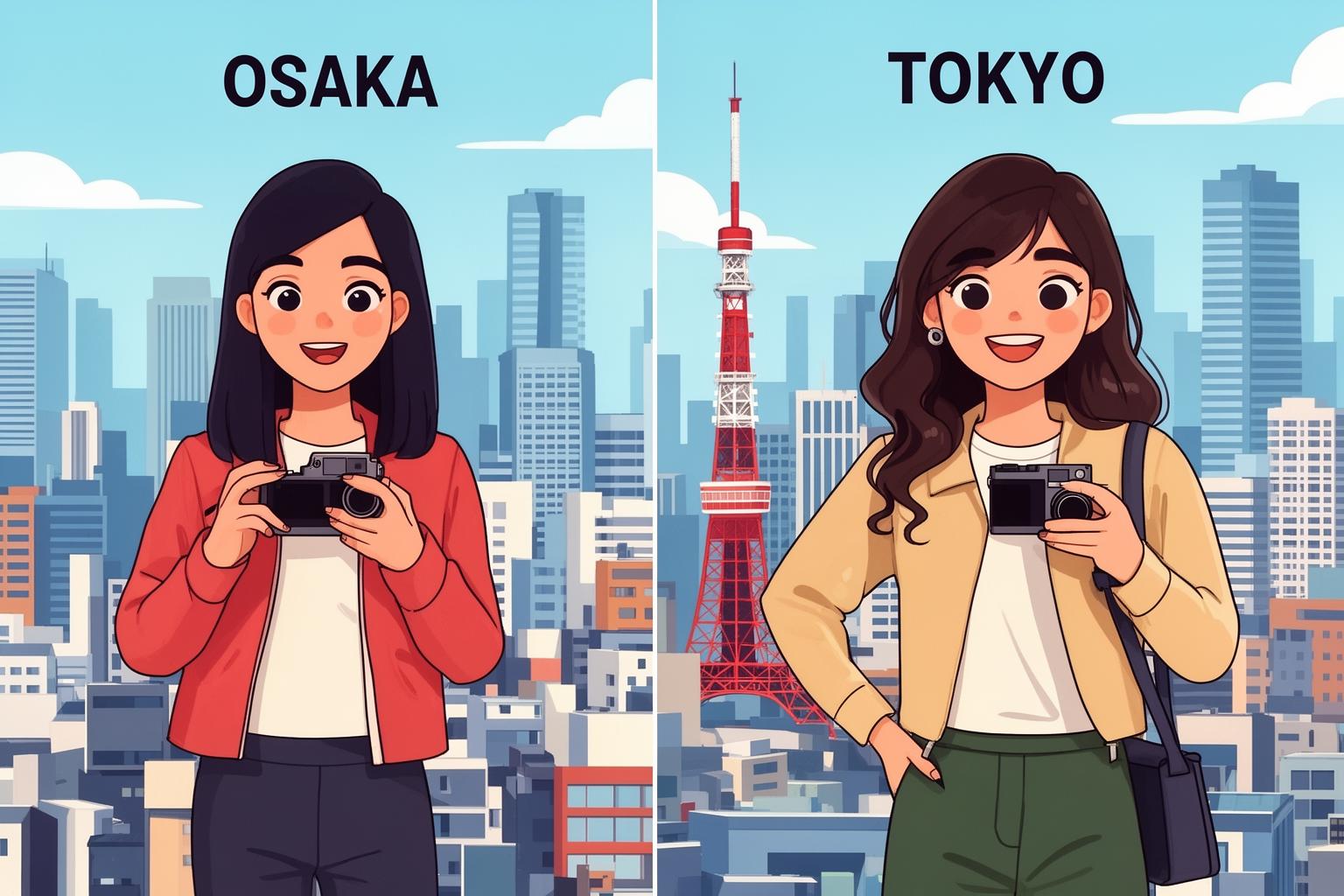
To truly understand the uniqueness of the Osaka obachan, it helps to compare her with her counterpart from the Kanto region, a figure one might call the Tokyo okusama. Although both are middle-aged Japanese women, they often embody two very distinct ways of navigating social life, reflecting the contrasting cultural DNA of their respective cities.
Public vs. Private Personas
In Tokyo, there is often a clear separation between one’s private self (uchi) and public face (soto). The Tokyo okusama tends to present an image of refined elegance and restraint in public. Her interactions are polite, formal, and carefully managed to avoid causing any discomfort or imposition on others. By contrast, the Osaka obachan operates with a much smaller divide between her uchi and soto. Her public persona largely mirrors her private one: expressive, emotional, humorous, and straightforward. What you see is what you get. This reflects a core Osaka value of honesty and a dislike for pretense (tatemae). This absence of artifice makes her both approachable to some and intimidating to others. She isn’t playing a role; she’s simply being herself, loudly and proudly, in the public sphere.
Humor as a Social Lubricant
Osaka is known as Japan’s comedy capital, the birthplace of manzai stand-up. This comedic spirit extends beyond the stage; it’s a fundamental part of daily communication, and the obachan is a master of this craft. Self-deprecating humor is a common tool she wields. An obachan might loudly lament her forgetfulness or joke about her flashy clothing. This acts as a powerful social lubricant, signaling that she doesn’t take herself too seriously, which in turn makes her less intimidating and more relatable. It diffuses tension and builds instant rapport. Complaints are often softened with humor, making them easier to accept. This stands in stark contrast to the more serious and face-conscious communication style often seen in Tokyo, where humor tends to be more subtle and less frequently used with strangers. In Osaka, a shared laugh holds as much value as an ame-chan.
The Power of the Collective
While social hierarchies certainly exist in Osaka, the obachan’s power does not come from her husband’s corporate rank or the prestige of her address—factors that often carry greater weight in Tokyo’s status-conscious society. Instead, her influence stems from the strength of her community network. Her reputation is built on reliability, local knowledge, social skills, and a willingness to support the collective good. She is respected not for who she’s married to, but as the person who knows how to get things done, can be relied upon in a crisis, and holds the community together. This represents a different, more grassroots kind of social power, rooted in action and connection rather than status and appearance.
It’s easy to spot the woman in leopard print; it requires no effort. But to truly live in Osaka, one must look beyond the cliché and recognize the intricate, powerful, and deeply humane system she embodies. She is not a relic of a bygone era. She is the living soul of the city, a testament to the enduring strength of community in an increasingly fragmented world. She is the keeper of Osaka’s boisterous, chaotic, and wonderfully warm heartbeat. Look past the bright colors and listen to the rhythmic pulse of her voice in the shotengai. That is the sound of Osaka, and she is its steadfast conductor.








