
As an event planner born and bred in the relentless, 24/7 hum of Tokyo, my life has always been a meticulously scheduled dance with deadlines. We live by the minute, optimize the second, and treat our calendars like sacred texts. The concept of ‘work-life balance’ in Tokyo often feels like a mythical creature—something you read about online but never actually see in the wild. It’s a city that runs on the unspoken agreement that your career is your identity, and your commitment is measured in the hours you’re visibly, performatively, on. Then came the great global shift, the remote work revolution, which promised a new kind of freedom. It promised we could escape the crushing commutes and the suffocating pressure of the open-plan office. But for many of my friends back in Tokyo, it just replaced a physical leash with a digital one. The office was now our apartment, the boss was now a green dot on Slack, and the pressure to be constantly available had somehow intensified, seeping into every corner of our lives. It was against this backdrop of digital burnout that I took a long-term project in Osaka, a city I only knew through stereotypes: loud, a little gaudy, and obsessed with food. I came here expecting a different flavor of Japan, but what I found was a completely different philosophy of life, one that might just hold the secret to surviving, and even thriving, in the new world of remote work. This isn’t about takoyaki and okonomiyaki—or at least, not just about them. It’s about a deep-seated cultural mindset locals call ‘Kuidaore,’ and it’s a powerful antidote to the Tokyo grind. This is the story of how ‘eating yourself into ruin’ might just be the healthiest professional decision you could ever make.
This pragmatic, value-driven mindset, which also fuels the region’s business and tourism sectors, is evident in the strategic preparations for the upcoming Expo 2025.
Deconstructing the Grind: What Tokyo Work Culture Really Means
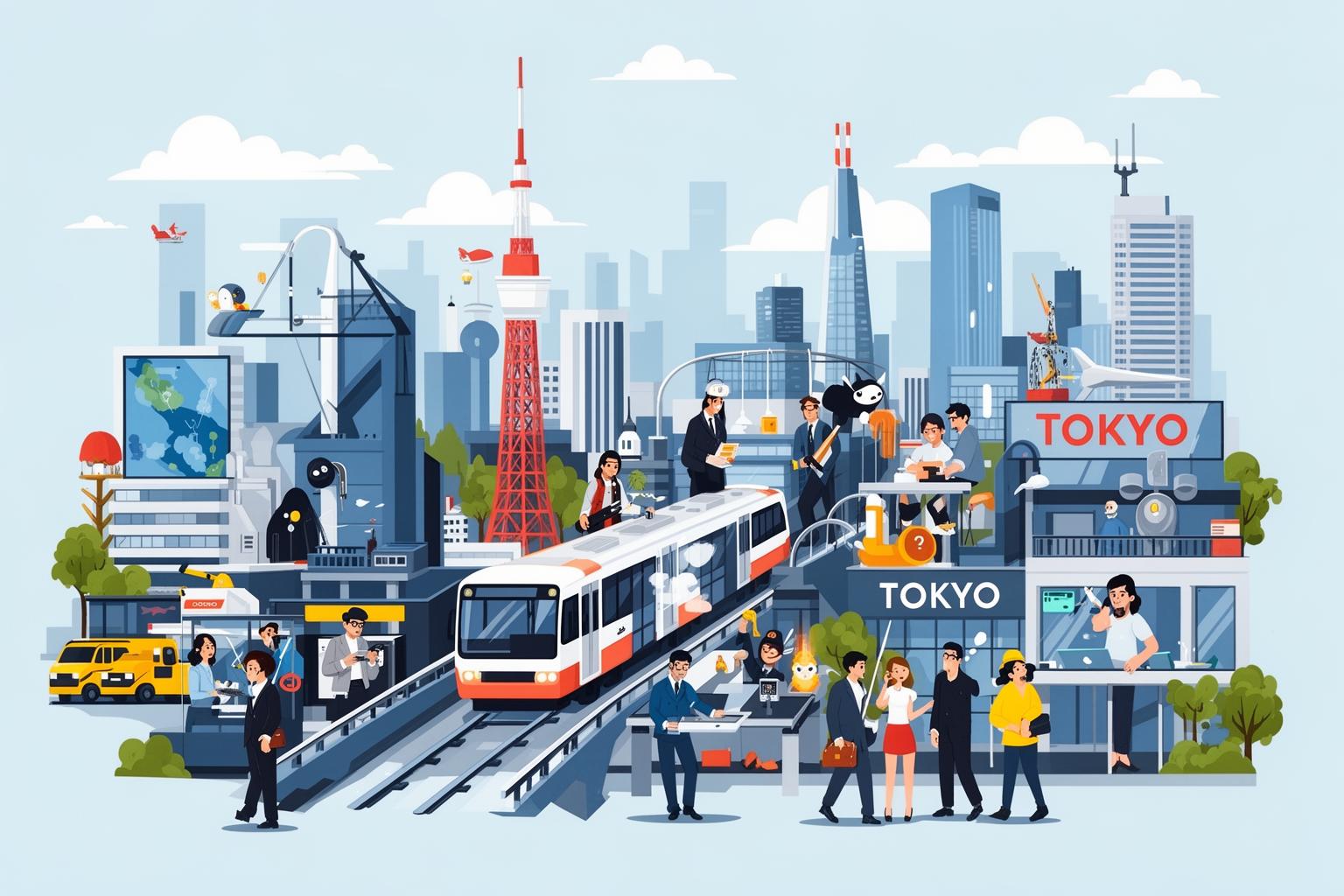
To truly understand Osaka, you first need to grasp the beast that is Tokyo’s work culture. It’s far more than just long hours—such a view is a gross oversimplification. It’s a complex network of social obligations, unspoken expectations, and a deep-rooted fear of standing out for the wrong reasons. The key principle is harmony, or ‘wa,’ but within a corporate setting, this harmony often comes through a collective, unspoken agreement to sacrifice individuality for the group’s perceived benefit. The strongest force in any Tokyo office isn’t the boss’s direct commands, but the invisible pressure of ‘kuuki wo yomu’—reading the air. Employees are expected to pick up on the mood, anticipate needs, and respond appropriately without explicit instructions. If your manager is still at their desk at 7 PM, you dare not leave, even if your tasks are complete. You respond to a 10 PM email almost immediately, to show dedication and alertness. Your value lies not only in the quality of your work but in the demonstration of your commitment. Being seen working hard matters just as much as the work itself. This fosters a culture of ‘presenteeism,’ where the goal is to be physically or digitally present as long as possible. The day is packed with meetings that could be emails, and emails that require lengthy, nuanced courtesies before getting to the point. Efficiency takes a backseat to process and politeness. Now, picture this entire system moving online. When remote work arrived in Tokyo, it didn’t free people from this culture; it intensified its worst traits. The office ‘air’ gave way to the tyranny of the green status dot on Microsoft Teams or Slack. If it switched to yellow for ‘away,’ a surge of anxiety would hit. Are they watching? Do they think I’m slacking? This digital panopticon turned the home, once a refuge, into a stage. People hurried through lunch in two minutes, hunched over laptops, afraid to miss any messages. The workday, once framed by commuting, now stretches endlessly into evenings and weekends. A Slack message from the boss at 9 PM on Sunday isn’t a casual note; it’s a test of loyalty. This isn’t about productivity—it’s about control and the deep cultural anxiety that if you aren’t being watched, you’re not working. It drains your spirit, erases boundaries between work and personal life, and keeps you in a constant state of low-level stress. You’re not just working from home; you’re living at work. This is the grind—a silent, unrelenting pressure cooker that defines professional life in the capital.
‘Kuidaore’ is Not Just About Food, It’s a Life Philosophy
When you first encounter the word ‘Kuidaore,’ it sounds almost like a joke. Its literal meaning is something along the lines of ‘to eat until you drop’ or, more dramatically, ‘to eat yourself into bankruptcy.’ On the surface, it serves as the slogan for the gluttonous, food-obsessed chaos of Dotonbori, with its giant mechanical crabs and endless street food stalls. But after spending real time here, you come to understand that ‘Kuidaore’ is the key to grasping the entire Osaka mindset. It’s a philosophy that directly contrasts with Tokyo’s culture of self-sacrifice and delayed gratification. It boldly declares that the tangible, immediate, and joyful pleasures of life are not mere indulgences but the very essence of the human experience. Work, money, and status are simply tools to achieve this joyous way of living, not the ultimate goals themselves.
Beyond the Takoyaki: The Essence of ‘Kuidaore’
This philosophy’s roots lie deep in Osaka’s history. While Tokyo (then Edo) was the city of samurai and shogunate—a place built on strict hierarchy, loyalty, and duty—Osaka was the city of merchants. It was Japan’s kitchen, the central hub for commerce, rice, and trade. The merchant’s world is not one of abstract honor; it’s grounded in practicality, negotiation, and concrete results. You strike a good deal, earn your money, and use it to enjoy a good life. There’s no glory in asceticism. The rewards of your labor are meant to be enjoyed, not endlessly reinvested for some distant, uncertain future. ‘Kuidaore’ epitomizes this merchant spirit: spending your hard-earned money on the best food, drinks, and company right here, right now. It reflects a deep appreciation for value. An Osakan will proudly recount an incredible meal they had for 800 yen, not because it was cheap, but because the quality far surpassed the price. It’s about being a savvy consumer of life itself. This mindset elevates the present moment. While a Tokyoite might save for a designer bag to be used years down the line or work overtime for a promotion that may come in three years, the Osakan focuses on the delicious bowl of ramen they’ll enjoy tonight. This is not shortsightedness but a profound understanding that life is lived in these small daily moments of satisfaction. It’s a philosophy that invests in immediate happiness and well-being.
How ‘Kuidaore’ Influences the Osaka Workday
This philosophy fundamentally alters the relationship with work. In Osaka, your job is what you do, not who you are. It’s a means to an end—the end being a life full of good experiences. This fosters a much clearer and healthier boundary between professional and personal time. The workday is approached with a sense of purpose that can feel startlingly direct if you’re used to Tokyo’s subtle dance of consensus-building. The merchant spirit of ‘shoubai’ (business) thrives here. It’s about being sharp, efficient, and getting things done without unnecessary fluff. Meetings are shorter and more focused, with the question always being, ‘What’s the goal here? How do we get there quickest?’ There is little tolerance for performative busyness. If you’re working late into the evening, people don’t see a dedicated employee; they may see someone inefficient who can’t manage their time. The aim is to complete your work efficiently so you can move on to the more important business of living. Conversations in the office kitchen revolve less around corporate restructurings and more about a new standing bar or the best spot for seasonal fish. The workday is marked by a genuine, collective anticipation for the pleasures waiting after clock-out. This doesn’t mean people in Osaka don’t work hard—they are remarkable entrepreneurs and famously shrewd businesspeople—but they work smart. They hustle with clear purpose: to fund a life rich, flavorful, and lived on their own terms. The ‘grind’ is seen as a bad bargain—trading your most precious resource, time, for the vague promise of future security, often at the cost of present happiness. In Osaka, that’s a deal no savvy merchant would ever accept.
The Remote Work Revolution: Where Philosophies Collide
The shift to remote work has sharply highlighted these two contrasting philosophies. What was once simply a difference in office ambiance has evolved into a fundamental divide in quality of life. The home, as the ultimate private space, has become the new arena for these cultural values, resulting in strikingly different outcomes.
Tokyo’s Digital Panopticon
At a company based in Tokyo, the promise of remote work’s flexibility often turns into a nightmare of digital surveillance. The culture of ‘reading the air’ and performative busyness has been transferred directly into the digital world. Companies implement time-tracking software that captures screenshots of your desktop. Managers expect immediate replies on Slack, and a ten-minute delay can prompt a follow-up message: ‘Are you there?’ The green ‘active’ status icon becomes a constant source of nagging anxiety. You feel tethered to your desk, not by physical presence, but by psychological pressure. Taking a genuine break feels like a violation. Stepping out for a walk during the day? Unthinkable. The very freedom remote work was meant to provide is undermined by deep mistrust and a management style that equates visibility with productivity. This results in a workforce more burned out than ever. People work longer hours because the physical boundary of a commute no longer exists to signal the end of the workday. Home ceases to be a place to recharge; instead, it becomes a space of continuous, low-level professional obligation. The ‘work-life balance’ scale leans so heavily toward ‘work’ that ‘life’ becomes a few frantic hours of chores and sleep before the cycle repeats. This system values company peace of mind over employees’ mental health, trapping them in a gilded cage of high-speed internet and corporate messaging apps.
Osaka’s Pragmatic Approach to WFH
Now, consider the mindset of a remote worker in Osaka, where the ‘Kuidaore’ philosophy prevails. Here, the emphasis is overwhelmingly on results, rather than on visible performance. An Osaka manager cares little if your Slack status stayed green for eight hours straight; what matters is whether you delivered the report you promised. ‘Did you get it done? Is the client satisfied? Yes? Great. I’m off to get some kushikatsu. Talk to you tomorrow.’ This pragmatic, businesslike focus on outcomes is incredibly liberating. It grants genuine autonomy. As long as the work is completed to a high standard, how you manage your time is largely up to you. This is where the ‘Kuidaore’ spirit transforms the workday. If you are efficient and finish your tasks by 3 PM, there is no cultural pressure to stay at your computer until 6 PM pretending to be busy. That time belongs to you. You can go to the local market to buy fresh dinner ingredients, take a long bath, or meet a friend for coffee. You are not ‘slacking off’; you are wisely reinvesting your time into your well-being, which in turn makes you a more refreshed and effective worker the next day. This is not laziness; it is the ultimate form of life efficiency. The philosophy encourages finding pleasure and meaning in your day. The ‘work’ component is a transaction—you provide your skills and time, and the company provides payment. But the ‘life’ component is your own enterprise, and the ‘Kuidaore’ way demands you run it with passion. It fosters a healthier, more sustainable rhythm where work is part of your day, not its entirety. You are trusted as a professional and treated like an adult who can manage your own time and energy. It is a simple, respectful understanding that feels worlds apart from Tokyo’s digital oversight.
Daily Life and the Unspoken Rules
These philosophical differences are not merely abstract ideas; they appear in the small, everyday rituals that shape the texture of daily life. From how people eat lunch to how they communicate after work hours, the cultural divide between Tokyo and Osaka becomes apparent in subtle yet profound ways.
The Lunch Break Test
Nothing reveals the cultural gap more clearly than the simple lunch break. In Tokyo, for many office workers—even those working remotely—lunch is a rushed, practical necessity. Often it’s a 400-yen bento box or a couple of onigiri from a convenience store, eaten in less than ten minutes while scrolling through emails on a smartphone. The objective is to quickly refuel and maximize time spent ‘working.’ The desk doubles as the dining table. It’s a lonely, joyless ritual that treats food as mere fuel for the corporate engine. In contrast, the lunch break in Osaka is a protected, almost sacred ritual. Taking a full hour away from the desk is standard. People spill out of their offices and homes, filling neighborhood eateries. The goal is not just to eat but to savor the meal. It’s a moment to relax, socialize, and enjoy tangible pleasure in the middle of the day. You’ll see people queuing at popular curry shops or sitting down to proper teishoku set meals, chatting animatedly with colleagues or friends. For a remote worker, this is a lifeline. It compels you to step away from the screen, stroll through your neighborhood, and connect with other people. It breaks the hypnotic grip of the digital workspace. This daily ritual is a physical expression of the ‘Kuidaore’ philosophy: working hard in the morning earns you the right to an hour of delightful, unapologetic indulgence. It’s a quiet act of rebellion against the tyranny of nonstop productivity, performed every single day.
After-Hours Communication: ‘Otsukaresama’ vs. ‘Honma?’
The way people communicate after the official workday ends highlights another stark contrast. In Tokyo, boundaries are constantly blurred. A message from a superior at 10 PM—even if it begins with the polite ‘Otsukaresama desu’ (Thank you for your hard work)—carries an implicit pressure. It’s a subtle intrusion into personal time, triggering an automatic, Pavlovian urge to respond—to show you are always available, always engaged with work. Ignoring the message feels like a risky form of defiance. In Osaka, boundaries are firmer and often enforced with characteristic bluntness. When a non-urgent work message arrives late at night, the response is more likely to be silence until morning rather than a panicked, apologetic reply. If pressed, an Osaka resident might respond with a straightforward ‘Is this urgent for tomorrow morning?’ or ‘Got it, I’ll check tomorrow.’ There is less cultural tolerance for what’s seen as an unnecessary invasion of personal time. This stance isn’t due to disrespect or insubordination but stems from the practical belief that rest and personal life are essential to being productive. The phrase ‘Honma?’ (‘Really?’ or ‘Seriously?’) serves as a powerful tool in Osaka’s communication style. It’s a direct, no-nonsense way of cutting through corporate nonsense to ask, ‘Is this genuinely important right now?’ This directness guards personal time, creating a psychological firewall that many Tokyo workers desperately need. It enables a more complete mental disengagement at day’s end, which is crucial for preventing remote work burnout.
Community and Connection: Beyond the Office Walls
For remote workers, the danger of isolation is profound. When the office, the main hub of social interaction, disappears, where do you find community? In Tokyo, social life is often closely tied to the company. The dreaded ‘nomikai’ (after-work drinking party) is where relationships are built and office politics unfold. It extends the workplace, and your social circle often consists only of your team. When working remotely, this entire structure can collapse, leaving you feeling unmoored. Osaka offers a compelling alternative because its social fabric revolves not around corporations but neighborhoods. The city is a mosaic of lively ‘shotengai’ (local shopping streets), standing bars, and small family-run eateries. Social life here is decentralized and accessible. As a remote worker, you can finish your day, step outside your door, and within minutes find yourself at a local bar, chatting with the owner and a random group of regulars. The social scene is more permeable here. Barriers between strangers are lower. People are curious, they’ll ask where you’re from, and share a laugh over a beer and plate of doteyaki. This isn’t forced networking; it’s just life—organic, spontaneous community. This neighborhood-based social life is a huge advantage for remote workers. It offers an immediate source of connection separate from work, allowing you to build a richer, more diverse social life and combat the loneliness that’s one of the biggest challenges of working from home.
What Foreigners Often Misunderstand
From an outside perspective, Osaka’s unique culture is often easily misunderstood. The laid-back approach to the typical 9-to-5 routine and the focus on enjoyment can be seen as a lack of drive, while the well-known frankness may be unsettling to those used to the more nuanced social cues of other Japanese regions.
‘Kuidaore’ Is Not Synonymous with Laziness
A frequent misconception is to associate Osaka’s ‘Kuidaore’ philosophy with laziness or a weak work ethic. Nothing could be further from the truth. Osaka is a city full of tireless hustlers and entrepreneurs. The merchant spirit is competitive, ambitious, and exceptionally hardworking. The main difference lies in the motivation and approach. The effort is not an end goal; it serves as a means to attain a particular lifestyle. It’s about working as efficiently as possible with minimal wasted effort—‘finishing the job’ so you can focus on the more meaningful parts of life. A Tokyo worker may stay late to show loyalty and endurance. An Osaka worker views that as a waste of time better spent eating, drinking, or being with family. They aren’t working less; they’re working with a more targeted and practical intensity. Their ambition extends beyond just climbing the corporate ladder; it aims to create a life that is truly enjoyable every day. This is not a lack of ambition but a broader, more well-rounded vision of what success means.
Osaka ‘Friendliness’ Is Practical, Not Purely Altruistic
The stereotype that ‘Osaka people are friendly’ holds true, but it’s important to grasp the reasoning behind it. The friendliness found in Osaka differs from the carefully polite, service-driven friendliness of Tokyo. Osaka’s friendliness is based on straightforwardness, curiosity, and genuine lack of pretense. People strike up conversations on trains or in bars not because they are following social conventions, but because they are sincerely interested or because it’s simply the most efficient way to engage. There’s less of the formal, hierarchical distance that characterizes Tokyo. This can be very refreshing, but it’s key to recognize it as social pragmatism. Being direct is more efficient than avoiding a topic, and including a stranger in conversation is more enjoyable than sitting in silence. This mindset greatly benefits foreigners and remote workers by lowering social barriers to connection. You don’t need a formal introduction to start chatting. You can build a community step by step, through direct, humorous, and unfiltered interactions. It’s a kind of friendliness that feels authentic and earned, rather than performed.
So, Is Osaka the Remote Worker’s Paradise?
After spending time immersed in this city, I realize the question isn’t simply about which city is ‘better.’ It’s about which life philosophy resonates with you. Osaka is not a utopia. Its directness can sometimes feel abrupt if you’re unaccustomed. The dialect presents a steep learning curve. And if you work remotely for a Tokyo-based company while living in Osaka, you may experience a frustrating cultural tug-of-war—residing in a city that values personal time while being digitally bound to a corporate culture that does not. However, for the remote worker overwhelmed by digital presenteeism and relentless performance pressure, Osaka offers more than a change of scenery. It provides a paradigm shift. It embodies a cultural framework that inherently values and protects your time, well-being, and the right to enjoy the life you’re striving to build. The ‘Kuidaore’ philosophy is a powerful reminder that work’s purpose should be to support living, not the reverse. It prioritizes tangible results over performative labor, genuine connection over formal networking, and present-day joy over vague future promises. For a remote worker aiming to reclaim autonomy and create a balanced, sustainable life, choosing Osaka is more than selecting a city. It’s embracing a mindset that regards a well-enjoyed meal with friends as equally vital as a well-crafted report. In today’s work environment, that may be the most radical and healthiest choice of all.