When you picture Osaka, what comes to mind? Is it the electric pulse of Dotonbori, a river of neon reflecting on the water as the Glico Running Man dashes forever across his finish line? Perhaps it’s the towering majesty of Osaka Castle, a stoic sentinel watching over a sea of skyscrapers. Or maybe it’s the endless labyrinth of underground malls in Umeda, a futuristic city beneath the city. These are the iconic images, the postcards sent home, the stories told and retold. But Osaka, like any great metropolis, holds secrets in its less-traveled corners, entire worlds tucked away just a few train stops from the bustling center. Today, we’re not heading for the bright lights. We’re taking a journey south, across the rivers that artery this city, to a place where the air feels different, the music has a distinct twang, and the soul of another island beats strong. We’re going to Taisho Ward, Osaka’s very own ‘Little Okinawa.’ This is a district shaped by water and industry, by migration and memory, a place where you can find the heart of the Ryukyu Kingdom thriving in the Kansai metropolis. It’s a land of vibrant Eisa festivals and soul-warming Soki Soba. Yet, it’s also here, amidst the hibiscus flowers and shisa lion guardians, that we find an unexpected, deeply satisfying taste of pure Osaka: the humble, glorious kushi-katsu. This is a story about that delicious paradox—a journey into a cultural crossroads, where crispy, golden skewers tell a tale as rich and complex as the neighborhood itself.
For a different perspective on Osaka’s spiritual heritage, you can explore the ancient Sumiyoshi Taisha shrine, a place deeply connected to the ocean gods.
The Rhythm of the Island Ward

Disembarking at Taisho Station on the JR Osaka Loop Line evokes a subtle shift in atmosphere. The intense, high-energy buzz of downtown Osaka fades away, replaced by a slower, more deliberate pace, lightly infused with the salty scent of the nearby port. Taisho is a ward shaped by its geography; almost an island, encircled by the Kizu and Shirinashi Rivers, historically tied to the sea and its industries. This bond influenced its history, attracting waves of migrants from Okinawa after World War II, who arrived seeking employment in the busy shipyards and steel mills. They brought not only their work and dreams but also their culture, cuisine, music, and strong sense of community. In doing so, they transformed this industrial part of Osaka into something distinct.
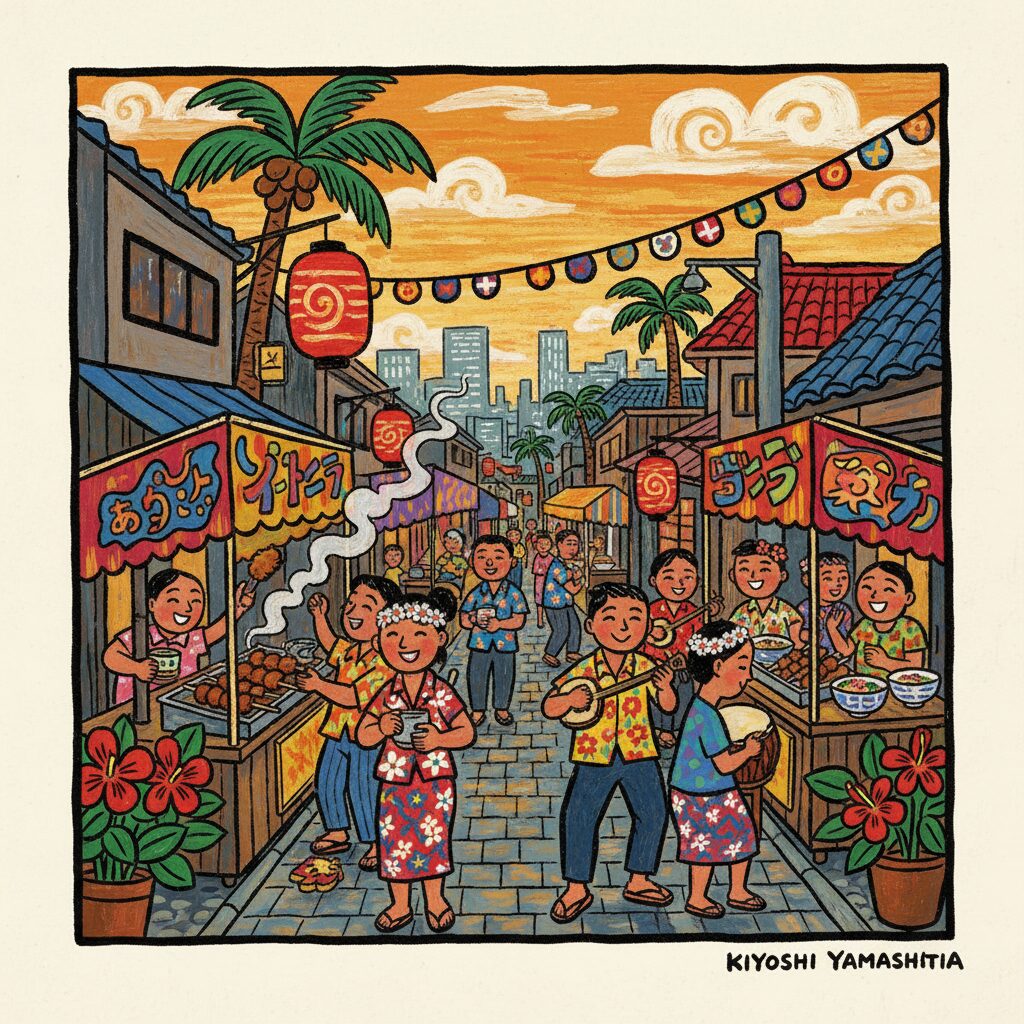
As you stroll through the streets, especially deeper into areas like Hirao, the Okinawan influence becomes strikingly clear. It isn’t a theme park; it’s a living, vibrant community. You’ll spot the iconic shisa, guardian lion-dog statues, standing proudly on rooftops and guarding shop entrances, their fierce looks meant to ward off evil. The unmistakable pentatonic tones of the sanshin, the three-stringed Okinawan lute, might drift out from a second-story window or a local bar. Storefronts promote Orion beer, the crisp lager of the southern islands, while shelves feature Okinawan specialties: thick tofu blocks, vivid purple sweet potatoes, and the famously bitter goya melon. The air itself feels warmer here, infused with the Okinawan spirit of nankurunaisa—a resilient faith that everything will ultimately turn out well. This atmosphere is the essence of the Taisho experience; it’s a sensation of being transported, discovering a sunlit piece of the tropics woven into the urban landscape of Osaka.
A Culinary Tale of Two Islands
To truly appreciate the delightful surprise of discovering world-class kushi-katsu here, one must first grasp the cuisine that defines Taisho. Okinawan food, or Ryukyu ryori, is a distinct culinary tradition that differs from mainland Japan. It is celebrated for its focus on pork, ranging from the tender, slow-braised pork belly of rafute to the hearty pork rib soup noodles of Soki Soba. It highlights unique vegetables like the previously mentioned goya, stir-fried with egg and tofu to create the iconic dish Goya Champuru. The flavor profiles tend to be gentle, wholesome, and deeply nourishing.
Venturing through Hirao Shopping Street feels like a culinary pilgrimage. Small, family-run restaurants with modest signs and well-worn noren curtains beckon you inside. Within, elderly couples speak in the soft rhythm of the Okinawan dialect, Uchinaaguchi, as they ladle steaming broth over thick, chewy noodles. The scent of bonito flakes and stewed pork permeates the air. This is the authentic experience—the very reason this area is nicknamed Little Okinawa. It offers a taste of home for the generations of Okinawans who settled here and a delicious discovery for visitors. It is within this deeply rooted Okinawan food culture that the presence of exceptional kushi-katsu shops feels like a charming plot twist. Kushi-katsu, quintessentially Osakan, is the city’s blue-collar soul food: a variety of meats, seafood, and vegetables skewered, dipped in a light batter and panko breadcrumbs, then fried to a perfect golden crisp. It’s a lively, communal dish, governed by the sacred rule of no double-dipping into the shared sauce container. So why here? Why does this emblem of Osaka street food flourish in an Okinawan enclave? The answer lies in the rich, complex, and delicious reality of cultural exchange. The children and grandchildren of the original migrants were born and raised in Osaka. They grew up embracing both the flavors of their heritage and those of their city. Kushi-katsu isn’t an intruder here; it’s a neighbor, a friend, and a natural part of Taisho Ward’s blended identity.
The Crispy Counterpoint: Uncovering Taisho’s Kushi-katsu Gems
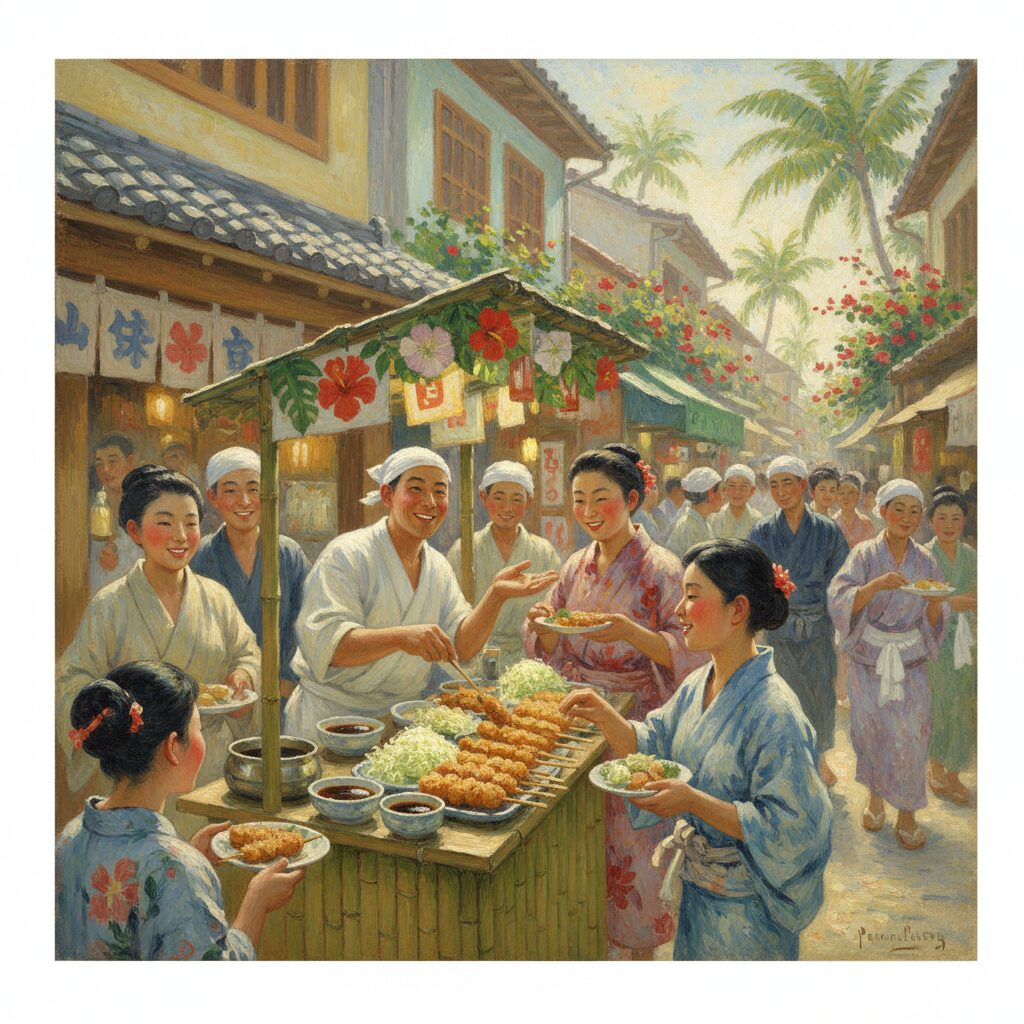
Discovering these spots is part of the adventure. They aren’t always found on the main streets, highlighted by flashy signs. Often, they are hidden away, woven into the residential fabric of the ward, rewarding those who explore with an open mind and an empty stomach. The experience is frequently a study in contrasts. You might pass a shop selling Okinawan brown sugar candy and then, just two doors down, encounter a place where the aroma of hot oil and sweet tonkatsu-style sauce fills the air.
The Neighborhood Stalwart
Picture a small, standing-room-only establishment just a few blocks from the main road. It’s the kind of place with a single, long wooden counter, worn smooth by the elbows of countless patrons over decades. Behind it stands an elderly master whose economical and precise movements dip skewers into a secret batter recipe before plunging them into a deep fryer seasoned into the very walls of the shop. Here, you’ll find classics executed to perfection. The lotus root is impossibly crisp, its lacy interior steaming. The quail eggs boast creamy yolks that burst in your mouth. The beef skewers are tender and juicy. The magic lies in the batter—it’s lighter than expected, forming a delicate shell that shatters on the first bite without ever feeling heavy or greasy. The sauce is a communal pot of dark, tangy liquid. You dip your skewer once, and only once, before setting it on your plate. The regulars, a mix of factory workers finishing shifts and local families, eat with practiced efficiency, sipping cold beer or shochu. There’s a quiet camaraderie here. No one is a tourist; everyone is simply a neighbor savoring a taste of Osaka, a shared ritual that binds the community together, regardless of heritage.
The Okinawan Fusion
Further into the ward, you might discover a slightly more modern izakaya that playfully bridges two culinary worlds. Here, the menu offers a creative dialogue between Okinawa and Osaka. Alongside traditional pork and onion skewers, you’ll find exciting innovations. A thick slice of goya, its bitterness mellowed by hot oil and balanced by sweet dipping sauce, is a revelation. Skewered cubes of Spam—a beloved Okinawan staple—become crispy, salty morsels of joy. You might even find a skewer of mozuku, the delicate Okinawan seaweed, fried in a tempura-like batter that defies logic and gravity. This is where the younger generation of Taisho leaves its mark. They honor the traditions of both their grandparents’ island and their city, unafraid to create something new and exciting from the two. Pairing these creations with an Okinawan awamori highball instead of a standard beer feels both rebellious and perfectly fitting. It’s a taste of Taisho’s future—a culinary identity still evolving, surprising, and utterly delicious. From a fashion and art perspective, this fusion holds the most exciting energy; it’s the sartorial equivalent of pairing a vintage kimono with modern sneakers—unexpected yet stylishly coherent.
The Dockside Secret
Given Taisho’s proximity to the port, it’s no surprise that seafood plays a starring role. Seek out smaller, less obvious spots, perhaps closer to the waterfront, where the focus is squarely on the sea’s bounty. These shops carry a different atmosphere. The air is briny, and the decor might be adorned with fishing nets and nautical charts. The kushi-katsu menu here celebrates freshness. Plump prawns, sweet scallops, delicate whiting, and even whole sardines are skewered and fried with expert care. The batter is often thinner here, designed to complement rather than overpower the subtle flavors of the seafood. The true prize might be the octopus skewer, the tentacle cooked tender before frying, resulting in a delightful contrast of a crispy exterior and a soft, yielding bite. Eating here feels deeply connected to the place itself—a direct taste of the ward’s industrial and geographic identity. It’s a reminder that before becoming Little Okinawa, Taisho was, and still is, a port town whose fortunes rise and fall with the tides.
Navigating Taisho: Practical Advice for the Curious Traveler
Taisho Ward is easily accessible while still maintaining a charming, local atmosphere free from heavy tourism. A bit of preparation will help you fully appreciate its unique appeal.
Getting There and Getting Around
The easiest way to reach Taisho is by taking the JR Osaka Loop Line to Taisho Station. It offers a direct connection from major hubs such as Osaka Station (Umeda) and Tennoji. Upon arrival, you’ll immediately spot the Kyocera Dome Osaka beside the station, a prominent landmark. However, to experience the core of Little Okinawa, you’ll need to head south. The neighborhood is quite walkable, but to reach more distant areas like the Hirao neighborhood, the local bus system is very convenient. Buses run frequently from the terminal just outside the station. Don’t worry if you don’t speak Japanese; route information is clearly displayed, and pointing to a map usually helps. Alternatively, taxis offer a quick and easy way for small groups to get around.
Timing Your Visit
Taisho offers different charms depending on the time of day. During daylight hours, the shopping arcades buzz with locals going about their daily errands. This is an ideal time to enjoy a leisurely lunch of Soki Soba and browse the small shops selling Okinawan crafts and groceries. In the evening, the izakayas and kushi-katsu eateries come alive. Lanterns cast a warm glow on the streets, accompanied by the sounds of laughter and clinking glasses. For a truly memorable visit, try to coincide your trip with the annual Taisho Eisa Festival, usually held in September. The streets burst with color and energy as traditional Okinawan drumming and dancing performances electrify the atmosphere.
Local Etiquette and Tips
While Taisho is friendly and welcoming, it’s not a heavily touristy spot, so a few tips will help you blend in naturally. Many smaller, family-run shops and restaurants accept cash only, so it’s wise to carry yen. When dining at a kushi-katsu restaurant, remember the golden rule: no double-dipping. The communal sauce container is shared by everyone at the counter. Dip your skewer generously the first time. If you need more sauce, use the cabbage leaves provided to scoop some onto your plate—never dip the skewer again after taking a bite. This practice is both hygienic and respectful. As a female traveler, I’ve always found Taisho to be safe and inviting, but like any urban area, it’s sensible to stay aware of your surroundings, especially at night. The backstreets can be very quiet, so it’s best to stick to main, well-lit roads when walking alone after dark. A simple konnichiwa (hello) or arigato (thank you) can go a long way in showing respect and will usually be met with a warm smile.
Beyond the Plate: Soaking in the Ward’s Atmosphere
While the food is a major attraction, Taisho’s true essence lies in the spaces between the restaurants. Take some time to simply wander. Stroll along the riverbanks and watch the barges glide past. The bridges crossing the waterways are engineering marvels, and the view from them, especially at sunset, provides a unique perspective of Osaka—a city of water and steel, where industry and nature coexist. The Namihaya Bridge, with its sweeping curves, is particularly photogenic. Explore the covered shopping arcades, such as the Sankyusuijo-dori Shotengai. These aren’t sleek, modern malls but charmingly retro corridors of community life. You’ll discover everything from hardware stores to tiny cafés and grocers offering produce you won’t find in mainstream supermarkets. Notice the small details: the hand-painted signs, the colorful tiles, the way sunlight filters through the translucent roofing. These are the textures of daily life in Taisho, a world apart from the polish of central Osaka. It’s in these quiet moments of observation that you truly connect with the spirit of the place.
A Final Thought
Osaka is a city that rewards curiosity, inviting you to look beyond the surface, peel back its layers, and discover the rich, diverse communities that define its remarkable character. Taisho Ward perfectly exemplifies this. It offers a journey to another island without leaving the city limits. Here, you can enjoy the comforting, soulful flavors of Okinawa for lunch and then dive into the crispy, communal delight of Osakan kushi-katsu for dinner. This is not a contradiction but a harmony—an expression of migration, adaptation, and the beautiful way cultures blend while maintaining their unique identities. So, on your next trip to Osaka, take a ride on the Loop Line. Step off at Taisho, let the rhythm of the sanshin guide your steps, and follow the irresistible aroma of hot oil and sweet sauce. You’ll discover more than just a great meal; you’ll uncover a hidden piece of Osaka’s heart.