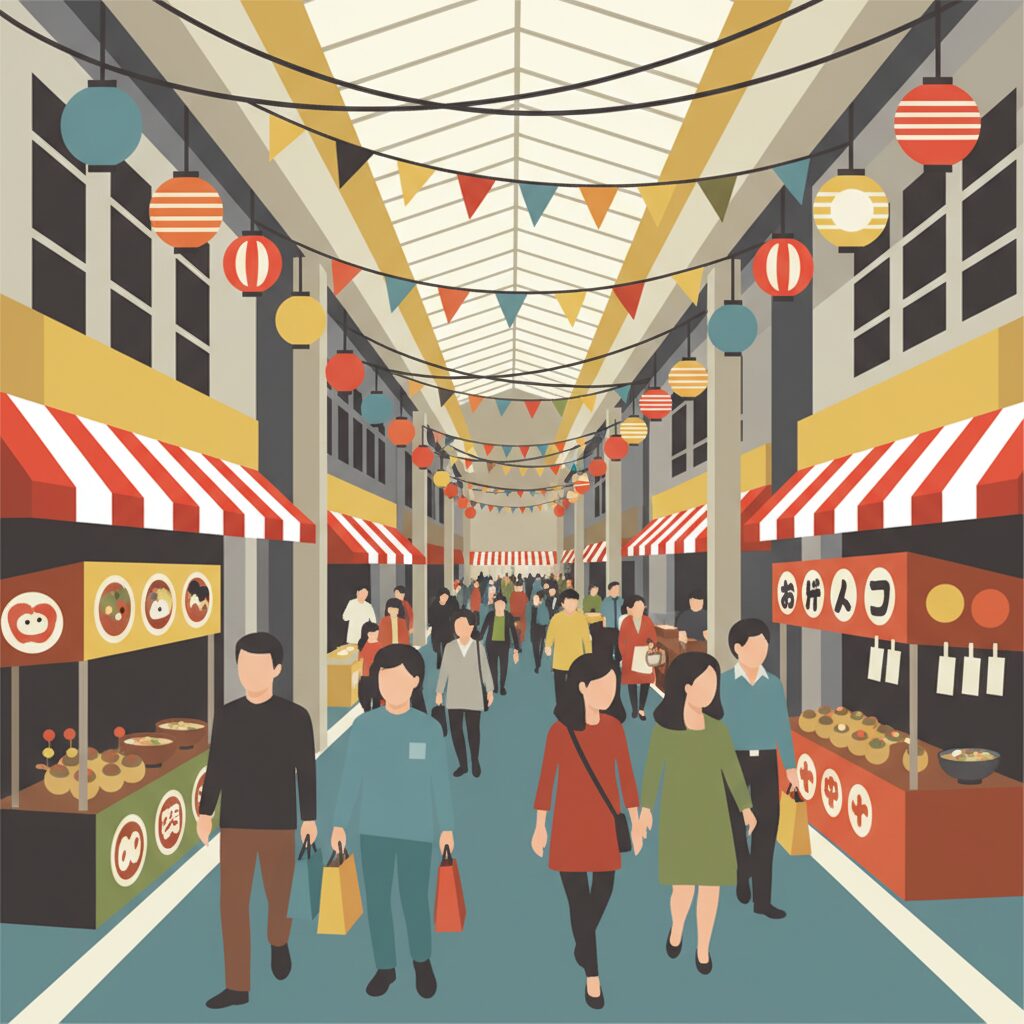
Walk into a Tokyo department store, and you’re greeted with a symphony of perfect bows and practiced honorifics. The service is immaculate, a polished performance designed to make you feel respected, valued, and utterly anonymous. It’s a clean, efficient transaction. You buy your things, you receive a polite “arigatou gozaimashita,” and you disappear back into the city’s quiet hum. You expect Japan to be this way—a culture of subtle cues, respectful distance, and unspoken rules. Then, you move to Osaka. You wander into your local shotengai, one of those covered shopping arcades that pulse with the city’s true rhythm. You’re just trying to buy some potatoes for dinner. The elderly woman behind the counter, her apron dusted with dirt from the morning’s haul, looks you up and down. She doesn’t bow. She leans forward, squints, and her first words aren’t “irasshaimase.” They are, “You’re not from around here, are ya?”
Before you can even answer, the questions come rolling in, a conversational avalanche with no regard for personal space. “Where you from? America? Ooh, fancy. You here for work? You married? No? Why not? A pretty thing like you! You must be lonely. What are you even making for dinner with just those potatoes? That’s not a real meal.” Suddenly, a simple shopping trip has turned into a full-blown deposition conducted by a tiny, smiling grandmother who seems to believe your personal life is her business. For many foreigners, and frankly, for someone like me who grew up in the polite bubble of Tokyo, the experience is whiplash-inducing. The common travel guide wisdom says “Osaka people are friendly.” But is this friendly? It feels more like a loving, yet relentless, interrogation. This isn’t the Japan you were told about. This is Osaka, a place where the lines between customer and community, stranger and neighbor, are gleefully, and loudly, blurred. This is where service isn’t about silent respect; it’s about getting all up in your business, because in their world, your business is the start of a real connection.
This experience is a classic example of the well-meaning Osaka obachan who acts as the neighborhood’s social glue, turning a simple errand into a community connection.
The Tokyo-Osaka Service Divide: A Tale of Two Countertops
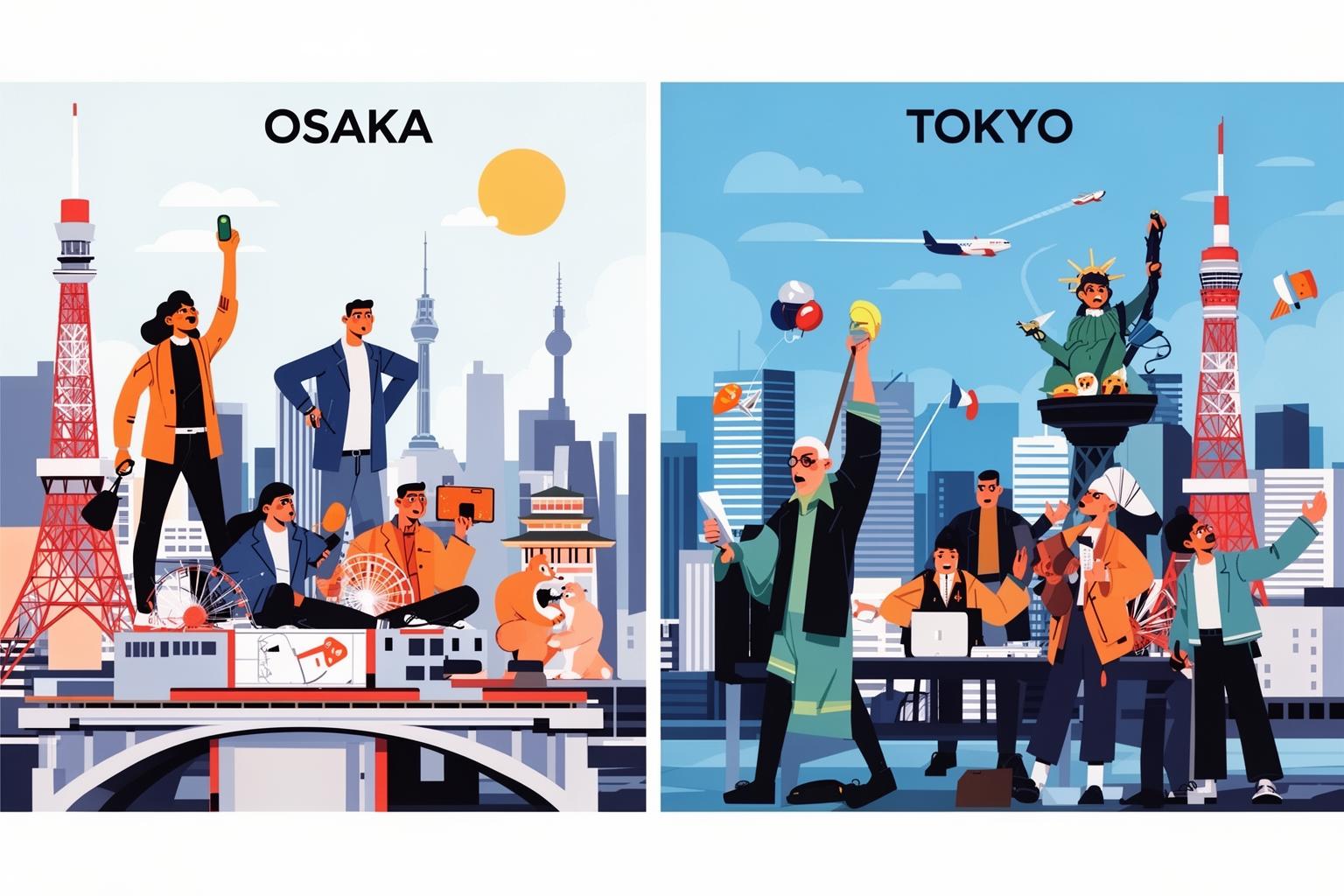
To truly grasp what’s happening in that shotengai, you need to understand the fundamental divide between how Tokyo and Osaka perceive the space between two people. This difference is so profound that it alters the very meaning of a shop counter. For one city, it is a wall; for the other, a bridge. Experiencing both feels like traveling between two completely different countries, not merely two cities on the same island.
Tokyo’s Invisible Wall
In Tokyo, the customer experience is grounded in omotenashi, a form of hospitality that is anticipatory, meticulous, and deeply respectful of personal boundaries. The customer is o-kyaku-sama, an esteemed guest. This status automatically creates an invisible but impenetrable wall between the service provider and the person being served. The aim is perfection and seamlessness. The convenience store clerk will flawlessly perform a script of greetings, confirmations, and farewells. The department store attendant will speak in the most refined Japanese, her movements precise and her expression composed.
This isn’t coldness; it’s a form of professional respect. Their role is to facilitate your purchase without any friction. Your personal life, dinner plans, or marital status are irrelevant details that would only introduce messy, unpredictable humanity into a smoothly running system. The silence between exchanges isn’t uncomfortable; it’s a sign of a well-oiled machine. They are there to serve the customer, not to get to know the person. The countertop marks a formal boundary: on their side, professional duty; on yours, consumer anonymity. It’s clean, predictable, and for many, reassuring. You are left alone with your thoughts, your privacy fully preserved.
Osaka’s Collapsible Counter
In Osaka, that same countertop is seen less as a barrier and more as a shared table. The moment you show interest in a shopkeeper’s goods, you’ve metaphorically pulled up a chair. The concept of o-kyaku-sama still exists, but it is a far more flexible idea. Here, the ideal customer isn’t a silent, honored guest but an active participant in a lively social exchange. The shopkeeper, often the owner and a long-standing member of the neighborhood, isn’t just selling fish; they’re inviting you into their world. In doing so, they need to know a little about yours.
This attitude is a direct legacy of Osaka’s history as the nation’s commercial center, a city of akindo, or merchants. For centuries, business here wasn’t about cold transactions. It was about relationships. Trust wasn’t built on brand names but on handshakes and genuine conversations. Your reputation in the community mattered above all. Being a good merchant meant knowing your customers—not just their buying habits, but their families, challenges, and successes. That heritage runs through the heart of the shotengai. The shopkeeper’s openness isn’t a flaw; it’s the entire system in operation. They’re not trying to be intrusive. They’re simply conducting business the only way they know: personally.
Cracking the Code: What They’re Really Asking
Grasping the historical context is one thing. Facing a rapid-fire barrage of questions about your reproductive choices while trying to buy tofu is quite another. To handle these encounters, you need to learn how to interpret the questions. They seldom concern the literal topic. Rather, each question acts as a tool to chip away at the stranger barrier and reveal the person underneath. It serves as a conversational shortcut to community.
“Where you from?” – The Opening Move
This is almost always the first question, and it’s the most straightforward. In Tokyo, it might be asked with polite curiosity. In Osaka, it’s like a crowbar used to pry open a conversation. The answer doesn’t merely satisfy curiosity; it provides material for further discussion. If you say you’re from Texas, prepare for a monologue about cowboy movies. If you say France, get ready to talk about bread, wine, and a vacation they took to Paris in 1982.
It’s a search for a connection, a shared reference point, no matter how tenuous. The goal isn’t to get your exact location but to jumpstart the banter. It’s their way of saying, “Okay, I see you. You’re not just a wallet with legs. Let’s find something to talk about.” This is the crucial first step in turning you from a faceless foreigner into “John from Australia who likes baseball.” It’s an act of categorization—not negatively, but to place you on their mental map of the neighborhood.
“You married? Got kids?” – The Community Census
Here lies the question that creates the most cultural friction. To most Westerners, and even many modern Japanese, questions from strangers about marital or family status are deeply personal and off-limits. But in the shotengai ecosystem, it’s standard information, similar to asking someone’s name. This isn’t about judgment, but about understanding your role and place within the community’s structure. Are you a young single living alone? A family with small children? A couple starting out?
Each response opens a different path in the social script. If you’re single, expect sympathy, jokes, or unsolicited matchmaking offers. If you have kids, they’ll ask their ages and then start sharing advice on everything from schools to nutrition. They’re conducting a verbal census, mapping the social landscape of their territory. By asking, they signal that they see you as a potential long-term participant, not just a visitor. It’s an invitation to become part of the neighborhood’s fabric. They treat you like a neighbor they’ve known for years, even if you’ve only just met. It’s a sign of acceptance, however bluntly given.
The Follow-Up Question
Of course, it hardly ends with the initial inquiry. If you say you’re unmarried, the follow-up is quick and predictable: “Why not? Better hurry up!” or “Don’t worry, you’ll find someone!” This can feel like heavy social pressure, but it’s important to understand the performative nature of it. This is often conversational play, a familiar routine. It reflects the social norms of their generation, delivered without modern filters.
They’re not necessarily trying to dictate your life choices; they’re filling conversational space with familiar phrases. It’s like someone in the West commenting on the weather. For this generation of Osakans, your marital status carries similar conversational weight. The best way to respond is often to play along. A dramatic sigh and a laugh will get you further than defensiveness. They seek engagement, not a serious discussion about modern relationships.
“What you cookin’ tonight?” – The Practical Inquiry
Often asked as you hold up a piece of produce or stare uncertainly at a cut of fish, this question is perhaps the most misunderstood. It sounds like simple nosiness, another invasion of your private life. But in reality, it represents the pinnacle of Osaka-style customer service. This is not small talk; it’s a diagnostic question.
The butcher isn’t asking about your dinner plans to be intrusive but to recommend the right cut of meat. Saying stew might get you pointed to a tougher, more flavorful cut that cooks down beautifully over time. If you say stir-fry, he’ll suggest something tender and quick-cooking. The vegetable vendor asks because if you’re making nimono (simmered dish), she’ll give you a sweeter daikon radish ideal for slow cooking. She’ll advise buying smaller onions for their stronger flavor in soup.
This is expertise in action. They see themselves not just as sellers but as consultants. Their deep practical knowledge is their greatest asset, and they want to share it. To them, simply selling an ingredient without knowing its purpose is a neglect of duty. It’s proactive, deeply personalized service you won’t find in a sterile Tokyo supermarket where interaction is limited to a barcode scan.
The Unsolicited Advice Department
This practical inquiry naturally opens the door to a flood of unsolicited advice. They won’t just sell you the fish; they’ll tell you exactly how to grill it, what to serve with it, and might even comment on your health. “You look pale today! You need more greens. Here, I’ll throw in some spinach for free.” This omake (freebie) often comes with a dose of grandmotherly concern.
This can feel condescending, as if they assume you don’t know how to care for yourself. But again, it’s about reframing their intent. They’re not questioning your competence; they’re sharing their wisdom. In a community where knowledge was passed down orally, this is a natural, almost instinctive act. They’re guardians of a certain domestic lore and see it as their role to pass it on. It’s a form of care expressed as a command. Resisting it is futile; the best you can do is smile, thank them, and accept the spinach.
The Psychology of Osaka’s Merchant Heart
This style of communication is neither accidental nor merely a collection of individual quirks. It directly reflects a culture shaped by commerce, comedy, and a strong sense of community. Living here means living within that psychological framework, and understanding its foundations is essential to thriving.
Akindo Spirit: Business is Human
At the heart of Osaka lies the akindo, the merchant. While samurai culture influenced Tokyo’s formal and hierarchical character, merchant culture shaped Osaka’s practical, rational, and deeply human-centered nature. For an akindo, a transaction was never solely about exchanging money for goods; it was part of an ongoing relationship. A small sale today could foster a lifetime of loyalty, but only if the human connection was genuine.
This made personality, humor, and sincere interest in the customer’s life crucial business tools. A sharp wit and hearty laugh could build rapport faster than a polite bow ever could. That’s why shopkeepers in the shotengai are so performative. Their personality is their brand. They’re selling you not only vegetables but also a story, a laugh, and a moment of connection. These aspects are inseparable. Removing the personal banter would strip away the core of their business model.
The Disappearance of Boundaries
Japanese culture is well known for uchi-soto, the distinction between one’s “inside” group (family, close colleagues) and “outside” people. In Tokyo, this boundary is rigid and permanent. As a customer, you remain clearly soto. The language used and physical distance maintained all reinforce this divide.
Osaka’s shotengai culture constantly challenges the uchi-soto distinction. Shopkeepers strive to move you from soto to uchi as fast as possible. Personal questions are their tools to achieve this. By learning your name, job, and family situation, they reclassify you. You’re no longer just a customer; you become part of their “inside” circle, their neighborhood family. When the butcher starts calling you by a nickname and sets aside your favorite cut of meat without being asked, it means you’ve crossed over. Though this can feel uncomfortable, it is an honor—it means you’ve been accepted.
Humor as a Lubricant
You can’t talk about Osaka without talking about comedy. The city is the birthplace of manzai, a quick-witted, back-and-forth style of stand-up. The rhythm of boke (the funny fool) and tsukkomi (the sharp straight man) extends beyond the stage; it’s the default mode of communication. Many intrusive questions are just setups for punchlines.
When the shopkeeper asks if you’re married and you say no, her exaggerated gasp and sigh, “Oh, a tragedy! What will your parents think?” isn’t a serious judgment. It’s a boke moment, inviting your tsukkomi. A reply like, “They’re just happy I’m out of the house!” will earn a genuine laugh and instant respect. Viewing these interactions as lighthearted improv rather than serious inquiries can transform the dynamic. It’s a game, and they’re inviting you to join. Laughter is the social lubricant that keeps the whole system running smoothly.
A Foreigner’s Survival Guide to the Shotengai
So, how do you handle this when all you want is to shop for groceries in peace? You have choices. Your approach will depend on your personality and your objectives. Do you want to engage deeply, or simply get your shopping done?
Strategy 1: The Full Embrace
If you’re extroverted, or your aim is to genuinely immerse yourself in the local culture, the best tactic is to dive in wholeheartedly. Respond enthusiastically to their questions, then turn the spotlight on them. Ask about their own lives: “Married? Yes, for five years. What about you? How long have you been married? You must have a wonderful family! Are your kids close by?” This shifts the one-sided interrogation into an authentic, two-way conversation.
Share aspects of your life. Vent about your boss. Tell them about your cooking mishaps. This openness signals trust, which will be rewarded many times over. Soon, you’ll no longer be just a customer; you’ll receive the finest produce, extra portions, freebies, and a daily dose of warm, if lively, conversation. You’ll become a true regular, a valued part of their daily routine.
Strategy 2: The Polite Deflection
If you’re more private, you don’t need to sacrifice your boundaries to get through these interactions. You can handle them without causing offense. The trick is to be friendly yet vague. Perfect the art of the non-answer. When asked if you’re married, a cheerful “Who knows what the future holds!” with a laugh works perfectly. It’s upbeat but reveals nothing.
The most effective move is to redirect. After a vague reply, immediately shift to a question about the products: “My plans for the future are a mystery! But this fish looks amazing. Is it good for grilling?” This shows you’re happy to engage on their expertise, but your personal life is off-limits. It respects their attempt to connect while gently reinforcing your boundary. A smile is your strongest defense. As long as you stay pleasant, they’ll likely pick up the hint without feeling rejected.
Strategy 3: The “Tokyo Wall” (Use with Caution)
Your third choice is to adopt the Tokyo style of interaction. Give short, quiet, literal answers. Offer no extra information. Avoid banter. This “Tokyo Wall” approach generally works. You’ll be able to complete your purchase and leave.
However, be aware of the cultural consequences. In Osaka, this behavior is often interpreted as cold, arrogant, or unfriendly (tsumetai or suneteiru). The shopkeeper might assume you dislike them or think you are too good for their shop. While you won’t face hostility, you’ll encounter a cold professionalism that feels distinctly un-Osaka-like. You’ll get your potatoes, but miss out on what makes these places special: the relationships, the omake, the sense of belonging. You’ll remain soto, an outsider looking in.
Understanding the “Why” is Key
Ultimately, regardless of the strategy you pick, the most important skill is understanding. When you recognize that the intrusive questions come from a place of community-building rather than ill intent, they lose their power to irritate. You can start to see them not as invasions of privacy, but as awkward, sincere invitations to connect. You don’t have to accept every invitation, but simply knowing it’s being offered can transform your entire perspective on daily life in this city.
Beyond the Stereotype: Not Just “Friendly”
To describe this complex, high-energy, and often abrasive social dynamic simply as “friendly” does it a great injustice. Tokyo’s friendliness is passive and polite, wishing you well from afar. In contrast, the “friendliness” of an Osaka shopkeeper is an active, engaged interaction. It confronts you directly, demands your attention, and pulls you into the experience.
It’s not always comfortable. It’s not always easy. But it is always, undeniably, genuine. In an increasingly anonymous and transactional world, the Osaka shotengai stands as a bastion of raw humanity. The shopkeepers reveal their true selves, without pretense or polish, and they ask for your authentic self in return. The constant questions and unsolicited advice are the vibrant, imperfect sound of a community that is alive and thriving, a community determined to know its neighbors. It’s a challenge, but also a gift. Learning to embrace it is the key to truly understanding the loud, chaotic, and deeply human heart of Osaka.