
Walk into any Osaka neighborhood, and you’ll find it. A covered street, buzzing with a chaotic energy that feels a world away from the polished silence of a Tokyo department store. This is the shōtengai, the local shopping arcade. Your first instinct might be to label it. Maybe it’s a relic, a charming throwback to a bygone era. Maybe it’s a tourist street, a place for photogenic snacks and souvenirs. In some cases, like the famous Kuromon Ichiba, that’s not entirely wrong. But to understand Osaka, to really get a feel for the city’s pulse, you have to look past that first impression. You have to realize that for the people who live here, the vast majority of shōtengai aren’t attractions. They are the essential, thrumming, beating heart of daily life. They’re the city’s open-air living room, its social network, and its pantry, all rolled into one noisy, vibrant, and unapologetically human package. In Tokyo, life might revolve around the train station. In Osaka, it revolves around the shōtengai. It’s where the city’s true personality isn’t just on display; it’s performed, negotiated, and celebrated every single day. Forget what you think you know about Japanese shopping. This is a different beast entirely.
While the shōtengai represents the enduring, grassroots soul of Osaka, the city also sees the closing of chapters tied to its modern history, such as the impending closure of the Senri Hankyu Hotel, a landmark born from the 1970 Osaka Expo.
The Shōtengai as Osaka’s Social Operating System
Before you even make a purchase, you hear it. The shōtengai has a distinctive soundscape all its own, sharply contrasting with the quiet, orderly atmosphere of commerce found elsewhere in Japan. It’s a symphony of human noise and serves as the first indication that you’re in a place operating on a different social wavelength.
A Symphony of Shouts and Banter: The Soundscape of Commerce
In a Tokyo supermarket, the “Irasshaimase!” (Welcome!) is a polite, almost mechanical murmur. In an Osaka shōtengai, it bursts out as a full-throated roar from the vegetable seller, a bold declaration of presence. It’s not just directed at you; it’s for everyone within earshot. It says, “My daikon radish is the crispiest around, and I’m ready to make a deal!” This isn’t a place for quiet reflection. It’s a stage for performance. The fishmonger isn’t merely selling fish; he’s putting on a show, his booming voice carrying over the sizzle of a nearby takoyaki stand. The local greeting isn’t a subdued nod—it’s a hearty “Maido!” (Thanks, as always!) or the classic Osaka business query, “Mōkarimakka?” (Making money?), to which the typical reply is a wry “Bochi bochi denna” (So-so, you know). This isn’t small talk; it’s the rhythm of commerce, a verbal handshake that reinforces connections. Shopkeepers shout jokes to each other from across the street. Customers and vendors exchange rapid-fire banter that sounds less like a transaction and more like a family quarrel. To an outsider, this wall of sound might feel overwhelming, even a bit aggressive. But for an Osakan, it’s the sound of life. It’s confirmation that the community is vibrant, engaged, and open for business. Silence breeds suspicion; noise signals vitality.
The Unspoken Currency of ‘Kao’ (Face)
In the impersonal world of chain stores and online shopping, you are just a data point, a record of transactions. In a shōtengai, you are a kao—a face. Becoming a regular, a jōren-san, means more than repeat business; it’s about cultivating a tangible social identity within your neighborhood. It starts small. The first time you buy from the tofu shop, you’re simply a customer. After a few visits, the elderly woman behind the counter might inquire about where you’re from. A few more visits later, she remembers you prefer the firm momen tofu over the silky kinu. Before long, she’s setting aside the freshest block just for you before you ask. This is the currency of the shōtengai: a system of mutual recognition and trust that no loyalty card can match. It’s the butcher who, knowing you’re making curry, offers you a slightly cheaper cut of beef and shares tips on how to cook it tender. It’s the fruit stand owner who slices you a piece of a new melon variety—not as a free sample, but as a shared experience. “Try this; it’s exceptional today.” This system creates a safety net. Imagine rushing out to grab soy sauce only to realize you’ve forgotten your wallet. At a convenience store, that’s a moment of embarrassment and a lost sale. But at the local shōtengai shop where you have kao, the owner will likely just wave it off and say, “Akan, akan, just pay me next time you’re here.” It’s a small gesture, but it speaks volumes. It means you are part of the ecosystem. You are trusted. Your face is your credit.
Not Just Shopping, It’s an Extension of Your Kitchen
People often misinterpret the role of a shōtengai. They notice the food stalls and assume it’s all about snacks. However, the truth is much more intertwined with daily home life. For many families in Osaka, the shōtengai isn’t a place to stock up for the week; it’s a spot they visit almost every day. It serves as a communal, out-of-home extension of the kitchen.
The ‘Konamon’ Culture in Full Glory
Osaka is famously known as the capital of konamon, or “flour-based foods.” The shōtengai is its natural environment. The takoyaki (octopus balls), okonomiyaki (savory pancakes), and kushikatsu (deep-fried skewers) stalls aren’t just attractions for tourists. They play a crucial role in the local food culture. Schoolchildren pick up trays of takoyaki on their way home. Parents, too exhausted to cook, grab okonomiyaki for dinner. This culture of casual eating, called kuiaruki (literally, ‘eating while walking’), is much more relaxed here than in other parts of Japan. While eating while strolling is often frowned upon in Kyoto or Tokyo, in an Osaka shōtengai, it’s perfectly normal. The arcade essentially becomes a dining room. Yet more vital are the sōzai-ya, delis offering a dazzling variety of home-style side dishes. You’ll find shiny heaps of simmered pumpkin, hijiki seaweed salad, fried mackerel in sweet vinegar, and countless other dishes your grandmother might make if she had the time. These shops are the secret weapon for Osaka families, enabling a home-cooked meal experience without hours of preparation. You buy fresh fish from the fishmonger, have rice cooking at home, and round out the meal with two or three sides from your favorite sōzai-ya. It’s a modular, efficient, and delicious way to eat that depends entirely on the arcade’s ecosystem.
The Hyper-Specialization of Shops: Contrasting Tokyo and Osaka
In Tokyo, convenience often takes priority. The large supermarket in a department store basement, where you can purchase everything from avocados to floor cleaner in one stop, represents the ideal of efficiency. Osaka’s shōtengai, however, follow a completely different logic. They are sanctuaries of hyper-specialization. You don’t just go to “the store.” You visit the tofu maker for tofu, then the kamaboko (fish cake) specialist for oden ingredients. Next comes the fishmonger specializing in sourcing and cutting the best seafood. Then the pickle shop, which sells dozens of varieties of tsukemono and nothing else. From a Tokyo perspective, this seems highly inefficient. Why make five stops when one would suffice? Osaka’s answer lies in a deep respect for kodawari, an almost obsessive dedication to one’s craft. You go to the tofu artisan because all he does—and all his father did—is make tofu. He understands the beans, the water, the exact temperature. You’re not just buying a block of soy protein; you’re purchasing his accumulated knowledge and pride. This creates a different kind of consumerism. It’s not about saving time but about maximizing quality and flavor. It’s about composing a meal from a group of specialists, each a master of their craft. The shōtengai is the arena where these artisans compete and collaborate, and your dinner is the delicious outcome.
The Architecture of Community: Why the Roof Matters
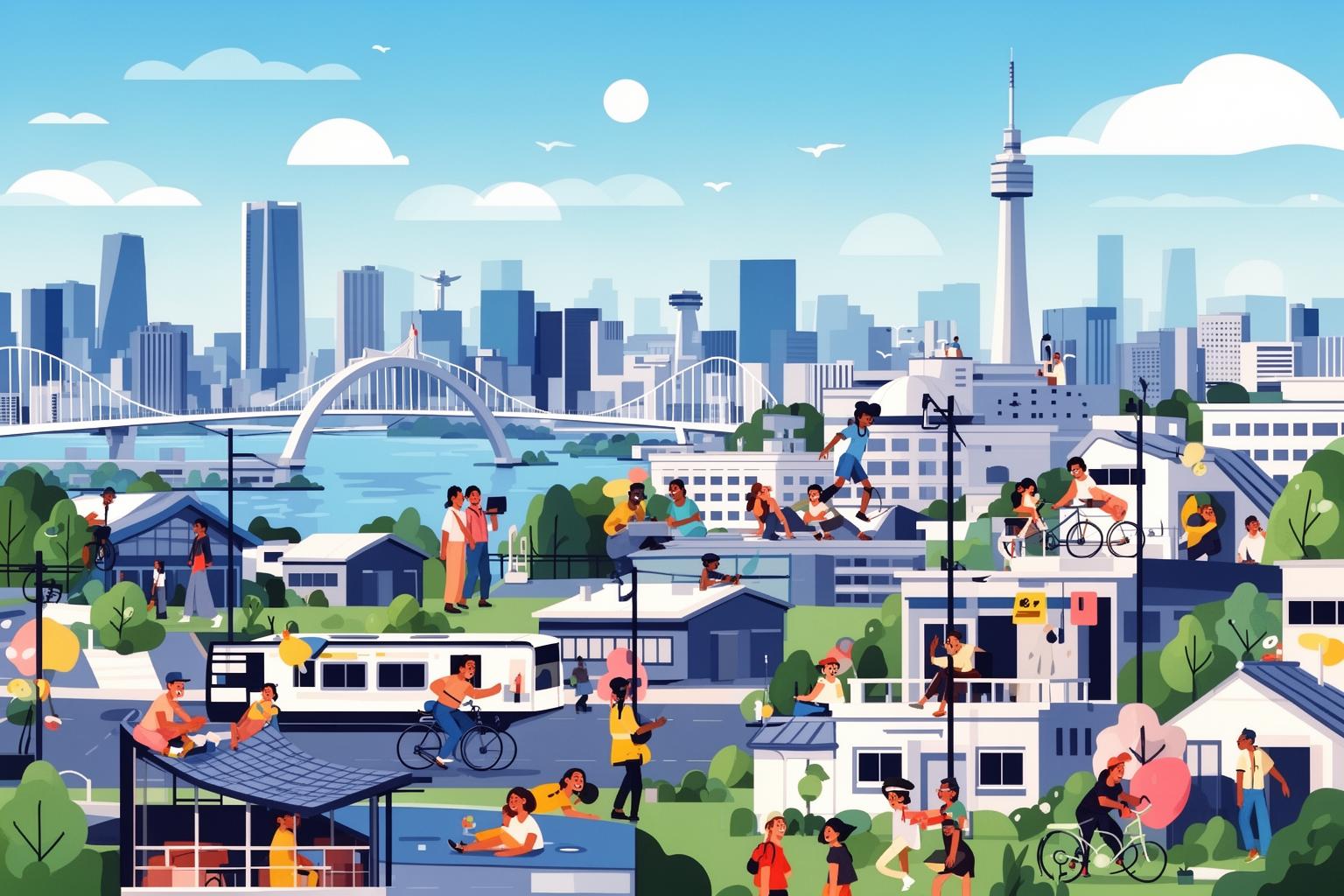
The most distinctive physical feature of a shōtengai is its roof. This simple architectural element does more than just keep the rain away; it fundamentally transforms a public street into a shared communal space, influencing how people interact within it.
An All-Weather Living Room
From a practical standpoint, the arcade roof is a blessing during Osaka’s humid, rainy summers and cold winters. It forms a climate-controlled corridor where daily life can continue unaffected by the weather. This fact cannot be emphasized enough. It ensures the shōtengai is always a comfortable and accessible place. Yet, the impact goes beyond practicality. The roof instills a sense of enclosure, turning an open street into a large, elongated room. It stops being merely a passageway and becomes a destination. That’s why you’ll see groups of elderly women, the well-known ‘Osaka obachan,’ pulling up plastic stools to chat for hours, blocking half the lane without concern. It’s also why children chase each other in zig-zags as their parents shop. The space feels safe, contained, and managed. It’s a pedestrian-first environment where the usual street rules don’t apply. This semi-private, all-weather setting encourages people to linger. It’s a place to hang out, not just pass through — serving as the neighborhood’s de facto community center.
A Calendar of the Community
The shōtengai doesn’t just provide shelter to the community; it also marks the passage of time. The decorations hanging from the arcade’s ceiling create a living calendar for the neighborhood. In early July, the entire arcade is adorned with colorful, intricate streamers for the Tanabata star festival. In August, paper lanterns appear, signaling the approach of the local Obon summer festival. When winter comes, you see bright Christmas tinsel and New Year’s banners wishing prosperity. These aren’t mere decorations; they are public statements of the season, a shared visual rhythm for everyone walking beneath them. The arcade also serves as a venue for community events. Local festivals, performances by the neighborhood kids’ band, and even political stump speeches all take place under the shelter of the shōtengai. The merchants association often acts as a quasi-governmental organization, coordinating events and caring for the neighborhood. This centralization of community life distinguishes the shōtengai from more fragmented urban settings. Here, you don’t need to check a website to find out what’s happening; you just walk down the street and look up.
Decoding the ‘Osaka Mindset’ Through Shōtengai Interactions
To truly understand how people in Osaka think, you need to observe them conducting business. The shōtengai is the ideal place to see the city’s distinctive commercial culture in action. This culture is built on personality, practicality, and a passion for human connection.
The Art of the ‘Nebiki’ (Price Haggle)
One of the most common questions foreigners ask is: can you haggle in Japan? The usual answer is no. Yet Osaka is the exception, and the shōtengai is where it happens. However, it’s important to realize that it’s not the aggressive, price-cutting bargaining you might find elsewhere. Osaka nebiki is a subtle, relationship-based dance. You don’t haggle with a stranger over a single item—that’s considered rude. The dance begins when you become a regular, or when you’re purchasing multiple items. It’s less of a direct demand and more of a playful suggestion. You might say something like, “I’m buying all three of these, can you chotto makete kureru?” (give me a little discount?). The shopkeeper might laugh and knock off a hundred yen. More often, rather than a discount, they’ll offer you an omake—a little extra. You buy five tomatoes, and they throw in a sixth for free. You buy a large piece of fish, and they might add some extra ginger. The goal isn’t solely to save money. It’s a form of communication. A successful negotiation, even a small one, signals a good rapport between buyer and seller. It’s a small victory in the shopping game. This reflects two core Osaka values: the practical desire to get a good deal (etoko dori) and the idea that human relationships should always be more flexible than fixed price tags.
‘Akinai’ as Communication, Not Just Commerce
In the Osaka dialect, there’s a word: akinai. It means business or trade but carries a much deeper, more humanistic meaning than its English counterpart. The local philosophy is often expressed as, “Shobai wa akindo”—business is about the people who do it. This means the merchant’s personality is as important as, if not more than, the product they sell. Osakans often prefer buying from a friendly, humorous shopkeeper they like over a grumpy one, even if the price is slightly higher or the location less convenient. The relationship adds value to the transaction. The shōtengai is the physical embodiment of this idea. It is a curated collection of personalities: the gruff-but-fair butcher, the perpetually cheerful fruit vendor, the gossipy pickle lady. Shopping here is a social experience. You catch up on neighborhood news, share a laugh, get tips on how to cook what you just bought. This contrasts sharply with the cult of silent, frictionless efficiency that characterizes much of modern retail. In Osaka, friction—the chatting, the haggling, the jokes—is the whole point. It’s what transforms a simple errand into a meaningful human exchange. It’s what makes a neighborhood feel like home.
What a Shōtengai is NOT
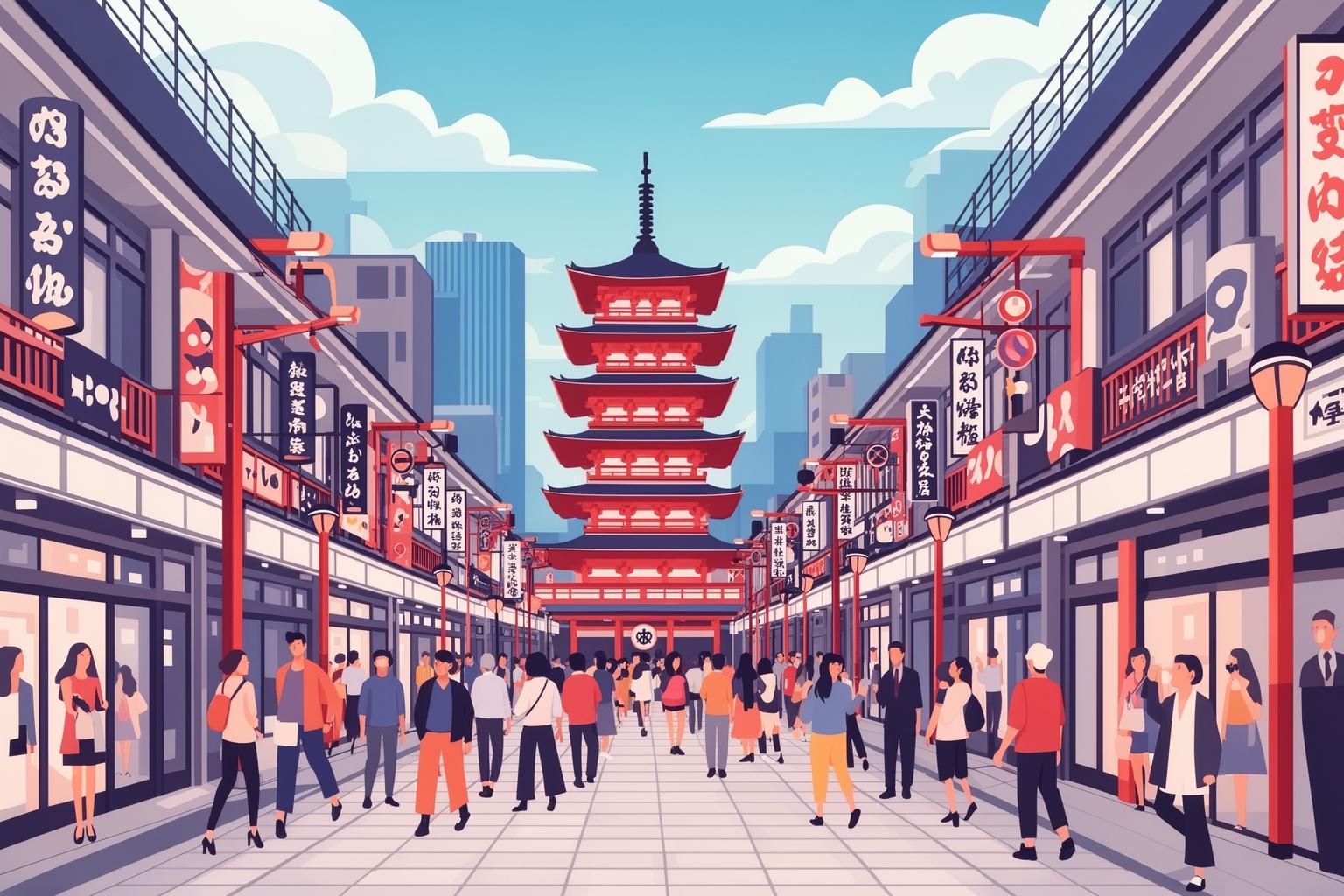
To complete the picture, it’s equally important to understand what a typical neighborhood shōtengai is not. Clearing up these common misconceptions is essential to truly appreciating the arcade as an authentic, functioning component of the city’s infrastructure.
It’s Usually Not a Tourist Trap
While areas like Dotonbori’s covered streets and Kuromon Ichiba market in Namba have recently become popular tourist spots, characterized by inflated prices and offerings aimed at photogenic, single-serving snacks for visitors, these are exceptions rather than the norm. For every Kuromon, there are hundreds of other shōtengai—such as the expansive Tenjinbashisuji, the bustling Sembayashi, or the intimate Miyakojima—that primarily serve locals. The test is straightforward: observe the shops. A genuine shōtengai forms a complete ecosystem for everyday life. Nestled between the butcher and the tofu maker, you’ll find a small clinic, a dry cleaner, a bicycle repair shop, a dusty bookstore, a barber, and a store selling affordable yet practical clothing. This is a space designed to meet residents’ needs, not tourists’ desires. The presence of these ordinary but vital services is a defining feature of a true, functioning arcade. It serves the person living on the third floor above the fishmonger, not the visitor staying for three days.
It’s More Than Just Nostalgia
With their Showa-era architecture and abundance of family-run shops, it’s easy to romanticize shōtengai as living museums or preserved remnants of a simpler era. But to view them solely as guardians of tradition ignores their vibrant, evolving nature. They are not frozen in time; they are living, breathing entities that are constantly, albeit gradually, changing. Look closely, and you’ll notice this transformation. An old rice shop operated by the same family for three generations might close, only for a young entrepreneur to open a chic craft coffee stand in its place a few months later. A third-generation fishmonger might launch an Instagram account to showcase his daily catch. You may find a sleek, modern bakery offering artisanal sourdough adjacent to a 100-year-old store selling handmade senbei rice crackers. This blend of old and new is what keeps the shōtengai vital. Their endurance isn’t rooted in sentimentality but in their deep social and economic utility. They persist because they work. They deliver value—in freshness, expertise, and above all, human connection—that larger, more modern retailers simply cannot match. They embody the past, present, and future of Osaka neighborhood life simultaneously.