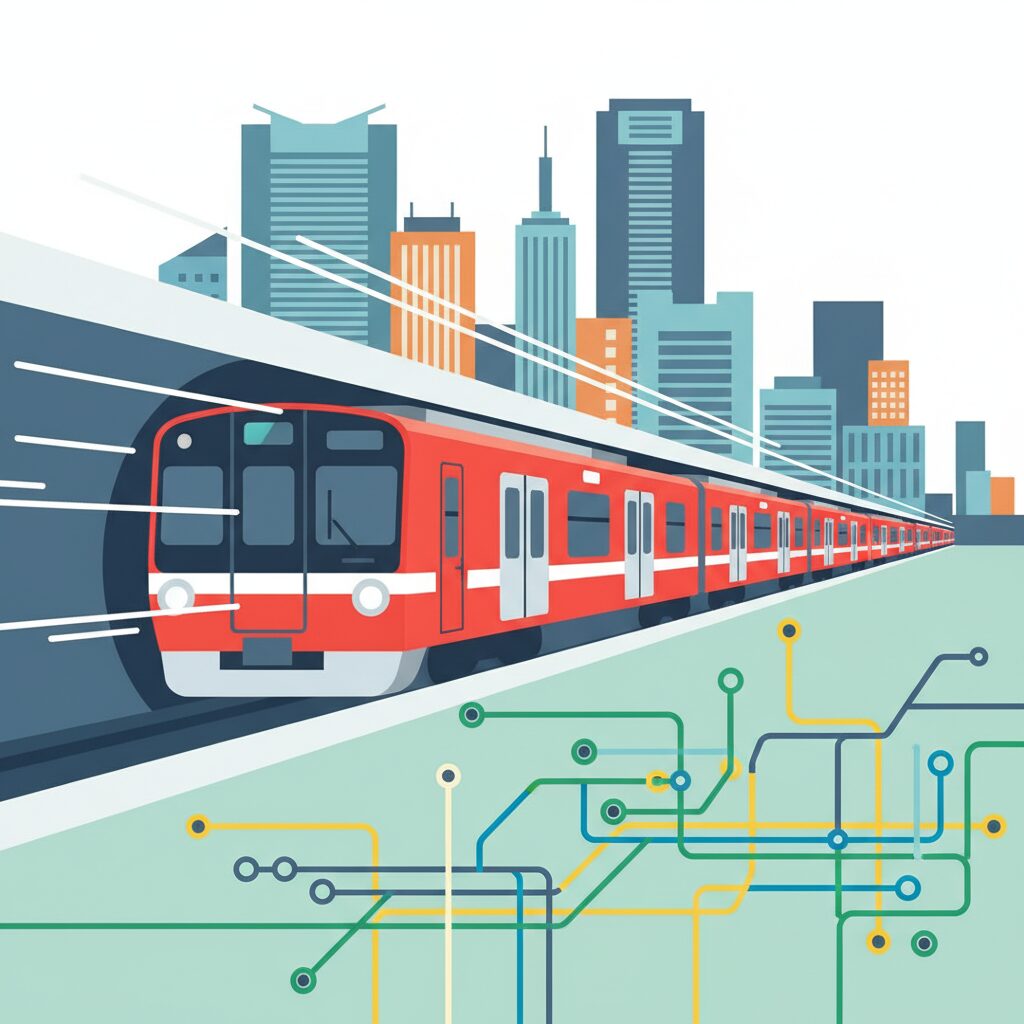
“Where do you live?” In Tokyo, the answer is a neighborhood. Shimokitazawa. Kichijoji. Daikanyama. It’s a statement of tribe, of lifestyle. In Osaka, the first question is different. “Nani sen?” What line? And if your answer is “Midosuji,” a silent understanding passes. Ah, you’re that kind of person. You’re plugged into the main circuit. The Midosuji Line isn’t just a subway route; it’s the city’s central nervous system, a high-voltage artery pumping life between the two poles of Osaka’s identity: the polished corporate north of Umeda and the vibrant, chaotic south of Namba. Choosing to live along this crimson streak on the map is less a matter of geography and more a declaration of intent. It’s a choice to live life at the city’s frenetic pace, to prioritize speed and access above all else. But for every person who thrives on this relentless energy, another finds solace one transfer away, on a quieter line where the city’s pulse softens to a gentle hum. Before you sign a lease, you need to ask yourself: Are you built for the main artery, or do you belong in the capillaries, where neighborhood life flows at a more human speed?
If you’re drawn to the city’s frenetic pace but still value practicality, you might find a kindred spirit in Osaka’s unique cost-performance culture.
The Midosuji Mindset: A Philosophy of Perpetual Motion
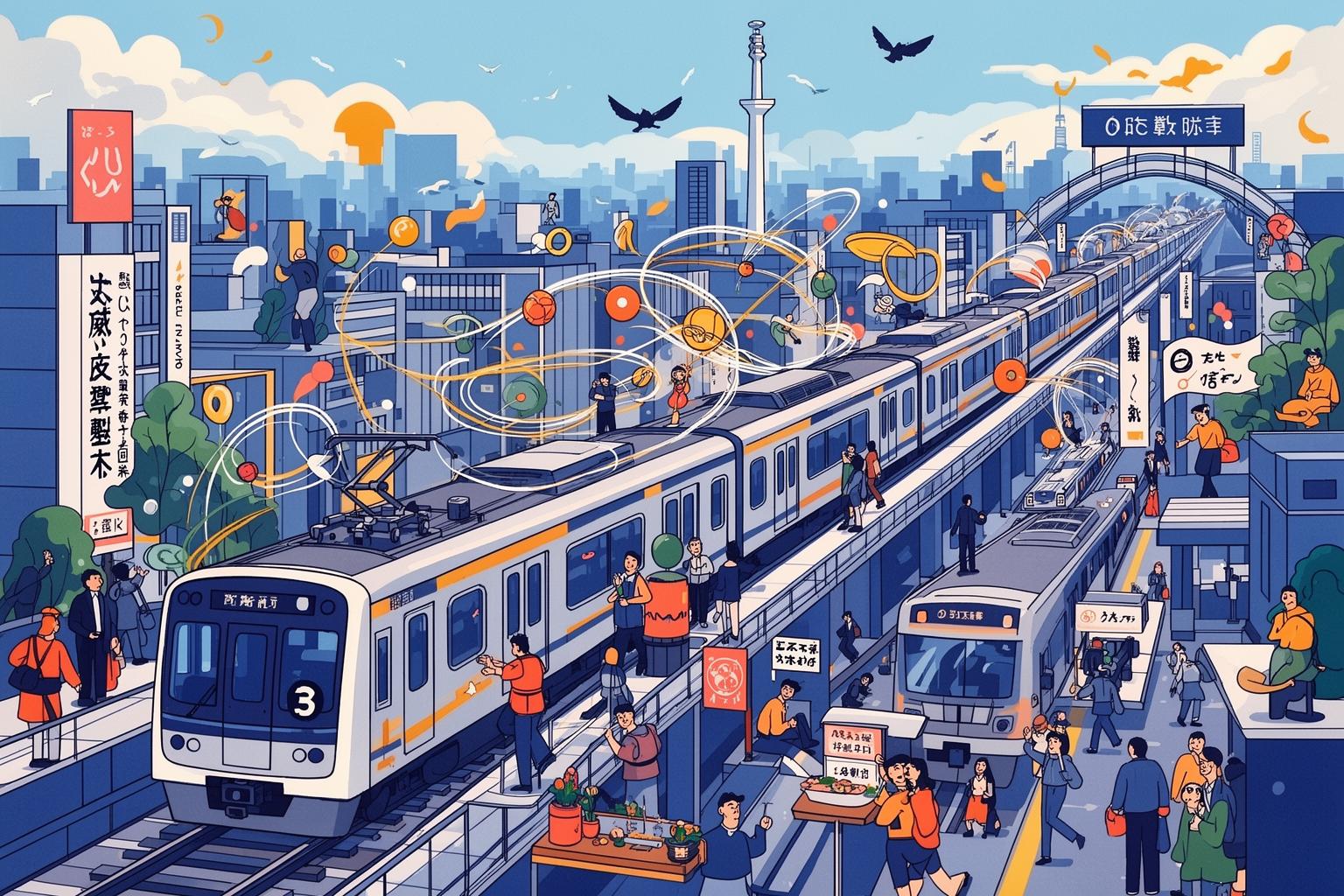
Living along the Midosuji Line means adopting a specific mindset. It’s an approach grounded in efficiency, where the shortest route between two points is more than just geometry—it’s a way of life. The line itself exemplifies this ideal. It cuts straight and decisively through the city’s core, linking Shin-Osaka, the Shinkansen gateway, directly with Umeda, Honmachi, Shinsaibashi, Namba, and Tennoji. There are no winding detours or quaint little stops in the city center. Every station is a major hub, a center of activity with clear purpose. Those who ride the Midosuji don’t browse; they navigate. They don’t meander; they act.
This attitude draws a distinct crowd. Young professionals, consultants, and ambitious creatives gravitate towards apartments near these stations. For them, time is the ultimate asset. Being able to get from their desk in a Yodoyabashi office tower to a dinner meeting in Namba within twelve minutes is not a luxury—it’s a strategic edge. Here, convenience forms the social fabric. Plans come together and unfold with impressive speed. “Want to grab a drink after work?” On the Midosuji, that question isn’t for next week; it’s for the next hour. The whole city is your playground, and your transit card is a master key. There’s an unmistakable feeling of being at the epicenter, a sense that if something important is happening in Osaka, it’s happening just a few stops away, in either direction.
This line serves as the great connector of Osaka’s dual nature. It unites the contrasting identities of “Kita” (North) and “Minami” (South), as different as night and day. Kita, anchored by Umeda, is Osaka’s sleek, corporate face—a realm of glossy department stores, luxury hotels, and towering office buildings. The vibe is sharp, professional, and reminiscent of Tokyo’s financial districts. Minami, with Namba and Shinsaibashi at its heart, is the city’s vibrant, untamed soul. It’s loud, colorful, chaotic—a maze of covered shopping arcades, tiny bars, street food stalls, and theaters. It’s where Osaka’s bold, down-to-earth spirit is born. A Midosuji resident doesn’t have to choose between the two. They can work amid Kita’s polished world and, fifteen minutes later, lose themselves in the neon-soaked sensory rush of Minami. Their identity isn’t defined by a single neighborhood’s character; it’s shaped by the line that links them all. They are, essentially, true Osakans—at ease in a boardroom or at a back-alley takoyaki stand alike.
The Sound and the Fury: The Unfiltered Daily Experience
The trade-off for this unmatched access is a life lived without a volume control. The Midosuji Line is relentlessly and unapologetically loud and crowded. This isn’t the gentle ebb and flow of a suburban line; it’s a constant, surging tide of people. During the morning rush hour, trains arriving from northern suburbs like Senri-Chuo or Esaka are already packed to capacity by the time they reach Umeda. Boarding isn’t a casual walk; it’s a strategic squeeze, finding a tiny space and becoming part of the moving mass. There is no personal space, only shared momentum. Foreigners used to a certain bubble of personal territory find this the most startling aspect. It’s not rudeness; it’s physics. It’s simply the reality of funneling a massive slice of a metropolis’s workforce through a single channel.
The stations themselves function as ecosystems unto themselves. Umeda Station is a sprawling, multi-level giant that feels less like a train station and more like an underground city. It links to multiple other train lines, vast shopping malls, and a bewildering network of tunnels. Newcomers often refer to the “Umeda labyrinth,” where you can easily get lost for an hour trying to find the right exit. Namba Station is equally expansive but with a rougher, more chaotic vibe. The sounds differ too. In Umeda, you hear the sharp click of heels on polished floors and the hum of commercial drive. In Namba, it’s a cacophony of pachinko parlors, street performers, and shopkeepers’ shouts. Living along the Midosuji means these environments aren’t just places you visit; they become your daily gateways, the front doors to your commute.
This experience contrasts with Tokyo’s famously complex yet orderly system. While Tokyo’s Shibuya or Shinjuku stations are larger and more crowded, there is a certain choreographed order amid the chaos. Osaka’s Midosuji feels rawer, more direct. The flow of people is less like a managed river and more like a powerful current. There’s an unwritten rule here: know where you’re going and move with purpose. Hesitation is the cardinal sin. Stopping mid walkway to check your phone will merit a barrage of pointed “tsk” sounds and perhaps a gentle but firm shoulder nudge. This isn’t aggression; it’s the enforcement of the line’s core principle: keep moving. You pay for this lifestyle not just in rent, which tends to be higher along this prime corridor, but with a piece of your daily tranquility.
The Case for the Side Streets: Life on the Tanimachi, Sakaisuji, and Yotsubashi Lines
For many, the nonstop intensity of the Midosuji is too high a price to pay for convenience. These are the people who consciously choose to live “off-Broadway,” on one of Osaka’s other vital but less hectic subway lines. Their lifestyle involves making just one transfer, deliberately trading five to ten minutes of travel time for a vastly different daily atmosphere. Newcomers often misunderstand this choice, seeing the subway map and assuming the red line is the only one that matters. For a large number of Osakans, the best life can be found in the city’s quieter veins.
The Tanimachi Line: Neighborhood Charm and a Slower Pace
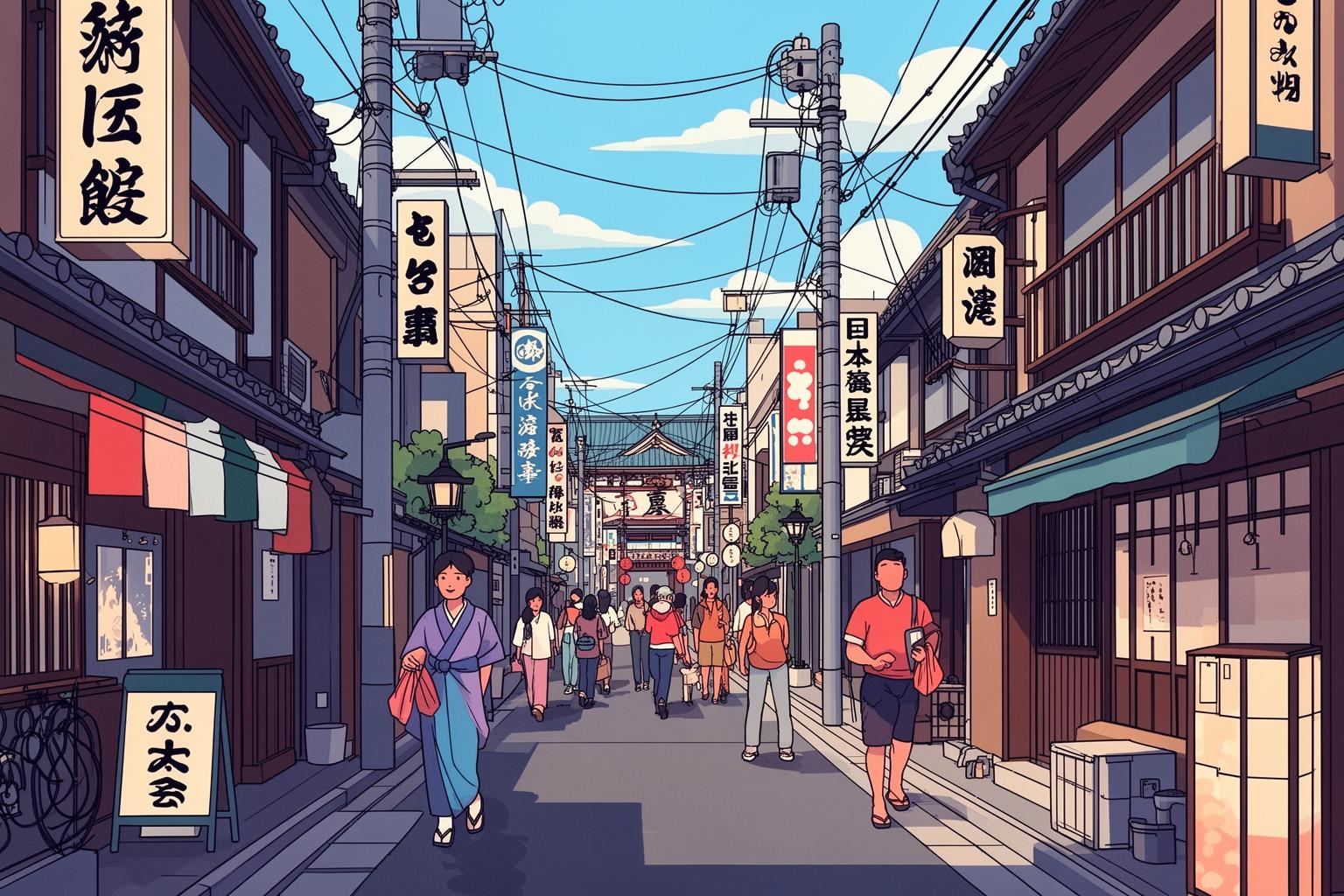
Running parallel to the Midosuji just to the east, the purple Tanimachi Line is the quintessential neighborhood line. It serves areas that feel like an entirely different city. Take Tanimachi 6-chome (“Tan Roku”) or the area around Tenjinbashisuji 6-chome, where the urban scene shifts from towering office buildings to low-rise apartments, ancient temples, and most importantly, sprawling shotengai (covered shopping arcades). Tenjinbashisuji Shotengai, Japan’s longest, stretches 2.6 kilometers and is a microcosm of traditional Osaka life. It’s home to legacy tofu shops, family-run fruit stands, and tiny cafes where elderly residents gather to gossip over coffee.
Living here means your daily life is rooted in community. You don’t just live in a building; you live in a neighborhood. You recognize the butcher, the baker, and the old woman who sweeps the pavement outside her shop each morning. The pace of life follows the rhythm of local shops, not the relentless schedule of corporate headquarters. The mindset of a Tanimachi Line resident values sanctuary. Their home is a retreat from the city’s hustle, not merely a base camp for it. They accept transferring at Higashi-Umeda to reach the main Umeda station because the reward is a peaceful evening stroll through a familiar, friendly street. It’s a life that feels more settled, rooted, and deeply connected to a specific place rather than the abstract concept of the “entire city.”
The Yotsubashi Line: The Midosuji’s Savvy, Quieter Twin
To the west of the Midosuji runs its blue-hued counterpart, the Yotsubashi Line. For an important stretch, from Daikokucho to Nishi-Umeda, it shadows the Midosuji’s path, often just one city block away. Living on the Yotsubashi is what could be called the ultimate Osaka life hack. It’s ideal for those who want the convenience of a central location but cannot endure the daily crush of the Midosuji. The stations are smaller, the platforms less crowded, and the trains noticeably calmer.
Nishi-Umeda places you right at the edge of the Umeda hustle, but in a far more civilized way. Higobashi and Honmachi provide access to the business district with a more relaxed, professional atmosphere. The area around Yotsubashi station is a trendy enclave of furniture stores, cafes, and boutiques, adjacent to the fashionable Horie neighborhood. Those who choose the Yotsubashi Line tend to be pragmatists—the insiders who have figured out how to enjoy 90% of the Midosuji’s benefits with only 50% of its stress. They might work in the same Umeda office as colleagues residing on the Midosuji line, but their commute begins and ends with a deep breath rather than a battle for air. It’s a subtle yet profound difference—one that reflects a desire for balance and a rejection of the notion that speed must always come at the expense of sanity.
Who Are You in Osaka? The Train Line as a Statement of Identity
In Osaka, more than in Tokyo, your main train line becomes a shorthand for your personality and priorities. It’s an essential part of how you present your life to others. Mention living along the Midosuji Line, and people will envision a fast-paced work life paired with even faster social activities, a schedule filled with engagements from Kita to Minami. Your existence is characterized by movement and accessibility. Though you may grumble about the crowds, you secretly thrive on the energy. Your apartment is likely a modern, compact “mansion,” valued for its closeness to the station rather than its size. You view the city as a series of destinations to be reached as efficiently as possible.
In contrast, if you say you live on the Tanimachi Line, a different picture arises. People imagine a lifestyle focused on a local shotengai, a slower pace, and a stronger bond with a single neighborhood. You come across as someone who values community and comfort. You probably own a bicycle that you use for nearby errands. Your ideal weekend isn’t a hectic tour of the city’s hotspots but a relaxed afternoon at a neighborhood café followed by grocery shopping where vendors know you by name. You’ve chosen a part of Osaka to call home, nurture, and belong to.
This is a crucial point that foreigners often overlook. They arrive with a “center-is-best” mindset, assuming a Midosuji address is the only one worth considering. They look at the map and fixate on the red line, fearing that anything else means exile to the suburbs. An experienced Osakan, however, recognizes the trade-offs. They may regard a Midosuji address not with envy, but with a hint of sympathy. “It must be so noisy,” they might say, “and so impersonal.” They understand that the “best” place to live isn’t the most central spot, but the one that suits your noise tolerance, need for community, and personal definition of a good life.
Finding Your Rhythm in the City’s Pulse
Ultimately, choosing between the Midosuji Line and a quieter route is a decision about how you want to experience Osaka. The city offers various rhythms, and where you live determines which one greets you each morning. The Midosuji Line is the city’s strong, pulsating heartbeat—a constant, driving force fueling its commerce and nightlife. Living there means placing your ear directly against the city’s chest, feeling every pulse and surge of energy. It’s an exhilarating, demanding, and completely immersive way to live, suited for those who want to be engulfed by the city and become part of its relentless flow.
Yet just a few hundred meters away, running parallel, the city’s rhythm shifts. It slows to a steady, reliable tempo on the Yotsubashi Line or a gentle, flowing melody on the Tanimachi Line. Life here isn’t about conquering the city but about finding your own space within it. It’s about recognizing that connection isn’t only about speed but also about depth. This is for those who prefer to hear the city’s heartbeat from a comfortable distance, appreciating its power without being overwhelmed. There is no right or wrong choice—the only question is, which rhythm speaks to you? Listen carefully, and Osaka will reveal where you belong.