I’ll never forget my first serious business meeting in Tokyo. It was a masterclass in choreographed formality. We sat in a sterile, silent room, precisely arranged. The business cards were exchanged with a two-handed, reverential bow, each one studied for a moment before being placed carefully on the table, a map of the corporate hierarchy. The conversation was a delicate dance of pleasantries, indirect statements, and cautious consensus-building. We spent an hour talking around the subject before a decision was gently hinted at, to be confirmed later via a series of emails. It was elegant, respectful, and utterly exhausting. A week later, I had a meeting in Osaka. I walked into a cluttered office buzzing with noise. The CEO, a man in his sixties wearing a casual polo shirt, waved me over to a small table littered with papers and tea cups. “Mia-san! Good to see ya! So, this project of yours,” he began, before I’d even fully sat down. “The idea is good, but your price is too high. Here’s what I can do.” There was no formal card exchange, no dance. We laughed, we argued, we haggled like we were buying fish at a market. We left an hour later with a handshake deal, a belly full of cheap takoyaki he’d ordered in, and a genuine sense of connection. That’s when it hit me. These weren’t just two different cities; they were two different operating systems for life, and Osaka’s was written in the language of the akindo, the merchant.
For anyone living here, trying to understand the pulse of this city, you have to look past the neon lights of Dotonbori and into the mindset that built it all. It’s a way of thinking forged in centuries of commerce, where pragmatism, personality, and the art of the deal aren’t just business skills—they’re survival skills that permeate every aspect of daily existence. This isn’t the polished, process-driven Japan you see in corporate brochures. This is Osaka, where the rules are more like guidelines, and the most valuable currency is a sharp mind and a quick wit. Forget what you think you know about Japanese business culture. Here, the game is played differently, and learning its rhythm is the key to truly living in this vibrant, chaotic, and wonderfully human city.
This pragmatic, cost-conscious mindset is evident even in daily life, where Osaka’s community-managed bicycle parking systems offer significant savings for commuters.
The Soul of the Akindo: More Than a Merchant
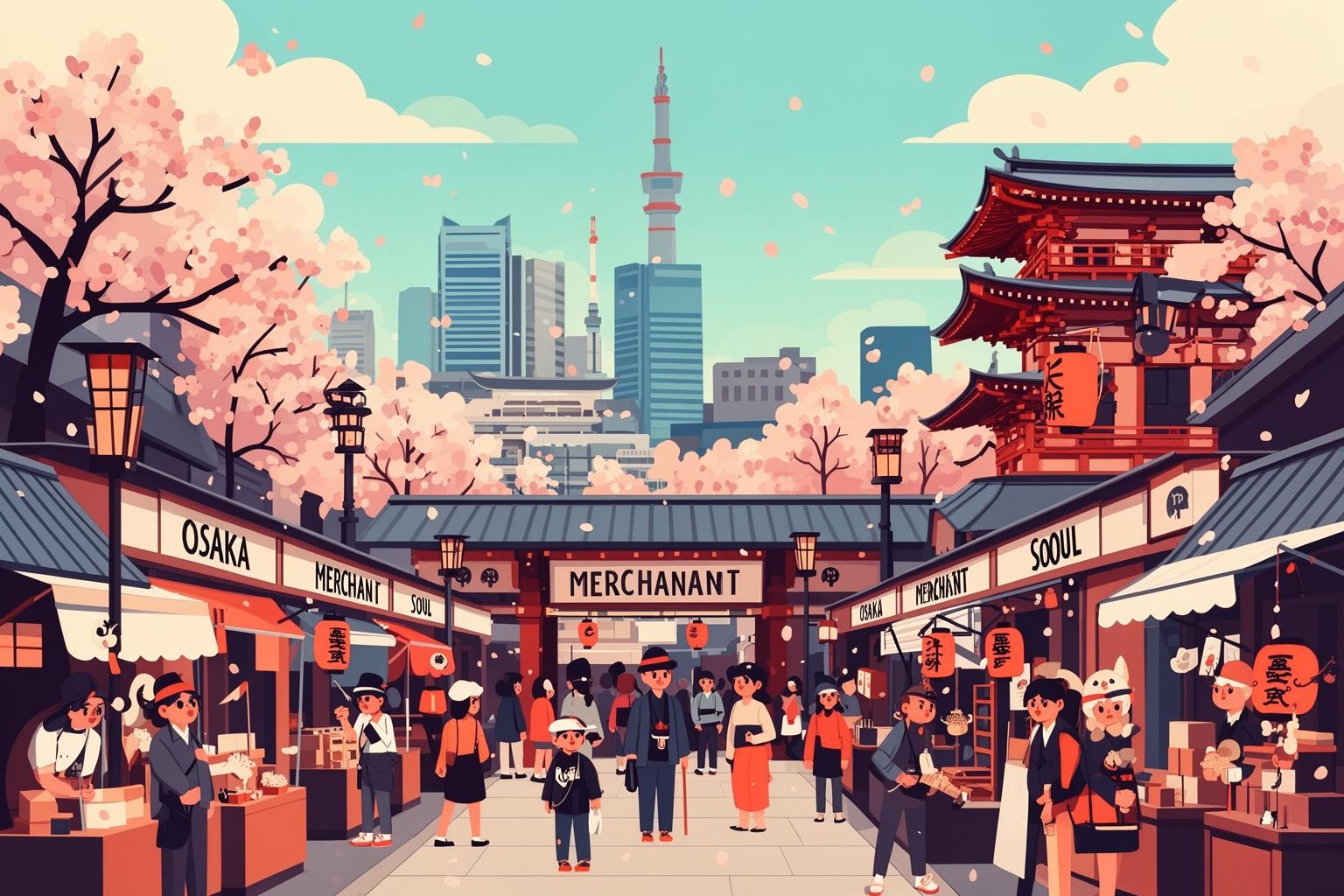
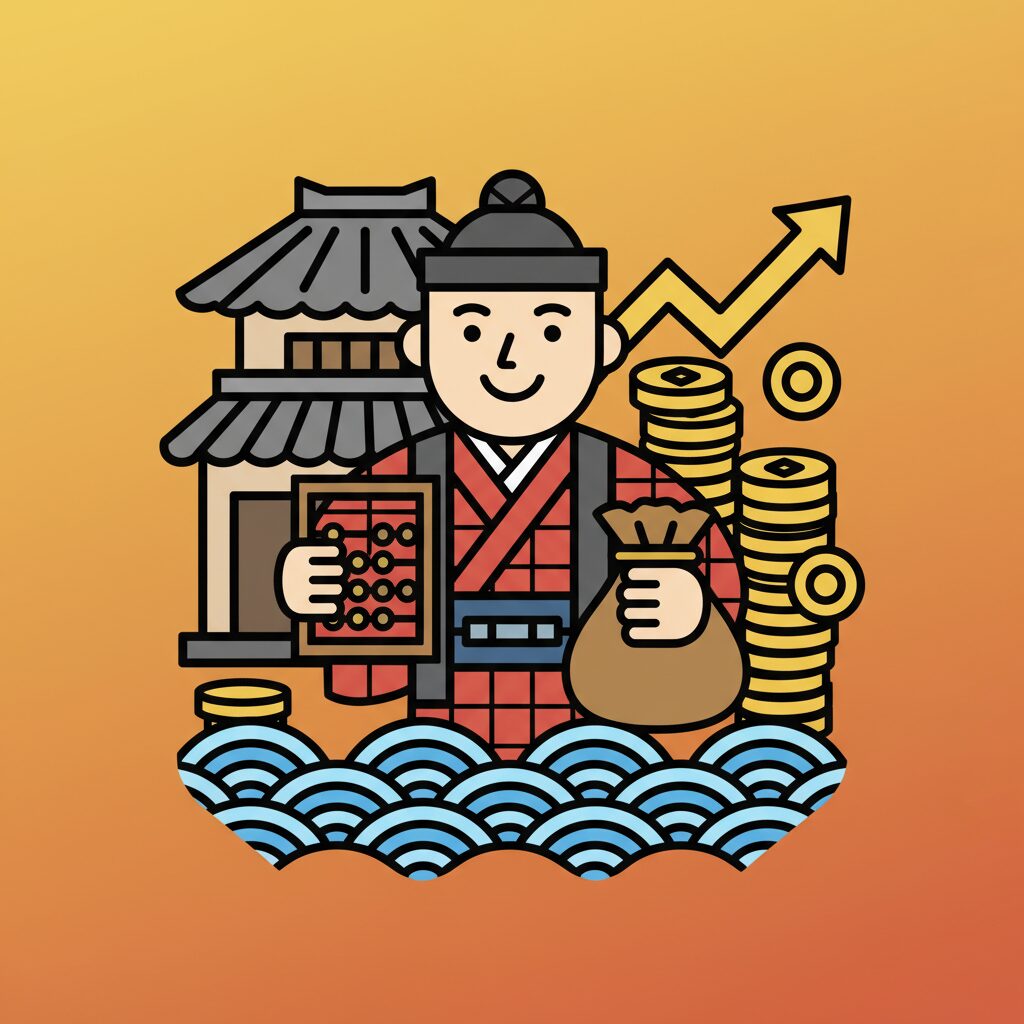
To truly understand Osaka, you must first grasp the real meaning of akindo. While it literally translates to “merchant” or “trader,” that’s akin to calling a Jedi merely a “laser sword enthusiast,” missing the core philosophy entirely. The akindo mindset embodies a worldview and code of conduct shaped by Osaka’s history as the tenka no daidokoro, or “the nation’s kitchen.” For centuries, rice, sake, and goods from all across Japan passed through this city. Here, your family name or samurai rank mattered less than your ability to read the market, build trust, and turn a profit. This heritage fostered a culture that values practicality over prestige, results over ritual, and genuine human connection over fancy corporate titles.
An akindo is inherently pragmatic. Their focus is on the bottom line, but not in a narrow or greedy sense. The bottom line embraces happiness, strong relationships, and a sustainable business that benefits the community. It’s about creating win-win outcomes. Waste is seen as the ultimate sin—wasted time, money, or opportunity. This is why meetings get straight to the point and conversations are so direct. Why spend an hour on pleasantries when you could be solving a problem or closing a deal? This efficiency is a form of respect for the other person’s time and intelligence.
This spirit is also fiercely independent. Osaka merchants drove the economy, often wielding more power and wealth than the samurai ruling class. They needed to be clever, adaptable, and self-reliant. This legacy continues in the city’s entrepreneurial spirit and a playful disdain for the rigid bureaucracy often associated with Tokyo. In Osaka, respect is earned through competence and character—not automatically granted by a business card. The akindo views the world as a dynamic marketplace of ideas, goods, and relationships, and their role is to navigate it with skill, humor, and a keen eye for value.
The Tokyo Template: Procedure, Protocol, and Perfection
To fully grasp the Osaka difference, you must first understand its direct opposite: the business and social framework of Tokyo. Tokyo is built on a foundation of carefully defined processes and protocols. It’s a culture that has mastered risk mitigation through formality. The implicit aim of many interactions is to ensure everything is done “correctly,” in line with established norms, to preserve harmony (wa) and avoid causing offense.
This is evident in numerous ways. Language plays a crucial role. In Tokyo, the levels of politeness in Japanese (keigo) are employed with precise accuracy. The choice of verb endings can convey deep respect, subtle distance, or clear power dynamics. Meetings are often preceded by pre-meetings (nemawashi), where consensus is meticulously developed behind the scenes so that the official meeting simply serves to formalize a decision already reached. This approach prevents open disagreement and the risk of losing face.
Presentation is everything. Suits must be flawless. Business cards must be immaculate. Proposal documents must be perfectly formatted and bound. This isn’t mere superficiality; it signals that you are a serious, detail-focused professional who respects the process. The emphasis is on the group rather than the individual, with the company’s reputation being paramount. You represent your organization first, and yourself second. This system prioritizes stability, predictability, and large-scale operations. It’s extremely effective in its purpose, but can seem impersonal and slow to outsiders or those from Osaka. It values the integrity of the process, sometimes even at the expense of the outcome’s efficiency.
The Osaka Way: Pragmatism, Personality, and Profit
If Tokyo’s operating style focuses on minimizing risk through structured processes, Osaka’s approach emphasizes maximizing opportunity through flexibility and human connection. The akindo mindset cuts through formalities to get to the heart of any interaction: what are we aiming to achieve, and what’s the most straightforward way to get there?
Getting Straight to the Heart of the Matter
In Osaka, time is money, and beating around the bush is considered a waste of both. An Osakan businessperson often begins a negotiation by stating their position clearly and directly. “That price is too high.” “We can’t meet that deadline.” “Your product is good, but your competitor’s is cheaper.” This isn’t intended to be confrontational but rather an invitation to an honest conversation. It’s putting all the cards on the table so both parties can start working on a solution right away. The Tokyo style of carefully circling a topic can be seen in Osaka as a sign of weakness, indecision, or even insincerity. The prevailing attitude there is, “If you have something to say, just say it!”
Bargaining, or negeri, is not only accepted but expected. It is an integral part of the process—a dance showing that you are a savvy and engaged partner. Accepting the first offer without question can appear odd, as if you don’t care about securing the best value. This holds true for everything from multi-million yen corporate contracts to buying a shirt at a local market. Negotiation itself is a way to build rapport and gauge the other person. It’s a lively, interactive process, not a tense confrontation.
The Real Meaning of ‘Mokkari-makka?’
In Osaka, people often greet each other with “Mokkari-makka?,” which literally means “Are you making a profit?” To outsiders or even Tokyo residents, this may sound rude or intrusive, but it’s not a literal inquiry about one’s finances. It’s the akindo equivalent of “How are you?” or “How’s business?” The typical response is “Bochi bochi denna,” meaning something like “So-so” or “Can’t complain.”
This exchange is a cultural touchstone, reflecting a worldview where business is not a dirty word and prosperity is a collective community goal. It’s a friendly acknowledgment of the commercial spirit that connects everyone. It’s a way of saying, “We’re all in this game of life and business together. I hope you’re doing well.” It signals camaraderie, not a financial audit. Understanding this greeting is key to grasping the local mindset.
The Handshake is the Human, Not the Paper
In Tokyo, deals rest on meticulously drafted contracts, official stamps (hanko), and multiple layers of managerial approval. Trust is placed in the institution and process. In Osaka, though contracts are certainly used, the true foundation of a deal is the personal relationship. Trust is placed in the individual. “Can I work with this person? Are they honest? Do they have a good sense of humor? Are they searching for a fair deal?” These are the questions an Osaka akindo asks.
Deals often progress or are concluded over food and drink. The real negotiation happens not in the boardroom but in a lively izakaya, where guards are down and personalities shine. This is where you discover who someone truly is. Building this personal connection is vital. Once an Osakan decides they can trust you as a person, the corporate affiliation becomes secondary. That’s why a small, family-run business in Osaka can compete effectively with a huge Tokyo corporation. They aren’t selling a brand; they’re fostering a relationship, and that kind of loyalty is difficult to break.
How the Akindo Mindset Permeates Daily Life
The merchant spirit isn’t limited to office buildings and factories; it’s the lifeblood of the city, present in every neighborhood, every shop, and every interaction. It influences how people speak, shop, and even perceive their place in the world.
The Shotengai: A Living Theater of Commerce
There is no better place to experience the akindo spirit than in Osaka’s numerous shotengai, or covered shopping arcades. These are far from quiet, sterile malls—they are vibrant, chaotic, and deeply human ecosystems. Stroll through Tenjinbashisuji Shotengai, Japan’s longest, and you’re walking through a living museum of the merchant mentality.
The shopkeepers, often second or third generation, excel at engagement. They don’t wait for you to approach; they call out, offer samples, and crack jokes. “O-niisan, you look handsome today! This shirt would suit you even better!” or “O-neesan, try this pickle! It’ll change your life!” It’s a performance, and the customer is part of the act. You’re encouraged to banter back, ask about prices, or even haggle a bit. Purchases are often accompanied by an omake, a small free gift—extra oranges from the fruit vendor or an extra croquette from the butcher. It’s not about the monetary value but a gesture of goodwill, a way of saying, “Thanks for your business, please come again.” It turns a simple transaction into a memorable human exchange.
A Bluntness Born of Efficiency
Osaka’s direct communication style extends far beyond commerce. People on the street are more likely to speak openly. If you’re blocking the escalator (remember, in Osaka, you stand on the right!), you won’t get a passive-aggressive cough; you’ll hear a straightforward “Sumimasen, toshite kudasai” (“Excuse me, please let me pass”). It’s not rude—it’s efficient. An auntie (obachan) might bluntly comment on your clothes or ask where you’re from with curious frankness that can be surprising at first. But it rarely comes from spite; it reflects a genuine desire to connect and understand, free of the layers of formal politeness common elsewhere.
This honesty is often refreshing. Ask for an opinion, and you’ll receive a sincere one. “Does this look good on me?” might earn a thoughtful “Hmm, the other color was better.” This isn’t an insult but a genuine effort to help. In a culture that can be maddeningly indirect, Osaka’s straightforwardness is a breath of fresh air—once you know how to interpret it.
Not Cheap, But Value-Obsessed
There’s a persistent stereotype that Osakans are kechi, or cheap. This is a fundamental misconception. They are not cheap; they are highly value-conscious. The akindo mindset detests waste and reveres kosupa (cost performance). It’s not about spending as little as possible but about getting the best quality, quantity, and experience for the money spent.
This explains the city’s amazing food culture. Osakans will gladly wait in line for an hour and pay a fair price for the best takoyaki or okonomiyaki because they know it’s worth it. Yet, they’ll scoff at an overpriced, mediocre coffee in a trendy café. They have a sixth sense for value, are expert comparison shoppers, and know the market rates for everything. They take pride in finding a good deal. This isn’t stinginess; it’s intelligence and respect for hard-earned money. It’s the akindo spirit in everyday consumption: maximizing the return on every single yen.
Decoding the Misunderstandings
For a foreigner navigating this unique culture, it’s easy to misinterpret the signals. The akindo mindset follows a logic that may seem counterintuitive if you’re accustomed to the typical “Japanese” etiquette mainly shaped by Tokyo.
Directness vs. Rudeness
The biggest challenge is often the style of communication. The absence of formal pleasantries, the straightforward questions, and the openness to disagree can come across as blunt or rude. The key is to change your perspective. In Osaka, this directness often shows respect. It suggests the speaker views you as an equal, someone they don’t need to treat delicately. They are treating you like a local, not a fragile outsider. Attempting to use overly formal, Tokyo-style language can sometimes create distance, making you seem stiff or insincere. The best approach is to be polite yet clear, friendly but direct. Match their energy, and you’ll find conversations flow much more smoothly.
The Critical Role of Humor
Humor acts as a lubricant for nearly all social and business interactions in Osaka. The city’s fame for comedians is no accident. Laughter is used to break the ice, build rapport, ease tension in tough negotiations, and show you don’t take yourself too seriously. A business meeting without at least one laugh is often seen as unsuccessful. Someone who is constantly serious and unsmiling might raise suspicion. Are they hiding something? Are they too uptight?
For foreigners, this can be comforting. You don’t need to be a professional comedian, but being able to enjoy a joke and occasionally make a lighthearted one yourself is a valuable tool for connection. It signals that you are relaxed, confident, and human. Humor is a core element of the akindo toolkit for fostering the personal relationships that matter most.
The Goal is Mutual Prosperity, Not Just Personal Gain
While the emphasis on profit and good deals is clear, it’s mistaken to view the akindo spirit as purely self-interested. There is a strong sense of community. A good deal is one where both parties leave satisfied. A thriving business is one that contributes to the vitality of its neighborhood. This is why shopkeepers often give you an omake, and why business owners frequently go out of their way to support each other. There’s a belief that “a rising tide lifts all boats.” They recognize that long-term, sustainable success depends on a network of strong, mutually beneficial relationships. It’s a notably pragmatic and deeply humanistic approach to capitalism.
Finding Your Place in the Merchant City
So, how do you, as a foreign resident, adjust to this distinctive environment? The good news is that the akindo mindset tends to be more approachable and less daunting for Westerners than the strict formality found in Tokyo. It values individuality and straightforward communication, which can feel familiar.
Embrace the Banter
Don’t just passively consume. When you visit your local bakery or fruit stand, interact with the owner. Ask what’s good today. Compliment their products. Share a simple joke. Don’t hesitate to ask for a small discount or a little extra; the worst response is no, and they’ll often respect you for trying. This is how you transition from a faceless customer to a neighborhood regular, where life in Osaka becomes genuinely rewarding.
Appreciate the Value, Not Just the Price
When making buying decisions, adopt the local perspective. Does this product or service offer good kosupa? Don’t be influenced by flashy branding or an upscale setting. Osakans excel at seeing beyond superficial gloss to the real value beneath. Developing this ability will not only save you money but also deepen your understanding of what the city truly values: substance over style.
Be Authentically Yourself
In a city that celebrates personality, the worst thing you can be is a dull, faceless corporate drone. Don’t shy away from having opinions. Be passionate about your work and interests. Be genuine. Osaka is a city full of unique characters, and it welcomes yours. People respond more to sincere enthusiasm and clear, honest expression than to a perfectly executed bow or flawless use of honorifics. Ultimately, the akindo spirit is about human-to-human connection. Master that, and you’ve mastered Osaka.
The City’s Unchanging Heartbeat
Living in Osaka is an ongoing lesson in the art of human connection. It’s a city that constantly challenges your assumptions about Japan. It’s loud, a bit chaotic, and unapologetically commercial. Yet beneath that vibrant exterior lies a deep-rooted logic—the logic of the akindo. This philosophy embraces pragmatism, the pursuit of value, the importance of building relationships, and the understanding that business and life are not separate but two sides of the same well-negotiated coin.
While Tokyo may be the polished face of modern Japan, the center of government and high finance, Osaka remains its lively, pulsating heart—the nation’s kitchen where real deals are struck. It’s a city shaped not by grand imperial designs but by the accumulated wisdom of countless merchants making smart, practical decisions every day. Grasping this not only makes doing business here simpler but also makes living here more meaningful. It reveals the warmth beneath the bluntness, the community behind the commerce, and the profoundly human rhythm of a city that has always, and will always, follow its own rules.