Have you ever stood in the dizzying, multi-layered labyrinth of Osaka-Umeda Station and watched someone confidently stride past the most direct escalator to the JR line, descend into an unmarked corridor, walk for what feels like an eternity through a department store basement, and emerge ten minutes later right where they needed to be, having saved a mere 160 yen on a transfer? To an outsider, especially one accustomed to the time-is-money efficiency of Tokyo, the action seems baffling. It’s a deliberate sacrifice of ten minutes for the price of a vending machine drink. It looks illogical. It looks… inefficient. But you’re not seeing the whole equation. What you’ve just witnessed isn’t a strange personal quirk; it’s a live performance of a centuries-old philosophy. This is the ‘Akindo’ spirit in motion. Akindo, the merchants who built this city on commerce, wit, and a relentless pursuit of value, didn’t just leave behind castles and canals. They left a cognitive blueprint, a unique operating system for daily life that prioritizes ‘cost-performance’—or kosupa, as it’s known here—above all else. This isn’t about being cheap. That’s the single most common and most profound misunderstanding of the Osakan mindset. It’s about being smart. It’s a deeply ingrained, almost cellular-level drive to extract the maximum possible value from every yen, every minute, and every interaction. To truly understand life in Osaka, you don’t start at the tourist sites. You start by decoding the calculus behind a train transfer and the strategy behind a grocery run. This is where the city’s soul reveals itself, in the mundane, everyday decisions that, when woven together, create the vibrant, practical, and utterly unique tapestry of Osakan life.
Osaka’s commitment to maximizing value finds fresh expression in evolving trends like modern Osaka hospitality, where traditional cost-performance principles meet innovative guest experiences.
The Commuter’s Calculus: Time, Money, and the Illusion of Convenience
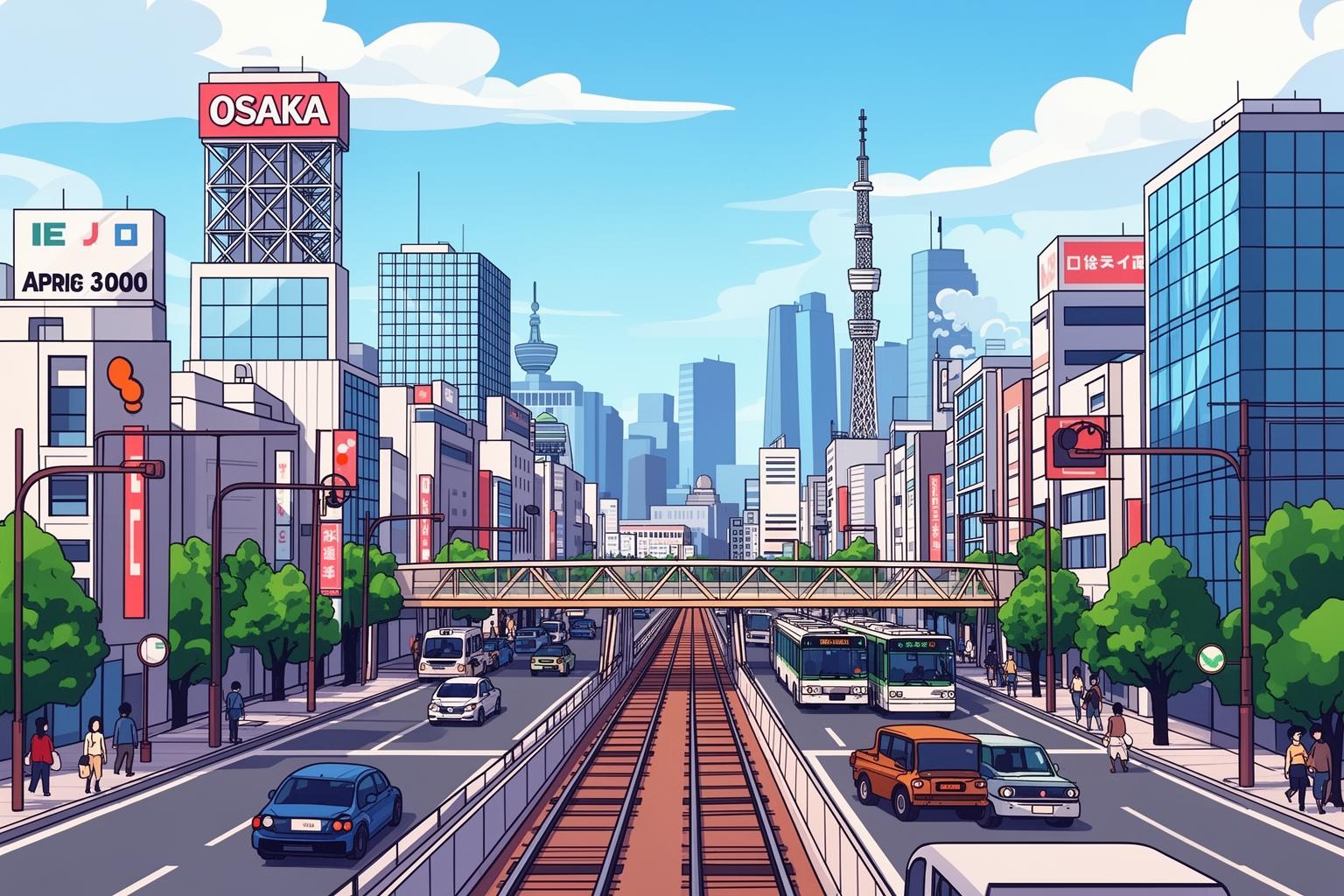
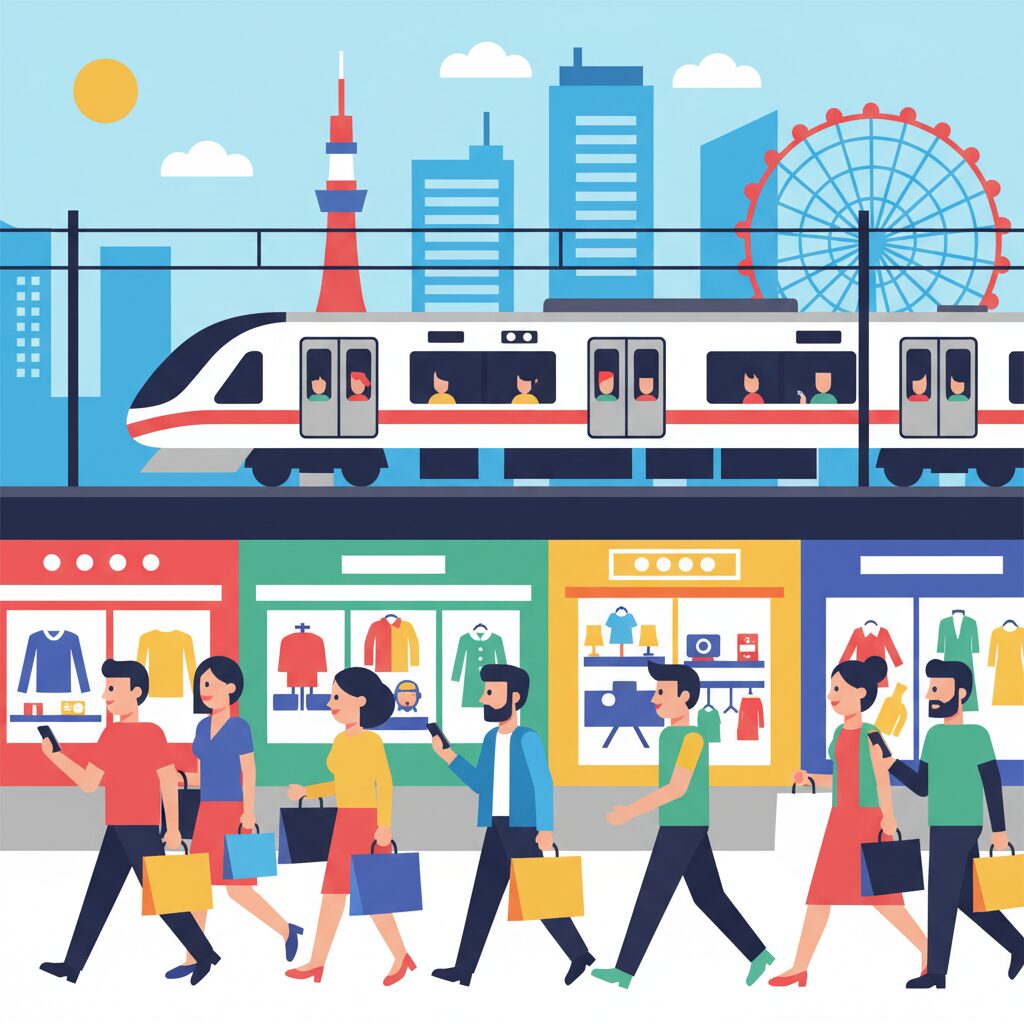
Nowhere is the Osakan value-driven mindset more evident than in the daily commute. In many cities, the objective is straightforward: travel from Point A to Point B as quickly and with as few transfers as possible. In Osaka, however, the equation is far more intricate—a multi-variable calculation that balances ticket price, transfer times, station amenities, and even loyalty point collection. The result is a travel pattern that may seem counterintuitive to outsiders but is, for the local commuter, a masterstroke of personal economics.
The Umeda Dungeon and the Art of Transfer
Returning to that scene in Umeda: what a tourist perceives as a chaotic, poorly signposted maze of train lines—JR, Hankyu, Hanshin, and three subway lines converging in a vast underground city—the Osakan sees as a landscape full of opportunities. This complex, often dubbed the “Umeda Dungeon” by locals and expats alike, serves as the ultimate testing ground for the savvy commuter. While an app like Google Maps might recommend a straightforward single-company route costing 450 yen, the Osakan knows better. They possess a mental map of the dungeon, honed over years of trial and error. By taking the Hankyu line to Umeda, walking seven minutes through the Hankyu Sanbangai shopping street, cutting through the basement of the Hanshin Department Store, and then boarding the Midosuji subway line, they can complete the same journey for just 290 yen. The extra walking time is traded off for significant savings. In Tokyo, this kind of route optimization is rarer, as stations like Shinjuku are enormous and transfers physically taxing, with cultural emphasis on speed and simplicity. Tokyoites often pay a premium for direct lines to avoid inconvenience. In Osaka, embracing the hassle is part of the game—a small victory won twice daily, a quiet testament to cleverness and resourcefulness. This is not simply about saving a few hundred yen; it’s about outsmarting the system and rejecting the default option when a better value exists.
Why Your Train Ticket Is More Than Just a Ticket
This strategic mindset is supported and encouraged by Osaka’s transit system structure. Unlike Tokyo, dominated by JR East and Tokyo Metro, Osaka’s transit scene is a battleground among powerful private railway companies. Hankyu, Hanshin, Kintetsu, Keihan, and Nankai all fiercely compete with JR West, using value as their main weapon. This rivalry fosters a culture of discounts, special passes, and coupon books well-known to the average Osakan. The kaisuuken, a booklet of 11 tickets sold for the price of 10, is a staple. Beyond that, there are off-peak coupon books with even steeper discounts, weekend passes, and combination tickets including attraction entries along the lines. An Osakan doesn’t simply buy a ticket; they curate a portfolio of travel options. While they might use a kaisuuken for their regular commute on the Hankyu line, they’ll also be aware of, say, a Kintetsu weekend pass ideal for a day trip to Nara. This knowledge is shared openly, with conversations among colleagues frequently revolving around the latest ticket deals. People form groups to purchase larger, discounted coupon books and split them. Thus, the ticket vending machine acts not as a simple dispenser but as a strategic interface. This behavior directly descends from the merchant ethos: always monitor your expenses, pursue bulk discounts, and use competition to your advantage. Private railway companies have expanded this logic by creating whole lifestyle ecosystems around their lines. For example, a Hankyu line commuter likely shops at Hankyu Department Store, holds a Hankyu-branded credit card, and accumulates points redeemable throughout the Hankyu-Hanshin-Toho Group, generating a powerful feedback loop of value and turning a commute into a comprehensive economic strategy.
The Bicycle: Osaka’s Unsung Economic Engine
One more vital tool in the Osakan commuter’s arsenal is the humble bicycle, or charinko. In Osaka, the bicycle is less a leisure or exercise device and more a fundamental economic tool. The city’s relatively flat terrain makes cycling especially practical. The charinko’s true brilliance lies in solving the “last mile” problem: the walk from home to the nearest train station might take 15 minutes, while a bus would cost over 200 yen each way. The bicycle eliminates that expense entirely. A one-time purchase—often an inexpensive secondhand bike—provides years of free, efficient transport to and from the station. As a result, large, often multi-story underground bicycle parking garages are common at nearly every major Osaka-area station. This infrastructure reflects the city’s recognition of the bicycle’s role in daily economic calculations. For a small monthly fee, commuters secure a parking spot and save thousands of yen yearly in bus fares or shorter train trips. This sharply contrasts with central Tokyo, where bicycle infrastructure is less developed, parking is problematic, and cycling to the station is culturally less ingrained. For the Osakan, the bicycle is far more than transport; it’s a tool to shrink the city, bringing more distant—and cheaper—housing options within the viable economic reach of desirable train lines. It adds yet another layer to the intricate, value-driven daily movement algorithm.
The Marketplace Mindset: Every Purchase is a Negotiation with Value
If the commute is where the Akindo spirit is conceived, the marketplace is where it is brought to life. Shopping in Osaka—whether for a 100-yen daikon radish or a 100,000-yen handbag—is never a passive act. It is an active, sometimes theatrical, process of assessing, validating, and maximizing value. This mindset permeates every facet of commerce, from the lively covered shotengai arcades to the polished floors of upscale department stores.
“Nambo?”: More Than Just “How Much?”
One of the first phrases a newcomer picks up in Osaka is “Nambo?”—the local dialect for “How much is it?” But the phrase carries weight and implication far beyond its literal meaning. In many parts of Japan, directly asking the price can seem blunt. In Osaka, however, “Nambo?” invites conversation—an opening to discuss a product’s worth. In the bustling Tenjinbashisuji Shotengai, Japan’s longest shopping arcade, this word rings out constantly. When an obachan (a savvy older Osaka lady) asks a vegetable seller “Nambo?” about a box of strawberries, she is not merely seeking the number on the sign. She is initiating a ritual. The seller may state the price but will also extol the sweetness of the berries, their perfect ripeness, and might even offer a sample. The obachan may then pick one up, examine it, and comment, “A bit small, aren’t they?” This isn’t aggressive bargaining in the usual sense; it’s a performance—a way for the buyer to show discernment and for the seller to prove the product’s quality. The final sale reflects mutual agreement not just on price, but on value. This spirit extends even to fixed-price shops. An Osakan browsing Uniqlo will feel the fabric of two similar shirts, compare stitching, and quietly debate which boasts better kosupa. Though price is fixed, the internal negotiation over the item’s intrinsic value is always in play.
The Supermarket as a Battlefield of Logic
This fierce focus on value reaches its peak in the daily ritual of grocery shopping. The supermarket in Osaka is no place for casual browsing; it is a strategic battleground where sharp planning and keen observation yield significant savings. Many Osakan households don’t rely on a single supermarket but maintain a roster, each known for a particular deal. They know Supermarket A offers 100-yen egg packs on Tuesdays; Supermarket B, a little farther out, features meat discounts after 6 PM on Fridays; the local shotengai greengrocer sells the freshest and cheapest vegetables—but only before 10 AM. A grocery run can become a multi-stop mission optimized for maximum savings. This is not considered a chore, but a savvy investment of time and effort. Inside the store, yet another level of strategy plays out. Osakans excel at finding mi-kiri-hin—items discounted to clear before expiration. Whereas Tokyo shoppers might discreetly pick up milk marked 30% off, in Osaka it’s a badge of pride. Snagging a pristine half-price slab of tuna that must be eaten that night is a victory to boast of at dinner—proof of timing, shrewdness, and refusal to pay full price when good value exists. The symbol of this culture is the ubiquitous point card. An Osakan’s wallet is often thick with them—a colorful arsenal of loyalty programs. They know which card delivers the best rewards on which day. Forgetting a point card is a moment of real regret—not just for the lost yen but for breaking the system of value maximization.
Department Stores vs. Discount Chains: Two Faces of Osakan Spending
This obsession with discounts can lead outsiders to think Osakans are merely frugal or cheap. Nothing could be further from the truth. The key lies not in avoiding spending, but in allocating money with relentless intelligence. This is perfectly illustrated by the city’s dual devotion to glamorous department stores and gaudy discount markets. On one side stands the Hankyu Umeda Main Store—a temple of luxury, impeccable service, and high-quality goods. An Osakan will not hesitate to spend generously here on a gift for a respected superior, a beautifully packaged box of sweets for a client, or a high-quality coat meant to last for years. In this context, ‘value’ is not about price but about quality, brand prestige, elegant presentation, and the social currency the purchase confers. It is an investment in relationships or personal image. On the other side, that same person will joyfully shop at Super Tamade, a local discount supermarket famous for its chaotic neon lights, blaring music, and almost comically low prices, including legendary 1-yen sales. Buying milk, bread, and toilet paper at Tamade exemplifies Osakan practicality. The Akindo logic mandates spending richly where it matters (social status, durability) and saving fiercely where it doesn’t (commodities). This is not hypocrisy but a sophisticated, context-driven application of value theory. Squandering money on overpriced daily items is foolish, just as skimping on an important social gift would be. It’s about knowing when to pay for the sizzle and when simply to buy the steak.
The Social Currency: How Value Extends Beyond Money

The Akindo mindset extends beyond the transactional acts of commuting and shopping. It has grown to shape the very essence of social interaction in Osaka. Relationships, community, and communication are also seen through a perspective of value, though here the currency is goodwill, laughter, and mutual support rather than yen.
The Gift of “Ame-chan” and the Economy of Generosity
The classic image of a friendly Osaka obachan is her reaching into her purse to offer a piece of candy, or ame-chan. This is often depicted as a simple, sweet idiosyncrasy. But it is much more than that. It represents a micro-transaction within Osaka’s lively social economy. The candy itself costs almost nothing, but the act of giving it produces a significant return. It breaks the ice, creates a brief connection with a stranger, and lubricates the daily social interactions. It is a small resource investment that can yield a large goodwill return. Assist an obachan with her bags, and you’re almost always offered an ame-chan. If a child cries on the train, an ame-chan often appears from a nearby passenger. This low-cost, high-impact gesture helps maintain a harmonious social atmosphere. This principle of small, thoughtful gifts permeates the culture. Bringing back a modest omiyage (souvenir) for colleagues after a trip is common across Japan, but in Osaka, it feels less like a formal duty and more like a natural way to keep the group’s spirits high. The worth lies not in the monetary value of the gift but in the act of sharing and strengthening bonds. It reflects the merchant’s understanding of goodwill as a tangible, valuable asset to nurture.
“Mokkari-makka?” and the Language of Shared Prosperity
The Osaka dialect itself is rich with commercial language. The traditional greeting, though less frequent among younger people, is “Mokkari-makka?” which literally means “Are you making a profit?” The usual, often playful response is “Bochi-bochi denna,” meaning “So-so” or “Bit by bit.” Tourists might find such a direct question about one’s finances surprising, but it’s not intended to be intrusive. It’s a cultural shorthand that frames life through a common lens of work, effort, and striving for success. It quickly establishes rapport based on the understanding that everyone, in their own way, is an Akindo running their own life’s business. It acknowledges the everyday hustle and turns it into a shared bond. This contrasts sharply with the more formal, weather-related greetings typical in Tokyo. The Osaka greeting gets straight to the point, acknowledging life’s economic realities with a smile and a wink. It fosters camaraderie and the sense that everyone is in the same boat, working to turn a profit—whether monetary, social, or personal. It verbalizes a culture that values practicality, honesty, and a collective sense of purpose.
Practical Takeaways for Living the Osakan Way
Grasping this deeply rooted Akindo logic is the initial step. Living by it, or at least navigating it with ease, follows next. For any foreigner settling in Osaka, embracing this value-driven mindset, even in small ways, can shift your daily experience from bewildering to comfortable. It’s about learning to perceive the city through a fresh, more practical, and rewarding perspective.
Start by reconsidering your daily commute. Don’t simply follow the route your phone suggests without thought. Study a physical train map. Notice where competing private lines run alongside the JR lines. Ask a colleague or neighbor about their route—they’ll likely be eager to share their hard-earned tip for saving 80 yen by walking through a certain underground passage. Trying these alternative routes isn’t just about saving a little money; it’s a proactive way to understand the city’s true geography and engage in the local culture of optimization. You’ll uncover hidden shops and restaurants in those underground passages and feel a subtle sense of belonging each time you make the “smart” transfer.
Next, embrace point cards and supermarket sale flyers. Don’t dismiss them as clutter or a nuisance. Recognize them for what they truly are: keys to the local economic system. Choose one or two supermarkets you visit regularly and get their loyalty cards. Pay attention to the days when points double. You’ll not only save money but also begin to sense the neighborhood’s rhythm—the pre-dinner scramble for discounted bento boxes, the quiet satisfaction of Tuesday morning egg sales. It’s a simple way to synchronize your household budget with the city’s pulse.
Learn to appreciate the art of the deal in all its forms. When you’re in a shotengai, interact with the vendors. Ask about their produce. Compliment their displays. Even if you don’t haggle, engaging in conversation acknowledges the value they offer. And don’t shy away from the discount stickers at the supermarket. View them as a smart, sustainable choice. You’re acquiring a perfectly good product at a better price while helping to reduce food waste. It’s a win-win, the hallmark of any good Akindo.
Finally, realize that discussions about money, prices, and bargains here aren’t considered rude or crass. They’re a common topic of conversation—a way people relate and share useful information. Listening to these talks, and eventually joining in—perhaps by sharing a great deal you found—is a meaningful way to connect. Living in Osaka invites you to become a more conscious consumer, a more strategic planner, and a more practical participant in the urban ecosystem. The city’s Akindo legacy isn’t just history; it’s a living, breathing philosophy that makes life here dynamic, endlessly engaging, and, if you learn to play the game, exceptionally rewarding.