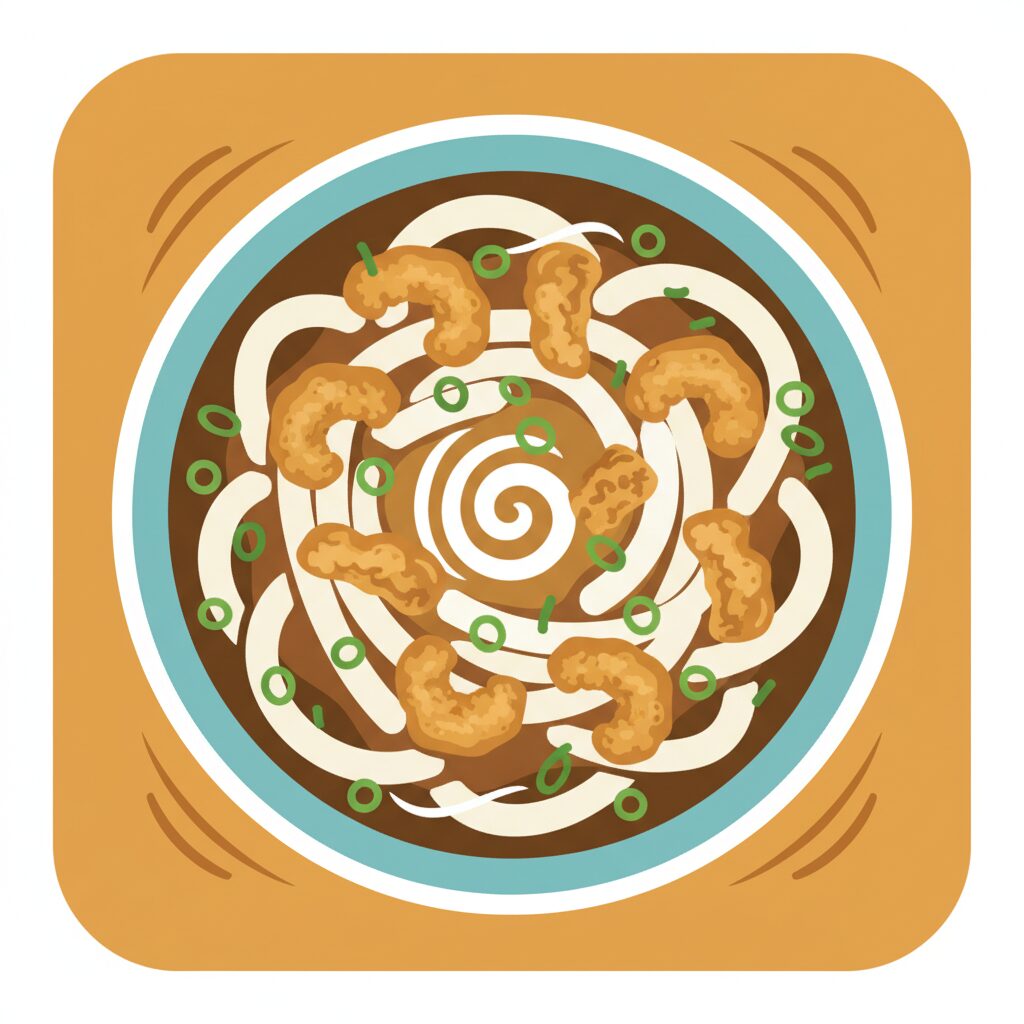
Step off the train in the southern stretches of Osaka Prefecture, in the towns that orbit the city proper, and the air changes. The slick gloss of Umeda’s high-rises and the electric hustle of Namba’s nightlife fade into a different kind of rhythm. This is the Osaka that doesn’t make it into the travel brochures, a landscape of low-slung homes, small factories, and local shotengai shopping streets humming with a quiet, persistent energy. It was on a chilly Tuesday night in one of these neighborhoods, after a friend insisted I needed to try “the real taste of his hometown,” that I first encountered a bowl of Kasu Udon. It arrived steaming, a deceptively simple-looking noodle soup. The broth was a clear, pale gold, the noodles thick and soft, the green onions a slash of vibrant color. But floating on top were these… things. Gnarly, pockmarked, brownish nuggets that looked like forgotten scraps from a deep fryer. I had no frame of reference. “What is this?” I asked. My friend just grinned. “That,” he said, “is the good stuff. That’s the kasu.”
That first spoonful was a revelation. The light, elegant broth I was expecting had been hijacked by a deep, smoky, impossibly rich flavor. It was beefy, but not like steak. It was savory, but with a subtle sweetness. The mysterious nuggets themselves were a textural puzzle, part chewy, part crispy, part meltingly soft, releasing more and more flavor as they soaked in the hot soup. This was not just udon. This was something else entirely, a dish with a hidden depth that spoke of its origins. Kasu Udon is more than a meal; it’s a hyper-local password, a culinary key that unlocks the character of South Osaka, a region known as Minami-Kawachi. To understand this bowl of noodles is to understand the unpretentious, resourceful, and fiercely proud spirit of the people who call this part of Osaka home. It’s a taste of a city that’s far more complex and varied than its common caricature suggests, a place where the best things in life are often found far from the spotlight, in the most unassuming of packages.
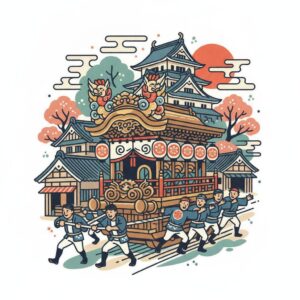
Immerging from the deep flavors of kasu udon, the subtle community spirit of the region is also reflected in the vibrant danjiri rhythms of Kishiwada, offering a captivating glimpse into Osaka’s unspoken local traditions.
What in the World is ‘Abura Kasu’?

The first and most crucial thing to grasp is what ‘kasu’ is not. You might immediately think of ‘tenkasu,’ those crunchy bits of tempura batter commonly used as a topping on udon throughout Japan. However, this is something completely different. Its full name is ‘abura kasu,’ which means ‘oil dregs’ or ‘oil scraps,’ a term that is both brutally honest and somewhat misleading. It doesn’t sound particularly appetizing, which is part of its understated appeal. Abura kasu is made from beef intestine, or ‘horumon,’ specifically the small intestine. While this might give pause to many non-Japanese diners, in Osaka, horumon is not an obscure ingredient; it’s a celebrated part of the local culinary tradition, reflecting the city’s historic connections to the meat industry.
The making of abura kasu exemplifies Osakan creativity. The intestines are slowly and carefully cooked in oil for a long time. This method renders almost all the fat out, leaving behind a dense, dehydrated, and intensely flavorful nugget. The final product is hard and dry, similar in texture to pork cracklings or chicharrón. All the moisture is removed, but what remains is a rich source of collagen and umami. This preservation technique stems from the philosophy of ‘mottainai’—a deeply rooted Japanese sense of regret over waste. In South Osaka, an area traditionally filled with butchers and meat processors, nothing went to waste; every part of the animal was valued and repurposed for deliciousness.
This reflects a fundamental difference in mentality compared to, for example, Tokyo. While Tokyo boasts its own refined food culture, often emphasizing purity and aesthetic perfection as seen in Edomae sushi, Osaka’s culinary identity—especially in its working-class southern districts—is about transformation. It’s about taking humble, overlooked, or even challenging ingredients and, through ingenuity and a deep understanding of flavor, turning them into something exceptional. Abura kasu perfectly embodies this philosophy. It’s culinary alchemy. It takes a part of the cow that many would discard and turns it into a flavor-packed ingredient that lifts a simple bowl of noodle soup into a richly satisfying meal. It’s not about luxury; it’s about resourcefulness. And in Osaka, resourcefulness is deeply revered.
A Tale of Two Osakas: The North vs. The South
For many foreigners and even for numerous Japanese from other regions, Osaka is seen as a single, monolithic entity. It’s known as the city of the Glico Running Man, takoyaki stands, and loud, friendly people. However, living here reveals that Osaka is actually a patchwork quilt of distinct areas, each with its own history, accent, and identity. The most basic division is between ‘Kita’ (North) and ‘Minami’ (South). Kita, centered around Umeda Station, serves as the city’s modern business and transportation hub. It’s polished, corporate, and, in many ways, resembles parts of Tokyo. Minami, around Namba and Shinsaibashi, is the historic entertainment district—more chaotic, colorful, and gritty.
Yet, Kasu Udon doesn’t originate from the Minami familiar to tourists. It comes from the deep south, the Minami-Kawachi region, which includes cities like Habikino, Matsubara, and Fujiidera. This area of Osaka has a distinctly different atmosphere. It’s more suburban, more industrial, and firmly grounded in its working-class heritage. This is where the local meatpacking industry was concentrated, and it’s within this particular industrial setting that Kasu Udon was born. It was a meal for workers—affordable, hearty, and packed with intense flavor to fuel them through a tough day’s work.
This highly localized origin is essential. Authentic Kasu Udon won’t be found in upscale department store food courts in Umeda, nor featured in glossy magazines highlighting Japan’s finest cuisine. Instead, it is served in small, family-run establishments scattered throughout South Osaka, places marked by faded noren curtains and menus handwritten on yellowed paper. This geographic fidelity speaks volumes about Osaka culture: identity here is deeply local. People don’t just take pride in being from Osaka; they take pride in their specific neighborhood or region. To someone from Habikino, Kasu Udon isn’t merely ‘Osaka food’; it’s their food—a symbol of heritage and a taste that connects them to generations before. This intense localism stands in sharp contrast to Tokyo’s more centralized culture, where trends often emerge from a few fashionable districts and spread outward. In Osaka, culture rises organically from the ground, from countless unique communities, creating a far more decentralized and diverse cultural landscape.
The Flavor Profile: More Than Just a Noodle Soup
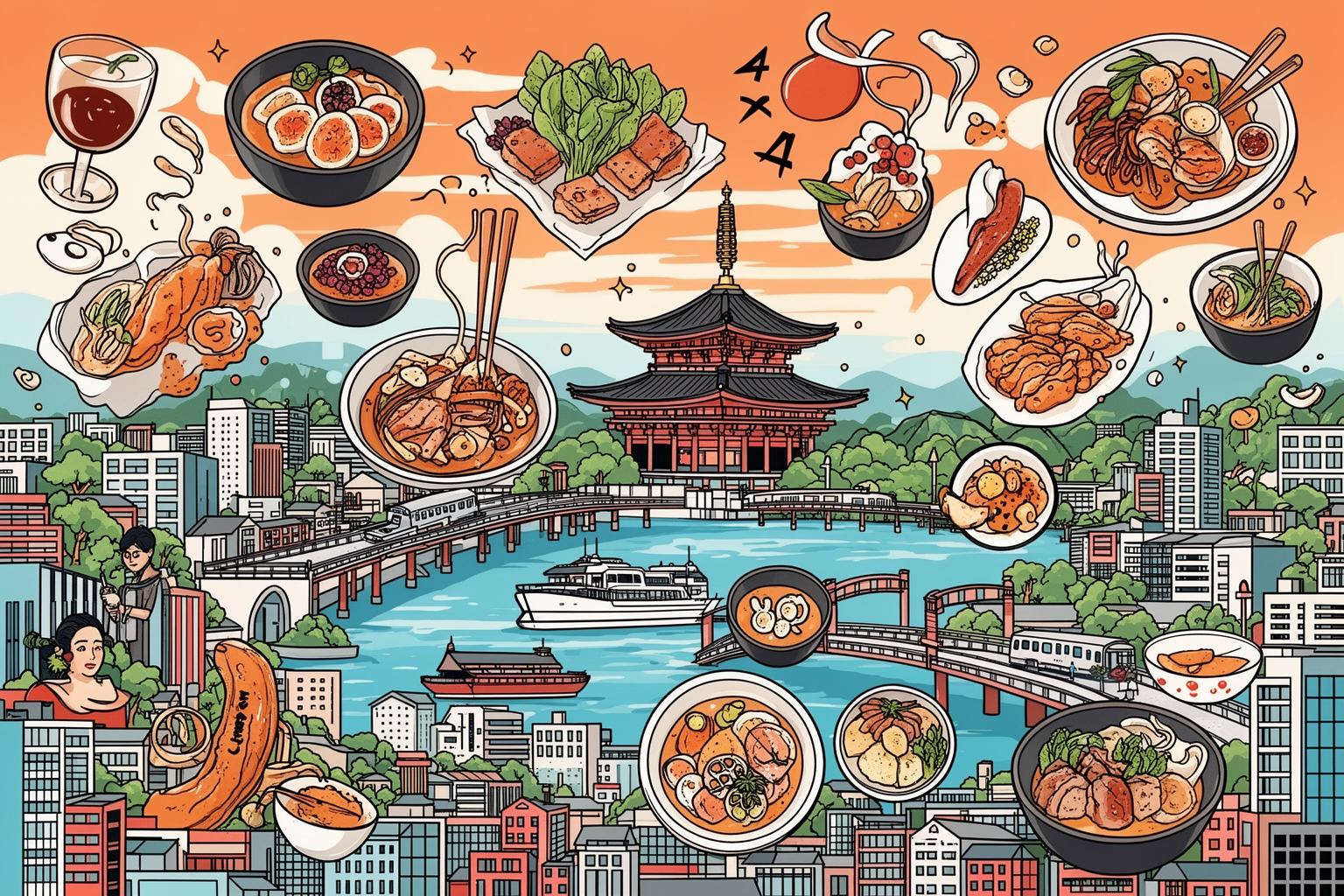
Describing the taste of Kasu Udon is like attempting to explain a color to someone who has never seen it. It starts with a familiar base: the Kansai-style dashi. Unlike the darker, saltier, bonito-rich broth typical of Tokyo, Kansai dashi is lighter in color and more subtle. It is usually made with high-quality kombu (kelp) and a gentler touch of katsuobushi (bonito flakes), resulting in a broth that is elegant, refined, and brimming with deep, oceanic umami. On its own, it’s a delicious and comforting soup, serving as the foundation for much of the region’s cuisine.
But the magic unfolds when the abura kasu is added. As the hard, crispy nuggets meet the hot broth, they begin to rehydrate. The change is immediate and striking. The kasu releases its concentrated beef flavor and rich collagen into the delicate dashi. The clear, light broth turns cloudy and more robust, taking on a golden hue and a silky texture from the rendered oils. The aroma shifts from the clean scent of the sea to a complex, smoky, and deeply savory fragrance. It’s a perfect union of contrasts: the refined elegance of the dashi forms an ideal canvas for the rustic, powerful punch of the abura kasu.
The noodles themselves play a vital supporting role. This is not the firm, chewy, al dente Sanuki udon from Kagawa Prefecture that’s become the national benchmark. This is classic Osaka udon: thick, soft, and almost pillowy. Some might call it weak, but that misses the point. Osaka udon is not meant to be the star; it’s a team player. Its soft texture is designed to absorb the broth, becoming a vehicle for that incredible, transformed soup. Each slurp delivers the noodles and the full-bodied flavor of the dashi-kasu blend in perfect harmony. The kasu, now rehydrated, offers its own textural contrast. The outer layer becomes tender and gelatinous, while the core often retains a pleasant chewiness, a reminder of its crispy beginnings. It’s a dish of profound contrasts—light and heavy, simple and complex, delicate and robust—all coexisting in one steaming bowl.
Where and When: The Ritual of Kasu Udon
To truly grasp Kasu Udon, you need to experience it in its natural environment. The classic Kasu Udon shop contrasts sharply with modern, Instagram-focused restaurants. It is often a small, cramped space—sometimes just a counter with a dozen stools, walls yellowed from years of steam and smoke. The decor is utilitarian at best: a wall-mounted TV showing a baseball game, calendars from local suppliers, and a dusty lucky cat statue resting on a shelf. The air is thick with the scent of dashi and the rich aroma of beef. It’s not a place for lingering conversations or romantic dates. It’s a place for eating.
This is an essential part of daily life in Osaka that is often misunderstood. A restaurant’s quality is measured not by its ambiance or service style, but by the honest deliciousness and value of its food. An Osakan will gladly queue in a dingy alley for an unforgettable meal and confidently affirm that it surpasses any three-star restaurant. This pragmatism defines the Kasu Udon experience. You’ll sit shoulder-to-shoulder with a construction worker in a dusty uniform, a salaryman with a loosened tie, a couple of young people fueling up before a night out, and an elderly woman who has eaten at the same counter for thirty years. It is a deeply democratic space.
The timing of a Kasu Udon meal also follows a cultural rhythm. It is a staple lunch for those who work with their hands: quick, affordable, and calorie-dense—a true source of fuel. But its real purpose is as a late-night dish. After hours of drinking in the izakayas and bars of Minami, a bowl of Kasu Udon is the ultimate ‘shime,’ the final dish that closes the evening. Its rich, fatty broth is said to coat the stomach and prevent hangovers, while its savory warmth offers deep, primal comfort. Stumbling into a brightly lit Kasu Udon shop at 2 AM, steam fogging the windows against the cold night air, and slurping down a bowl of that magical soup—this is an essential Osaka experience. It is a ritual that grounds you, a moment of savory clarity after a chaotic night.
Kasu Udon and the Osakan Character

When examined closely, a bowl of Kasu Udon serves as a perfect metaphor for the Osakan spirit. The dish is grounded in pragmatism and ingenuity. Taking an off-cut, an ingredient often regarded as waste, and having the vision and patience to transform it into a delicacy exemplifies Osakan resourcefulness at its finest. This embodies the spirit of ‘kuidaore’—literally eating oneself into ruin—but it’s not about indulgence or excess. Rather, it’s a relentless quest for deliciousness through the cleverest and most economical means. It’s about achieving maximum value, flavor, and satisfaction. This approach extends beyond food to business, humor, and life here: find the angle, waste nothing, and turn it into something valuable.
The dish is also straightforward and honest. There’s no pretense. Nicknamed ‘oil scraps udon,’ it looks a bit rough around the edges and makes no attempt to appear elegant. Its charm isn’t in its looks but in its unmistakable, powerful flavor. This reflects the communication style many Osakans adopt. Though sometimes perceived as blunt by outsiders, it stems from genuine honesty. People say exactly what they mean, focusing on substance rather than style. A bowl of Kasu Udon doesn’t require elaborate descriptions or flowery stories; it simply needs to be eaten. Its quality speaks loudly and clearly on its own.
Ultimately, Kasu Udon embodies a strong local pride. It stands as a bold expression of South Osaka’s identity. The dish challenges the notion that Japanese culture must always be elegant and refined, or that the finest food only comes from famous, historically significant culinary centers. It celebrates a working-class heritage and declares that greatness can be found in the most unexpected places. Talking to a shop owner about their Kasu Udon reveals this pride in full force. They will passionately describe why their particular blend of kasu or family dashi recipe is the best. This is not arrogance, but a deep love for their craft and community—a belief that what they’ve created here, in their small neighborhood, is something truly special and deserving of recognition.
How to Order and Eat Like a Local
Entering a Kasu Udon shop for the first time might feel intimidating, but the process is straightforward and the rewards are great. The classic bowl is excellent on its own, yet you can enhance it with toppings that complement the rich broth. A popular choice is ‘tororo kombu,’ a fluffy, shredded kelp that dissolves into the soup, adding an additional layer of oceanic umami and a slightly silky texture. Adding a raw egg (‘nama tamago’) is also a traditional choice; you crack it into the hot soup and stir, letting the yolk thicken the broth, creating even more richness and a velvety mouthfeel. Naturally, a generous sprinkling of ‘negi’ (green onions) is crucial to provide a sharp, fresh contrast to the deep flavors.
When your bowl arrives, pause to savor the aroma. Then, take a sip of the broth before stirring everything together. This lets you enjoy the pure dashi before the kasu fully infuses the soup. After that, gently mix the ingredients. Don’t hesitate to slurp your noodles—in Japan, slurping is not impolite; it signals that you are enjoying your meal and also helps cool the hot noodles as you eat. In a Kasu Udon shop, the sound of appreciative slurping forms the ambient background.
Most importantly, approach the experience with an open mind. Don’t be discouraged by the ingredient descriptions. Trust the generations of Osakan creativity that refined this dish. Kasu Udon is more than a regional specialty; it offers a cultural lesson. It shows that value isn’t determined by price, that beauty can emerge from imperfection, and that the soul of a city is often best felt not through its grand landmarks but in a simple, honest bowl of noodle soup shared with the people who call that city home.