Osaka. The name itself crackles with energy. It conjures images of neon-drenched canals, sizzling takoyaki stalls, and a city that moves to a rhythm of boisterous laughter and commerce. It’s a place of incredible vitality, a metropolis that wears its heart on its sleeve. But just beneath this vibrant, modern surface lies a current of profound cultural depth, a soul nurtured over centuries in the merchant houses and theaters of this very city. To truly understand Osaka, you must look past the glowing billboards of Dotonbori and listen for a different kind of sound: the resonant chant of a storyteller, the sharp, percussive twang of a shamisen, and the silent, graceful dance of puppets who carry the weight of human drama in their lacquered wooden heads. This is the world of Bunraku, and its beating heart is the National Bunraku Theatre, a place where tradition is not a relic, but a living, breathing spectacle. For the uninitiated, the idea of traditional puppet theater can sound quaint, perhaps even a bit arcane. But to step inside this theater is to discover an art form of astonishing complexity and emotional power, an experience that redefines what a puppet can be and what a story can do. This is a journey into one of Japan’s three great classical performing arts, born and perfected right here in the streets of Osaka.
After experiencing the profound artistry of Bunraku, continue your cultural immersion by exploring the historic charm of Hozenji Yokocho’s lantern-lit alleyways.
The Approach: A Sanctuary of Art Amidst Urban Energy
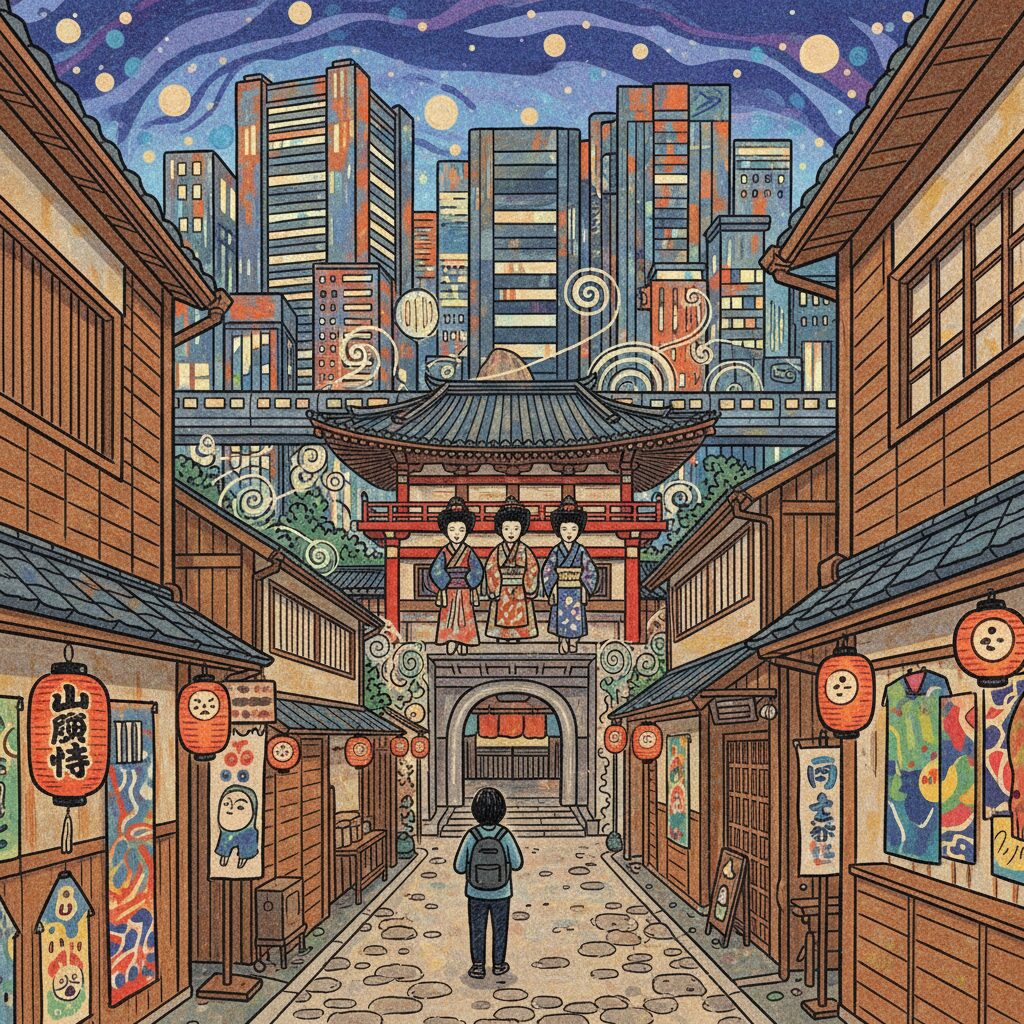
Locating the National Bunraku Theatre is an experience in itself, a study of the striking contrasts that define modern Japan. You emerge from the Nippombashi subway station into a vibrant whirlwind of sights and sounds. This is the Minami district, Osaka’s playground. To one side lies the electric buzz of Den Den Town, a paradise for anime and electronics fans. A short stroll away, the enticing aromas of Kuromon Market draw you into a maze of fresh seafood and street food delights. The energy is tangible, a pulsating rhythm of a city in constant motion. Yet, just a few blocks east, the atmosphere starts to change. The crowds thin, the noise diminishes, and then, you notice it. The theater doesn’t demand attention loudly. Instead, it commands it with quiet, assured dignity. Its architecture is a skillful blend of traditional Japanese aesthetics and modern practicality. The sloping, tiled roofs recall the outline of a feudal castle, while the clean lines and large glass windows reflect a contemporary cultural institution. It feels like a conscious statement: this is a place where the past is not frozen in time but presented with modern clarity. A sense of crossing a threshold is felt even before entering the building. The frenetic energy of the city seems to fade, replaced by an air of reverence and anticipation. It’s as if the very atmosphere around the building prepares you for the focused, deliberate art you are about to experience. This transition serves as your first lesson in Bunraku; it teaches you to slow down, to observe, and to ready your senses for something truly exceptional.
Inside the Hallowed Halls: The Overture of Atmosphere
Stepping through the glass doors into the lobby feels like entering another world. The cool, spacious interior stands in stark contrast to the humid bustle of Osaka’s streets. The prevailing impression is one of polished wood, muted tones, and a tangible reverence for the art form. The space is grand, yet inviting. Soaring ceilings create an airy atmosphere, while elegant displays in glass cases immediately capture your attention. Here, you can get an intimate first look at the stars of the show: the puppets, or ningyo. They remain silent and still, but their exquisite craftsmanship is stunning. You can admire the intricate embroidery on their silk costumes, the delicate carving of their wooden faces, each painted with expressions that hint at the dramatic lives they lead on stage. There are also exhibits of the thick, heavy books used by the chanter and the refined, powerful shape of the futo-zao shamisen. This small, curated museum serves as the perfect introduction to the performance. I cannot emphasize enough the importance of arriving early. It gives you a chance to soak in the atmosphere, study these artifacts, and begin to appreciate the immense artistry involved before the first note even sounds. The crowd itself is an intriguing mix. You’ll notice elegant elderly ladies in beautiful kimono, quietly chatting with friends for whom a visit to the Bunraku is a cherished ritual. You’ll see university students, perhaps studying classical literature, watching with scholarly focus. And you’ll see people like yourself: curious travelers, first-timers, their faces a blend of intrigue and slight bewilderment. This is the ideal moment to visit the information counter and obtain the most vital tool for any non-Japanese-speaking visitor: the earphone guide. For a modest fee, this device becomes your key to unlocking the narrative. It doesn’t merely offer a dry translation; it provides context, explains symbolism, and alerts you to important moments, enabling you to follow the intricate feudal tales of love, betrayal, and honor that form the heart of the Bunraku repertoire. With your guide in hand, you feel prepared and eager to immerse yourself. As the chimes ring, signaling the doors to the auditorium have opened, a quiet, collective movement begins—a pilgrimage into the core of the drama.
The Three Souls of a Single Puppet: Deconstructing the Magic
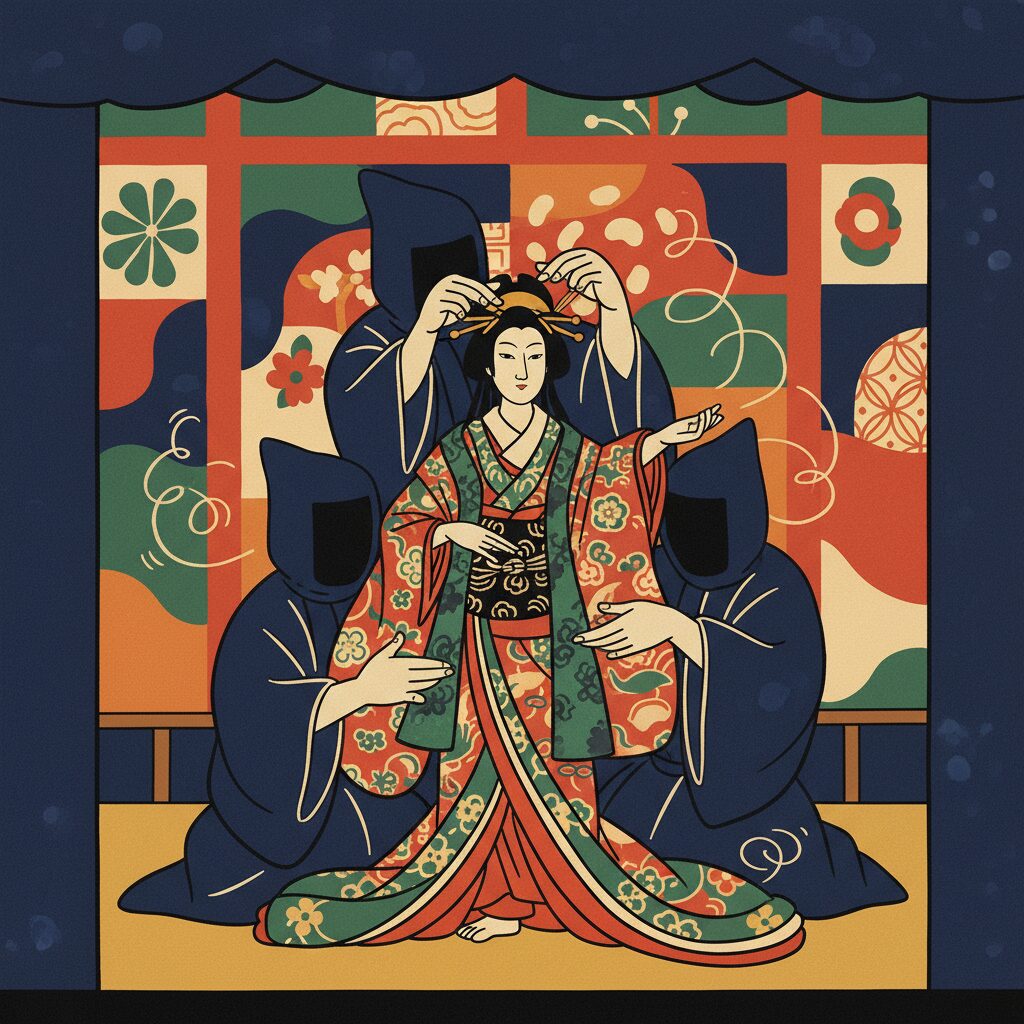
To truly appreciate Bunraku is to understand its distinctive structure—a trinity of artistic disciplines that blend to create a seamless reality on stage. A single puppet, about two-thirds life-size, is animated not by strings from above but by three highly skilled puppeteers, the ningyo tsukai, who are visible on stage dressed in black. This initial sight may be startling for newcomers, but the brilliance of Bunraku lies in how these visible manipulators eventually disappear from your perception. This illusion is achieved through the absolute mastery of the other two elements in the trinity: the chanter and the shamisen player.
The Tayu: The Voice of Every Emotion
Seated on a revolving platform to the side of the stage is the tayu, the narrator or chanter. This is far more than mere storytelling; it is an act of complete vocal and emotional embodiment. The tayu performs every role, shifting from the gruff voice of a samurai warrior to the gentle whisper of a young princess, from the cackle of a villain to the sorrowful cry of a grieving mother. They do not merely recite the lines; they inhabit them. They growl, weep, sing, and roar. The performance is an athletic feat. Sitting in the formal seiza posture, their entire body is tensed as they deliver the story from the depths of their abdomen (hara). They use a heavy, ornate script book, or yukahon, which they lift and turn with dramatic flair, the pages serving almost as a percussive instrument. Watching the tayu is a performance in itself. You see sweat beading on their brow and veins standing out on their neck as they unleash a powerful crescendo of emotion. They are the engine of the narrative, the source from which all of the story’s passion flows. Their voice guides your heart, telling you what to feel and painting a sonic landscape as vivid as the physical sets on stage.
The Shamisen: The Heartbeat of the Narrative
Beside the tayu sits the shamisen player, wielding a three-stringed instrument with a thick neck known as a futo-zao shamisen. If the tayu is the voice of the story, the shamisen is its soul and nervous system. This is not background music. The shamisen punctuates every action, underscores every emotion, and often conveys what words cannot. A sharp, violent strum may signify a sword being drawn. A series of rapid, frantic notes can express a character’s inner turmoil. A long, mournful pluck can echo the silence of a tragic farewell. The shamisen player and tayu maintain a constant, dynamic dialogue. They breathe together, their rhythms perfectly synchronized in a partnership called chobo. The music can shift from percussive intensity one moment to achingly melodic the next. It creates a soundscape unique to Japanese theater, one that gets under your skin and connects you directly to the emotional core of the play. The shamisen player watches the stage, the puppets, and the tayu, acting as the ultimate conductor, weaving the diverse elements into a cohesive whole.
The Ningyo Tsukai: The Breath of Life
Then there are the puppets and their handlers. The three puppeteers operate in silent, flawless coordination. Their hierarchy is strict, reflecting a long and arduous apprenticeship. The principal puppeteer, the omozukai, controls the head and right arm. This is the master, the only one whose face might be visible, a mark of their esteemed rank. They are responsible for the puppet’s primary gestures and, most importantly, its expressions. Through subtle head tilts and small movements, they convey an astounding range of emotions. The second puppeteer, the hidarizukai, manages the left arm. Positioned under the main puppeteer’s right arm, their work must perfectly mirror and invisibly extend the master’s will. The third and junior puppeteer, the ashizukai, controls the legs. They remain in a low crouch throughout the performance, their movements creating the illusion of walking, running, or the delicate, shuffling steps of a woman in a kimono. The apprenticeship for a Bunraku puppeteer is famously lengthy. It is said mastering the feet takes ten years, another ten to master the left arm, and only after two decades of training can one hope to become an omozukai and finally handle the puppet’s head. This dedication is palpable on stage. Their movements are devoid of ego. They are not performers seeking applause; they are channels. Their goal is to vanish, becoming mere shadows—kurogo—in service to the puppet. Their unified, selfless effort is what breathes life into the inanimate doll, transforming it into a character with its own thoughts, feelings, and soul.
When the Curtain Rises: A Spectacle of Miniature Grandeur
The house lights dim, and a hush settles over the audience. A sharp, resonant clack of wooden blocks, the ki, echoes through the theater, signaling the beginning of the performance. Instead of being raised, the curtain is swept aside by a stagehand, a swift and dramatic reveal. Suddenly, the world of the play emerges before you. The sets are intricate and beautiful, often portraying traditional Japanese interiors, tranquil gardens, or dramatic landscapes. Then the puppets make their entrance. Your first impulse is to watch the puppeteers, trying to decipher the mechanics behind it all. They stand there, dressed in black, their presence undeniable. But then, something strange and wonderful starts to happen. The tayu’s voice rises, filled with passion. The shamisen releases a mournful cry. The puppet on stage lifts a hand to its face in an expression of sorrow. In that moment, the three black-clad figures behind it begin to fade from your awareness. Your mind makes a magical leap. You are no longer observing three men manipulating a doll; you are witnessing a character’s grief. You notice the subtle slump of the puppet’s shoulders, the almost imperceptible tilt of its head, and you feel its anguish. The artistry lies in the details. A princess might express her turmoil not through wild gestures, but through the slight trembling of her sleeve, a movement created by the almost invisible flick of the omozukai‘s wrist. A warrior’s determination is shown in the firm planting of his feet, a testament to the ashizukai‘s steady control. The stories are often epic tragedies from Japan’s feudal past—tales of samurai honor, star-crossed lovers, and moral dilemmas leading to heart-wrenching sacrifice. You might witness the story of Sugawara no Michizane, a loyal courtier unjustly exiled, or the tragic love suicide of a merchant and a courtesan in Sonezaki Shinju. Even without grasping every nuance of the archaic language, the earphone guide offers the plot, while the raw, universal emotions of the performance transcend any language barrier. The blend of the tayu’s gut-wrenching wails, the shamisen’s evocative music, and the puppet’s poignant gestures delivers an emotional impact that is surprisingly powerful. You may find yourself forgetting to breathe, utterly captivated by the drama unfolding in this miniature, magnificent world.
An Interlude for Reflection: Savoring the Experience
Bunraku performances are often lengthy, divided into several acts with generous intermissions. This is not idle time; it is a vital part of the experience. When the curtain closes and the house lights brighten, you are released from the intense emotional hold of the performance. The lobby, once quiet with anticipation before the show, now buzzes with conversation. This moment allows you to reflect on what you’ve witnessed. It’s also an opportunity to participate in another beloved tradition: the theater bento. Many audience members buy beautifully crafted lacquer boxes filled with a variety of seasonal delicacies to enjoy during the break. These bento are sold in the lobby, and joining in is a wonderful way to engage with local culture. Find a seat in one of the lounge areas and unwrap your meal. As you eat, observe the other patrons, listen to the soft murmur of Japanese around you, and contemplate the story. Was the hero’s sacrifice noble or misguided? Did the heroine’s plight touch your heart? The intermission allows the play’s heavy themes to settle. It’s also a great chance to visit the theater’s gift shop, where you can find books about Bunraku, beautiful postcards featuring the puppets, and unique souvenirs related to the plays. This is an opportunity to bring a piece of this distinctive cultural experience home with you. This break is crucial—not only for refreshment but for emotional pacing. It readies you for the next act, allowing you to return to your seat with a clear mind, prepared to immerse yourself once again in the dramatic world on stage.
Beyond the Stage: Weaving Bunraku into Your Osaka Story
The magic of attending a performance at the National Bunraku Theatre is enhanced by its location. The theater is not an isolated cultural entity; it is intricately woven into the vibrant fabric of one of Osaka’s most lively neighborhoods. Exploring the area before or after the show deepens your appreciation of the city’s diverse character. It enables you to situate this classical art form within a contemporary setting.
From Ancient Drama to Culinary Delights: Kuromon Market
Just a five-minute walk from the theater stands Kuromon Ichiba Market, often referred to as “Osaka’s Kitchen.” A visit here before the performance is a feast for the senses. The covered arcade buzzes with vendors calling out their goods, the aroma of grilled scallops and simmering dashi broth fills the air, and vivid displays of glistening tuna, enormous crab legs, and perfectly marbled wagyu beef paint a lively picture. Here, you can observe a different kind of Japanese artistry. Watch a chef skillfully slice a piece of fatty tuna with a long, elegant knife, his movements as precise and practiced as a puppeteer’s. Sample freshly grilled unagi or a sweet, juicy strawberry mochi. The raw, vibrant energy of the market, centered on the pleasures of food and trade, forms a striking contrast to the refined, epic world of Bunraku. It serves as a reminder that Osaka’s culture has always been rooted in the daily lives of its merchants and artisans.
The Neon Glow of Dotonbori: A Study in Contrasts
After an evening performance, stepping out of the theater transports you from the quiet world of feudal Japan to the dazzling neon spectacle of Dotonbori just a short stroll away. Walking along the canal, beneath the iconic Glico Running Man sign and giant mechanical crabs, is a quintessential Osaka experience. The overwhelming sensory stimulation stands in stark contrast to the focused, acoustic experience of Bunraku. Yet, encountering both so closely is not a jarring clash but a revelation. It highlights the remarkable range of Osaka’s identity. This is a city that honors its 300-year-old theatrical traditions while embracing the chaotic, futuristic, and unabashedly commercial aspects of modern life. Experiencing both in one day offers insight into the city’s dynamic soul, where profound history and cutting-edge modernity not only coexist but energize one another.
A Quiet Moment in Hozenji Yokocho
For a post-theater experience that sustains the traditional atmosphere, seek out Hozenji Yokocho. This narrow, stone-paved alley, tucked away near the neon glare of Dotonbori, feels like a step back in time. Lanterns cast a warm, gentle light on the small, traditional restaurants and izakayas lining the street. At its center is Hozenji Temple, home to a famous moss-covered statue of the deity Fudo Myo-o. Worshippers splash water on the statue as they offer their prayers, a quiet, contemplative ritual. Finding a small restaurant here for a late dinner or a glass of sake is an ideal way to conclude your evening. It allows you to quietly reflect on the powerful performance you’ve just experienced, surrounded by an atmosphere deeply connected to the old world you left behind on stage.
Practical Wisdom for the Aspiring Spectator
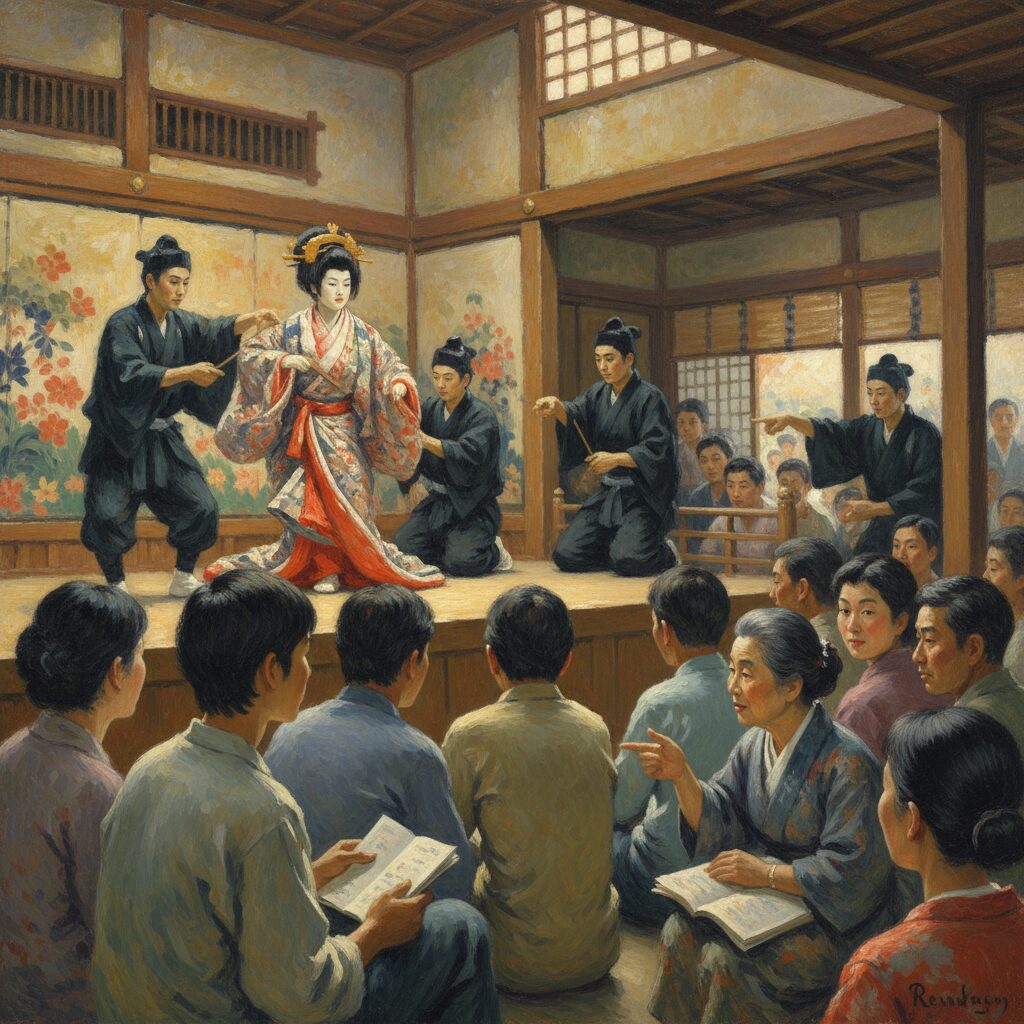
Experiencing Bunraku for the first time can seem daunting, but a bit of preparation can transform it from mere curiosity into a profoundly moving experience. First and foremost, embrace the earphone guide—it’s not a crutch but a vital bridge to understanding, enhancing your experience significantly. When booking tickets, it’s often best to do so online in advance, especially for popular shows. If time is limited or you’re hesitant to commit to a full four-hour performance, consider the makumi option, which lets you buy a ticket for a single act. This offers a more manageable and budget-friendly introduction to the art, making it perfect for newcomers. Regarding attire, there’s no formal dress code; while some attendees wear formal clothes, many opt for smart casual. The most important thing is to be respectful by arriving on time, turning off your phone, and refraining from talking during the show. The auditorium is acoustically designed, so every sound carries clearly. Allow yourself to be fully immersed in the sounds from the stage. Lastly, read a brief synopsis of the play beforehand. The theater’s website and program typically offer this in English. Having a basic understanding of the plot and main characters ahead of time will let you focus more on the emotional delivery and the artistry, rather than trying to follow the storyline.
A Final Bow: Carrying the Echoes of Osaka’s Soul
A Bunraku performance is more than just an evening at the theater; it is a deep immersion into the cultural essence of Osaka. It exemplifies the Japanese commitment to mastery and the continual refinement of an art form across generations until it nears perfection. You leave with vivid sensory memories: the thunderous voice of the tayu, the haunting resonance of the shamisen, and the unforgettable sight of a wooden doll turning its head with such profound sorrow that it touches your heart. You gain a renewed appreciation for the power of silence, subtlety, and selfless collaboration. In a world that values speed and ephemeral digital entertainment, Bunraku provides a powerful counterpoint: a slow, deliberate, and deeply human experience that rewards patience and concentration. It challenges your senses, educates your aesthetic sensibilities, and offers a direct connection to the enduring spirit of the city. So when you visit Osaka, by all means, savor the street food, marvel at the neon lights, and immerse yourself in its vibrant energy. But also, pause, enter the National Bunraku Theatre, and let the city reveal one of its most profound and beautiful secrets to you.