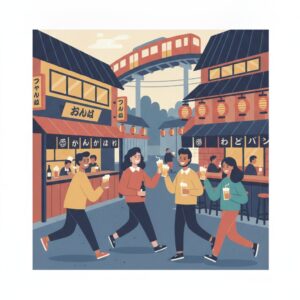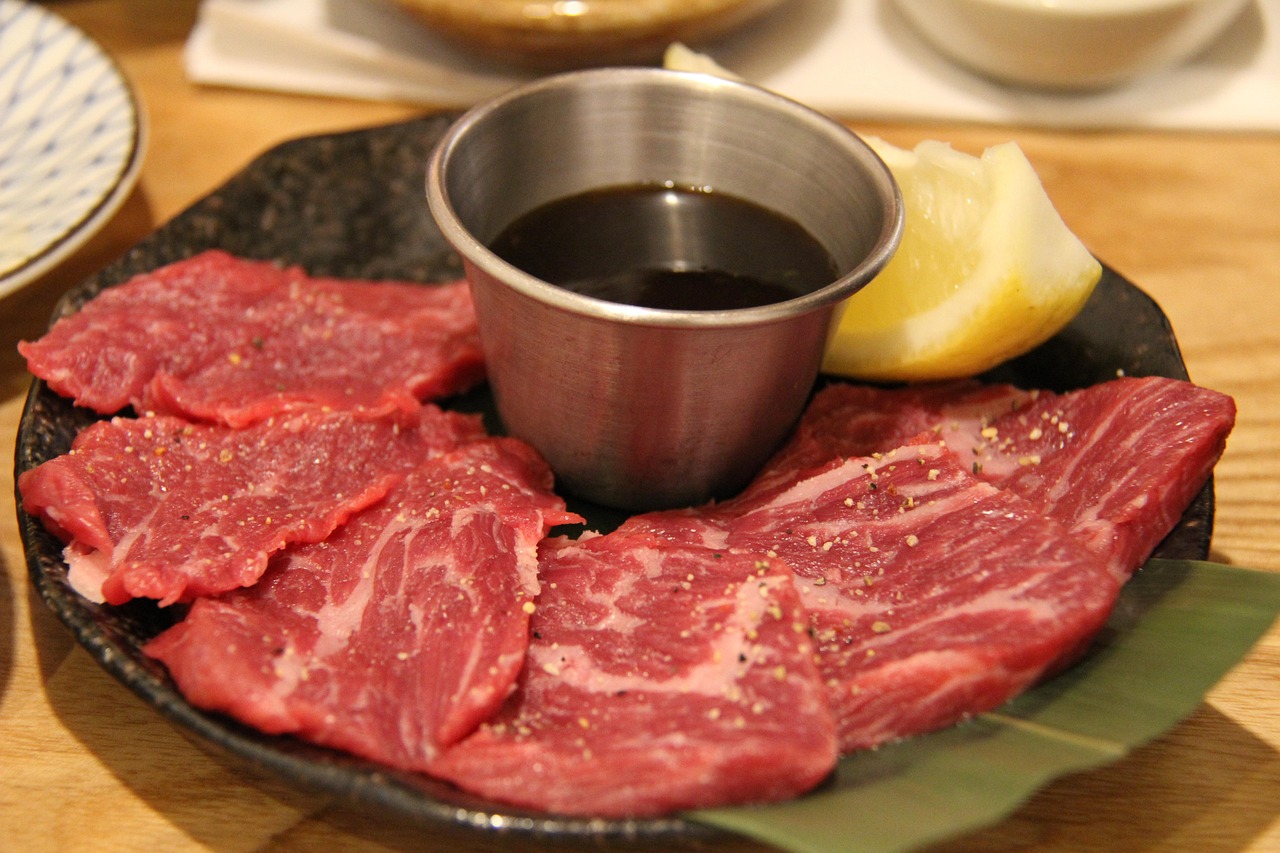
There exists a place in Osaka where the neon glow of the city seems to soften, where the broad avenues give way to a sophisticated labyrinth of quiet lanes and discreet doorways. This is Kitashinchi, a district that beats with a different heart, a rhythm of exclusivity, tradition, and unparalleled epicurean artistry. For generations, this has been the city’s premier entertainment quarter, a place where business magnates and political figures have brokered deals over exquisite meals and rare sake. Today, while its historical role has evolved, its reputation as the zenith of Osakan fine dining remains unchallenged. And at the apex of this culinary pyramid sits an ingredient treated with a reverence bordering on the sacred: Wagyu beef. For those seeking to commemorate a truly special occasion—an anniversary, a landmark achievement, a profound declaration—Kitashinchi offers an experience that transcends mere dining. It presents a choice between two sublime philosophies of culinary performance: the intimate, ingredient-focused dialogue of kappo, and the dazzling, theatrical spectacle of teppanyaki. This is not just a search for a meal; it is a pilgrimage to the heart of Japanese hospitality, or `omotenashi`, where every detail is a brushstroke in a masterpiece crafted just for you, a memory to be seared in flavor and time.
To further explore the culinary artistry of this exclusive district, discover more about Kitashinchi’s world of Wagyu kappo and sukiyaki.
The Echoes of Elegance: The Soul of Kitashinchi
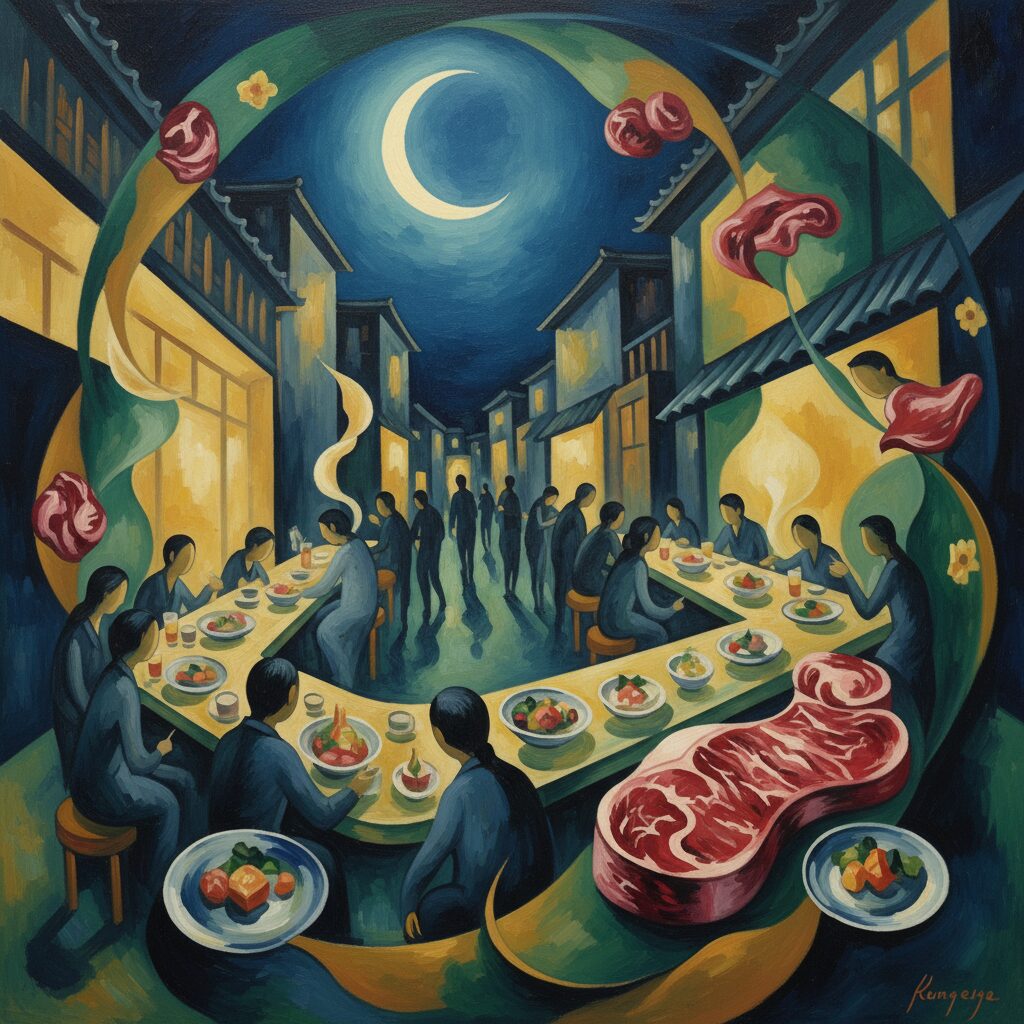
To truly savor a meal in Kitashinchi, one must first grasp the foundation upon which these culinary temples stand. The district’s identity is deeply intertwined with the history of Osaka itself, a vibrant merchant city once dubbed the “nation’s kitchen.” Its roots trace back to the Edo period’s Dojima Rice Exchange, the world’s first futures market, where samurai stipends and the nation’s wealth were exchanged in bales of rice. This immense concentration of commerce and capital naturally fostered a refined culture of entertainment and dining. Kitashinchi, formerly known as Sonezaki Shinchi, developed as a premier `hanamachi`, or geisha district—a realm of sophisticated pleasure hidden behind bamboo screens and sliding paper doors. These were not just restaurants but exclusive teahouses, or `chaya`, where influential men were entertained by geisha skilled in music, dance, and conversation. The entire system was founded on discretion, impeccable service, and a network of trust. A patron’s reputation was paramount, as was the establishment’s ability to deliver an experience of flawless elegance.
This historical essence continues to flow through modern Kitashinchi. The maze-like design of its streets is a direct inheritance from that time, crafted for privacy and discovery. The subtle, often unmarked entrances to its restaurants reflect the exclusivity of the old `chaya`. The deep commitment to `omotenashi`—that anticipatory, wholehearted hospitality characteristic of Japanese service—is not a recent invention but a continuation of centuries-old tradition. Chefs opening establishments here are not merely launching businesses; they aspire to become part of a lineage. They remain aware of the spirits of merchants and artists who once walked these same paths. This rich historical context elevates a Kitashinchi dining experience, imbuing the meal with a sense of place and time, turning it from a simple transaction into a cultural immersion. The quiet confidence of the staff, the tranquil atmosphere, and the unwavering dedication to perfection—all echo a past devoted to crafting a perfect, fleeting moment of beauty and pleasure.
A Tale of Two Theaters: Kappo and Teppanyaki
At the core of your Wagyu journey in Kitashinchi is a choice between two distinct yet equally captivating culinary philosophies. Each provides a unique perspective for appreciating this magnificent ingredient, and your decision will deeply influence the story of your evening. These are the intimate setting of kappo and the grand spectacle of teppanyaki.
The Intimate Dialogue of Kappo
The term `kappo` (割烹) combines two characters: `katsu` (割), meaning “to cut,” and `po` (烹), meaning “to simmer” or “to cook.” Despite its simple name, it represents a profound and highly personal dining style. A kappo restaurant features a counter, often made from a single, exquisite plank of wood such as hinoki cypress, serving as both the kitchen pass and dining surface. Here, you sit directly before the master chef, the `itamae`. This closeness defines the kappo experience—it is a dialogue. You are not simply a customer but an audience of one, a guest in the chef’s private culinary studio. The barrier between creator and diner fades, fostering an atmosphere of intimacy and shared exploration.
Kappo’s philosophy is one of immediacy and transparency. The ingredients, displayed in a refrigerated case before you, take center stage—pristine seasonal vegetables, live seafood, and naturally, exquisitely marbled Wagyu cuts. The chef’s artistry unfolds in full view: the flash of a perfectly sharpened knife filleting fish, the careful control of heat over a charcoal grill, the delicate presentation of a finished dish. Regarding Wagyu, a kappo master might serve the beef in multiple forms throughout a multi-course `kaiseki`-style menu. It might be a thin slice in a clear, umami-rich soup (`suimono`), a luxurious piece of beef sushi, or a flawlessly grilled steak accompanied only by a pinch of sea salt and freshly grated wasabi. The goal is not merely to cook the beef but to embed it within a wider seasonal narrative, harmonizing its potent flavor with the subtle nuances of other ingredients. A kappo experience is cerebral, reflective, and deeply enlightening. It’s a quiet symphony of technique and tradition, ideal for those who appreciate subtlety and seek a connection with the artisan behind the craft.
The Sizzling Spectacle of Teppanyaki
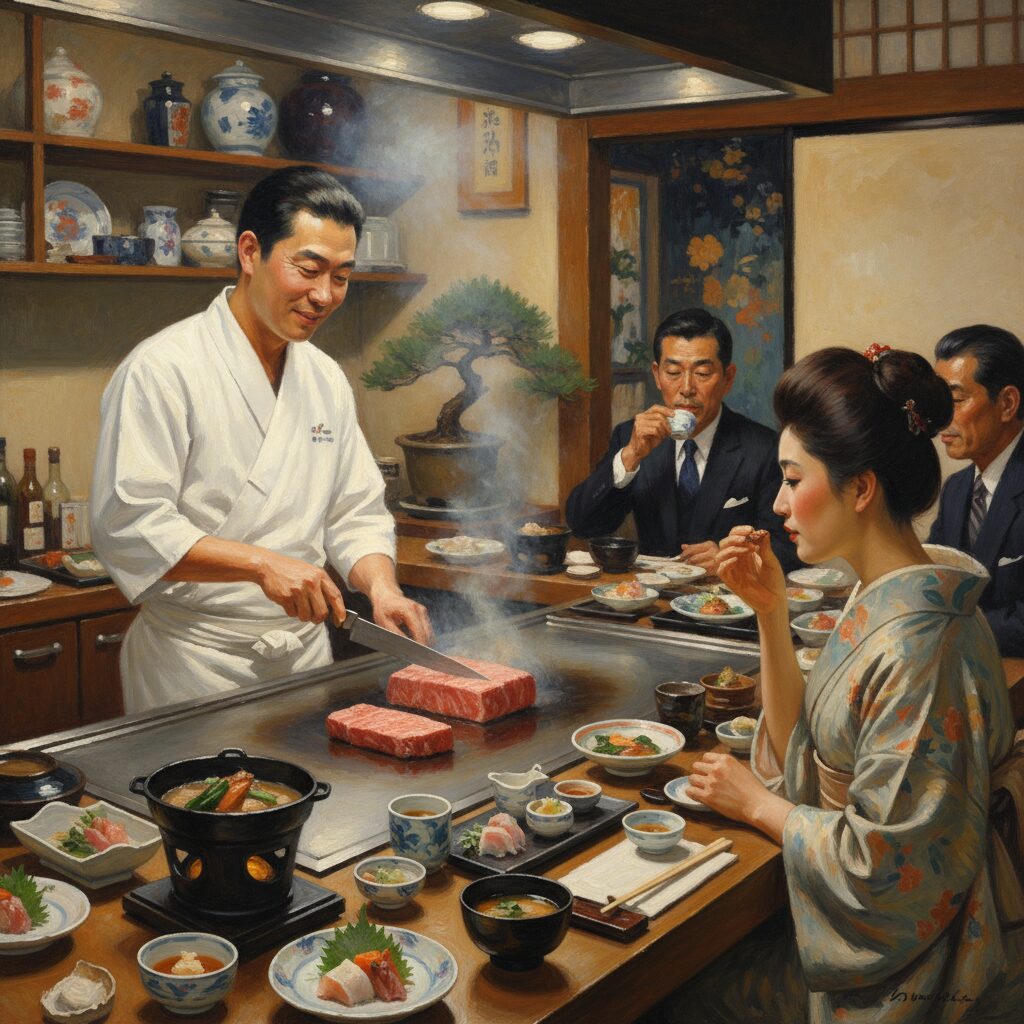
If kappo is an intimate chamber music recital, then teppanyaki (鉄板焼き) is a grand, fiery opera. The name means “grilling on an iron plate,” with the `teppan` itself serving as the stage. The atmosphere is immediately more energetic and theatrical. The sounds play a vital role: the sharp hiss as a block of marbled beef strikes the blazing hot steel, the rhythmic clatter of the chef’s metal spatulas, the whoosh of a cognac-fueled flambé. The aromas are intoxicating, filling the air with the rich scent of caramelizing beef fat and savory seasonings. The teppanyaki chef is not only a cook but a performer—a virtuoso wielding a knife, fork, and spatulas. Their movements resemble a precise, stylish dance honed through years of practice.
While often traced to the post-war era as a way to appeal to Western tastes, teppanyaki has been raised in Japan to a refined culinary art. It stands as perhaps the most direct and unfiltered method to savor the unique glory of premium Wagyu. The chef’s expertise is evident in their absolute control of the teppan’s surface, understanding hotspots and cooler areas to achieve the perfect `yaki-kagen`—the ideal degree of cooking. They create a deeply browned, Maillard-rich crust on the beef while keeping its interior exquisitely rare and tender, with the precious fat rendered just enough to melt on the tongue. Presentation is part of the spectacle, as the steak is skillfully sliced into bite-sized cubes and served straight from the grill to your plate. The accompaniments often include luxurious partners to the beef—spiny lobster, abalone, foie gras—all receiving expert treatment on the iron stage. A teppanyaki experience is a multisensory celebration—a feast for the eyes, ears, and palate. It is perfect for joyous celebrations, impressive business dinners, or anyone wishing to witness the raw power and beauty of Wagyu brought to life in a dazzling culinary performance.
The Jewel in the Crown: A Deeper Understanding of Wagyu
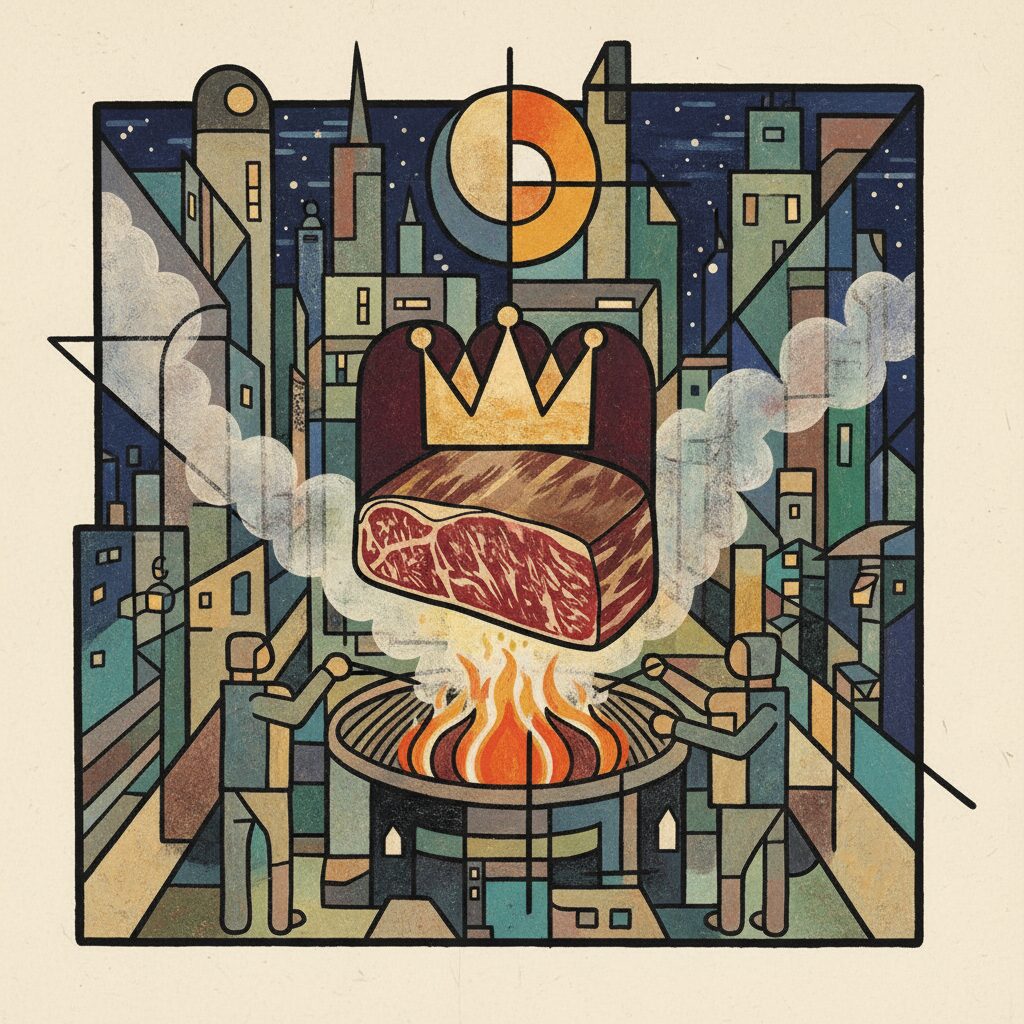
Speaking of Wagyu in Kitashinchi is to speak of the zenith of a national passion. The term ‘Wagyu’ (和牛) literally means “Japanese cattle,” yet it embodies a world of precise breeding, devoted care, and an intricately complex grading system. This is more than just beef; it is the culmination of a centuries-long pursuit of perfection, a luxury product whose quality is guarded and celebrated with the same intensity as French champagne or Italian parmesan.
The vast majority of Wagyu, and nearly all of the ultra-premium beef you will find in Kitashinchi, originates from the Japanese Black breed, or ‘Kuroge Washu.’ This breed possesses a unique genetic tendency to develop intense intramuscular fat, the delicate webbing called ‘sashi’ or marbling. This is the key to Wagyu’s legendary flavor and texture. Unlike the firm, chewy fat typical of many Western cattle breeds, the fat in top-grade Wagyu is monounsaturated and melts at an exceptionally low temperature, sometimes as low as room temperature. This is why a piece of A5 Wagyu will literally melt on your tongue, enveloping the palate in a rich, buttery, and deeply savory umami experience.
Grasping the grading system is essential to fully appreciating what you are served. Japanese Wagyu is evaluated by a dual system. The first is a Yield Grade, indicated by a letter (A, B, or C), measuring the ratio of meat to carcass weight. For diners, this is less critical; nearly all beef served in upscale restaurants will be Grade A. The second, and more significant, is the Quality Grade, a number from 1 to 5, where 5 is the highest. This score is based on four factors: marbling, the color and brightness of the meat, its firmness and texture, and the color and sheen of the fat. To earn the prestigious “A5” rating, a carcass must achieve a 5 in all four aspects. Moreover, marbling itself is evaluated on an even more detailed scale, the Beef Marbling Standard (BMS), ranging from 1 to 12. A steak must have a BMS of at least 8 to qualify as A5. The legendary beef with BMS scores of 10, 11, or 12 represents the rarest and most intensively marbled Wagyu available.
You will also encounter regional brands, with the most renowned being Kobe beef. It is important to note that Kobe is not a breed but a brand name for Tajima-gyu (a strain of Japanese Black) cattle, raised under exceptionally stringent standards in Hyogo Prefecture. While Kobe is magnificent, it is not the sole superstar. Omi beef from Shiga Prefecture, reputedly Japan’s oldest beef brand, and Matsusaka beef from Mie Prefecture, known for its especially tender and richly flavored female cattle, are equally esteemed by aficionados. Many master chefs in Kitashinchi maintain close ties with specific farms and obtain their beef based not only on a famous brand name but also on the individual producer’s reputation. When a chef presents you with a piece of raw, beautifully marbled steak before cooking it, they are not merely showing you dinner; they are sharing the culmination of a farmer’s lifelong dedication and a proud regional legacy.
Imagining the Experience: A Walk Through Kitashinchi’s Finest
While specific restaurant names may change, the timeless archetypes of excellence in Kitashinchi endure. To guide your selection, let’s envision stepping into three distinct yet equally magnificent establishments, each embodying a unique aspect of the district’s Wagyu culture.
The Kappo Sanctuary: “Kitashinchi Sekka”
Picture turning off a main street into a narrow, stone-paved alley. No sign greets you, only a beautifully illuminated `noren` curtain hanging over a sliding wooden door. Once inside, the outside world melts away. The air is still, scented faintly with the clean aroma of hinoki wood and dashi. This is a space of profound tranquility—a minimalist sanctuary with perhaps just eight seats arranged along a flawless, single-plank cypress counter. Soft lighting highlights the chef’s hands and the ingredients before him. Welcome to the realm of the kappo master.
The experience is a carefully choreographed multi-course menu that narrates the season. Wagyu plays a starring role, but just one part of the story. Your evening might start with a delicate appetizer of firefly squid and mountain vegetables, followed by a clear soup featuring a single, perfect dumpling. Then, the beef arrives: a small, jewel-like block of A5 Omi sirloin. The chef explains its origin—the farm it comes from. Rather than grilling it on a teppan, he gently poaches thin slices in a simmering kelp broth right before you, a method known as `shabu-shabu`, served with tart ponzu and creamy sesame sauce. Later, another expression of beef might appear: a small, intensely flavored cube of braised Wagyu cheek, simmered for hours until it melts at the touch of your chopsticks. The meal is a journey of textures and temperatures, of balance and restraint. This experience suits the culinary purist, couples celebrating a quiet anniversary, or anyone seeking a deep, contemplative connection with Japanese cuisine’s artistry.
The Teppanyaki Theatre: “Teppan Enbu”
Now, envision an entrance that feels more assertive, yet remains impossibly chic. You’re led into a room with warm, dark wood and ambient lighting; the centerpiece is a massive, gleaming teppan grill that shines like a polished stage. The atmosphere buzzes with energy—the murmur of appreciative conversation punctuated by the sizzle of the grill. The chef, immaculate in their uniform, greets you with a confident bow. This is the teppanyaki theatre.
Here, your meal is a performance from the very start. The chef may begin by expertly preparing a live Ise-ebi lobster, its tail meat pulled from the shell and cooked to pearly perfection. Then comes the main event: a trolley arrives, presenting a magnificent, thick-cut slab of A5 Matsusaka chateaubriand, its marbling so dense it appears almost pink. The chef invites you to inspect it before commencing the ritual. The beef is seasoned simply with salt and pepper. It lands on the grill with an assertive hiss. With surgical precision, the chef uses spatulas to sear every surface, creating a mahogany crust as flames lick the edges. You watch, mesmerized, as the steak is sliced into perfect cubes, revealing a warm, ruby-red interior. It’s served immediately alongside an array of salts, sauces, and freshly grated wasabi, though the first bite is best enjoyed plain. The flavor explodes—rich, beefy, and decadently luxurious. The evening builds to a crescendo of sumptuous flavors and dynamic flair. This venue is ideal for grand celebrations, entertaining important clients, or first-time visitors seeking the quintessential, show-stopping Japanese steakhouse experience.
The Charcoal Connoisseur: “Sumibiyaki Ran”
Finally, consider a third option blending intimacy with a primal cooking method. You find yourself in a more secluded spot, perhaps a basement in an unassuming building. Here, the centerpiece isn’t a teppan but a charcoal grill, or `shichirin`, glowing with white-hot `binchotan` charcoal. The air carries a subtle, clean smokiness that rouses the appetite. Seating may be at a counter or in a private room, but the focus remains entirely on the transformative power of the perfect fire.
This is the realm of the `sumibiyaki` (charcoal grilling) expert. The menu offers a deep dive into Wagyu’s essence. The chef, a true beef scholar, might present a tasting course showcasing several cuts from the same animal, allowing you to explore their unique characteristics. You could savor the supreme tenderness of the chateaubriand, the balanced richness of the sirloin, and the intense marbling of a lesser-known, prized cut like the `zabuton` (chuck flap). Each piece is grilled with monastic focus over the intensely hot, smokeless `binchotan`, which instantly sears the exterior, locking in juices and imparting a subtle smoky fragrance that enhances rather than masks the beef’s natural flavor. The experience is elemental yet refined—a masterclass in Wagyu’s nuances, reduced to meat, salt, and fire. This choice suits the dedicated carnivore or discerning epicure eager to look beyond the A5 grade and truly grasp the ingredient’s soul.
A Guide for the Discerning Guest: Practicalities and Etiquette
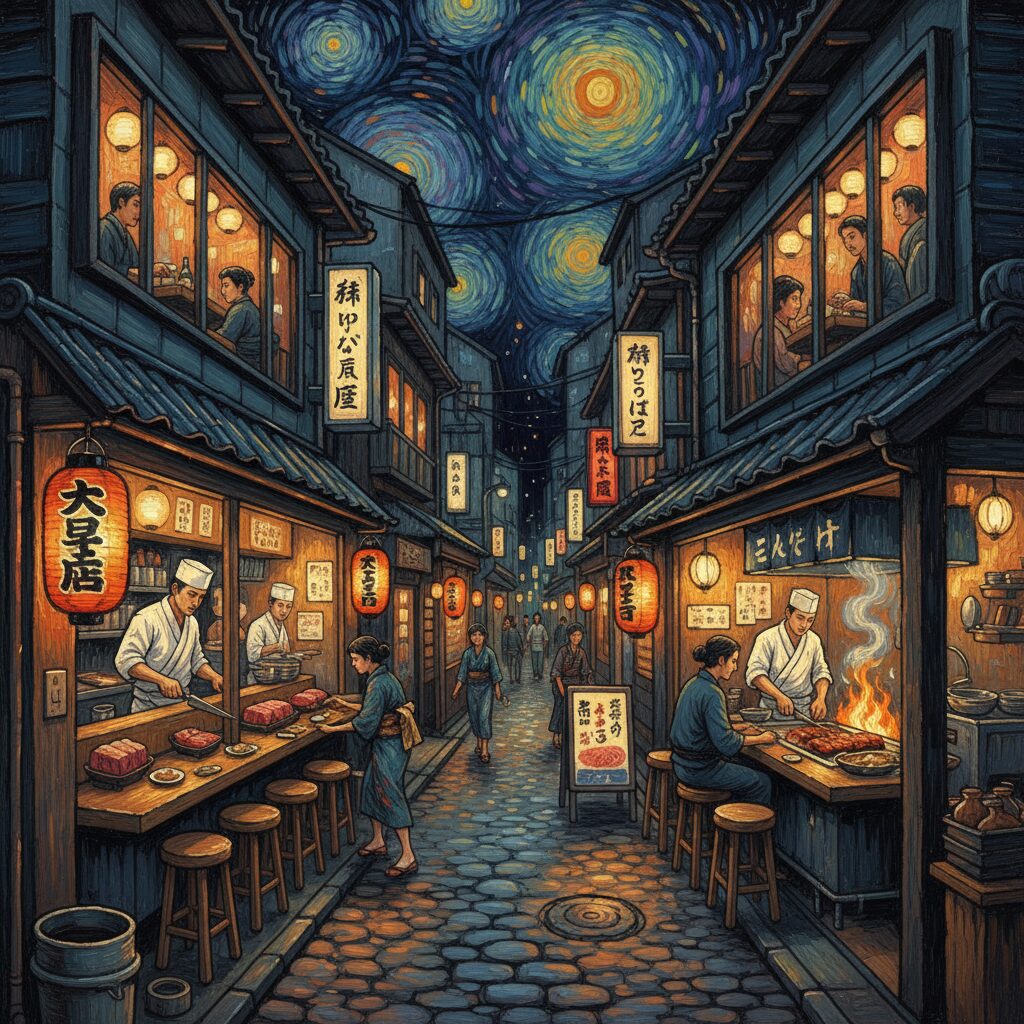
A perfect evening in Kitashinchi involves more than just selecting the right restaurant; it also requires navigating the experience with elegance and insight. This area is governed by unspoken rules and long-standing traditions, and a bit of preparation can make all the difference.
Securing Your Place
Reservations are not just recommended—they are essential. Many upscale Kitashinchi venues are intimate with limited seating and are often fully booked weeks or even months in advance. For international visitors, this poses a challenge since many do not offer online booking and may require a Japanese speaker to make calls. This is where a luxury hotel concierge proves invaluable, possessing both language skills and established connections to secure reservations on your behalf. Additionally, reputable third-party booking services specialize in obtaining seats at exclusive restaurants, which can be well worth the fee for a memorable occasion.
The Art of Arrival
The dress code in Kitashinchi generally calls for smart casual as a minimum, with many guests opting for more formal wear. Women often choose elegant dresses, blouses, and trousers, while men wear collared shirts, jackets, and tailored trousers. T-shirts, shorts, and sandals are considered entirely inappropriate and may lead to denied entry. Punctuality is crucial. In kappo or teppanyaki settings, where multi-course meals are served simultaneously at the counter, arriving late can disrupt the entire service. Aim to arrive five to ten minutes before your reservation. The district’s layout can be confusing, so allow plenty of time to locate the restaurant. The easiest access is usually a short walk from JR Kitashinchi Station, or a slightly longer walk or quick taxi ride from major hubs like Umeda or Yodoyabashi.
During the Meal
Once seated, the evening progresses under the chef’s and staff’s guidance. At a counter, engaging with the chef is not only acceptable but often encouraged—you can inquire about ingredients or compliment their skills. However, it’s equally important to respect their pace and give them space during intensive preparation moments. When taking photos, be discreet; avoid using flash and politely ask for permission before photographing the chef. Don’t hesitate to seek beverage recommendations. These restaurants boast meticulously curated selections of sake, wine, and Japanese whisky, with staff or sommeliers ready to suggest perfect pairings to enhance your meal. Lastly, be prepared for the expense. Dining at this level is a significant investment, with tasting menus often starting around ¥20,000 per person and increasing steeply beyond that, excluding drinks. This is truly a special occasion splurge.
The Lingering Glow: Savoring the Kitashinchi Night
The magic of Kitashinchi doesn’t end once you settle the bill. The experience continues along the beautifully illuminated streets, inviting you to extend the enchantment. Instead of hurrying back to your hotel, take a moment to savor the ambiance. A post-dinner walk is a lovely way to digest both your meal and the experience. The lanes have grown quieter, with the warm glow from tucked-away establishments spilling onto the pavement. Soft sounds of muted conversations, the clinking of glasses, and the clip-clop of elegant shoes on stone fill the air.
This is an ideal chance to complete your sophisticated evening with a visit to one of Kitashinchi’s renowned bars. Like its restaurants, the district boasts a remarkable concentration of world-class cocktail bars, many hidden in basements or on upper floors of unassuming buildings. Here, bartending is elevated to a fine art. You’ll find masters in crisp white jackets, carefully carving ice balls by hand and mixing classic cocktails with meticulous Japanese precision. There is no finer way to conclude an extraordinary Wagyu dinner than with a flawlessly crafted Old Fashioned made using rare Japanese whisky or a seasonal fruit cocktail that embodies the essence of Japan. This final gesture—a quiet drink in an elegant setting—solidifies the evening as a complete, immersive journey into the heart of Japanese sophistication.
A Memory Seared in Flavor
Dining on premium Wagyu in Kitashinchi is more than just enjoying a luxurious meal; it is engaging in a profound cultural ritual. It embodies the Japanese pursuit of perfection, a philosophy known as `kodawari`, where artisans devote their lives to mastering a singular craft. This dedication is evident in the farmer who raises the cattle, the chef whose knife skills become a form of meditation, and the host whose service reflects genuine care. Whether you opt for the subtle elegance of kappo or the vibrant flair of teppanyaki, the experience leaves a lasting impression. It is a dialogue with a master, a taste of history, and a sensory mosaic crafted from flavor, aroma, and ambiance. For that one extraordinary evening in the radiant heart of Osaka, you become more than a guest; you are an honored participant in the pinnacle of culinary artistry, creating a memory to be treasured long after the final exquisite bite has dissolved.