Step away from the blinding neon river of Dotonbori, leave the polished facades of Shinsaibashi behind, and venture into the authentic, beating heart of Osaka’s nightlife. We’re going to a place locals call Uranamba, literally “Back Namba.” It’s a tangled labyrinth of narrow alleys, buzzing with the electric hum of conversation and the irresistible aroma of grilled meats and simmering dashi. This isn’t the Osaka you see on postcards; this is the Osaka you feel in your soul. Uranamba is the city’s unofficial sanctuary for one of Japan’s most cherished social rituals: the tachinomi. These are standing bars, no-frills establishments where you stand shoulder-to-shoulder with strangers who quickly become temporary friends, sharing cheap drinks, delicious small plates, and the collective exhale of a city that’s clocked out for the day. This is where you experience hashigo-zake, the art of bar hopping, not as a tourist, but as a participant in a nightly tradition. Forget sprawling menus and comfortable chairs; here, the currency is authenticity, the pace is brisk, and the rewards are immeasurable. It’s a world built on fleeting moments of connection, a shared laugh with the chef, a clink of glasses with the salaryman next to you. Prepare to dive headfirst into the glorious, gritty, and utterly delicious world of Uranamba’s standing bars.
While the polished facades of Shinsaibashi and the dazzling neon of Dotonbori are famous worldwide, Uranamba offers a more intimate and authentic taste of Osaka’s nightlife.
The Electric Soul of Uranamba: Beyond the Neon Glow
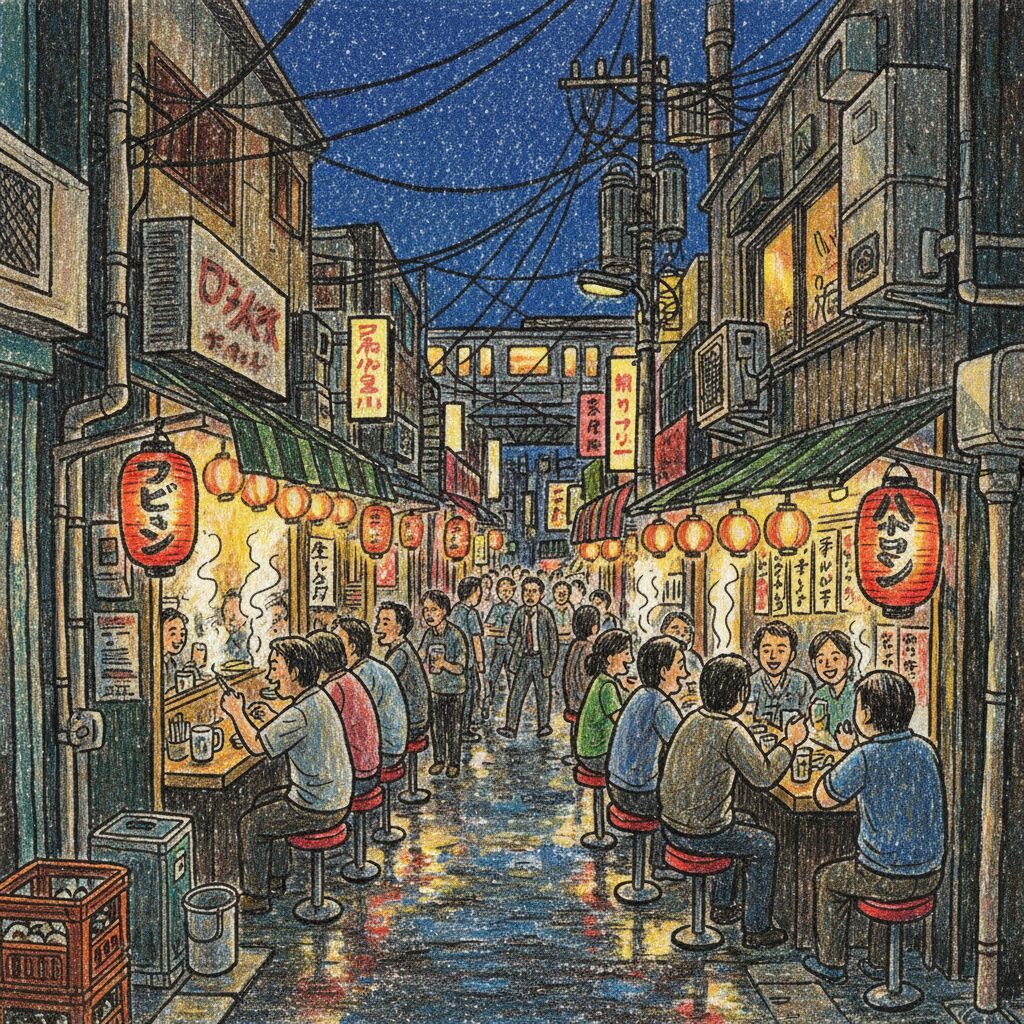
To truly grasp the essence of Uranamba, you must first adjust your senses. The air here feels distinct—thick and savory, a complex blend of aromas rising from the steam of simmering oden, the sharp char of yakitori grilling over hot coals, and the sweet, malty fragrance of draft beer pulled fresh from the tap. Red and white paper lanterns, called akachochin, emit a warm, welcoming glow that pushes back the encroaching shadows cast by the towering city buildings surrounding this hidden haven. The soundscape is a raw urban symphony: the clatter of dishes, the sizzle of oil, bursts of hearty laughter, and the rhythmic flow of Kansai-ben, Osaka’s unique and lively dialect, echoing off the narrow alley walls. This is no place for quiet reflection; it is a vibrant, living web of human connection.
Originally, these alleys served as the practical back-of-house area for the grand Sennichimae shopping district, hosting delivery entrances, storerooms, and staff quarters. Yet, true to Osaka’s spirit—where no space goes unused and every chance for business or enjoyment is embraced—these backstreets naturally evolved into a sanctuary for affordable, easily accessible food and drink. They became the favored haunt of the city’s working class—the chefs, shopkeepers, office workers—seeking a quick, satisfying, and down-to-earth way to end their day. This history is woven into the very fabric of Uranamba. It’s palpable in the worn wooden counters, the faded Showa-era posters advertising sake brands of the past, and the gruff but heartfelt hospitality of the proprietors, many of whom have run their small establishments for generations. The tachinomi culture perfectly embodies Osaka’s pragmatism and its legendary passion for food, a philosophy known as kuidaore, which means to eat and drink until you drop—or run out of money.
Mastering the Tachinomi Tango: A Guide to Standing Bar Etiquette
Walking into your first tachinomi can feel intimidating. These establishments are usually small, crowded, and governed by an unspoken set of rules. But don’t worry; the “tachinomi tango” is an easy dance to pick up, and locals are almost always friendly to newcomers who show a bit of respect and a willingness to give it a try. The key principle is straightforward: be mindful of space and time.
Finding Your Footing
First, take a quick look inside from the doorway. Don’t just rush in. Check if there’s a small spot available at the counter. If it appears full, try catching the staff’s eye and hold up one finger if you’re alone, or two if you’re with someone. They’ll either beckon you in if there’s a hidden spot or politely cross their arms to indicate they’re full. If you secure a spot, slide in smoothly. Keep your bag and coat close to you; placing them on the counter is a big no-no. Most places provide small hooks beneath the counter or shelves above for your belongings. Remember, every inch counts. The goal is to make yourself small and blend into the bar’s lively crowd.
The Art of the Order
Menus can be tricky. They’re often just wooden or paper strips fixed to the wall, written solely in Japanese. Consider this part of the adventure. Start with the basics: a draft beer is “Nama biiru,” and a highball is “Haibōru.” If you spot something appealing, pointing is perfectly fine and universally understood. Saying “Kore kudasai” (“This, please”) while pointing works wonders. The staff are experts in efficiency; they’re not there for long discussions about the menu. Order a drink first, then one or two dishes. Avoid ordering everything at once. The idea is to maintain a steady, gentle flow of food and drink. Watch what the regulars are having—it’s typically the house specialty and the freshest choice. Be bold and order the same; it’s a respectful move and a great way to discover something delicious.
Settling the Tab
Payment methods vary, adding another dimension to the experience. The most traditional is kyasshu on or “cash on,” where you place a 1,000 yen bill or some coins on the counter in front of you. As you order, the staff will take the cost of each item from your pile. It’s a beautifully simple and transparent system. Other bars ask you to pay at the end, tallying your bill on a small piece of paper or by memory. A few, especially kushikatsu places, might use a ticket system. Whatever the method, always have cash ready. Many small, old-fashioned spots don’t accept credit cards. It’s part of their charm and their business model, which relies on low overhead and high turnover. Tipping isn’t practiced in Japan, so the price you see is the price you pay.
The Rhythm of the Hop
The most important etiquette is understanding the rhythm. A tachinomi isn’t a place to settle in for the entire evening. It’s a quick stop, one scene in the longer story of your night. The unspoken rule is to have one or two drinks, a couple of small dishes, and then move on, freeing up your spot for the next guest. This transient nature fuels the hashigo-zake tradition of bar hopping. Staying longer than an hour is generally seen as bad form unless the bar is empty. Embrace this flow. The charm lies not in finding one perfect bar but in creating a constellation of experiences as you wander from one lantern-lit doorway to the next.
The Uranamba Circuit: A Journey Through Taste and Time

As you start to wander through the winding alleys, you’ll realize that the tachinomi of Uranamba are far from uniform. They represent a varied collection of specialized venues, each boasting its own distinct character, menu, and essence. Your bar-hopping adventure will serve as a journey through the many facets of Osaka’s culinary identity.
The Showa-Era Time Capsule
Your first stop might be a spot seemingly frozen in time from the 1960s. The entrance is a sliding wooden door that creaks as you open it, unveiling a cramped interior filled with cigarette smoke and the warm steam rising from a simmering pot. The counter is a single, thick plank of dark wood, smoothed by the elbows of countless patrons over decades. The master, or taisho, is a quiet, elderly man whose economical movements reveal a lifetime spent behind this very counter. The menu is simple and unchanging: bottles of Kirin or Asahi lager, affordable and potent chuhai (shochu highballs), and a selection of classic comfort foods. In a large copper pot, you’ll find o-den, a winter staple where daikon radish, tofu, fish cakes, and boiled eggs drift lazily in a savory dashi broth. Point to your choice, and the master will retrieve it from the broth, serving it with a dollop of sharp karashi mustard. There may also be grilled fish, simple pickles, or potato salad. The experience here is less about culinary innovation and more about connecting with the past. It offers a quiet, reflective drink, a chance to observe the unspoken camaraderie of regulars and feel the deep, grounding history of the place.
The Seafood Specialist’s Paradise
Turn a corner and you encounter a completely different vibe. Bright, almost harsh fluorescent lights illuminate styrofoam boxes packed with ice and the day’s fresh catch. The air smells briny and clean, like the ocean’s breeze in the heart of the city. This is the seafood tachinomi, a tribute to Osaka’s history as a port town and its proximity to Japan’s best fishing grounds. The counter here may be stainless steel, easy to wipe clean, and the atmosphere is loud and boisterous. The menu follows the market’s bounty. One day it’s glistening horse mackerel (aji) sashimi, the next it’s fatty bonito (katsuo) lightly seared on the outside. Fresh oysters shucked to order or clams steamed in a bath of sake and butter may also appear. Ordering here is an act of trust. Ask for the osusume (recommendation), and you’ll be rewarded with the freshest, best catch of the day. Pair it with a crisp, dry sake that balances the richness of the fish. Here you truly experience the essence of kuidaore culture—incredibly high-quality ingredients served simply and at remarkably low prices.
The Kushikatsu Carnival
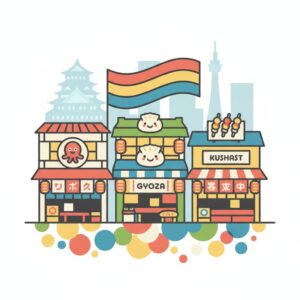
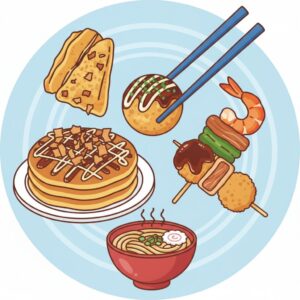
No culinary tour of Osaka is complete without savoring kushikatsu, and Uranamba offers some of the best and most atmospheric spots to do so. You’ll be drawn in by the unmistakable, mouth-watering aroma of frying. These are temples of the deep fryer, lively and casual places where everything imaginable is served on a bamboo skewer, coated in a light panko breading, and fried to golden perfection. The menu is a delightful checklist of options: pork belly, chicken thigh, lotus root, shiitake mushrooms, quail eggs, gooey cheese, and even bananas for dessert. The skewers arrive piping hot, placed on a metal tray before you. Here you will discover the most sacred rule in all of Osaka dining: NO DOUBLE DIPPING. A communal pot of thin, tangy Worcestershire-style sauce sits on the counter. You dip your skewer once, and only once, before taking your first bite. If more sauce is needed, you use a slice of raw cabbage provided to scoop it up and drizzle it onto your skewer. Breaking this rule is the ultimate sin. Kushikatsu is fun, interactive, and deeply satisfying. It’s a meal best enjoyed with a cold beer and a group of friends, making it a perfect stop on your Uranamba crawl.
The Modernist’s Outpost
Among the traditional old-timers, a new generation of tachinomi has emerged in Uranamba. These spots offer a modern take on the standing bar concept. The décor might feature polished concrete and minimalist design, attracting a younger crowd with a playlist of indie J-rock or city pop. The drink menu often extends beyond standard beer and chuhai, showcasing a curated selection of craft sake from small breweries, natural wines, or inventive cocktails using Japanese ingredients like yuzu citrus, shiso leaf, or matcha. The food is equally inventive. You might find Italian-inspired small plates such as “tuna carpaccio with a wasabi-soy vinaigrette” or Spanish tapas-style dishes like “shiitake al ajillo.” These bars serve as an excellent bridge for visitors, frequently offering more visual or even English-language menus, and highlight the dynamic, evolving nature of Osaka’s culinary scene. They demonstrate that the tachinomi spirit—quick, high-quality, communal dining—is not just a relic of the past but a vibrant and adaptable part of the city’s future.
Practical Navigation for Your Uranamba Adventure
Getting lost in Uranamba is part of the charm, but it’s helpful to know how to reach it initially. The area is just a short distance from several major transportation hubs. The easiest access point is from Nankai Namba Station. Exit the station and head east, crossing the main road toward Sennichimae Doguyasuji Shotengai (the well-known kitchenware street). Uranamba’s alleys branch off around Doguyasuji and the Namba Grand Kagetsu Theater. If you’re arriving via the Midosuji subway line at Namba Station, look for exits leading to the BIC Camera store; Uranamba lies just behind it. Don’t rely too much on Google Maps once inside the alleys, as the GPS signal can be weak. Instead, trust your eyes and nose—follow the glow of lanterns and the sound of laughter.
The best time to fully enjoy Uranamba is on a weekday evening, from about 6:00 PM to 10:00 PM. This is when you’ll find the genuine after-work crowd, a mix of salarymen loosening their ties and local shopkeepers relaxing. The atmosphere is lively yet purposeful. On weekends, the crowd tends to be younger, and the area takes on more of a party vibe, which is fun but different. Keep in mind that many smaller, traditional tachinomi close relatively early, often by 11:00 PM, as their customers leave for the last train.
Regarding your budget, Uranamba is one of the most affordable spots to eat and drink well in central Osaka. Most tachinomi offer drinks priced between 300 and 600 yen, with small plates generally ranging from 200 to 500 yen. A satisfying visit to one bar, including a drink and two dishes, will likely set you back between 1,000 and 1,500 yen. Plan to hop around three or four places, and you can enjoy an amazing evening of food and drink for under 5,000 yen. Be sure to bring cash, ideally in smaller bills and coins. Struggling with a 10,000 yen note for a 400 yen beer can interrupt the fast-paced flow of the bar.
Beyond the Bar: Soaking in the Local Vibe

While the tachinomi are the main attraction, the surrounding area offers a rich context that enhances the overall experience. Before you start your bar hopping, take a stroll down the aforementioned Doguyasuji Shotengai. This covered arcade is a paradise for anyone passionate about cooking. It’s lined with shops selling everything from hyper-realistic plastic food models (sampuru) to professional-grade chef’s knives, traditional ceramics, and massive takoyaki grills. It provides a captivating glimpse into the commercial engine fueling Osaka’s restaurant culture.
Dominating the area is the Misono Building, a magnificent and peculiar example of Showa-era architecture. The ground floor contains more tachinomi and eateries, while the second floor is a legendary, time-warped realm of tiny, themed snack bars and lounges, each adorned with its own fantastically kitsch décor. Exploring the Misono’s second floor is an adventure for another night, but its retro-futuristic presence contributes to the unique, slightly surreal vibe of Uranamba.
Remember the seasonal variations. In the humid heat of an Osaka summer, nothing compares to the crisp, cold refreshment of a draft beer paired with light, vinegared sashimi. In the chill of winter, the steam-filled warmth of an oden bar offers a cozy refuge, with hot dashi and warm sake driving away the cold. Every season provides a new reason to step into these inviting spaces.
Uranamba is more than just a cluster of bars; it’s a full immersion. It’s a place that invites you to abandon your itinerary, follow your instincts, and embrace the simple, profound pleasure of sharing a good meal and a cold drink in a small room filled with strangers. It’s here, in these unassuming back alleys, that you’ll discover the true, unfiltered essence of Osaka. So take a deep breath, slip under that first noren curtain, and let the rhythmic pulse of Uranamba carry you through the night. Kanpai!