There are maps for mountains and trails for forests, paths worn into the earth by those who came before. As someone who spends most of their time tracing these lines through the wilderness, the city can often feel like a different kind of beast entirely. The grid of streets, the hum of the train lines, the sheer verticality of it all. But then you find a place like Kitakagaya. Tucked away in Osaka’s Suminoe Ward, this neighborhood isn’t on the main tourist circuit. It doesn’t scream for your attention with neon lights like Namba or Dotonbori. Instead, it whispers. It’s a low, resonant hum of creativity, a place where the concrete skin of an industrial past has become the canvas for a vibrant, untamed future. This isn’t just a district; it’s an ecosystem. It’s a place you don’t just visit, you navigate. You explore. For an outdoorsman like me, stepping off the Yotsubashi Line train at Kitakagaya Station feels like arriving at a new kind of trailhead, one leading into a sprawling urban wilderness where the discoveries are just as thrilling as any mountain vista.
Kitakagaya’s story is etched into its very foundations. This was once a powerhouse of Osaka’s industrial might, a land of shipyards and factories, where the air was thick with the sounds of metal and ambition. But as industries shifted and faded, the giants fell silent. The cavernous warehouses and sprawling factory grounds were left behind, hollowed-out skeletons of a bygone era. For years, it was a quiet, forgotten corner of a bustling metropolis. But where some saw decay, others saw potential. The vast, empty spaces and affordable rents became a siren call for artists, musicians, designers, and creators of every stripe. They moved in, not to tear down the old, but to build within it. They breathed life back into the concrete and steel, transforming silent warehouses into bustling studios, blank walls into monumental murals, and forgotten corners into secret gardens of artistic expression. To walk through Kitakagaya today is to walk through a living museum, a testament to the raw, beautiful power of reclamation. It’s a place where every corner turned reveals a new layer of history and a fresh splash of paint, a constant dialogue between what was and what could be. It is, in essence, Osaka’s creative frontier.
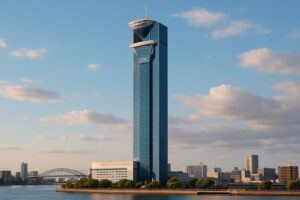
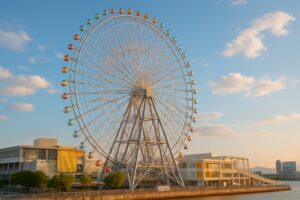
While Kitakagaya offers a raw, grassroots creativity, those seeking a more polished, blockbuster experience can explore the cinematic thrills at Universal Studios Japan.
The Topography of a Reclaimed Land
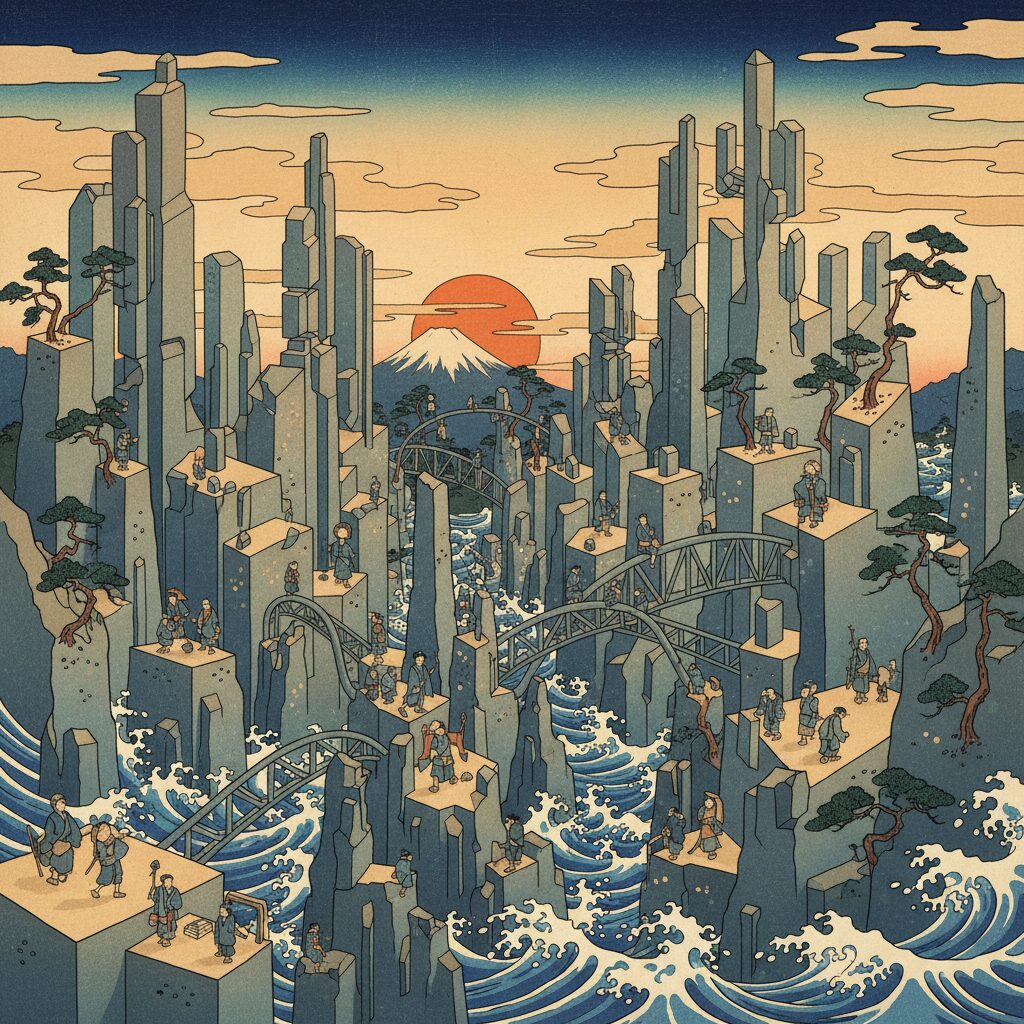
Exploring Kitakagaya calls for a shift in perspective, much like adapting your eyes to the dim light of a dense forest. You need to learn how to read the landscape. The main thoroughfares are broad, functional streets lined with a mix of active businesses, residential apartments, and the quiet fronts of old industrial buildings. But the true charm lies in the capillaries—the narrow alleyways and unmarked side streets that lead into the neighborhood’s core. This is where the urban layout becomes fascinating. The landscape is shaped not by hills and valleys, but by towering, windowless walls of former warehouses and the sudden, unexpected openings of repurposed courtyards. It’s a world of sharp angles, weathered surfaces, and vast empty spaces that make you feel wonderfully small.
There’s a distinct atmosphere here unlike anywhere else in Osaka. During the day, it’s often quietly misleading. You might catch the distant clang of a workshop, the rumble of a truck, or the whistle of wind as it funnels between two immense buildings. It feels post-industrial, though not deserted. It’s a place holding its breath, a sleeping giant dreaming in vivid color. The primary colors come from the Kitakagaya Wall Art Project, a vast outdoor gallery that uses the neighborhood as its canvas. Huge murals burst across brick facades, some whimsical and vibrant, others abstract and thought-provoking. These are more than decorations; they are landmarks. In this concrete wilderness, these murals act as your trail markers, leading you deeper into creative territory, hinting at the energy coursing just beneath the surface.
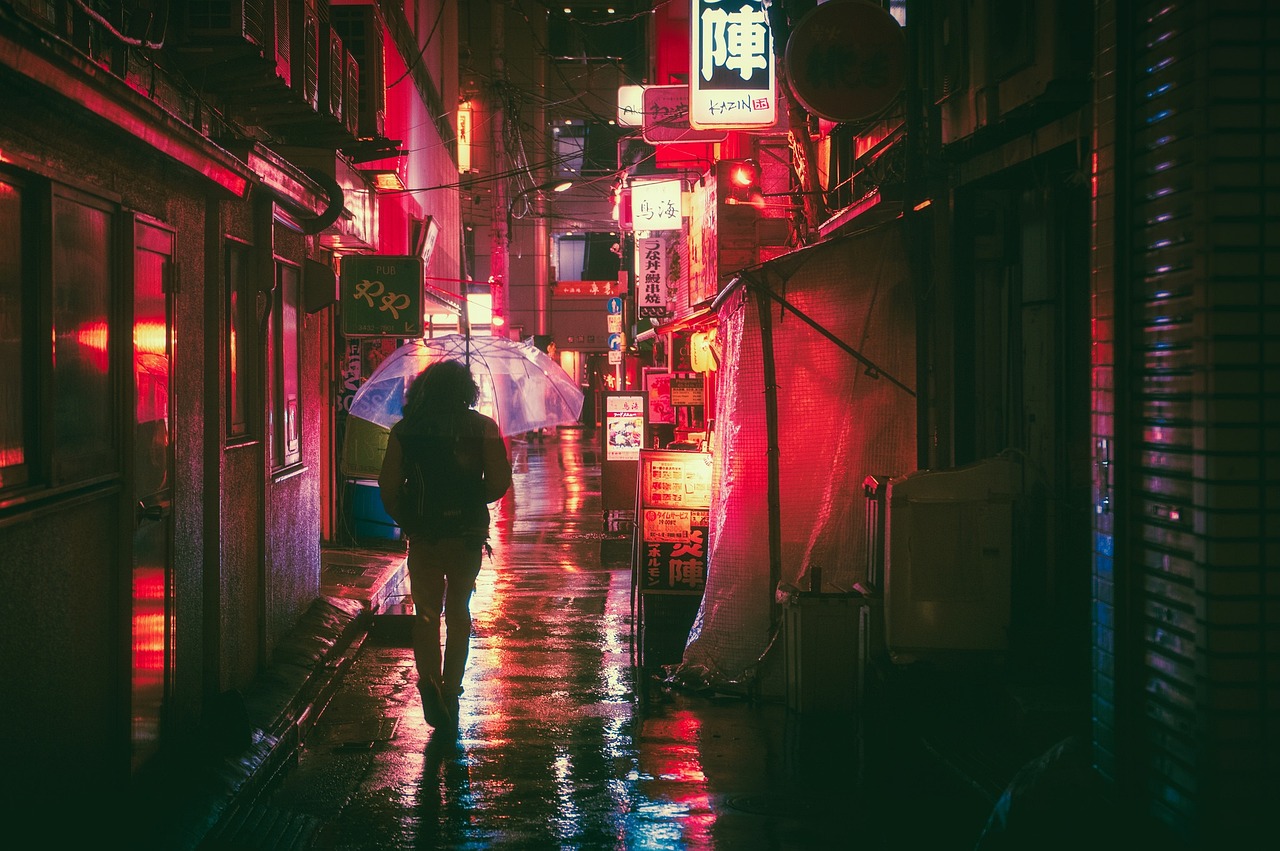
As dusk falls, the character of the landscape shifts completely. The setting sun casts long, dramatic shadows, turning the familiar streetscape into something mysterious. The fading light softens the harsh lines of industrial architecture, and a new kind of life begins to stir. A warm glow might appear in a once-dark window. A sliver of music might seep from behind an unremarkable steel door. The daytime’s quiet hum gives way to a more focused, intimate energy. This is when the nocturnal inhabitants of this creative ecosystem start to appear. This is when the search for Kitakagaya’s legendary underground art bars and hidden creative spaces truly begins.
Following the Signs: The Art of Urban Orienteering
Discovering the hidden gems of Kitakagaya’s nightlife is an adventure on its own. It’s a kind of urban orienteering where curiosity is your compass, and your map is made up of whispers, rumors, and subtle hints. There are no bright signs or street promoters. Entry is a reward for those willing to look more closely, to push a door that seems locked, or to follow a sound down a shadowy alley. From my viewpoint, it resembles tracking wildlife—you watch for subtle signs of passage, the out-of-place detail that shows you’re on the right track.
Your first hint might be a single, carefully placed sticker on a utility pole or a faint, stencil-painted logo on the pavement, nearly worn away by time and foot traffic. It might be a vintage bicycle decorated with fairy lights, resting against a corrugated metal wall. These are the modern petroglyphs of the urban explorer, signaling entry into a space curated by those who value subtlety over spectacle, community over commerce. The experience is purposefully crafted to exclude the passive observer, creating a sanctuary for the genuinely curious.
One evening, following a cryptic tip, I found myself before what appeared to be an abandoned auto repair shop. The large roll-up door was tightly closed, windows dark, and no noise came from inside. It seemed like a dead end. Then I noticed it—a small, almost invisible doorbell beside a smaller, human-sized door set into the larger one. No name, no sign, just the button. Taking a chance, I pressed it. For a moment, nothing happened. Then, a heavy clunk echoed from within, and the small door creaked open, revealing not a garage, but a warm, dimly lit room buzzing with quiet conversation and filled with the aroma of aged wood, oil paints, and whiskey. This is the soul of Kitakagaya nightlife—not convenience, but the thrill of discovery and the sense of belonging that comes with crossing its threshold.
Chidori-bunka: The Cultural Heartbeat
While many places remain deliberately hidden, some act as vital community anchors. Chidori-bunka is one such example, brilliantly capturing what makes this neighborhood unique. Located in a complex of interconnected old buildings, including a former apartment and bathhouse, it serves as a multifaceted hub of creativity. It’s a café, bar, gallery, shop, and community space all in one. Stepping into Chidori-bunka feels like entering the shared living room of Kitakagaya’s art scene. The architecture is a charming blend of preserved decay and thoughtful renovation, where exposed wooden beams, cracked tile floors, and patched walls coexist with contemporary art and minimalist furniture.
The atmosphere is relaxed and inviting. By day, sunlight filters through old windows, illuminating students and freelancers working on laptops while sipping carefully crafted coffee. It’s a space for quiet reflection and slow conversations. But as evening falls, the energy shifts. The bar area becomes the center of attention—lighting dims, the music deepens, and the crowd changes. Artists discuss new projects, locals unwind after work, and curious travelers who have navigated here mingle. The bar itself is a piece of art, offering a curated selection of craft beers, local sake, and inventive cocktails. It’s the perfect place to start a night in Kitakagaya—to get your bearings, soak in the local vibe, and maybe catch a tip on where to explore next.
The Anatomy of an Underground Art Bar
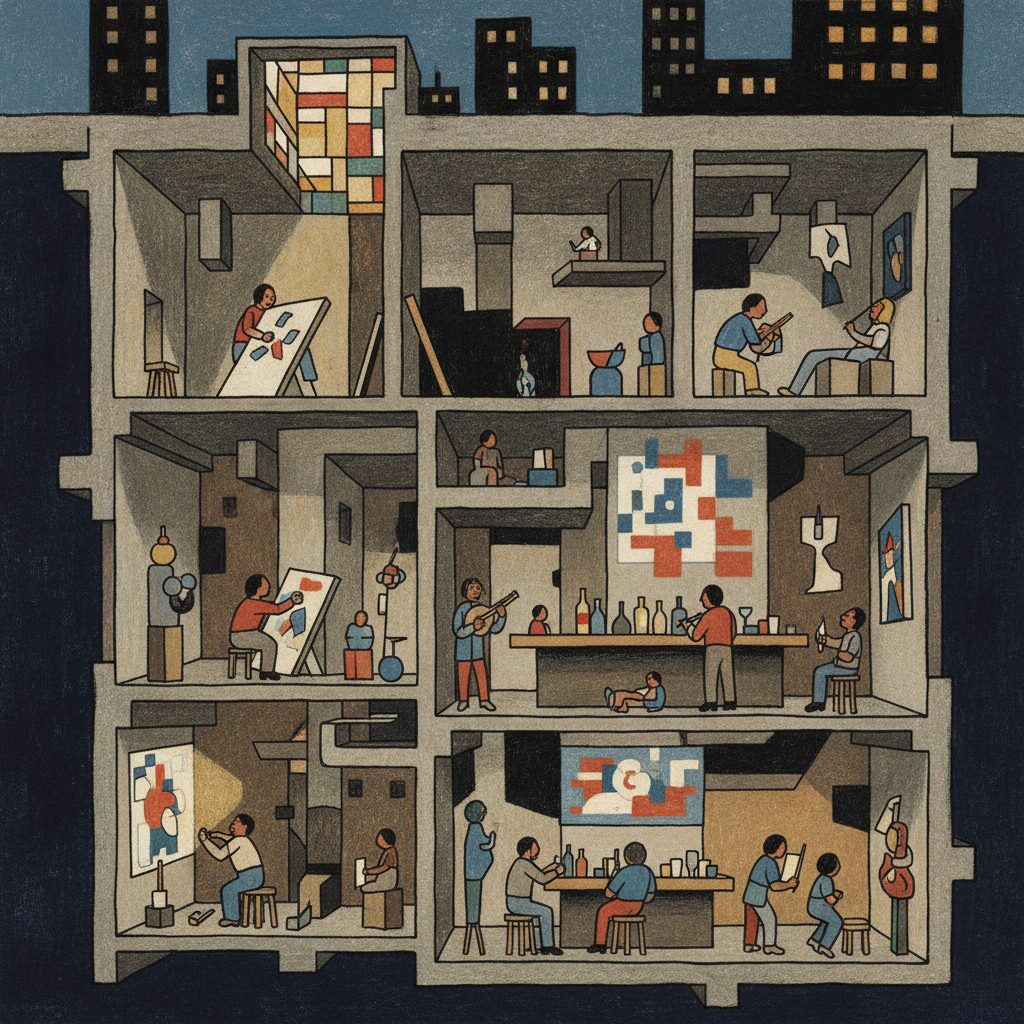
So, what exactly defines an “underground art bar” in Kitakagaya? The term itself remains fluid, as each venue uniquely embodies its creator’s vision. Yet, common threads link them together. They are almost always artist-run or closely connected to the local creative community. They emphasize atmosphere and experience over profits. And they serve as more than just drinking spots; they are dynamic, evolving spaces for art and connection.
Imagine stepping into one of these hidden gems, a place we’ll call “The Forge.” It sits down a narrow path between two warehouses, marked only by a bare Edison bulb glowing above a heavy iron door. Inside, the space is vast, preserving the raw industrial character of its past. High ceilings are intersected by old steel girders, and the walls are a mosaic of exposed brick, raw concrete, and large, unstretched canvases. The bar itself is a massive slab of reclaimed wood, smoothed by countless elbows. Behind it, instead of rows of generic liquor bottles, you find a carefully curated selection of Japanese whiskies, small-batch gins, and infused shochu bottles with handwritten labels.
The furniture is an eclectic mix of salvaged pieces—mid-century armchairs, vintage cinema seats, and tables crafted from welded scrap metal. Every item seems to carry a story. The art extends beyond framed works on the walls. A kinetic sculpture hums softly in one corner, casting shifting shadows. A projector displays a silent, looping art film on a whitewashed brick wall. A local ceramicist’s creations serve drinks and snacks. The space is a living gallery, its exhibition constantly changing, sometimes overnight.
The owner, likely an artist, doubles as the bartender, mixing your drink with focused care and happily chatting about the local art scene, the building’s history, or the flavor profile of a rare sake from a small Nara brewery. The patrons include painters, photographers, musicians, writers, and a few adventurous visitors from outside the art world who appreciate the place’s authenticity. The soundtrack isn’t a generic playlist; it might be a rare vinyl of ambient electronic music, followed by an impromptu acoustic set from a musician seated at the bar’s end. There’s no pressure or pretense. It’s a space founded on a shared appreciation for craft—whether brewing, distilling, painting, or simply creating a welcoming, inspiring environment. This is the essence of a Kitakagaya art bar—a place that is itself a collaborative work of art.
Sound and Vision: The Performance Spaces
Beyond the bar scene, Kitakagaya’s nightlife is also shaped by its experimental performance venues. These are not typical concert halls. Picture a converted lumber yard where a noise-rock band performs amid stacks of wood, or a former ironworks where a contemporary dance troupe interacts with dormant machinery. These spaces embrace their industrial roots, using unique acoustics and aesthetics to craft unforgettable experiences.
One such venue might occupy a multi-story warehouse known only by its address. There’s no fixed stage. The performance area is rearranged for each event. One night, you could be in the basement—a concrete bunker with incredible natural reverb—listening to a minimalist techno DJ. A week later, you might be on the top floor, with loading bay doors flung open to the night sky, watching an avant-garde theater piece. These events often spread by word-of-mouth or through private social media groups. Attending feels like being let in on a secret.
The ethos is fiercely independent and DIY. The sound system might be a patchwork of vintage and custom-made speakers, but it’s expertly tuned with care. The lighting might be a simple array of clamp lights and projectors, but used with artistic intention. These venues are labors of love, run by collectives more focused on pushing creative limits than selling tickets. Seeing a show in one of these spaces is an immersive experience. You’re not just an observer; you’re part of a temporary, autonomous zone of artistic freedom. You stand on the same concrete floor as the performers, feel the bass resonate through your body, and share a singular moment with a community of like-minded souls.
A Hiker’s Field Notes on an Urban Expedition
Accustomed to the slow, deliberate pace of long-distance hiking, I find a curious familiarity in exploring Kitakagaya. The principles remain the same: preparation, observation, and openness to the unexpected. Just as you wouldn’t head into the mountains without proper gear, you shouldn’t visit Kitakagaya expecting a polished tourist experience. The right “gear” here includes a curious mind, patience, and comfortable shoes. Distances between points of interest can be greater than they seem on a map, and the best discoveries often come on foot, wandering without a fixed destination.
I’ve learned to interpret the urban environment here much like reading a trail. A cluster of graffiti tags might signal an artist’s studio nearby, similar to how certain moss points to a water source. A carefully maintained, out-of-place garden in an industrial lot suggests a community space. The people are part of the landscape as well. Observing them reveals stories: a group smoking outside a nondescript building late at night aren’t merely loitering—they’re likely on a break from a gallery opening or studio session. A friendly nod and a simple “Konbanwa” (Good evening) can sometimes open the door to new experiences.
The neighborhood has a rhythm reminiscent of natural cycles. The quiet, industrious daylight hours are like the calm forest floor, where growth happens slowly beneath the surface. At night, nocturnal creatures emerge, and energy becomes more visible and concentrated. There’s a thrill in this shift, a sense of anticipation as the environment changes around you. The reward for exploring isn’t a summit with panoramic views, but an intimate conversation in a hidden bar, the discovery of striking art in an unexpected spot, or the feeling of belonging to a vibrant, living community. It’s a different kind of wilderness, yet the sense of awe and discovery feels just as profound.
Practical Tips for Your Kitakagaya Expedition
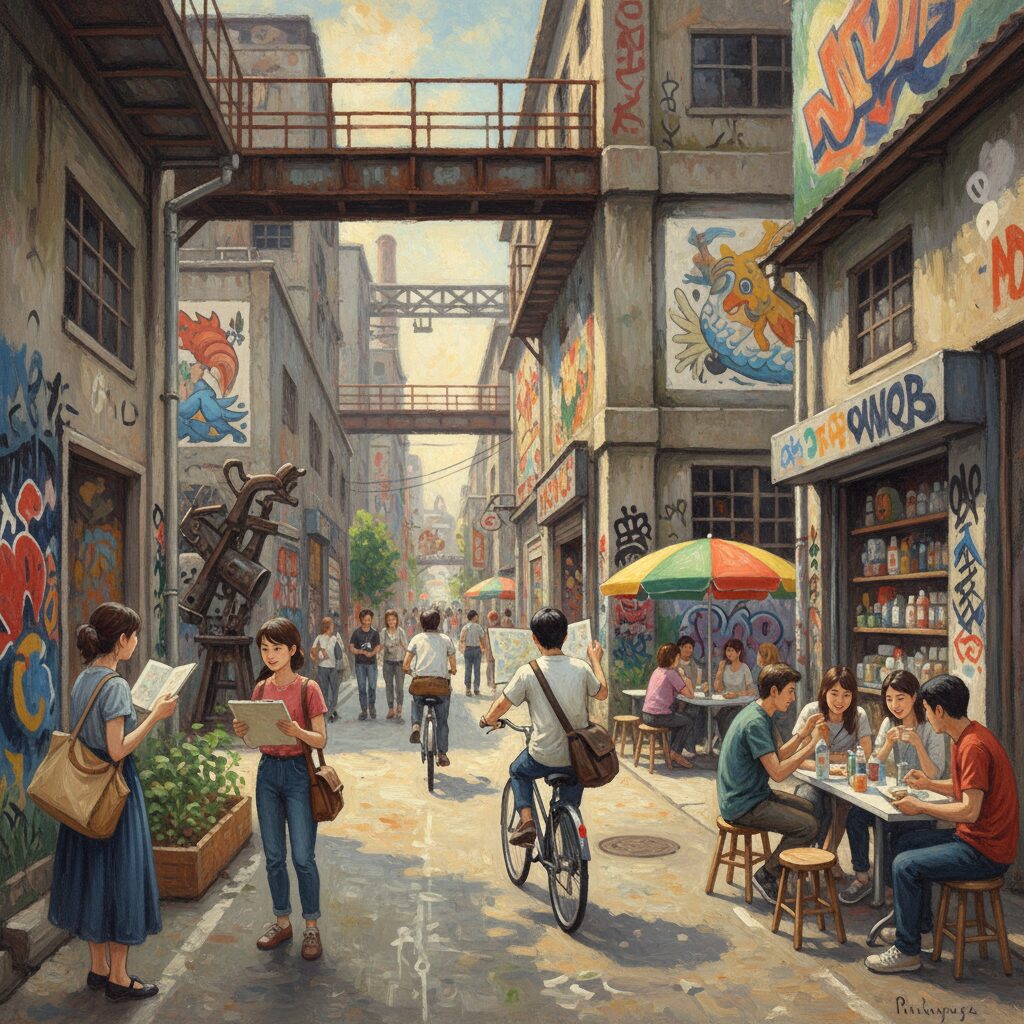
Successfully navigating Kitakagaya requires some planning and the right mindset. This isn’t a place to conquer in an afternoon with a checklist; it’s somewhere to savor and get pleasantly lost in.
Getting Your Bearings
The easiest way to get there is via the Osaka Metro Yotsubashi Line to Kitakagaya Station. From the station, the creative core of the neighborhood is just a short walk away, although the area is quite spread out. Don’t hesitate to wander. Having an offline map on your phone is helpful, as some smaller streets may lack clear signage. Still, allow yourself to put the phone aside and follow your instincts—some of the best murals and hidden spaces are discovered by taking a wrong turn.
Timing is Everything
Kitakagaya follows its own rhythm. Many galleries and studios have limited or irregular hours, often open only on weekends or for special exhibitions. It’s wise to check their websites or social media ahead of time if there’s a specific spot you want to visit. The street art, of course, is accessible 24/7. A good approach is to arrive in the late afternoon, giving you a few hours of daylight to explore the murals and get a feel for the neighborhood layout. As evening falls, you can shift to seeking out cafes and bars as they open. Nightlife typically starts later, around 8 or 9 PM, and often continues well into the night, especially on weekends.
First-Timer Advice
For your first visit, I recommend a loose itinerary. Choose one or two anchor points, like Chidori-bunka or the Black Chamber of Chaleur (a well-known gallery), and use them as bases for exploration. Wear comfortable walking shoes, as you’ll be covering a lot of ground on hard concrete. While Osaka is generally very safe, some industrial areas can be quite dark and deserted at night, so stay aware of your surroundings. Most importantly, be respectful. These aren’t just tourist spots—they’re people’s homes, workplaces, and community spaces. Avoid trespassing into clearly private areas, keep your voice down in residential zones, and always ask before photographing people or the interiors of private studios. A little courtesy goes a long way in preserving the neighborhood’s welcoming atmosphere.
Beyond the Concrete: The Spirit of Kitakagaya
What truly characterizes Kitakagaya is not just the art or the bars, but the resilient, independent spirit that infuses the entire neighborhood. It’s a spirit of creation emerging from decay, a belief in the strength of community, and a quiet resistance to the commercialized, cookie-cutter experiences found elsewhere. The people who have shaped this scene have done so with their own hands, driven by passion rather than profit. This authenticity is the neighborhood’s most valuable asset.
When you have a drink at a bar here, you’re often directly supporting the artist who runs it. When you attend a performance, you’re engaging with an ecosystem that prioritizes experimentation over mainstream appeal. This isn’t a passive experience. It’s an invitation to connect with a raw, vibrant current of contemporary Japanese culture that is often hidden from view. The conversations you share here, whether with a bartender, a fellow patron, or an artist at their own exhibition, can be as memorable as the art itself. It’s a chance to see a different side of Japan—one that is creative, somewhat gritty, and deeply inspiring.
As your night in Kitakagaya winds down and you walk back toward the warm lights of the subway station, you’ll carry with you more than just memories of striking art and good drinks. You’ll carry the essence of the place—the expansiveness of the industrial spaces, the vibrancy of murals glowing under streetlights, and the warmth of the hidden communities you uncovered. Kitakagaya reminds us that the most beautiful things often lie where we least expect them, in the spaces in between, on the edges of the map. It’s a journey worth taking—a concrete canyon brimming with creative life waiting to be discovered, one step, one corner, one unmarked door at a time.