There’s a certain kind of magic that hums in the air of Osaka, a city that dances to its own boisterous, unapologetic rhythm. But to find its most peculiar and enchanting beat, you have to venture south, past the gleaming towers of Namba and into a neighborhood that feels like it was caught in a beautiful time warp. This is Shinsekai, the “New World” of Osaka, a district dreamed up over a century ago with aspirations of Parisian avenues and the whimsy of Coney Island. While time marched on elsewhere, here it seemed to stumble, preserving a vibrant, gritty, and utterly captivating slice of mid-20th-century Japan. The iconic Tsutenkaku Tower pierces the sky, a steel sentinel watching over a labyrinth of streets where giant, inflatable fugu lanterns bob in the breeze and the scent of fried kushikatsu skewers hangs thick and tantalizing. But beneath the tower’s gaze, nestled in the narrow alleyways and along the main thoroughfares, lies the true soul of Shinsekai’s enduring charm: its retro game arcades and smart ball parlors. These are not the sleek, futuristic gaming lounges of today. They are living museums, resonating with the echoes of decades of simple, analog joy. They are sanctuaries where the ghosts of Showa-era entertainment still play, inviting you to step away from the digital age and lose yourself in the clatter of steel balls and the glow of CRT screens. This is a journey into the heart of Osaka’s playful past, a world built on the simple pleasure of a game well-played.
After immersing yourself in the nostalgic glow of Shinsekai’s arcades, you might feel drawn to explore another facet of Osaka’s spiritual heritage, such as the sacred matchmaking rituals at Shoman-in Aizendo Temple.
The Echo of a Forgotten Future
To truly grasp Shinsekai’s arcades, you need to first understand Shinsekai itself. Established in 1912, its northern section was inspired by Paris, featuring its own Eiffel-like tower, the original Tsutenkaku. The southern section took cues from Coney Island, boasting an amusement park and Luna Park. It was an ambitious, hopeful vision of a modern Japan. Yet, as history often does, it had different plans. The park closed, the tower was dismantled for the war effort, and the neighborhood’s prosperity declined. When the new Tsutenkaku Tower was built in 1956, Shinsekai was revived, but not as a futuristic dream. Instead, it emerged as a working-class hub, filled with affordable entertainment, lively izakayas, and pachinko parlors. It was during this gritty, post-war boom that the area established its character. The inexpensive theaters, standing bars, and game centers served a crowd looking for simple, budget-friendly escape. This is the period so well preserved today. Strolling down the main streets, especially as twilight falls and neon signs flicker on, feels less like visiting a tourist spot and more like walking onto a movie set. The oversized restaurant signs—a giant chef, a massive crab, a cheerful cow—are remnants of an era when advertising was bold, tangible, and somewhat quirky. Everything feels weathered, well-used, and genuine. There is no artifice here. This is Osaka at its most unfiltered and nostalgic, where the god of good fortune, the smiling Billiken, rests enshrined in the tower, his golden feet polished smooth by countless hands seeking a touch of luck.
The Gentle Rattle of Glass and Wood: Inside a Smart Ball Parlor
Before you hear the digital chirps of video games, you’ll likely first be captivated by a more organic, rhythmic sound—a soft, percussive clatter that seems to come from another era. This is the sound of smart ball, or sumatoboru. Discovering a smart ball parlor in Shinsekai is like uncovering a secret portal. The storefronts are modest, often featuring faded curtains or sliding glass doors that reveal rows of men and women bent over beautiful, vintage machines. There are no flashing lights or booming music. The atmosphere inside is one of quiet, meditative focus. Parlors such as New Star or Asahi are legendary, their interiors lined with dozens of identical, angled wooden game boards beneath glass. The air may carry the faint, sweet scent of old wood and lingering cigarette smoke—ghosts from a bygone age when such habits were common. It’s a world apart from the sensory overload of modern arcades.
Smart ball is the gentler cousin of the more frenzied pachinko. It is a game of pure analog mechanics—a beautiful blend of pinball and a vertical bagatelle board. You purchase a tray of small glass marbles, usually for a few hundred yen, and select an open machine. The goal is simple: use a spring-loaded plunger to launch the balls one by one to the top of the board, where they cascade through a forest of brass pins. If a ball lands in one of the numbered holes, you win more balls, which spill out into the tray below with a satisfying clatter. There’s a certain bingo-like excitement to it; some holes complete a line and trigger a bigger payout. The game is slow, methodical, and surprisingly hypnotic. The repetitive action of loading a ball, pulling the lever with just the right force, and watching its chaotic yet somehow predictable path down the board is incredibly calming. There is a subtle art to it—learning the quirks of a particular machine, finding the perfect spot on the plunger to send the ball exactly where you want. It’s a quiet dialogue between you, the machine, and gravity.
Your First Game of Smart Ball: A Ritual of Simple Pleasures
For newcomers, the experience might feel a bit daunting, but the process is delightfully straightforward. First, pick a machine that draws you in. Each has a different theme, often with charming, retro, hand-painted backboards depicting everything from idyllic landscapes to sumo wrestlers. Once seated on the small stool, insert your coins into the slot on the machine. This releases your first batch of ammunition—a gleaming collection of glass balls. You then pull back the plunger on the bottom right and let it snap forward. The thwack of the lever and the clink of the ball hitting glass is the opening note of your personal symphony. You watch it bounce, hoping it will find a lucky pocket. When you win, a cascade of new balls will tumble down. The thrill isn’t about achieving a high score, but about sustainability—keeping the game going as long as possible with your initial investment. When you’re ready to stop, press a button or call over an attendant who will help you pour your winnings into a counting machine. You then receive a ticket corresponding to your ball count, which you can exchange at a prize counter. The prizes add to the charm. Don’t expect high-tech gadgets; instead, you’ll find shelves stocked with classic Japanese snacks, bottles of Ramune soda, cartons of juice, towels, and other simple household items. Trading a ticket earned through a game of skill and luck for a bar of chocolate or a can of coffee feels wholesome and deeply satisfying—a nostalgic throwback to the simpler days of carnivals and county fairs.
The Sanctuary of Pixels: Shinsekai’s Retro Arcades
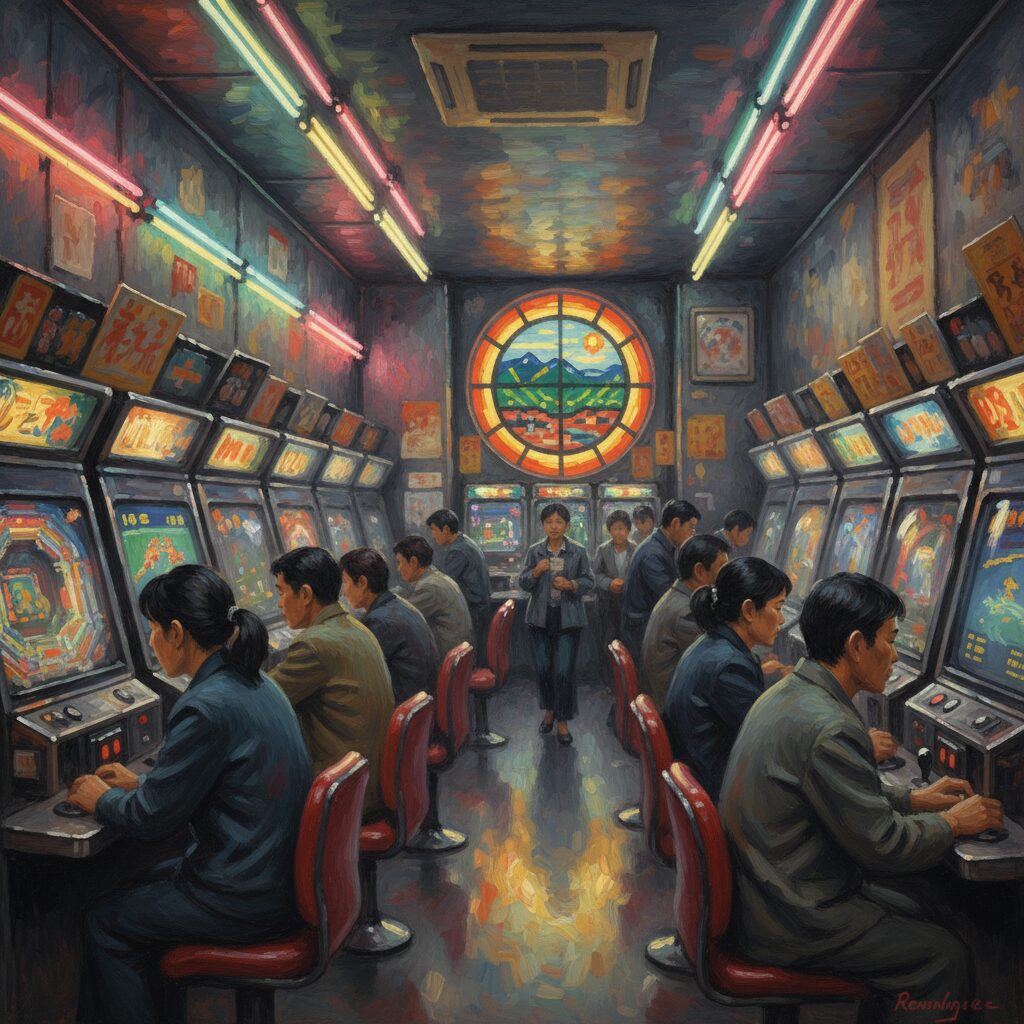
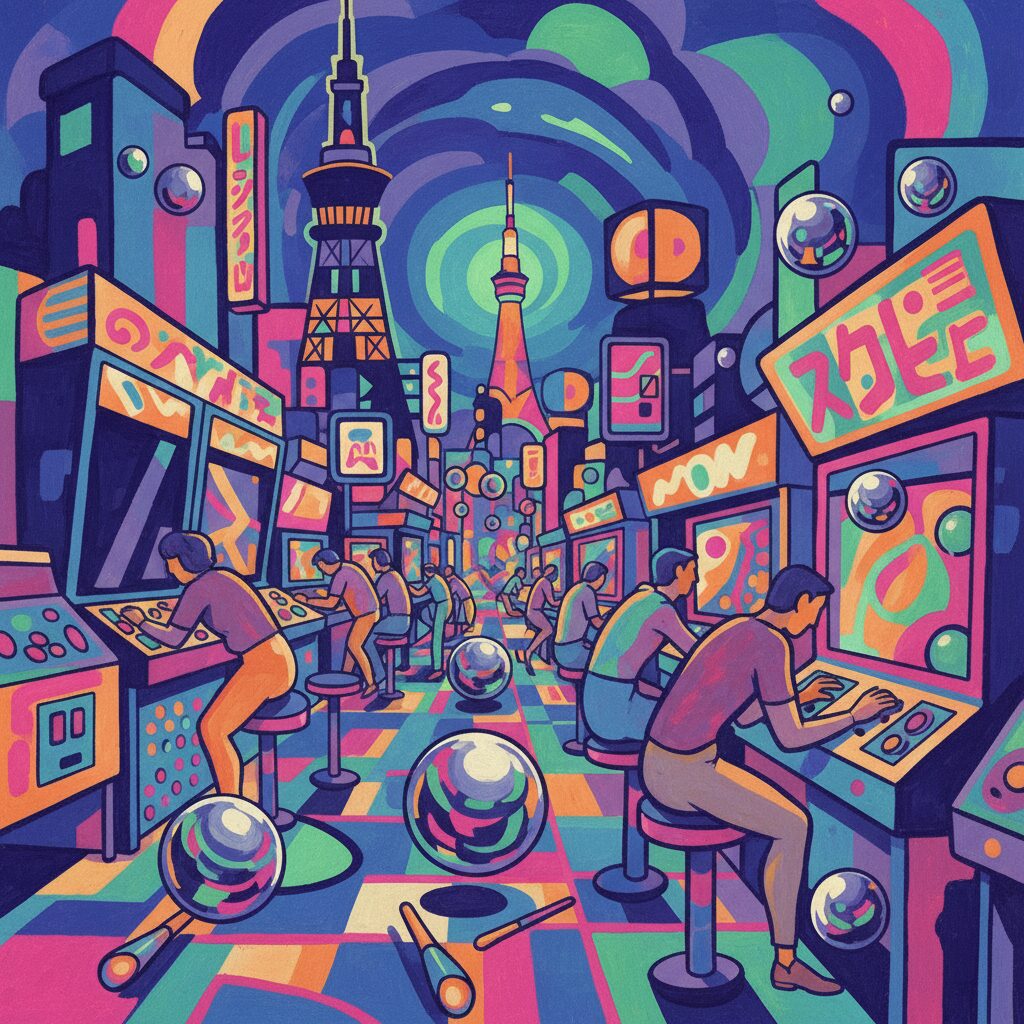
Just a short distance from the peaceful smart ball parlors, you’ll encounter their louder counterparts: the retro video game arcades. These aren’t places you just happen upon; you’re drawn in by the unmistakable cacophony of 8-bit and 16-bit sound effects spilling onto the street. Venues like Zarigani Game Center or Kasuga are sacred spaces for a certain generation. Step through the plastic flap curtains at the entrance, and you’re immediately enveloped in a wave of sensory nostalgia. The air is cool and dim, illuminated only by the mesmerizing glow of numerous CRT monitors. The screens, with their distinct rounded corners and scan lines, cast vibrant light onto the players’ faces, their expressions a blend of intense concentration and pure delight. The soundscape is a delightful chaos—the iconic Hadouken shout from Street Fighter II mixing with the cheerful tune from Puzzle Bobble and the relentless laser blasts of a classic shoot-’em-up. It’s a symphony of digital memories.
The machines themselves are relics. These original Japanese candy cabinets are designed to be played while seated. The joysticks are worn smooth from countless rotations, the buttons offering a satisfying, responsive click that modern controllers rarely match. Here, you’ll discover a curated history of gaming. The giants of the ’90s fighting game boom are ever-present: multiple versions of Street Fighter, The King of Fighters, and Samurai Shodown. Dedicated players perform complex combos with a fluidity born of thousands of hours of practice. But it’s not just fighting games. There are vertical scrolling shooters requiring near-superhuman reflexes, mind-bending puzzle games that still feel fresh after three decades, and quirky, uniquely Japanese titles that never made it overseas. It’s an opportunity to experience these games as they were meant to be played—in a shared space, energized by the presence of other players.
Keepers of the Flame
What makes these arcades truly special isn’t just the games, but the community. You’ll spot salarymen in suits fitting in a quick game on their way home from work, ties loosened as they immerse themselves in a world from their youth. You’ll see groups of high school students clustered around a cabinet, cheering on a friend. And you’ll meet the masters, the local legends—often older gentlemen who’ve been returning to the same arcade to play the same game for decades. They are the custodians of the high score, their movements economical and precise. There’s a quiet reverence in the air. People often stand and watch a particularly skilled player, not out of envy, but admiration. The arcade owners play a vital role in this ecosystem as well. They are more than business owners; they’re preservationists. They dedicate countless hours to maintaining these aging machines, sourcing rare parts, and keeping the spirit of this golden era alive. They are the curators of these interactive museums, and their passion is tangible. This isn’t a business driven by profit margins; it’s fueled by a profound love for the culture.
Fueling Your Adventure: Kushikatsu and Local Flavor
Gaming in Shinsekai offers an immersive experience, but it also builds up an appetite. Luckily, you are in one of Osaka’s most renowned culinary hotspots. The district is famous for kushikatsu—deep-fried skewers of meat, seafood, and vegetables. The streets are lined with dozens of restaurants, ranging from large chains like Kushikatsu Daruma to smaller, family-run establishments. The ritual is part of the enjoyment: you sit at the counter and a communal container of thin, dark dipping sauce is set before you. This comes with one vital rule of Shinsekai, prominently displayed on signs everywhere: no double-dipping! You dip your freshly fried skewer only once into the sauce. If you need more, you use a slice of the complimentary cabbage to scoop some onto your plate. The skewers are tasty, affordable, and endlessly varied—pork, beef, shrimp, quail eggs, shiitake mushrooms, lotus root, even cheese and mochi. Paired with a cold beer, it’s the perfect meal to recharge before another round of gaming.
For a different flavor of the neighborhood, explore Janjan Yokocho, a narrow, covered shopping alley connecting Shinsekai to the neighboring Dobutsuen-mae area. This alley is a snapshot of old Osaka, filled with tiny eateries, inexpensive clothing shops, and most famously, shogi and go clubs. Peering inside, you’ll see rows of elderly men engrossed in intense matches of Japanese chess, the sharp clack of the wooden game pieces resonating in the confined space. It’s a vivid reminder that the passion for games, both analog and digital, runs deeply through the heart of this neighborhood.
Practical Tips for Your Shinsekai Pilgrimage

Exploring Shinsekai is straightforward, but a few local tips can enhance your visit. The best way to get there is by subway or JR lines. Dobutsuen-mae Station on the Midosuji and Sakaisuji subway lines, Shin-Imamiya Station on the JR Osaka Loop Line, and Ebisucho Station on the Sakaisuji line will all drop you right at the heart of the action. While Shinsekai is intriguing at any hour, it truly comes alive as the sun sets. Late afternoon is ideal for a few games of smart ball, followed by an evening spent exploring the glowing arcades and enjoying kushikatsu as the neighborhood’s neon lights illuminate the streets in vibrant color.
One key thing to remember is to carry cash, especially plenty of 100-yen coins. These are essential for the arcades. Although some parlors have change machines, many older games and smart ball machines only accept 100-yen coins directly. Credit cards are rarely accepted in these traditional venues. Don’t worry about a language barrier; while English isn’t widely spoken, the language of gaming is universal. A smile, a nod, and pointing to what you want will get you everything you need. The staff and regulars are used to curious visitors and are generally happy to see people showing interest in their favorite pastime. It’s also worth mentioning that Shinsekai has a reputation as one of Osaka’s rougher neighborhoods. While it is perfectly safe for travelers, especially in the main tourist areas around the tower and arcades, it maintains a raw, unrefined charm. Just be mindful of your surroundings as you would in any large city, and you’ll enjoy a wonderful and authentic experience.
A Final Token of Gratitude
Leaving Shinsekai feels like emerging from a strange, wonderful dream. Your pockets may be slightly lighter, your fingertips might be tender from pressing buttons, and you could have a quirky little prize from a smart ball parlor as a keepsake. But you’ll take away something much more valuable: a connection to a vibrant, enduring, and joyfully analog part of Japanese culture. In a world that’s constantly speeding up, a place like Shinsekai stands as an essential link to the past. It reminds us of the simple, tactile joy of dropping a coin into a slot, the shared sense of community in a neighborhood arcade, and the timeless excitement of watching a silver ball find its way home. It’s proof that some games, and some places, are too special to be forgotten. So when you visit Osaka, be sure to save a few coins, and a few hours, for a journey into its beautiful, buzzing, and brilliant New World.