There are cities that race toward the future, shedding their skins for glass and steel, and then there is Osaka. And within Osaka, there is a pocket of the city that seems to defy the very concept of time’s arrow, a place where the neon hums with a Showa-era rhythm and the air is thick with the scent of fried batter and cheap, cheerful beer. This is Shinsekai, the “New World” of Osaka, a district that, despite its name, is a glorious, unabashed ode to a bygone era. It’s a place of vibrant, beautiful grit, where the ghosts of post-war optimism still linger under the watchful gaze of the iconic Tsutenkaku Tower. For the traveler seeking the unfiltered soul of Osaka, the journey begins here, not in a polished museum, but on the streets, with a tray of scorching-hot takoyaki in one hand and a frosty mug in the other. This isn’t just about food; it’s about a culture of accessible joy, encapsulated in the magical word ‘senbero’—the art of getting a pleasant buzz for a mere thousand yen. Shinsekai is the grand temple of this philosophy, and its sacred offering is the humble octopus ball. Prepare to step through a portal, not just to a different place, but to a different time, where the pleasures are simple, the flavors are bold, and the heart of Osaka beats its truest, most welcoming rhythm.
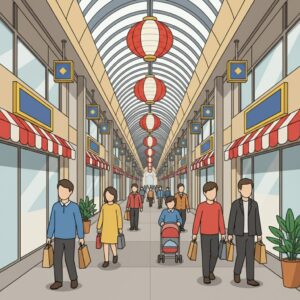
After exploring the vibrant streets and savoring the takoyaki, be sure to experience the nostalgic charm of Shinsekai’s classic arcades, where the district’s timeless energy truly comes to life.
The Neon-Soaked Soul of Old Osaka
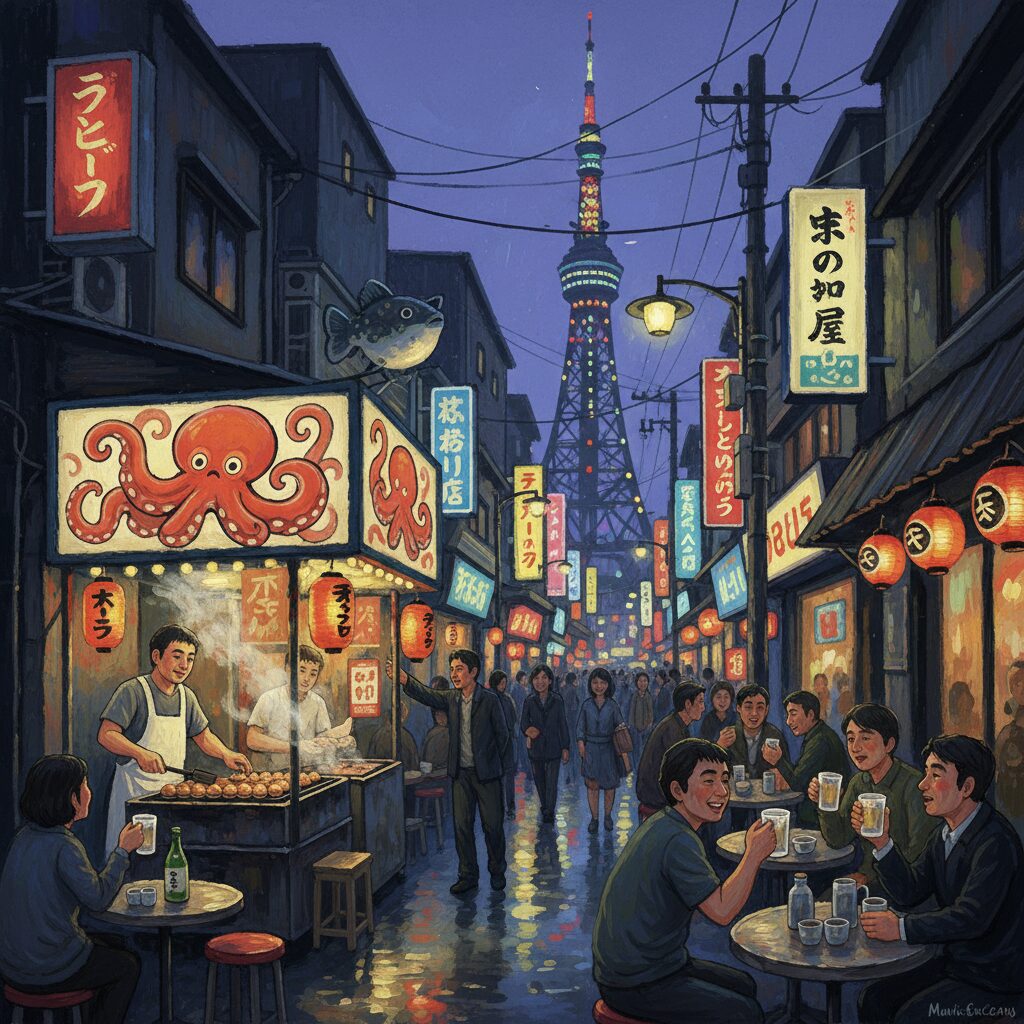
To truly grasp Shinsekai, you must first let your senses take charge. Arriving via the Dobutsuen-mae subway station or the somewhat more chaotic Shin-Imamiya JR station feels like stepping out of a time machine. The polished shine of modern Japan fades away, replaced by a visual symphony of charming disorder. The streets form a canyon of faded splendor, lined with buildings decorated with enormous, three-dimensional fugu lanterns, giant models of kushikatsu skewers, and weathered signs whose peeling paint tells tales of decades spent under the Osaka sun and rain. Towering above it all, Tsutenkaku Tower pierces the sky, a steel-and-neon beacon that has stood as the district’s vigilant eye since its post-war reconstruction in 1956. It’s not sleek or futuristic like the Tokyo Skytree; rather, it’s a proud, somewhat clunky relic from an era of boundless optimism, a tribute to a city that rebuilt itself with determination. The very air feels distinct here. It’s a heady blend of sizzling oil from countless kushikatsu fryers, the sweet, savory aroma of takoyaki batter hitting a hot griddle, and the subtle, ever-present scent of cheap beer and laughter wafting from the curtained doorways of tiny tachinomi (standing bars). The soundtrack is a medley of clattering pachinko parlors, the cheerful, repetitive jingles of storefronts, and the low, content hum of conversations among locals who have frequented these same spots for generations. Men in work clothes gather around tiny tables playing shogi (Japanese chess), their faces marked with concentration, while families admire the larger-than-life mascot Billiken, the God of Things As They Ought To Be, whose statues dot the area. Shinsekai doesn’t perform for tourists; it simply exists. It’s a living, breathing museum of the Showa period, a time of economic prosperity and simple, communal joys. This unpretentious, slightly worn-at-the-edges vibe is its true charm. It’s a place that invites you to slow down, observe, and join in its timeless rituals, the most delicious being the takoyaki crawl.
Takoyaki: The Humble Sphere of Joy
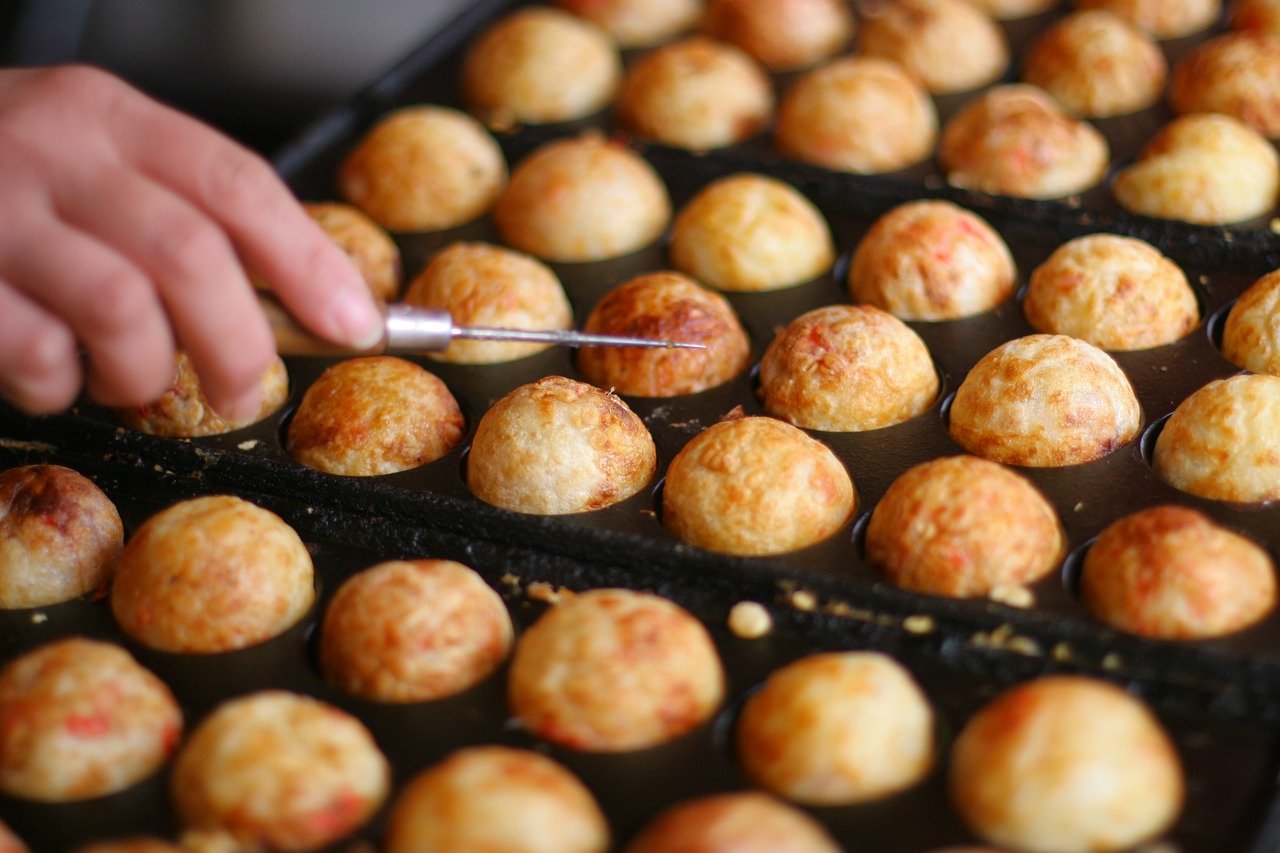
Before you begin your culinary journey, it’s important to know what captives your heart. Takoyaki, at its essence, appears simple but is far from it. This ball-shaped snack is made from a savory wheat-flour batter, cooked in a specialized molded pan with indentations resembling a cast-iron egg carton. Yet, calling it merely a batter ball does it a serious disservice. This is culinary magic. The batter is often enriched with dashi, a Japanese soup stock that lends a profound umami flavor, forming the foundation of the dish. Within each ball lies a prized ingredient: a tender, chewy piece of tako (octopus). Additional elements are frequently added, such as beni shoga (pickled red ginger) for a sharp zing, and tenkasu (crispy tempura batter bits) for added texture. The true enchantment occurs during cooking. Observing a skilled takoyaki vendor is like witnessing a captivating performance. Using two sharp picks, they swiftly and skillfully turn the scalding balls on the grill with remarkable speed and precision, a graceful dance of wrist and metal that ensures each piece is evenly cooked to a perfect golden-brown. The outcome is a study in contrasts: a delightfully crisp thin shell that yields with slight pressure, enclosing a molten, nearly creamy center of savory batter and octopus, releasing a burst of heat and flavor. Then come the toppings, the final touch on this culinary masterpiece: a generous drizzle of rich, sweet-and-savory takoyaki sauce, a delicate lattice of creamy Japanese mayonnaise, a dusting of aonori (green seaweed flakes) adding an oceanic hint, and finally, a shower of katsuobushi (dried, smoked bonito flakes). As the takoyaki’s heat rises, the paper-thin katsuobushi flakes dance and curl as if alive, contributing a smoky, savory note. This is not merely a snack; it is a multi-sensory experience and, in Shinsekai, the very lifeblood of its people.
The Art of the Shinsekai Stall
Takoyaki stalls in Shinsekai offer an experience distinct from what you might find in modern food courts or fashionable urban eateries. Here, the stalls embody history. Many are little more than a small cart or a hole-in-the-wall window, run by a single person—often an elderly man or woman whose hands have flipped tens of thousands of octopus balls over the years. There are no elaborate signs or English menus, just a grill, a master at work, and the intoxicating aroma serving as its own advertisement. The emphasis is on tradition and quality, not novelty. The batter recipe might be a family secret handed down through generations; the sauce, a proprietary blend refined over decades. You’ll frequently find yourself eating while standing on the sidewalk, sharing a narrow ledge with other customers, or perched on a wobbly plastic stool. This is integral to the experience. It dissolves the barriers between vendor and customer, between stranger and stranger. You are more than a consumer; you are part of a daily ritual. You might see a local salaryman, tie loosened, grabbing a quick bite on his way home or a group of students laughing as they juggle the hot takoyaki. The vendors themselves are often characters, their faces etched with the story of a life spent over a hot grill. They may be gruff and intensely focused on their craft, communicating mostly with nods and grunts, or surprisingly talkative, happy to share a moment with a curious traveler. This is where the soul of Osaka’s ‘konamon’ (flour-based food) culture resides—unpretentious, delicious, and deeply connected to the community it serves. These stalls are not simply selling food; they are safeguarding a piece of the city’s culinary heritage, one perfectly cooked octopus ball at a time.
The Senbero Philosophy: A Thousand Yen Passport to Happiness
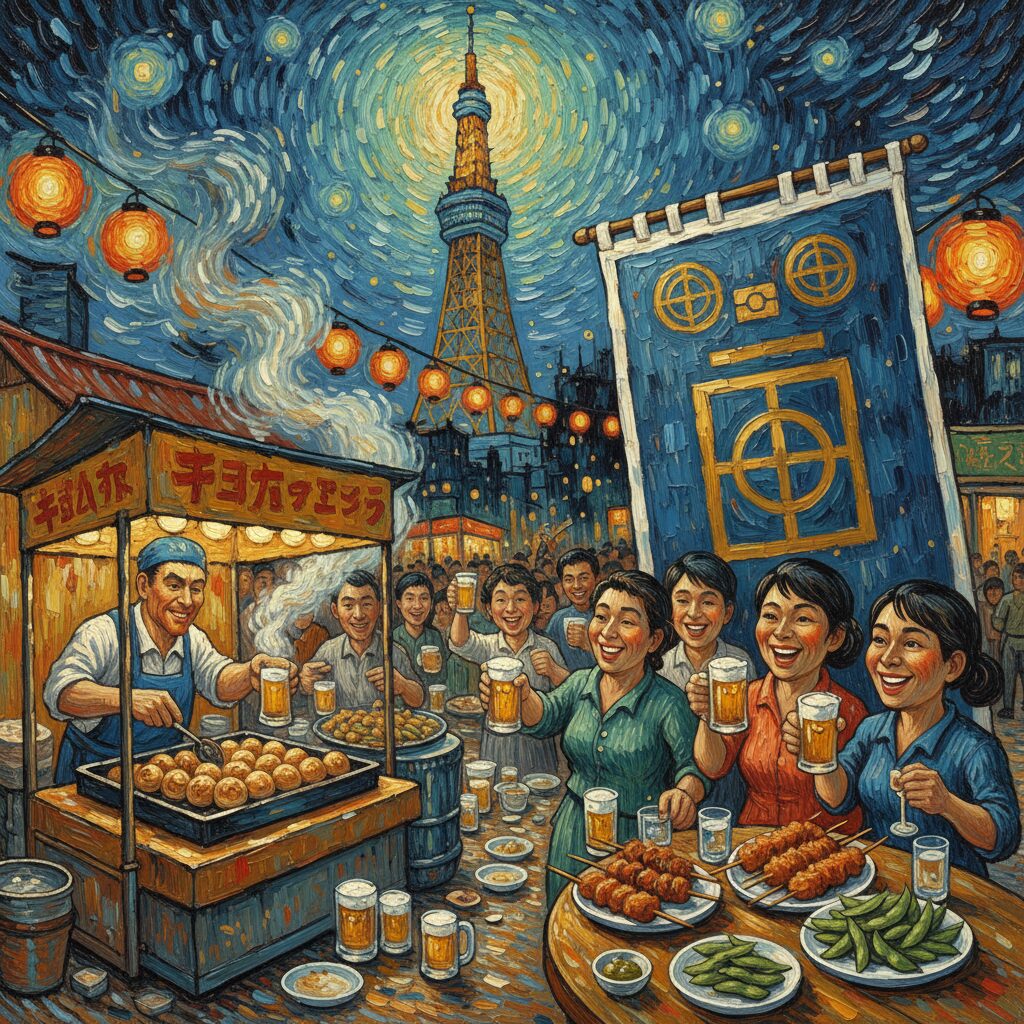
To fully experience the magic of a Shinsekai takoyaki crawl, you need to embrace the idea of ‘senbero’. The term combines ‘sen-en’ (1,000 yen) and ‘berobero’ (slang for getting drunk or tipsy). In essence, it’s the art of enjoying a few drinks and a snack for around a thousand yen. This philosophy, rooted in the working-class spirit of neighborhoods like this, champions the belief that having a good time doesn’t have to be costly. In Shinsekai, senbero isn’t just achievable; it’s the norm. The streets are dotted with tachinomi and affordable izakayas where a draft beer (nama biru) costs just a few hundred yen, and a highball—a simple, refreshing mix of Japanese whisky and soda water—is even cheaper. Another local favorite is the chuhai, a shochu highball available in fruit flavors such as lemon, grapefruit, or plum. The aim isn’t to overindulge but to reach a pleasant, relaxed state—a gentle buzz that enhances the flavors of the food and the lively atmosphere. A typical senbero set usually includes one or two drinks and a small dish. In our case, the dish is takoyaki. A tray of six or eight large takoyaki from a classic stall will rarely cost more than 500 or 600 yen. Add a 400-yen beer, and you’ve achieved senbero perfection. It’s an accessible and democratic way to enjoy the city, allowing you to hop from place to place, sampling different tastes and soaking up various atmospheres without spending much. This culture of affordability and easy access drives Shinsekai’s social scene, fostering community and shared experiences over sizzling grills and clinking glasses. It celebrates simple pleasures and reminds us that the best things in life are often the simplest.
Crafting Your Perfect Takoyaki Crawl
Now, let’s bring it all together. A takoyaki crawl through Shinsekai is an adventure—a moving feast to be savored, not hurried. The best time to start is late afternoon, when the sun is setting, and the neon signs flicker to life, casting a warm, colorful glow across the streets. This is when the district truly comes alive.
Your first stop should be for the purist’s takoyaki. Find a stall that looks unchanged for fifty years, likely tucked away on a side street off the main drag of Janjan Yokocho Alley. The vendor will be a master, their movements efficient and precise. Order a standard tray, probably eight pieces, with the classic sauce and mayonnaise. Your first bite will be a revelation. The thin, crispy shell gives way to a steaming, almost soupy interior, the dashi-infused batter coating your tongue with rich umami. The octopus is tender, not rubbery, offering a satisfying chew. The sharpness of the pickled ginger cuts through the richness, while the dancing bonito flakes add a final savory, smoky note. Pair this with a classic Japanese lager, like an Asahi or Kirin, served ice-cold in a frosted mug. The crisp, clean bitterness of the beer perfectly contrasts with the rich, savory takoyaki, refreshing your palate for the next bite. Stand at the small counter, watch the world go by, and simply savor the moment. This is the quintessential Shinsekai experience.
For your second stop, it’s time to get a little more adventurous. Wander deeper into the maze of streets until you find a stall with a slightly different vibe. Perhaps they offer alternative toppings, like ponzu (a citrus soy sauce) with green onions, or just salt and mayonnaise for a simpler, more direct flavor. Some stalls are known for a crispier, more deep-fried style of takoyaki, where the entire ball has a satisfying crunch. This is also a great chance to change up your drink. Try a refreshing lemon chuhai. The tart, citrusy fizz contrasts brilliantly with the fried batter, and its light, clean taste won’t overpower the subtle flavors of the sauce. As you eat, you might strike up a conversation with a local waiting for their order, or just enjoy feeling temporarily woven into the neighborhood’s vibrant fabric. You’ll notice subtle differences in batter texture, sauce recipe, and cooking style from one stall to another. Each vendor has their own take on this classic dish, and discovering these nuances is part of the joy of the crawl.
Your third and final takoyaki stop should be the neighborhood legend. This might not be the most obvious choice. It could be a tiny spot down a narrow lane, with just a couple of stools and a red lantern outside. Here, you go for atmosphere as much as the food. You’ll likely be rubbing elbows with regulars who have been coming for years. The vendor may know everyone by name. The takoyaki here might be simple and unadorned, letting the quality of the batter and fresh octopus speak for themselves. This is a place to slow down. Order your takoyaki and perhaps a highball this time. The clean, simple taste of whisky and soda is a classic match for fried foods. Listen to the rhythm of the local dialect and the easy banter between friends. This stop is about immersion—feeling the community’s pulse. The takoyaki will taste richer here, infused with the history and camaraderie of the space. By the end of this third stop, you’ll be full, pleasantly buzzed, and deeply appreciative of the art of Osaka takoyaki. You’ll have completed the trifecta: experiencing the classic, the variation, and the soulful heart of it all.
Beyond the Octopus Balls: The Shinsekai Supporting Cast
While takoyaki is undoubtedly the highlight of your senbero crawl, Shinsekai’s culinary landscape is extensive and delicious. To fully appreciate the area, be sure to try its other iconic dishes, which make excellent companions or alternative stops on your journey. The most famous among these is kushikatsu—skewers of various meats, seafood, and vegetables, coated in light panko crumbs and deep-fried to a golden crisp. You’ll find dozens of kushikatsu restaurants, often marked by entrances guarded by large, slightly stern-looking Daruma doll statues. You order by the skewer, and they arrive hot and crispy. One key feature is the communal pot of thin, dark dipping sauce, where the single rule of kushikatsu applies: absolutely no double-dipping. You dip your skewer once—and only once—before taking a bite. If you need more sauce, you use the provided raw cabbage slices to scoop it up and drizzle it onto your plate. Kushikatsu is quick, affordable, and endlessly varied—from classic pork and onion to more unusual options like cheese, quail eggs, and mochi. It’s the perfect social food to share with friends over a few beers. Another local specialty worth trying is doteyaki, a rich and hearty stew of beef sinew, konjac, and miso. Slow-cooked for hours until the beef is tender and the broth thick and flavorful, it’s the ultimate comfort food, typically served in a small bowl and topped with green onions. Enjoying a bowl of doteyaki alongside a simple highball on a cool evening is one of Osaka’s best-kept pleasures. And naturally, no visit to Shinsekai would be complete without experiencing its landmarks. Ride up Tsutenkaku Tower for a stunning panoramic view of the city, where the cozy chaos of Shinsekai can be seen in the context of the sprawling Osaka metropolis. Don’t forget to rub the feet of the Billiken statue for good luck. Afterwards, wander down Janjan Yokocho, a covered shopping arcade that feels like it’s been frozen in the 1950s, filled with budget eateries, vintage shogi clubs, and retro game parlors. For a completely different and almost surreal experience, visit Spa World, a sprawling multi-story bathhouse complex featuring themed onsen (hot springs) inspired by places around the world—from ancient Rome to a blue grotto in Finland. It’s a wonderfully quirky and relaxing way to end a day of walking and dining.
A Practical Guide for the Intrepid Explorer
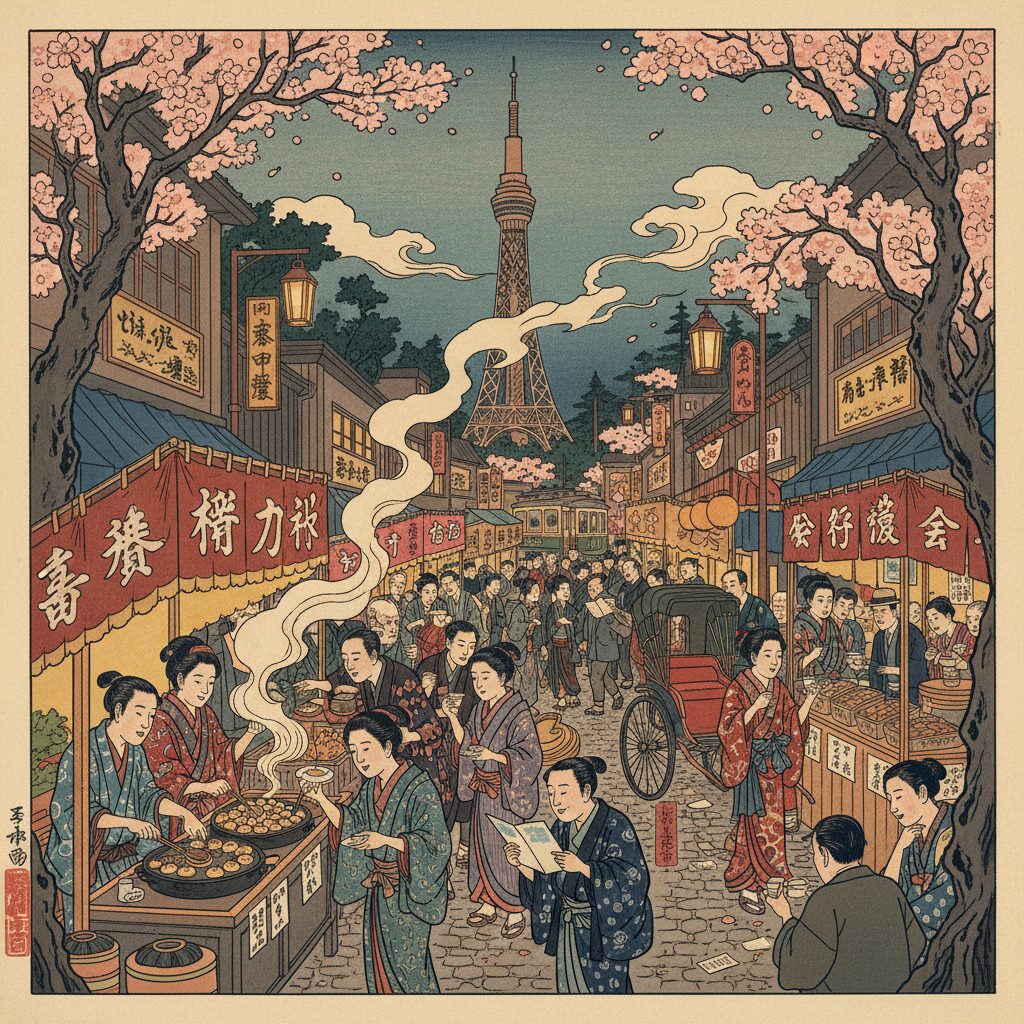
Navigating Shinsekai is fairly simple, but a few tips can help make your visit smoother and more enjoyable. The area is best reached from two train stations. If you’re using the JR Pass, Shin-Imamiya Station on the Osaka Loop Line is the most convenient option. From the east exit, it’s just a short walk past the Don Quijote megastore to the main streets of Shinsekai. Alternatively, the Osaka Metro offers great convenience. Dobutsuen-mae Station, served by both the Midosuji and Sakaisuji lines, brings you right to the southern entrance of the district, near Janjan Yokocho. Although Shinsekai is interesting any time of day, it truly comes alive in the late afternoon and evening when salarymen finish work, lanterns are illuminated, and the grills seem to sizzle louder. Weekends are naturally busier with tourists and locals, creating a lively, festive atmosphere, while weekday evenings tend to be quieter, offering a more intimate, local experience. One key thing to keep in mind is that cash remains king in many of Shinsekai’s older, smaller spots. While larger restaurants may accept credit cards, the best takoyaki stalls and tiny standing bars often only take cash. It’s wise to carry plenty of 1,000 yen notes and coins. As for etiquette, things are relaxed. At standing stalls, it’s polite to eat in the designated area and dispose of your tray or boat-shaped container in the provided bin. The spirit of Shinsekai is friendly and communal, but it’s always good to be mindful of your space, especially when it gets crowded. Don’t hesitate to try communicating with vendors, even if you don’t speak Japanese—a simple “oishii” (delicious) and a smile go a long way. This is a place that rewards curiosity and an open heart.
A Taste of the Showa Soul
A journey through Shinsekai is more than simply a food tour; it’s an immersion into the cultural soul of Osaka. It’s an encounter with the Showa era, spanning from the 1920s to the 1980s, which shaped modern Japan. This district stands as a living reflection of the Showa aesthetic—slightly kitschy, deeply heartfelt, and completely unpretentious. It recalls a time when community was forged in small bars and on street corners, and joy was found in a simple, well-crafted snack and a cold drink after a long day’s work. In a country often seen as reserved and formal, Shinsekai offers a contrasting view. It’s loud, lively, and incredibly welcoming. Here, you can feel the city’s working-class roots and its resilient, optimistic spirit. The flavors of takoyaki, kushikatsu, and doteyaki embody this spirit—bold, satisfying, and meant to be shared. This culinary scene values substance over style, heartiness over delicacy. As you stroll beneath the glow of Tsutenkaku Tower, you walk through a story—a story of a city that has always found joy in the everyday, built community over shared meals, and known how to have a great time without breaking the bank. This is the magic of Shinsekai. It doesn’t just satisfy your hunger; it nourishes your soul, leaving you with a taste of something authentically, wonderfully, and unapologetically Osaka. So come with an empty stomach and an open heart. Let the neon lights lead you, follow the aroma of sizzling batter, and plunge into the glorious, time-warped world of Shinsekai. You’ll leave with a full belly, a warm buzz, and a memory of a side of Japan you never knew you were missing.