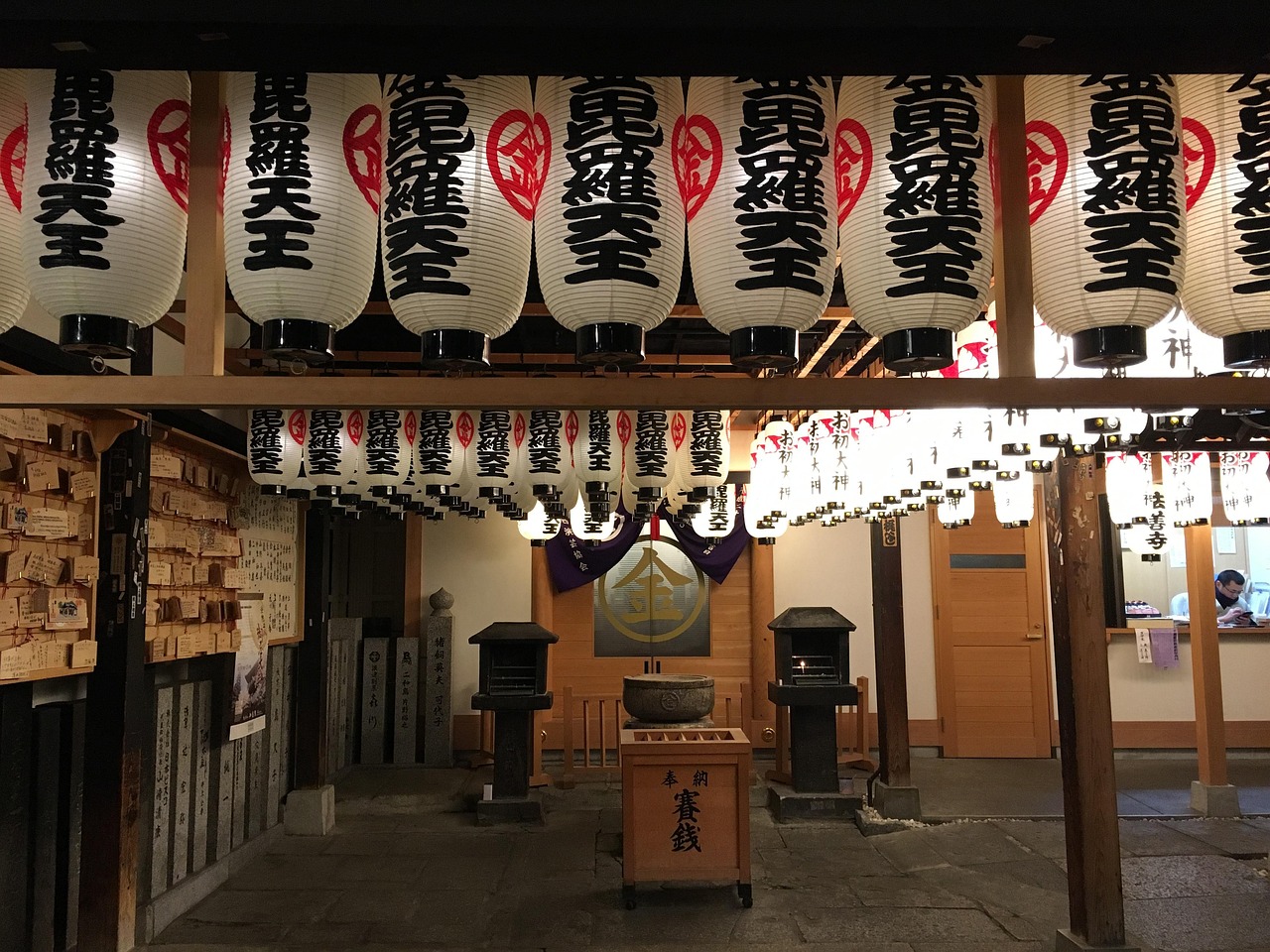
Osaka’s Dotonbori district is a symphony of sensory overload, a dazzling assault on the senses that pulls you into its vibrant, chaotic embrace. Towering neon billboards paint the night sky in electric hues, their reflections dancing on the dark waters of the canal below. The air is thick with the tantalizing aroma of takoyaki sizzling on griddles and the sweet scent of grilled crab, all underscored by a cacophony of cheerful shouts from street vendors, the electronic jingles of pachinko parlors, and the ceaseless chatter of a thousand excited voices. It is a place of boundless energy, a futuristic cityscape that feels impossibly alive. Yet, just a few steps away from this glittering spectacle, tucked away from the main thoroughfare, lies a portal to another time. A narrow, stone-paved alley, barely wide enough for two people to pass comfortably, beckons you to leave the modern world behind. This is Hozenji Yokocho. Here, the electric glare gives way to the soft, warm glow of paper lanterns, and the roar of the city is replaced by the gentle clatter of wooden sandals on stone and the hushed whispers of patrons disappearing into tiny, traditional eateries. At the heart of this atmospheric lane, nestled within the modest grounds of Hozenji Temple, stands a figure of profound serenity and startling appearance: a statue of the deity Fudo Myoo, completely enveloped in a lush, green carpet of living moss. This is not just a statue; it is a living testament to faith, a symbol of Osaka’s resilience, and the quiet, spiritual anchor of the city’s most boisterous entertainment district. To understand this verdant icon is to understand a deeper, more intimate side of Osaka itself, a story whispered not in neon, but in moss and stone.
To continue exploring Osaka’s rich culinary landscape beyond the serene Hozenji Yokocho, consider a visit to the bustling Kuromon Ichiba Market for its famous Kobe beef and Wagyu skewers.
A Passage Carved by Time: The Genesis of Hozenji Yokocho
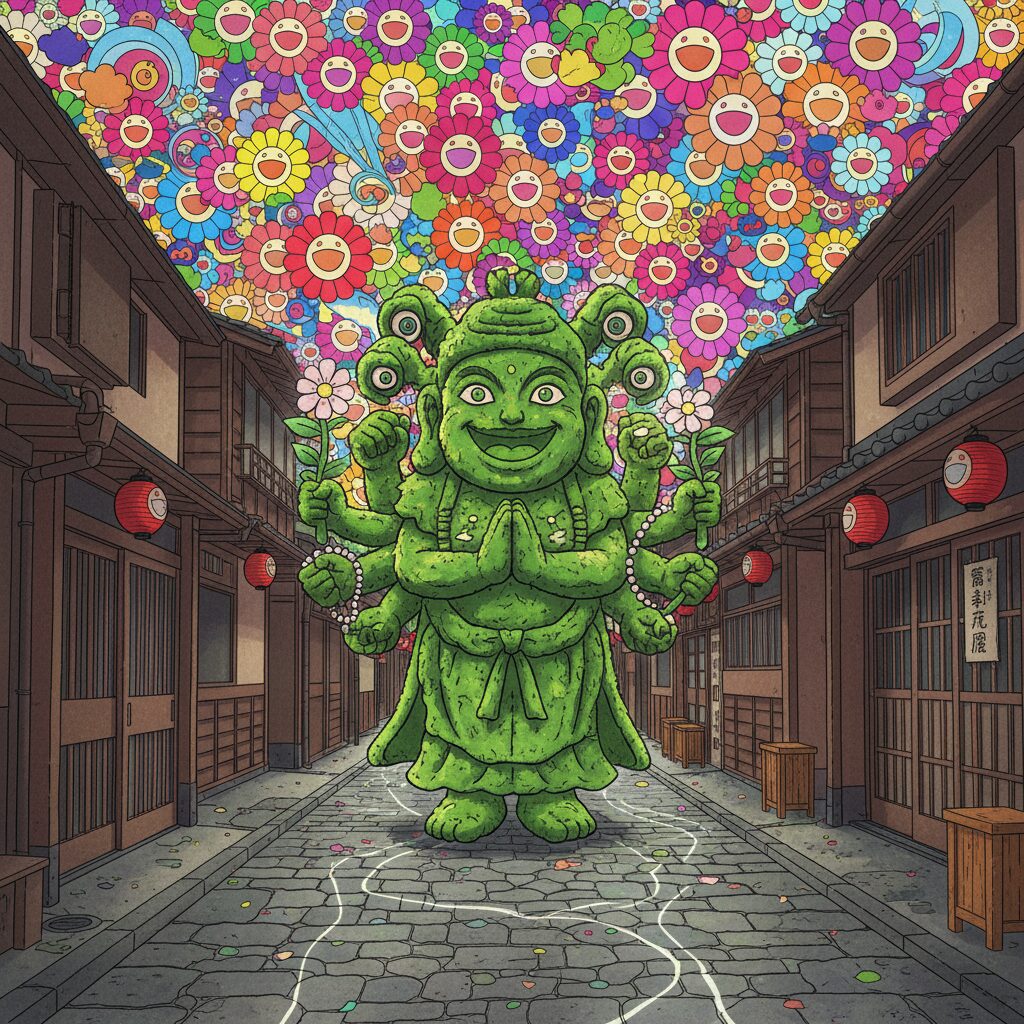
The story of Hozenji Yokocho is deeply intertwined with the temple that bears its name. Founded in 1637, Hozenji Temple was once a much larger and more prominent establishment, occupying a vast area of what is now the lively Namba district. During the Edo period, Osaka thrived as Japan’s commercial center, famously known as the “Tenka no Daidokoro,” or the “Nation’s Kitchen.” It was a city of merchants, craftsmen, and entertainers, where wealth was created and culture flourished. The Dotonbori district, home to newly opened Kabuki and Bunraku theaters, became the heart of this vibrant cultural scene. Visitors coming to enjoy the latest performances naturally passed by Hozenji Temple. Seeing an opportunity, enterprising vendors started setting up small tea and food stalls within the temple grounds to serve both theatergoers and devout worshippers. This marked the modest origins of the yokocho, or alleyway, which gradually expanded into a maze of narrow lanes threading through the temple precincts, lined with spots offering rest, refreshment, and spiritual comfort. The alley evolved into a microcosm of Osaka’s essence—a gathering place where commerce, faith, and entertainment met. It was a bustling, lively street where actors, geishas, merchants, and everyday people mingled, sharing stories over bowls of noodles and cups of sake beneath the watchful eyes of the temple’s deities. This golden era of theatrical culture and street-side trade shaped the alley’s character, a legacy still evident today in its cozy scale and traditional businesses. However, in the final devastating months of World War II, the Great Osaka Air Raids of 1945 reduced much of the city, including the Dotonbori area, to charred ruins. The wooden buildings of the temple and surrounding alley were destroyed by fire. The neighborhood was razed, its centuries-long history seemingly erased in a single night. Yet, amid the ashes and debris, one figure survived unscathed: the stone statue of Fudo Myoo. Its miraculous preservation was seen as a powerful symbol of hope and resilience for the local community. As Osaka embarked on the difficult rebuilding process, residents restored the alley and temple around this steadfast survivor. Hozenji Yokocho was revived not only as a commercial street but as a place of memory and a tribute to the city’s unyielding spirit. The path you walk today is steeped in this history, each stone bearing witness to the community’s resolve to safeguard its cultural soul.
The Verdant Guardian: Decoding the Mizukake Fudo Myoo
To those unfamiliar, the sight of the statue can be quite striking. It is not the calm, meditative Buddha that many associate with Japanese temples. This is Fudo Myoo, the Immovable Wisdom King, one of the most significant figures in Japanese Esoteric Buddhism. His appearance is deliberately fierce. With a wrathful scowl, furrowed brow, and bared fangs, he stands as a formidable protector deity. In one hand, he wields the Kurikara sword to cut through ignorance and worldly attachments. In the other, he holds a rope, or kensaku, to bind evil forces and pull sentient beings back onto the path of enlightenment. He is often shown surrounded by a halo of purifying flames that consume negativity and delusion. His fearsome visage is not a mark of malevolence but of deep compassion; his is the tough love of a guardian who will stop at nothing to protect the faithful and guide them toward salvation. He is the ultimate spiritual bodyguard. For centuries, the statue at Hozenji stood like any other—a gray, stoic figure carved from stone. The transformation that made him world-famous began with a single, heartfelt prayer. The story goes that a woman, seeking the fulfillment of a desperate wish, visited the temple. As an act of devotion, she splashed water over the statue in a purification ritual known as mizukake. Her wish was granted. Word of this miracle spread quickly through the neighborhood. Soon, others began to follow her example, ladling water over Fudo Myoo while offering their own prayers for business success, good health, and happy relationships. This simple act of faith, repeated thousands of times daily, year after year, decade after decade, brought about an unintended and beautiful result. The constant moisture, combined with Osaka’s humid climate, created the perfect conditions for moss to grow. Slowly, painstakingly, a vibrant green coat began to spread, creeping over the deity’s shoulders, down his arms, and across his stern face. Today, the statue is entirely enveloped in a thick, velvety cushion of moss, with its once-sharp, fearsome features softened into a gentle, organic form. This green mantle has altered the perception of the deity. The Immovable Wisdom King has become Mizukake Fudo-san, an affectionate title that reflects the intimate bond the people of Osaka share with their green guardian. The moss itself has become a physical embodiment of the countless prayers, hopes, dreams, and tears offered at his feet. Each tiny green frond represents a human story, a silent wish absorbed into the very being of the statue. To pour water on him now is to partake in this living history, to add your own hopes to the collective faith that has sustained him for generations. The act of prayer here is a beautifully simple ritual. Visitors can purchase candles and incense from a small stand. You light your candle and place it in the sand-filled trough, then light your incense from the flame and place it in the large burner, letting the fragrant smoke wash over you in a symbolic act of purification. Next, you take one of the long-handled wooden ladles, scoop water from the stone basin, and gently pour it over the mossy figure. You may pour it over his head, shoulders, or anywhere you feel drawn. As the cool water trickles down, you bring your hands together, bow your head, and make your wish in silent contemplation. It is a moment of profound peace, a personal connection with a deity who has become one with nature and the faith of his followers.
The Soul of Naniwa: Culture and Cuisine in the Alley
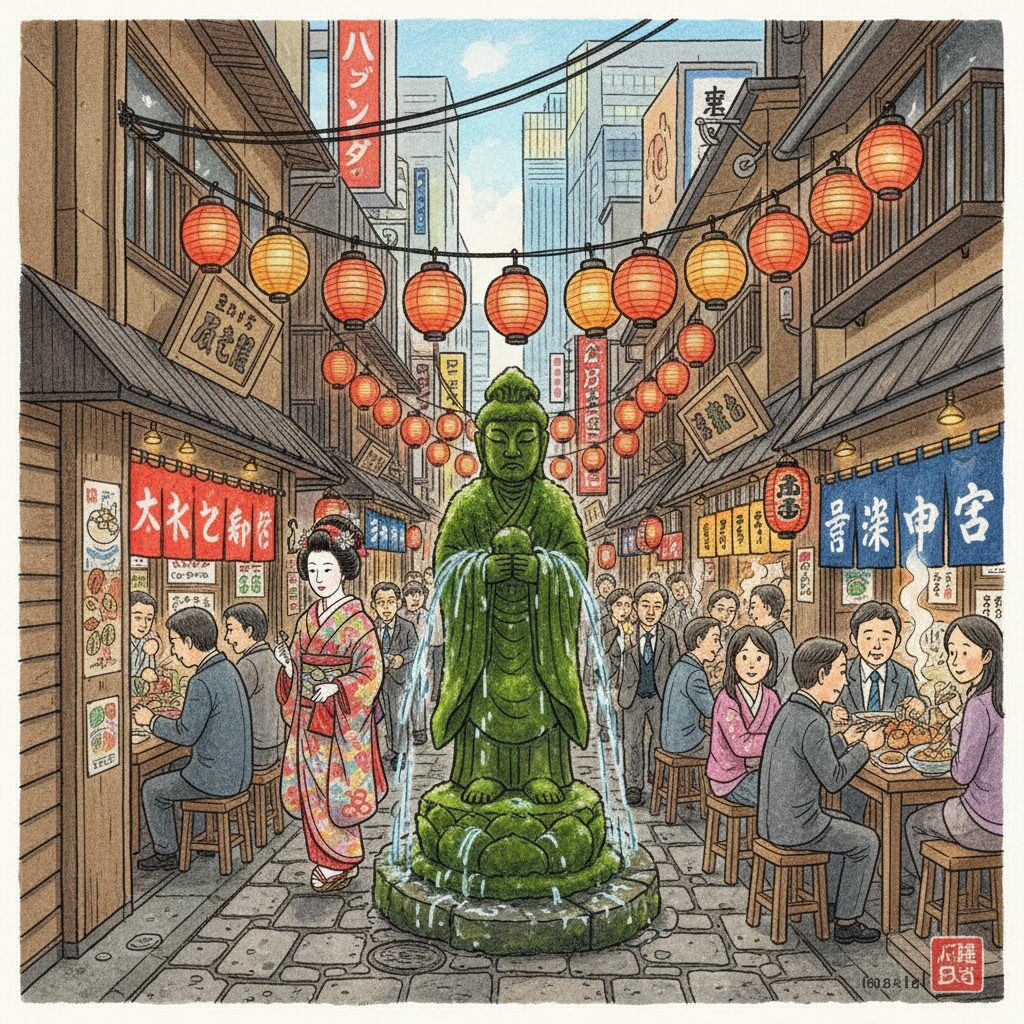
Hozenji Yokocho is more than just a temple; it is a vibrant cultural gallery, showcasing Osaka’s rich culinary and artistic heritage. The alley is lined on both sides with over sixty small restaurants and izakayas, many family-run businesses handed down through generations. Entering one of these establishments feels like stepping into a private home, where space may be limited but hospitality is abundant. The air is filled with the tempting aromas of dashi broth, grilling meat, and sizzling batter. Here, you can enjoy some of the city’s most authentic and refined cuisine. There are shops specializing in kushikatsu, Osaka’s famous deep-fried skewers; okonomiyaki restaurants where savory pancakes are expertly cooked on a hot teppan grill right before your eyes; and elegant kappo establishments serving multi-course meals that highlight the finest seasonal ingredients. The emphasis is on quality and tradition, not fleeting trends. This food defines Osaka’s identity as the Nation’s Kitchen. Perhaps the most renowned and culturally significant spot in the alley is a tiny shop called Meoto Zenzai, meaning “Couples’ Sweet Red Bean Soup.” For over a century, this shop has offered just one item: a warm, sweet adzuki bean soup served with a single piece of mochi. What makes it unique is the presentation—an order for one is served in two small bowls, symbolizing a husband and wife, a loving couple. Sharing the bowls is believed to bring luck, happiness, and harmony to a relationship. It is a favored spot for couples on dates and those hoping for success in love. Both the shop and the alley were immortalized in Sakunosuke Oda’s 1940 novel Meoto Zenzai. Oda, one of Osaka’s most celebrated authors, portrayed a resilient, free-spirited couple navigating city life, capturing Osaka’s distinctive spirit and securing Hozenji Yokocho’s place in Japan’s cultural imagination. Visiting the shop is not just about savoring a dessert; it is about experiencing a piece of literary history and a cherished local tradition. The alley’s atmosphere changes dramatically with the time of day. In the morning, it is quiet and serene; the stones are still damp from the night, and the only sounds are broom sweeps and gentle greetings as shopkeepers prepare for the day. This is the ideal time for a reflective visit to Fudo Myoo, offering a nearly solitary moment of peace. As evening falls, the paper lanterns are lit, casting a magical, nostalgic glow along the lane. The alley comes alive with the sizzling sound of cooking, clinking glasses, and the warm buzz of conversation spilling out from behind the noren curtains of the restaurants. The atmosphere is intimate and lively, a world apart from the bustling crowds just a street away. It feels like a hidden village within the megacity, a place where time slows and the simple joys of good food and good company take center stage.
Navigating the Hidden Gem: A Guide for the Curious Traveler
Discovering Hozenji Yokocho is part of its allure; it feels like an authentic find. Although centrally located, it remains discreetly tucked away. The easiest access is from any major station in the Namba area, such as Namba Station on the Midosuji subway line or Osaka-Namba Station on the Kintetsu-Nara line. From there, it’s just a five-to-ten-minute walk. Head toward the heart of Dotonbori. When you spot the enormous, animated Glico Running Man sign, you know you’re nearby. Look for the narrower, intersecting streets and soon you’ll find the modest wooden sign marking the entrance to the yokocho. The immediate contrast upon entering is striking and deeply satisfying. The alley is charming at any time, but an evening visit is highly recommended to fully experience its atmospheric magic. The lantern light softens the edges of the aged wooden buildings and reflects beautifully off the wet stone pavement, creating a scene reminiscent of an old film. For photographers, the golden hour and the following blue hour present unparalleled opportunities. However, for a more spiritual and personal connection with Mizukake Fudo-san, an early morning visit offers a rare tranquility that cannot be found later in the day. When visiting the temple area, a certain decorum is appreciated. This remains an active place of worship, not merely a tourist site. Speak softly and be considerate of those who come to pray. When using the hishaku, the water ladle, it is customary to do so with intention and respect. Visitors of any background are welcome to participate in the water-pouring ritual; it is an offering of goodwill and respect that transcends religious lines. After your visit, take time to explore the entire length of the alley in both directions. It forms a T-shape, with hidden gems down each path. Don’t hesitate to peek into the restaurants. Many have picture menus or English translations, and the chefs are often friendly. A small tip for first-time visitors: let your senses guide you. Follow the most enticing aroma, listen for laughter, and notice the details—the calligraphy on a lantern, the worn wooden lattice of a door, the small floral arrangement in a window. The true charm of Hozenji Yokocho lies in these small, carefully preserved details. It’s a place that rewards slow, attentive wandering. From here, you’re perfectly situated to dive back into Osaka’s vibrant energy. Explore the food stalls of Dotonbori, take a river cruise along the canal, or catch a traditional puppet show at the nearby National Bunraku Theatre, connecting the alley’s theatrical past with its present-day life.
The Whispers of Moss and Stone
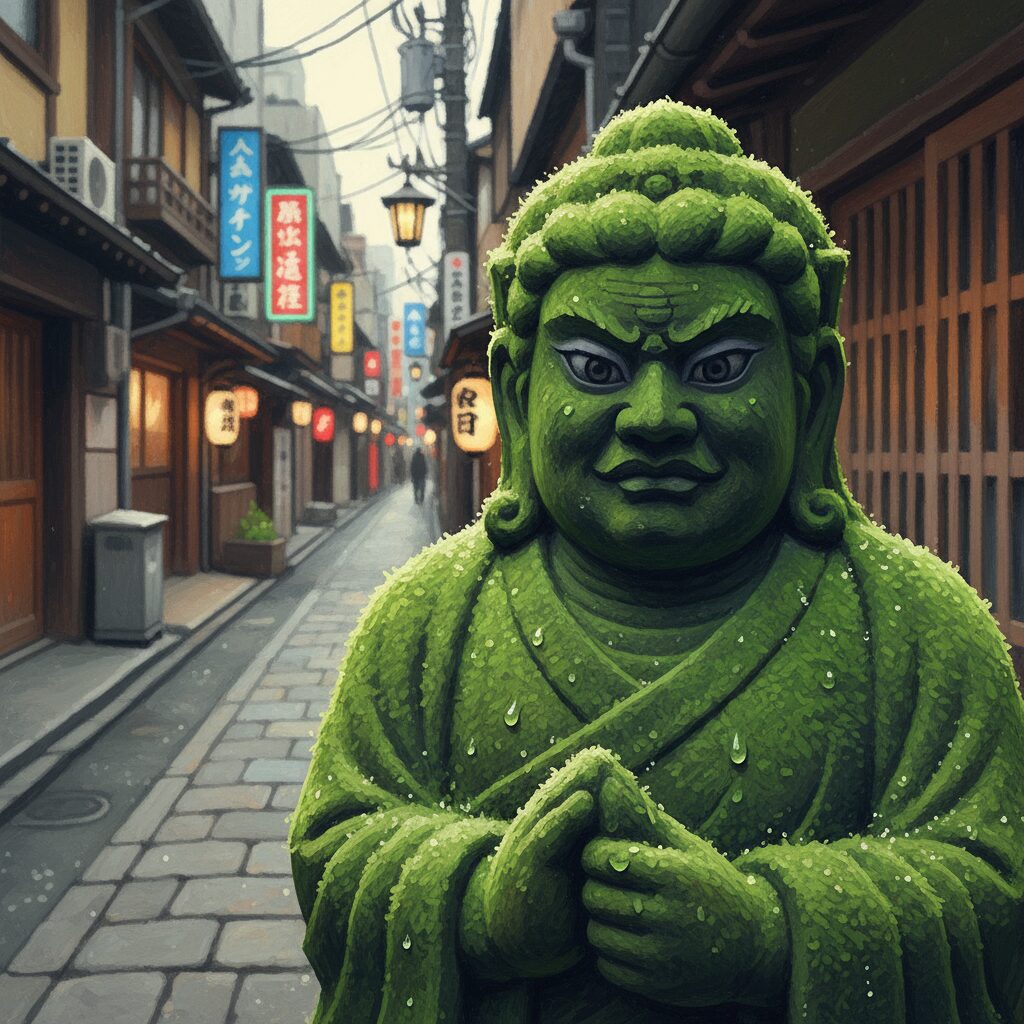
In a city that prides itself on progress, constant innovation, and reinvention, Hozenji Yokocho stands as a quiet act of preservation. It serves as a powerful reminder that advancing forward does not mean erasing the past. The alley and its moss-covered deity guard Osaka’s collective memory, acting as a living museum curated not by scholars, but by the everyday faith of ordinary people. The statue of Mizukake Fudo Myoo imparts a profound lesson. Originally, he was a symbol of fierce, unyielding power, carved from hard, unforgiving stone. Yet through the gentle, persistent acts of countless simple gestures—a ladle of water, a whispered prayer—he was transformed. He became soft, green, and alive. His story reflects Osaka’s own: a city that has faced hardship and fire, yet has always emerged with its warm, compassionate, and resilient spirit not only intact but strengthened. Visiting Hozenji Yokocho is more than just sightseeing. It is stepping into a narrative unfolding for centuries, feeling the weight of history beneath your feet and witnessing faith’s power growing, quite literally, before your eyes. Amid one of the world’s most electrifying urban landscapes, this small, green deity offers a moment of quiet connection, a silent whisper that speaks of endurance, hope, and the beautiful, enduring soul of Osaka.