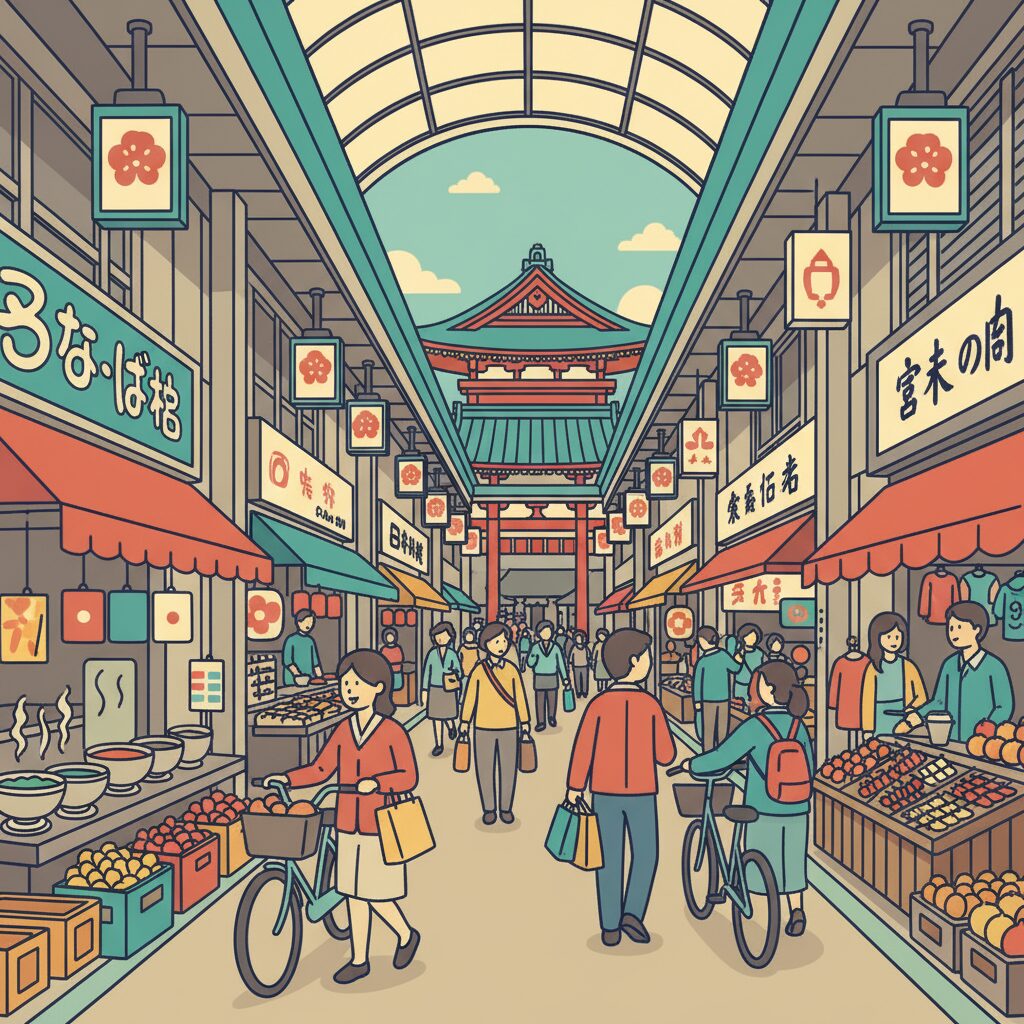
Everyone arrives in Osaka with the same phrase echoing in their ears: “It’s cheaper than Tokyo.” It’s a mantra, a promise of a more affordable, more grounded Japanese life. But the truth of that statement doesn’t reveal itself in the fluorescent glare of a 24-hour convenience store or the polished aisles of a corporate supermarket. It’s not about the price of a train ticket or the rent on a high-rise apartment. To really understand the cost of living here, to get to the heart of Osaka’s famously pragmatic soul, you have to walk under the covered roofs of its neighborhood shotengai. These sprawling, chaotic, wonderfully human shopping arcades are the city’s real economic battleground, its cultural heartland, and the best classroom for learning what it truly means to live, eat, and think like an Osakan. Forget the tourist-choked corridors of Shinsaibashi or the flashy food stalls of Kuromon Market for a moment. We’re going deeper, into the workaday arteries of the city where the real transactions happen—not just of money, but of trust, community, and a shared understanding of value. This is where the myth of ‘cheap’ gets complicated, and a much more interesting reality takes its place.
A closer inspection reveals that the resilient merchant spirit of Osaka’s shotengai not only influences the cost of daily goods but also forges genuine community bonds throughout the neighborhood.
The Myth of ‘Cheap’: Unpacking Osaka’s Value-First Mentality
The first mistake foreigners often make is mistaking Osaka’s focus on cost for mere cheapness. It’s a subtle yet significant distinction. A Tokyoite might willingly pay extra for a beautifully packaged fruit from a department store, appreciating the presentation and brand. In contrast, an Osakan will walk several blocks further to another grocer because their daikon radish is twenty yen cheaper but just as fresh. This isn’t about being stingy; it’s about mastering your own finances. It’s about winning the small, everyday battles of household budgeting.
It’s Not About Being Cheap, It’s About Being ‘Otoku’
A key word in the local vocabulary reveals this mindset: お得 (otoku). It doesn’t simply mean ‘cheap’ or ‘bargain’; it’s closer to ‘getting excellent value for your money’, a ‘smart deal’, or even a ‘profitable acquisition’. Scoring an otoku deal brings a unique satisfaction—a sense that you’ve played the game well. You can see it in the eyes of the obachan, the elderly neighborhood woman, as she taps a melon, holds a cabbage up to the light, and negotiates with her gaze. Her scrutiny isn’t stinginess; it’s the practiced skill of a seasoned quartermaster managing her household’s resources with precision. She knows the market’s rhythms, the seasonal peaks, and the perfect moment when the sun-warmed tomatoes are at their tastiest and most affordable. The pursuit of otoku sets the rhythm of daily life. The most exciting part of any shotengai is late afternoon, when nebiki (price reduction) stickers appear. A slice of glistening tuna, once a splurge, is now 30% off. Unsold bento boxes are suddenly half-price. This isn’t a clearance of unwanted goods; it’s a carefully coordinated, symbiotic exchange between vendor and customer. Shops clear their perishable stock, and savvy shoppers secure fantastic deals for dinner. Planning your shopping around the nebiki hour isn’t a sign of financial hardship; it epitomizes financial savvy in Osaka.
The Supermarket vs. The Shotengai: A Tale of Two Shopping Carts
The modern, air-conditioned supermarket offers a certain kind of convenience—it’s anonymous, efficient, and predictable. Prices are set by a distant head office. The apples are uniform in size, polished to a sterile shine and sealed in plastic. It’s a place of quiet, orderly acquisition. The shotengai, by contrast, is a full-contact sensory experience. It’s loud, filled with vendors calling out their wares beneath the arched roof. It smells of grilled eel, fresh-cut flowers, and the sharp tang of pickled vegetables. It’s deeply personal and unapologetic. Here, a price comparison only tells part of the story. The chain supermarket sells a generic block of firm tofu for ¥98, a reliable, standard choice. But just down the arcade, a small family-run tofu shop, steam fogging its windows, offers a larger, denser, creamier block for ¥120. A newcomer sees a pricier product. The Osakan instantly understands the otoku logic. That extra ¥22 buys tofu made that very morning, with a flavor and texture that elevate any meal. It buys a product crafted by your neighbor, a man whose family has been making tofu in that very spot for sixty years. That heritage alone adds value. The same reasoning applies to produce. The supermarket’s perfectly straight, uniformly orange carrots are predictable. The yaoya (greengrocer) in the shotengai offers a pile of carrots, still with green tops, some crooked, dirt clinging to their skin. They cost less than half the supermarket price, and their flavor is vastly superior. This daily choice defines Osakan life: the sterile perfection of the corporate chain versus the vibrant, imperfect, high-value reality of the local arcade.
The Anatomy of a Neighborhood Shotengai
Each local shotengai is a self-contained universe, a miniature reflection of the neighborhood it serves. While well-known ones may feature mobile phone shops and chain drugstores, the truly local arcades are anchored by a core group of specialists who form the heart of the community’s everyday life. Getting to know who they are and what they do is like meeting the key figures in a new town.
Beyond the Octopus Balls: The Essential Shops
Come with me as we stroll through a typical arcade, past the pachinko parlor and the 100-yen shop. The first person you encounter is the yaoya, the greengrocer. His storefront bursts with seasonal colors, wooden crates of produce spilling onto the walkway. The prices, handwritten on cardboard signs, change daily, sometimes hourly, reflecting the morning’s market auction. The owner is a walking encyclopedia of his inventory. He won’t just sell you bamboo shoots; he’ll explain the best way to prepare them and which other vegetables are currently at their peak. Next is the nikuya, the butcher. The air grows cooler and carries a faint iron scent. Behind the glass, trays hold thinly sliced pork for shabu-shabu, marbled beef for sukiyaki, and ground meat for gyoza. You don’t buy prepackaged trays here; you request what you need—200 grams of chicken thigh, three slices of thick-cut bacon. The butcher’s real secret often lies in the hot deli case at the front, where freshly fried korokke (croquettes) and menchi-katsu (minced meat cutlets) are sold. For about a hundred yen, you get a hot, savory snack that perfectly exemplifies otoku—a delicious, filling treat at a bargain price. Further along, the unmistakable scent of the ocean signals the sakanaya, the fishmonger. The day’s catch rests on beds of crushed ice: silvery aji (horse mackerel), glistening squid, and pink slabs of salmon. The fishmonger is a craftsman who can tell you where and when a fish was caught. More importantly, he’ll do the hard work for you—scaling, gutting, and filleting your purchase with a few swift strokes of a long, sharp knife—a service included in the transaction. You leave with dinner, not a task. And you can’t miss the tofuya. Often the smallest and humblest shop, it is a place of quiet wonder. Here, soybeans and water are transformed into silken tofu, hearty atsuage (thick fried tofu), and delicate aburaage (thin fried tofu pouches). The freshness surpasses anything found in supermarkets. The tofu is often still warm, sold from a water-filled basin, carrying the subtle, sweet flavor of its source.
The Hidden Economy of Services
Life in the shotengai isn’t just about what you eat for dinner. These arcades host an entire ecosystem of services rooted in repair, maintenance, and human interaction. There’s the local barbershop, often marked by a spinning red, white, and blue pole outside. A haircut might cost ¥1,200, a fraction of a stylish salon’s fee, but the true value lies in the conversation. The barber knows everyone and is a central hub of neighborhood news. There’s the small pharmacy, not a large chain drugstore, but a tiny shop run by a pharmacist who knows your name and might ask how your son’s cold is progressing. He can recommend a remedy based on genuine conversation, not just symptoms listed on a sheet. Tucked into side streets, you’ll find specialists: the man who repairs watches and replaces batteries, the woman who re-strings paper on shoji screens, the shop that fluffs and cleans old futons to extend their life by another decade. These businesses embody a philosophy opposed to modern consumerism. They focus on preservation, not disposal; on fixing what’s broken rather than buying new. This too is a form of otoku—the deep value of making things last.
The Human Currency: Building Relationships is Your Best Discount Card
In a supermarket, you remain an anonymous shopper. You fill your cart, scan your items, and pay at a machine. The only words you might exchange are a quiet “arigato.” In the shotengai, however, the transaction marks just the start of the conversation. The most valuable currency here isn’t yen; it’s recognition. It’s the slow, rewarding process of becoming a regular.
From ‘Irasshaimase’ to ‘Maido Ookini’
When you first enter a shop, you are greeted by the standard Japanese welcome: “Irasshaimase!” It’s polite, professional, and universal. But after visiting the same fishmonger three or four times, something changes. One day, as you leave, the owner will call out, “Maido ookini!” This is pure, unfiltered Osaka merchant dialect. It means, “Thanks, as always,” or “We appreciate your continued business.” It’s a verbal sign that you’ve crossed a threshold. You are no longer just a customer; you are a joren, a regular. This is the first reward for your loyalty. That simple phrase acknowledges a relationship — it recognizes that you belong to the shop’s community. In Tokyo’s more reserved culture, this kind of familiarity can feel surprising. In Osaka, it’s the very essence of doing business. It’s commerce woven into the fabric of community.
The Unspoken Perks of Being a ‘Joren’
Becoming a regular reveals a deeper layer of the shotengai economy, one built on gestures and unspoken understandings. This isn’t a formal loyalty program with points or plastic cards. It’s far more natural and meaningful. One day, you ask the butcher for pork belly for your ramen. He nods, and as he wraps it up, he tosses in a chunk of pork fat, free of charge. “For the broth,” he says with a smile. You didn’t ask for it. You never could. It’s a gift. The fruit seller notices you admiring the pricey Shine Muscat grapes. As you pay for your apples, she quietly slips a slightly bruised but perfectly delicious peach into your bag. “Service,” she says softly, a catch-all for a small extra. The baker gives you the mimi (the crusty end) of the shokupan loaf because he knows you like it. The tofu maker sets aside the last block of his special dark-roasted sesame tofu for you on Fridays because it’s your favorite. These small acts of generosity, called omake, are the rewards of your loyalty. They’re never advertised and can’t be demanded; they’re offered in the spirit of mutual appreciation. This is the true currency of the shotengai, worth more than any discount tag.
A Foreigner’s Guide to Shotengai Etiquette
Navigating this social world as a foreigner might seem intimidating, but it’s simpler than you think. The key is to show respect and make an effort. A simple “Konnichiwa” when you arrive and “Gochisousama deshita” (after eating) or “Arigatou gozaimashita” when you leave goes a long way. Don’t handle the produce as if you were in a Western supermarket; the vendors take great pride in their displays. Point to what you want or ask for a recommendation. Your imperfect Japanese isn’t a barrier; it’s a bridge. Osaka shopkeepers are famously curious and talkative. They’ll ask where you’re from, what you’re cooking for dinner, how you’re managing the humid summer. This isn’t an interrogation. It’s an invitation. They’re trying to place you on their community map. Responding with a smile opens the door. In many other parts of Japan, such personal questions from a stranger might seem intrusive. In Osaka’s shotengai, silence is the most suspicious response of all. Joining in this light, friendly banter is how you begin earning your “Maido ookini.”
Why the Shotengai Endures in an Age of Amazon
By all modern logic, the shotengai should be an antiquated relic. It’s an analog system in a digital age. Its owners are aging, and it faces unrelenting competition from shiny Aeon malls on the town’s outskirts and the seamless convenience of online retailers. Yet, in Osaka more than anywhere else in Japan, the shotengai not only survives; in many neighborhoods, it flourishes. Its resilience stands as a testament to the city’s core values.
Resisting the Pull of Faceless Convenience
The shotengai persists because it provides what no algorithm or delivery drone can: human connection, sensory experience, and deep-rooted community trust. It’s a third space—neither home nor work—where daily, low-stakes social interactions weave the fabric of a neighborhood. It’s where you hear about the new baby born down the street, check in on an elderly neighbor you haven’t seen for a few days, and seek advice from a trusted expert on something as simple as perfectly grilling a sardine. This social role is inseparable from its economic one. People don’t just shop for food here; they shop to feel part of something. You can’t recreate the warmth of a butcher remembering your usual order or a baker greeting you by name through a digital interface. That deep, fulfilling sense of belonging is a strong anchor against the tide of faceless convenience.
The Osaka Mindset: A Pragmatic Defense of the Local
Ultimately, the shotengai’s survival is grounded in the pragmatic, merchant-class ethos that built Osaka. This is a city founded and governed by traders and artisans, not by samurai and bureaucrats. Its people possess an innate, almost instinctual grasp of economics and the flow of money. They know that shopping locally is not an act of charity or nostalgia, but a strategic investment in their own environment. When you buy tofu from the local tofuya, that money doesn’t vanish to a distant corporate headquarters. It stays within the neighborhood. The tofu maker uses it to purchase fish from the sakanaya, who then pays the yaoya for vegetables, who in turn gets his haircut from the local barber. It’s a simple, elegant, circular economy. Supporting this ecosystem is a practical act of self-preservation for the neighborhood. This isn’t high-minded ideology; it’s the most otoku way to manage a city. Where a foreigner might see a cluster of old-fashioned shops, an Osakan sees a finely tuned economic engine that keeps their community vibrant, employed, and self-sufficient.
The real cost of daily goods in Osaka, then, is a far richer and more rewarding calculation than the price tag suggests. It’s measured in the quality of your food, the strength of your community bonds, and the daily satisfaction of making smart, worthwhile choices. The shotengai is where this calculation happens every single day. It stands as a living testament to the idea that value means more than just saving money. It’s about what you gain along the way. You can always go to the supermarket and save a few yen on groceries. But you’ll miss the chance to be greeted with a hearty “Maido ookini!”—the feeling of being a known, valued part of an Osaka neighborhood. For many who truly learn to live in this city, that cost is simply too high to bear.