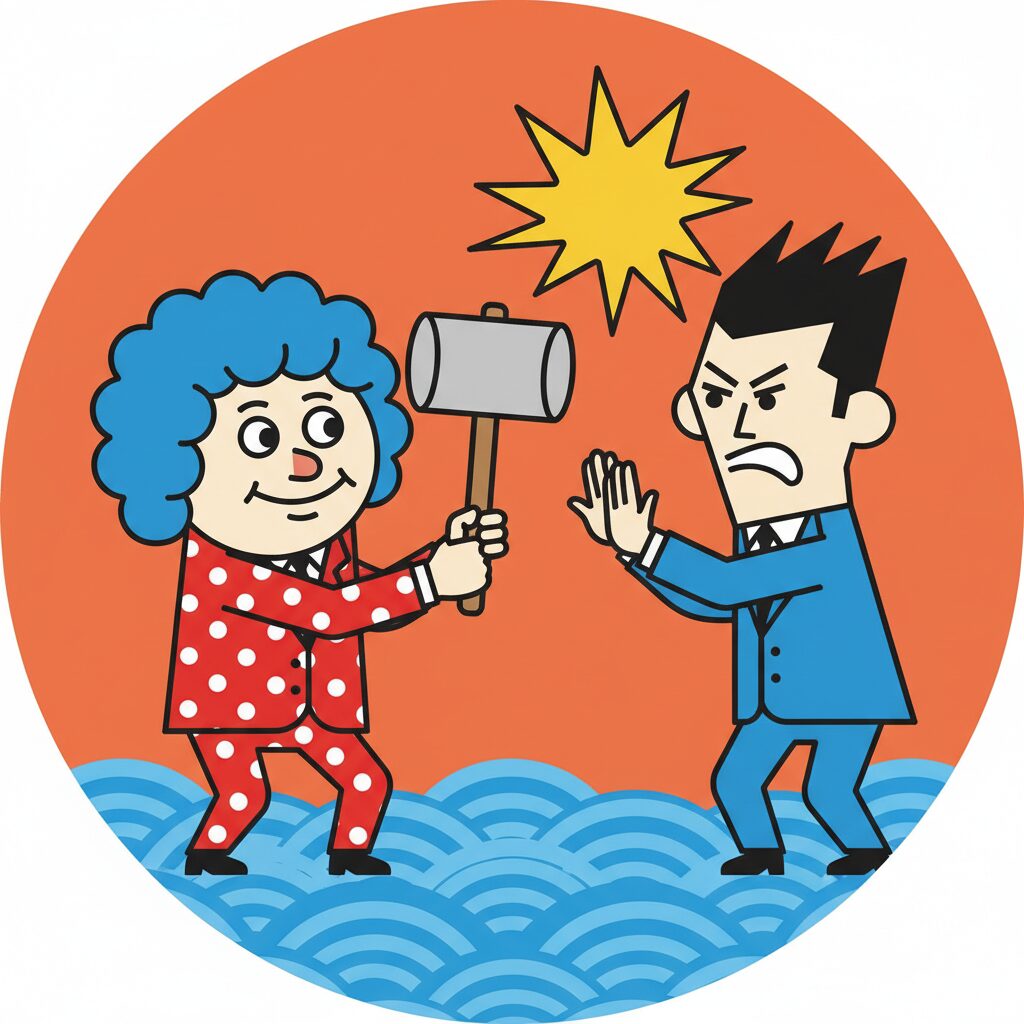
The first time it happened, I was utterly bewildered. Standing on a crowded train heading towards Umeda, I overheard a conversation between two middle-aged men in work suits. It started normally, but then one man pointed at a flashy advertisement and said something with complete seriousness. The other man replied instantly, his voice rising in what sounded like pure, unadulterated fury. He jabbed his finger towards his friend, his face a mask of indignation. I froze, bracing for a full-blown argument, maybe even a physical confrontation. But then, the first man burst out laughing, and the angry one cracked a huge grin, lightly smacking his friend on the shoulder. The tension vanished. They weren’t fighting; they were… playing? I had just witnessed my first raw, unfiltered exchange of ‘boke’ and ‘tsukkomi’, the invisible engine that powers almost every conversation in Osaka. It’s a rhythmic dance of humor that, once you understand it, unlocks the entire personality of this incredible city. It’s the reason people here don’t just talk; they perform, they connect, they spar with words as a sign of affection. This isn’t just about telling jokes. It’s a fundamental way of life, a communication style so deeply ingrained that it dictates the flow of interactions from the boardroom to the corner takoyaki stand. Forget what you think you know about reserved Japanese communication; you’re in Osaka now, and the rules are delightfully different.
Osaka’s vibrant lifestyle also manifests in everyday exchanges, where even the true cost of daily goods offers a glimpse into the city’s spirited neighborhood culture.
The Anatomy of a Joke: What Are ‘Boke’ and ‘Tsukkomi’?
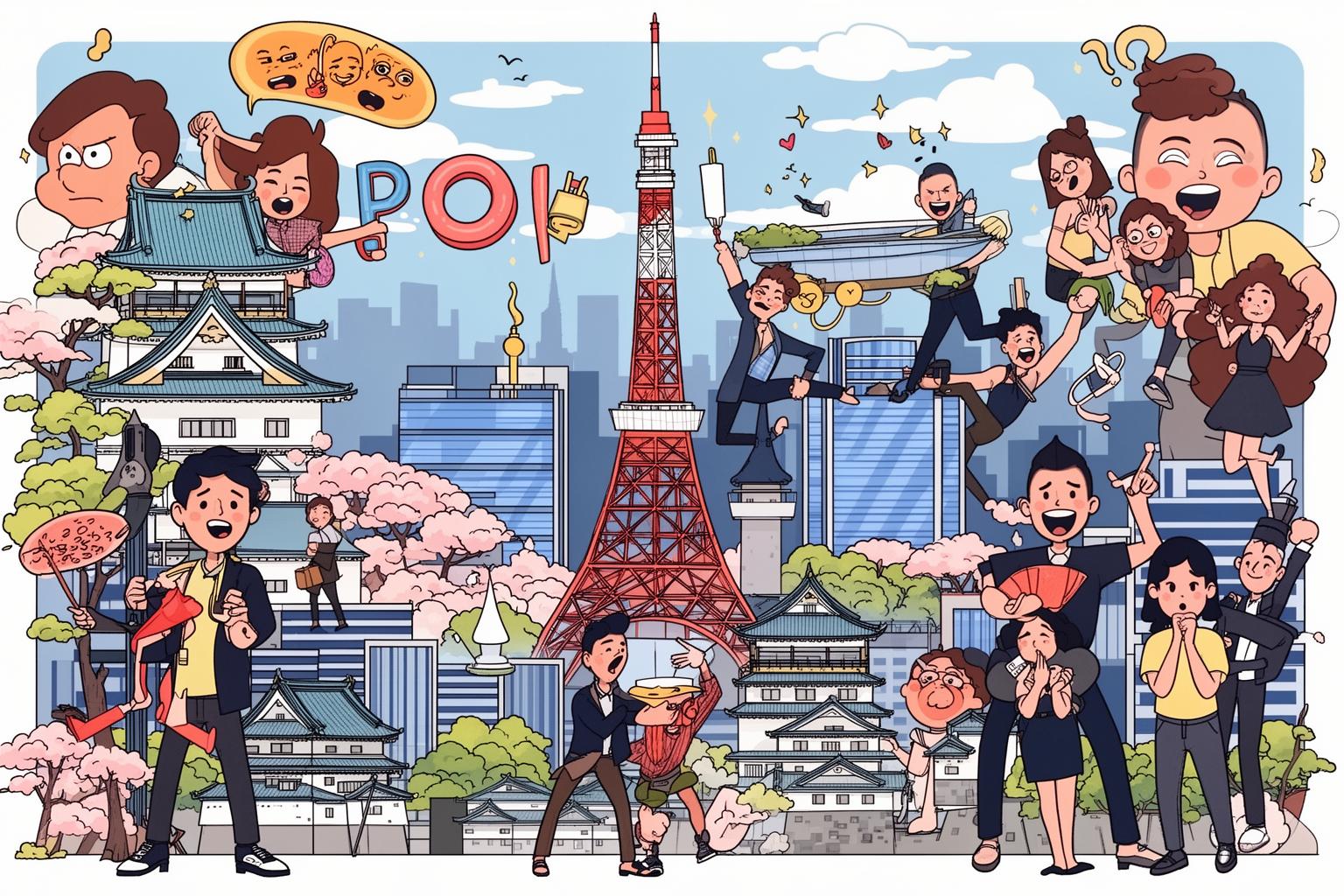
Before you start noticing it everywhere, you need to know what to look for. ‘Boke’ and ‘Tsukkomi’ are two parts of a single entity, the essential building blocks of Japanese stand-up comedy called manzai. But in Osaka, this dynamic jumped off the stage and into everyday conversation. Think of it as a back-and-forth exchange. One person serves the ball, and the other has to return it with force. The joke isn’t complete until both roles have been fulfilled.
The ‘Boke’ (ボケ): The Lovable Fool
The term ‘boke’ derives from the verb ‘bokeru’ (惚ける), which can mean to become senile or act like an airhead. The ‘boke’ is the one who says or does something absurd, illogical, or simply wrong. This isn’t about genuine stupidity. It’s a deliberate act of comedic defiance against the ordinary. The ‘boke’ intentionally disrupts a normal conversation to open the door for humor. Their delivery is often deadpan, as if they truly believe the nonsense they’re uttering. It’s the skill of playing the fool with perfect timing.
Here are examples of a ‘boke’ move:
- The Obvious Misidentification: While walking past the Tsutenkaku Tower, the ‘boke’ points and exclaims with wide-eyed amazement, “Wow, the Tokyo Tower looks so different up close!”
- The Literal Interpretation: When someone says, “My hands are full,” the ‘boke’ looks at their empty hands and replies, “No, they’re not. They’re empty.”
- The Feigned Ignorance: At a restaurant known for okonomiyaki, the ‘boke’ studies the menu then asks the waiter, “Do you have any pizza?”
Without the other half, these remarks would just seem strange, confusing, or even irritating. The ‘boke’ tosses out a comedic grenade and waits for their partner to deal with the blast.
The ‘Tsukkomi’ (ツッコミ): The Master of the Comeback
The ‘tsukkomi’ role comes from the verb ‘tsukkomu’ (突っ込む), meaning to thrust or poke into something. This is the straight man, the voice of reason. Their job is to instantly and sharply point out the absurdity of the ‘boke’s’ remarks. The ‘tsukkomi’ delivers the punchline. Their reaction signals to everyone that a joke has just been made. It’s usually quick, a little loud, and expressed with playful frustration.
Here’s the ‘tsukkomi’ responding to the earlier ‘boke’ examples:
- To the Tower comment: “なんでやねん!通天閣や!” (Nande ya nen! Tsutenkaku ya!) – “What the heck are you talking about?! That’s Tsutenkaku!” This is the classic Osaka ‘tsukkomi’.
- To the ‘full hands’ comment: “そういう意味ちゃうわ!” (Sou iu imi chau wa!) – “That’s not what I meant!”
- To the pizza question: “お好み焼き屋でピザ頼むな!” (Okonomiyaki-ya de piza tanomu na!) – “Don’t order pizza at an okonomiyaki place!”
There’s often a physical aspect, but it’s purely pantomime. A gentle tap on the head with a paper fan is a classic manzai gesture, but in real-life exchanges, it’s more commonly a light smack on the arm or shoulder. It’s a punctuation mark, not an attack.
The Unspoken Rhythm of Osaka Life
Once you tune into this frequency, you’ll realize this isn’t some special performance. It’s the constant, humming background noise of the city—a shared rhythm that people use to quickly build rapport, turning ordinary errands into brief moments of collaborative comedy. It’s how strangers become acquaintances, and acquaintances turn into friends.
At the Supermarket Checkout
Picture this: An obachan (an older lady, a true master of this art) is at the checkout. The young cashier tells her the total, say, 2,480 yen.
The obachan, playing the ‘boke’, fumbles in her purse and says with a mock troubled expression, “Oh dear, I only have 2,000 yen. I guess you’ll have to just give me a discount, right?”
The cashier, a seasoned Osakan, doesn’t skip a beat. She plays the ‘tsukkomi’, leaning forward with a smile. “あかん!ちゃんと払ってください!” (Akan! Chanto haratte kudasai!) — “No way! Please pay the proper amount!”
The obachan cackles, pulls out the exact change, and they share a laugh. No offense is taken. In fact, a bond is formed. The cashier didn’t just offer robotic customer service; she joined in a human moment.
In a Business Meeting
While subtler, the spirit of boke and tsukkomi definitely exists in the Osaka workplace. It’s a tool to break the ice and ease tension. Imagine a team brainstorming a challenging problem, and the room has fallen silent.
The boss, sensing the mood, might lean back in his chair and say something completely absurd (‘boke’): “You know, maybe we should just close the company and open a takoyaki stand instead.”
A junior employee, reading the atmosphere, might boldly offer a ‘tsukkomi’: “部長、僕たこ焼き作ったことないですよ!” (Buchou, boku takoyaki tsukutta koto nai desu yo!) — “Chief, I’ve never even made takoyaki before!”
Everyone laughs. The tension breaks. The boss shows he’s approachable, and the employee demonstrates a good sense of humor and social awareness. In Tokyo, such a comment from the boss might be met with nervous silence as employees wonder if he’s serious. In Osaka, it’s an open invitation to join the fun.
Just Getting Directions
Even a simple exchange with a stranger can become this playful dance. If you ask someone for directions to Osaka Castle, they might first point you in the completely wrong direction with a straight face. This is your cue. If you look puzzled and say “Eh?”, they’ve set the ‘boke’. Their friend, or even they themselves, will immediately follow with the ‘tsukkomi’: “ちゃうちゃう、こっちや!” (Chau chau, kotchi ya!) — “No, no, it’s this way!” They just wanted to share a quick joke with you before helping out. Laughing rather than getting frustrated shows you’re tuned in to their wavelength.
The Soul of a Merchant City: Why Osaka?
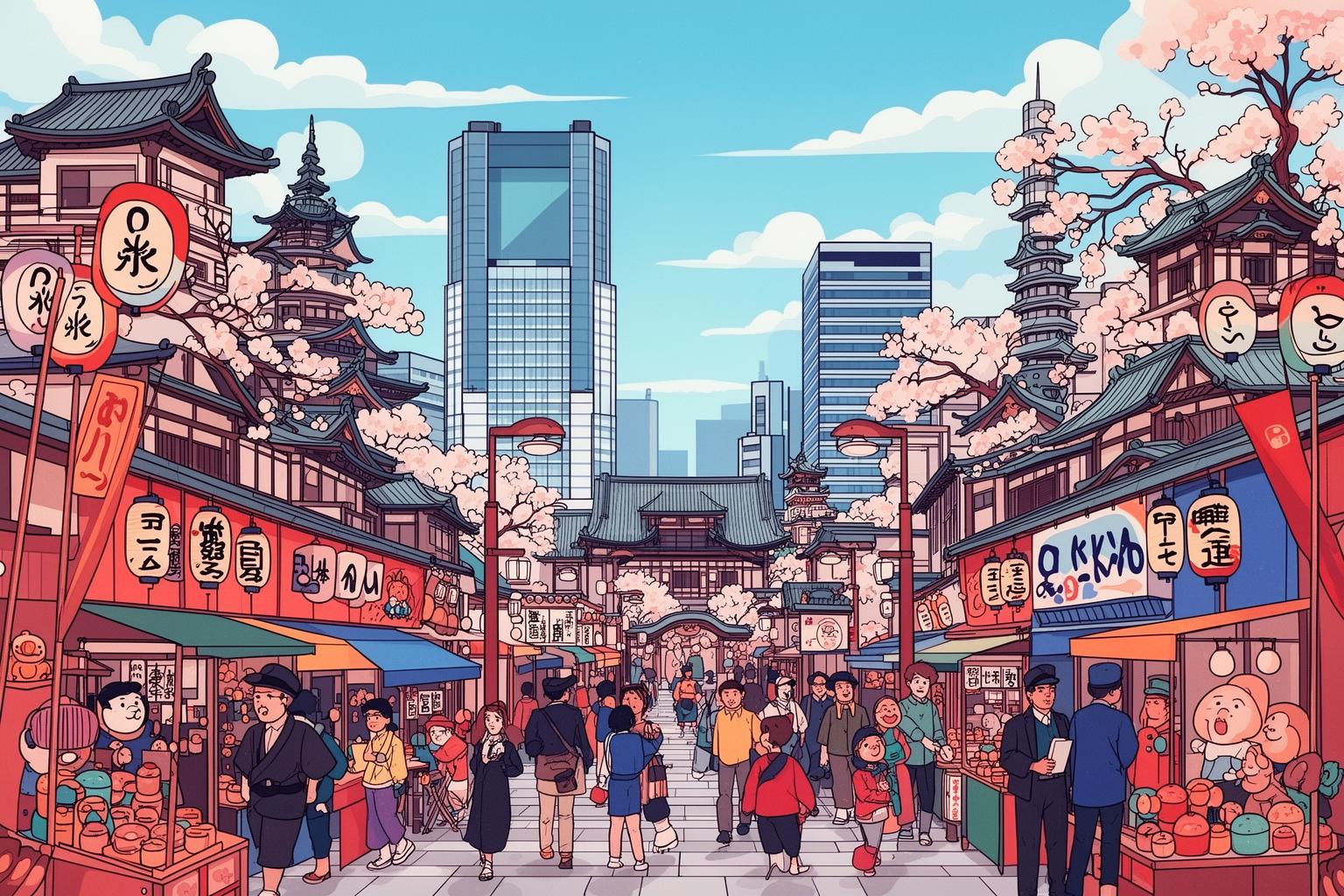
This style of communication isn’t accidental; it’s deeply ingrained in the city’s DNA. While Tokyo evolved as the strict, formal capital of shoguns and samurai, Osaka grew into a lively center of commerce. It was the nation’s kitchen, attracting merchants from across Japan to trade rice and goods. In the business world, being sharp, quick-witted, and able to build trust swiftly was essential. Humor served as a powerful tool—it could disarm a tough negotiator, create a memorable connection with a client, and make a market stall the most popular one. Conversations were not merely exchanges of information; they were opportunities to size each other up and establish a bond.
This spirit was later captured and transmitted nationwide by entertainment giants like Yoshimoto Kogyo, founded in Osaka in 1912. They transformed the local manzai comedy into a nationwide sensation. Suddenly, the way people in Osaka spoke—the dialect, the rhythm, the dynamic between ‘boke’ and ‘tsukkomi’—became the defining language of Japanese comedy. Children grew up watching their favorite comedians engage in this fast-paced banter daily, reinforcing this style as a fundamental part of Osakan identity. Locals take pride in their comedic heritage, viewing humor as a mark of intelligence and social finesse.
This contrasts sharply with the communication norms in Tokyo. In the capital, there is often a stronger focus on politeness (teinei), preserving harmony (wa) through indirectness, and reading the atmosphere (kuuki wo yomu). In a formal Tokyo setting, a ‘boke’ might be met with an awkward silence followed by a polite, literal correction, missing the playful invitation entirely. The ‘tsukkomi’ reaction is not the default. This difference is a key reason why the two cities feel so culturally distinct.
Common Misunderstandings: A Foreigner’s Guide
For someone unfamiliar, this constant comedic undertone can be a confusing minefield. What sounds like an argument is actually a sign of affection, and what appears to be a mistake is often a deliberate joke. Understanding the intent behind the words is crucial.
“Are They Angry at Each Other?”
This is the biggest misconception. The ‘tsukkomi’ can sound harsh. Expressions like “Nande ya nen!” (“Why the heck!”) or “Aho ka!” (“Are you an idiot!”) are delivered with such force that they might come across as genuinely aggressive to outsiders. The key is to listen to the tone beneath the words. Is there a hint of laughter in their voice? Is the other person smiling? Is their body language relaxed? In 99% of cases, the answer is yes. A sharp ‘tsukkomi’ from a friend or colleague is actually a sign of closeness. It means, “I know you well enough to joke around like this. We don’t need to be formal.” Silence or a bland, polite response often indicates distance. Receiving a good ‘tsukkomi’ means you’ve been accepted.
“How Am I Supposed to React?”
You don’t need to become a world-class comedian overnight. Nobody expects you to deliver a flawless ‘tsukkomi’ in rapid-fire Osaka-ben. But simply recognizing the game is a huge step. Here’s an easy progression:
- Level 1: The Observer. When you see it happen, just smile and laugh along. Your appreciation of the joke is participation enough and shows you understand.
- Level 2: The Gentle Participant. If someone directs a ‘boke’ at you—like offering you chopsticks to eat your ice cream—you don’t need a clever retort. You can just laugh and say, “No, no, a spoon!” in English. Your amusement is all that’s needed.
- Level 3: The Aspiring Player. If you’re feeling bold, try a simple Japanese ‘tsukkomi’. Someone says something absurd? A drawn-out “えええええ?” (Eeeeeh?) with a shocked, amused face works perfectly. Or the classic, “なんでやねん!” (Nande ya nen!). Even if your pronunciation is off, the effort will be appreciated. You tried to join the game, and that’s what matters.
The ‘Obachan’ and the Candy Test
The ultimate gatekeepers of this culture are the Osaka obachan. They’re fearless, hilarious, and often involve strangers in this banter. A typical scenario involves ame-chan (candy). An obachan might offer you a piece of candy. If you accept, she might then try to shove five more pieces into your hand (‘boke’), saying you look too skinny or need some for your family back home. The polite, non-Osaka reaction is to get flustered and politely refuse. The Osaka-savvy response is to play along. You can raise your hands in mock surrender and laugh, saying “もうええわ!” (Mou ee wa!) – “That’s enough!” This completes the comedic circle. You’ve passed the test, shared a moment, and shown you understand the city’s unwritten rules.
Living Inside the Joke
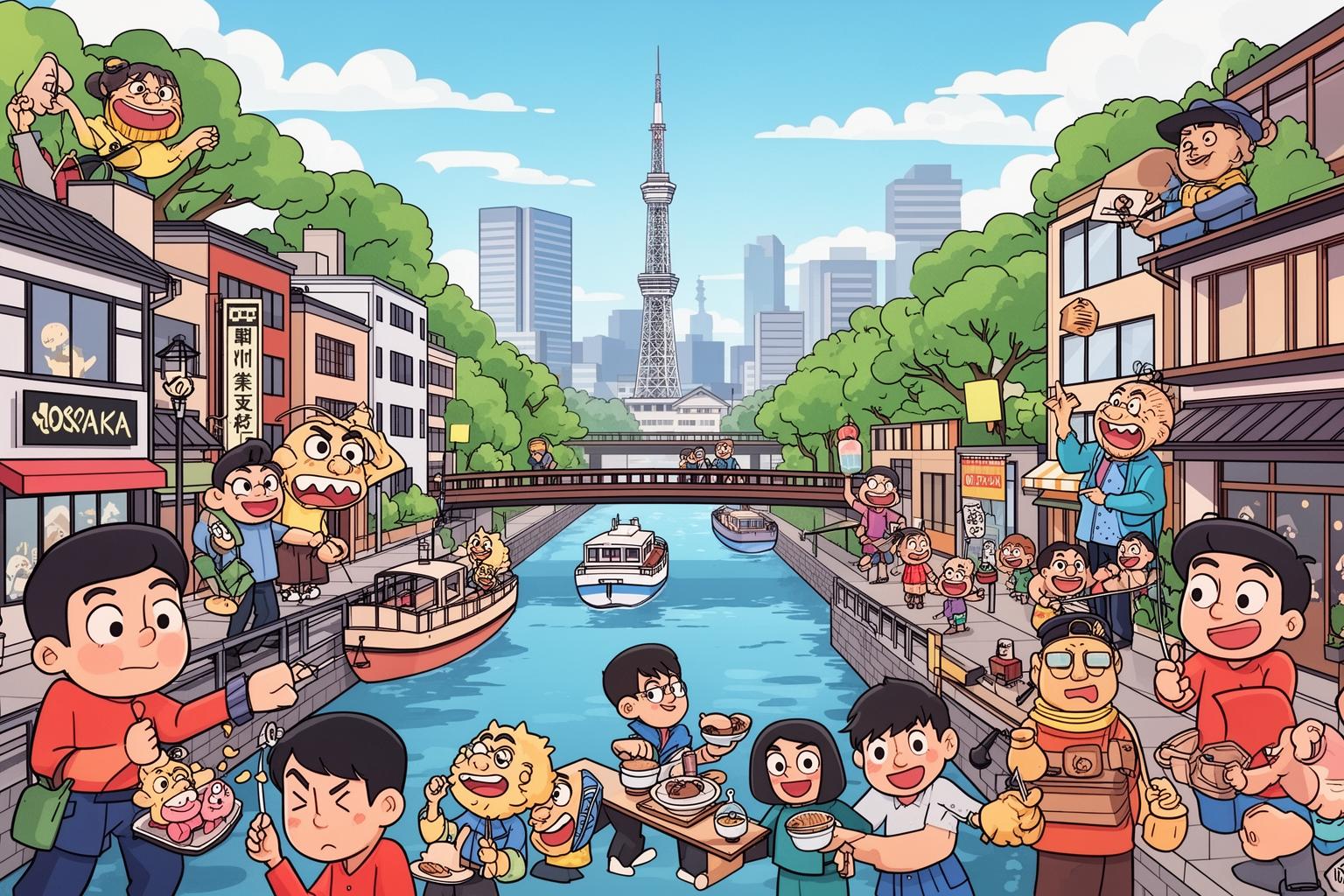
So what does all this mean for everyday life? It means living in Osaka feels less like following strict social rules and more like joining a city-wide improv show. Interactions have a liveliness and spontaneity that are truly captivating. The atmosphere feels charged with playful energy. A trip to the post office becomes more than a transaction; it’s an opportunity for a quick, friendly exchange with the person behind the counter. Your neighbors don’t just greet you; they exaggerate the weather amusingly, waiting for you to respond.
This culture of humor creates a distinctive kind of resilience. It helps keep things in perspective, finding lightness even in frustrating moments. It effortlessly breaks down barriers between strangers, coworkers, and generations. This is what really lies behind the cliché that “Osaka people are friendly.” It’s not just their welcoming nature; it’s that they actively draw you into their world through shared laughter. They invite you to join the conversation, not just listen.
To truly live in and understand Osaka, you don’t first need to memorize train schedules or restaurant guides. You need to learn how to catch the joke. You need to recognize that when someone says something completely absurd with a straight face, it’s not madness; it’s friendship. It’s an open invitation to come in and play along. And there’s no better way to feel genuinely at home.