In the sprawling, hyper-modern expanse of Osaka, a city that pulses with neon and races toward the future, there exist rare pockets where the frantic rhythm of the metropolis softens to a gentle, steady heartbeat. Here, time does not leap forward; it meanders, flowing like a quiet river through landscapes of memory and tradition. One of the most enchanting of these temporal oases is the Karahori Shopping Street, or Karahori Shotengai. This is not a theme park reconstruction of the past, nor is it a sterile museum exhibit sealed behind glass. Karahori is something far more precious and profound: it is a living, breathing artery of Old Osaka, a place that survived the inferno of the Second World War and continues to thrive with a spirit as tenacious as it is charming. To walk beneath its covered arcade is to step through a veil, leaving the 21st century behind to wander through a tangible piece of the Showa era, a world of wooden storefronts, neighborly chatter, and the quiet dignity of resilience. This neighborhood, nestled atop the ancient Uemachi Plateau, didn’t just witness history; it defied it, and in doing so, it preserved a soulfulness that much of the city lost to fire and progress. It stands today as a testament, not to what Osaka was, but to what Osaka, in its deepest heart, still is.
This preserved spirit is echoed in other historic districts like Shinsekai, another of Osaka’s beloved time capsules.
The Echo of Survival: Karahori’s Wartime Miracle

To truly grasp the significance of Karahori, one must first understand the Osaka that was nearly wiped out. During the Second World War, Osaka was a powerhouse of Japanese industry, the smoke-filled heart of the nation’s war effort. Its factories produced munitions, its shipyards constructed warships, and its extensive network of railways and ports transported troops and supplies across the empire. This industrial strength made it a prime target for the Allied forces, and in 1945, the city paid a heavy price for its strategic importance. Beginning in March of that year, a series of devastating air raids, primarily incendiary bombings, were launched against Osaka. The assaults were methodical and relentless. Squadrons of B-29 bombers flew over the city, releasing hundreds of thousands of M-69 incendiary bombs that spread napalm upon impact. The city’s dense urban layout, mainly composed of wooden homes and shops, served as perfect fuel for the resulting firestorms. Entire neighborhoods vanished overnight, engulfed by flames that spread block to block, creating infernos so fierce they generated their own weather. The sky above Osaka glowed with a hellish red for days. When the smoke finally lifted, nearly a third of the city had been transformed into a scorched, desolate wasteland. The vibrant commercial hubs of Namba and Shinsaibashi were destroyed. The industrial districts were leveled. The human toll was immense, with tens of thousands dead and hundreds of thousands left homeless amid the devastation. From these ashes, modern Osaka would eventually emerge, rebuilt with concrete, steel, and an unwavering determination to progress. Yet, amid this near-total destruction, a few small areas were miraculously spared. Karahori was one of them. Its survival cannot be attributed to a single, simple cause but rather to a combination of luck and geography. Positioned atop the Uemachi Plateau—a natural elevation that has served as a settlement center since Osaka’s earliest history—Karahori stood apart from the low-lying industrial zones near the bay that were the main targets. Additionally, the district was predominantly residential, lacking the large factories that attracted bombers. Some local accounts even mention cloud cover on a critical night or a slight shift in the wind that redirected the flames. Whatever the exact reasons, it was a miracle. While the surrounding city burned, Karahori remained intact. Its old wooden machiya townhouses, winding roji alleyways, and covered shotengai arcade survived unscathed. This survival is the core story of Karahori. It is not just old; it is a survivor. Every weathered wooden beam, every tiled roof, every worn stone step stands as a testament to this remarkable heritage. Walking through its streets is stepping into an authentic, unbroken lineage of urban life, a direct link to the pre-war city that most of Osaka now knows only through photographs and memories. This is no reconstruction; it is the genuine article, a living relic preserved by fortune.
A Symphony of Sights and Sounds: The Atmosphere of the Shotengai
Stepping into Karahori Shotengai from the bustling modern streets of Tanimachi brings a profound sensory shift. The outside world, with its wide avenues, traffic lights, and glass-fronted buildings, fades away. Here, the scale feels human and intimate. The main street is a long, covered arcade, a classic feature of Japanese shopping districts, yet this one feels distinctive. The ceiling is lower, the width narrower, and the light filtering through the translucent panels is soft and diffused, casting a gentle, timeless glow on the scene below. The air seems to carry a different weight, thick with the mingled aromas of daily life. There is the earthy scent of daikon radishes and burdock root piled high outside a greengrocer, the sharp, salty tang of pickled vegetables from a specialty shop, the rich, nutty aroma of freshly roasted hojicha tea leaves, and the sweet, comforting fragrance of red bean paste simmering in a wagashi confectioner’s kitchen. The soundtrack of Karahori is a gentle symphony of commerce and community: the rhythmic clatter of a shopkeeper’s abacus, the cheerful, high-pitched “Irasshaimase!” greetings as customers enter, the low hum of neighbors catching up on local news, and the squeak of bicycle brakes as a resident navigates the pedestrian flow. Absent are the canned pop music and aggressive advertising that dominate more modern commercial spaces. The pace of life here is unhurried, guided not by the city’s relentless clock but by the organic rhythms of daily chores and social rituals. Elderly women with shopping carts pause to chat with the fishmonger, their talk a familiar, practiced dance. Young mothers with children in tow stop to buy freshly made korokke (croquettes) for an afternoon snack. It feels less like a commercial district and more like a communal living room, a place where neighborhood bonds are continually strengthened through small, everyday interactions. The architecture tells a story of texture and time. Storefronts are a patchwork of weathered wood, faded awnings, and hand-painted signs bearing elegant brushstrokes from a bygone era. Sliding wooden doors and latticed windows speak of a time before air conditioning. Looking up, one sees a tangle of electrical wires, a chaotic yet strangely beautiful web tracing the neighborhood’s history of modernization. It is this lived-in, slightly imperfect quality that gives Karahori its deep charm. It is not curated or polished for tourists; it remains an authentic, functioning neighborhood, where visitors are simply guests privileged to witness a way of life that endures against the odds.
Old Meets New: The Rebirth of Karahori’s Machiya

For decades after the war, Karahori remained a treasured yet gradually fading relic. As Japan experienced its economic miracle, the convenience of large supermarkets and modern department stores began to jeopardize the survival of small, independent shops. With an aging population, the beautiful but labor-intensive wooden machiya and nagaya (long, narrow row houses) faced the threat of demolition to make way for characterless modern apartment buildings. The very survival that made Karahori special also posed its greatest challenge: how could this remnant of the past find its place in the 21st century without losing its essence? The solution emerged not from a top-down, government-led preservation effort, but from a grassroots revival—an organic blend of old and new. A new generation of artists, designers, restaurateurs, and entrepreneurs, tired of the sterile uniformity of modern urban life, discovered Karahori. They were attracted by the area’s distinctive atmosphere, the architectural beauty of its traditional buildings, and the relatively affordable rents. Yet instead of demolishing the old structures, they chose to embrace and collaborate with them, infusing new life into these historic spaces with creativity and respect. This movement has transformed Karahori into an intriguing hybrid, where a century-old tofu shop might neighbor a minimalist art gallery or a third-wave coffee roaster. The most prominent and celebrated examples of this revitalization are the renovated nagaya complexes, such as Ren, So, and Hoshu. These buildings were originally traditional row houses—long and deep with a narrow frontage—often housing multiple residences or a front business with living quarters behind. Visionary developers and architects have meticulously restored these structures, preserving their original wooden beams, earthen walls, and interior courtyards while cleverly repurposing the small, interconnected spaces into a range of unique boutiques, artisanal shops, and cozy cafes. Stepping into a complex like Ren is like entering a charming maze. One room might host a shop selling exquisite handmade leather goods, another a quiet cafe serving matcha lattes, and a third a gallery showcasing local ceramic artists. The spaces flow seamlessly into each other, connected by narrow wooden corridors and small, light-filled courtyards. The restoration is so carefully executed that the spirit of the original building remains ever-present. You can see the aged wooden pillars, feel the slight unevenness of the original floors, and admire the skillfulness of traditional Japanese carpentry. This approach is a masterclass in adaptive reuse. It does not represent destructive gentrification but rather a collaborative evolution. The new businesses attract a younger crowd and fresh energy, which in turn helps sustain the traditional shops that form the community’s foundation. This delicate balance between preservation and innovation is the key to Karahori’s continued vitality, ensuring that the neighborhood remains not just a monument to the past but a lively and exciting place to be today.
Weaving Through the Alleyways: A Guide to Exploration
While the main covered arcade of Karahori Shotengai serves as the neighborhood’s backbone, its true essence resides in the intricate network of roji—narrow alleyways branching off from the main street like tiny capillaries. To genuinely experience Karahori, one must allow themselves to get lost within this labyrinth. These alleys are the hidden corridors of Old Osaka, so narrow in places that you can touch both walls with outstretched arms. They are quiet, residential enclaves offering intimate glimpses into a traditional way of life that peacefully coexists just steps away from the bustling commercial area. Entering a roji is like stepping into another world; the sounds of the shopping street diminish, replaced by profound silence. Here, bicycles are the primary mode of transport, often parked neatly by doorways, and the most common inhabitants are the neighborhood cats, who lounge regally on sun-warmed walls or dart playfully into the shadows. The alleyways delight the observant eye. You’ll find small, meticulously tended gardens in pots and planters, adding splashes of green to the dense urban setting. Look for the tiny, almost hidden Shinto shrines and Buddhist altars nestled in corners, where residents pause to offer brief prayers. Notice the details of the houses themselves: the elegant patterns of wooden lattices (koshi), the varied textures of plaster walls, and the charcoal-gray tiles (kawara) that adorn the roofs, some bearing family crests or fierce onigawara goblin tiles meant to ward off evil spirits. These alleys are not mere pathways; they are extensions of the homes they border. You might see laundry drying on bamboo poles or catch the scent of meals drifting from open windows. It’s vital to remember that this is a living community. As a visitor, it’s essential to be respectful: walk quietly, avoid trespassing on private property, and refrain from taking intrusive photos of residents or their interiors. Your presence is that of a guest, and a quiet, observant attitude will be appreciated. Exploration can also extend beyond to the wider geography of the Uemachi Plateau, on whose northern edge Karahori sits. Walking south from the shopping street, you can follow the ridge of this ancient high ground, discovering historic temples, serene shrines, and dramatic cliff-like slopes (saka) descending into the city’s lower parts. This broader context illuminates Karahori’s strategic importance and its role as a significant site long before the modern city developed around it. Wandering, following your curiosity down a narrow path, is the most rewarding way to engage with Karahori. It is within these quiet, in-between spaces that the neighborhood reveals its deepest secrets and most enduring charm.
Flavors of a Fading Era: Culinary Delights in Karahori
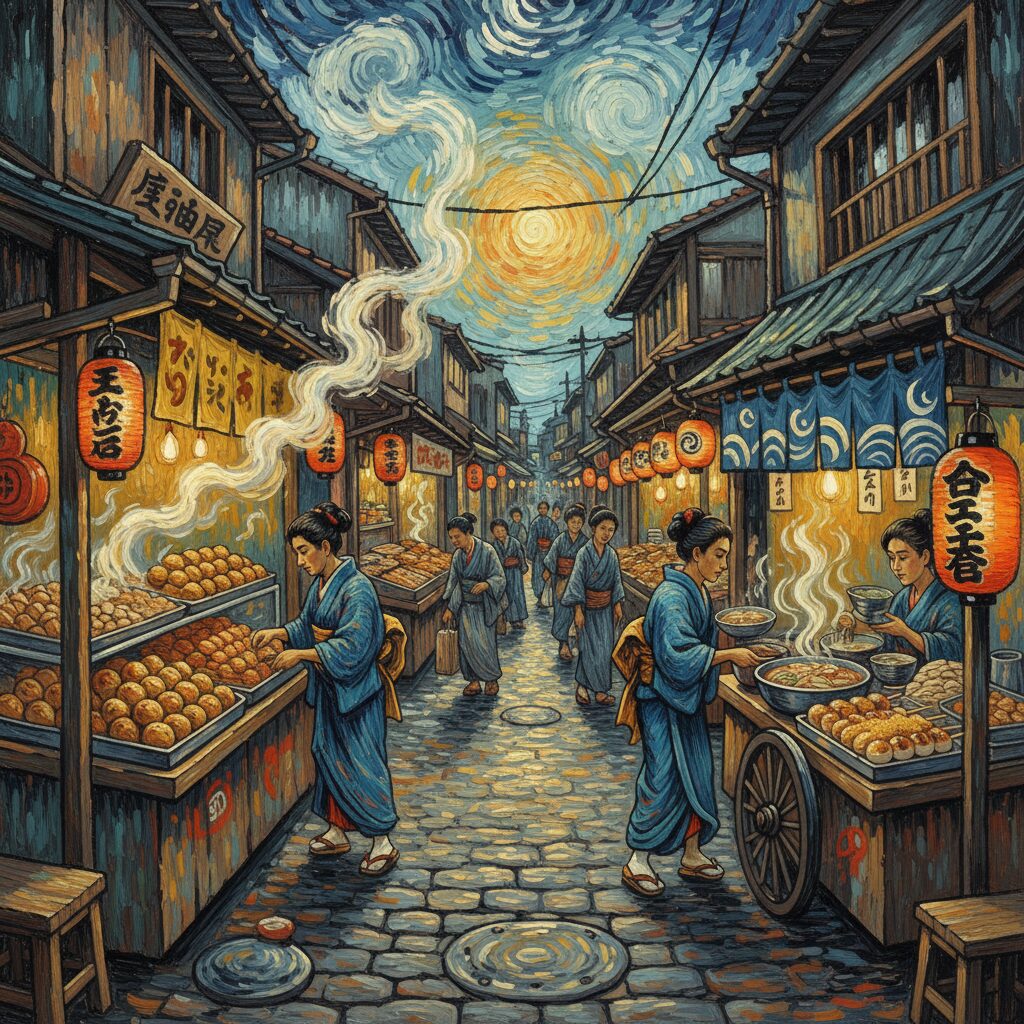
Food is the lifeblood of any Japanese shotengai, and in Karahori, the culinary scene tells a rich story of the neighborhood’s history. Here, you can savor flavors that have nourished generations of Osakans, crafted with skill and dedication that feels increasingly rare today. The street is dotted with heritage businesses, shops run by the same families for decades, their identities closely tied to a single perfected product. There is the tofu maker’s shop, opening in the early morning hours. The air around it is warm and fragrant with the sweet scent of soybeans. Inside, the master crafts blocks of silky tofu, thick slabs of fried aburaage, and creamy soy milk, all sold fresh to loyal customers who wouldn’t consider buying their tofu elsewhere. A few doors down, the kamaboko shop specializes in artisanal fish cakes, displayed like jewels in a chilled case. Further along, a venerable kombu (kelp) merchant offers a dazzling variety of dried seaweed, essential for the dashi broth foundational to Japanese cuisine. The owner explains the subtle differences between varieties from Hokkaido with the expertise of a master sommelier. And, of course, there are prepared food vendors, the sozai-ya, whose counters are filled with a colorful array of daily dishes: glistening potato salads, savory simmered vegetables, golden-fried croquettes, and grilled fish. These shops are vital to local residents, providing the essentials for home-cooked meals. Yet Karahori’s food culture is not stuck in the past. Interwoven with this traditional fabric are the new flavors brought by the neighborhood’s revival. Hidden in a renovated nagaya, you might find a chic bakery producing exquisite sourdough bread and delicate French pastries. Around the corner, a cozy, standing-room-only coffee bar serves single-origin pour-overs with great care. These new establishments do not clash with the old; they complement them, offering a different kind of daily ritual—a spot for morning coffee or an afternoon treat—and drawing a fresh crowd to the neighborhood, ensuring its ongoing vibrancy. The best way to experience Karahori’s food culture is to graze. Don’t settle for one restaurant. Instead, embrace the spirit of kuidaore—Osaka’s famed passion for eating—and sample a bit of everything. Buy a single croquette at one shop, a sweet daifuku mochi at another, and a bag of freshly roasted tea at a third. Sit on a bench in a small local park and create your own impromptu feast. This is the most genuine way to taste the spirit of the place—a delightful blend of tradition and innovation, a meal that tells the story of a neighborhood that has perfected the art of survival.
Practical Navigation: Access and Insider Tips
Despite its old-world charm, Karahori is surprisingly easy to reach from the main hubs of modern Osaka. Its location makes it an ideal half-day excursion, providing a perfect complement to the city’s more popular and crowded attractions. The easiest way to get there is by subway. The shopping street is situated almost exactly between two stations on different lines. Tanimachi 6-chome Station, served by the purple Tanimachi Line and the light green Nagahori Tsurumi-ryokuchi Line, is perhaps the most common starting point. Exits 3 or 4 put you just a short walk from the eastern end of the main arcade. Alternatively, Matsuyamachi Station on the Nagahori Tsurumi-ryokuchi Line is at the western end of the street, known for its concentration of traditional doll and wholesale fireworks shops. Arriving at one station and leaving from the other offers a pleasant, linear way to explore the entire arcade and its surroundings. Karahori is also within a reasonable walking distance—about 20 to 25 minutes—from the southern part of Osaka Castle Park. This makes it a great follow-up after a morning spent exploring the castle, smoothly transitioning from Osaka’s grand feudal past to its more intimate modern social history. The best time to visit is during daylight hours, from late morning to late afternoon, when the shotengai is most vibrant, with shops open and local life buzzing. A weekday visit provides a more authentic, less crowded experience, whereas weekends are livelier, attracting more visitors from across the city. Keep in mind that, like many traditional shopping streets, many small, family-run shops close one day a week, often on Wednesday or Thursday, so it’s wise to remain flexible with your plans. For first-time visitors, a few tips can enhance the experience. First, wear comfortable shoes. The true joy of Karahori lies in walking and wandering, and you’ll cover more ground than expected while exploring the charming side alleys. Second, bring enough cash. Although some newer boutiques and cafes accept credit cards, many older, traditional vendors operate on a cash-only basis. Having small bills and coins is especially useful for purchasing inexpensive snacks and goods. Finally, and most importantly, remember you are a guest in a residential neighborhood. Be respectful and considerate. Keep your voice low in the quiet alleys, avoid pointing your camera toward private homes, and always ask permission before taking close-up photos of people or their shops. A smile and a simple gesture of politeness will go a long way in ensuring a positive interaction with the community whose remarkable history you’re there to appreciate.
A Tapestry of Time: Karahori’s Enduring Legacy
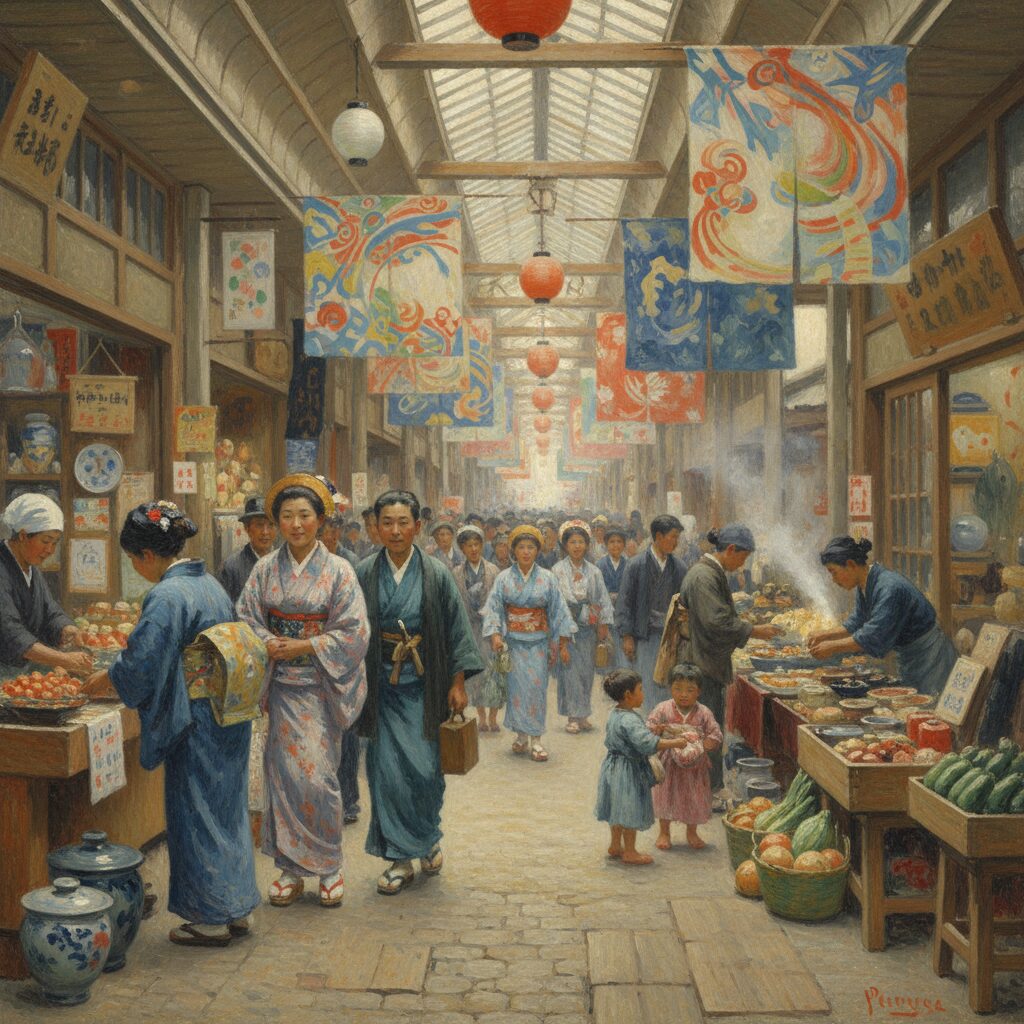
Karahori Shopping Street is much more than a mere collection of old buildings or a charming location for nostalgic photographs. It tells a compelling story of resilience, community, and the delicate balance between past and present. In a nation often driven by relentless modernization, sometimes at the cost of its heritage, Karahori offers a powerful alternative. It proves that preservation need not mean stagnation, and that progress does not require erasure. The legacy of Karahori lives in the stories of its people. It can be seen in the weathered hands of the third-generation rice cracker maker, who continues to use the same roasting methods as his grandfather. It shines in the hopeful eyes of a young designer who has launched her first boutique in a restored machiya, showcasing contemporary creations against a backdrop of century-old wood. It thrives in the daily conversations among neighbors, the shared moments that weave the invisible, unbreakable threads of community. As you leave Karahori and climb the steps back into the subway to re-enter the dazzling chaos of modern Osaka, the contrast is striking. The quiet harmony of the shotengai is replaced by the city’s roar. Yet, the spirit of Karahori remains. It serves as a reminder that beneath the gleaming surface of any great metropolis, stories of survival, pockets of memory, and communities fiercely holding on to their identity endure. Karahori invites you to slow down, look closer, and listen to the whispers of history echoed through its narrow alleys. It offers a journey into the soul of Osaka, a city that, despite the ravages of war and pressures of modernity, has kept a precious piece of its heart beautifully, stubbornly, and triumphantly intact.