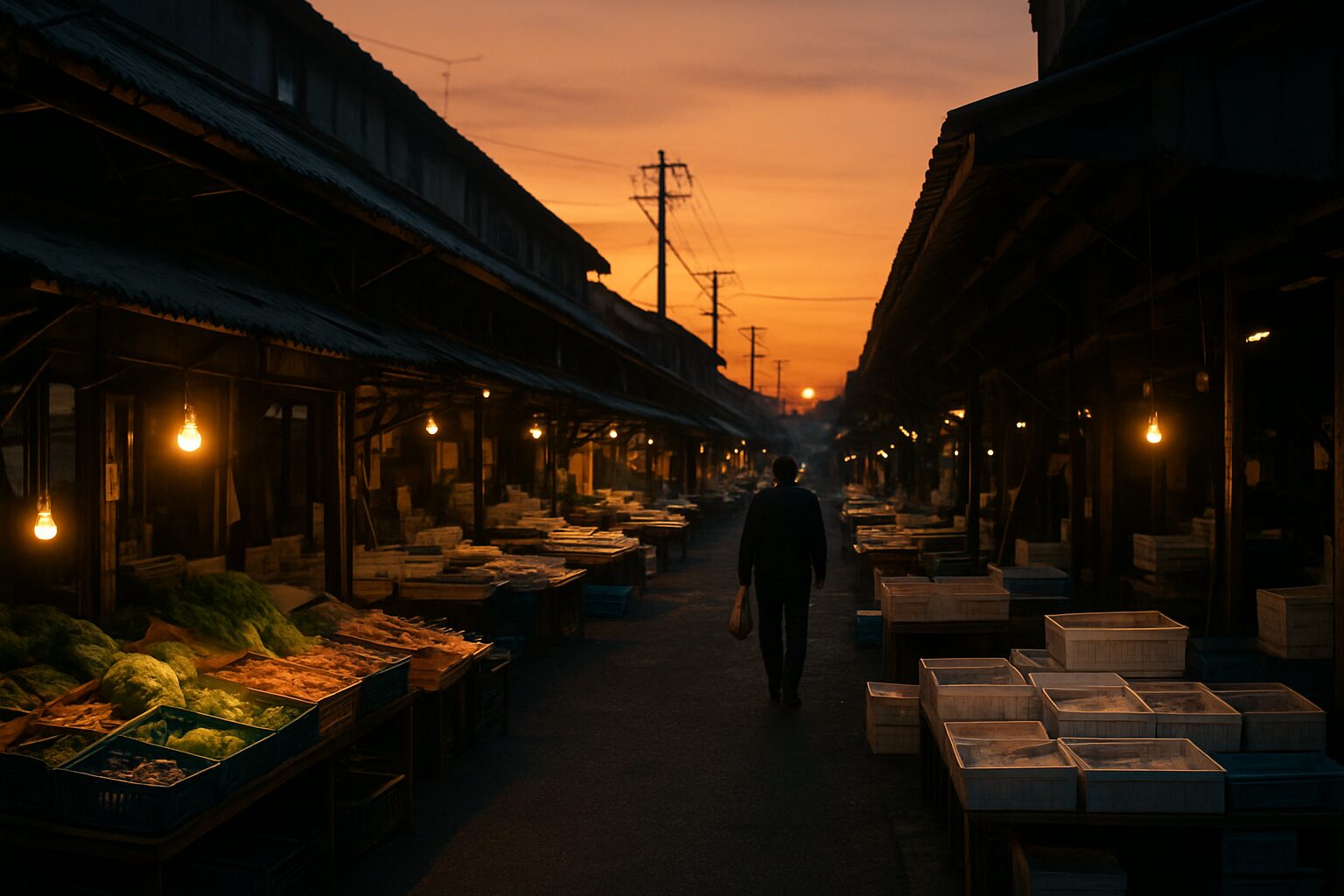
Before the neon signs of Dotonbori have fully dimmed and while the subways still slumber, a different kind of energy begins to pulse in the heart of Osaka. It’s a raw, authentic rhythm, a symphony of rolling carts, booming greetings, and the sharp, clean scent of the sea. This is the daily awakening of the Kizu Wholesale Market, the city’s legendary pantry, a place affectionately known for over three centuries as ‘Osaka’s Kitchen.’ Forget the polished facade of a tourist attraction; this is where the soul of Osaka’s world-famous culinary culture is forged every single morning. It’s a sprawling, vibrant universe of commerce and community, where the city’s top chefs and discerning home cooks come to procure the freshest ingredients imaginable. For the traveler willing to rise with the sun, Kizu Market offers more than just a meal; it offers a profound, delicious immersion into the philosophy of ‘kuidaore’—the noble pursuit of eating until you drop. It’s a chance to taste the ocean’s bounty just hours after it’s been pulled from the water, to witness the passion behind every perfect piece of fish, and to start your day with a breakfast that will redefine your understanding of freshness. This isn’t just about food; it’s about connecting with the very lifeblood of a city that lives to eat.
To delve deeper into the vibrant morning rituals and culinary treasures of this historic market, explore our guide to a morning at Osaka’s Kizu Wholesale Market.
The First Brush with Authenticity

Entering Kizu Wholesale Market at dawn feels like passing through a portal. The cool, quiet pre-morning city streets give way to a humid, lively buzz. Your senses are immediately awakened. The first thing you’ll notice is the floor, constantly damp from melted ice and the frequent washing of stalls, a testament to the ongoing cycle of freshness. It’s best to wear practical, closed-toe shoes; this is a working environment, not a polished department store food hall. The air is thick with a complex briny aroma, the unmistakable scent of the ocean blending with the earthy fragrance of fresh produce and the faint, enticing hint of charcoal grills sparking to life in the distance. The soundscape is a chorus of organized chaos: the gravelly calls of vendors promoting their prized catches, the high-pitched drone of small turret trucks weaving through aisles, the steady thud of skilled hands scaling and filleting fish with precision. It can feel overwhelming at first—a whirlwind of motion and noise. But pause for a moment, step aside, and simply watch. You’ll witness a beautiful, intricate dance. You’ll see chefs from Michelin-starred restaurants pointing at a particular flounder, their eyes filled with intense focus. You’ll see elderly locals shopping for their family’s dinner, sharing a laugh with vendors they’ve known for decades. This isn’t a show for tourists; it’s the genuine, unfiltered daily rhythm that sustains Osaka’s culinary fame. The best way to explore this space is with respectful curiosity. Keep your eyes open, avoid blocking busy workers, and let the market’s energy guide you. This initial immersion is vital, seasoning your appetite with a deep appreciation for the journey your breakfast is about to take.
The Quest for the Perfect Seafood Bowl
While the market itself is a spectacle, the true pilgrimage for most visitors is to one of the small, unassuming eateries hidden within its maze-like alleys. These are the revered spots where the market’s treasures are transformed into breakfast masterpieces. The highlight of a Kizu Market morning is undeniably the ‘kaisendon,’ a simple bowl of pristine, warm sushi rice topped with a mosaic of freshly sliced raw seafood. Calling it merely a ‘seafood bowl’ does it a disservice. It is a work of art, a celebration of natural flavors, and an intimate connection to the sea. As you near the restaurants, vibrant photographs of their dishes serve as a helpful guide for non-Japanese speakers. Lines often form early, especially at the more famous spots, but the wait is part of the experience, building anticipation with every tempting aroma wafting from the kitchen. Inside, the spaces tend to be cramped and bare, focused entirely on the food. You might find yourself sitting elbow-to-elbow with a fishmonger on break or another curious traveler, all united in the shared quest for culinary bliss. The menu, while often featuring grilled fish sets and tempura, centers around the kaisendon. The variety is astounding. There’s the ‘maguro-don,’ showcasing different cuts of luscious bluefin tuna, from the lean, ruby-red ‘akami’ to the decadently marbled ‘otoro’ that melts on your tongue like a savory snowflake. You might opt for a bowl overflowing with plump, sweet ‘botan ebi’ (spot prawns), glistening orange pearls of ‘ikura’ (salmon roe) that burst with oceanic flavor, and creamy, golden tongues of ‘uni’ (sea urchin) that evoke the sweet, mysterious depths of the ocean. Each ingredient shines, its quality impeccable. The seafood is sliced to order, preserving its perfect texture and temperature. It is artfully arranged over a bed of expertly prepared sushi rice, which itself is crucial—slightly warm, subtly seasoned with vinegar, offering the ideal contrast to the cool, rich seafood. A small dish of premium soy sauce and a mound of freshly grated wasabi are provided, but use them sparingly. The aim is to enhance, not overshadow, the delicate, sublime flavors of the fish. That first bite—the blend of fresh, tender seafood, perfectly seasoned rice, and a touch of wasabi—is a moment of pure, unfiltered joy. It’s clean, vibrant, and tastes of the morning itself.
Beyond the Bowl: Exploring the Market’s Depths
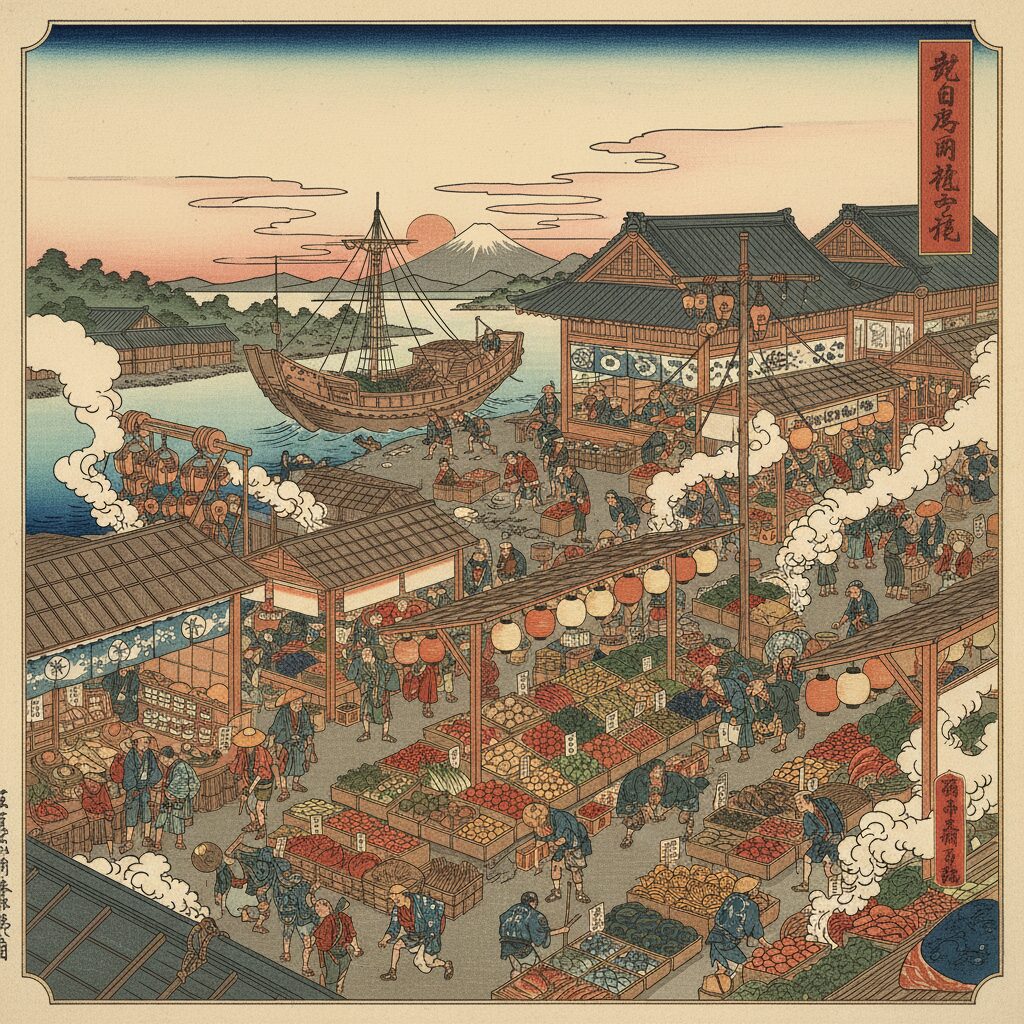
Satisfied and content after your splendid breakfast, the adventure is far from finished. Now is the ideal moment to explore the rest of what Kizu Market has to offer. To truly grasp its reputation as ‘Osaka’s Kitchen,’ you must venture beyond the seafood stalls. A slow, leisurely stroll through the covered aisles unveils the full range of Japanese cuisine’s fundamental ingredients. You’ll discover entire sections devoted to produce, where pyramids of seasonal fruits and vegetables are stacked with geometric precision. Depending on the time of year, you might find giant, perfectly white ‘daikon’ radishes, boxes of incredibly sweet strawberries from Nara, or rugged, flavorful ‘gobo’ (burdock root). These are no ordinary supermarket vegetables; they represent the pinnacle of their kind, destined for the city’s finest kitchens. Then there are the specialists. Spot the ‘tsukemono’ (pickle) vendor, where you can admire the vast variety of preserved vegetables stored in giant wooden barrels, ranging from crisp pickled cucumbers to vibrant pink ‘gari’ (pickled ginger) and deeply savory ‘narazuke.’ These pickles are an essential element of a traditional Japanese meal, providing a sharp, acidic contrast that refreshes the palate. Seek out the tofu maker, where you’ll see blocks of fresh, silken tofu gently quivering in cool water, far removed from the vacuum-packed varieties found elsewhere. You’ll also find stalls selling ‘kamaboko’ (cured fish cakes), some intricately shaped and colored, others simple and rustic. Vendors specializing in ‘konbu’ and ‘katsuobushi’—the dried kelp and bonito flakes that form the base of ‘dashi,’ the fundamental soup stock at the heart of Japanese cooking—are also present. Engaging with these vendors is a delight. Even with a language barrier, a curious smile and a pointing finger can lead to wonderful discoveries. Many will offer you a small taste. This exploration transforms your understanding of the food you just enjoyed. You begin to see the kaisendon not as a standalone dish, but as the culmination of a vast and interconnected network of dedicated artisans and pristine ingredients. It deepens your appreciation and connects you to the culinary culture on a much more intimate level. For a special experience, plan your visit for the second or last Saturday of the month. This is when the ‘Kizu Asaichi’ (Kizu Morning Market) takes place. The atmosphere becomes even more festive, with special sales, lively tuna filleting demonstrations, and auctions open for the public to watch. It’s a fantastic opportunity to see the market at its most dynamic and perhaps grab a unique souvenir or a delicious snack to take home.
A Local’s Guide to a Flawless Visit
Exploring a bustling place like Kizu Market for the first time can feel overwhelming, but a few simple tips will help ensure your visit is smooth, respectful, and thoroughly enjoyable. Above all, timing is crucial. The market’s pace follows the sun. While the main wholesale activities begin in the early hours before dawn, the best time for visitors looking for breakfast and a lively scene is between 7:00 AM and 10:00 AM. Arriving then lets you see the market in full action without interfering with the busiest commercial exchanges of early morning. By 11:00 AM, many stalls start closing up, and the vibrant atmosphere begins to fade. Getting there is surprisingly easy. The market is just a short walk from several key subway stations. Daikokucho Station, served by the Midosuji and Yotsubashi lines, is the closest, only a five-minute walk away. Alternatively, a pleasant 10-to-15-minute stroll from the bustling Namba Station also brings you right to the market. This convenient location makes Kizu Market an easy stop on any itinerary focused on southern Osaka. One essential tip is to bring Japanese Yen in cash. Kizu Market is a stronghold of traditional trade. Small family-run stalls and tiny eateries rely heavily on cash payments. While some larger vendors may accept cards, it’s wiser—and more respectful—to assume they don’t. This also speeds up transactions and keeps lines moving smoothly. Keep in mind that you are a guest in a fast-paced, professional setting. Those working here are focused on their tasks, so their efficiency comes first. Be aware of your surroundings: aisles are busy with handcarts, turret trucks, and people carrying heavy loads. Stay to the sides, avoid blocking pathways to take photos, and always yield to the flow of market traffic. A little awareness goes a long way in showing respect and ensuring your safety. Lastly, feel free to be adventurous, but don’t feel pressured. If a bowl overflowing with sea urchin and exotic shellfish seems too daring for your first visit, there are plenty of great alternatives. A simple grilled fish set, called ‘yakizakana teishoku,’ is a classic breakfast choice—featuring a perfectly grilled seasonal fish, a bowl of rice, miso soup, and pickles. It’s comforting, delicious, and an authentic taste of a traditional Japanese morning. The key is to embrace the experience, follow the locals’ lead, and let your curiosity—and appetite—guide you.
The Lingering Taste of an Osaka Morning

As you finally step back onto the city streets, leaving behind the lively buzz of the market, the experience stays with you. It remains not just as a pleasant memory of a delicious meal, but as a deeper insight into Osaka itself. You’ve seen firsthand the passion, dedication, and community that form the foundation of the city’s ‘kuidaore’ spirit. That bowl of kaisendon was more than just raw fish on rice; it told the story of a fisherman’s pre-dawn journey, a vendor’s discerning eye, and a chef’s delicate touch. The market brings the farm-to-table (or, in this case, sea-to-table) concept to life in its most genuine and straightforward form. A visit to Kizu Market is a sensory reset. It recalibrates your palate to the true taste of freshness and reminds you of the simple, profound joy of eating food that is deeply connected to its origin. It’s a reminder that the best culinary experiences often come not from the most extravagant settings, but from the most authentic ones. So when you plan your trip to Osaka, make sure to start early. Set your alarm, skip the hotel buffet, and make your way to ‘Osaka’s Kitchen.’ It’s a morning that will awaken all your senses, fill your stomach with unmatched deliciousness, and connect you to the vibrant, beating heart of this remarkable city. It’s an experience that truly nourishes both body and soul, leaving you with a taste of Osaka you’ll carry long after you’ve gone.