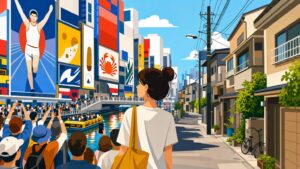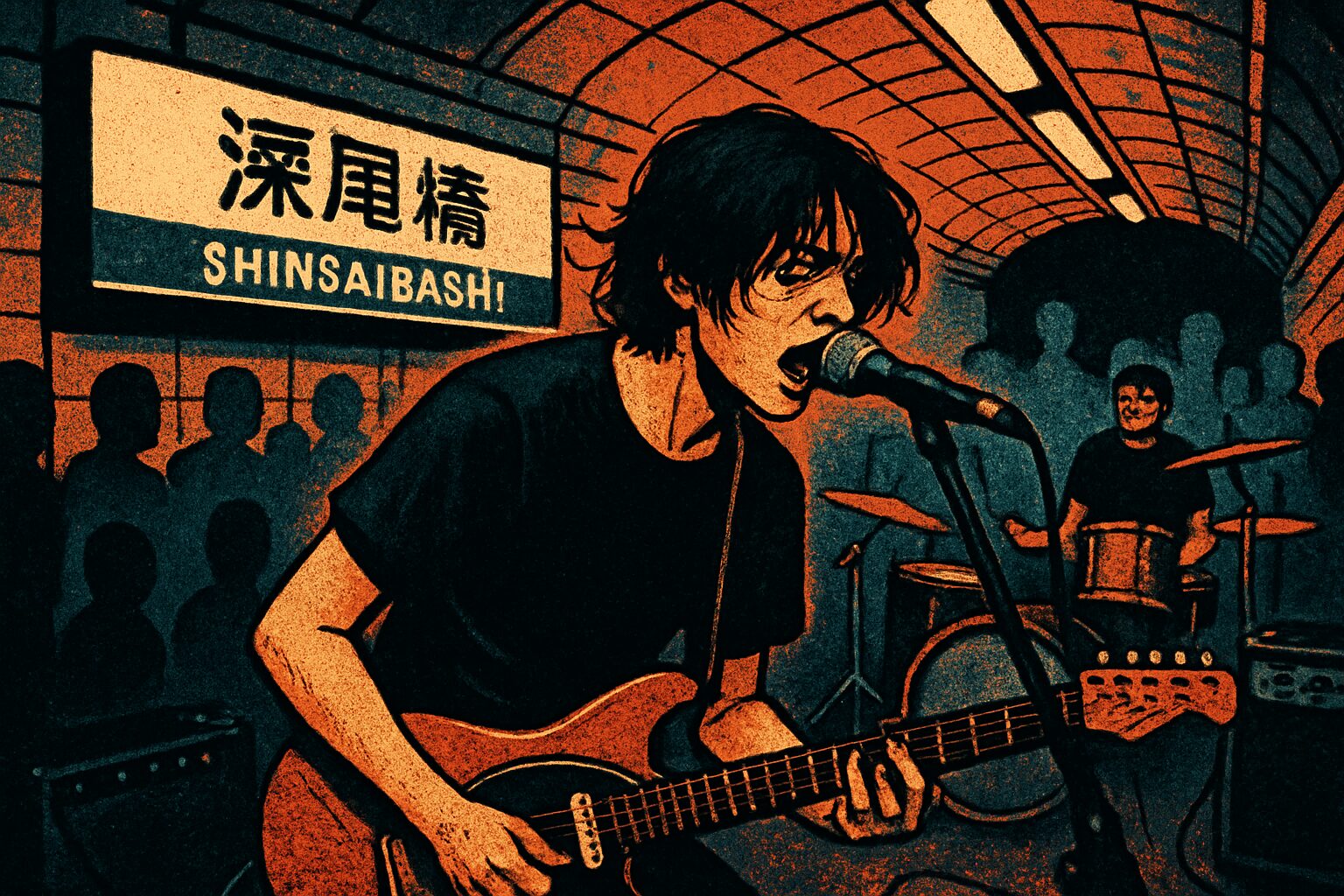
Osaka. The name itself crackles with an energy distinct from any other city in Japan. While Tokyo projects an image of sleek, futuristic order, Osaka thrums with a raw, unapologetic, and profoundly human rhythm. It is a city built on trade, comedy, and an insatiable appetite for both food and life, a place where the expression ‘kuidaore’—to eat oneself into ruin—is a badge of honor. At the very core of this vibrant metropolis lies Shinsaibashi, a district that serves as the city’s pulsating heart. By day, its covered shopping arcade is a river of humanity flowing past high-end boutiques and legacy department stores. By night, the side streets and alleys ignite with neon, and a different kind of energy begins to flow. This is the energy of youth, of rebellion, of art, and most importantly, of music. Shinsaibashi, particularly its western pocket known as Amerikamura, is the undeniable epicenter of Osaka’s youth culture and, for those willing to look beyond the dazzling surface, home to one of Japan’s most potent and authentic underground music scenes. Forget the algorithm-curated playlists and stadium tours; this is a world of dimly lit basements, sweat-drenched walls, and sonic exploration that runs the gamut from face-melting hardcore punk to hypnotic deep techno, from jangly indie rock to challenging experimental noise. This is where the city’s true sonic soul resides, nurtured in venues that are less like concert halls and more like sacred temples dedicated to sound. This guide is your key—an invitation to descend the staircases, push past the heavy doors, and immerse yourself in the vibrant, living culture of Shinsaibashi’s underground. It’s a journey into the heart of Osaka’s creative pulse, a world that rewards the curious and the adventurous with experiences that are intense, unforgettable, and utterly real.
After exploring the underground beats, continue your sensory journey through Osaka by discovering the electric energy of Dotonbori after dark.
The Electric Veins of Amerikamura: Where It All Begins
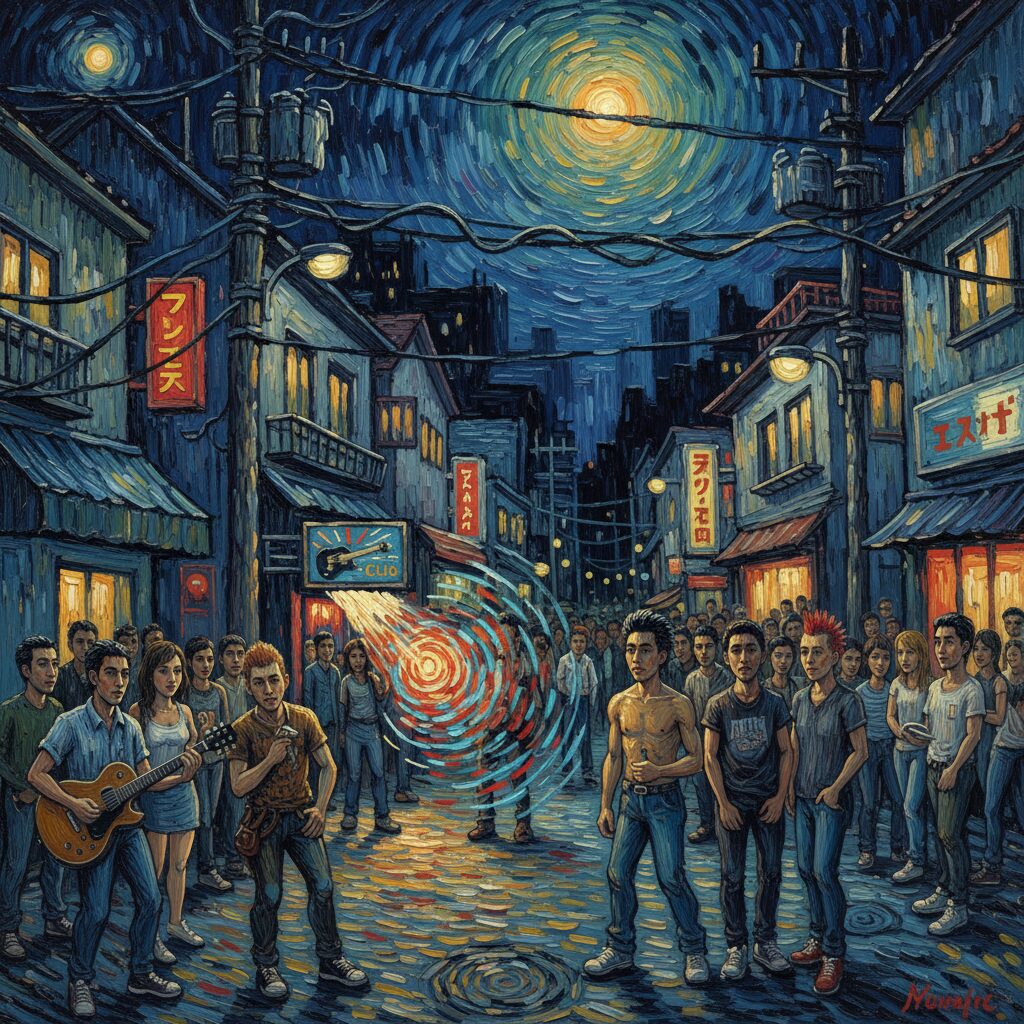
To truly grasp the music of Shinsaibashi, you must first explore the streets of Amerikamura, or ‘Amemura’ as locals affectionately call it. This lively, chaotic, and eternally youthful neighborhood is the rich soil from which the city’s subcultures flourish. Its history begins in the late 1960s and early 1970s, a time of profound cultural transformation in Japan. A cluster of warehouses and vacant lots was reinvented by visionary entrepreneurs who started importing used clothing, vinyl records, surfboards, and other cultural artifacts straight from the West Coast of the United States. This infusion of American counterculture essence gave the area both its name and identity. It swiftly attracted artists, designers, musicians, and anyone feeling constrained by mainstream culture. Today, that heritage is evident everywhere. The buildings serve as canvases for sprawling psychedelic murals and striking graffiti. The streetlights, famously shaped like human figures, watch over the scene below. Sankaku Koen, or Triangle Park, functions as the neighborhood’s central plaza—a concrete gathering place where skaters practice kickflips, budding musicians strum guitars, and fashion tribes meet to see and be seen. The air here is rich with the aroma of incense from vintage shops, the sizzle of takoyaki grills, and the layered soundscape of hip-hop blasting from a sneaker store, punk rock riffs escaping a basement bar, and the hum of countless conversations. This is not a polished, curated depiction of youth culture; it is messy, loud, and vibrantly alive. The fashion reflects this spirit of individuality—a mix of vintage treasures, DIY alterations, and avant-garde Japanese design. It is in this dynamic, visually stimulating setting that Shinsaibashi’s underground music venues are nestled. They are not separate from Amemura; rather, they are a vital part of its ecosystem, drawing energy from the streets and, in turn, providing the soundtrack to the lives there. Finding these venues is part of the experience. They rarely occupy street level, often tucked away in basements or upper floors of unassuming buildings, marked only by a small sign or a string of band posters taped to a wall. This physical descent or ascent is symbolic; you leave behind the commercial street world and enter a space devoted purely to artistic expression.
Legendary Live Houses: The Cradle of Osaka’s Sound
At the heart of Japan’s independent music infrastructure lies the distinctive institution known as the ‘live house’ or ‘raibu hausu’. These venues are far more than just bars with a stage or small concert halls. They are purpose-built spaces, carefully crafted to provide an optimal sonic experience and serve as the lifeblood of the underground music scene. These places nurture emerging talent, draw devoted fans like pilgrimage sites, and function as community hubs where music scenes are born and thrive. Shinsaibashi boasts some of the country’s most renowned live houses, each possessing a unique character, rich history, and specific sonic focus. Entering one means engaging in a uniquely Japanese ritual of music appreciation—a powerful, intimate communion between artist and audience. These venues form the foundational pillars of the Shinsaibashi music scene, each representing a chapter in Osaka’s long and vibrant musical history.
Shinsaibashi SUNHALL: An Institution of Sound
If the walls of SUNHALL could speak, they would roar, sing, and shout stories from decades of Japanese music history. Situated deep in the basement of the Shimizu Building, this venue is a true institution, a name that commands respect across the nation’s music community. Discovering it for the first time feels like stumbling upon a secret. You pass street-level shops, find the correct entrance, and descend a long concrete staircase. With every step, the muffled thump of bass becomes clearer, the outside world fades away, and anticipation grows. Upon entering the main hall, the sheer size of the space is striking. It’s a vast, cavernous room painted functional black, designed to keep the stage as the central focus. The sound system is formidable, capable of delivering everything from the delicate nuances of experimental electronic acts to the full-throttle power of doom metal bands with crystal clarity and bone-shaking impact. SUNHALL’s legacy is built on its versatility. Over time, its stage has hosted legendary Japanese punk bands, pioneering noise artists, international indie sensations on their first Japan tours, and countless techno, reggae, and hip-hop nights. It adapts to each lineup like a chameleon—one night a hardcore festival with moshers thrashing on the floor, the next transformed into an all-night rave with mesmerizing visuals and a crowd entranced by hypnotic techno beats. This adaptability has ensured its survival and continued significance. Visitors should plan ahead by checking the schedule, usually available in Japanese but often navigable with browser translation, to explore upcoming events. Attending a show here is more than just seeing a band; it’s a tribute to a venue that has been a crucible for Osaka’s sound— a dark, resonant chamber where musical history is continuously made.
ANIMA: The New Wave of Indie
While SUNHALL symbolizes the scene’s deep roots, ANIMA, situated inside the Amerikamura landmark BIGSTEP shopping complex, represents its vibrant present and future. As a relatively new player compared to some of the area’s seasoned venues, ANIMA has swiftly become one of western Japan’s premier locations for contemporary indie rock, alternative, and pop music. Its location within a popular building makes it more accessible to newcomers than many of the more hidden basement spots. However, don’t be deceived by its convenient location; the underground spirit remains strong here. The venue is modern and professionally managed, featuring clear sightlines and a crystal-clear sound system tailored to the nuanced, melodic, and intricate music performed by the bands. ANIMA is the ideal place to discover Japan’s next big indie acts. Its booking policy is sharp and forward-thinking, regularly showcasing rising stars on the brink of breakthrough alongside established independents with loyal followings. The atmosphere is one of passionate yet respectful fandom. Audiences listen intently, erupt into applause between songs, and move with an infectious collective energy. It’s less physically intense than a punk show but no less fervent. The bond between performers and crowd is palpable in this perfectly sized room—large enough to create a powerful atmosphere but intimate enough to see musicians’ expressions and feel the energy of their performance. For travelers seeking a glimpse into Japan’s evolving alternative music scene, an evening at ANIMA is essential, offering a polished yet authentic view of the new wave of artists reshaping the country’s musical landscape.
Pangea: The Intimate Experience
For those craving raw, unfiltered live music in its most immediate form, Pangea is the venue to visit. This smaller space is a long, rectangular room where the boundary between stage and audience barely exists. The experience is visceral and intense. Here, you’re not just watching a band—you’re in the same room, sharing the air and feeling the amplifier vibrations resonate through your body. Pangea is a sanctuary for high-energy bands—garage rock, punk, edgy indie rock, and other genres best experienced up close. The name, evoking the unified supercontinent, feels fitting; for the duration of a set, band and audience merge into a single, sweaty, moving entity. The sound is loud, the space tight, and the atmosphere electric. From just feet away, you can watch a guitarist’s fingers fly across the fretboard, see the drummer’s sweat fly with every beat, and join a communal chorus with hundreds of passionate fans. Known for excellent curation, Pangea books local Osaka legends as well as touring acts from across Japan and sometimes abroad. Music lovers come here to find new favorites, confident that any band on the Pangea stage has been chosen for their talent and live energy. For first-timers, a night at Pangea delivers the quintessential Japanese live house experience at its most potent. Be ready to stand, be jostled, and become fully immersed. It’s a reminder that, at its core, music is a physical, communal experience—and few venues facilitate that connection as powerfully as Pangea.
Hokage: The Bastion of Hardcore and Punk
Descending into Hokage feels like entering another realm—a raw, underground sanctuary resisting the polished world above. Named ‘Fire Shadow,’ this legendary venue epitomizes Osaka’s hardcore, punk, metal, and grindcore scenes. It’s not for the faint-hearted. Here, primal sonic fury finds its release within a concrete bunker where the city’s heaviest and fastest bands unleash their energy. Upon entry, the atmosphere is overwhelming. The air is dense. Walls plastered with layers of old flyers and stickers chronicle the countless bands that have bled, screamed, and sweated on this small stage. Hokage embodies the DIY spirit, devoid of frills, with a singular focus on music in its most extreme and cathartic form. The sound is punishingly loud, a physical wave felt as much as heard. Bands here are masters of their craft, delivering tight and powerful performances in genres demanding technical prowess and boundless energy. The audience is integral to the experience; mosh pits erupt, stage dives erupt frequently, and the energy between performers and crowd creates a violent yet beautiful spectacle. Amid the chaos, a strong sense of community and respect prevails. The Hokage scene thrives on a shared passion for music far outside the mainstream. It warmly welcomes anyone who values the intensity and honesty of heavy music. Visiting Hokage is more than a concert; it’s a cultural immersion into a dedicated, vibrant subculture and a fiery testament to the enduring spirit of punk rock in Osaka’s underground.
Late-Night Rhythms: Shinsaibashi’s Premier Clubs
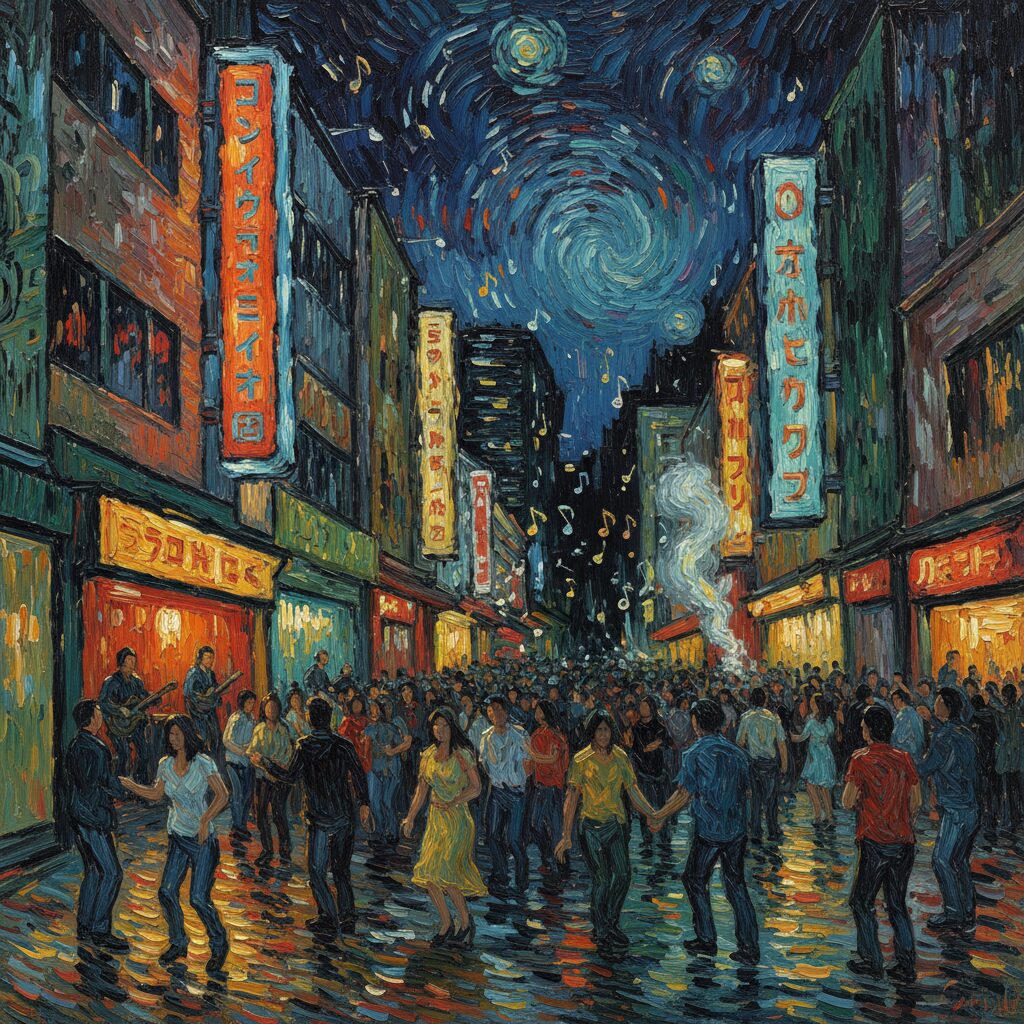
As live houses begin to close, usually around 10 or 11 PM, a new rhythm starts to pulse through Shinsaibashi. The spotlight shifts from bands to DJs, from the intense focus of a 45-minute set to the endurance of an all-night dance party. Osaka boasts a rich and renowned history in club culture, especially in electronic music, with Shinsaibashi’s clubs leading the charge. These venues are crafted for full immersion, where world-class sound systems, sophisticated lighting, and expertly curated music merge to create transcendent experiences. From expansive multi-floor complexes to intimate, sound-centric hideouts, the district offers a wide variety of nightlife options for those eager to dance until dawn.
Club Joule: The Multi-Level Giant
Club Joule is a giant and a cornerstone of Osaka’s nightlife scene for years. This multi-story venue is a maze of dance floors, bars, and lounges, each level presenting a unique world to explore. Its vast size allows it to cater to diverse musical preferences, often within the same night. The main floor is a huge hall with a soaring ceiling, a large stage, and a sound system powerful enough to make your whole body resonate. Here, major international DJs spin techno and house, or the club hosts grand hip-hop parties featuring live MCs and dance crews. The lighting and visual production are exceptional, creating a festival-like atmosphere contained within the club itself. But the experience continues beyond that. Head upstairs to find another room dedicated to drum and bass, a cozy bar with local DJs playing disco and soul, or a rooftop terrace where you can catch your breath while enjoying city lights. Joule’s programming is ambitious, regularly featuring acclaimed artists from Berlin, Detroit, London, and beyond, making it a prime destination for catching global headliners. The crowd is diverse, blending devoted music fans, international visitors, and weekend revelers, all united in losing themselves in the music. A night at Joule is a full-sensory spectacle—a place to get lost, explore different sounds, and join a massive collective celebration. Be sure to check their schedule, as one night might host a psy-trance party while the next focuses on Japanese pop. It’s a powerhouse truly offering something for everyone.
Circus Osaka: The Epicenter for Underground Electronic Music
While Joule impresses with size and spectacle, Circus Osaka is about focus and quality. This club has earned a stellar reputation both domestically and internationally as the top destination for discerning fans of underground electronic music. If you prefer cutting-edge techno, house, bass music, or experimental sounds, Circus is your haven. The club itself embodies a ‘music-first’ ethos. It is a dark, rectangular room with a low ceiling, minimal decor, and one of the best-tuned sound systems in the city. Its layout is designed to focus all attention on the DJ booth and dance floor—no VIP sections or distractions; the entire space is dedicated to creating the perfect listening and dancing environment. Circus’s booking policy is impeccable, consistently bringing in highly respected, forward-thinking DJs and producers from around the globe—artists revered by music connoisseurs. It also serves as a crucial platform for Japan’s exceptional underground talent. A night at Circus is a sonic education. The crowd is knowledgeable and appreciative, made up of people attending specifically for the artist and the music. The atmosphere favors deep, hypnotic immersion over wild partying. People dance with eyes closed, lost in the intricate rhythms and textures streaming from the speakers. It’s a place for true music lovers, a community hub celebrating electronic music as a serious art form. For any traveler tuned into global electronic music culture, a visit to Circus Osaka is not just recommended; it’s essential.
GHOST ultra lounge: A Glamorous Vibe
Offering a distinct but equally vibrant slice of Shinsaibashi nightlife, GHOST ultra lounge attracts a crowd that loves hip-hop, R&B, and the sleek energy of a modern city club. Whereas venues like Hokage and Circus emphasize a gritty, underground aesthetic, GHOST embraces a polished, stylish vibe. Its interior is modern and chic, featuring sophisticated lighting, comfortable lounge areas, and a dance floor always packed with a young, energetic, and fashion-savvy crowd. The music policy is a major draw. GHOST is one of the city’s most reliable spots for high-quality hip-hop, from classic ’90s jams to the freshest trap and drill tracks, mixed expertly by talented resident and guest DJs. The energy remains consistently high, fueled by a crowd that knows the lyrics to every song and is there to dance and socialize. It serves as a more accessible entry point into Osaka’s club scene for those who might find a dedicated techno club intimidating. The atmosphere is fun, lively, and unpretentious, yet carries an unmistakable urban glamour. It reflects the close ties between music, fashion, and street culture defining the Shinsaibashi area. GHOST is a place to see and be seen, to enjoy familiar anthems in a high-energy setting, and to experience the more mainstream side of Osaka’s lively nightlife. While it may not be ‘underground’ in the same way as a hardcore punk venue, it remains an authentic and hugely popular part of the local cultural fabric, embodying the pulse of the city’s contemporary urban scene.
The Culture of the Scene: More Than Just Music
To truly enjoy a night out in Shinsaibashi’s underground scene, it helps to grasp some of the cultural nuances that make Japan’s music world distinctive. These places are more than just venues; they function as self-contained ecosystems with their own rules, rituals, and economic systems. Appreciating these finer details can shift your perspective from that of a curious onlooker to an engaged participant, deepening your bond with the music and the community surrounding it.
The “Live House” System
One of the first things visitors will notice at any live house is the mandatory drink ticket system. Upon paying the entry fee, you will almost always be required to pay an extra charge (usually around 600 yen) in exchange for a small token or ticket. This ticket can then be redeemed at the bar for a single drink. This is not an optional up-sell; it is a core element of the live house’s business model. It ensures a minimum revenue stream for the venue, helping them cover operating costs and maintain a platform for non-mainstream artists. Rather than seeing it as an additional fee, consider it part of your ticket price that includes a drink. It’s a simple system but essential to the financial health of these important cultural spaces. Another, less obvious, feature is the ‘noruma’ system. Often, especially at smaller local shows, bands must meet ticket sales quotas—they are responsible for selling a certain number of tickets to secure their spot on the lineup. While this can create pressure on artists, it also builds a strong sense of community. Bands depend on their friends and dedicated fans for support, fostering a close-knit and mutually supportive scene. When you buy tickets from a band or attend their shows, you are directly helping them continue making music.
Navigating the Night: Tips for First-Timers
Finding your way through Shinsaibashi’s musical labyrinth can be an adventure. Many venues are notoriously tricky to locate for newcomers. They are often hidden in basements or on upper floors of multi-use commercial buildings, with subtle entrances. Your best tools are Google Maps and sharp observation. Look for sandwich boards on the sidewalk, posters on walls, or small signs beside elevators and staircases. Don’t hesitate to peek inside buildings and check directories. The search is part of the fun. Timing matters as well. Live house shows in Japan typically start and end much earlier than in many Western countries. The first band may begin as early as 6:30 or 7:00 PM, with the event finishing by 10:30 PM, largely to accommodate last train times. Clubs, however, are a different story—they usually open around 10:00 PM but don’t fill up until after midnight, often staying lively until 5:00 AM or later. Always verify event schedules. Although Japan is becoming increasingly cashless, cash still rules in the underground scene. Many smaller venues and especially merchandise tables are cash-only. It’s wise to carry enough yen. Lastly, a word on etiquette. Japanese audiences are known for their respectfulness, but this doesn’t mean they are passive. At rock shows, expect high-energy moshing and crowd surfing. In clubs, people come to dance. The key is mindfulness—be aware of those around you, and if you’re not taking part in the mosh pit, give space to those who are. Above all, show your appreciation for the artists. Music is a universal language, and your enthusiastic presence will be warmly welcomed, even if you don’t speak a word of Japanese.
Fueling the Fire: Pre-Gigs and Late-Night Eats
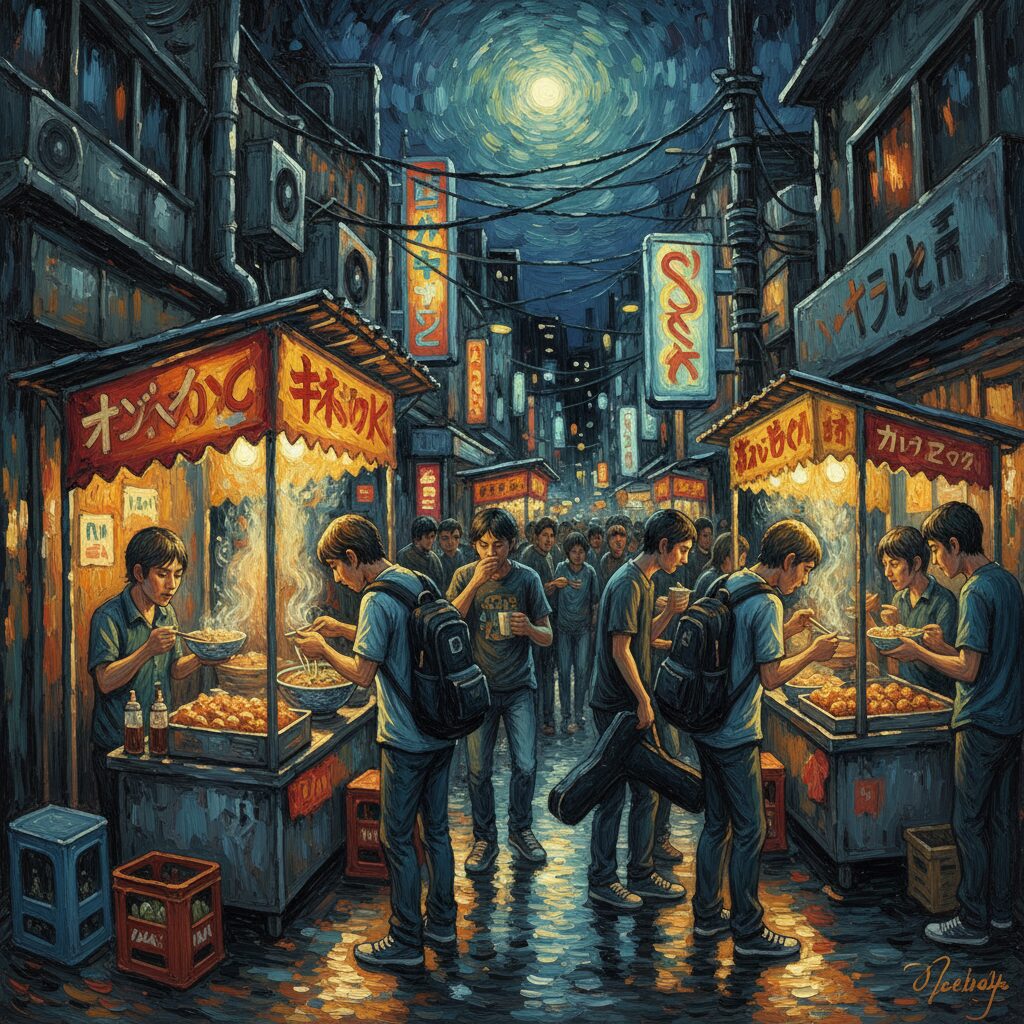
A night of musical discovery in Shinsaibashi is deeply intertwined with the area’s renowned food culture. The two coexist symbiotically; the energy from the food fuels the night, while the night’s hunger is satisfied by the endless culinary choices. Before catching an early live show, Amerikamura is the ideal spot for a quick, affordable, and tasty meal. You won’t walk ten feet without encountering a takoyaki stand, where octopus-filled batter balls are grilled to perfection and topped with savory sauce and mayonnaise. This iconic Osaka street food makes for the perfect pre-gig snack. For something heartier, seek out a local okonomiyaki restaurant, where you can watch chefs prepare savory, cabbage-stuffed pancakes on a large teppan grill right before your eyes. The area is also filled with small, independent curry houses, ramen shops, and burger joints catering to the tastes of local youth. After the clubs close in the early morning hours, a different food scene comes alive. This is when 24-hour ramen chains and beef bowl eateries transform into havens for hungry dancers and musicians. There’s a unique camaraderie in slurping a steaming bowl of noodles at 5 AM, surrounded by fellow night owls. The bright lights of Dotonbori are also just a short walk away, serving iconic late-night dishes amid its famous glowing billboards. Incorporating these food experiences into your night out not only satisfies your appetite but also enriches your immersion in the local culture, turning the whole evening into a holistic sensory journey through Osaka’s vibrant street life.
The Enduring Pulse of Shinsaibashi
Shinsaibashi’s underground music scene is not a fixed attraction to be passively witnessed. It is a living, breathing entity, continually shifting, evolving, and reinventing itself. Venues may close, new ones may emerge, and musical trends may rise and fade, but the core spirit of this place remains constant. This spirit is born from Osaka‘s distinctive character: slightly rebellious, fiercely independent, and deeply passionate. It is a community founded on a shared love for sound in its rawest and most genuine forms. To explore this realm is to glimpse a side of Japan that many visitors overlook. It is to step beyond the temples and tourist paths and into the vibrant, contemporary heart of its creative culture. So, the next time you are in Osaka, let your ears guide you. Wander through the vibrant streets of Amerikamura, listen for the faint echo of a kick drum or distorted guitar from a basement, and dare to descend those stairs. You will discover more than just a concert or a club; you will uncover the unapologetic, pulsating, and unforgettable sonic soul of Shinsaibashi.