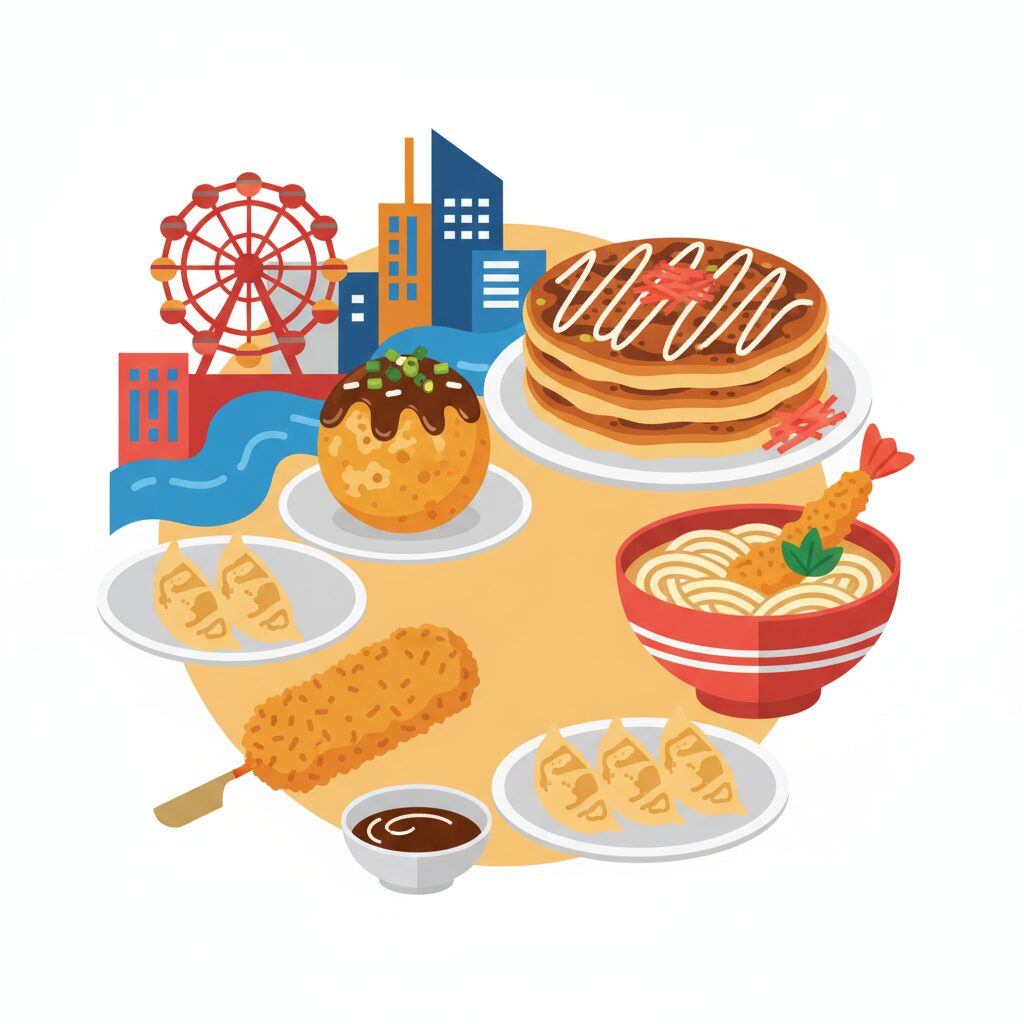
Take a train from Osaka’s Umeda Station, and in thirty minutes, you’re in Kyoto. Thirty minutes. It’s barely enough time to finish a podcast episode or get lost in a book. Geographically, they’re neighbors, two ancient hearts of Japan’s Kansai region, linked by steel rails and a shared history. But step off that train, and you’ve crossed a cultural chasm wider than any river. This divide is never clearer, never more potent, than when you sit down to eat. Kyoto, the city of emperors and serene temples, will offer you kaiseki—a meticulously crafted, multi-course journey of seasonal aesthetics, where every leaf is placed with intention and every flavor is a subtle whisper. It is poetry on a plate. Then there’s Osaka. Osaka, the city of merchants, comedians, and get-it-done pragmatism, offers you kuidaore. The word itself is a legend, a philosophy, a challenge. It translates, with a dramatic flourish, to “eat until you fall into financial ruin.” It’s not poetry; it’s a rock concert for your taste buds. This isn’t just a preference for different kinds of food. This is a fundamental schism in worldview, a daily demonstration of what each city values. For anyone trying to understand what it’s actually like to live in Osaka, to get under its skin and feel its relentless pulse, you have to start here. You have to understand why an Osakan will happily line up for an hour in the rain for a 900-yen bowl of ramen, while politely questioning the wisdom of spending a fortune on a meal that’s more about looking than eating. This is the story of two cities told through their stomachs—a tale of refined harmony versus glorious, delicious chaos.
Delve further into how everyday exchanges in Osaka’s shotengai foster a distinctive local community spirit that perfectly complements its famed culinary verve.
The Soul of the Merchant City: What Kuidaore Really Means
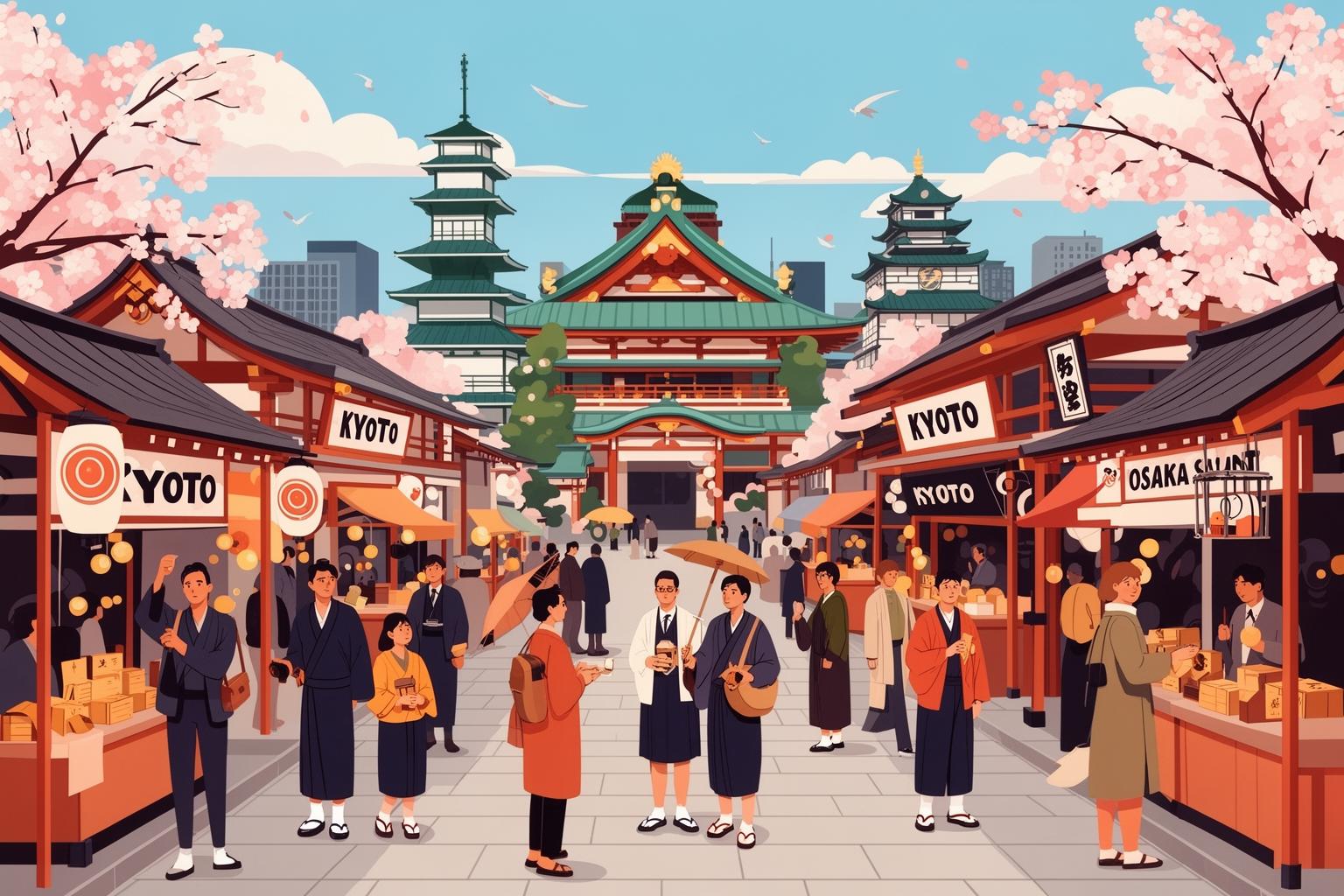
To an outsider, kuidaore might sound like a warning—a cautionary tale about gluttony and financial recklessness. But in Osaka, it’s embraced as a badge of pride. It’s a statement that life’s greatest joy, the thing most deserving of your hard-earned money, is a truly satisfying meal. This mindset didn’t emerge out of nowhere. It’s deeply rooted in the city’s identity, a direct legacy from its time as tenka no daidokoro, the “nation’s kitchen.” While Kyoto was the imperial court’s seat, a realm of aristocrats with refined tastes, Osaka was the busy port, the national hub for rice and goods distribution. It was a city shaped by merchants, traders, and workers. For them, value wasn’t an abstract idea; it was the key to survival and success. Their world was practical, straightforward, and unapologetically commercial. And their culinary culture developed accordingly.
More Than Just “Eating Until You Drop”
Let’s clarify the translation. Kuidaore isn’t about mindlessly overeating until you collapse. It’s a passionate, nearly obsessive pursuit of excellent food so compelling you’d be willing to spend your last yen on it. It’s the choice to prioritize the joy of eating over other, perhaps more “prudent,” expenses. An Osakan might wear a worn t-shirt, but they’ll know exactly where to find the freshest tako (octopus) for their takoyaki. They might live in a humble apartment, yet maintain a fiercely debated ranking of the top five okonomiyaki spots in their neighborhood. This is the merchant spirit expressed through gastronomy. You invest your resources—time and money—where you get the best return in enjoyment. The historical reasoning is straightforward: whereas samurai and aristocrats in other cities might spend their wealth on fine art or elaborate tea ceremonies, the Osaka merchant, whose rank depended on prosperity, funneled that wealth into the most tangible and immediate pleasure: food. It was a democratic luxury, open to anyone with a discerning palate and a bit of cash.
The Gospel of “Kosupa”
If kuidaore is the philosophy, then kosupa is its guiding principle. A blend of “cost performance,” kosupa is the holy grail of Osaka’s dining experience. But here’s what foreigners—and even many Japanese from other regions—often misunderstand: kosupa doesn’t mean “cheap.” It means “value.” A 500-yen bowl of kitsune udon can have poor kosupa if the noodles are soggy and the dashi broth is weak. Conversely, a 15,000-yen crab feast can offer excellent kosupa if the crab is incredibly fresh and sweet, enjoyed in an atmosphere that leaves you buzzing with delight. The question an Osakan asks isn’t “How much did it cost?” but “Was it worth it?” This calculation runs constantly in their minds. It explains the long lines outside unassuming ramen shops tucked beneath railway tracks. Those people have done the math. They know the rich, pork-bone broth and perfectly chewy noodles inside offer a flavor-to-yen ratio that’s unbeatable. It’s a culture of savvy consumers who refuse to be taken for a ride, especially when it comes to their stomachs. They can spot tourist traps from a mile away, sniffing out poor kosupa like bloodhounds. In Osaka, you earn respect not by dining at the priciest restaurant, but by knowing the little place serving a life-changing lunch set for 800 yen.
The Kaiseki Counterpoint: Kyoto’s Theater of Delicacy
To truly understand Osaka’s culinary identity, you need to appreciate its refined neighbor. Dining on kaiseki in Kyoto is less about eating and more about immersing yourself in culture. It’s a slow, intentional performance where every detail is crafted to reflect the season and convey a story. You’re not merely consuming food; you’re experiencing a culinary art form honed over centuries, closely linked to the tea ceremony and the aesthetics of the imperial court.
A Feast for the Eyes, A Whisper to the Palate
Picture a quiet tatami-mat room overlooking a moss garden. A kimono-clad server moves with silent elegance, presenting a small, exquisite dish. It could be a single piece of grilled sea bream, garnished with a sprig of sansho leaf and a precisely carved piece of ginger. The plate itself is an artwork—a handcrafted piece of Kiyomizu pottery chosen to complement the colors of the food. The flavor is clean, delicate, and pure. The kaiseki chef’s aim is not to overwhelm with flavor but to emphasize the natural essence of a peak-season ingredient. It’s a meal of subtle hints, balance, and harmony. Each course is a beautifully arranged vignette, flowing seamlessly into the next like stanzas in a poem. The entire experience is a meditation—on nature, on craftsmanship, and on the fleeting beauty of the seasons.
Why This Doesn’t Resonate with the Osakan Spirit
An Osakan, when presented with this experience, will certainly recognize the beauty and skill involved. They are no culinary barbarians. Yet, deep down, a little voice is likely asking, “This is lovely, but where’s the punch?” From the kuidaore viewpoint, the focus on aesthetics can sometimes feel like it sacrifices hearty satisfaction. Portions are small, flavors restrained, and the atmosphere often hushed and formal. It can feel somewhat like dining in a museum. The straightforward, direct personality of Osaka finds this approach a bit puzzling. They want their food to be obviously and undeniably delicious. They crave a rich, savory dashi that coats the tongue, a juicy, flavorful piece of grilled meat, a heaping bowl of noodles that leaves them fully satisfied. The Osakan spirit longs for interaction, energy, and a tangible sense of enjoyment. The quiet reverence of a kaiseki meal stands in many ways as the opposite of the loud, communal, laughter-filled dining experience that defines Osaka.
How Kuidaore Shapes Daily Life in Osaka
The philosophy of kuidaore extends beyond restaurants; it weaves itself into the very social fabric of the city. It shapes how people converse, how they spend their leisure time, and how they move through their neighborhoods. Living in Osaka means being constantly immersed in a city-wide dialogue centered on food. It functions as the local language, a shared foundation, and the ultimate social currency.
The Language of Food
In Osaka, conversations naturally revolve around food with irresistible magnetism. When you meet a friend, after exchanging initial pleasantries, the question almost always is, “Have you eaten anything good lately?” The traditional greeting among merchants, “Mokarimakka?” (“Making a profit?”), still lingers in older districts, but the true benchmark of a good day is often a great meal. Recommendations are exchanged like prized stock tips. “You have to try the new udon spot near Tenma station—their broth is amazing.” “I found a takoyaki stall in Nishinari where every ball contains a huge piece of octopus—the kosupa is phenomenal.” People recount meals from days past with the enthusiasm and precision usually reserved for major life events. Exclamations of “Umai!” or the even stronger “Meccha umai!” (Super delicious!) are voiced with full-hearted excitement, not as mere polite praise to the chef. Food is not a subdued topic here; it is the topic.
Navigating the Urban Kitchen: From Shotengai to Tachinomi
Osaka’s urban landscape reflects its rich food culture. The city’s heartbeat can be found in its shotengai—long, covered shopping arcades winding through residential areas. These are far from sterile, polished malls. Instead, they are vibrant, chaotic, and deeply local lifelines, lined with greengrocers, fishmongers, butchers, and, most importantly, countless small, specialized eateries. A place such as Tenjinbashisuji Shotengai, Japan’s longest shopping street, is like a multi-kilometer buffet. Living here means building a mental map of these arcades—knowing which stall has the crispiest croquettes, which butcher sells the best pork for tonkatsu, and which tiny counter offers the most comforting bowl of oden. The dining scenes themselves embody the city’s character:
Tachinomi (Standing Bars): These epitomize Osakan efficiency and sociability. No chairs, no fuss. You stand at a counter, shoulder-to-shoulder with strangers, order a cheap beer and a few skewers of kushikatsu (deep-fried skewers). It’s quick, affordable, and intensely communal. Conversations ignite easily, and by the time you finish your drink, you might have three new dining recommendations.
Izakaya Under the Tracks: In neighborhoods like Fukushima or Tenma, entire clusters of restaurants nestle under the arches beneath elevated train tracks. These spots are loud, smoky, and bustling with energy. Every few minutes, a train rumbles overhead, shaking the entire structure. This isn’t a flaw—it’s part of the charm. The rumbling adds to the lively, industrial atmosphere. The food is straightforward, the drinks are strong, and the laughter is hearty.
Specialty Stalls: Osaka’s food culture celebrates mastering one dish done perfectly. You don’t visit a place that serves “a bit of everything.” You seek out the takoyaki master who has dedicated his life to perfecting his batter or the okonomiyaki joint known for its distinctive cabbage-to-flour ratio. This emphasis on specialization guarantees quality and fosters a culture of friendly competition, which ultimately benefits diners in their endless pursuit of the finest kosupa.
The Unspoken Rules of Engagement
Living the kuidaore lifestyle means embracing local customs. The most famous is the absolute, iron-clad rule for kushikatsu: NO DOUBLE-DIPPING. The communal tub of dark, sweet tonkatsu sauce on the counter is for one-time dipping only, when your skewer is clean and untouched by your mouth. If you want more sauce, use the provided cabbage slice to scoop it up and drizzle it onto your plate. This isn’t just about hygiene; it’s a social contract—a metaphor for Osaka’s dining culture: we’re all in this together, sharing the good stuff, so respect the rules. Another unspoken guideline is to trust the queue. A long line of locals patiently waiting outside a nondescript storefront is Osaka’s most reliable Michelin star. It silently signals that what’s inside is truly worth your time.
What Foreigners Often Miss About Osaka’s Food Scene
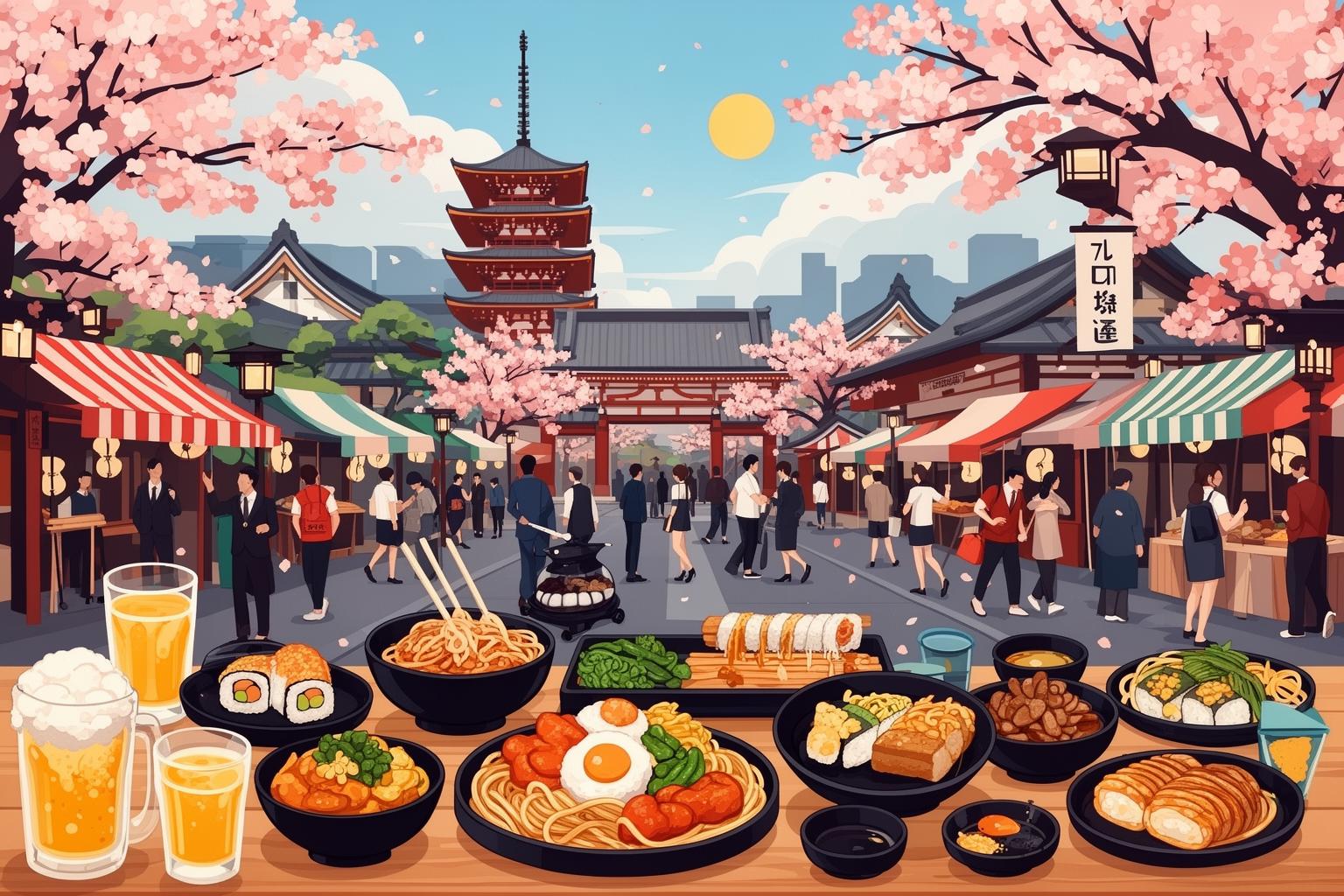
Many visitors arrive in Osaka with a checklist: takoyaki, okonomiyaki, kushikatsu. They enjoy these dishes in the neon-lit tourist hotspot of Dotonbori and tick the boxes. While these foods are beloved staples of Osaka’s B-kyu gurume (B-class gourmet) culture, they represent only the beginning of a much richer and more intricate culinary narrative.
It’s Not Just Takoyaki and Okonomiyaki
To think Osaka’s cuisine is merely fried street food is to fundamentally miss the essence of kuidaore. The philosophy of maximizing value and flavor applies across all dining experiences. Osaka is a seafood giant, benefiting from the abundant bounty of the Seto Inland Sea. Here, you can enjoy exceptional sushi and sashimi, often at prices that would make Tokyoites envious. The difference lies in the presentation and atmosphere. Instead of a quiet, reverent sushi counter, you may find yourself at a lively standing bar where the chef cheerfully slaps the fish down in front of you. The city is also renowned for fugu (pufferfish). Whereas a fugu meal in Tokyo is often a pricey, formal occasion, Osaka offers numerous casual, affordable fugu restaurants where friends gather to share hot pots and toast with sake. The kuidaore spirit democratizes luxury, taking premium ingredients and removing the pretentiousness to make them accessible to everyday diners.
Flavor Profile: Bold, Direct, and Savory
The taste of Osaka’s food stands apart. It mirrors the character of its people. While Kyoto cuisine depends on a delicate, nuanced dashi broth designed to subtly enhance ingredients, Osaka’s dashi is bold and assertive. Typically made from a stronger mix of kombu (kelp) and katsuobushi (bonito flakes), it delivers a deeper, smokier, and more savory flavor that makes its presence known. Sauces for okonomiyaki and takoyaki are distinctively sweeter and richer than those found elsewhere. This is not a lack of refinement, but a preference for unmistakable clarity. Osakan food speaks plainly—it doesn’t hint or imply; it confidently declares its deliciousness. This reflects the direct, open, and expressive nature of Osakans themselves. The cuisine is an extension of their character: honest, robust, and full of heart.
Living the Kuidaore Lifestyle: A Resident’s Guide
For a non-Japanese resident, adopting the kuidaore lifestyle is the quickest way to feel at home in Osaka. It’s your gateway into the local community and the best means to grasp the city’s rhythm. It demands a sense of adventure, a willingness to explore, and a hearty appetite.
Finding Your Spot
The best restaurants in Osaka are seldom those with the flashiest websites or English menus. The true treasures are the neighborhood establishments, the mom-and-pop shops that have been serving the same community for generations. The best method to discover them is to get hyperlocal. Stroll through your nearby shotengai. Notice where the elderly ladies buy their croquettes for dinner. Ask the person at the corner liquor store where they go for a drink after work. This is how you uncover the places with genuine kosupa. Be ready to enter restaurants that appear a bit old or worn down. In Osaka, a spotless, modern interior often matters less than the quality of the food and the warmth of the owner. A faded noren (shop curtain) and a few marks on the counter are frequently signs of a long and cherished history.
Embracing the Noise
Dining in Osaka is an interactive experience. Expect a sensory adventure that goes beyond taste. Restaurants are often small, busy, and loud. You’ll hear the sizzle of the teppan grill, the rhythmic chopping of knives, the loud laughter from the next table, and the owner shouting a hearty “Ookini!” (Thank you! in Osaka dialect) as customers leave. Don’t be surprised if a stranger at the counter suggests a dish to you or the chef starts sharing a story while cooking. This isn’t an interruption; it’s the highlight. Food acts as a catalyst for connection. It’s what unites people in a lively, unpretentious atmosphere. To live and eat in Osaka is to realize that a meal is never just about what’s on the plate. It’s about the room’s energy, the chef’s skill, the quality of the ingredients, and the satisfaction of knowing you’ve spent your money wisely. It’s a philosophy of life, served hot, fresh, and with no apologies.