Welcome, traveler, to the electric heart of Osaka, a place where neon bleeds into the night sky and the very air hums with an insatiable energy. This is Namba, the city’s sprawling, kaleidoscopic entertainment district. It’s a theater of human life, a sensory explosion of sizzling street food, booming arcades, and rivers of people flowing through covered shopping arcades. But beneath the dazzling surface of the Glico Running Man and the giant mechanical crab, a fierce, delicious battle rages on. It’s a culinary war fought not with swords, but with ladles and noodle strainers. The prize? The title of the ultimate Tonkotsu ramen. This isn’t just soup; it’s a soul-warming, umami-laden elixir, a creamy, opaque broth born from hours, sometimes days, of boiling pork bones until they surrender their very essence. It’s a dish of profound depth and deceptive simplicity, and here in Namba, the competition to perfect it is a testament to Osaka’s obsession with incredible food. This journey is a pilgrimage into that savory world, a quest to navigate the steam-filled alleyways and bustling streets to find a bowl that doesn’t just fill the stomach, but captures the very spirit of this vibrant, unapologetic district. So, loosen your belt and ready your senses. Our search for the perfect pork bone symphony begins now.
For a different kind of ramen adventure that never sleeps, explore the best 24-hour ramen shops in Dotonbori.
The Standard Bearer: Where Tradition Meets the Modern Palate

Our first stop is a name that resonates throughout the global ramen scene—a titan of Tonkotsu that has established its presence far beyond Japan’s borders. In Namba, it stands as a benchmark, a standard against which all others are measured. Spotting it is simple; just follow the inevitable line winding out from a sleek, modern storefront. The experience begins not with a greeting, but with a machine. A luminous, button-covered vending machine acts as the stoic gatekeeper. Here, you buy your ticket to paradise. You choose your ramen, toppings, side dishes, and drinks, feeding bills into the slot and receiving a cascade of small paper tickets in return. This is efficiency at its finest, a system designed to streamline the journey from street to slurp.
Inside, you are directed not to a communal table, but to a small, private booth. It resembles a study carrel—a personal ramen sanctuary. A bamboo screen separates you from the server, with only a small window connecting you to the unseen kitchen. This is the famed “flavor concentration booth,” intended to minimize distractions and let you focus entirely on the bowl before you. A customization form lies in front of you, the true key to this establishment’s magic. Do you prefer a rich or light broth? Heavy or no garlic? With or without the signature spicy red sauce? Most importantly, how would you like your noodles? From extra firm (cho-kata) to extra soft (cho-yurui), the choice is yours. This level of personalization is central to their philosophy: the perfect bowl of ramen is not dictated by the chef, but crafted by you.
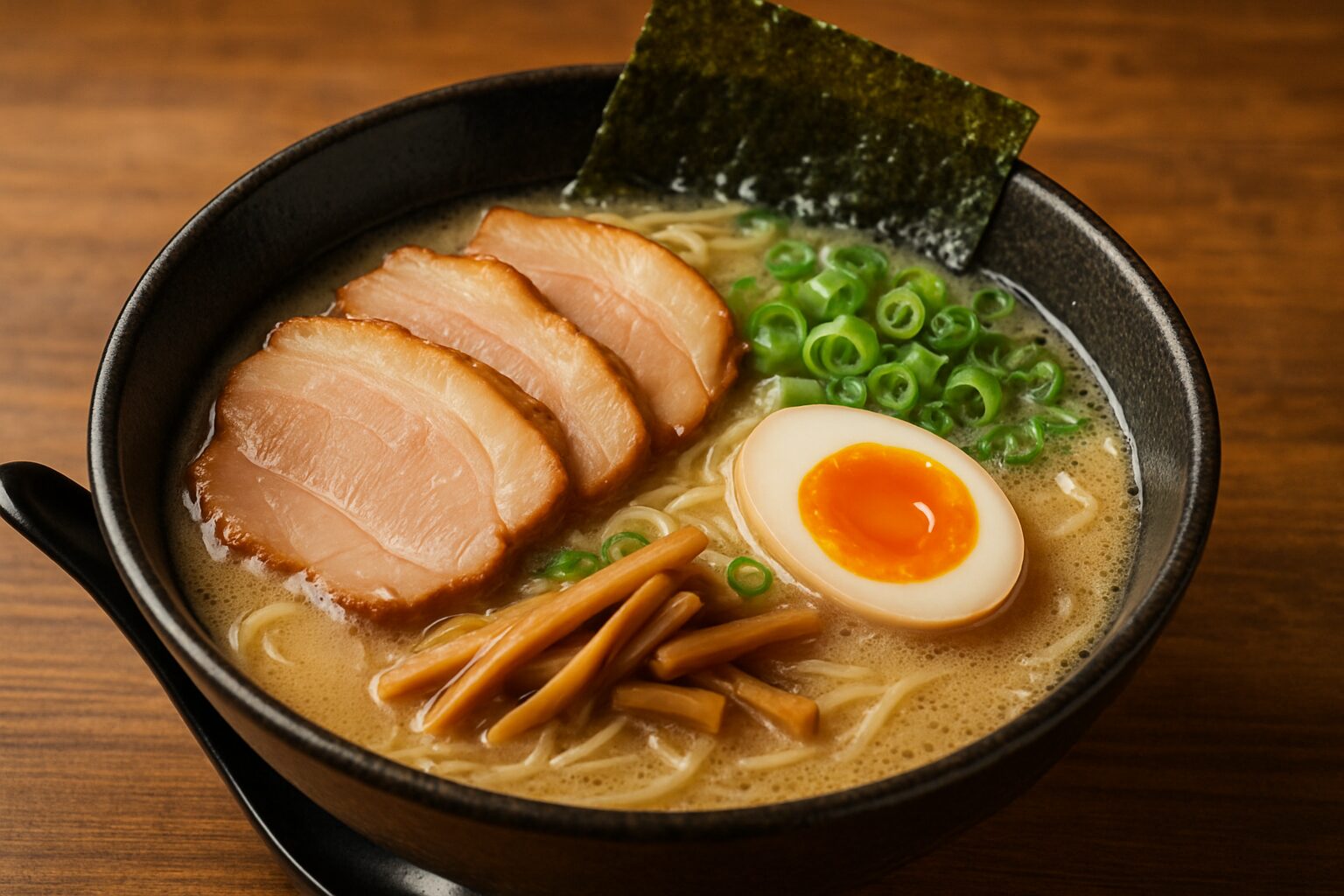
I made my choices: rich broth, a standard amount of garlic, a half portion of the spicy sauce, and firm (katame) noodles—the classic pick for Hakata-style ramen. I pressed the small button on my desk, and moments later, the bamboo screen lifted. Faceless hands took my tickets and customization sheet, and the screen lowered again. The anticipation in the small, enclosed space was tangible. Then, with quiet grace, the screen rose once more, and a steaming bowl was placed before me. The first thing to hit me was the aroma—a deep, comforting scent of pork, clean and refined, free of the harsh gaminess that sometimes mars lesser Tonkotsu broths. The broth was a beautiful creamy beige, opaque and shimmering with tiny droplets of emulsified fat. A perfect circle of fiery red sauce sat at the center, a vibrant heart waiting to be stirred into the milky sea. Thinly sliced green onions and a few delicate pieces of chashu pork rested on top.
The first sip of broth, before disturbing the composition, was revelatory. It was incredibly smooth, coating my tongue with a luxurious, collagen-rich texture. The flavor was deep and profoundly savory, a pure expression of pork bone coaxed into its most elegant form. It was rich, yes, but not heavy or greasy—perfectly balanced. Then I mixed in the red sauce, introducing a new dimension. A wave of complex spice—a deep, savory chili flavor beyond mere heat—cut through the pork’s richness, creating a dynamic interplay between creamy and spicy. It was an exhilarating jolt that kept my palate engaged.
Next came the noodles: ultra-thin, straight, and pale—the hallmark of Hakata style. Lifting them from the broth, they were perfectly firm, with a delightful chew and bite. Their role was not merely to carry the soup, but to act as an equal partner. Their texture complemented the broth’s smoothness perfectly. Because they are so thin, they must be eaten quickly, before softening and absorbing too much liquid. This urgency is part of the experience. The chashu was tender, though perhaps less of a star than the broth, melting away almost immediately. It added a subtle pork accent without overpowering the bowl.
In the focused solitude of the booth, each slurp became a form of meditation. The rhythmic sound, the steam warming my face, the evolving flavors as the spicy sauce blended deeper with the broth—it was a fully immersive sensory experience. This is Tonkotsu ramen as precise science, a formula perfected through endless repetition and refinement. It might lack the rustic charm of a back-alley shop, but its consistency and quality are unmatched. It offers the perfect introduction for newcomers and a reliable comfort for seasoned fans. For visitors to Namba, especially first-timers, this provides a seamless, stress-free entry into the world of authentic ramen, removing language barriers and social uncertainties with its clever system. The best time to visit is during off-peak hours, ideally mid-afternoon between three and five, to avoid the long lines that are common at lunch and dinner.
The Artisan’s Counter: A Bowl of Unfiltered Passion
Leaving behind the streamlined efficiency of the first shop, our journey led us deeper into the labyrinthine core of Namba, away from the bustling main streets and into a narrow, dimly lit alley known as a yokocho. These side streets are the veins of the city, home to tiny, specialized establishments that have been operating for decades. Here, we discovered our next destination, a stark contrast to the first. There was no glowing vending machine, no private booths—only a sliding wooden door, a faded noren curtain hanging above it, and a handwritten sign displaying the day’s specials. Inside, the space was tight, seating no more than ten people along a long wooden counter worn smooth by countless elbows and ramen bowls.
The air was thick with steam and the rich, almost primal aroma of boiling pork bones. This scent differed from that of our first stop—richer, deeper, with a more pronounced, unapologetically porky character. Behind the counter stood a single man, the master, or taisho. He moved with a practiced, almost dance-like economy of motion, his face a mask of intense concentration. He was a craftsman, and this tiny shop was his studio.
Ordering was straightforward. There were only two options: ramen, or ramen with extra toppings. I pointed to the latter. There were no customization sheets here; you received the ramen as the master intended it. To ask for any modification would be to question his art. I watched him work, his movements precise and unhurried. He drained the noodles with a powerful flick of his wrist, arranged the toppings with the care of a painter composing a scene, and finally poured the broth from a massive, simmering cauldron that looked as old as the shop itself.
The bowl that arrived was a vision of rustic beauty. The broth was a darker, more robust shade of cream, almost tan, with a visible depth and viscosity. It was clearly unfiltered, with tiny particles suspended within, evidence of its long, slow simmer. A glistening layer of fragrant black garlic oil, mayu, swirled on the surface, creating an intoxicating, smoky aroma. The toppings were more generous here: thick-cut slices of chashu pork, their edges beautifully seared; a perfectly soft-boiled egg (ajitama), its yolk a vibrant, molten orange; a pile of crisp bean sprouts; and finely chopped wood ear mushrooms (kikurage).
The first taste of this broth was like a thunderclap—explosive. The flavor was immensely deep, complex, and powerful. You could taste the marrow, the collagen, the very soul of the pork. It was less refined than the first bowl, but in its place was raw, untamed power. The black garlic oil added a smoky, slightly bitter counterpoint that was utterly addictive, cutting through the intense richness of the broth and layering it with complexity. This was not a broth that whispered; it roared. It was the kind of flavor that lingers, one you can recall with perfect clarity days later.
The noodles were thicker than the Hakata-style strands from before, with a slight wave. They had a firm, satisfying chew and were robust enough to stand up to the powerhouse broth without getting lost. They clung to the soup, ensuring every bite was a perfect harmony of noodle and broth. The chashu was a star in its own right. The thick slices were unbelievably tender, having been braised for hours until nearly falling apart. The seared edges provided a wonderful textural contrast and a hint of caramelized sweetness. The ajitama was flawless, its yolk a creamy, custardy sauce that further enriched the decadent broth. The bean sprouts and mushrooms added a welcome crunch, offering a textural break from the overwhelming richness of the other components.
Eating at that counter was a communal experience. Everyone sat shoulder-to-shoulder, focused on their bowls, the only sounds the rhythmic slurping of noodles and the occasional grunt of appreciation. The master watched over his customers, his satisfaction evident in their empty bowls. Finishing the last drop of soup felt like a duty, a sign of respect for the artist who had poured his heart into its creation. You don’t linger in a place like this—you eat, pay the master directly with a quiet “Gochisousama deshita” (thank you for the meal), and leave, making way for the next hungry soul. This is Tonkotsu in its purest, unadulterated form. It embodies the heart of Osaka’s food culture: small, independent artisans devoted to perfecting a single craft. Finding these hidden gems requires a bit of adventurous spirit, but the reward is a taste of something truly authentic, a bowl of ramen that tells a story of dedication and tradition.
The New Wave: Fusion and Fearless Flavor

Namba is not a district that remains static. It is constantly reinventing itself, and its ramen scene is no exception. While the established legends and traditionalists maintain their stronghold, a new generation of chefs is pushing the boundaries of what Tonkotsu can be. Our third stop was one such establishment—a modern, brightly lit shop with a minimalist design, favored by a younger, trend-conscious crowd. The atmosphere was entirely different—upbeat music filled the air, and the staff was youthful and energetic. Here, the menu was a playground of creativity, using the classic Tonkotsu as a canvas for bold experimentation.
The signature dish was a Tonkotsu infused with a seafood dashi, a blend known as gyokai tonkotsu. This fusion style has surged in popularity recently, combining the rich, creamy texture of pork broth with the complex, umami-rich flavors of fish and seaweed. The aim is to craft a more nuanced, multi-layered flavor experience. I also noticed toppings that diverged from tradition, such as yuzu peel, fried onions, and even a dollop of basil-infused oil on one of the specialty bowls.
I chose the signature gyokai tonkotsu. Its presentation was artful and contemporary. The broth remained creamy and opaque but carried a subtly different sheen. A fine, fragrant powder, likely ground dried fish (gyofun), was lightly sprinkled on top. The chashu was a thick, perfectly round slice, cooked sous-vide before being seared—a technique borrowed from French cuisine. A vibrant green heap of fresh scallions sat beside a bright yellow sliver of yuzu peel. It was a bowl as pleasing to the eye as it was to anticipate eating.
As I lifted the spoon, the aroma was a captivating duet. The foundational scent of rich pork lingered but was entwined with a briny, smoky fragrance from the seafood dashi. The first sip revealed a harmonious balance. The initial impact was the familiar, comforting richness of pork, swiftly followed by a wave of profound, oceanic umami from the katsuobushi (dried bonito flakes) and niboshi (dried sardines) used in the dashi. The two elements didn’t compete; they danced together. The seafood component cut through the sheer fattiness of the Tonkotsu, making the broth feel lighter and more complex, compelling you to return for sip after sip to unravel its secrets.
The noodles were thick and wavy, with a strong, chewy texture that was highly satisfying. They were clearly chosen to withstand the complex broth and deliver a substantial bite. The sous-vide chashu was a triumph of texture—impossibly tender and juicy, with a clean pork flavor enhanced, not overshadowed, by the searing. The fresh yuzu peel was a stroke of brilliance. Grating a bit into the broth released a bright, citrusy aroma that acted as a palate cleanser, a burst of sunshine that intermittently lifted the deep savory notes of the soup and prevented flavor fatigue. The fried onions sprinkled on top added a sweet, crunchy element, further enriching the textural variety.
This was Tonkotsu reimagined. It honored the tradition of long-simmered pork broth yet embraced innovation, incorporating techniques and ingredients from other culinary worlds to create something fresh and exciting. This shop exemplifies the future of ramen—a dynamic, evolving cuisine. It shows that tradition is not a cage but a foundation on which to build. For the adventurous diner visiting Namba, seeking out these new-wave shops offers a thrilling glimpse into the contemporary Japanese food scene. It’s an opportunity to taste creativity and realize that even a dish as beloved as Tonkotsu ramen still holds surprises. These places often have a more relaxed vibe, making them ideal for groups or those wanting to savor a more unconventional bowl at leisure. Visiting during the week for lunch often reveals special set menus that offer excellent value, pairing a slightly smaller bowl of ramen with a side dish like fried rice or gyoza.
The Spice Specialist: A Fiery Challenge
Osaka is celebrated for its bold flavors, and Namba’s ramen scene embraces the allure of spice with equal passion. Our final destination on this culinary journey was a shop famed for its unwavering commitment to heat. This was no ordinary place offering a simple spicy option; it was a sanctuary of chili, where the Tonkotsu broth served as a rich, creamy canvas for a masterpiece of both pain and pleasure. The shop’s exterior was decorated with red lanterns and dragon motifs, a clear signal of the fiery experience inside. Within, the air was infused with the enticing, unmistakable aroma of toasted chilies.
The menu presented a spectrum of spiciness, ranging from a mild level one for the cautious to a legendary level ten that required signing a waiver. The walls were covered with photos of triumphant customers who had conquered the highest heat levels, their expressions a blend of pride and agony. This was more than just dinner; it was a challenge, an event. I opted for a respectable yet formidable level five, described as “for experienced spice lovers.”
The bowl set before me was a terrifyingly beautiful sight. The rich Tonkotsu broth was visible beneath streaks of deep, menacing red chili oil. At the center sat a mound of spicy miso-infused ground pork, accompanied by the usual toppings of chashu, egg, and green onions. A fine, dark red powder—an eclectic mix of ground chilies from around the world—was sprinkled over the entire dish.
Taking a deep breath, I dipped my spoon in. The first sip was an explosion. The familiar comforting creaminess of the Tonkotsu lingered briefly like a silk glove before the iron fist of spice struck. Then the heat arrived—not a simple, one-dimensional burn, but a complex, layered sensation unfolding across the palate. There was the sharp upfront sting of Japanese togarashi, the smoky depth of chipotle, and the slow-building burn of Sichuan peppercorns, leaving a thrilling numbing sensation known as mala. Crucially, beneath the heat, there was abundant flavor. The chili oil was fragrant and savory, not merely hot. The spicy miso pork contributed another layer of umami and texture. The rich Tonkotsu broth acted as a perfect counterbalance, its creamy, fatty nature soothing the palate and providing a strong foundation for this symphony of spice.
The noodles were thick and extra-chewy—a smart choice since their substantial texture offered a welcome break and something to focus on between fiery spoonfuls. Each slurp was a battle, a negotiation between pleasure and pain. Sweat formed on my forehead. My lips tingled. Yet, I couldn’t stop. The bowl was utterly addictive. The richness of the pork, the saltiness of the miso, the fragrance of the oils, and the intense, exhilarating heat all fused into something greater than the sum of its parts. It was a full-body experience, a culinary thrill ride.
This kind of specialty shop showcases the remarkable versatility of the Tonkotsu base. Its rich, emulsified nature makes it an ideal vehicle for carrying intense flavors like chili, standing up to the heat without being overwhelmed. For visitors to Namba seeking a truly memorable and uniquely Osakan experience, a stop at a spicy ramen specialist is essential. It perfectly embodies the city’s love of food that is loud, proud, and unapologetically bold. A practical tip: begin with a lower spice level than you think you can handle—you can often add more later, but you can’t take it away. Also, ordering a side of rice is a pro move; it’s the perfect tool for soaking up the last of that incredible, fiery broth.
Navigating the Noodle Maze: A Traveler’s Guide

Setting out on a ramen adventure in Namba is an exciting experience, but the district itself can feel like a confusing maze for anyone visiting for the first time. Knowing its layout and the ramen-eating culture is essential for a smooth and tasty journey. Namba is not just a single spot but a large area centered around several key train stations: Nankai Namba Station (the terminus for trains from Kansai International Airport), Osaka Namba Station (serving the Hanshin and Kintetsu lines), and JR Namba Station. These are all connected by an extensive network of underground passages and shopping centers, making navigation challenging. My suggestion is to surface at street level as soon as possible to get your bearings. The most famous landmark is the Dotonbori Canal, featuring the iconic Glico Running Man sign. This area represents the neon-lit Namba you’ve seen in photos, with streets branching from it packed with countless ramen shops.
The ramen culture in Japan has its own set of unwritten rules. First is the ordering process, which often involves using ticket vending machines, or kenbaiki, as we encountered. They can seem intimidating, but most machines in tourist-frequented areas like Namba have English translations or at least pictures. The steps are simple: insert cash, press the button for your chosen dish, then collect your ticket and change. Hand the ticket to the staff, and you’re good to go. Second is the importance of slurping. Rather than being rude, slurping your noodles is the correct way to enjoy ramen. It serves two purposes: it cools the hot noodles as you eat, and it aerates the noodles and broth, which intensifies the flavor. So, slurp with confidence! Lastly, ramen is treated as fast food. It’s meant to be eaten relatively quickly, while the noodles are at their best texture. Lingering over a bowl for a long chat is generally discouraged, especially if there is a line of people waiting. The aim is to enjoy the bowl with focus and then make room for the next hungry customer.
Don’t hesitate to explore. While the well-known shops on the main streets are excellent, some of the best bowls are tucked away in narrow yokocho alleys, like Hozenji Yokocho with its moss-covered statue and traditional vibe. These small, often family-run shops offer a glimpse into a more authentic side of Osaka. Cash remains king in many of these smaller establishments, so carrying yen is always wise. Although many places in Namba cater to tourists, learning a few simple Japanese phrases will be appreciated. A cheerful “Itadakimasu” before eating and a sincere “Gochisousama deshita” afterward will always bring a smile.
The Final Sip
After navigating the bright lights and shadowy alleys of Namba, sampling bowls crafted with scientific precision, rustic passion, modern innovation, and fiery intensity, what’s the verdict? Where can one find the ultimate Tonkotsu ramen? I realized that the question itself is flawed. There is no single “best” bowl. The ultimate Tonkotsu ramen is a highly personal experience. Is it the perfectly balanced, customizable bowl from the famous chain? The soul-stirring, powerful broth from the hidden alleyway master? The creative, boundary-pushing fusion bowl, or the thrilling challenge of the spice specialist? The answer shifts depending on your mood, your palate, and what you seek from the experience.
This quest wasn’t about pinpointing a single winner. It was about uncovering the incredible diversity and artistry nestled within one food category in a single district. It was a flavorful journey through Japanese culinary culture, from its deep respect for tradition to its bold embrace of innovation. Namba’s ramen scene reflects the district itself: vibrant, diverse, competitive, and deeply satisfying. So, my final advice is this: don’t just chase the ramen shop with the longest line or highest rating. Let that be your starting point, but also allow yourself to be drawn in by the steam escaping a tiny doorway, a handwritten sign, or the aroma of pork and chili lingering in the air. Create your own pilgrimage. The ultimate bowl of Tonkotsu is waiting for you, and the joy lies in the journey to find it. In a city that lives by the motto kuidaore—to eat oneself into ruin—there’s no better place to begin than with a perfect, soul-warming bowl of ramen in the electric heart of Namba.