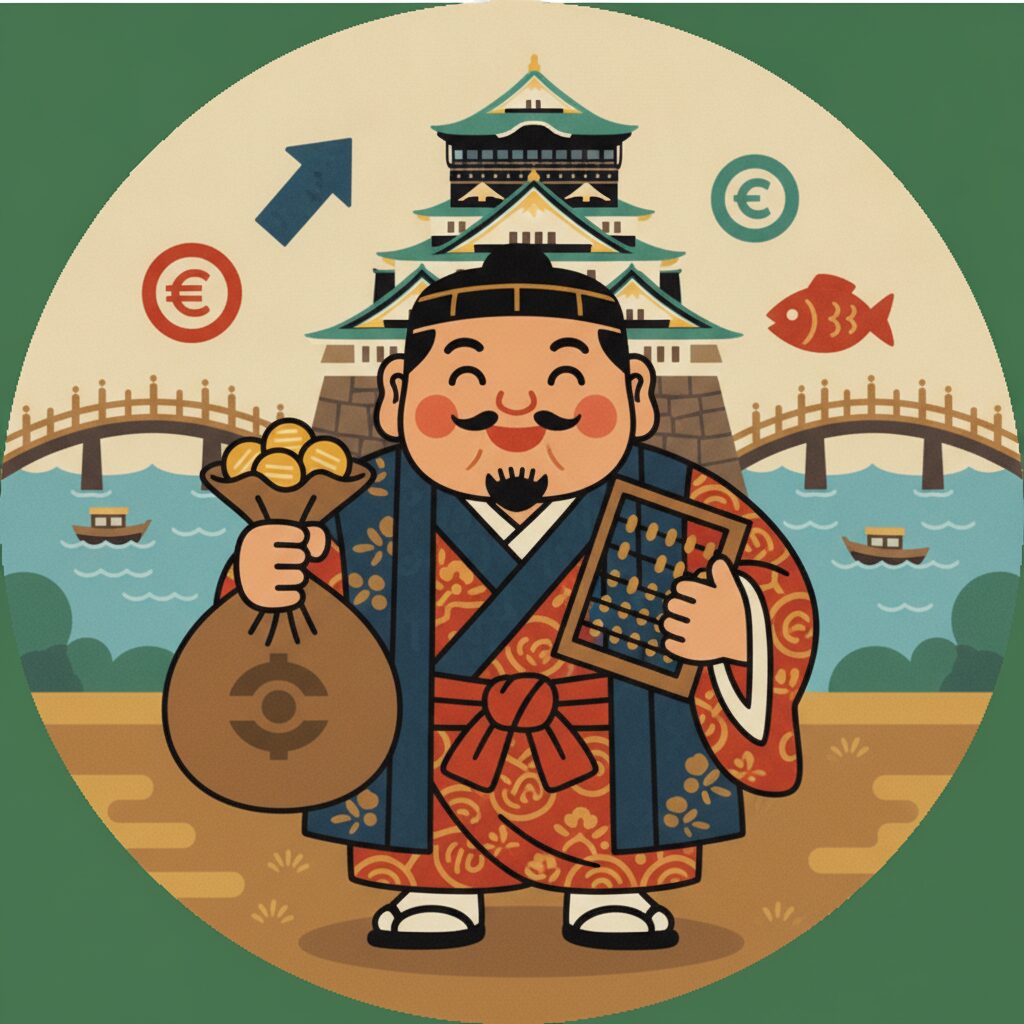
Step off the Shinkansen in Osaka, and the first thing you notice isn’t a landmark. It’s the sound. The air hums with a different frequency than the polite, measured quiet of Tokyo. It’s a rhythm of commerce, of chatter, of life played at a slightly higher volume. You hear it in the rapid-fire cadence of the local dialect, Osaka-ben, and in the way strangers engage with an ease that can feel both welcoming and startlingly direct. For anyone accustomed to the subtle, unspoken rules that govern much of Japan, Osaka presents a fascinating puzzle. Why do people here talk about money so openly? Why does a simple shopping trip sometimes feel like a friendly sparring match? The answer isn’t just that Osakans are ‘friendly’ or ‘outgoing’—those are lazy clichés. The truth is far more interesting. It’s etched into the city’s DNA, a legacy of its past as the commercial heart of Japan, the ‘Nation’s Kitchen’. This is a city built by merchants, and that mercantile spirit, the ‘akindo’ mindset, doesn’t just live in the stock exchange or the corporate boardrooms. It breathes in the shotengai shopping arcades, it seasons the conversations in standing-room-only bars, and it dictates the unwritten rules of everyday life. To live in Osaka is to learn the art of the deal, not just for business, but for everything. It’s a philosophy of practicality, engagement, and finding value, not just in what you buy, but in the human connection you make along the way.
Osaka’s entrepreneurial spirit even finds expression in its culinary scene, where vegan and gluten-free adaptations of traditional takoyaki and okonomiyaki highlight the city’s knack for reinventing its cultural icons.
The Unspoken Language of “Mokari Makka?”
In most parts of Japan, greetings unfold as a gentle dance of formalities—a bow, a polite comment about the weather, a soft “otsukaresama desu.” In Osaka, however, you’re just as likely to be met with a cheerful, “Mokari makka?” which literally means “Are you making money?” The typical response is just as revealing: “Bochi bochi denna,” or, “Well, so-so.” For an outsider, especially someone from Tokyo where discussing personal finances publicly is considered highly inappropriate, this exchange can be confusing. It may seem intrusive, even rude. Is your neighbor really asking to peek at your bank statement?
Certainly not. This isn’t an audit; it’s a verbal handshake. It’s Osaka’s version of “How’s it going?” seen through a worldview where business, well-being, and life flow together as one. Asking if someone is making money is a way of inquiring if they are thriving, if their efforts are paying off, if life is treating them kindly. The response “bochi bochi” isn’t an admission of financial hardship; it’s a modest, grounded way of saying one is managing, staying afloat. It’s a display of pragmatism. No one wants to seem boastful, nor do they want to come across as failing. “So-so” strikes the comfortable, relational middle ground.
This greeting highlights a fundamental difference in mindset. In Tokyo, society is often organized by position, institution, and formal hierarchy. In Osaka, the true equalizer is the marketplace. Everyone is a participant in the grand game of commerce, whether selling takoyaki from a street stall or closing a multi-million yen deal. This shared identity fosters a unique social fabric—one where value, pragmatism, and hustle are acknowledged and respected. That’s why conversations can naturally turn to prices and costs. Sharing the bargain you found at the grocery store isn’t viewed as cheapness; it’s seen as cleverness, a small victory worth mentioning. It’s a language of common experience, and understanding it is the first step to grasping the city’s rhythm.
Negotiation as a Daily Ritual: Beyond the Marketplace
The merchant spirit in Osaka extends far beyond mere business dealings. It is a philosophy that infuses every aspect of life, transforming ordinary interactions into chances for engagement, connection, and securing the best possible outcome. This approach isn’t confrontational; rather, it reflects a culture that prizes a friendly, straightforward, and often humorous exchange. Deals happen everywhere, from negotiating the price of fish to defining the terms of a friendship.
The Art of “Negiri” (Price Haggling)
In a typical Tokyo department store, the price tag is final. Questioning it would violate a strong social contract, often resulting in awkward silence and puzzled looks. However, in Osaka—especially within the bustling ‘shotengai’ shopping arcades or at smaller independent shops—the price tag often serves as the starting point for conversation. This is ‘negiri’—the art of price negotiation. And it truly is an art form.
Mistaking ‘negiri’ for a desperate effort to save a few yen misses the point. It is a performance, a game, and a mode of communication. The objective isn’t simply to get a discount; it’s to build a relationship. Observe an Osakan ‘obachan’ (a middle-aged or older woman) at a fish stall. She might remark on the quality of the tuna, inquire about its origin, and banter playfully with the vendor. Then, with a gleam in her eye, she’ll ask, “Chotto makete kureru?”—”Can you give me a little discount?” Or she might buy three items and request a fourth as ‘o-make’, a little extra.
The vendor is expected to engage in this exchange. A flat refusal is considered bad manners. Instead, he might sigh theatrically, scratch his head, and say he’s barely breaking even, but for a valued customer like her, he’ll knock off a hundred yen. Both leave with smiles. She feels she scored a good deal through charm and wit; he feels he made a sale and strengthened a customer bond. This back-and-forth is the lifeblood of the local economy. It turns a dry transaction into a memorable human connection. It’s a dance of mutual respect, where buyer and seller recognize each other’s needs and work towards a solution that feels like a win-win.
The Value Proposition: “Yasui” vs. “Otoku”
There’s a common stereotype that Osakans are cheap, but this is a fundamental misunderstanding. An Osakan doesn’t simply want things that are ‘yasui’ (cheap). They seek items that are ‘otoku’ (great value). This distinction is vital. ‘Yasui’ refers solely to a low price. ‘Otoku’ involves a nuanced evaluation of quality, durability, usefulness, and price. It represents the ultimate goal for Osaka consumers.
This mindset explains why the city is a paradise for food enthusiasts. The ‘kuidaore’ culture—eating until you drop—is driven by a fiercely competitive environment where only the best value thrives. A ramen shop serving mediocre bowls at 1,000 yen will disappear quickly, but one offering an outstanding bowl at 800 yen will attract a queue around the block. That 200-yen difference isn’t just about saving money; it’s about principle. The 800-yen ramen is ‘otoku’. It provides the greatest satisfaction at a fair price.
This philosophy permeates all purchases. An Osakan might hesitate to pay for an expensive but flimsy umbrella, yet willingly invest in a high-quality, lifetime-guaranteed knife from the Doguyasuji kitchenware street. Though pricier upfront, its craftsmanship and longevity make it ‘otoku’ over time. It reflects a mindful consumption ethic—a business owner’s mindset applied to every purchase. Is this a wise investment? Will it yield satisfaction and usefulness? This ongoing, nearly instinctive cost-benefit evaluation drives everyday life. It’s not about stinginess; it’s about making smart choices.
The Merchant’s Mindset in Social Interactions
The ‘akindo’ spirit goes well beyond merely buying and selling goods. It influences how people communicate, form relationships, and handle social situations. The directness, humor, and practicality that characterize business dealings in Osaka are the very same qualities used to forge friendships and community bonds. This social logic is grounded in efficiency and authentic connection, standing in marked contrast to the more reserved and nuanced communication styles found elsewhere in Japan.
Direct Communication as Efficiency
One of the biggest culture shocks for those relocating from Tokyo to Osaka is the style of communication. The intricate interplay of ‘honne’ (true feelings) and ‘tatemae’ (public facade) is a hallmark of Japanese interactions, especially in the capital. People learn to “read the air” and interpret what is left unsaid. In Osaka, however, the atmosphere is much clearer. People tend to say exactly what they mean, for better or worse.
From a merchant’s viewpoint, this approach is logical. Time is valuable. Ambiguity wastes it. Beating around the bush delays deals and opens the door to misunderstandings. Clear, straightforward communication quickly aligns everyone and pushes matters forward. To the unaccustomed, this can seem blunt or even harsh. For example, a coworker in Osaka might say about your report, “This part is confusing, fix it.” In Tokyo, the same feedback might be softened: “This is an interesting perspective; perhaps we could consider rephrasing this section to make it more accessible for the client?” Both aim at the same result, but Osaka prioritizes clarity over politeness.
This frankness isn’t rude; in fact, it’s often seen as a sign of respect. It suggests that you are resilient enough to handle direct criticism and that achieving good work together outweighs protecting individual pride. It fosters a different kind of trust—one based on openness rather than preserving social harmony. It’s a way of saying, “We’re on the same team, so let’s skip the formalities and solve the issue.”
Humor as a Lubricant for Deals
It’s no accident that Osaka is Japan’s comedy capital, home to ‘manzai’ stand-up and the Yoshimoto Kogyo entertainment empire. Humor serves not just as entertainment in Osaka but as a key social tool and essential lubricant in negotiations. Shared laughter breaks down barriers, builds rapport, and transforms tense moments into cooperative ones.
The typical ‘manzai’ duo features a ‘boke’ (the silly fool) and a ‘tsukkomi’ (the quick-witted straight man). This interplay unfolds regularly on Osaka’s streets. Offering a sharp ‘tsukkomi’ comeback to a joke signals intelligence and engagement—it shows you’re listening, quick, and ready to participate. This skill is valuable currency. In meetings or price discussions, a well-timed joke can outshine a dozen PowerPoint slides. It diffuses tension, shows humility, and fosters a positive environment where agreements are more easily reached.
This is why conversations with Osakans often feel vibrant and performative, filled with rapid exchanges, wit-testing, and a shared urge to find humor in situations. It’s a way to build a connection beyond mere transactions. Making someone laugh means building a bridge—and across that bridge, any deal is possible.
What Foreigners Often Misunderstand
Osaka’s distinctive culture, shaped by its commercial roots, is often easily misunderstood. The city’s vibrancy is frequently interpreted through the framework of more traditional Japanese customs, resulting in stereotypes that offer an incomplete and sometimes inaccurate portrayal. Grasping the reasons behind the behavior is essential to truly appreciating the logic and warmth of the Osaka mindset.
“Stingy” or “Pragmatic”? The “Kechi” Stereotype
A common stereotype about Osakans is that they are ‘kechi’, or stingy. There are countless tales of people biking across town to save 30 yen on a daikon radish. While these anecdotes are often true, branding them as ‘kechi’ misses the essence entirely. The motivation is not stinginess, but a profound respect for value and a strong dislike of waste. It reflects a philosophy of careful resource management.
Consider it from this angle: to a genuine Osakan, overpaying is a personal failure. It means you weren’t savvy enough, didn’t do your homework, or failed to negotiate effectively. It’s a minor loss in the everyday game of ‘otoku’. Saving that 30 yen on the radish isn’t just about the money; it’s a small victory for pragmatism. It’s a win. The very same person who pedaled across town for that radish may just as easily treat friends to a lavish dinner without hesitation. This isn’t contradictory. That dinner is an investment in relationships, goodwill, and social capital. It is another form of valuing resources. The Osaka mindset revolves around distributing resources—whether time, money, or energy—in the most efficient and impactful way possible. It’s not about hoarding; it’s about optimizing. Someone who recognizes that a yen saved is a yen earned, and that nurturing relationships is an asset, is not ‘kechi.’ They are a shrewd operator.
“Loud and Aggressive” or “Open and Engaging”?
Compared to the relative quiet of other Japanese cities, Osaka can come across as loud. Voices tend to be higher, laughter more uninhibited, and conversations faster and more energetic. This can sometimes be seen as brash, aggressive, or lacking subtlety. Yet, this interpretation overlooks the context. This is the sound of engagement.
Picture a traditional marketplace. To capture a customer’s attention amid the noise of competing vendors, one must project their voice loudly, be lively, engaging, and a bit theatrical. This marketplace energy has infused the social life of the entire city. A loud, lively conversation signals that people are invested, passionate, and connected. Quiet reserve can be mistaken for disinterest or aloofness. In Osaka, active participation is highly valued. That’s why strangers might feel comfortable joining your conversation on the train or offering unsolicited advice if they see you seem lost. This isn’t nosiness; it’s an extension of a community-focused, problem-solving spirit. In a market, everyone is working together. The city mirrors this reality. The noise isn’t aggression; it’s the sound of a city fully awake, engaged, and eager to connect.
To truly understand Osaka, you need to set aside the usual Japanese etiquette and embrace a new one, shaped by generations of merchants. It’s a language of deals, but these deals mean far more than just money. They’re about human connection, mutual respect, and the shared joy of discovering great value. Living in Osaka invites you to join this lively, continual negotiation. It’s about learning to joke with the shopkeeper, appreciating the smart logic of a good bargain, and realizing that here, the best deals leave everyone feeling a little richer. The heart of this city isn’t found in quiet temples or peaceful gardens; it’s found in the handshake, the haggle, and the vibrant, life-affirming rhythm of the deal.