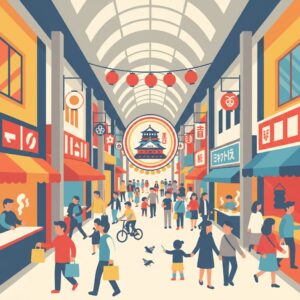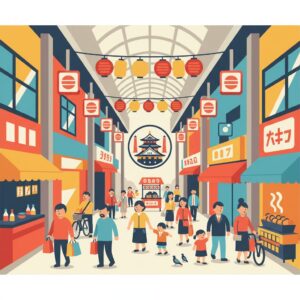
Walk down any covered shotengai shopping arcade in Osaka, past the pachinko parlors and the octopus ball stands, and you’ll see them. Tucked between a pharmacy and a fishmonger, you’ll find a doorway, often with a faded plastic food model of a parfait in the window and a sign written in swirling, old-fashioned katakana: 喫茶店, or kissaten. Your first impulse, fueled by a thousand Instagram posts, is to see a time capsule. You picture the dark wood paneling, the velvet-upholstered chairs in shades of burgundy or forest green, the soft glow of a Tiffany-style lamp. You can almost taste the lurid green melon soda with its scoop of vanilla ice cream, a perfect subject for your camera. And you wouldn’t be wrong. That aesthetic is a huge part of the initial appeal. It’s a tangible piece of the Showa Era (1926-1989), a nostalgic fantasy you can step into for the price of a cup of coffee.
But if you stop there, you’re missing the entire point. You’re mistaking the stage for the play. After living here and spending countless hours in these smoky, time-worn establishments, I’ve come to understand a fundamental truth about this city. The kissaten is not a museum. It’s not a theme park. It is, quite possibly, the most vital, misunderstood, and intensely Osakan social institution that exists. These aren’t just cafes; they are the unofficial community centers, the neighborhood living rooms, the daytime pubs for a city that runs on human connection. They are governed by a complex, unwritten code of conduct, populated by a cast of fiercely loyal regulars, and presided over by a ‘Master’ who is more of a community anchor than a barista. To truly understand the rhythm of daily life in Osaka, to grasp why this city feels so fundamentally different from the polished efficiency of Tokyo, you have to look past the retro filter and learn to read the room inside a kissaten.
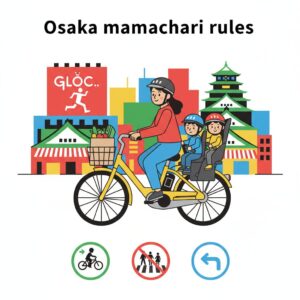
To truly understand the rhythm of daily life in Osaka, to grasp why this city feels so fundamentally different from the polished efficiency of Tokyo, you have to look past the retro filter and learn to read the room inside a kissaten, much like navigating the city requires understanding the unwritten rules of riding a mamachari.
Your Local Living Room: The Kissaten as a “Third Place”
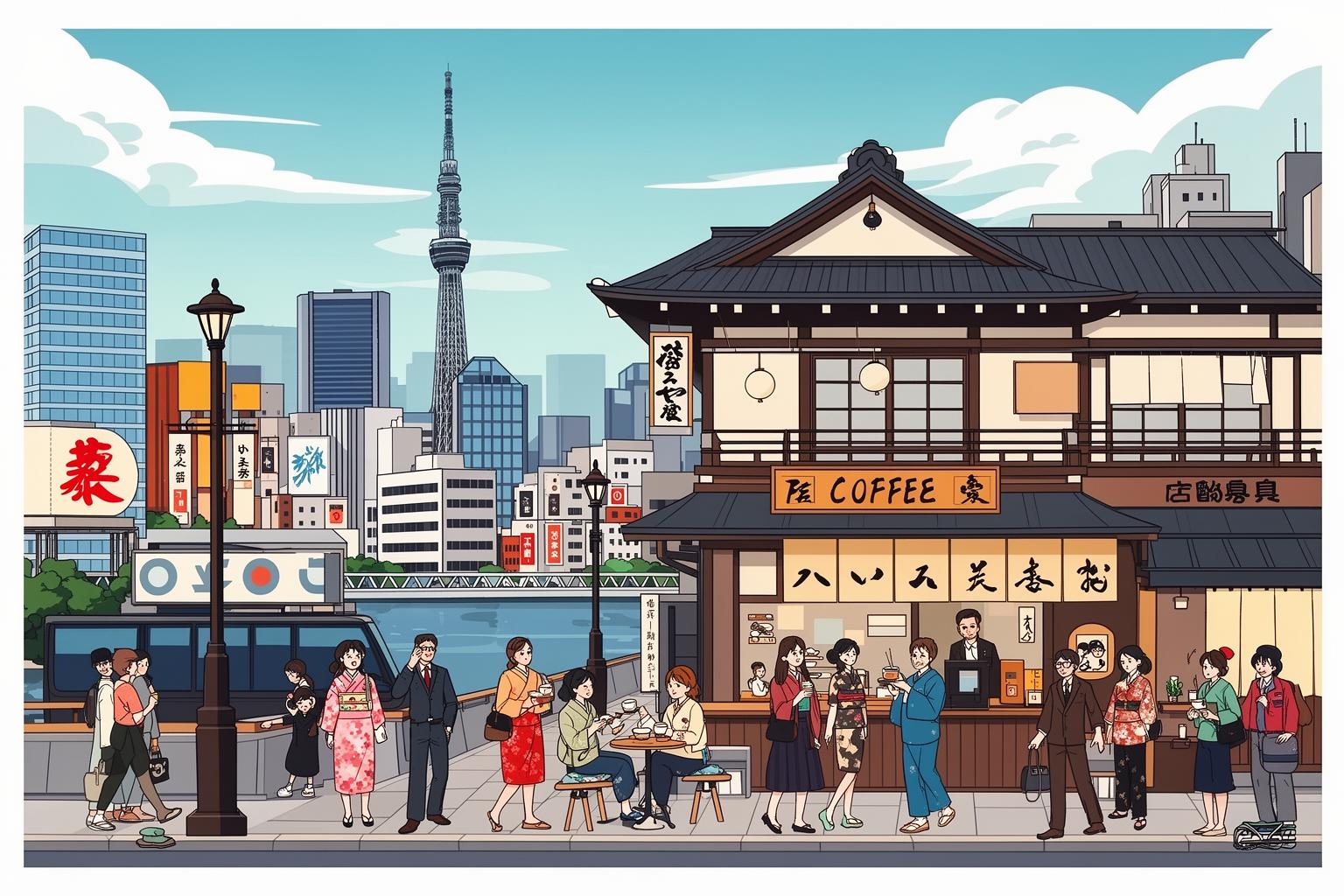
Sociologists refer to the “third place” as those environments outside our two main domains of home (first place) and work (second place). These spots serve as anchors of community life, fostering broader and more creative interactions. In many Western cultures, this might be a pub, barber shop, or public library. In modern Japan, especially Tokyo, this role has largely been taken over by impeccably clean, highly efficient chain cafes. You visit Starbucks to grab a finely crafted beverage, plug in your laptop with noise-canceling headphones, and retreat into your own private bubble. It’s a space designed for productivity and anonymous coexistence. You are a customer, a transaction. You are alone, together.
Osaka’s kissaten embrace a completely different philosophy. Here, the kissaten is the quintessential third place, but it operates less like a public space and more like a shared private space—a natural extension of the neighborhood’s living room. In dense residential areas like Tenma, with its vast Tenjinbashisuji shopping arcade, or the rougher, more down-to-earth streets of Kyobashi, you’ll find a kissaten on nearly every block. They don’t aim to attract tourists or design enthusiasts. Their survival hinges on a steady, daily flow of locals.
People don’t come here for the artisanal, single-origin pour-over. They come for consistency. They come to read the newspaper—not on a tablet, but the actual crinkly paper the shop provides. They come to rest after grocery shopping, bags slumped into the seat beside them. They come to have a cigarette and a moment of peace away from family or work. The coffee is often a dark, bitter, old-fashioned roast that’s been sitting on a warmer for some time. The toast is plain white bread. The point isn’t culinary excellence; the point is the chair. The value lies in renting a small piece of familiar, comfortable real estate for an hour, surrounded by known faces, where you aren’t required to be productive or performative. You are simply allowed to be.
The Master’s Domain: More Than Just a Barista
The entire world of a kissaten centers on a single, pivotal figure: the owner, universally called the “Master” (or “Mama-san” if female). This individual is not merely an employee, nor a “service professional” in the contemporary sense. The Master is a proprietor, an autocrat, a confidant, and a gatekeeper; their personality is woven into every facet of the establishment, from the strength of the coffee to the unspoken rules of conversation.
The Gatekeeper and the Confidant
To an outsider, the Master may appear gruff, quiet, or even intimidating. Often an older man or woman, they have stood behind the same counter for thirty, forty, or even fifty years. They move with economy of motion, wiping the counter, pouring coffee, and taking orders in a smooth, practiced rhythm. They might not greet you with the high-pitched, energetic “Irasshaimase!” typical of a convenience store; instead, you might receive a quiet nod.
But watch how they interact with the regulars, the jouren-san. Here, their true role is revealed. They know who takes milk and one sugar without needing to ask. They know that Tanaka-san’s wife is in the hospital and will inquire after her condition. They’ll hold a newspaper for Suzuki-san, who always arrives at 10 AM. They act as a central information hub for the neighborhood. They know who is hiring, whose business is struggling, whose grandchildren have just passed exams. They are the custodians of the community’s oral history and its daily heartbeat.
This makes them a figure of immense trust. People confide in the Master. They vent about their boss, their health, or the rising price of vegetables. The Master listens, offering a quiet grunt of sympathy or a brief, pragmatic piece of advice. They serve as the neighborhood’s secular priest, the bartender-therapist of the daytime world. The counter is their confessional, and the price of admission is a 400-yen cup of coffee.
Reading the Room, Reading the Master
The atmosphere of a kissaten can shift dramatically depending on the Master’s personality and even their mood on any given day. There are distinct archetypes. There’s the Silent Craftsman, a man utterly devoted to his coffee syphon, treating the process with the solemnity of a tea ceremony. His shop is usually quiet—a place for contemplation—and tries to engage him in idle chatter would be a social misstep. Then there’s the Chatty Mama-san, a woman energized by gossip and news. Her shop is lively, filled with laughter and overlapping conversation. She is the conductor of the social orchestra. There’s also the Gruff but Kindly Oji-san (uncle), who seems perpetually annoyed but surprises you by remembering you prefer the egg salad sandwich and having it ready before you order.
Learning to read the Master is the first step to cracking the kissaten code. Observe. Are they engaged in a long conversation with a regular at the counter? It’s probably a social shop. Are they meticulously polishing glasses with their back to the room? It’s likely a place for quiet reflection. Their posture, tone, and level of engagement—all set the rules for everyone else present.
The Unwritten Rules: Navigating the Social Maze
No kissaten displays a sign on the wall outlining its rules, yet the social conventions are as strict and intricate as any ancient courtly etiquette. A foreigner, or even a young Japanese person from out of town, can enter and unknowingly commit numerous social blunders. Breaking these codes won’t get you expelled, but it will clearly mark you as an outsider, a ghost in the machine unfamiliar with the way things work. Grasping these rules is essential to transitioning from a mere customer to a welcome presence.
The Politics of Seating
This is perhaps the most crucial and invisible rule. In a kissaten, not all seats are equal. They are, in effect, owned. That particular booth in the corner with the best view of the TV? That belongs to Yamamoto-san, who arrives daily at 2 PM to watch the horse racing results. The second stool from the left at the counter? That’s where Watanabe-san sits to read the sports pages and complain about the Hanshin Tigers baseball team with the Master. These are not formal reservations, but ironclad social contracts forged over years, sometimes decades, of repetition.
A newcomer who casually occupies one of these sacred spots can cause a quiet, tangible tension to ripple through the room. The Master may hesitate before taking your order. The other regulars exchange subtle glances. When the rightful owner of the seat arrives, they pause at the door, momentarily puzzled. A delicate, unspoken negotiation begins. Usually, the Master will politely ask the newcomer to move, gesturing to another available table. To the uninitiated, it might seem impolite. To everyone present, it’s the simple, necessary act of restoring the natural order.
As an outsider, the safest approach is to pause at the door and let the Master guide you to a seat. Avoid prime spots—the best-looking booth, the seat with the power outlet. Opt for a neutral, unobtrusive place. Over time, as you become a regular yourself, you may naturally find “your” seat—a place that becomes yours through consistent, respectful presence.
The Sound of Silence, The Roar of the Crowd
The soundscape of an Osaka kissaten differs vastly from a modern cafe. The dominant noise is not the hiss of an espresso machine or the click of laptop keys. It is the constant, low-level blare of a television. The TV is not mere background noise; it serves as the communal hearth. It’s almost always tuned to a daytime waido show (a chaotic mix of news, celebrity gossip, and cooking segments) or a sports event. The content on screen shapes the flow of conversation.
When surprising news breaks, the entire room reacts. It’s common for a man in one corner to shout his opinion about a political scandal to someone across the room. These aren’t private conversations in isolated bubbles; the whole shop operates as a single, porous conversational space. A stranger might lean over and comment on the article in your newspaper. Using headphones to block out the environment is considered deeply anti-social. It’s like erecting a wall in the middle of a family living room. You signal that you’re not part of the community, that you’re merely there to use the Wi-Fi—which, incidentally, many old-school kissaten proudly do not offer.
The Morning Ritual
To experience the kissaten in its purest form, visit in the morning. Between roughly 7 AM and 11 AM, most shops serve mōningu sābisu, or the “Morning Set.” For the price of a single cup of coffee (usually 400-500 yen), you receive a small, complimentary breakfast. The offerings are remarkably consistent across the city: a thick, fluffy slice of shokupan toast (often called simply “toast”), a hard-boiled egg, and sometimes a tiny salad with bright orange dressing.
This isn’t a meal designed to impress. It’s a social and economic contract. For regulars, especially the elderly, it’s their daily check-in. It ensures they leave the house, see others, and enjoy a cheap, simple breakfast. The Master can keep an eye on them; if an elderly regular misses their morning set for several days, it’s cause for concern. For the shop, it guarantees a steady flow of customers during an otherwise quiet time. Profit margins on the food are irrelevant. The aim is to bring people in, cementing the kissaten as an indispensable part of their daily routine.
The Art of Lingering
In a fast-paced city, the kissaten is an oasis of slowness. The modern cafe business model relies on quick table turnover: get your coffee, drink it, and leave. Lingering too long with an empty cup during busy hours feels rude. The kissaten reverses this logic. Here, lingering is the point.
Nursing a single cup of coffee for an hour or two while carefully reading every section of the newspaper is not only acceptable; it’s the norm. You’re paying for the space as much as for the drink. The Master understands this. There’s no pressure to order more or to free your seat. This fosters a relaxed, unhurried atmosphere almost impossible to find elsewhere. It’s a place to kill time between appointments, wait out a sudden downpour, or simply sit and think without feeling pressured to be constantly moving, doing, or buying. This respect for unhurried time is a small but potent rebellion against the relentless efficiency of modern life.
The Jouren Ecosystem: A Cast of Characters
Over time, you start to recognize the familiar faces that make up the kissaten’s ecosystem. They are the jouren-san, the regular customers, who form a self-regulating micro-community. Their interactions exemplify unspoken communication and long-term relationships.
There’s the group of elderly men, the Oji-sans, who claim the same table every morning. They read the sports pages, smoke, and converse in gruff, clipped sentences about baseball, golf, and minor health issues. They’ve known each other for decades, their friendship forged in the smoky atmosphere of this very room.
Then there’s the local business owner, perhaps from the nearby tailor or bookstore. He drops in several times a day for a quick coffee and cigarette, exchanging brief, rapid greetings and snippets of neighborhood news with the Master and others at the counter. His visits serve as a way to gauge the local economy and social scene.
The housewives, the Oba-chans, arrive in the late morning after their shopping is done. They come in pairs or trios, their chatter a lively, energetic buzz. They swap gossip, exchange recipes, and grumble about their husbands. Their laughter brings a different energy to the room.
These groups coexist in a delicate harmony. Though they might not all interact directly, they remain aware of one another. They notice when someone gets a haircut. They notice when a usual face is missing. I’ve seen regulars bring back omiyage (souvenirs) from their travels, not just for the Master, but enough to share with other regulars present at the time. It’s a gesture that says, “You are my community. I thought of you while I was away.” This small act reveals the deep, familial bonds that underpin the entire establishment.
Why Osaka’s Kissaten Feel Different
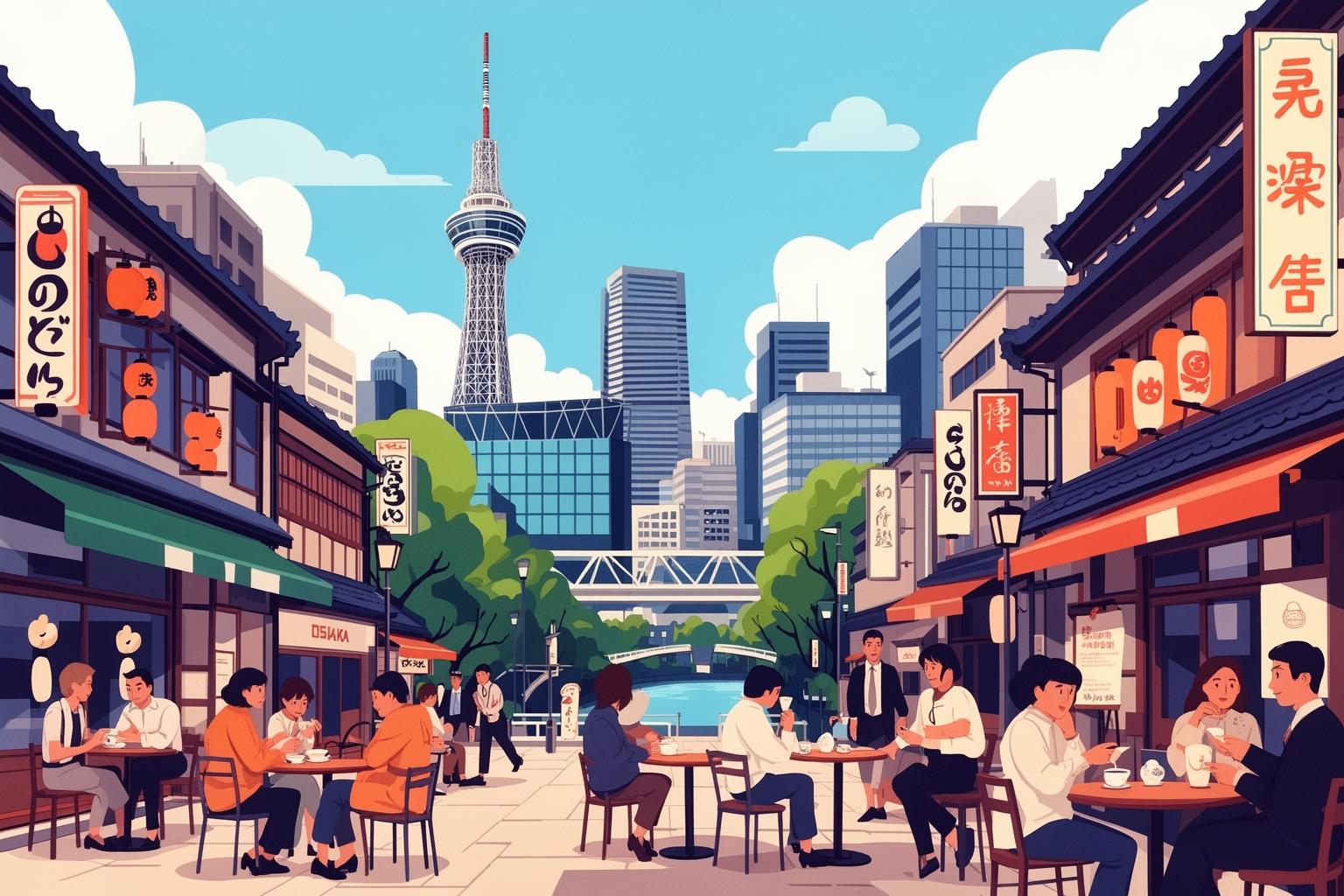
Kissaten can be found throughout Japan, but those in Osaka have a distinctly different feel. The difference is subtle yet significant, reflecting the very character of the city itself.
Community over Curation: Osaka vs. Tokyo
In Tokyo, kissaten culture often emphasizes aesthetics and concept. You’ll encounter meticulously curated meikyoku kissa that play only classical music on vintage audio equipment, where conversation is discouraged. Some kissaten resemble the work of top-tier interior designers, serving expensive, carefully sourced coffee to a stylish clientele. They are serene, elegant, and designed for solitary enjoyment. They serve as destinations.
In contrast, Osaka’s kissaten are rarely destinations; they function as infrastructure. They are practical, utilitarian, and deeply embedded in the everyday life of the working class. Their decor is usually an eclectic mix of furniture and knick-knacks accumulated over time, rather than a single, unified design. The aim isn’t to create a perfect, Instagram-worthy scene. Instead, it’s about offering a dependable, comfortable space for the community. It’s less about curation and more about accumulation. The layers of smoke stains, worn spots on velvet seats, and nicks on wooden tables aren’t flaws—they’re a patina of lived experience. It’s a living space, not a museum.
The Echo of Merchant Culture
This pragmatic, community-centered approach is deeply rooted in Osaka’s history as Japan’s great merchant city. Unlike the samurai-led capital of Edo (now Tokyo), Osaka’s strength and identity came from its shonin, its merchants and craftsmen. For them, business relied on relationships, trust, and a constant flow of information. Kissaten, like the teahouses that preceded them, became key venues for these interactions.
This legacy endures today. An Osaka kissaten is a place where information is shared openly. You might overhear a stock tip, hear about a new shop opening nearby, or receive a recommendation for a trustworthy plumber. It acts as a network—an analog social media platform for the neighborhood. This focus on practical communication and relationship-building is quintessentially Osaka. It’s a city that prizes directness, pragmatism, and value—and the morning set of coffee, toast, and community for a few hundred yen is one of the best bargains around.
A Foreigner’s Guide to Fitting In
So, how can you, as a non-Japanese resident, gain access to this deeply local world? It requires patience, keen observation, and a willingness to set aside your own cultural expectations of what a café should be. It is a gradual process of earning trust and acceptance.
Finding “Your” Spot
Don’t just walk into the first kissaten you come across. Do some research. Stroll past several in your neighborhood at different times of day. Peek inside. What kind of atmosphere do you sense? Is it quietly serene with everyone reading, or lively with animated conversations? Is it smoky? (Most are, so be prepared.) Choose one that aligns with the energy level you find comfortable. The aim is to find a spot you can realistically visit regularly.
The First Visit and Beyond
On your first visit, be a silent observer. Avoid pulling out your phone to take photos. This is not a tourist attraction; it’s someone’s personal space. Allow the Master to seat you. Order something simple—“Hotto ko-hi” (hot coffee) or “Aisu ko-hi” (iced coffee). Bring a book or newspaper. Sit, sip, and absorb the atmosphere. Listen to the flow of conversations around you.
Consistency is key. Try to return at roughly the same time once or twice a week. Sit in a similar spot. After a few visits, the Master will begin to recognize you. You might receive a slightly warmer nod. This is progress. Respond with a small nod, an eshaku. The goal is to quietly and respectfully become part of the scenery.
True acceptance may take weeks, or even months. It will likely come in a subtle, unexpected moment. The Master might ask where you’re from. A regular sitting nearby might make a comment about the weather. This is your invitation. Reply simply and politely. Don’t force a lengthy conversation. Just respond to the opening offered. This is how the bridge is built—one small, quiet exchange at a time.
What Not to Do
The list of “don’ts” is arguably even more important than the “dos.”
- Don’t treat the space like your office. Taking out a large laptop and settling in for a day’s work is a serious breach of etiquette. A small notebook or book is acceptable.
- Don’t take business calls. Conversations here are communal, not private and professional.
- Don’t complain or make special requests. They don’t offer oat milk, decaf, or gluten-free options. You are there to participate in their world, not to make them accommodate yours.
- Don’t be a tourist. Avoid photographing other customers. You are a guest in their living room, not a documentarian.
The Future of a Fading Culture?
It would be easy to romanticize the kissaten and label it a dying breed. The owners are aging, and their children often pursue different, more modern careers. The economics are challenging, competing against global chains with vast marketing budgets. Younger generations are frequently more attracted to sleek, bright, Wi-Fi-equipped cafes that cater to a digital lifestyle.
And yet, they endure. They persist with a stubbornness that reflects Osaka itself. Why? Because they offer something that the shiny new cafes cannot: a profound, tangible sense of belonging. They serve as a powerful antidote to the loneliness and anonymity that can permeate modern urban life. They stand as a testament to a city that still values face-to-face community, neighborhood ties, and the simple, unhurried joy of sharing a space with fellow residents.
As long as there are people in Osaka who cherish a quiet conversation over a Wi-Fi connection, who prefer a familiar face to a corporate logo, and who believe the best deal in town is a cheap cup of coffee accompanied by human connection, the spirit of the kissaten will endure. It may seem like a relic from the past, but its role is more vital than ever. It is the beating, smoky, coffee-stained heart of Osaka.