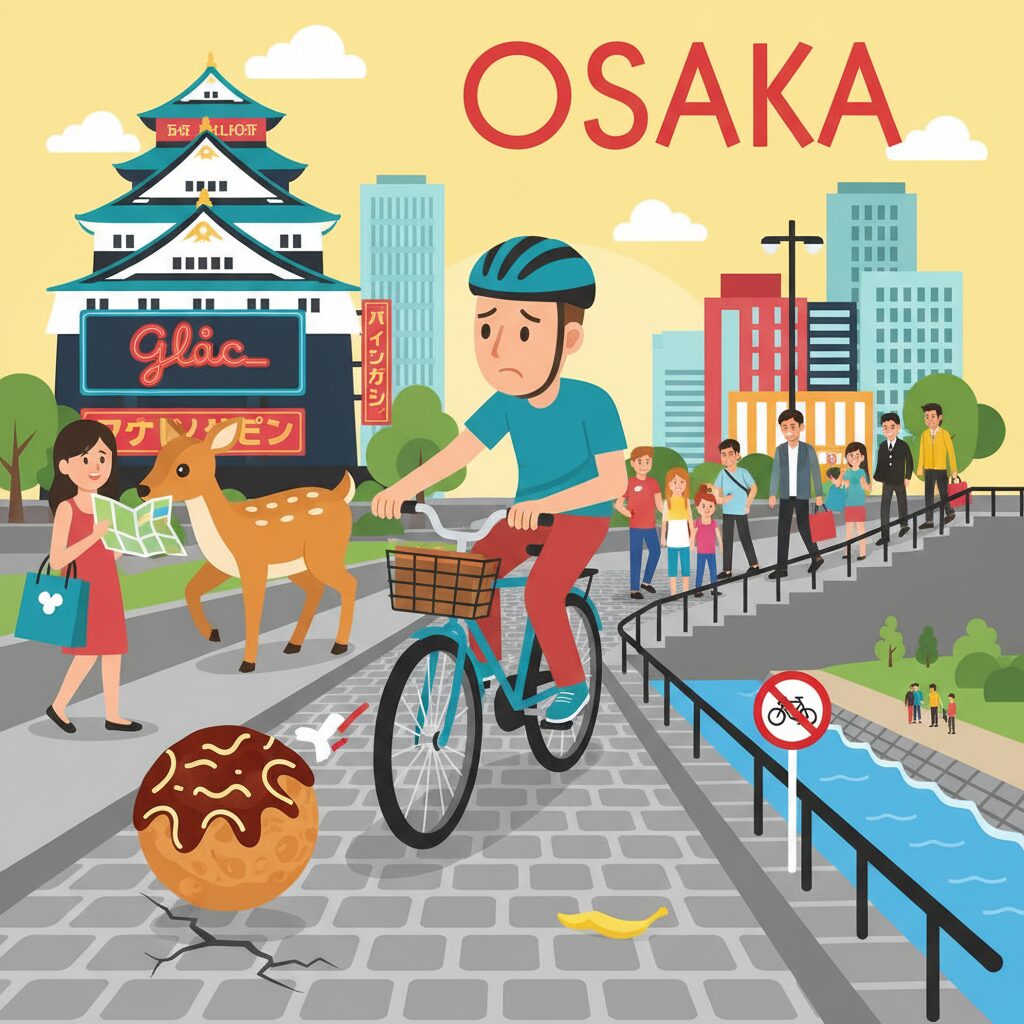
Step off the train at any station in Osaka, from the polished commercial hub of Umeda to a quiet residential stop on the Hankyu line, and you’ll be greeted by the same sight: a sprawling, metallic ocean of bicycles. They’re crammed into multi-story municipal garages, chained to every available railing, and clustered in chaotic flocks on the sidewalks. This isn’t just a mode of transport; it’s the city’s circulatory system, the lifeblood of daily existence. In a city as flat as a tatami mat and as densely packed as a box of Pocky, the humble bicycle, or jitensha, isn’t a choice—it’s a declaration of independence. It’s the freedom to bypass a crowded subway car, to discover a hidden takoyaki stand in a back alley, to truly own your corner of this sprawling metropolis. But like anything in Osaka, this freedom comes with a side of chaos. It’s a dance of unspoken rules, a test of peripheral vision, and a daily negotiation with grandmothers who have the unwavering momentum of a freight train. Riding a bike here is the fastest way to understand the city’s soul: pragmatic, efficient, a little bit reckless, and governed by a complex social code that’s written nowhere but understood by everyone. To navigate Osaka on two wheels is to learn the rhythm of the city itself.
To truly master this complex social code, it helps to understand other unique aspects of Osaka’s culture, such as the art of banter and bargaining in its local shotengai.
The Iron Steed of Naniwa: Understanding the Mamachari
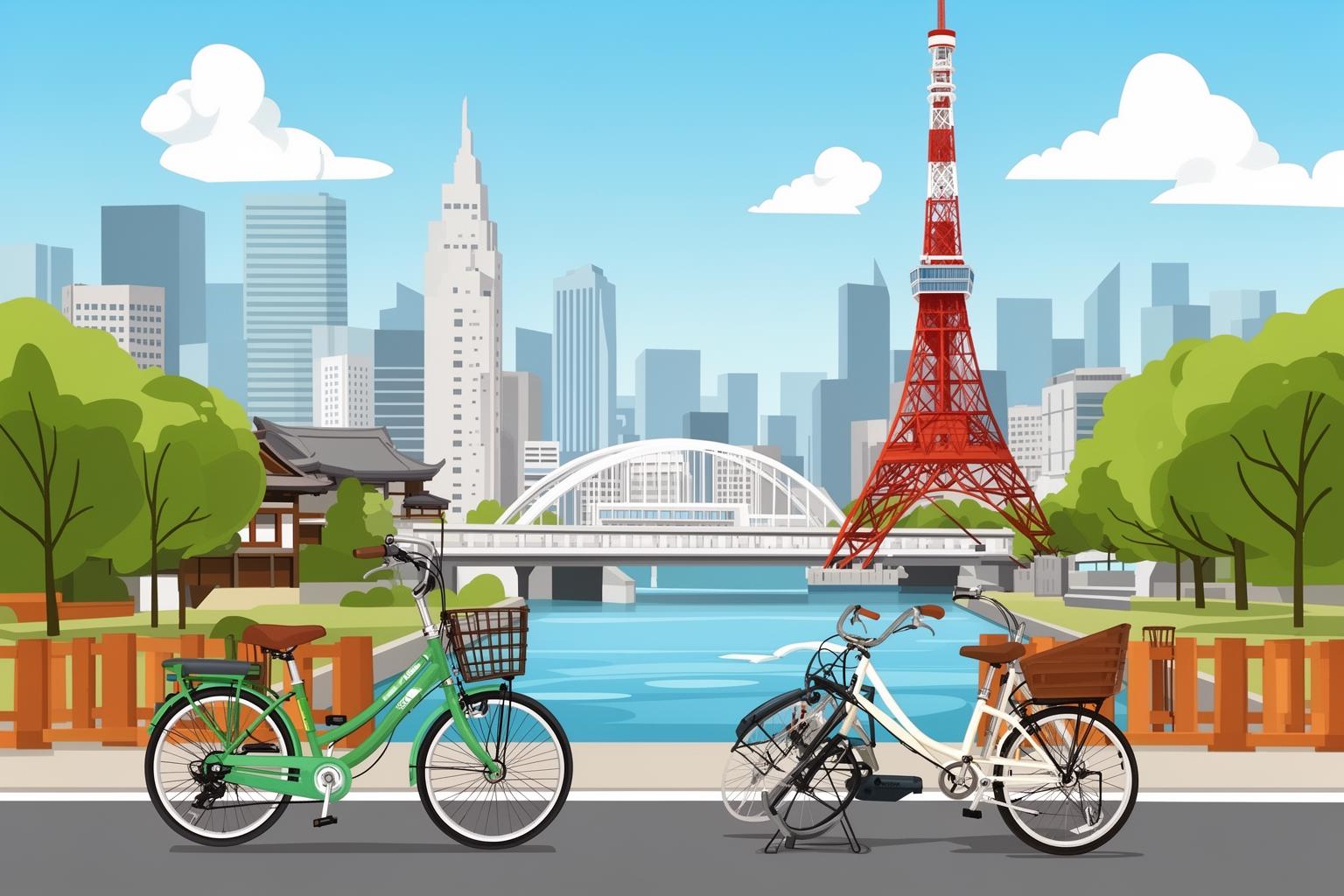
Before discussing cycling itself, we must first consider the machine. Forget about sleek carbon-fiber road bikes or rugged mountain bikes. The undisputed ruler of Osaka’s streets is the mamachari—the “mom’s chariot.” This is not a bike designed for speed or sport; it’s a dependable workhorse, a rolling embodiment of Japanese practicality. With its step-through frame for easy mounting, upright handlebars encouraging a relaxed posture, and a built-in front basket, the mamachari is crafted for one purpose: getting life done. It’s the urban equivalent of a pickup truck, ready to carry a week’s groceries from the local Tamade supermarket, a futon to the cleaners, or even a small child securely seated on the back.
More Than a Bicycle, It’s a Lifeline
The mamachari symbolizes egalitarianism. You’ll spot high school students in crisp uniforms riding them to school, salarymen in suits pedaling briskly to the train station, and elderly residents making their way to the community center. Its charm lies in its complete lack of pretension. It is deliberately uncool, which in Osaka is the coolest quality of all. This city prioritizes function over form, results over appearance. Why drive a car and pay for parking and gas when this fifty-dollar, single-speed bike can get you and your daikon radishes home just as effectively? The mamachari captures the Osakan spirit of kechi—not stinginess, but a fierce, almost spiritual devotion to maximizing value for your money and effort. It’s a tool whose dents, scratches, and slightly rusted basket serve as badges of honor, proof of a life lived resourcefully.
The Electric Revolution and the Rise of the Super-Mama
In recent years, the classic mamachari has evolved. The advent of the den-do jitensha, the electric-assist bike, has shifted the landscape, especially for parents. These are mamacharis on steroids, equipped with a quiet yet powerful electric motor that makes hauling two children and groceries up a gentle hill effortless. Although pricey—often costing more than a used scooter—they represent a significant improvement in quality of life. The “Super-Mama” on her electric chariot is a force of nature. She can cover vast distances—from daycare to the supermarket to the park—without breaking a sweat. This technological upgrade has reinforced the bicycle’s role as the family’s primary vehicle in urban Osaka. It enables families to live comfortably without the financial and logistical challenges of owning a car in a city where space is a precious commodity. The soft hum of these electric motors has become a familiar part of the city’s soundscape, the soundtrack of modern family life in motion.
The Urban Landscape: A Cyclist’s Paradise, A Pedestrian’s Puzzle
Osaka’s geography and urban design serve as the backdrop for this cycling drama. The city’s layout is a major factor in why bicycles have become deeply embedded in the local culture. It’s a landscape that almost appears tailor-made for two-wheeled travel, for better or worse.
The Blessing of the Plains
Unlike the surprisingly hilly terrain of Tokyo or the steep slopes of nearby Kobe, Osaka is, for the most part, gloriously and relentlessly flat. The city rests on a vast alluvial plain, a geographic feature that has influenced its history and modern identity. This absence of hills is the single most significant factor enabling its cycling culture. It means that nearly anyone, regardless of age or fitness, can rely on a bicycle for practical, everyday transportation. A five-kilometer ride is not an intimidating physical challenge; it’s a simple, straightforward trip. This flatness removes a major obstacle, making the bicycle the most accessible form of transport available. It explains why seventy-year-old men cycle to the public bathhouse with the same ease as teenagers heading to a concert at Osaka-jo Hall. The terrain of the city makes cycling not only possible but sensible.
Shotengai: The Unofficial Highways
Another distinctively Osakan feature that supports cyclists is the shotengai, the covered shopping arcade. These pedestrian-centered commercial streets weave through the city, serving as vital lifelines for local neighborhoods. Although officially intended for walking, in Osaka they function as de facto bicycle highways. The Tenjinbashisuji Shotengai, Japan’s longest at over 2.6 kilometers, exemplifies this perfectly. During the day, it is a river of people—shoppers, tourists, and delivery workers all competing for space. Running through the heart of it is a steady flow of cyclists. They move with practiced, almost fluid grace, weaving through crowds, ringing bells sparingly, and depending on a shared, unspoken understanding to avoid collisions. For cyclists, the shotengai provides a direct, car-free route through neighborhoods, a sheltered path protected from the scorching summer sun or sudden summer rain. It’s a prime example of how Osakans modify public spaces to meet practical needs, adapting intended uses to create a more efficient, if somewhat chaotic, reality.
The Unwritten Codex: Navigating Osaka’s Cycling Culture
Here lies the core of the issue. Official traffic laws do exist, naturally. Bicycles are legally categorized as light vehicles and are required to ride on the left side of the road. However, in Osaka, the written law acts more like a gentle suggestion. The true rules form a complex, unwritten code of social signals, assertive maneuvering, and situational awareness. To survive and thrive as a cyclist in Osaka, you must learn to read the air, not just the rulebook.
The Great Sidewalk Debate: A Place of Ongoing Negotiation
The first and most crucial rule to grasp is this: the sidewalk is open territory. While police in Tokyo might stop you for riding on a crowded sidewalk, in Osaka, it’s the norm. Why? Roads are often narrow, and cars, driven by equally impatient people, move fast. The sidewalk, though filled with pedestrians, feels like the safer of two risky options. This turns every pavement stretch into a dynamic negotiating space. There are no designated “bicycle lanes” or “pedestrian lanes.” It’s a shared area where your right to be there depends on your speed, confidence, and ability to anticipate others’ movements.
Reading the Air, Not the Signs
Success hinges on kuuki wo yomu, or “reading the air.” You learn to notice a pedestrian’s subtle hesitation before changing direction. You sense another cyclist’s trajectory approaching from a side street. You recognize that an elderly woman with a shopping cart is an immovable object around which you must flow. It’s an advanced form of processing—continuous micro-adjustments and predictions. This contrasts sharply with Tokyo’s approach, where people tend to follow marked paths and wait for clear signals. In Osaka, you carve your own path moment by moment through a shared understanding that everyone simply wants to get where they’re going as efficiently as possible.
The Hierarchy of the Sidewalk
Although it may seem chaotic, a loose, informal hierarchy exists. Pedestrians with children or the elderly theoretically have the highest right of way. In practice, the most assertive party often prevails. A fast cyclist with a determined look often parts pedestrians like the Red Sea. The mamachari, with its broad frame and heavy load, commands space by presence alone. The most feared figure is the oba-chan on an electric-assist bike; she yields to no one. Knowing your place in this fluid hierarchy is essential to avoiding conflicts and collisions.
The Symphony of the Bell: Communication or Combat?
In most cultures, a bicycle bell is a polite ding-ding signaling, “Excuse me, I’m approaching.” In Osaka, the bell is a weapon. It’s used less as a gentle alert and more as a command: “Move.” A rapid, relentless ringing from behind is not a request; it demands you clear the way. This can be startling for newcomers. It might feel aggressive, even rude. But from the Osakan view, it’s simply efficient communication. Why waste time with ambiguity? The goal is to get through, and the bell is the most direct tool to achieve that. It mirrors the city’s famously straightforward speech and actions. There’s no room for polite pretense when you’re rushing home before your vegetables wilt.
The Art of the Weave: A High-Stakes Ballet
Watch an experienced Osaka cyclist navigate a crowded area like Namba station during rush hour. It’s a spectacle. A ballet of near-misses and instinctive adjustments. They don’t stop; instead, they adjust their speed, shift their weight, and turn handlebars with delicate precision to slip through gaps that seem impossibly narrow. This skill, the “weave,” is perfected through years of daily practice. It demands complete decisiveness. Hesitation means losing momentum and becoming an obstacle. You must commit fully to your path, trusting others to adjust around you as you adjust around them. This reflects the Osakan mindset: be bold, decisive, and trust the chaotic yet functional rhythm of the crowd.
Parking as Anarchy: The Daily Scramble for Space
The final challenge of any bicycle journey is finding a spot to park. While major train stations offer large, paid bicycle parking garages, for short trips to shops or restaurants, the situation is pure anarchy. Legally, you must use designated parking areas. In truth, people park anywhere and everywhere. Sidewalks become cluttered obstacle courses of bikes left haphazardly. The unspoken rule is to park where you inconvenience the fewest people, though this is highly subjective. This has prompted a city-wide crackdown. You often see abandoned or illegally parked bicycles tagged with warning notices. Bikes not moved within a set period are towed to a municipal impound lot, where retrieval requires a hefty fee. This creates an ongoing cat-and-mouse game between authorities enforcing order and citizens simply seeking a place to leave their bikes briefly. It’s a daily struggle that highlights the tension between official regulations and grassroots convenience.
The People on the Pedals: A Cross-Section of Osaka Life
Observing the cyclists of Osaka is like viewing a living demographic map of the city. Every age group and every walk of life is present, each showcasing their own distinct style and purpose. Their presence on the streets reveals the story of how this city functions.
The Oba-chan Imperium: Queens of the Asphalt Jungle
Any conversation about Osaka cycling wouldn’t be complete without honoring the oba-chan, the middle-aged and elderly women who dominate the sidewalks. Typically dressed in their trademark leopard-print shirts and wide, sun-shielding visors, they ride their electric-assist mamacharis with a formidable sense of determination. Their baskets brim with groceries, their posture is impeccably upright, and their gaze stays fixed ahead. They are the city’s matriarchs, and their cycling style mirrors their status. They are direct, unstoppable, and possess deep knowledge of the city’s shortcuts and hidden alleys. They have claimed their place on these streets through decades of raising families and managing households, moving with a hard-earned confidence that borders on entitlement. Blocking the path of an oba-chan on a mission is a rookie error you only make once.
The Family Convoy: Juggling Kids, Groceries, and Balance
You will be astonished at what bicycles can carry. It is common to see a mother or father cycling with a small child seated on the front handlebars and another on the back, while bags of groceries dangle from hooks. It is a feat of balance and logistics. This isn’t a leisure activity; it is the heart of family transportation. It’s how children get to kindergarten, how shopping is managed, and how the family reaches the local park on a Sunday. This dependence on bicycles shapes family life and neighborhood design. It encourages a hyper-local lifestyle, where everything you need—schools, clinics, shops—is within a 15-minute ride. This is an incredibly efficient and eco-friendly way of living, born from the practical demands of urban density.
The Commuter Class: From Home to Station and Back Again
Early mornings and late evenings reveal another group of cyclists: students and office workers. For them, the bicycle is a vital link in their daily commute, the “last mile” solution connecting their home to the nearest train station. They ride with brisk, focused efficiency, weaving through traffic to catch their trains. The scale of this is evident at any major station’s bike parking facility, where thousands of bicycles are neatly stored in automated, multi-level racks. Paying a monthly fee for one of these spots has become a standard household cost, as essential as a train pass. This symbiotic bond between bicycles and the train network is what makes living in Osaka’s sprawling suburbs both practical and affordable.
The Perils and Paperwork: The Gritty Reality of Two-Wheeled Life
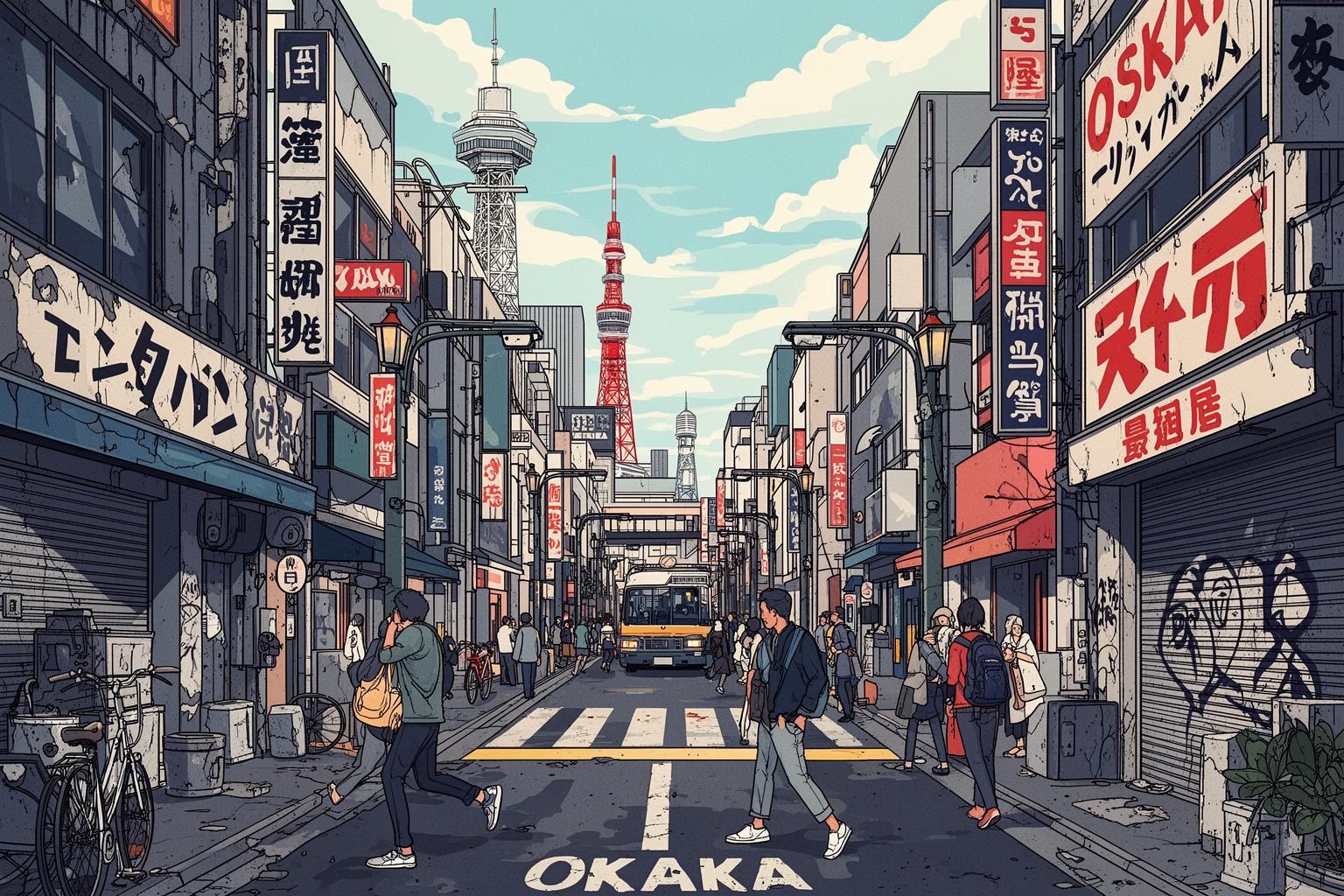
Despite its freedom and convenience, life as a cyclist in Osaka involves certain risks and bureaucratic challenges. The city’s vibrant energy has a darker side, making it essential to be prepared for the practical realities of accidents, theft, and encounters with law enforcement.
The Inevitability of Impact: Accidents and Insurance
With millions of people navigating crowded spaces by bicycle, accidents are not a question of if, but when. Most are minor—a scraped knee from a sudden stop or a bruised ego from a low-speed collision with another cyclist. However, more serious accidents involving pedestrians or cars remain a constant risk. The boundary between sidewalk and road is often unclear, and drivers, pedestrians, and cyclists frequently have conflicting expectations. A car turning left might not see a cyclist rapidly approaching on the sidewalk, while a pedestrian stepping out of a store may not look for an oncoming bike. This is why, in 2016, Osaka Prefecture made bicycle liability insurance mandatory for all riders. It recognizes the inherent dangers of the system. Obtaining this insurance is simple and affordable, often available at convenience stores, but it is a non-negotiable requirement. Riding without it is not only illegal but also financially irresponsible.
The Phantom Thief: On Locks, Loss, and Registration
Bike theft is unfortunately common in Osaka. The city is filled with old, inexpensive mamacharis, which tend to be frequent targets. A basic built-in ring lock on the rear wheel isn’t sufficient, as professional thieves can break these within seconds. To protect your bike, you need a second, heavy-duty chain or U-lock to secure the frame to an immovable object. Even then, nothing is guaranteed. To combat theft, Japan has a national bicycle registration system called bouhan touroku. When purchasing a new or used bike, the shop will ask you to complete a form and pay a small fee. You’ll receive a small orange or yellow sticker with a registration number placed on the bike’s frame. This links the bicycle to you, making it harder for thieves to resell and easier for police to return if recovered. It’s a simple but essential piece of paperwork.
“Chotto, Sumimasen”: The Random Police Stop
One of the most unexpected experiences for foreign cyclists in Osaka is the random police stop. While riding, a police officer may politely ask you to stop—not as an accusation but to conduct a routine check of your bike’s registration. They will request your residence card and use their radio to verify that the bike’s bouhan touroku number matches your name and that the bike hasn’t been reported stolen. For foreigners, especially those who don’t appear Japanese, this can sometimes feel like being singled out. Although profiling may play a role, these checks are very common for everyone. The best way to handle the situation is to remain polite, have your residence card ready, and ensure your bike is properly registered to you. It’s a minor inconvenience but part of a system designed to deter the widespread theft.
A Tale of Two Cities: Cycling in Osaka vs. Tokyo
Comparing the cycling cultures of Osaka and Tokyo provides an ideal perspective for understanding the fundamental differences between these two great Japanese cities. It epitomizes the contrast of order versus organized chaos, top-down planning versus bottom-up pragmatism.
Rules as Fixed Boundaries vs. Rules as Flexible Guidelines
In Tokyo, there is a stronger tendency to follow official rules. Though not flawless, you are much more likely to see cyclists riding on the road, stopping at red lights, and using designated bike lanes where available. There is a tangible social pressure to adhere to the established order and avoid causing inconvenience to others. Public space is regarded as something to be shared under a clear set of regulations. In contrast, Osaka’s approach is more individualistic and context-dependent. The rule is what works best in the moment. If the road is busy and the sidewalk is clear, the sidewalk becomes the preferred route. If a red light applies to cars but no pedestrians are present, cautiously rolling through it is generally acceptable. This attitude isn’t rooted in defiance but in a pragmatic belief that individual efficiency benefits the collective. It reflects the merchant city spirit: find the opportunity, take shortcuts, and don’t be slowed down by unnecessary rules.
Infrastructure and Philosophy: Diverging Urban Approaches
In recent years, Tokyo has invested more heavily in dedicated cycling infrastructure. You’ll find more streets with clearly marked bike lanes and stronger public campaigns promoting their use. The underlying philosophy is to establish an orderly system and expect compliance. Osaka, meanwhile, has been slower to develop such infrastructure. Bike lanes are scarce and often seem to vanish unpredictably. The city’s strategy has focused less on redesigning streets and more on embracing the chaotic, mixed-use character of its public spaces. The solution relies less on paint and pavement and more on the populace’s adaptive skills. The city places trust in its citizens to negotiate space cooperatively. This reveals a fundamental difference in trust: Tokyo puts faith in the system, while Osaka relies on its people.
Your Guide to Joining the Flow: Practical Steps for the Osaka Cyclist
So, you’re ready to embrace the chaos and join the ranks of Osaka’s cyclists. It is unquestionably the best way to experience the city, but going in prepared will save you a lot of trouble. Here are some practical steps to help you get started.
Choosing Your Ride: Function Over Style
First, choose the right bike. For most people, a simple, single-speed mamachari is the ideal choice. It’s affordable, sturdy, and discreet, making it less attractive to thieves. You can buy a new one at a reasonable price or find a used one at a recycle shop for very little. If your route includes hills or you need to carry heavy loads, investing in an electric-assist model will be a game changer. A folding bike is a good choice if you plan to combine cycling with train travel, but for straightforward city use, nothing beats the classic mamachari. Focus on a good basket, a solid lock, and built-in lighting.
Staying Legal: Registration, Insurance, and Essentials
Don’t overlook the paperwork. When you get your bike, make sure you complete the bouhan touroku (anti-theft registration) right away; the shop will usually take care of this for you. Next, sign up for bicycle liability insurance, which you can do online or via payment machines at most convenience stores. Major insurance companies offer affordable plans. Finally, ensure your bike has the required equipment: a functioning brake, a headlight, and a bell. Though the bell’s use can be culturally tricky, it’s legally mandatory.
A Survivalist’s Approach: Tips for Staying Safe and Upright
Lastly, adopt the right mindset. Be predictable in your actions, but stay ready for others to be unpredictable. Sharpen your peripheral vision—threats and opportunities can come from any direction. Avoid riding with headphones; you need to hear the hum of an electric bike behind you or a pedestrian’s warning shout. Always assume that drivers might not see you. When riding through crowded shotengai, keep your speed low. Match the pedestrian flow and weave gently through the crowd. Learn to read the city’s rhythm—the morning rush to the station, the afternoon lull, the evening flood of commuters heading home. Cycling in Osaka is a skill, and like any skill, it requires practice. Start in quiet residential neighborhoods and gradually build your confidence. Before long, you’ll find your rhythm, and the chaotic dance of Osaka’s sidewalks will start to make perfect, beautiful sense.