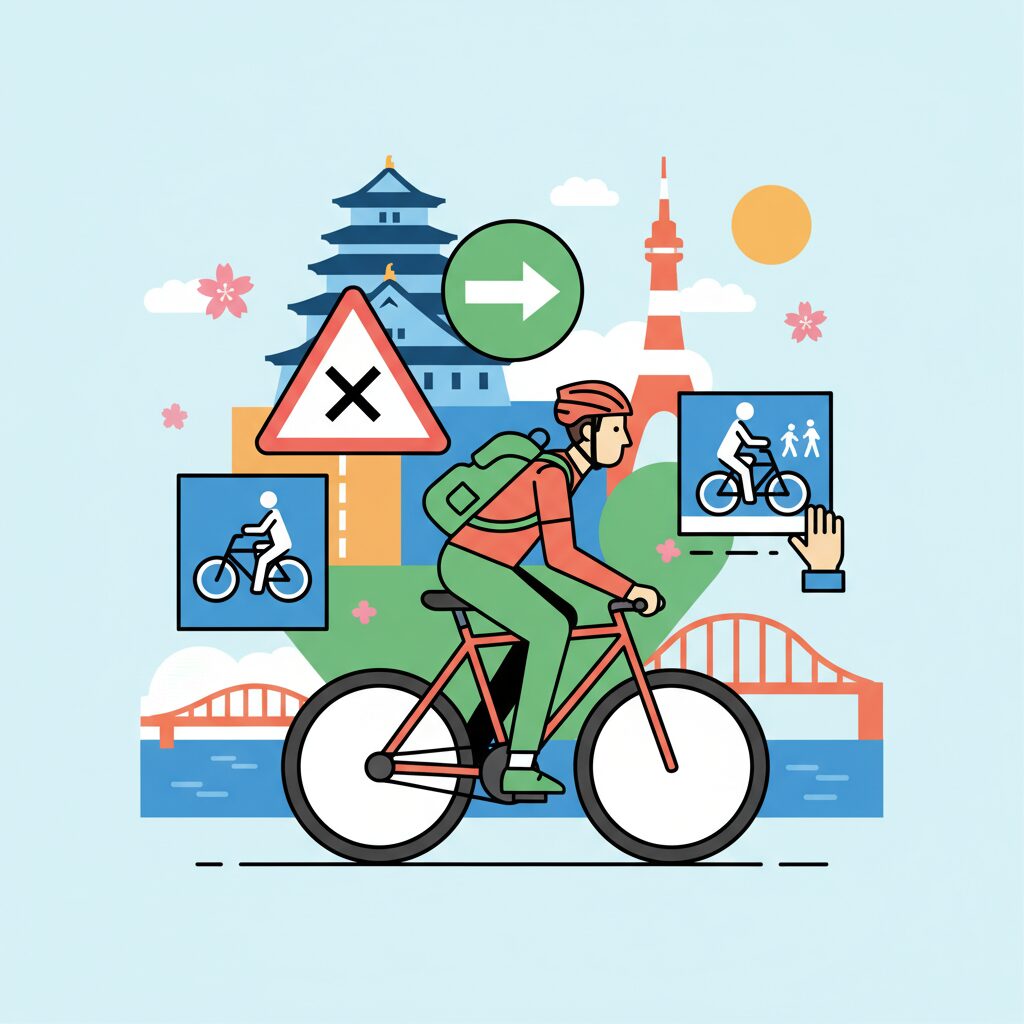
Your first few weeks in Osaka are a sensory overload, a beautiful, bewildering barrage of sights, sounds, and smells. You’re learning the train lines, deciphering menus, and getting the hang of the local dialect. But then, you notice the other transportation network, the one that operates on a completely different set of principles. It’s a silent, swirling, and sometimes terrifying ecosystem of bicycles. They’re everywhere. Propped against storefronts, chained to guardrails in massive, shimmering herds, and, most alarmingly, coming straight at you on the sidewalk you thought was a pedestrian safe zone. It’s not just the quantity of bikes; it’s the quality of the chaos. You see a mother with one child strapped to her back, another in a seat upfront, and a bag of groceries dangling from the handlebars, expertly weaving through a crowd while holding an umbrella. You see a salaryman in a crisp suit, briefcase in the front basket, pedaling furiously past a line of cars. You see a grandmother, back ramrod straight, cruising along at a deceptively brisk pace. This isn’t the Tour de France. This isn’t a weekend leisure activity. This is the lifeblood of the city, a system of movement that seems to defy all known laws of traffic and physics. Your Tokyo friends told you about orderly queues and rule-abiding citizens. This, you realize, is not Tokyo. This is Osaka, and the first unspoken rule is that the bike is king, the sidewalk is its kingdom, and you’d better learn the rhythm of the court if you want to survive. The whole city feels like a living organism, and the bicycles are its millions of blood cells, pumping through arteries and capillaries, sometimes smoothly, sometimes clotting into chaotic pile-ups, but always, always moving. It’s a beautiful mess, and understanding it is your first real lesson in understanding Osaka itself.
To truly grasp the city’s rhythm, it’s also worth exploring how the character of Osaka’s neighborhoods shifts dramatically from station to station.
The Sidewalk is the Main Road: The First Rule You Learn
Your initial instinct, shaped by years of conditioning, is that bicycles belong on the road while sidewalks are meant for walking—a simple, logical separation of space. In Osaka, however, you must immediately discard this logic. The sidewalk is not just an alternative for cyclists; it serves as the default, the main thoroughfare, the preferred route for the vast majority of two-wheeled commuters. It’s the first and most striking cultural shock you’ll encounter while on foot, and the first rule you’ll embrace once you finally get your own bike.
The Official Rule vs. The Osaka Reality
Technically, Japanese law classifies bicycles as vehicles to be ridden on the left side of the road, following traffic. Naturally, there are exceptions: sidewalks marked with specific signs for shared use are allowed; children under thirteen and adults over seventy may also ride on sidewalks; and there’s a vague provision for situations where road traffic is deemed “unavoidably dangerous.” In Osaka, it appears every road is considered inherently dangerous by every cyclist. Streets are narrow, cars dart around corners at surprising speed, and trucks unload their cargo right into traffic lanes. The road feels like a hostile environment. As a result, the entire community has silently agreed: we take the sidewalk. This isn’t defiance; it’s a pragmatic city-wide decision. The official rule is merely a suggestion, a distant guideline from a government office in Tokyo. The Osaka reality is embodied by a grandmother quietly gliding up behind you on a heavy-duty bicycle as you leave a convenience store. You learn to listen for the soft sound of tires and the gentle hum of a chain.
The Silent Language of the Sidewalk
To outsiders, it may seem like chaos, a risky game of human Frogger. But once inside, you begin to perceive the subtle language at play. It’s a dance of constantly evolving, delicate negotiations. No shouting, no wild gestures. Communication happens through body language and a mutual understanding of intent. A slight lean to the left, a subtle turn of the handlebars, a brief pause—these are the signals that prevent collisions dozens of times a minute. Eye contact matters but is fleeting—a quick glance that says, “I see you, you see me, we agree I’m going this way and you’re going that.” The bicycle bell, often considered essential for safety, is almost never used; ringing it at a pedestrian is seen as aggressive, impatient, and rude—like honking your horn the instant a traffic light turns green. Instead, if someone genuinely blocks the way, you might hear a gentle “sumimasen” (excuse me). More often, cyclists simply find a gap in the human flow and slip through gracefully. The hierarchy is fluid. Pedestrians technically have the right of way, but a mother on an electric-assist bike with two kids is a battleship you do not challenge. A high school student rushing to class, pedaling fiercely, is a torpedo to avoid at all costs. You learn to read the speed and intent of every cyclist approaching, becoming part of the flow rather than an obstacle within it.
Navigating the Urban Jungle: Pedestrians, Poles, and Other Cyclists
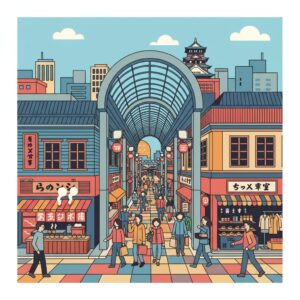
Every trip is a micro-adventure. Riding through a covered shotengai shopping arcade, like the renowned Tenjinbashisuji, is an advanced lesson in this silent language. You dodge shoppers who stop abruptly to peer into windows, children darting out from storefronts, and oncoming cyclists. It demands a state of hyper-awareness, a 360-degree sensory input that becomes second nature. You learn the distinct challenges each neighborhood presents. The narrow, twisting alleys of Nakazakicho require slow, careful navigation. The wide sidewalks near the Umeda Sky Building create a different dynamic—higher speeds and more complex pedestrian interactions. You anticipate the unpredictable: the sudden opening of a taxi door, a pedestrian engrossed in their smartphone stepping sideways without looking, a delivery rider on a scooter crossing your path. This is not a leisurely, scenic ride; it’s an active, engaging, and sometimes stressful exercise in navigation. Yet by mastering it, you gain a profound connection to the city’s rhythm. You’re no longer merely observing the chaos; you become a particle moving in harmony with it.
Meet the King: Understanding the ‘Mamachari’
To truly understand Osaka’s cycling culture, you first need to get to know its favorite chariot: the mamachari. The name, which translates literally to “mom’s chariot,” perfectly captures its purpose and role within the community. These bikes are neither sleek, lightweight racing machines nor rugged mountain bikes. Instead, they are the reigning champions of urban utility, the dependable workhorses of the city, and the key to navigating daily life for millions of Osaka residents.
More Than Just a Bike: The Mamachari as a Lifeline
The mamachari’s design is a model of practical engineering. Its step-through frame makes mounting and dismounting easy, even when wearing a skirt or carrying a child. Upright handlebars promote a comfortable, non-athletic riding posture. Every detail serves a function. The sturdy metal basket at the front isn’t meant for a baguette and wine; it’s built to hold a week’s groceries, a school bag, or a briefcase. A built-in wheel lock operated by a simple key offers basic security, while a robust kickstand keeps the bike steady even when fully loaded. Many models feature a dynamo hub that powers the front light automatically while riding—a clever, set-it-and-forget-it safety feature. But the signature element is the rear rack, often equipped with a formidable child seat. This bicycle is not just a mode of transport; it serves as a family station wagon, grocery carrier, and school bus, all rolled into one efficient, human-powered vehicle. It embodies a lifestyle defined by practicality, resourcefulness, and quietly getting things done. It’s the expression of Osaka’s no-nonsense, grounded spirit.
The Mamachari Rider: A Driving Force
Riding a mamachari means joining a community. The classic image is the Osaka mother, a true warrior of the streets. She maneuvers through the city with near-supernatural skill. One child secured in the rear seat, another sometimes perched in a front-mounted seat. Her basket overflowing with daikon radish and bags from the local grocery store. Often, she manages all of this with one hand on the handlebars, the other holding an umbrella high to shield her and her children from sun or sudden rain. Focused and resolute, she commands respect on the sidewalk like few others. However, mamacharis are not just for moms. Elderly men ride slowly on their way to public baths or go clubs. University students pedal between apartments and campus. Office workers in business attire use their mamacharis as the final leg of their commute from train stations to work. While Tokyo boasts a wider variety—sleek road bikes, stylish fixies, folding commuters—Osaka’s streets are dominated by the mamachari across all ages and walks of life. It is the great equalizer, a shared tool for navigating the vibrant, complex reality of daily life.
Electric Assist: A Powerful Evolution
In recent years, a new innovation has taken hold: the electric-assist mamachari, or denki-mamachari. These bikes look similar to their traditional counterparts but are heavier, housing a small motor and battery that provide a strong boost with every pedal stroke. Hills and bridges that once posed challenges are now easily overcome. Carrying heavy loads or two children has become almost effortless. This development has revitalized the whole ecosystem. Electric mamacharis accelerate swiftly from a stop and move with an uncanny silence. Pedestrians no longer hear the familiar labored breathing of an approaching cyclist; instead, they are met with a sudden rush of air as the bike glides by. These bikes have granted mothers and elderly riders enhanced mobility and freedom. However, they also bring new safety concerns. Their silent, fast, and heavy nature demands heightened awareness from all who share the sidewalks. The sight of a mother on an electric mamachari effortlessly climbing the incline of a bridge over the Yodo River perfectly symbolizes modern Osaka: enduring practicality boosted by technology, creating an unstoppable force.
The Parking Paradox: A Sea of Bikes with Nowhere to Go
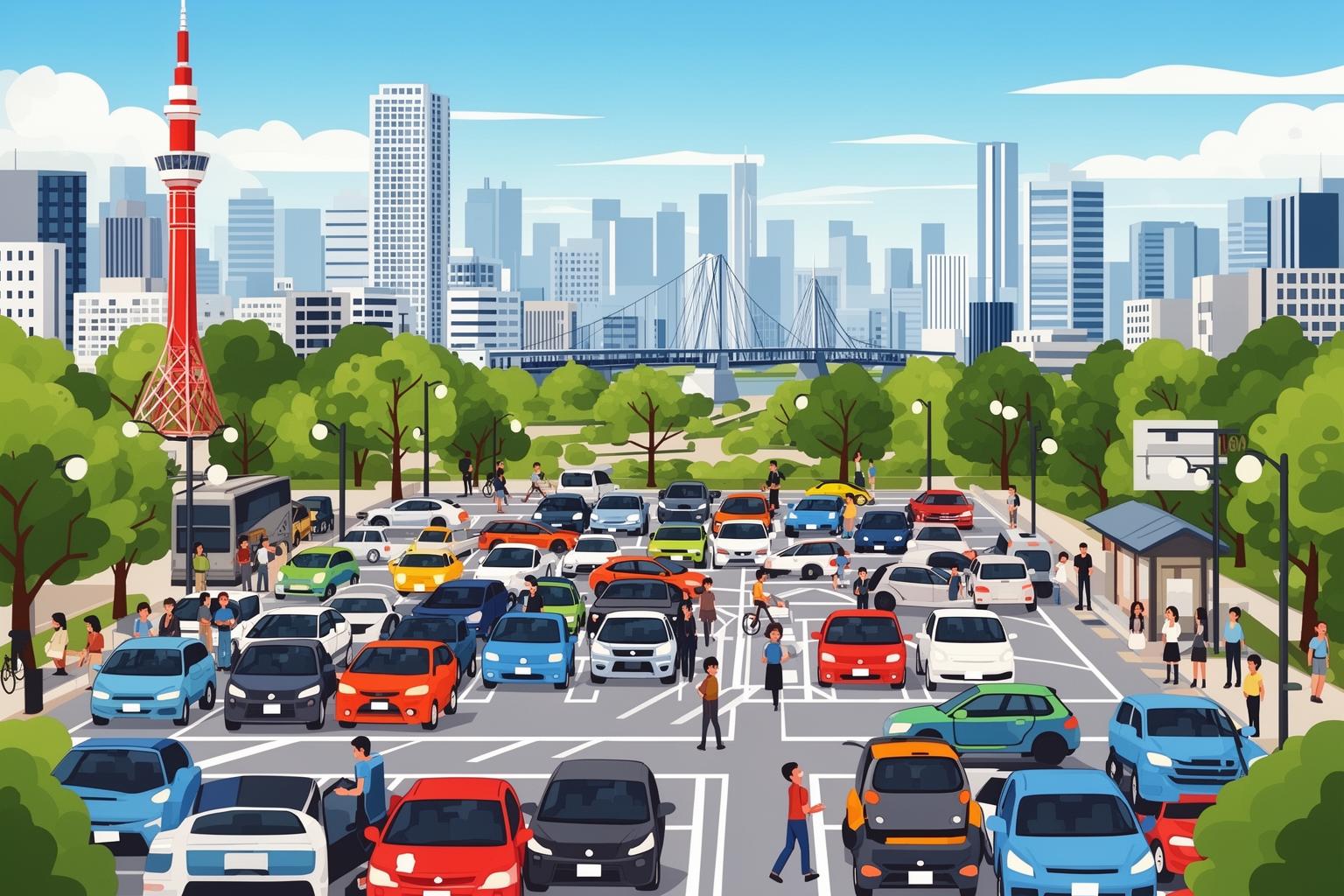
For every bicycle in use, there are ten more left parked, and the challenge of where to place them creates one of the most visible and frustrating conflicts in the city’s daily life. Osaka is inundated with bicycles—a shimmering sea of metal and rubber lining every available surface. Navigating the parking dilemma is a daily strategic struggle, a game of risk, reward, and regulation that exposes the city’s ongoing tension between order and convenience.
The Official Parking System: Idealism Meets Reality
The city has naturally attempted to bring order to the chaos. Near every train station and key commercial area, you’ll find designated bicycle parking areas called churinjo. These range from simple open-air lots with metal racks to complex, multi-story automated garages that seem taken from a science fiction movie. A small fee—usually about 150 yen per day—is charged, or you can opt for a monthly subscription if you’re a regular commuter. The system is logical, organized, and intended to keep sidewalks clear. In theory, it’s an ideal solution. In practice, however, it often proves troublesome. The lots fill up quickly, especially during rush hours, and finding the entrance to the underground parking at Namba Station can feel like a challenge in itself. Paying even a small fee feels like an unnecessary inconvenience when a perfectly good guardrail sits just a few feet away. The official system represents the Japan of order and rules, the Japan portrayed in travel guides. But it clashes directly with Osaka’s mindset of maximizing efficiency with minimal hassle.
The Unspoken System: Creative Parking and the Silver Sentinels
As a result, a huge unofficial parking system operates alongside the official one. This system treats any stationary object as a potential bike rack. Sidewalk guardrails are the most common choice, often hidden beneath dozens of bikes chained to them. Street signs, telephone poles, fences, and even sturdy trees are all fair game. This results in the notorious “bicycle graveyards” scattered throughout the city—dense thickets of bikes that force pedestrians to walk single file. Yet, this chaos is not without its enforcers. Patrolling these areas are the “Silver Sentinels,” retired men often dressed in official-looking uniforms, employed by the city to manage the problem. These frontline agents in the fight against illegal bike parking carry clipboards and rolls of brightly colored warning tags. They affix a yellow tag to illegally parked bikes, noting the date and time. This serves as the first warning. If the bike remains beyond a specified period—a few hours in busy areas or several days in residential neighborhoods—it is removed. The bike is then taken to a remote impound lot, typically located in an inconvenient industrial part of town. Retrieving it requires a visit to the lot, paperwork, and paying a fine of a few thousand yen. The Silver Sentinels are not aggressive but methodical, patient, and persistent.
The Risk vs. Reward Calculation
This sets up the key drama of bicycle parking in Osaka: the daily risk-versus-reward decision. Do you spend five minutes and 150 yen to park legally in a designated lot, or do you save both time and money by locking your bike to the nearest railing, hoping to complete your errands before a Sentinel arrives? This dilemma is quintessentially Osakan. It involves a nuanced understanding of the local environment—you learn which spots are heavily patrolled and which are overlooked. You know that parking in front of a major department store in Umeda for ten minutes invites trouble, while leaving your bike in a quiet residential alley for an entire day is usually safe. The small victory of returning to an illegally parked bike untouched and untagged is deeply satisfying. Conversely, reaching the store exit only to find an empty patch of sidewalk where your bike once stood is a rite of passage for every Osaka cyclist. It is a humbling lesson and a stark reminder that while the city may tolerate bending the rules for convenience, the boundaries of tolerance are always enforced.
Essential Gear and Unwritten Etiquette
Living the bicycle life in Osaka involves more than just owning a bike. It requires a specific set of accessories and an unspoken understanding of certain behavioral norms. These tools and techniques enable you to fully integrate into the mamachari culture, riding not merely as a foreigner on two wheels but as someone who grasps how the city functions. It’s about blending in, ensuring safety, and managing the unique challenges the city presents.
Rain, Umbrellas, and the Skill of One-Handed Riding
Osaka’s humid, subtropical climate means rain is frequent and often comes suddenly. However, the city doesn’t pause for a downpour, nor do its cyclists. This has led to one of the most impressive—and technically illegal—urban cycling feats: kasa-sashi unten, or riding while holding an umbrella. Yes, it’s against the rules. And yes, it’s quite dangerous. Yet on rainy days, sidewalks are crowded with people doing it. It’s a remarkable display of balance and coordination, steering a heavy mamachari through pedestrian traffic with one hand while gripping an umbrella with the other to shield from wind and rain. Some cyclists even use special clamps to attach umbrellas to their handlebars, freeing both hands but creating a sail that can catch gusts of wind with alarming results. This practice perfectly captures Osaka’s spirit: official rules are acknowledged but often overridden by what is practical and necessary at that moment. A raincoat is the safer, smarter, and legal choice, but the umbrella is faster, easier, and simply what everyone else does. Following this trend is a form of cultural immersion, albeit a risky one.
Lights, Locks, and Registration
While many rules are viewed as loose guidelines, some are enforced quite strictly. Bicycle lights are one such rule. Police, especially at night, frequently stop cyclists without lights as a common way to engage with the public. Most mamachari come with a dynamo light that activates automatically, but if yours is broken or you have a different bike, you must have a functioning, visible light. Avoiding stops for this reason is simple. Security is another mandatory matter. Every mamachari has a built-in lock immobilizing the back wheel, sufficient for a brief stop at a convenience store. However, for longer periods, a second, stronger lock is necessary. Securing your bike’s frame to an immovable object is the only way to ensure peace of mind. Bike theft is common enough that using two locks is standard practice. Lastly, there is the essential bouhan touroku, or crime prevention registration. Upon purchasing a bike (new or used), you must register it with the police for a small fee, receiving a small orange sticker with a registration number. This is crucial. If your bike is stolen and found, the registration helps identify you. More importantly, if your bike is impounded due to illegal parking, this registration serves as proof of ownership, enabling you to reclaim it.
The Smartphone Zombies
A distinctly modern hazard has joined the traditional sidewalk dangers: cyclists absorbed in their smartphones. This behavior is infuriating, dangerous, and surprisingly common. People scroll through social media, text, or watch videos while wobbling through crowded sidewalks. They’re unpredictable, unaware, and pose a threat to everyone nearby. Unlike the unspoken negotiation that governs most interactions, there’s no communication with a smartphone zombie—they are lost in their own world. Giving them plenty of space is the only viable strategy. This serves as a reminder that while much of Osaka’s cycling culture relies on a shared, intuitive awareness, that social contract is being undermined by digital distractions, adding a new and unwelcome layer of chaos to the streets.
What It All Means: Cycling as a Window into the Osaka Soul
After some time, the chaos begins to make sense. The near-misses feel less frightening and more like a familiar rhythm. You find yourself joining the sidewalk dance, anticipating others’ movements, and weaving through the city with newfound confidence. You realize that the way people ride their bikes in Osaka isn’t just about getting around—it’s a raw, unfiltered expression of the city’s core identity. It’s a daily performance that reveals how Osaka’s people think, behave, and organize their lives.
Pragmatism Over Politeness
The whole system is rooted in relentless pragmatism. Why ride on a narrow, dangerous road when there’s a wide, open sidewalk nearby? Why walk ten minutes to a designated parking spot when a perfectly good guardrail is available? Why get drenched in the rain when you can simply hold up an umbrella? In many cultures, these actions would be seen as selfish or rude. In Osaka, they are viewed as efficient. The goal is to get from point A to point B, with your kids and groceries, in the most direct way possible. While rules matter, they come second to the practical needs of the moment. This can feel abrasive to newcomers, especially those from more orderly places like Tokyo, where following rules is often an end in itself. But in Osaka, a rule that lacks practical sense is likely to be bent. It’s not about malice; it’s a deeply ingrained focus on results.
A Shared, Chaotic Dance
What appears as total anarchy to outsiders is actually a highly complex, self-regulating system. It works because everyone mostly plays by the same unwritten rules. There’s a shared understanding of mutual awareness. I assume you see me, and you assume I see you. We make the necessary micro-adjustments to avoid collisions, then continue on without a word. It’s a high-trust, high-skill environment. Foreigners often struggle initially because they look for explicit instructions, clear signs, and painted lines. But Osaka operates on feel, intuition, and a collective understanding absorbed through experience rather than taught from a book. It’s the same logic behind the crowded jostling at Kuromon Market or the flow of people at a Hanshin Tigers game. It’s organized chaos—and it’s beautiful.
A Different Kind of Freedom
Ultimately, embracing the Osaka cycling life is an act of liberation. Once you get your own mamachari, register it, and master the sidewalk dance, the city feels smaller. Neighborhoods that once seemed far on a train map become just a twenty-minute ride away. You explore tiny backstreets, discover hidden cafes, and carry your groceries home without waiting for a train. You become a participant rather than a mere observer. You feel the summer humidity on your skin, smell takoyaki stands from a block away, and share a nod with a fellow cyclist waiting at a traffic light. Frustration and fear give way to a sense of belonging. You become part of the city’s circulatory system, one of the millions of blood cells flowing through its veins. It can be messy and dangerous, and it will test your patience. But it’s also the most honest, direct, and exhilarating way to experience Osaka’s true, pragmatic, and deeply human heart.