Welcome to the glittering, chaotic, and utterly delicious heart of Osaka—the depachika. Forget everything you think you know about basements. In Osaka, the basement of a department store isn’t a dusty storage space; it’s a vibrant, sprawling wonderland of food. It’s a culinary theater where a simple grocery run transforms into an adventure. As someone who lives to capture the beauty and flavor of a city, I quickly learned that to understand Osaka, you must first understand its depachika. It’s more than a food hall; it’s a direct reflection of the city’s soul: pragmatic, obsessed with quality, and always, always hungry for the best.
Living in Tokyo for a while, I grew accustomed to their depachika—elegant, quiet, almost reverential spaces. Shopping there felt like visiting a food museum. The displays were perfect, the staff spoke in hushed tones, and the shoppers moved with a graceful, reserved purpose. Then I came to Osaka. The first time I descended the escalators into the Hankyu Umeda depachika on a Friday evening, it was a sensory overload in the most magnificent way. The air buzzed with energy. Vendors weren’t just standing behind their counters; they were performing, their voices rising in a rhythmic chorus, calling out specials, offering samples with a friendly insistence. Shoppers weren’t just browsing; they were on a mission, their eyes sharp, their movements decisive. This wasn’t a museum; this was the stock exchange of flavor, and the currency was deliciousness. It was here I realized that navigating this space, especially with dietary restrictions, required a whole new playbook. It’s a place that rewards the bold, the curious, and the well-prepared. This guide is your playbook, your map to finding the highest quality, allergy-friendly ingredients while decoding the vibrant chaos of an Osaka depachika.
To truly understand the city’s pragmatic and community-focused soul beyond its famous food halls, consider exploring the unique social fabric of its neighborhood associations.
The Philosophy of the Osaka Stomach: Understanding Kuidaore
Before mastering the depachika, you must first understand the city’s fundamental culinary philosophy: kuidaore. This term literally translates to “eat until you drop” or “consume yourself into ruin.” In Tokyo, it might serve as a cautionary phrase against overindulgence. In Osaka, however, it’s an aspirational goal—a symbol of pride. Kuidaore goes beyond mere quantity; it’s an unwavering, city-wide quest for the finest flavor at the best possible price. An Osaka local will gladly wait in long lines for an exceptional piece of fried octopus but will quickly voice disappointment if the quality doesn’t justify the cost. This mindset fuels the entire depachika experience.
Quality is Non-Negotiable
In Osaka, food is much more than nourishment; it’s a vital part of personal identity and everyday joy. Locals possess what they call a shita ga koeru, or a “developed” palate. They can detect subtle nuances in dashi broth, the exact freshness of sashimi slices, or the ideal char on grilled eel. As a result, depachika vendors face tremendous pressure to maintain excellence. They’re not just selling food; they’re protecting their reputation with every sale. Shoppers scrutinize marbled beef with the dedication of a jeweler examining diamonds and engage in detailed discussions about the origin of a single tomato with the farmer—who is often present on weekends. For allergy sufferers, this emphasis on quality is a significant benefit. Ingredients tend to be simpler and of a higher grade, leaving no room for mediocrity. A premium tofu maker won’t compromise their soybeans with unnecessary additives, and a top-tier fishmonger knows precisely where their catch comes from. The focus remains on the pure flavor of the main ingredient, often resulting in fewer complex pre-made sauces or coatings where allergens might lurk.
The Art of Value: More Than Just a Price Tag
While Osakans demand top quality, they are also incredibly practical and discerning. They despise waste and appreciate a good bargain, creating an intriguing dynamic within the depachika. It’s not about buying cheap; it’s about attaining outstanding value. This is where the Tokyo-Osaka contrast becomes strikingly apparent. Tokyo shoppers might pay extra for beautiful packaging or a famed brand without hesitation. Osaka shoppers, on the other hand, will closely inspect the item inside the fancy box and ask, “Is it really worth it?” They possess an intuitive sense for what they term kosupa, or “cost performance.”
This mindset fuels one of the depachika’s most energetic daily traditions: the evening sale, or taimu seeru. Beginning around 7 PM, as stores approach closing time, vendors start discounting fresh, prepared foods. This is no quiet event with subtle stickers; it’s a lively performance. Vendors use microphones to announce discounts, with calls ringing through the aisles: “Saa, yasukunatta yo!” (“Hey, it’s gotten cheaper!”) or “Motteke dorobou!” (a playful phrase meaning “Take it, you thief!”). A polite line can quickly transform into a focused yet orderly crowd converging on discounted sushi, salads, and tempura. It’s a captivating, practical dance of supply and demand. For locals, this is a crucial life hack to enjoy restaurant-quality meals for a fraction of the price. Allergy sufferers should exercise caution, as many of these prepared foods are complex, but witnessing this cultural spectacle is essential to grasping the city’s practical, anti-waste spirit.
The Grand Theaters of Food: A Guide to Osaka’s Major Depachika
Each depachika in Osaka boasts its own unique character, serving different customers and excelling in various specialties. Selecting the right one depends on your purpose—whether you’re hunting for a rare artisanal soy sauce, seeking an impressive dessert, or simply grabbing a quick, quality weekday dinner. These are the grand stages where the daily drama of kuidaore unfolds.
Hankyu Umeda: The Elegant Queen
Walking into Hankyu’s depachika feels like entering a food palace. Spanning two expansive basement floors, with gleaming floors and lighting that transforms each fruit into a jewel, this is the domain of luxury, trends, and flawless presentation. If a new dessert craze from Paris or Tokyo is arriving in Osaka, it debuts here first. Lines for popular sweets like Grand Calbee potato crisps or Baton d’or Pocky can be legendary.
- Vibe: Sophisticated, stylish, and cosmopolitan. This is where you go to see and be seen. Shoppers are often impeccably dressed, and the atmosphere exudes aspirational gourmet living. It may feel slightly intimidating initially, but the staff are professional and well-informed.
- Strengths for Allergy-Friendly Shopping: Hankyu shines with its high-end specialty products. You’ll find an excellent selection of imported items—gluten-free pastas, organic oils, and premium vinegars. The fresh produce section is an artistic display of perfectly shaped vegetables and rare fruits. The butchers and fishmongers rank among the best, and they’re happy to accommodate requests for plain, un-marinated cuts. Their “World Foods” section is a valuable resource for international ingredients that suit specific dietary requirements. With so many vendors, you have a greater chance of discovering specialists, like shops devoted solely to premium seaweed or artisanal salt.
- Sofia’s Tip: The wagashi (Japanese sweets) area is a visual delight. Many traditional wagashi are naturally gluten- and dairy-free (made with rice flour and beans), but always confirm ingredients before purchasing. Staff at renowned stores like Tsuruya Yoshinobu or Toraya are experts who can provide detailed ingredient explanations.
Hanshin Umeda: The People’s Champion
If Hankyu is the elegant queen, the Hanshin depachika next door is the lively, beloved heart of the people. Newly renovated, it’s brighter and more modern but retains its energetic, down-to-earth spirit. This is where locals come for daily bread—and their daily beer, fried squid, and everything in between. Prices are slightly more affordable than Hankyu, but the dedication to quality remains strong.
- Vibe: Loud, bustling, and full of energy. It prioritizes unpretentious deliciousness over polished presentation. You’ll see office workers grabbing lunch, grandmothers shopping daily, and baseball fans (supporting the Hanshin Tigers, Osaka’s cherished team) fueling up before games.
- Strengths for Allergy-Friendly Shopping: Hanshin excels in sozai (prepared side dishes) and fresh essentials. The fish market resembles a busy port, and local farm produce piles high at the vegetable stalls. The vendors are approachable and less formal than at Hankyu, making it ideal for building personal relationships to tailor to your needs. Snack Park poses challenges for allergy sufferers, but watching the experts at the ikayaki (squid pancake) stand expertly flipping their creations is an iconic Osaka scene.
- Sofia’s Tip: Explore the smaller independent stalls nestled among the big names. You might discover a family-run tofu shop crafting fresh tofu and yuba daily (often just soybeans, water, and nigari) or a tsukemono (pickle) stand where you can inquire precisely about the pickling brine. The vibrant atmosphere truly reflects the city’s spirit.
Takashimaya Namba: The Southern Grande Dame
Situated in the lively, sometimes gritty Namba district, Takashimaya’s depachika feels more traditional and established. As the southern anchor of Osaka’s department store scene, it’s spacious and generally less hectic than the Umeda giants, offering a more relaxed shopping environment. It has a loyal, often older clientele who have shopped here for generations.
- Vibe: Classic, refined, and serene. This location values tradition and long-term relationships with suppliers. The layout is clear and easy to navigate.
- Strengths for Allergy-Friendly Shopping: Takashimaya balances luxury goods and everyday staples well. It specializes in traditional Japanese ingredients and is an excellent place to explore regional specialties showcased during promotional events. Their outstanding sake and shochu section features knowledgeable staff who assist in finding pure, additive-free options. The fresh food areas are high quality, and the lower crowd levels allow more time for detailed ingredient discussions with vendors without feeling rushed.
- Sofia’s Tip: Don’t miss exclusive depachika sweets from local Osaka bakeries like Mon Cher. While many contain common allergens, they showcase Osaka’s pastry craftsmanship at its finest. For safer choices, check out the extensive dried goods section—premium kombu, shiitake mushrooms, and beans that form the basis for many safe, home-cooked Japanese dishes.
Daimaru Umeda: The Modern Commuter’s Hub
Directly connected to JR Osaka Station, Daimaru’s depachika is the ultimate convenience spot. Its modern design and efficient layout cater to commuters on the move. Known for its impressive assortment of bento boxes and a thoughtfully curated selection of popular gifts and sweets, it suits busy shoppers perfectly.
- Vibe: Busy, efficient, and contemporary. Wide aisles and clear signage make it easy to find what you’re looking for quickly. The pace is brisk, especially during the evening rush.
- Strengths for Allergy-Friendly Shopping: Daimaru offers a carefully curated selection. Though smaller than Hankyu, every brand featured is top quality. The “Gochiso Paradise” floor is a treasure trove of individual shops and eateries. Allergy sufferers benefit from specialists such as high-end fruit parlors, butchers slicing to order, and a strong grocery section with organic and health-conscious products. The store’s streamlined nature reduces wandering and encourages focused shopping.
- Sofia’s Tip: Because it caters to commuters, Daimaru offers many stalls selling packaged, gift-ready items—a hidden gem for those with allergies. Packaged goods come with ingredient labels, so take your time, use a translation app if needed, and you can often find superior crackers, teas, and snacks that are safe to eat, with all ingredients clearly listed in compliance with regulations.
The Allergy Warrior’s Toolkit: How to Communicate Your Needs

Now for the most crucial part: bridging the language and cultural divide to ensure that what you’re buying is safe. Managing food allergies in Japan can be difficult. The awareness of severe, life-threatening allergies is not as widespread as in many Western countries, and the fear of error can sometimes cause staff to default to saying “I don’t know” or “no” as a precaution. However, in Osaka, the straightforward and practical nature of the people can benefit you. With the right approach, you can have very effective conversations.
Mastering Allergy-Related Language
Before you travel, equip yourself with a few key phrases. An allergy card written clearly in Japanese is indispensable. It should list your allergens and note that exposure can be life-threatening, if applicable.
Here are some important words and phrases:
- Allergy: Arerugii (アレルギー)
- I have an allergy: Watashi wa arerugii ga arimasu. (私はアレルギーがあります。)
- I am allergic to X: Watashi wa X no arerugii desu. (私はXのアレルギーです。)
- The seven major allergens (commonly labeled on packaging):
- Egg: Tamago (卵)
- Milk: Nyuu (乳)
- Wheat: Komugi (小麦)
- Buckwheat: Soba (そば)
- Peanut: Rakkasei / Piinattsu (落花生 / ピーナッツ)
- Shrimp: Ebi (えび)
- Crab: Kani (かに)
- Essential question: Kore ni X wa haitte imasu ka? (これにXは入っていますか?) – “Does this contain X?”
- Safety phrase when unsure: Taberaremasen. (食べられません。) – “I cannot eat this.”
The Osaka Way of Asking
In Tokyo, exchanges tend to be formal and indirect. You may ask a question, and the staff might consult a manual or manager before giving a rehearsed response. In Osaka, you’re more likely to receive a direct, unfiltered answer from the person who actually prepared the food. Don’t hesitate to be friendly and straightforward.
- Begin with a Smile: Osakans respond warmly. A cheerful “Konnichiwa!” makes a big difference. Show genuine interest in their product with, “Sore wa oishisou desu ne!” (“That looks delicious!”).
- Show, Don’t Just Tell: Present your allergy card and point to the characters for your allergens, as this is clearer than relying solely on pronunciation.
- Inquire About Hidden Ingredients: This is vital. Soy sauce contains wheat and soy. Mirin has alcohol and sometimes corn syrup. Dashi may contain fish. It’s important to consider the fundamental components of Japanese cooking.
- For instance, when looking at a simmered vegetable dish (nimono), ask: “Shoyu o tsukatte imasu ka?” (醤油を使っていますか?) – “Are you using soy sauce?”
- For dressings or sauces: “Kono soosu ni tamago ya nyuu wa haitte imasu ka?” (このソースに卵や乳は入っていますか?) – “Does this sauce contain egg or milk?”
- Accept Their Honesty: An Osaka vendor might look at your card, then at their product, and reply bluntly, “Akan, zenbu haitteru.” (“Nope, it’s in everything.”). Don’t interpret this as rudeness. It’s a form of kindness—they are being honest and direct to protect you. Thank them sincerely (“Wakarimashita, arigatou gozaimasu!” – “I understand, thank you very much!”) and move on. They appreciate your respect for their time, and you appreciate their honesty in keeping you safe.
Safe Choices and Clever Tips
Certain areas of the depachika are safer and simpler to navigate than others.
- The Produce Section: This is your safe haven. The fruits and vegetables are exceptionally fresh. Japan’s distinct seasons shine here—from spring bamboo shoots to autumn sweet persimmons—offering a feast for both eyes and palate. These are naturally free from major allergens.
- Butchers and Fishmongers: These are excellent resources. Stick to plain, unseasoned items. You can buy a beautiful steak, a salmon fillet, or scallops. Use gestures and simple phrases like “Aji nashi, onegaishimasu.” (“No seasoning, please.”). They’ll weigh and wrap your purchase. This is a great way to get high-quality protein you can prepare safely at home.
- Tofu and Yuba Shops: Tofu is a staple in Japanese cuisine, and the depachika features varieties not found in regular supermarkets. Freshly made zaru dofu (tofu drained in a basket) or delicate sheets of yuba (tofu skin) often consist solely of soybeans, water, and a coagulant (nigari). The vendors are usually artisans proud of their pure ingredients. Ask them, “Zairyo wa daizu to nigari dake desu ka?” (材料は大豆とにがりだけですか?) – “Are the ingredients just soybeans and nigari?”
- The Rice Cracker (Senbei) Aisle: While many crackers are flavored with soy sauce (containing wheat), you can often find simple salt-flavored (shio-aji) crackers made only from rice and salt. This requires careful label checking but offers a tasty, safe snack.
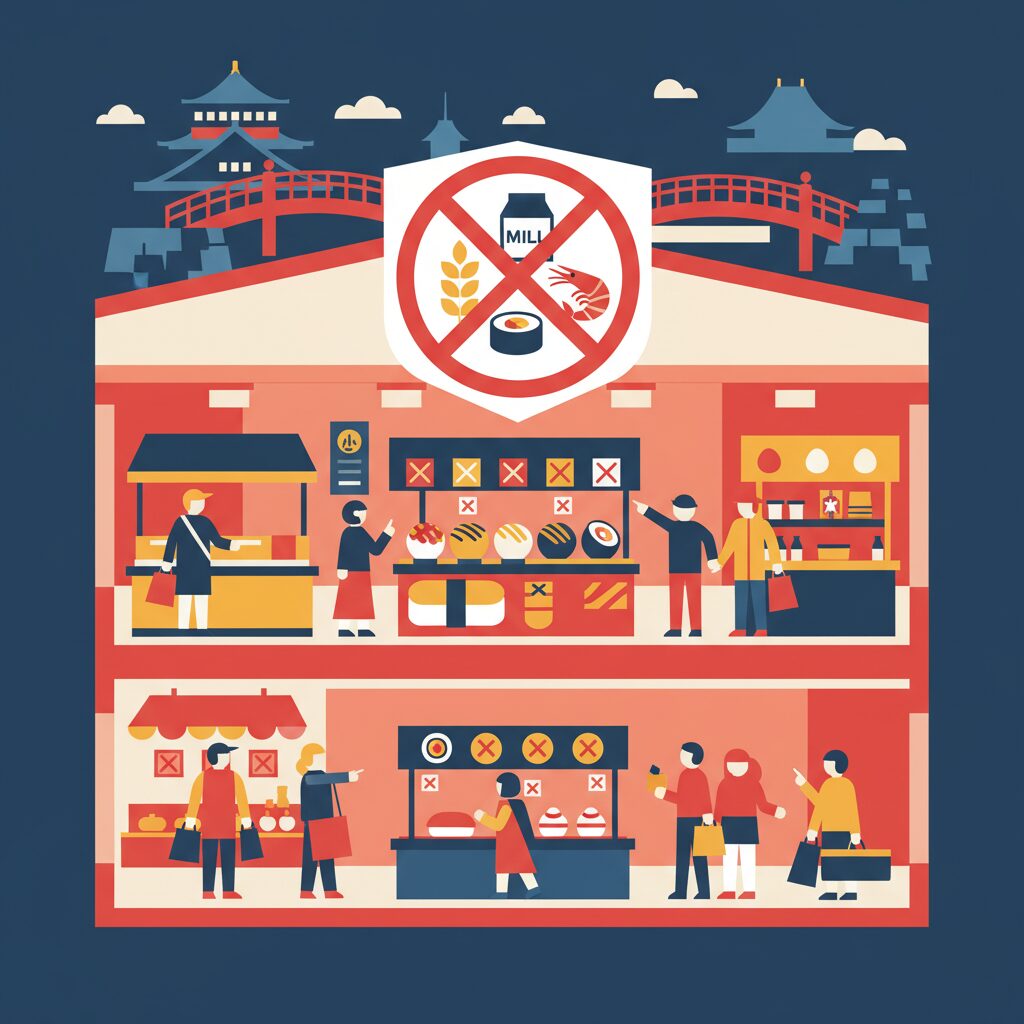
- Be Cautious at the Salad Bar and Sozai Corner: This is the highest-risk area. Though tempting, prepared dishes here often contain complex dressings and marinades. Cross-contamination risks are high due to shared utensils like tongs and spoons. Unless a vendor can show you a sealed, pre-packaged item with a clear ingredient list, it’s best to admire these selections from a distance.
Decoding the Unspoken Rules: Depachika Etiquette
Like any bustling public space in Japan, the depachika has its own set of unspoken rules. Following them will make your experience smoother and more enjoyable. The main difference in Osaka is that these rules are a bit more relaxed, allowing for more spontaneous human interaction.
The Flow of the Crowd
Depachika aisles can be narrow and crowded, especially on weekends and during evening sales. The key is to stay aware of your surroundings. Avoid stopping suddenly in the middle of a busy aisle. If you want to examine a display, step to the side. People tend to be on a mission, but the flow is generally less strict than in Tokyo. You don’t need to walk in perfect formation, but you must avoid becoming a stationary obstacle. If someone gently bumps into you, a quick nod or a quiet “sumimasen” (excuse me) suffices. There’s a shared understanding amid the organized chaos.
The Art of the Sample
One of the great pleasures of the depachika is sampling. Vendors offer tiny bites of everything from pickled radish to roasted tea to sausage. In Osaka, this is an active part of the sales experience. A vendor might catch your eye and extend a toothpick with a piece of food—a direct invitation.
- The Etiquette: It’s perfectly acceptable to accept. Take it with a smile and a nod. If you enjoy it, show your appreciation. If you don’t intend to buy, a simple “Oishii desu, arigatou” (“It’s delicious, thank you”) as you move on is polite. It’s considered rude to linger and take multiple samples without interacting with the vendor or showing intent to purchase. In Osaka, sampling is more generous and proactive than in Tokyo, where you often must show interest first. This reflects the friendly, merchant-city culture.
- For Allergy Sufferers: This can be tricky. The golden rule is: never accept a sample unless you are absolutely sure of its ingredients. A polite “Arerugii ga aru no de, sumimasen” (“I have allergies, so I’m sorry”), accompanied by a light bow or raised hand, is the perfect way to refuse. No one will take offense.
The Ritual of Payment and Packaging
Once you’ve chosen your items, the transaction is an art in itself. The vendor will treat your food with care and clearly confirm the price. When paying, place your money or card on the small tray provided instead of handing it directly to them. They will do the same with your change and receipt.
Then comes the packaging. Depachika packaging is renowned. Your purchase, no matter how small, will be wrapped with exquisite care and precision. A single pastry may be placed in a custom box, which could then be placed into a beautifully branded paper bag. For cold items, they will ask if you need an ice pack (horeizai) and inquire about your journey home. This isn’t simply about aesthetics; it’s about preserving the food in perfect condition. In a city that reveres flavor, ensuring your food arrives home exactly as it left the counter is part of the service. It’s a genuine expression of respect for both the product and the customer.
Conclusion: Your Passport to the Heart of Osaka

The depachika is far more than just a department store basement. It is a vibrant, living ecosystem that reveals everything you need to know about Osaka. It’s where the city’s deep-rooted passion for food (kuidaore) intersects with its famously practical and sharp-witted spirit. It’s a place where the demand for uncompromising quality coexists with the joyful thrill of hunting for a good bargain. The energy here is unlike anywhere else in Japan. It’s less about quiet reverence and more about joyful, communal participation in discovering, celebrating, and enjoying delicious food.
For a foreigner living here, especially one facing the added challenge of food allergies, mastering the depachika becomes a rite of passage. It compels you to engage, communicate, and be both prepared and flexible. It’s a space where you can practice your Japanese, foster relationships with local vendors, and gain a deeper appreciation for the seasonality and craftsmanship that define Japanese cuisine. Every successful purchase of a safe, delicious ingredient feels like a triumph. Every friendly conversation with a vendor forms a small, meaningful connection. So take a deep breath, equip yourself with your allergy card and a hungry heart, and dive in. The glittering aisles of the depachika await, and within them, you’ll find not just dinner—but the true, unfiltered, and utterly delicious taste of Osaka.