The light changes. That’s the first thing you notice. In Osaka, the end of the workday isn’t signaled by a clock on the wall, but by the quality of the air itself. The harsh, overhead sun of midday softens, turning the concrete canyons of the city a warm, hazy gold. This is ‘yugure-doki’, the evening hour, a liminal space between the hustle of the day and the quiet of the night. It’s a moment that can feel lonely in a sprawling metropolis, a time when the sheer scale of the city can press in on you. But here, in Osaka, this hour is not an ending. It’s a beginning. It’s the curtain rising on one of the city’s most essential, life-affirming daily rituals: the evening pilgrimage to the local shotengai.
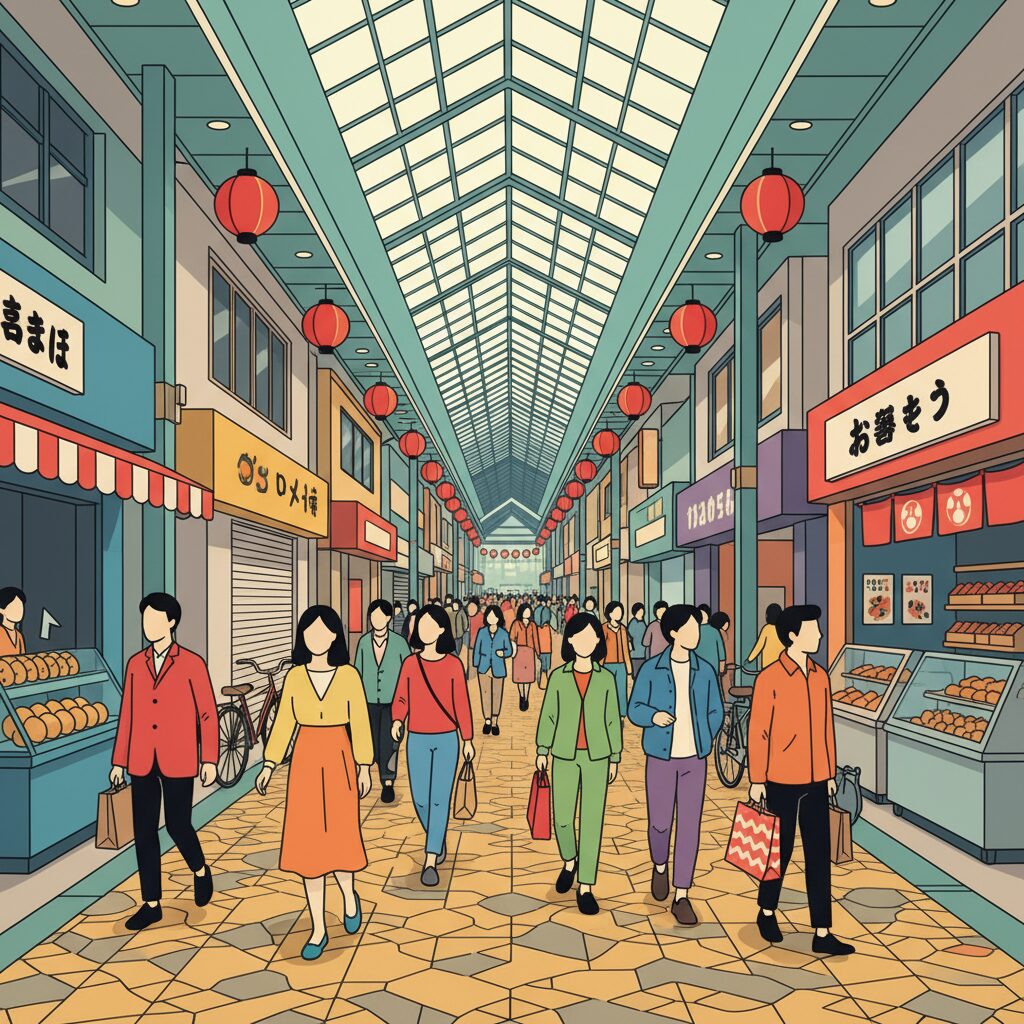
For a newcomer, especially one from a sprawling North American suburb or even the hyper-efficient corridors of Tokyo, the concept might seem quaint, inefficient. Why walk through a crowded, noisy arcade, stopping at five different tiny shops, when you can get everything under one roof at a brightly lit, air-conditioned supermarket? This question misses the point entirely. The evening trip to the shotengai isn’t about sterile efficiency. It’s about connection. It’s a sensory immersion, a social ballet, and a masterclass in the practical, warm-hearted, and deeply human way Osaka people live their lives. It’s not a chore to be completed; it’s a rhythm to be joined. This is where the city sheds its corporate skin and reveals its village heart, one sizzling croquette and friendly nod at a time. This is where you stop being a visitor and start, just maybe, understanding what it means to be a local. Before we dive into the symphony of sights, sounds, and smells, let’s ground ourselves in a place where this daily drama unfolds, the sprawling Tenjinbashisuji Shotengai, a perfect example of the city’s vibrant commercial arteries.
This daily rhythm of connection stands in beautiful contrast to the more private, yet equally vital, world of Osaka’s hyper-local supermarkets, where another layer of neighborhood life unfolds.
The Sensory Overture: More Than Just Shopping
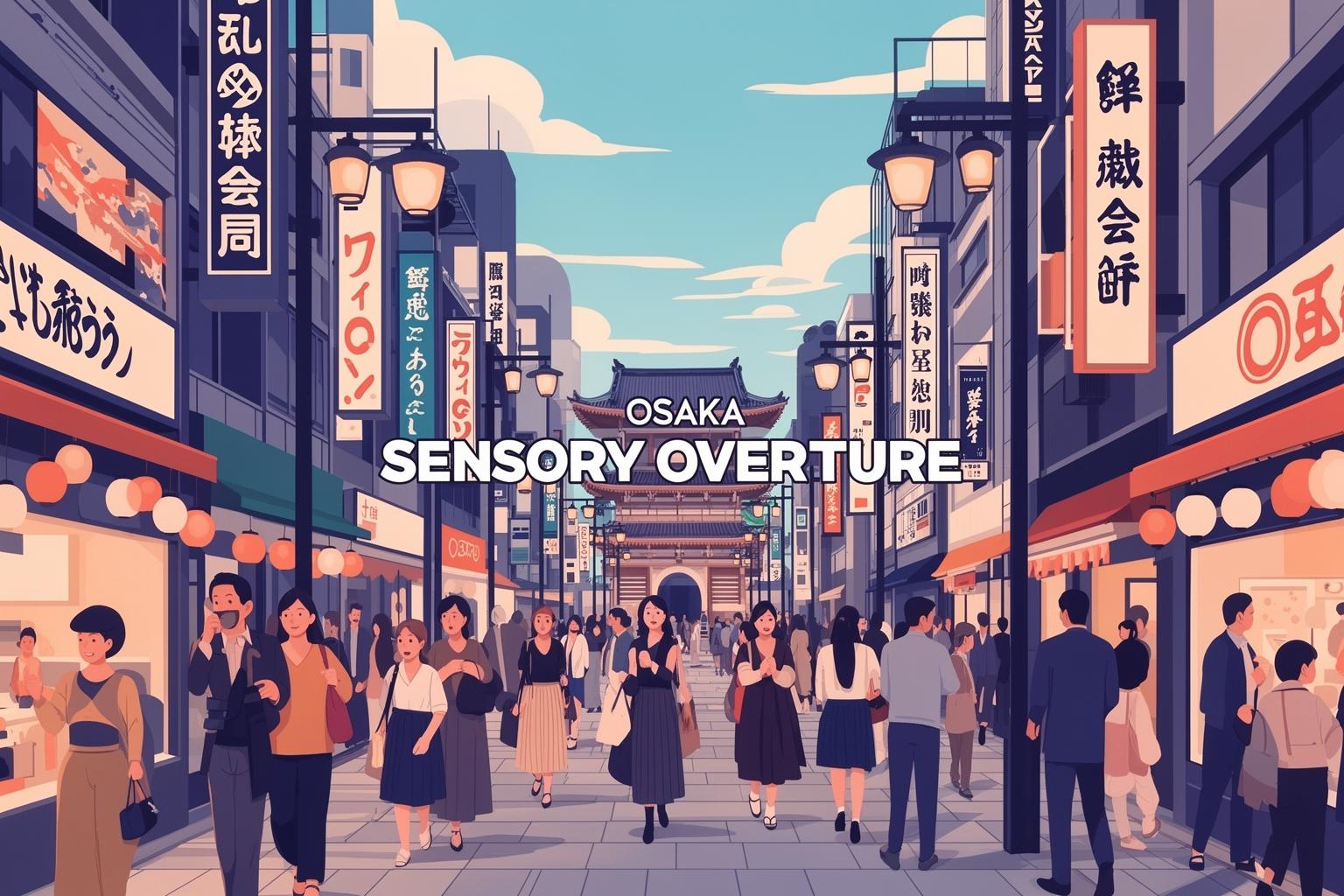
To truly grasp the essence of the evening shotengai, you must first awaken your senses. It’s an immersive experience for the entire body, a layered composition that supermarkets—with their filtered air and piped-in music—have methodically erased. The encounter begins even before you step beneath the arcade’s protective roof. You sense the energy change in the surrounding streets. The foot traffic thickens: a blend of mothers with children in tow, elderly couples walking hand-in-hand, and salarymen with loosened ties making their way home. The air itself becomes infused with a medley of distinct, enticing aromas that serve as a guide leading you to your destination.
A Symphony of Sound
The soundscape of the yugure-doki shotengai bears little resemblance to the monotonous beep of a checkout scanner. It’s a vibrant, living symphony of commerce and community. The central melody comes from the vendors themselves. Their voices, a distinctive Osakan chorus, rise and fall with a rhythmic, musical cadence. It’s far from a flat “Welcome.” Instead, it’s a prolonged, hearty “Irasshaaaaaai!” that echoes down the corridor. It’s the sharp, persuasive chant of a greengrocer advertising a time-sale on spinach: “Horenso, horenso, kyaku-en, kyaku-en dayo! Motteke, dorobo!” (Spinach, spinach, 100 yen, 100 yen! Take it, it’s a steal!).
This is more than mere noise; it’s communication. Whereas in Tokyo the customer experience tends to be quiet and deferential, in Osaka it’s a conversation, a performance. The vendors aren’t simply employees; they are masters of their craft, and their voices are their key tool. They engage, they banter, they tease. They cultivate an atmosphere of vibrant, competitive energy that is infectious. You, the customer, are not a passive observer but an active participant in this daily drama.
Beneath this vocal layer, a rich percussive soundtrack unfolds. The sharp, rhythmic tak-tak-tak of a butcher’s knife expertly chopping meat on a thick wooden block. The deep, satisfying sizzle of panko-crusted cutlets plunging into a vat of hot oil at the 惣菜屋 (souzai-ya, a delicatessen). The metallic clatter of a shop’s shutters rolling down for the night, signaling the end of the performance for some while others are just getting started. The soft rumble of bicycles, their bells tinkling politely as they weave through the foot traffic, baskets already brimming with daikon radish and leeks. The laughter of children, freed from school, chasing each other around pillars as they beg their parents for a 100-yen snack. Each sound is a piece of the story, a note in the daily life composition.
An Olfactory Map
Close your eyes in an evening shotengai, and you can navigate by scent alone. The air is thick—not with pollution, but with the warm, comforting aromas of countless home kitchens combined. The journey starts with the savory and the fried. A cloud of steam carrying the scent of sweet soy sauce and grilled chicken skin wafts from the yakitori stand on the corner. It mingles with the nutty, oily aroma of tempura batter crisping to perfection. A few steps further, the dominant note shifts to the sea. The salty, briny air of the 魚屋 (sakana-ya, fishmonger) is unmistakable—a clean, sharp smell of fresh fish laid out on beds of ice, punctuated by the richer scent of mackerel grilled over charcoal for a quick sale.
Then come the earthy and the sweet. The damp, soil-rich fragrance from the 八百屋 (yaoya, greengrocer), where piles of fresh gobo root and shiitake mushrooms emit their woodsy perfume. This blends with the yeasty, intoxicating aroma of baking bread from the small, independent bakery, promising warmth and comfort. Interspersed are pockets of sweetness: the caramelized sugar wafting from a taiyaki (fish-shaped cake) vendor, or the subtle, clean scent of rice from the 米屋 (kome-ya, rice shop), where grains are polished to order.
This olfactory landscape starkly contrasts with the sanitized, single-note scent of a supermarket. There, every effort is made to neutralize odors. Here, the smells are the point. They are an honest advertisement, a testament to freshness, a promise of the meal to come. They evoke memories, spark cravings, and guide your choices in a way no brightly colored sign ever could. Following your nose is not just a figure of speech; it’s a legitimate shopping strategy.
The Logic of the Arcade: Why This ‘Inefficiency’ Works
To someone accustomed to the ‘one-stop-shop’ model, the shotengai may seem fundamentally illogical. Why visit a dedicated tofu maker, then a butcher, and then a greengrocer? The answer highlights a key difference between the Osaka mindset and that of many other modern urban centers. It’s a value system that emphasizes specialization, freshness, and human connection over sheer convenience.
The Myth of Convenience
What foreigners—and even many modern Japanese from cities like Tokyo—often fail to understand is that the shotengai isn’t an inconvenience to endure; it’s a superior system for those who prioritize quality. The man who has been making tofu in the same shop for forty years knows more about soybeans than any supermarket employee ever will. The butcher is not just a shelf stocker; he is an expert who can advise you on the perfect cut of pork for tonkatsu versus the ideal cut for shabu-shabu. The greengrocer won’t simply sell you a tomato; she will tell you which ones are at their peak sweetness today, perfect for a salad, and which are better suited for simmering in a sauce.
This system is built on expertise. Each shop is a small kingdom ruled by a master of a particular craft. You’re not just buying ingredients; you’re accessing a deep well of accumulated knowledge. This stands in stark contrast to the anonymous experience of grabbing a plastic-wrapped tray of meat from a refrigerated case. Conversation is part of the transaction. “How should I cook this fish?” you might ask. The fishmonger won’t only share a recipe but will likely scale and gut the fish for you, preparing it precisely as needed. This service—the transfer of knowledge—is a kind of value that a barcode scanner cannot measure.
Osaka Pragmatism: The Art of the Savvy Shopper
This system also aligns perfectly with the famous pragmatism and economic sensibility of the people of Osaka. The stereotype of Osakans as thrifty or even stingy (kechi) is a misunderstanding of a more subtle trait: they are highly savvy consumers who dislike waste and demand value for their money. The shotengai is the ideal environment for this mentality.
Competition is intense and transparent. The greengrocer on the left is in direct, daily competition with the one on the right. If one offers better-quality daikon at 10 yen less, the entire neighborhood finds out by sundown. This keeps prices honest and quality high. Shoppers, in turn, aren’t loyal to a single store but instead to quality and value. An oba-chan (grandmother) might buy her onions from one shop, her potatoes from another, and her leafy greens from a third—all in the same trip—based on a complex internal calculation of who has the best offer that day.
Moreover, the shotengai model helps reduce food waste. You buy exactly what you need. Need three potatoes? You buy three potatoes, not a pre-packaged bag of seven that might sprout in your cupboard. Want a single slice of salmon? The fishmonger will cut it for you. This à la carte approach is both economical for the consumer and sustainable for the system. It’s a form of mindful consumption embedded in the very fabric of the local economy.
In Tokyo, efficiency is often equated with speed and consolidation. In Osaka, efficiency means obtaining the very best product for the best price, even if it requires taking a few extra steps. It’s a long-term strategy, and the evening stroll through the shotengai is its daily expression.
The Cast of Characters: A Human Ecosystem
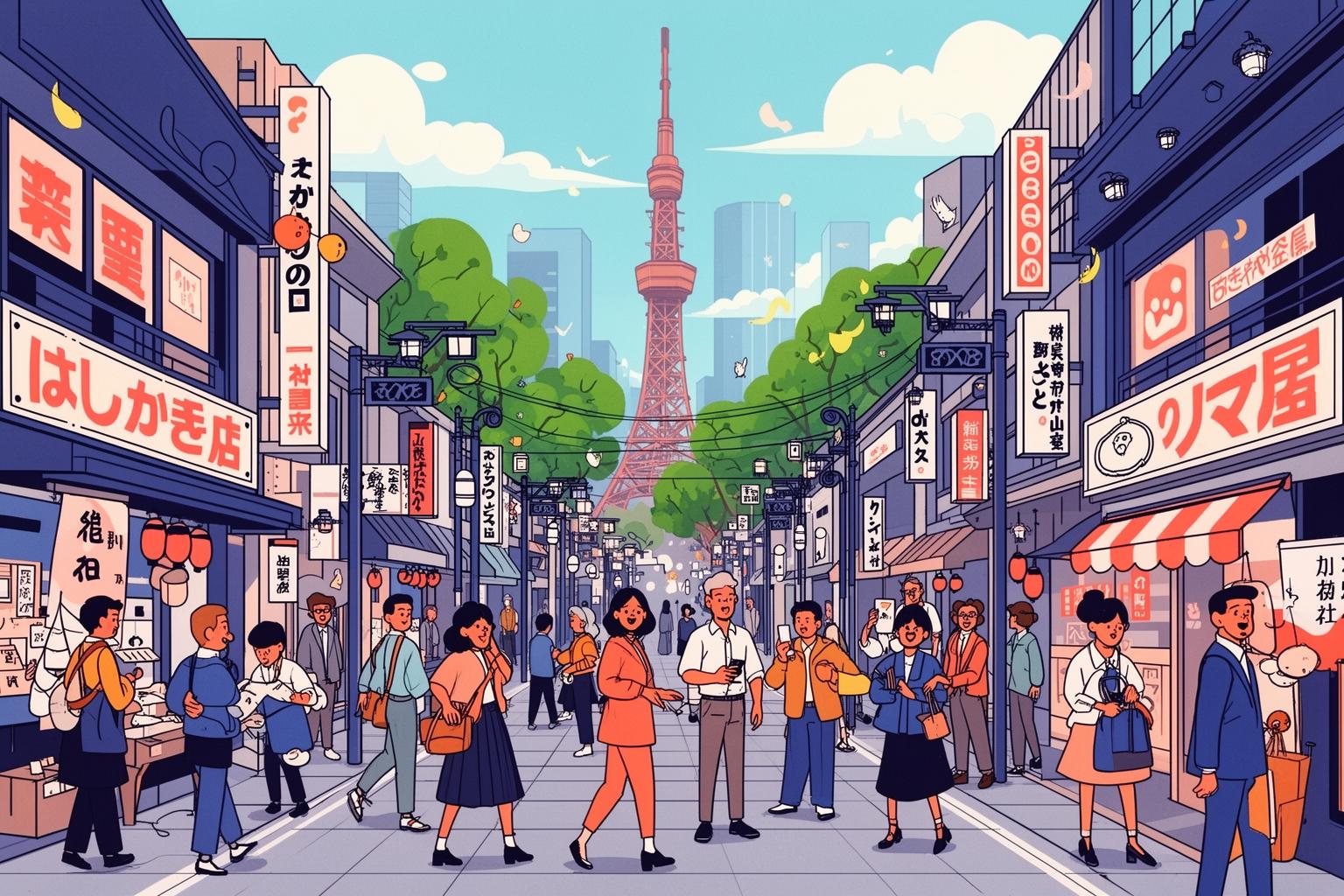
A shotengai is more than just a collection of shops; it’s a living ecosystem inhabited by a familiar cast of characters. Building relationships within this ecosystem is essential to truly experiencing life in a neighborhood. The interactions may be brief and transactional, but over time they create a web of familiarity that fosters a deep sense of belonging.
The Guardians of a Single Craft
Let’s explore a typical sequence of encounters. Your first stop could be the 豆腐屋 (tofu-ya). The shop is usually small, humid, and carries a faint scent of cooked soybeans. The owner, often an older man with strong forearms, greets you with a quiet nod. Before him, blocks of fresh tofu—silken (kinu) and firm (momen)—gleam in a basin of cool water. He may also offer thick slabs of fried tofu (`atsuage`), thin pouches for stuffing (`aburaage`), and fresh soy milk (`tonyu`). The interaction is straightforward. You ask for a block of momen, he skillfully scoops it up, places it in a thin plastic container, and accepts your coins. But if you become a regular, the routine expands. He’ll begin to recognize you. “Atsui desu ne” (It’s hot, isn’t it?), he might say, sparking small talk about the weather. This is the first thread of connection.
Next, you’re drawn by the sizzle and aroma of the 肉屋 (niku-ya), the butcher. This tends to be the liveliest spot in the arcade. Behind the counter lined with trays of marbled beef and thinly sliced pork, a team works with practiced speed. While one weighs a customer’s order of minced pork, another fries up golden-brown Korokke (potato croquettes) or Menchi-katsu (minced meat cutlets). These are more than raw ingredients—they’re a ready dinner solution. For a few hundred yen, you can grab a couple of hot, crispy cutlets that become the evening’s centerpiece. Kids often enjoy a korokke as an after-school snack, eating it right from a small paper bag. The butcher understands the neighborhood’s rhythm. He knows to have the affordable, quick-frying meats ready for the evening rush and may shout a suggestion: “Kyo no butabara, oishii de!” (The pork belly is delicious today!).
Then, the burst of color at the 八百屋 (yaoya). Piles of seasonal produce are artfully displayed in wooden crates spilling out into the walkway. The owner, usually a formidable woman with a booming voice and deep knowledge of her goods, commands the space. She is the oracle of seasonality. She’ll steer you away from out-of-season cucumbers and toward the plump, sweet spinach that just arrived this morning. Shopping here is a collaborative effort. You mention you’re making nikujaga (a meat and potato stew), and she selects the perfect onions and carrots for the dish. You’re not just a customer; you’re a student, and she is the teacher. This is where you learn the subtle calendar of Japanese cuisine—not from a book, but from the hands that sell the earth’s bounty.
The Social Fabric: More Than Transactions
These daily interactions lay the foundation of the neighborhood’s social fabric. Foreigners sometimes misinterpret this familiarity. The shopkeeper’s friendliness isn’t an invitation to become best friends or to be invited over for dinner. It’s something subtler and, in many ways, more essential. It’s an acknowledgement: “I see you. You belong here.” It’s a functional warmth that keeps the wheels of daily life turning smoothly.
This is also the domain of the famous “Osaka oba-chan” network. You’ll see them everywhere: clusters of elderly women chatting animatedly, sharing information. They are the neighborhood’s news service, social media, and quality control all rolled into one. They know which fishmonger has the freshest squid, which greengrocer is running a sale on mushrooms, and whose son just passed his university entrance exams. Their gossip and chatter are the community’s lifeblood, enforcing norms and strengthening bonds. To be greeted and recognized by them is a sign that you’ve begun to integrate.
This world is a stark contrast to the anonymity of supermarkets, where your only interaction might be a polite but impersonal exchange with a cashier. In the shotengai, you are a person with a face, preferences, and a story that gradually unfolds with each visit. The butcher starts to remember you like the leaner cuts. The tofu maker sets aside a block for you if he knows you’re coming late. These small gestures are the tangible rewards of taking part in a human-scale economy—they help a city of millions feel like a small town.
A Foreigner’s Guide to Fitting In
For someone not living in Japan, the shotengai can initially feel overwhelming. It’s noisy, busy, and conversations happen quickly in a dialect that can be challenging to understand. Yet, engaging with it offers one of the most authentic and rewarding experiences of life in Osaka. It provides a wonderful, low-pressure setting to practice your Japanese and immerse yourself in the city’s genuine culture, far removed from the polished tourist areas.
Breaking the Ice: A Few Simple Steps
The key is to go beyond just the basic transaction. Instead of merely pointing and saying “Kore wo kudasai” (I’ll have this), try to interact, even briefly. Here are some practical phrases that can help break the ice:
- “Konnichiwa!” or “Kombanwa!”: A friendly greeting is always a great way to start. Make eye contact and smile to show you intend more than just a quick purchase.
- “Kyou no osusume wa nan desu ka?” (What do you recommend today?): This phrase is invaluable. It shows respect for the vendor’s knowledge and invites genuine engagement. They’ll usually be happy to share what’s freshest or best priced.
- Commenting on the product: A simple “Oishisou desu ne!” (That looks delicious!) can make a difference, expressing appreciation for their craftsmanship and the quality of their products.
- Chatting about the weather: Classic small talk. Phrases like “Atsui desu ne” (It’s hot) or “Samui desu ne” (It’s cold) create a shared moment to connect.
Don’t stress about perfect grammar. Vendors in local shotengai are accustomed to interacting with people from all walks of life. They value your effort and often respond with kindness, patience, and a smile. Your willingness to engage matters more than fluency.
From Chore to Ritual: Changing Your Mindset
The biggest challenge is often in the mind. It means letting go of the Western obsession with speed and efficiency. Avoid visiting the shotengai when you are rushed. Instead, go when you have twenty to thirty minutes to spare. Think of it not as “grocery shopping” but more like an “evening stroll.”
Allow yourself to be spontaneous. Maybe you planned to buy tofu and milk but the tempting aroma of grilled eel from the unagi-ya sways your dinner plans. This is the serendipity of the shotengai—it’s a place of discovery. You might come across an unusual vegetable you’ve never seen before and ask the yaoya-san how to cook it. You could stumble on a tiny shop selling freshly made dango (sweet rice dumplings) and decide to make it your dessert.
This habit also connects you with the seasons in a way a supermarket never can. You’ll notice the first bamboo shoots of spring, the peak of summer vegetables, and the arrival of autumn mushrooms. Your cooking and daily life become more in tune with the natural rhythm of the seasons, a rhythm beautifully displayed across the shotengai stalls.
This daily or frequent ritual roots you in your neighborhood. You begin to recognize faces—not only the shopkeepers’ but also those of fellow shoppers. Nods of acknowledgement are exchanged. You stop being an anonymous figure in the crowd and become a familiar presence. This is how a sprawling, overwhelming city starts to feel like home.
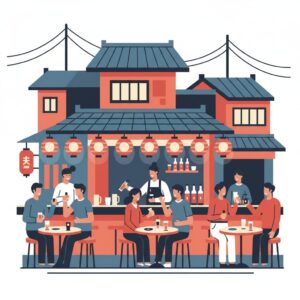
As the last light of day fades and the red lanterns of izakayas (pubs) flicker on, the shotengai shifts once again. The busy shoppers thin out, replaced by those seeking a different kind of nourishment. Salarymen pause at a tachinomi (standing bar) for a quick beer and yakitori skewer before catching their last train. Friends who bumped into each other while shopping decide to share a bottle of sake. The shotengai, which was the neighborhood’s pantry moments before, transforms into its living room and bar.
The yugure-doki routine is more than just food shopping. It is a deeply ingrained cultural practice that embodies what makes Osaka unique. It celebrates specialized skill over mass production, honors human connection in an increasingly digital age, and enacts the city’s practical, lively, and community spirit daily. Walking through a shotengai at dusk lets you feel the true, vibrant heartbeat of Osaka. It reminds you that in this city, the richest experiences often lie not in grand landmarks, but in the simple, beautiful, and delicious rituals of everyday life.