Walk through Tokyo before nine in the morning, and you witness a city in motion, a river of humanity flowing with relentless, silent purpose. The currents are strong, pulling people from train stations to office towers. Faces are forward, gazes fixed on phones or the middle distance, each person a solitary island in a sea of millions. The cafes reflect this reality; they are refueling stations, temporary docks for individuals to grab an espresso, plug in a laptop, and extract maximum productivity from a slice of borrowed time. It’s a world of clean lines, efficient transactions, and insulating headphones. It works. It’s the engine of a metropolis.
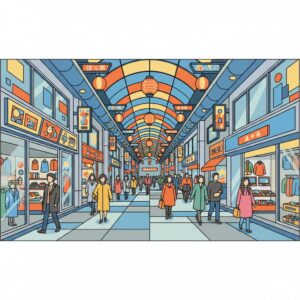
Then, step off the Shinkansen in Osaka, and walk down a shotengai, one of the city’s covered shopping arcades, around that same early hour. The energy is different. It’s not a river; it’s a collection of warm, slowly bubbling springs. The sound isn’t the uniform shuffle of feet but a layered composition of bicycle bells, shop shutters rattling open, and, filtering out from behind stained glass doors and fogged-up windows, the unmistakable hum of conversation. This is the sound of the kissaten, the classic Japanese coffee house, and it is here, in these humble, often time-worn establishments, that the true rhythm of Osaka life is set. It’s here that the city performs its most essential daily ritual: the Morning Service, or mōningu sābisu. To an outsider, it looks like a cheap breakfast deal—buy a coffee, get toast and a boiled egg for free or for a pittance. But to mistake it for a simple bargain is to fundamentally misunderstand Osaka. This isn’t just about food. It’s a social contract, a support system, and a daily affirmation of community, all served on a small ceramic plate. It’s the city’s living room, where the unspoken rules of Osaka society are practiced, polished, and passed on. Understanding the Morning Service is understanding the city’s soul, a soul that values human connection over hurried efficiency, and a good story over a quiet workspace.
This focus on community and conversation continues into the evening, as seen in the unique social dynamics of Osaka’s standing bars.
The Unspoken Contract of Morning Service
At its heart, the Osaka mōningu sābisu is a deceptively simple transaction. You order a single cup of coffee, typically priced between 400 and 500 yen, and it comes with a small array of accompanying items. The classic set—the foundation of this entire culture—features a slice of impossibly thick, fluffy toast called shokupan, toasted to a perfect golden brown and served with butter and sometimes a small pot of jam or a mound of sweet red bean paste. Alongside it is a hard-boiled egg, still warm in its shell, with a tiny cup of salt for dipping. For a few extra yen, you might receive a miniature salad dressed with bright orange dressing or a small glass of yogurt. The economic logic seems puzzling: how can a business survive, let alone thrive, by essentially giving away food with a single drink? This is where Tokyo’s mindset of transactional efficiency clashes with Osaka’s philosophy of relational investment.
More Than a Meal, It’s a Membership
In Osaka, the morning set isn’t a loss leader aimed at attracting new customers. Rather, it is a reward system for regulars, the jōren-san. The unspoken understanding is that the customer isn’t merely purchasing coffee and toast; they’re paying a small daily fee to belong to a community. The kissaten owner, the “Master,” isn’t just selling breakfast—they are cultivating a sense of belonging. Profit doesn’t come from the single cup of coffee you drink today but from the hundreds of cups you, your friends, and your family will enjoy over the years. It’s a long-term investment in loyalty, a concept deeply embedded in this city’s merchant DNA. The morning service is a daily handshake, a reaffirmation of the bond between the café and its patrons. It says, “Thank you for being here. You’re part of this place.”
The atmosphere inside reflects this philosophy. It is a shared space, but not in the modern, sterile sense of a co-working lounge. The air is thick with the rich aroma of dark-roast coffee, brewed with care through a siphon or a flannel drip, a process as much part of the morning’s ritual as the conversation itself. You hear the gentle clatter of ceramic cups on saucers, the rustle of newspapers being folded and passed along, and a steady, low hum of chatter. It’s the sound of a city waking up together. Laptops are rare. The dominant technologies here are analog: the printed page and the human voice. The space isn’t designed for isolated focus but for gentle, ambient engagement with the world around you. You’re not simply a customer occupying a seat; you’re a temporary resident in a shared home, expected to contribute, even if only through your quiet presence, to the collective morning calm.
The Master, The Guardian of the Gate
At the center of this daily ritual stands the most important figure in the kissaten ecosystem: the Master. This title, often given to the owner-operator, carries a weight of respect and responsibility far beyond that of a typical manager. The Master is the silent, observant hub around which the entire community revolves. Often an older man or woman who has run the establishment for decades, they possess encyclopedic knowledge of their clientele. They are gatekeepers, confidants, community bulletin boards, and quiet conductors of the morning’s social symphony.
Their service is an intimate, understated performance of care. They know Mr. Sato takes his coffee black and prefers the corner seat by the window. They know Mrs. Tanaka’s daughter is studying for university entrance exams and will inquire about her progress. They know the owner of the nearby bookstore is a fan of the Hanshin Tigers and will have the sports section of the newspaper ready for him. The first time you visit, you’re a guest. The second time, a familiar face. By the third, the Master might start your usual order with just a nod of recognition. This isn’t scripted corporate friendliness; it’s genuine, earned familiarity. In contrast to the loud, bright, and ultimately anonymous “Irasshaimase!” of a Tokyo chain, interaction in an Osaka kissaten is quieter but profoundly deeper. The Master’s role is to make you feel not just served but seen. They are the guardians of the space’s wa, its harmony, gently steering conversations, managing disputes over sports teams, and ensuring everyone feels they belong. Their memory for detail is a core business asset, transforming a simple coffee shop into an essential third place, as vital as home or office.
A Tale of Two Cities: Kissaten Culture in Osaka vs. Tokyo
To truly understand the significance of Osaka’s kissaten culture, it must be compared to its counterpart in Tokyo. While both cities feature coffee shops, their purpose, atmosphere, and social roles are strikingly different. They reflect the contrasting values of Japan’s two major urban centers: one emphasizes the smooth, efficient functioning of the individual within a vast system, while the other values the lively, interconnected, and often noisy collective experience. This contrast is most evident during the morning hours.
Efficiency vs. Engagement
Tokyo’s café culture exemplifies modern urban design, dominated by sleek, well-lit national and international chains, each a finely tuned productivity pod. Power outlets abound, Wi-Fi is fast, and seating arrangements maximize personal space while discouraging interaction. It is a culture of laptops, headphones, and silent concentration. The café serves as an extension of the office or university library—a place to work during brief breaks in a busy day. The aim is to be alone together. The transaction is straightforward: you pay for coffee and in return rent a small bubble of personal space and resources for a limited time. The social contract is one of mutual, respectful anonymity.
In contrast, Osaka’s kissaten operate on an entirely different principle. They are designed not for productivity but for engagement. These spaces tend to be smaller, darker, and more intimate, with seating that encourages closeness rather than isolation. The visit’s primary purpose is connection—to the master, to regulars, and to the day’s news. Opening a laptop in a classic Osaka kissaten during the morning rush would not provoke hostility but would create a subtle sense of social disconnect—like wearing a tuxedo to a backyard barbecue. While possible, it misses the gathering’s essence. The unspoken rule directs attention outward, toward the communal space, rather than inward at a screen. The value lies not in Wi-Fi speed but in the quality of human connection and the strength of the community you temporarily join.
The Language of the Morning
The auditory environment in the cafes of the two cities tells the full story. In Tokyo, the dominant sound is a low, ambient hum—the whir of espresso machines, soft keyboard tapping, and occasional hushed phone conversations. It is a soundscape designed for focus.
In Osaka, the sound is distinctly human: lively, unfiltered Osaka-ben, a faster, more direct, and more expressive local dialect. Conversations occur not only at tables but between them. A businessman might loudly lament a baseball loss from the night before, prompting laughter and shouted responses from elderly women across the room. A shocking headline held up from a newspaper might spark a roomwide debate. Such behavior would be a serious etiquette violation in Tokyo, an intrusion into others’ personal space. In Osaka, it is the core of the experience. It is not nosiness but communal engagement, grounded in an assumed shared experience and a right to comment.
This is where outsiders often misinterpret Osaka’s celebrated “friendliness.” It is not a gentle warmth but a direct, engaging, and sometimes intrusive camaraderie. The people of Osaka build connections swiftly and without pretense. A question like “Where are you from?” isn’t mere small talk; it’s an earnest attempt to place you within their world. They want to know your story—not as a courtesy but because stories are the currency of the kissaten. To sit in an Osaka kissaten is to join a live, unscripted neighborhood radio play of daily life. To withdraw behind headphones is to reject your role in that performance.
The Social Fabric Woven Over Toast and Coffee
The kissaten is more than merely a spot for a morning meal; it serves as a microcosm of Osaka society. It reveals the city’s intricate social fabric, where various community threads intersect in a way that is uncommon in a society often characterized by hierarchies of age and profession. Within the dark wooden walls trimmed with velvet, a unique and informal social order takes shape each morning, upheld solely by coffee, toast, and the universal human need for connection.
The Cast of Characters
After enough mornings in the same kissaten, the regulars become as familiar as family. There is the “Newspaper Club,” a group of retired salarymen who are usually the first to arrive. They claim a large table, carefully divide the day’s newspapers—financial, local, sports—and engage in debates on politics, the economy, and current affairs with the seriousness of a cabinet meeting. Their discussions are loud, their views firm, and their bond is shaped by decades of shared experience, now expressed through this daily ritual.
Then there’s the local shop owner, perhaps from the nearby tofu shop or hardware store. They dash in for a “quick” coffee that rarely is quick. This moment allows them to escape the pressures of their business for half an hour, catch up on neighborhood gossip, and gauge the local mood. Their conversation with the Master is a rapid exchange of crucial information: which supplier is delayed, whose son is getting married, and what the city is planning for the upcoming festival.
At another table holding court is the “Obachan Circle,” a group of middle-aged and elderly women whose laughter is the room’s most consistent and joyful sound. They share stories about their grandchildren, swap health tips, and provide running commentary on the dramas unfolding in silently playing morning TV shows in the corner. They act as custodians of the neighborhood’s oral history and its most effective social network—a source of comfort and potent gossip alike.
Scattered among them are solitary figures: the university student prepping for exams, the taxi driver on break, the freelance writer searching for inspiration. Yet even in their solitude, they are not truly alone. They partake in the ambient energy of the room, their presence recognized by a nod from the Master. In the kissaten, these diverse lives—who might otherwise never intersect—are brought into close, comfortable proximity. Banker and butcher, student and retiree, all become equals over the course of a coffee. This is the great equalizing force of the morning service; it temporarily dissolves the social distinctions of the outside world, replacing them with a shared, simple identity: that of a regular.
A Support Network in Disguise
Beneath the surface of casual conversation and daily routine, the kissaten operates as a powerful, informal social safety net. This is perhaps its most essential and least visible role, especially in a country with an aging population and an increasing number of people living alone. The daily check-in at the kissaten serves as a straightforward yet effective wellness monitor.
If an elderly regular who hasn’t missed a morning in twenty years suddenly fails to appear for two days in a row, it doesn’t go unnoticed. The Master is the first to sense the absence. By the third day, a quiet ripple of concern spreads through the regulars. “Has anyone seen Suzuki-san?” the Master might ask another patron living in the same apartment building. A call may be placed. A neighbor might be sent to check on them. This is not morbid curiosity but a deeply ingrained system of mutual care. In the anonymity of a modern city, the kissaten offers a fixed point of observation where absence holds as much significance as presence.
This network goes beyond simple wellness checks. It’s a hub for exchanging practical assistance and information. A regular might mention they’re looking for part-time work, and the Master, familiar with the owner of every business on the street, will facilitate a connection. Someone might need a reliable plumber recommendation, and a consensus quickly emerges among the patrons. Business deals are brokered, advice dispensed, and shoulders metaphorically leaned on. For many, especially the elderly and self-employed, the relationships formed over morning coffee are their most consistent and dependable social and professional support. It’s a system built on trust and longevity, a safety net woven from countless small, daily interactions.
Navigating the Kissaten: An Outsider’s Guide to Fitting In
For a non-Japanese resident, stepping into the warm, wood-paneled atmosphere of a traditional Osaka kissaten can feel like entering an exclusive club. The rituals are subtle, the rules unwritten, and the social dynamics intricate. The key to not just enjoying the experience but truly becoming part of it lies in understanding that you are joining a community, not merely visiting a commercial venue. Treating it with the mindset one might bring to a global coffee chain is the quickest way to mark yourself as an outsider.
The Unspoken Rules of the Game
The first and foremost rule is this: a kissaten is not Starbucks. It is neither a remote office, a public library, nor a place for loud conference calls. While rules differ, the traditional kissaten implicitly discourages extended laptop use, especially during the busy morning hours. The space is a cherished and limited community resource. Occupying a table for three hours with a laptop while nursing a single coffee effectively denies that space to other community members. This is viewed as fundamentally antisocial. Closing your laptop and picking up a newspaper or simply observing the room is a sign of respect for the space and its purpose.
The tempo of a visit is also vital. This isn’t a spot to grab a coffee and dash. The expectation is that you will stay awhile. The Master is not trying to “turn tables” in the Western restaurant sense. Still, there is a natural flow. During the morning rush, roughly from 7:30 to 9:30 AM, it’s understood that you will have your coffee and toast then make room for the next wave of regulars. Lingering for an hour is perfectly acceptable; lingering for three is not. In the quieter afternoon hours, the rules relax, and you can stay longer with a book.
Engagement is crucial. Fluency in Japanese isn’t necessary, but small gestures matter. A clear “Ohayō gozaimasu” (Good morning) to the Master upon entering and a “Gochisōsama deshita” (Thank you for the meal) upon leaving are essential. They communicate that you appreciate the personal nature of the establishment. Be open to conversation. If a regular at the next table comments on the weather, a simple nod and smile signal that you are part of the shared space. Don’t hesitate to ask the Master a question, perhaps about the coffee beans or the shop’s history. This shows sincere interest and often marks the first step from being an anonymous customer to a familiar face.
What Foreigners Often Get Wrong
One common mistake foreigners make is misreading the pace of service. In a world used to on-demand efficiency, the deliberate, unhurried movements of a kissaten Master can be mistaken for slowness or inattentiveness. This is a fundamental misunderstanding. The Master is not merely preparing your order; they are attending to the entire room. They observe conversations, anticipate needs, and maintain delicate social balance. The time it takes to make your siphon coffee is part of the experience—a moment to unwind and sync with the space’s rhythm. Demanding speed misses the point entirely.
A second major misunderstanding concerns the directness of Osaka communication. A regular might abruptly ask, “Where are you from? Why are you in Japan? Are you married? What do you do for work?” In many Western cultures, and certainly in Tokyo, such personal questions from a stranger might be seen as intrusive or rude. In Osaka, this direct approach is standard practice for showing interest. It’s a quick, effective way to build relationships. They don’t intend to pry; they want to connect. They seek common ground, a story, a way to understand you within their worldview. Vague or evasive answers can seem unfriendly. A direct, honest, and good-humored response will be met with genuine warmth and may earn you a friend for the morning—or longer.
Lastly, there’s the misconception that all kissaten are alike. While sharing a common spirit, each has its own unique character and specialty. Some are meikyoku kissa, playing classical music on vintage sound systems and insisting on near silence. Others are famous for a particular dish, like a spectacular egg sandwich or homemade curry. Some are bright, bustling hubs of neighborhood gossip; others are quiet, smoky retreats for solitary reflection. Part of the joy of living in Osaka is exploring these variations and finding the one that feels like your personal living room.
The Living History and Uncertain Future
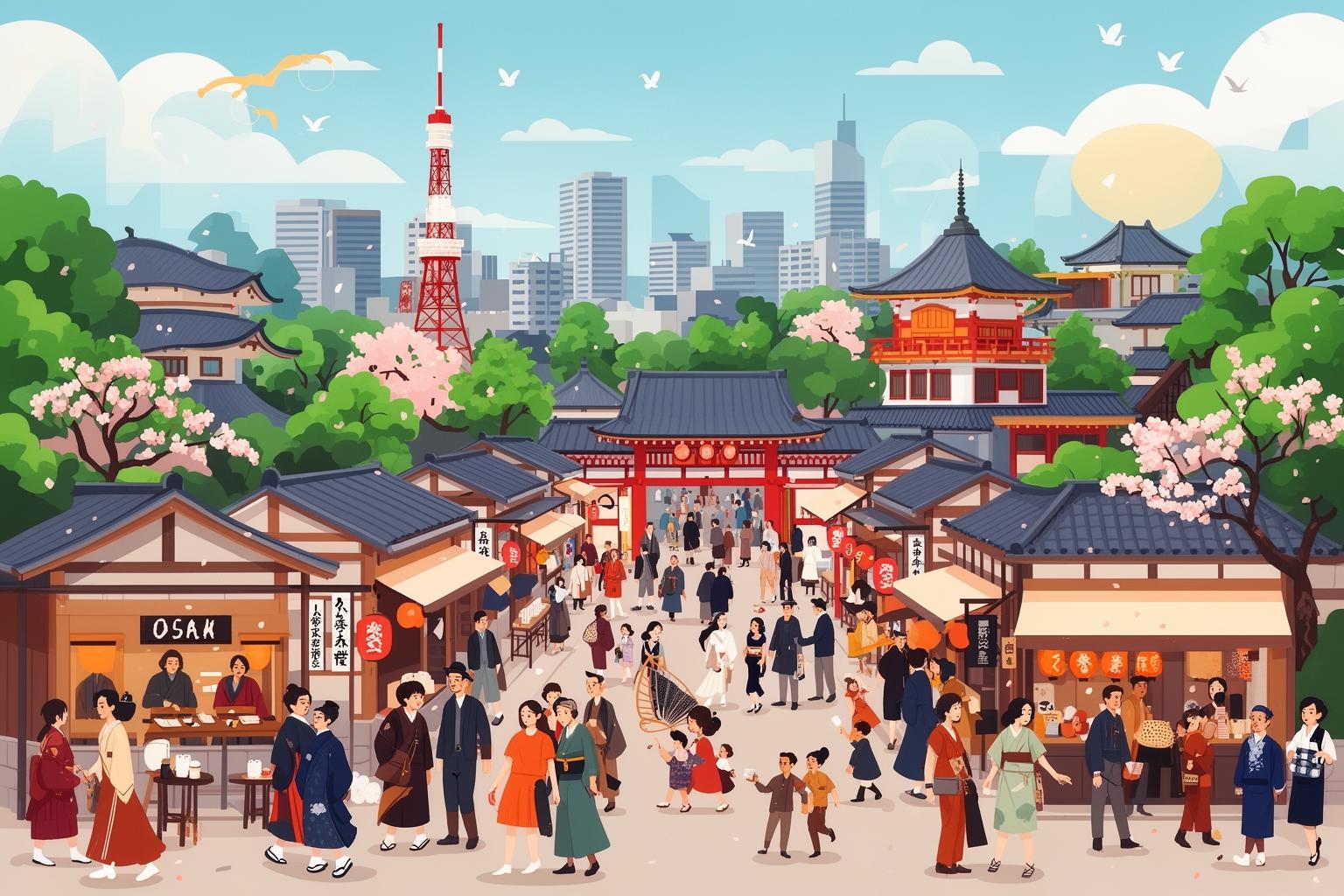
Sitting in an Osaka kissaten is like being inside a living museum of Japan’s Showa Era (1926-1989). These spaces serve as time capsules, preserving an aesthetic and lifestyle that has mostly disappeared from the country’s more modern cityscapes. The dark wood paneling, the worn velvet or leather chairs, the ornate siphon coffee makers resembling equipment from a science lab, and the warm glow of Tiffany-style lamps—all evoke a bygone era of post-war optimism and a blossoming coffee culture. Originally, these were not just places for coffee but hubs for ideas: where artists gathered, writers worked, intellectuals debated, and businessmen closed deals amid clouds of cigarette smoke.
From Showa-Era Relic to Modern Sanctuary
Remarkably, these establishments have endured. They have survived economic booms and busts, the rise of convenience store coffee, and the unstoppable expansion of global chains by refusing to compete on the modern world’s terms. They don’t offer Wi-Fi, power outlets, or elaborate seasonal drink menus. Instead, they provide something far more valuable and difficult to replicate: a sense of place, history, and belonging. In an increasingly fast, impersonal, and digital world, the kissaten has become an unexpected sanctuary—a place to disconnect from the internet’s noise and reconnect with the simple, analog pleasures of a well-brewed coffee and genuine, face-to-face conversation. No longer merely relics, they serve as a deliberate and necessary antidote to the pressures of contemporary life, reminding patrons that efficiency isn’t the only virtue and that some of life’s most meaningful moments occur in the slow, unstructured times between appointments.
A Fading Ritual?
Still, despite their resilience, the future of the traditional kissaten is uncertain. A sense of vulnerability lingers, as palpable as the rich aroma of coffee. The greatest challenge is demographic: the Masters, custodians of this culture, are aging. Many are in their seventies or eighties, with few children or successors willing to undertake the demanding, low-margin work of running a small, independent coffee shop. When they retire, their shops—and the unique communities they cultivated—often close forever. Each closure represents a small tear in the city’s social fabric.
Younger generations have different preferences, often drawn to bright, airy, and visually appealing cafes ideal for Instagram. The dark, sometimes smoky, and decidedly unphotogenic interiors of Showa-era kissaten can seem outdated or unwelcoming. The slow, deliberate pace may frustrate a generation raised on instant gratification.
However, there are hopeful signs. A growing counter-movement and renewed interest in “Showa retro” have led some young people to seek out the very authenticity that old kissaten provide. A new generation of entrepreneurs, inspired by the originals, are opening modern interpretations of the kissaten that maintain a focus on quality coffee and community while updating the aesthetic for today. Some are even taking over from retiring Masters, apprenticing to learn the craft and inherit the community. They recognize that what they preserve is not just a business model but a vital piece of the city’s cultural heritage. Though classic kissaten may become rarer, the core idea they represent—a welcoming, community-centered third place—is deeply rooted in Osaka’s DNA. The city’s need for a living room—a place to gather, talk, argue, and simply be together—will persist. As long as that need exists, the spirit of the Morning Service will continue, for it is, after all, how Osaka begins its day.