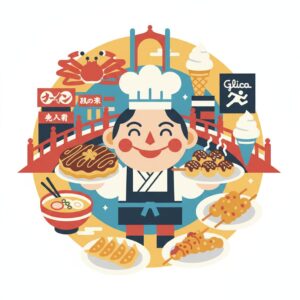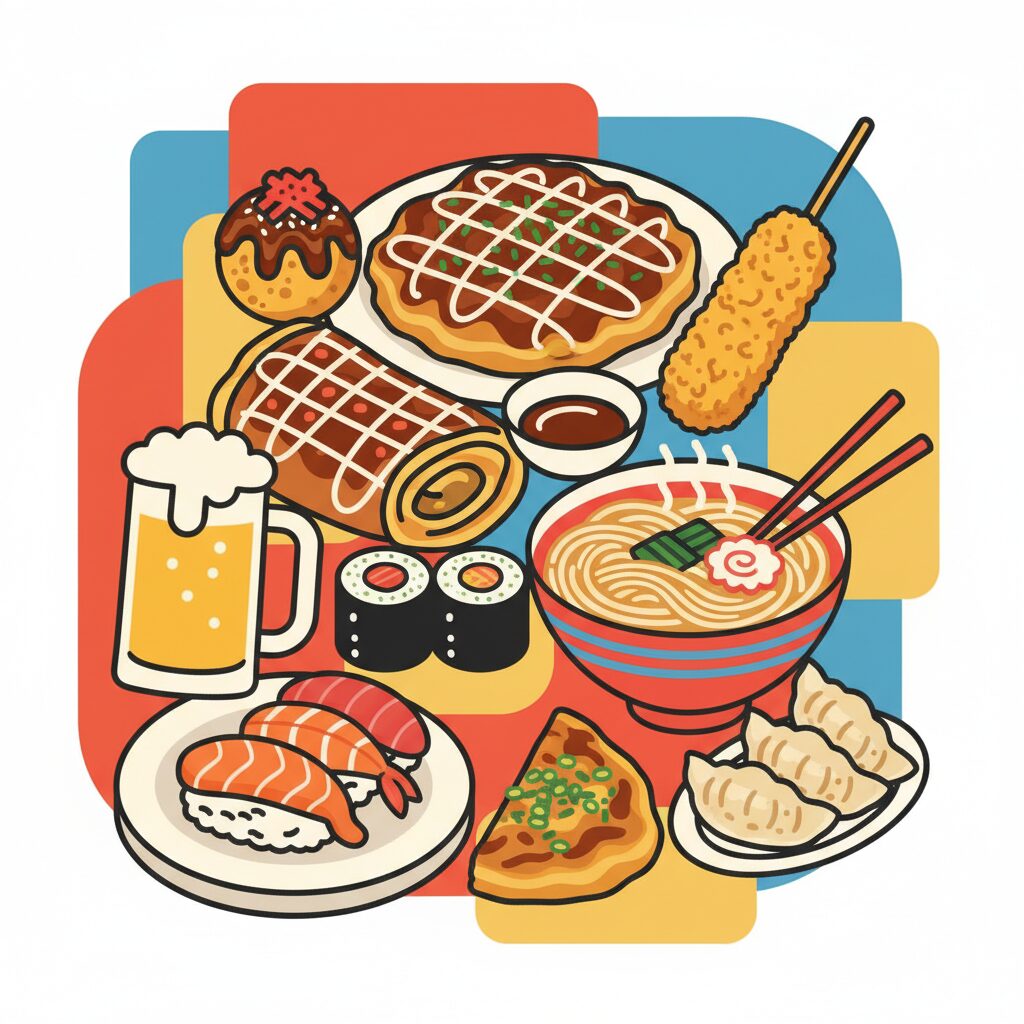
Walk through any neighborhood in Osaka, at any time of day, and you’ll feel it. It’s not just the smell of grilling takoyaki or the rich aroma of dashi broth wafting from a tiny udon shop. It’s a current, an energy, a city-wide obsession that pulses through every conversation and transaction. You’ll hear it in the way coworkers don’t ask “How was your weekend?” but “Did you eat anything good?” You’ll see it in the serious, focused expressions of people lining up for a simple pork bun from 551 Horai. This is the world of Kuidaore, a word every resident of Osaka knows in their bones. Translated literally, it means “to eat oneself into ruin,” a concept that sounds almost comically self-destructive. But to live here is to understand that Kuidaore is far more than gluttony. It’s a complete philosophy, a social compass, and the unofficial operating system for daily life in Japan’s Kitchen.
For a foreigner settling into Osaka, this food-centric universe can be both exhilarating and bewildering. In Tokyo, conversations might revolve around a new art exhibit, a fashion trend, or the latest tech gadget. In Osaka, the primary currency of social connection is food knowledge. The city’s famous slogan, “Kyotoites are ruined by overspending on clothes, Osakans are ruined by overspending on food,” isn’t a tourist catchphrase; it’s a statement of deeply held local values. It says that the most worthy thing to spend your hard-earned money on is not status symbols, but the tangible, democratic pleasure of a good meal. This article isn’t a guide to the best ramen in Namba. It’s a deep dive into the Kuidaore mindset itself—how it shapes the city’s soul, defines its people, and presents both wonderful opportunities and subtle challenges for anyone trying to build a life here. We’ll unpack the pros—the incredible value, the vibrant community—and the cons—the social pressure, the potential for judgment—to understand what daily life is truly like inside the whirlwind of Kuidaore.
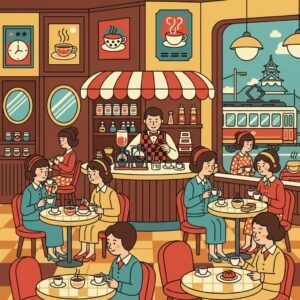
This philosophy of prioritizing simple, tangible pleasures is perfectly embodied in the city’s everyday morning rituals.
The Bedrock of Kuidaore: Understanding the Merchant’s Mentality
Before fully understanding the nuances of modern Osaka’s food culture, one must first trace its origins. Osaka was never the capital of samurai or emperors; rather, it was the capital of merchants. During the Edo period, it earned the nickname Tenka no Daidokoro—the Nation’s Kitchen. Rice and goods from across Japan poured into the city’s warehouses and were traded on its markets. This history shaped a population of pragmatic, straightforward people who valued money, quality, and the art of negotiation. They had little interest in the abstract aesthetics or strict formalities that characterized Kyoto’s courtly culture or Tokyo’s samurai bureaucracy. Instead, their focus was on what was real, tangible, and offered the best return on investment.
The Holy Trinity: Cheap, Delicious, and Fast
This merchant heritage directly informs the modern Osakan obsession with cost performance, or kosupa as it is colloquially called. The phrase you’ll hear everywhere is “Yasui, Umai, Hayai”—Cheap, Delicious, Fast. This is not merely a slogan for chain eateries; it is a core expectation for almost every meal. While a Tokyoite might willingly pay extra for elegant presentation, a renowned chef’s name, or a trendy spot, an Osakan makes a quick, ruthless calculation: “Is the quantity enough for the price? Are the ingredients’ quality justified? Does the taste impress me?” If the answer to any of these is no, the place is dismissed as poor kosupa and unlikely to thrive.
This explains why a 500-yen takoyaki stand with large octopus pieces typically has a longer line than the 1,500-yen artisanal pizza shop beside it. Osakans aren’t stingy—they simply hate feeling cheated. The value must be clear and immediate. This mindset applies across the spectrum, from street food to upscale dining. Even in expensive restaurants, Osakans mentally assess each aspect: Was the service charge justified by the service? Did the wagyu’s quality truly merit the price? This ongoing critical evaluation is ingrained city-wide.
Food as the Ultimate Meritocracy
In Osaka, food serves as the great equalizer. The merchant class believed that while birthright could not be changed, enjoying a good meal was always possible. This ethos continues today in a remarkably democratic food culture. A company president might be found slurping noodles alongside a construction worker, both united by their love of a perfect bowl of ramen. Status comes not from the place you eat but from what you know. Being able to recommend a hidden, family-run okonomiyaki shop tucked away in an alley earns far more social capital than name-dropping a well-known Michelin-starred restaurant featured in magazines.
This fosters a culture of discovery and shared knowledge. People are genuinely excited to share their latest find. Your barber, landlord, or the stranger sitting next to you at a bar—all have recommendations, delivered with passion and detailed reasons why it’s the best. It’s a form of social bonding. In this meritocracy, the food speaks for itself. Fancy décor, slick marketing, and celebrity endorsements mean little if the product fails to deliver on its core promise: being truly excellent for the price.
The Pros: How the Kuidaore Spirit Enriches Daily Life
The intense focus on food in Osaka is not merely a cultural idiosyncrasy; it produces tangible, positive impacts on everyday life. It builds community, maintains a consistently high quality standard, and makes living both more enjoyable and affordable.
An Unmatched Landscape of Accessible Excellence
Perhaps the biggest advantage of the Kuidaore culture is the easy access to top-notch cuisine. Due to the strong and widespread demand for high-quality meals, every neighborhood is filled with outstanding options. You don’t need to travel to a popular gourmet area to eat well. Near your local train station, you might find a standing-only udon shop serving a life-changing bowl for just 400 yen. The nearby butcher sells hot, crispy croquettes (korokke) superior to what you’d find in department store food halls. The corner takoyaki stall is run by a family that has perfected their batter recipe over three generations.
This sharply contrasts with Tokyo, where the finest restaurants tend to cluster in specific districts and often require reservations weeks or months ahead. In Osaka, spontaneity rules. The best meal of your week might come from an unexpected discovery. This makes everyday life feel richer. An ordinary Tuesday can be transformed by a quick, inexpensive, and utterly delicious dinner on the way home. It removes any pretension from good food, weaving it seamlessly into daily life.
The Social Glue of a Common Passion
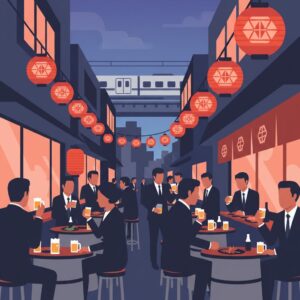
In many large cities, connecting with others can be difficult. Social groups may be closed off, and conversations can feel shallow. In Osaka, food serves as a universal icebreaker. It’s the go-to topic, the shared interest, the easiest way to strike up a conversation with a stranger. At a tachinomi (standing bar), you can simply ask the person next to you, “What’s that you’re eating? Is it good?” More often than not, this will spark a warm, enthusiastic exchange, and you might even be offered a taste.
This culture lowers social barriers. Inviting a new acquaintance to a formal dinner can feel intimidating. But in Osaka, the invitation is more likely to be, “Let’s grab some kushikatsu.” It’s casual, affordable, and interactive. You stand around a communal table, dip your own skewers into the shared sauce pot (no double-dipping!), and chat. Sharing food informally in this way quickly creates camaraderie. It’s a powerful way to make friends and build community, especially for foreigners who may feel isolated.
A Culture of Candid Honesty and Continuous Improvement
Osakans are straightforward. While this can sometimes be mistaken for rudeness, in the realm of food it acts as a rigorous, city-wide quality control. People aren’t afraid to speak their minds. If a restaurant’s quality declines, customers notice, talk about it, and stop going. There’s no polite silence or passive tolerance of mediocrity.
I once saw a man at a ramen shop politely but firmly tell the owner that the soup was saltier than usual. In Tokyo, this might cause a scene or be seen as very rude. In Osaka, the owner listened carefully, tasted the broth, and nodded, saying, “You’re right, I’ll keep an eye on it.” This constant feedback loop keeps businesses on their toes. They can’t rely on past reputations or reviews from a year ago. They must perform daily, serving a customer base of millions of discerning food lovers. For residents, this is a huge advantage. It means that, generally, the food you receive will be good because places that serve poor food simply don’t survive.
The Cons: The Dark Side of a Food-Obsessed City
Despite its many advantages, living under Kuidaore’s influence comes with its own set of challenges. The very passion that fuels such a dynamic food culture can also lead to social pressure, judgment, and a kind of cultural tunnel vision that may be exhausting and even alienating for those who don’t share the same level of enthusiasm.
The Unrelenting Social Pressure to Join In
What if you simply aren’t a “foodie”? What if food is just fuel for you? In Osaka, this can feel like a social disadvantage. Much of life centers around planning meals, discussing meals, and critiquing meals, making it hard to opt out. Colleagues spend lunch breaks not just eating but actively debating the merits of their bento boxes. Social gatherings almost always revolve around trying a new restaurant or returning to a favorite spot. If you suggest something that doesn’t involve food—like a walk in the park or a museum visit—you’re often met with slight bewilderment, as if you’ve missed the point. The default expectation is that food is the main event of any social outing.
As someone who loves the outdoors, I often just want a quick, simple meal before a long hike. But organizing this with Osaka friends can turn into a 45-minute debate over which convenience store offers the best onigiri or whether to detour to a famous bakery for sandwiches. The pressure to have a well-informed opinion on every culinary topic is constant. Indifference is not socially acceptable.
The Sting of “Gourmet Bullying”
On the flip side of a knowledgeable population is the potential for snobbery. This isn’t overt or malicious bullying, but a subtler form of social judgment. Let’s call it “gourmet bullying.” It involves gently—or sometimes not so gently—shaming someone for their food choices. If you admit to liking a popular, nationwide chain restaurant, you might be met with a theatrical sigh and a comment like, “You went there? Why? The place down the street is ten times better and cheaper.”
For foreigners, this can be particularly challenging. Without encyclopedic local knowledge, they naturally gravitate toward familiar or accessible spots. This can unintentionally mark them as outsiders who “don’t get it.” Those making such comments usually believe they are being helpful, sharing their superior knowledge to improve your experience. However, these interactions can cumulatively feel like a constant test of your taste and cultural assimilation. It fosters fear of making the “wrong” choice and can turn something as simple as choosing lunch into a socially risky endeavor.
The Health and Financial Reality of “Eating Till You Drop”
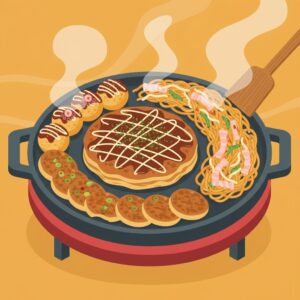
Let’s be honest: the Kuidaore lifestyle isn’t exactly a paragon of healthy living. Osaka’s celebrated dishes—okonomiyaki, takoyaki, ramen, kushikatsu—are typically heavy on carbs, oil, and salt. They’re delicious, comforting, and addictive. The culture encourages frequent indulgence. There’s always a birthday to celebrate or a new place to try, and eating out is the primary social activity. Resisting this current is tough.
For tourists on a week-long trip, this is a plus, not a downside. But for residents, it’s a real challenge. It requires deliberate effort to cook at home, eat vegetables, and control expenses. The temptation to grab a cheap, tasty, convenient meal is everywhere. The “ruin” in Kuidaore can become literal—both to your waistline and your budget. The small daily food expenses add up fast, and it’s easy to spend a significant part of your income just keeping pace with the city’s culinary lifestyle.
The Cultural Monoculture: Is Life Really Just About Food?
At times, the city’s intense focus on food can feel restrictive. It can overshadow Osaka’s other vibrant cultural offerings. The city boasts a fantastic independent music scene, a thriving artistic community, a unique history, and passionate sports fans. But these topics often take a back seat in casual conversation. The discussion almost always circles back to food.
This can cause misunderstandings for foreigners who come to Osaka for reasons beyond cuisine. They might be here for work, family, or study. They may have interests in art, literature, or sports. While communities exist for these passions, they are not part of the dominant, city-wide conversation in the same way food is. It can sometimes feel that if you’re not engaged in the great culinary debate, you’re missing a core part of being Osakan, leaving you feeling like an outsider looking in.
Learning to Live with Kuidaore: A Resident’s Survival Guide
So, how do you thrive in a city where food reigns supreme? The secret isn’t to resist it, but to understand it and discover your own place within it. You don’t have to turn into a food fanatic to enjoy life in Osaka. You simply need to learn the language and the rules of the game.
Find Your Own Balance, Not Theirs
First, free yourself from the pressure to keep up. It’s perfectly fine to have simple tastes. It’s okay to cook at home. You don’t need to form an opinion on the subtle differences between dashi broths from Kita and Minami. The key is to confidently embrace your own preferences. Identify your personal favorite spots—the quiet café with great coffee, the ramen shop that serves noodles exactly how you like them—and make them yours. Your own satisfaction matters more than fitting into a supposed local consensus. Being a resident rather than a tourist means building your own routine and creating your own map of the city that suits you.
Learn to Interpret the Subtext
When a local tells you that the place you picked is “wrong,” try to see it from a different perspective. They aren’t criticizing you personally. In Osaka, giving unsolicited food advice is a social ritual—a way of showing they’re engaged and care enough to share their hard-earned knowledge. It’s their way of saying, “I want you to have the best possible experience in my city.” A simple reply like, “Oh, really? Thanks, I’ll have to try it next time!” acknowledges their kindness without feeling defensive. Understanding the intention behind their words turns these interactions from criticism into a unique form of communication.
Use Food as a Gateway, Not a Destination
Rather than letting food dominate every conversation, use it as a starting point for deeper discussions. When someone recommends a restaurant, ask questions that go beyond the food itself. “Has it been there long?” “Is it family-run?” “What’s the neighborhood like?” A talk about an old udon shop can evolve into a conversation about the history of that area of the city. A chat about a specific ingredient can lead to discussions about local farming and produce. Food is the door, but it’s up to you to walk through and explore the rooms beyond. This way, you can connect with people on many levels, using food as a shared language to delve into topics that interest you more.
The Final Verdict on Kuidaore
Living in Osaka means embracing Kuidaore. It is the city’s pulse, an undeniable force that shapes its character and the daily lives of its people. This philosophy has created an extraordinary, world-class food culture accessible to all, nurturing a sense of community, honesty, and appreciation for genuine value. It makes life here flavorful, affordable, and rich with opportunities for connection.
However, it is also a demanding creed. It calls for your involvement, your perspective, your passion. It can be loud, judgmental, and at times, overwhelming. The challenge for any long-term resident is to engage with this vibrant culture on your own terms. It’s about learning to savor the amazing benefits—the community, the quality, the pure joy of a perfect meal—while skillfully managing the downsides—the pressure, the judgment, and the constant temptation.
In the end, you realize that Kuidaore is about far more than just eating. It’s a way Osaka views life. It represents a deep belief in value over vanity, community over exclusivity, and the simple, profound pleasure of sharing an honest, good meal. To live in Osaka is to understand that “eating till you drop” isn’t a cautionary phrase but an invitation to embrace life with a full heart, an open mind, and a very, very happy stomach.