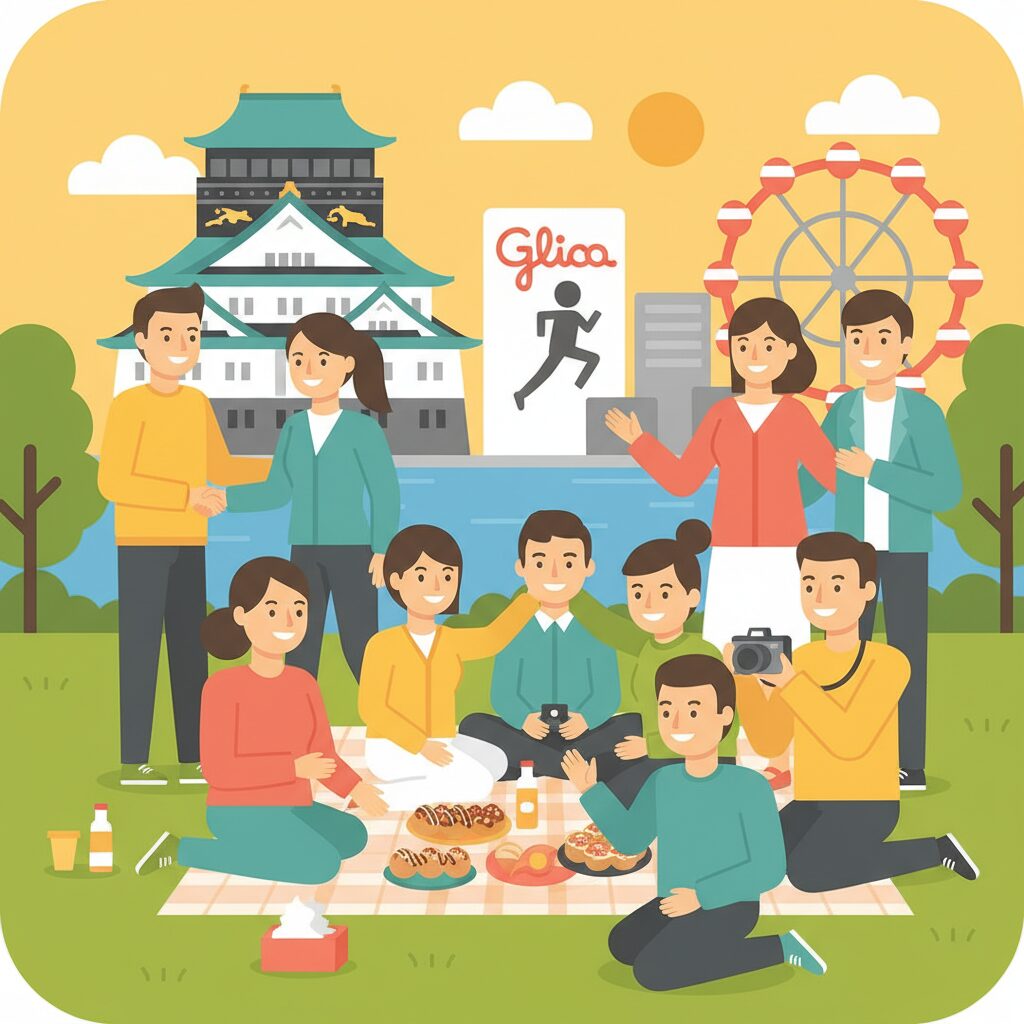
It happened during my first week in a quiet neighborhood nestled between the controlled chaos of Namba and the vintage hum of Amerikamura. I was standing in a tiny, family-run grocery store, a relic from a time before fluorescent-lit convenience stores colonized every corner. My mission was simple: buy some green onions for a soup. I picked up a bunch, probably the way I’d done it a thousand times back in the States. Suddenly, a voice, raspy with decades of use, cut through the quiet hum of the refrigerator. “Anata,ちゃうちゃう!” — “Honey, no, no, no!”
An elderly woman I’d never seen before, with a perfectly coiffed perm the color of lavender, snatched the green onions from my hand. My first reaction was a jolt of pure, unadulterated American panic. Am I being robbed? Scolded? Is this some kind of vegetable-based intervention? She pointed a wrinkled finger at the bunch I had chosen, then at another, seemingly identical bunch. “こっちや。こっちの方が新鮮。見て、色が違うやろ?” — “This one. This one’s fresher. See, the color’s different, isn’t it?” She thrust the “correct” onions into my hand, gave a satisfied nod, and went back to inspecting daikon radishes as if she hadn’t just rearranged my entire worldview. I stood there, clutching my superior green onions, completely bewildered. In Tokyo, you could live next door to someone for a decade and never learn their name. Here, I couldn’t even buy produce without unsolicited, expert consultation from a stranger.
This is the beautiful, baffling, and often brilliant reality of daily life in Osaka. The city breathes a different kind of air, thick with chatter, opinions, and a level of casual intimacy that can feel like an invasion of privacy to the uninitiated. This phenomenon, this friendly meddling known as osekkai, isn’t a bug in the system; it’s the core operating principle. It’s the city’s handshake, its secret password, and, if you know how to handle it, your golden ticket to a social life more vibrant and genuine than you ever thought possible in Japan. Forget the polite, impenetrable bubble of Tokyo. This guide is about how to pop that bubble, lean into the meddling, and transform those nosy strangers into your Osaka family.
To truly embrace this local spirit, consider exploring the social fabric of the city by weekend sentō hopping.
Decoding the “Osaka Meddle”: Why Your Business is Their Business
To tap into Osaka’s unique social energy, you first need to grasp its origins. This isn’t mere random friendliness; it’s a nuanced cultural mix shaped over centuries of trade, humor, and community. The woman at the grocery store wasn’t being rude; she was honoring an unspoken social contract I unknowingly agreed to by choosing to live here.
The Merchant City Mentality (Akinai no Kokoro)
While Tokyo was shaped by samurai and bureaucrats, emphasizing rules, hierarchy, and formality, Osaka was built by merchants. Known as the nation’s kitchen, it’s where wealth was earned not through birthright but through cleverness, effort, and strong relationships. The spirit of akinai (business) is embedded in the city’s very essence. For an Osaka merchant, a transaction was never just about money; it was about forging a connection, sharing some banter, and giving customers a reason to return. The aim was to turn a one-time buyer into a regular, and a regular into a friend. This mentality transcended the marketplace and permeated all areas of life.
This is why talking to strangers here feels so natural. Life is an ongoing negotiation, a dance of communication. People aren’t merely exchanging pleasantries; they’re actively building social ties. Asking about your day, remarking on your attire, or offering tips on your vegetables is their way of saying, “I see you. We’re in this together. Let’s connect.” This contrasts sharply with Kanto’s more reserved style, where unsolicited conversation can feel intrusive. In Osaka, it’s silence that seems odd.
It’s Not Nosiness, It’s “Osekkai”
There’s an essential Japanese word to know for thriving here: osekkai. While dictionaries translate it as “meddlesome” or “officious,” those terms miss the warmth behind it. In Osaka, osekkai is a term of affection, a form of proactive, sometimes over-the-top kindness. It means getting involved in someone else’s life because, in your way, you care.
When a restaurant owner tells you, “You’re too skinny, eat more!” and adds an extra piece of karaage to your plate, that’s osekkai. When the man at the bike shop notices your rusty chain and says, “You should oil that, it’ll rust,” that’s osekkai. When a woman at the bus stop asks if you have a boyfriend and then offers unsolicited dating advice, yes, that’s classic osekkai. It’s a kind of communal care—everyone takes an interest in each other’s well-being, whether it was requested or not. It signals that you’re not just a face in the crowd; you belong to the neighborhood, and your welfare concerns everyone.
The Comedy Club Culture: Life as a Performance
Osaka is Japan’s comedy capital, home to Manzai—a rapid-fire, back-and-forth comedic style that dominates TV. Comedy here isn’t only entertainment; it’s a communication style. Daily conversations in Osaka have a rhythm and flow akin to a comedy act, with a setup (boke) and a punchline (tsukkomi).
Friendly meddling often serves as the setup. The stranger isn’t just giving advice; they’re tossing you a conversational cue, inviting you to play along. They’re setting a scene and casting you as their partner. A simple “Thank you” is like dropping the mic and leaving the stage—it ends the exchange. But a quick-witted reply, a self-deprecating joke, or an exaggerated reaction keeps the performance going. This theatrical style of interaction is crucial. People seek engagement, reaction, and shared laughter. Your life can be material for comedy, and you’re invited to join the show.
The Foreigner’s Dilemma: Annoyance vs. Opportunity
For many of us raised in cultures that value individualism and personal space, this constant flow of interaction can be utterly draining, if not downright irritating. The natural reaction is to put up a barrier, plug in your headphones, and avoid eye contact. But doing so means missing the whole point of being in Osaka.
The Initial Reaction: “Please Leave Me Alone”
Let’s be honest. Sometimes, you just want to shop for groceries in peace. You don’t want to argue about the merits of different soy sauce brands with the cashier at Super Tamade. You don’t need a running critique of your Japanese pronunciation from the person sitting next to you at a ramen counter. Some days, the sheer volume of social input feels overwhelming.
I recall once sketching in a park in Tennoji when an old man sat beside me. For twenty minutes, he gave nonstop feedback on my drawing style. “The perspective is a bit off.” “You should use a thicker pen for the outlines.” “Are you a professional? Because if you are, you’re not very good.” My Western mind was yelling. It felt critical, rude, and deeply intrusive. My first instinct was to pack up and leave. But then I remembered a friend’s advice: “In Osaka, criticism is a conversation starter.” It’s a way to test if you can take a joke and throw one back. This constant prodding is meant to find your limits, to see what you’re made of, and to invite you into a more honest and straightforward way of communicating.
The Tokyo Comparison: The Comfort and Coldness of Anonymity
If Osaka’s style feels overwhelming, it helps to remember the alternative. Life in Tokyo provides a comfortable shell of anonymity. The service is impeccable, the politeness undeniable, and generally, people leave you alone. You can go through your day with minimal friction and no unexpected social demands. It’s efficient and orderly, but it can also be deeply isolating.
In Tokyo, making friends often follows a formal process. You join a club, attend a language exchange, or get introduced through official work events. Spontaneous interactions with strangers are rare and sometimes regarded with suspicion. Osaka takes a different approach. The city itself acts as your social club. The bus stop becomes your language exchange. The local bar turns into your networking event. The trade-off for this constant opportunity is the loss of anonymity. You must decide: do you prefer the predictable peace of being left alone, or the chaotic potential of constant engagement? Neither is inherently better, but understanding this key difference is essential to appreciating what Osaka offers.
Recognizing the Open Door
The most important mindset shift is to see every instance of osekkai not as an intrusion, but as an invitation. The meddling is an open door. The person commenting on your groceries isn’t just a nosy stranger; they could be a valuable source of local knowledge, a future friendly face in your neighborhood. The shopkeeper asking personal questions isn’t prying; they’re trying to move beyond a superficial customer-clerk relationship toward something more genuine.
Each of these moments is a small, low-pressure social audition. If you pass—by being open, humorous, and willing to engage—you’re welcomed deeper into the local community. If you fail—by being defensive, cold, or dismissive—the door closes, and you remain an outsider. The beauty of Osaka is that another door will open in five minutes. The city is relentless in its invitations to connect.
The Playbook: How to Turn “Osekkai” into Friendship
Grasping the theory is one thing; applying it in practice is another. You need a strategy and a set of tools to navigate these interactions and actively transform them into meaningful relationships. This isn’t about changing your personality, but about learning a new way to engage socially.
Step 1: Don’t Pull Back, Lean In (The Aizuchi Masterclass)
Your initial reaction might be to offer a brief, polite reply to end the conversation. Resist that urge. The key is to lean into the interaction with genuine or feigned enthusiasm. This is where your aizuchi—those small Japanese interjections that show you’re listening—become powerful assets.
But you’ll want to upgrade your basic aizuchi. A simple “hai” or “sou desu ka” feels too formal, too Tokyo. You need the Osaka toolkit: “Heeeh!” (with rising intonation), “Honma ni?!” (Really?!), “Uso!” (No way!), and the versatile “Nande ya nen!” (Why the heck!). These convey enthusiasm and invite more detail.
Here’s a replay of my green onion episode utilizing this knowledge:
- Obachan: “Anata, ちゃうちゃう!こっちの方が新鮮や!” (Honey, no, no, no! This one’s fresher!)
- Poor Response (My actual one): Awkward silence, then a mumbled “arigatou.”
- Better Response: “Eeeeh, honma desu ka?!” (Whaaat, really?!) Grasp both bunches side-by-side. “Doko ga chigau n desu ka? Zenzen wakaranai! Oshiete kudasai!” (Where’s the difference? I totally can’t tell! Please teach me!)
This response achieves three things: it validates her expertise, shows humility and the willingness to learn, and turns her comment into a quick lesson. You’ve turned an awkward moment into a positive connection. Next time you see her at the store, she’s not the weird lady who grabbed your onions; she’s your vegetable sensei. You’ve built a connection.
Step 2: Master the Comeback (The Tsukkomi Response)
Once you’re comfortable leaning in, the next step is to join the comedy rhythm. This means responding to the boke (funny setup/comment) with a tsukkomi (witty comeback). This is a fast track to being seen as someone who “gets” Osaka humor. The key is self-deprecation and playfulness. The goal isn’t to win an argument; it’s to share a laugh.
Here’s the example of the man criticizing my drawing in the park:
- Old Man: “Are you a professional? You’re not very good if you are.”
- Poor Response: Getting defensive (“Well, it’s just a hobby.”) or ignoring him.
- Better Response (with a laugh): “Baremashita ka?” (You caught me?) “Jitsu wa, manga o mezasahiteru n desu kedo, mada mada desu wa. Sensei, doko o naoshitara ii desu ka?” (Actually, I’m aiming to be a manga artist, but I’m not there yet. Master, where should I fix it?)
This completely disarms him. You accept his premise, make a joke at your expense, and playfully elevate him to “master” status. His aim wasn’t to hurt feelings but to start a conversation. By joining in, you create a memorable, positive exchange. He’s no longer a critic but a partner in your little public act.
Step 3: Build Consistency (Become a “Kao-najimi”)
One-off exchanges are nice, but true magic happens when you become a kao-najimi—a familiar face. This is how community forms in Japan, especially in Osaka. It means choosing to frequent the same places consistently.
Don’t hop to a new cafe every day. Pick one you like and become a regular. Don’t shop for groceries at five different stores. Stick to one and get to know the staff. This transforms you from “random foreigner” to “that American writer who loves anime.” At that point, the friendly interference becomes personal and genuinely caring. Questions change from “Where are you from?” to “How’s that project you were working on?” They remember details about your life because you’re no longer a stranger—you’re part of their everyday world.
Your Neighborhood Hotspots: Shotengai, Sento, and Standing Bars
To speed up this process, go where locals hang out. These places are the heart of Osaka community life.
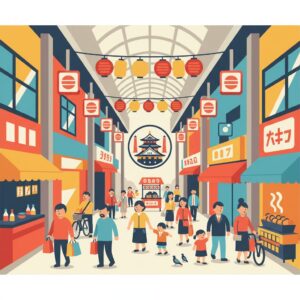
Shotengai (Shopping Arcades): Covered shopping streets are the lifeblood of Osaka neighborhoods. From the sprawling Tenjinbashisuji Shotengai to smaller local ones, this is where you buy tofu, fish, and vegetables. Vendors are there daily. They see you regularly. Engage with them. Ask what’s in season, ask how to cook something. They’ll start looking out for you, saving the best cuts or sneaking you an extra orange. This is ground zero for becoming a kao-najimi.
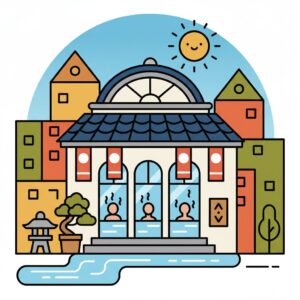
Sento (Public Baths): There’s no social setting more equalizing than being naked among strangers. The sento is a pillar of community. Conversations flow easily here, often starting with weather or the latest Hanshin Tigers game. Because it’s a relaxed, regular spot, small talk deepens fast. You learn about families, jobs, worries—an intimate space building genuine, unpretentious bonds.
Tachinomi (Standing Bars): These are small, often cramped bars where you stand at a counter to drink and eat. The close quarters make conversation almost inevitable. People come after work to unwind and are usually talkative. Tachinomi bars are perfect for practicing Japanese, catching local gossip, and meeting Osaka’s diverse society—from salarymen to construction workers to shop owners. Offer to pour a beer, ask what they’re eating, and let the chat flow.
From Acquaintance to Friend: Crossing the Threshold
So you’ve perfected the art of the comeback and have become a familiar face at your neighborhood tofu shop. How do you elevate these casual, location-based acquaintances? How do you transform your vegetable sensei into someone you’d enjoy having dinner with?
The Invitation: “Kondo, Gohan Ikou ya”
After building a rapport, you might hear a casual, “今度、ご飯行こうや” (“Let’s go for a meal sometime”). Elsewhere in Japan, this often serves as a polite, non-committal phrase, simply meaning “nice talking to you.” But in Osaka, it’s much more likely to be a sincere invitation. The secret lies in your response.
A vague “はい、ぜひ” (“Yes, I’d love to”) puts the ball back in their court and may lead nowhere. You need to take the initiative. The right move is to pull out your phone and say, “いいですね!いつが空いてますか?” (“Sounds great! When are you free?”). This shows you’re serious and ready to set a date. It turns a nebulous possibility into a definite plan. Be ready for them to suggest a place immediately—Osakans are spontaneous and value those who can keep pace.
The Power of Small Gifts (Temiyage Culture)
Whenever you are invited—whether to a home, a restaurant, or even a favorite bar—always bring a small gift, or temiyage. This is an essential element of Japanese social etiquette, demonstrating gratitude and respect. It doesn’t have to be extravagant. A box of cookies from a nice department store, a local snack from your hometown, or even a six-pack of their preferred beer works perfectly.
This small act speaks volumes. It expresses your appreciation for their time and invitation. It also sparks conversation. When you hand over a bag of Hershey’s Kisses and explain they’re a common treat in America, you’re sharing a bit of your culture and deepening the bond. This applies not only to formal invitations but also to your kao-najimi relationships. Occasionally bringing a small gift to the owner of your favorite coffee shop is a great way to strengthen your connection and show you value their presence in your life.
Navigating the Group Dynamic
Friendships in Osaka often aren’t just one-on-one affairs; they tend to be group activities. When you join your new friend for dinner, they’ll likely bring along two or three others. Don’t be intimidated—this is actually a positive sign. They’re inviting you into their existing social circle.
Your role is to apply the same skills you’ve been honing: be open, use humor, ask questions, and engage in the group banter. The atmosphere will be lively, conversations rapid, and people may talk over one another. Just jump right in. Don’t wait for a polite pause—it might never come. Here you’ll witness the boke and tsukkomi dynamic in full effect. The entire table is a stage. Laugh at the jokes, share a funny story of your own, and don’t be shy about being a bit loud. Your ability to blend into the group is the ultimate test. If you can keep up, you’re in.
Final Thoughts: Embracing the Beautiful Chaos
Living in Osaka is far from a passive experience. It’s an active, full-contact engagement. It demands your involvement. It will draw you out of your shell, challenge your ideas of privacy, and push you to interact with the world in a manner that is louder, messier, and more direct than what you might be accustomed to.
The friendly interference, the constant flow of osekkai, can initially feel intrusive. It seems like a disruption in the polite, orderly image of Japan you were expecting. But if you can make that essential mental shift—from viewing it as a nuisance to embracing it as an opportunity—the entire city opens up to you. Every stranger becomes a potential friend. Every encounter turns into a gateway to a deeper connection.
It takes a certain degree of social courage and a willingness to laugh at yourself. But the rewards are enormous. In a world growing increasingly isolated, and in a country that can sometimes seem impenetrably reserved, Osaka offers a compelling antidote: a community that insists on noticing you, talking to you, and drawing you into its chaotic, warm, and fiercely loyal embrace. It’s a city that won’t let you feel lonely. And all you need to do is learn the right way to buy your green onions.