I once stood with a colleague, Tanaka-san, in the controlled chaos of Namba Station on a Friday evening. He was a quintessential Osaka man in his forties—sharp suit, fast-talking, with a laugh that could cut through the roar of a packed izakaya. We were watching the departure board, a flickering constellation of destinations. He pointed a thumb towards a train bound for Gokurakubashi, the gateway to Mount Koya. “Gotta go recharge the battery, Li-san,” he said with a grin. “The city drains it, the mountain fills it back up.” He wasn’t heading for a hot spring resort or a fancy hotel. He was going to a shukubo, a temple lodging on a sacred mountain, to sleep on a futon in a minimalist room, wake up at dawn for Buddhist chanting, and eat vegetarian meals. This was the same man who, just the night before, had been passionately debating the merits of different takoyaki stands and closing a tough deal on the phone, all at the same time. The juxtaposition was jarring. How could this creature of commerce, this embodiment of Osaka’s gritty, gluttonous, and glorious urban energy, find solace in asceticism? The answer, I’ve come to learn, isn’t a contradiction. It’s the very key to understanding the modern Osakan psyche. The regular pilgrimage to Koyasan isn’t an escape from being an Osakan; it’s a fundamental tool for succeeding at it. It’s the silent, sacred space that makes the noise of the city not just bearable, but possible. It’s a practice that reveals a depth and a need for balance that the city’s boisterous surface often conceals, a secret rhythm beating just beneath the concrete.
This balance between the city’s relentless energy and the need for quiet reflection is also evident in the way many Osaka residents structure their daily lives, starting with their morning rituals.
The Hard Reset: Understanding the Osakan “On/Off” Mentality
To understand why someone from Osaka like Tanaka-san would exchange the neon lights of Dotonbori for the flickering candlelight of a temple hall, you first need to grasp their unique energy dynamic. Life in Osaka is lived at full speed. Business is unrelenting, competition cutthroat, and socializing an intense, high-contact affair. It’s a city of merchants, comedians, and hustlers where your value is often measured by your stamina, quick wit, and deal-closing ability. This is the “On” mode — a state of constant, high-powered output. People in Tokyo work hard too, but the pressure there feels different; it’s more like a steady, marathon-like hum of corporate demands and social expectations that permeate all aspects of life. Weekends in Tokyo can feel like just another performance, a carefully curated display of trendy consumption in Omotesando or a meticulously planned day out.
The Osakan style, however, is different. It’s not a marathon but a series of intense sprints. They push themselves to the limit, burn the candle at both ends, and then need to completely shut down. It’s not about a gentle, seamless “work-life balance” but rather a hard, binary switch — when it’s “Off,” it has to be truly off. Koyasan represents that ultimate off switch. The two-hour train ride from Namba Station on the Nankai Koya Line acts as a physical and mental decompression chamber. As the train climbs from the dense Osaka Plain into the forested mountains of the Kii Peninsula, the city’s frenetic energy peels away layer by layer. The air cools, the sounds shift from clattering trains to the whisper of wind through cedar trees, and the relentless urban pace finally slows.
From Urban Jungle to Sacred Forest
Imagine the daily sensory overload of life in Osaka. You wake to the noise of neighbors and the rumble of trains overhead. You navigate human currents flowing through Umeda Station, where people walk with borderline aggression. Your workday is a cacophony of ringing phones, rapid-fire conversations in thick Osaka dialect, and the pressure to perform, sell, and outmaneuver. Evenings are spent in packed tachinomi (standing bars) in Kyobashi or Tenma, shouting over the noise, fueled by beer and fried food. It’s exhilarating, vibrant, but utterly draining.
Now imagine arriving at Koyasan. You step off the cable car atop the mountain into a world of mist and silence. The air carries the scent of damp earth, woodsmoke, and the crisp, clean aroma of hinoki cypress. The only sounds are gravel crunching underfoot, a distant temple bell tolling, and crows cawing—ancient, knowing calls in this setting. This is not merely a change of scenery but a complete sensory reset. The Osakan isn’t just leaving the office behind; they are shedding the entire framework of their urban identity. The fast-talker becomes silent, the negotiator learns acceptance, the gourmand embraces simplicity. This radical transformation isn’t escapism but a strategic retreat—a vital recalibration to preserve sanity and effectiveness in a high-stakes urban life.
The Proximity Principle: A Sacred Backyard
Geography plays a key role in this dynamic. Koyasan isn’t a distant, mythical destination visited once in a lifetime. For Osakans, it’s practically in their backyard. This accessibility turns what could be a grand pilgrimage into a routine maintenance trip, akin to a haircut or a dentist visit. You can decide on a Friday afternoon to go and arrive by evening. This closeness engenders a sense of ownership and familiarity; it’s their mountain sanctuary. This contrasts with how Tokyoites might view spiritual retreats, often involving significant time and planning, such as trips to the Dewa Sanzan in far-off Yamagata or pilgrimages to Shikoku. For the Osakan, spiritual restoration is a practical, easily accessible resource. This pragmatism is fundamental. Why spend a fortune on flights and lavish wellness retreats when a profound sense of peace can be attained for the cost of a train ticket and a night in a temple? It perfectly aligns with the renowned Osakan practicality: the best solution is often the closest and most efficient one, making Koyasan the ultimate value proposition for mental and spiritual clarity.
Pragmatic Spirituality: A Tool, Not Just a Dogma
A common misconception among foreigners observing this phenomenon is to interpret it as a sign of deep religious piety. While many visitors, both Japanese and foreign, come to Koyasan driven by profound spiritual reasons linked to Shingon Buddhism and its founder, Kobo Daishi Kukai, the motivations of modern Osakans are often much more practical. This spirituality has been reinterpreted to serve a secular purpose. Rather than seeking salvation in the afterlife, they are aiming for functionality in the present one. The ancient rituals and practices of the monastery are regarded as powerful, time-tested techniques for calming the mind, restoring the body, and sharpening focus.
This is where the Osakan mindset truly excels. They have a unique ability to peel away the mystical layers and focus on the practical application of ideas. They view a temple not merely as a place of worship but as a high-performance facility for mental and physical well-being. The monks are not just spiritual leaders; they are masters of an ancient life hack, experts in achieving clarity amid chaos. This approach, which may seem irreverent to some, is actually born from a deep, unspoken respect—a respect for what works. And for Osakans, the methods of Koyasan demonstrably deliver results.
The Body Reset: Shojin Ryori as Culinary Mindfulness
Osaka is undeniably Japan’s kitchen. The city’s identity is closely tied to food—rich, savory, and often fried. Okonomiyaki, takoyaki, kushikatsu—a cuisine of joyful abundance. Osakans are discerning eaters, proud of their culinary heritage. So how do you convince them to embrace shojin ryori, the traditional vegetarian, often vegan cuisine of Buddhist monks? This food is subtle, free of garlic and onion, and based on principles of balance and simplicity. To many, it might sound bland.
But the Osakan foodie doesn’t view it as deprivation. Instead, they take it as a challenge to their palate and, more importantly, a form of detox or reset for their system. After a week of rich ramen broth, greasy pork, and countless beers, a meal of sesame tofu (goma-dofu), delicate vegetable tempura, clear soup (suimono), and mountain vegetables is regarded as medicine. It cleanses the body and recalibrates the taste buds. They approach it with the same analytical curiosity as they would a complex bowl of ramen. They notice subtle textures, the depth of flavor coaxed from simple daikon radish, and the artistry in presentation. It is a gourmet experience of a different kind, aligned with their practical weekend goal: to return to the city feeling lighter, cleaner, and more focused. They’ll discuss a particularly good dish of goma-dofu with the same enthusiasm reserved for a perfectly grilled piece of fatty tuna. The aim is not satiation, but purification—though the connoisseur’s mindset remains unchanged.
The Ritual of the Meal
The way the meal is served and consumed is as important as the food itself. It arrives on a small lacquer tray, a collection of small bowls, each containing carefully prepared components. There is no loud conversation or clinking glasses. You eat slowly, quietly, often seated on the tatami floor of your room. This enforced mindfulness is a powerful contrast to the typical Osakan meal, usually eaten quickly, socially, and loudly. For someone used to eating while discussing business or laughing with friends, the silence demands full attention on the act of eating. It becomes a meditation in itself. This has a practical effect; focusing on the food temporarily frees the mind from the endless cycle of worries, deadlines, and obligations that overwhelm it in the city. It’s a structured, tangible way to practice being present—a skill highly valuable in Osaka’s fast-paced environment.
The Mental Workout: Shakyo and Ajikan for the Restless Mind
Many Koyasan temples offer guests opportunities to engage in activities like shakyo (sutra copying) and ajikan meditation. Again, the typical Osakan participant often approaches these practices not purely for devotional reasons but as targeted mental exercises, akin to a gym workout for the brain.
Shakyo involves carefully tracing the characters of a Buddhist sutra, most commonly the Heart Sutra, with brush and ink. To a foreigner, it appears as beautiful calligraphy and an act of faith. For an Osakan businessperson, it is a demanding concentration exercise. The mind, accustomed to multitasking and jumping between many stimuli, is forced into a single, focused channel. Attention must be paid to the brush pressure, ink flow, and precise shapes of complex characters. The internal monologue—the constant stream of ‘what-ifs’ and ‘to-dos’—gradually quiets. It must—if the mind wanders, the hand slips and the character is ruined. An Osakan might describe it practically: “For one hour, I didn’t think about work. I couldn’t. It was impossible. It felt great.” It’s not about the religious meaning of the text; it’s about the neurological benefits of the process itself. It’s a forced detox from the digital distractions and mental clutter of modern life.
Ajikan meditation, the specific form practiced in Shingon Buddhism, often focuses on a Sanskrit character representing the cosmic essence of the universe. While the esoteric meaning is profound, the practical application is what appeals to secular visitors. The monk guides participants often with simple instructions: “Breathe in. Breathe out. Your mind will wander. That’s okay. Just bring it back.” This permission to fail and gently refocus resonates with the pragmatic Osakan spirit. It’s not about attaining mystical enlightenment in a 45-minute session. It’s about the practice—training the ‘monkey mind’ to be slightly less wild. The goal is to leave feeling a bit calmer and more centered than when entering. This small, measurable improvement is a classic Osakan win. The benefits are immediate and transferable; a calmer mind is a more effective mind when negotiating contracts or handling difficult clients come Monday morning.
A Different Kind of Luxury: The Value of Emptiness and Silence
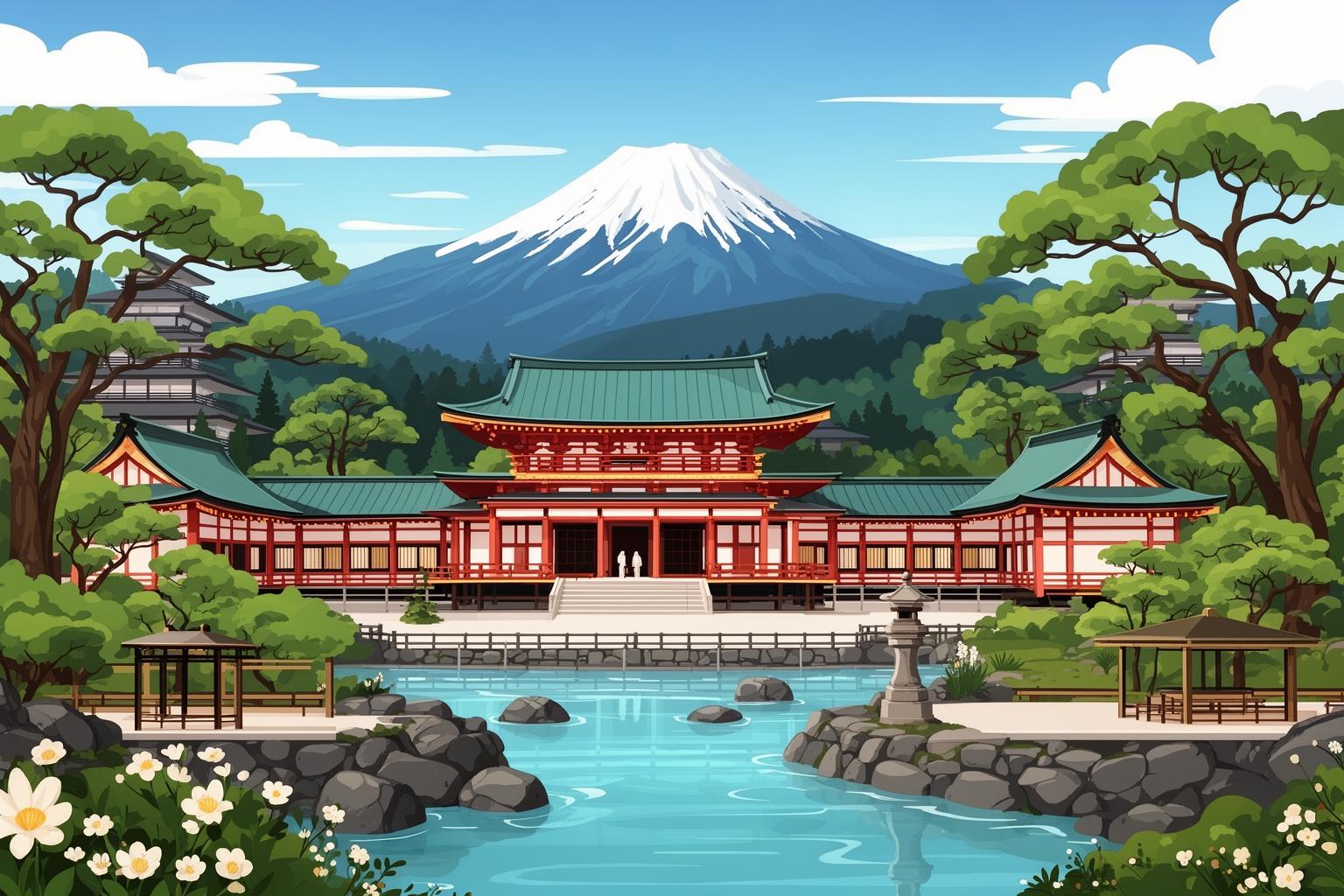
Osaka is a city grounded in the tangible. Its history is rooted in merchants and trade. Value is something measurable—counted, weighed, and tasted. A great bargain at the electronics shop in Den Den Town, a generous bowl of noodles for 500 yen, a successful quarter for your company—this is the language of value in Osaka. So it is striking that these same people will willingly spend a significant amount—a night in a quality shukubo can cost as much as a city hotel—for what is essentially a lack of things. They are paying for emptiness, silence, and inconvenience.
Consider what a temple lodging offers. Your room is likely a simple tatami space, partitioned from the hallway by a paper sliding door (fusuma). The furniture consists of a low table, and your bed is a futon you may need to lay out yourself. Bathrooms are often shared, halls are cold in winter. There is no room service, no mini-bar, no television blaring the news. You pay to have modern comforts and distractions removed from your surroundings. This is a radical redefinition of luxury. In Tokyo, luxury often means addition: a larger room, a better skyline view, more amenities, more attentive service. It’s about accumulation. But the luxury sought at Koyasan is subtractive. It’s the ultimate decluttering—not only of your physical space but of your entire sensory and mental world.
Paying for Silence: An Investment in Mental Capital
In the city, silence is such a rare commodity it barely exists. There is always a hum, a siren, a distant train, the buzz of a vending machine. At Koyasan, especially at night and early morning, you experience a silence that is profound. It’s a thick, enveloping silence that can initially feel unsettling to someone from the city. You become aware of your own breathing, the beating of your heart. This is what they are paying for. It’s an investment. In the mindset of Osakans, you spend money to make money. Here, you spend money on silence to gain the mental clarity and resilience required to return and succeed in the noisy world of commerce. A weekend of silence isn’t an expense; it’s a deposit into your mental capital account. The return on investment is a renewed capacity to handle the stress and chaos of urban life. An Osakan can justify the cost of a shukubo stay in the same way they justify investing in new equipment for their business. Both are tools to enhance performance.
The Aesthetics of Emptiness: From City Clutter to Tatami Simplicity
Osaka’s visual landscape is dense. Signage covers every vertical surface, pachinko parlors flash hypnotic lights, and storefronts overflow with goods. It’s a city of visual excess. The aesthetic of a temple lodging is the exact opposite. It embraces emptiness, or ma (negative space). A simple room with tatami mats, a single calligraphy scroll in the alcove (tokonoma), and a view of a mossy garden through a paper screen. This minimalism is not about poverty; it is a highly refined and deliberate design choice. For an Osakan whose apartment is likely cluttered with urban necessities and whose office is filled with files and screens, this visual simplicity is deeply restful. It offers the eyes—and thus the mind—a place to rest. There is nothing to process, nothing to desire, nothing to distract. This appreciation for austere aesthetics reveals a side of the Osakan character often overlooked. Beneath their love of the gaudy and extravagant (kote kote), there is a deeply ingrained cultural understanding of the beauty and power of simplicity. They can value the wild energy of a Shinsekai street scene and the profound stillness of a Zen rock garden. They do not see these as opposites; they are two sides of the same coin, both needed to feel complete.
The Koya-san Network: The Human Connection in Stillness
The stereotype of Osakans is that they are irresistibly social, always chatting, joking, and connecting with others. The well-known “Osaka obachan” (middle-aged woman) who offers a stranger a piece of candy perfectly exemplifies this. But does a visit to a quiet mountain monastery mean a total retreat from human contact? Not at all. It simply shifts the nature of interaction. The social energy typical of Osaka is funneled into a calmer, more observant, yet equally meaningful form of connection. It’s an opportunity to engage with others beyond the strict hierarchies and transactional ties of city life.
The Grounded Monk
The monks at Koyasan are not otherworldly beings basking in endless bliss. Many are personable, down-to-earth individuals with a sharp sense of humor. They often communicate exceptionally well, able to explain complex Buddhist ideas in clear, relatable ways. This practical approach suits the straightforward Osakan visitor perfectly. They can ask a monk a direct question about the temple’s history or the significance of a ritual and receive an honest answer. These conversations, whether held in the temple’s quiet corridors or during a guided walk, offer a deeply refreshing type of social interaction. There is no agenda—you’re neither selling anything nor networking; just two people sharing curiosity and learning. For someone whose urban discussions almost always have a specific purpose, this is a rare indulgence. The monks, through their calm presence, offer a different social anchor—one founded on wisdom and mindfulness rather than status or wealth.
The Quiet Community of Visitors
While you might arrive at Koyasan alone, you are never truly isolated. You become part of a temporary community of seekers, each there for their own reasons. A strong shared experience arises even without words. Standing together in the cold, dark hallway at 6 a.m. to enter the main hall for the morning chanting (gongyo), you form an unspoken bond with the other guests. You’re all tired, all cold, all present. Sitting in the hall, immersed in the deep, resonant chant of the monks, becomes a profound communal experience. The vibrations seem to permeate your chest. Afterward, you might exchange a quiet nod or a small smile with the person next to you. This connection runs deeper than a loud conversation in a bar. It’s a silent acknowledgment that everyone is tuning into a different frequency. This sense of quiet community powerfully reminds us that even in the pursuit of inner peace, the presence of others brings comfort and strength.
Ultimately, the modern Osakan’s weekend retreat to Koyasan is a masterclass in balance. It serves as an essential counterpoint to the intense energy of their urban existence. It reveals that the Osakan character is far more nuanced than the simplistic, one-dimensional stereotype of a money-driven, food-obsessed merchant. They excel at hitting the reset button, pragmatic individuals who find practical solutions for contemporary life within ancient spiritual traditions, and connoisseurs of a luxury defined by absence rather than abundance. Tanaka-san, standing amid the chaos of Namba Station, wasn’t escaping Osaka—he was performing an important ritual that would enable him to return on Sunday night fully recharged and ready to dive back into the vibrant, chaotic, and relentlessly energetic city he calls home. Grasping this duality—the dance between sacred mountain and secular city—reveals that an Osakan’s true strength lies not only in their hustle but in their profound, practical, and recurring pursuit of stillness.