Step out of the polished, echoing expanse of Osaka-Umeda Station, a place of perpetual motion where rivers of people flow toward glass towers and department stores shimmering with global brands. You’re in the heart of Western Japan’s economic engine, a district humming with ambition and the crisp, clean lines of modernity. Take a ten-minute walk east, past the elevated train tracks that hum with a constant rhythm, and the world changes. The air stills. The sky opens up. The concrete canyons give way to a tangled web of narrow alleyways, where two-story wooden houses lean into each other like old friends sharing a secret. This is Nakazakicho, and the shift is so abrupt, so complete, it feels less like walking and more like time travel.
For anyone trying to grasp the soul of Osaka, this transition is everything. Osaka is often painted with a broad brush: loud, boisterous, a city of brilliant neon and even more brilliant personalities. And while that’s true of places like Namba or Dotonbori, it’s only one chapter of a much thicker book. Nakazakicho tells a different story. It’s a neighborhood that survived the wartime firebombing that flattened much of the city, and then, through a combination of luck and stubborn local pride, it sidestepped the wrecking balls of Japan’s post-war economic miracle. What’s left is a living, breathing museum of Showa-era architecture, a labyrinth of pre-war `nagaya` (row houses) and `kominka` (old traditional homes). But this is no sterile, preserved historical district. It’s a place that has been lovingly, creatively, and purposefully repurposed. It’s where Osaka’s fiercely independent spirit has found a home, transforming old residences into a constellation of vintage clothing boutiques, artisan cafes, tiny art galleries, and quirky Zakka shops. It’s a haven for those who cherish the unique, the handmade, and the slow. Yet, it’s this very character that makes it a puzzle for others. If you’re looking for nightlife, you’ll find silent, dark streets after 8 PM. If you’re hunting for major tourist attractions, you’ll find none. Nakazakicho is a perfect case study in Osaka’s contradictions. It shows how this city can be simultaneously hyper-modern and deeply nostalgic, commercially savvy and passionately anti-corporate. To understand this little pocket of quiet rebellion is to understand a fundamental truth about the Osaka mindset: progress doesn’t always mean erasing the past; sometimes, the most radical thing you can do is to lovingly maintain it.
This quiet rebellion against corporate uniformity is a perfect example of the city’s unique merchant spirit, which thrives on independence and creative hustle.
The Nakazakicho Vibe: A Deliberate Escape from the Umeda Sprawl
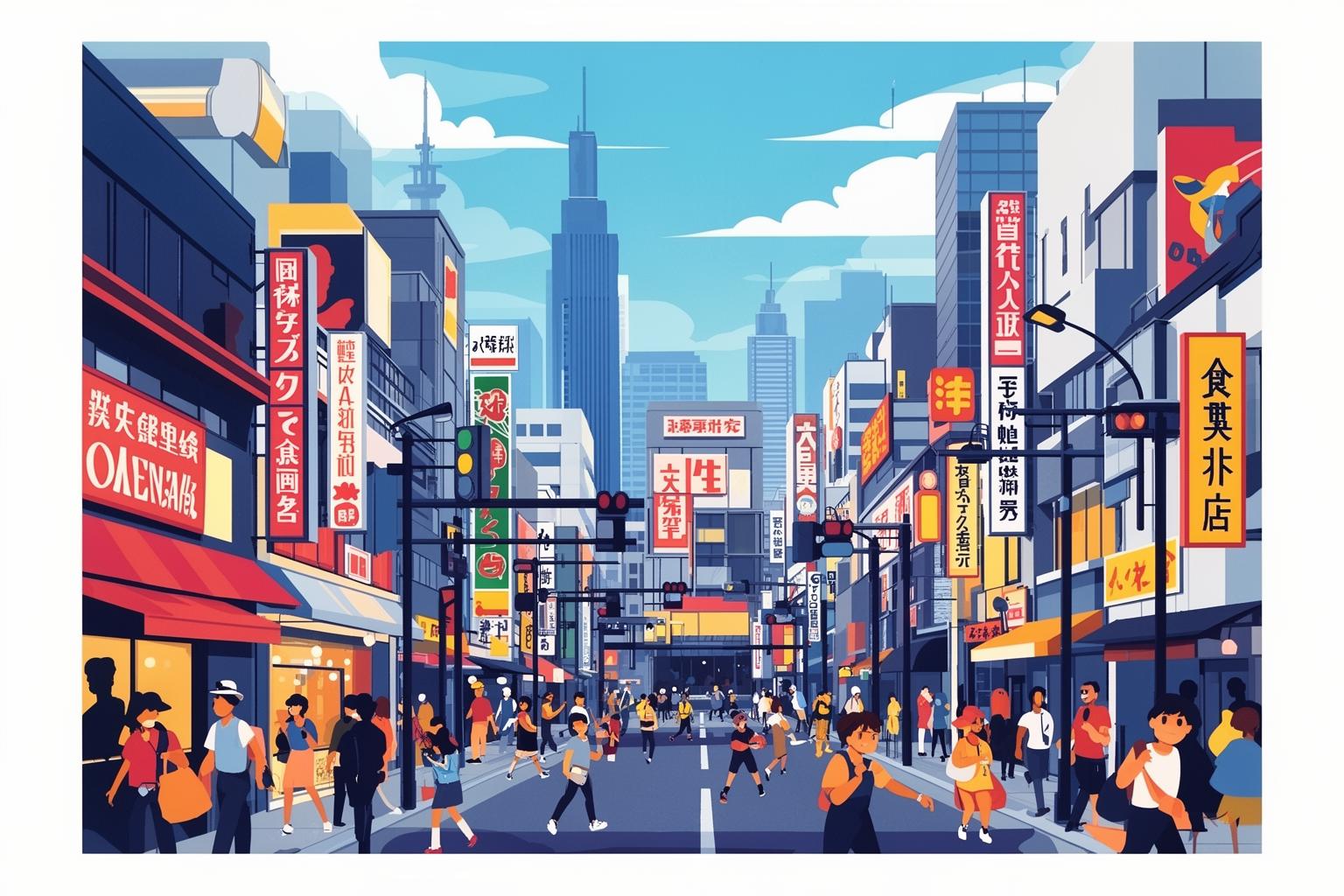
To truly appreciate Nakazakicho, you need to embrace the journey. It’s more than just a destination; it’s a transformation. You start in Umeda, a realm defined by height and speed. Your eyes are drawn upwards to towering skyscrapers, your route shaped by broad, multi-lane roads and the orderly flow of underground shopping arcades. It’s efficient, impressive, and completely impersonal. Then you cross the JR train line, the city’s great steel backbone, and everything shifts. The scale becomes more human.
The Sensory Shift: From Skyscraper Shadows to Sunlit Alleys
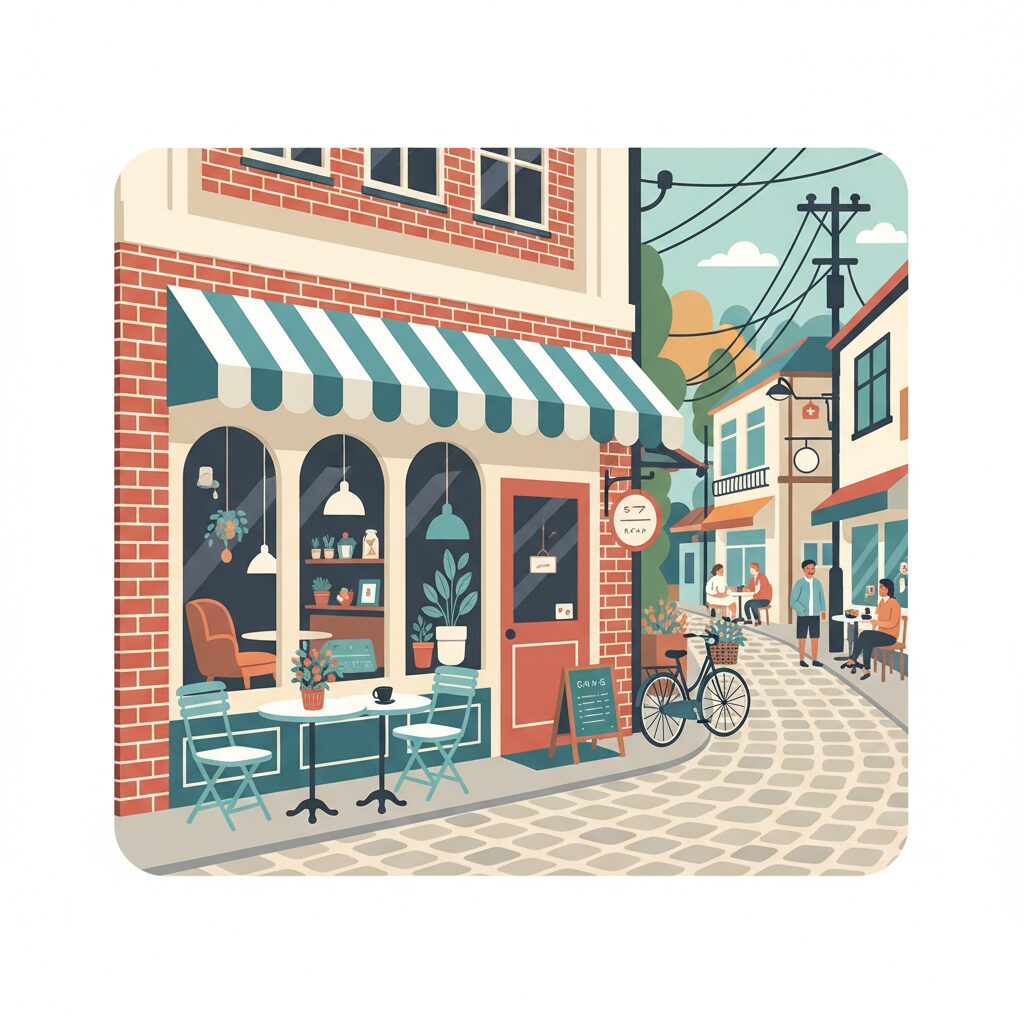
The traffic’s roar softens to a whisper. The heavy shadows cast by corporate buildings give way to sunlight filtering through a network of overhead electrical wires—a feature Tokyo’s urban planners often seek to remove, yet here feels like a nostalgic canopy. Streets narrow so much that cars are rare. The main sounds become the gentle hum of bicycles, the clink of coffee cups from open doorways, and the quiet chatter of friends exploring a hidden shop. You’re compelled to slow down and notice the small details: a pot of carefully tended hydrangeas on a doorstep, a hand-painted sign for a nearly invisible shop, the texture of weathered wooden slats on a wall. This isn’t a happy accident of urban design. It’s a deliberate rejection of the Umeda model. It reflects a collective choice by residents and business owners for this neighborhood to operate on a different wavelength. In Osaka, a city driven by business and progress, choosing to be slow and small is a powerful declaration.
What Does “Retro” Mean in the Osaka Context?
In Nakazakicho, “retro” isn’t just a style label; it’s a profound cultural touchstone. The aesthetic mainly reflects the Showa Era (1926-1989), especially the mid-Showa period of post-war recovery and growth. For many Japanese, this era stirs a strong sense of `natsukashii`—a warm, bittersweet nostalgia for a time seen as simpler, more hopeful, and more community-focused. This isn’t about romanticizing hardship but about recalling a period when Japan was rebuilding itself with clear energy and purpose. In Tokyo, the constant push for newness, futurism, and globally approved aesthetics often means the old is demolished. The city reinvents itself every few decades. Osaka, though familiar with development, maintains a different relationship with its past. There’s a practical inclination to repair and reuse rather than discard. Why tear down a solid, character-rich house when you can reinforce it, rewire it, and give it new life? This attitude lies at the heart of Nakazakicho. These old buildings are not mere shells for new ventures; their history, flaws, and very essence are the main allure.
The Architecture of Preservation
The buildings themselves are central figures in this narrative. Many are `nagaya`, long wooden row houses that once sheltered multiple families, sharing walls and a sense of communal living. These structures were the foundation of working-class Osaka. Seeing them still standing, now home to trendy cafes and boutiques, offers a direct link to the city’s merchant and artisan heritage. You can run your hand along a dark, polished wooden beam and feel its nearly century-old stories from the families who once lived there. This preservation mindset marks a subtle but crucial difference from Tokyo. While Tokyo has pockets of old-world charm like Yanaka, they often feel like preserved museum artifacts. Nakazakicho feels vibrant, evolving, and integrated. Transforming an old house into a business here isn’t gentrification in the Western sense of displacing communities; it’s often the community itself creatively and sustainably adapting to survive and flourish. It’s Osaka practicality at its best: our greatest asset is our history, so we make it the core of our business model.
A Mecca for the Meticulous: Vintage Shops and the Art of the Curated Self
Step into any vintage shop tucked away in Nakazakicho’s alleyways, and you’ll soon realize this isn’t about digging through dusty bins for a bargain. It’s about curation. Each store serves as a highly personalized gallery, reflecting its owner’s distinct passion—whether that’s 1970s American workwear, delicate European lace dresses from the 1950s, or rare Japanese band t-shirts. Here, clothing becomes a form of self-expression within a culture that often values harmony and conformity.
More Than Second-Hand: A Statement of Individuality
In the mainstream Japanese fashion scene, especially in Umeda’s department stores, trends dominate and seasons are clearly defined. Everyone seems to receive the memo at once about which colors or silhouettes are in style. Nakazakicho is the opposite. Shoppers here aren’t trying to blend in; they’re deliberately striving to stand out by crafting an identity from pieces of the past. Wearing vintage guarantees that no one else in the room, on the train, or at work will be dressed the same. It’s a subtle rebellion against mass production. This craving for the unique, for something with ‘kuse’ (a strong, peculiar character), is unmistakably Osakan. Osakans love a good story, and a worn-in ’80s leather jacket has far more to tell than a pristine one straight from the factory. It sparks conversations, a wearable fragment of history that connects you to another time and place.
The Shop Owners: Curators, Not Just Clerks
Shopping in Nakazakicho is a fundamentally different experience from a typical retail encounter. The shop owners are the neighborhood’s heart and soul. They’re not just staff; they’re archivists, historians, and stylists. Step into a store like `Pigsty` or `JAM` and feel the passion. The owner may not greet you with the loud “Irasshaimase!” typical of department stores. Instead, you might receive a quiet nod, an invitation to browse freely. But if you show genuine interest, a conversation often unfolds. They can share the likely origin of a specific piece of denim, explain the stitching on a military jacket, or tell the story of securing a rare accessories collection. This is the classic Osaka small-business model in action—where relationships are personal, and the owner’s expertise and personality define the store’s brand. This contrasts sharply with Tokyo’s polished yet often impersonal service culture, where the manual dictates the interaction. In Nakazakicho, exchanges are human, unscripted, and fueled by shared passion. You don’t just buy a shirt; you briefly step into the owner’s world.
The “One-of-a-Kind” Mentality
This fixation on one-of-a-kind items goes beyond fashion and taps into a core aspect of Osaka’s spirit. While Tokyo represents refinement and established trends, Osaka prides itself on being a bit rougher around the edges, more individualistic, and inventive. It’s a city of merchants and entrepreneurs who have always had to carve out their own path to succeed. This mindset fosters a deep appreciation for craftsmanship, character, and the unexpected. Whether it’s a bowl of ramen perfected over 40 years or a hand-dyed scarf by a local artisan, Osakans value `kodawari`—the relentless, nearly obsessive pursuit of perfection in one’s craft. Vintage clothing in Nakazakicho fits seamlessly into this ethos. Each piece was crafted with a level of quality and attention to detail often missing from today’s fast fashion, having proven its worth by enduring for decades. For the buyer, it’s about more than looks; it’s an investment in lasting value—a principle the merchant city of Osaka has long embraced.
The Cafe Culture: Slow Living in the Fast City’s Shadow
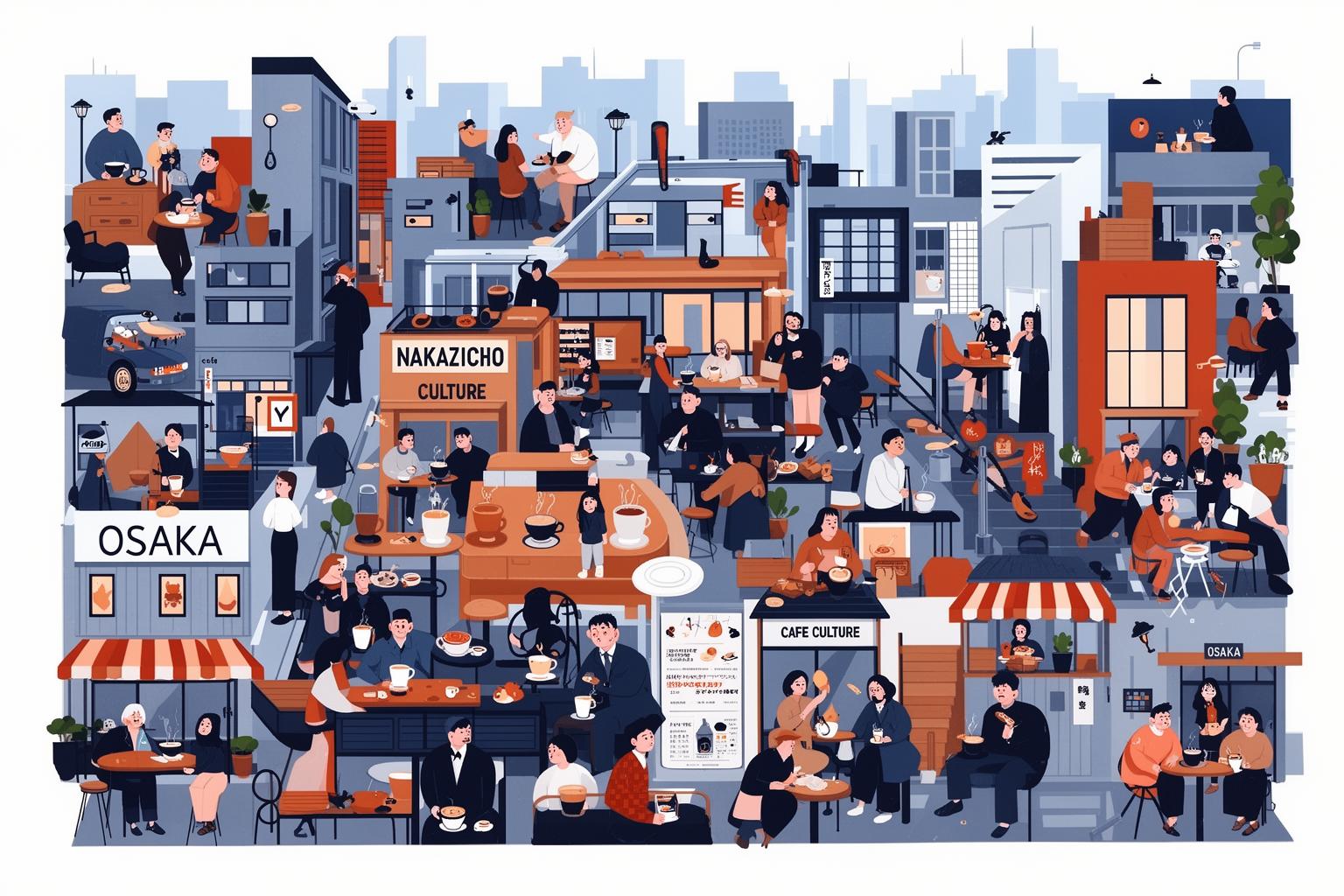
Parallel to the vintage scene, Nakazakicho’s character is defined by its cafes. However, these are not the practical, quick-turnover coffee shops typical of business districts. Instead, they are destinations in their own right—carefully crafted spaces that encourage you to pause, linger, and disconnect from the hectic pace of the city just a few blocks away. They serve as sanctuaries of slowness.
Not Your Typical Starbucks: The Emergence of the “Kakurega” Cafe
Many of Nakazakicho’s best cafes are `kakurega`, or “hideaways.” Often tucked away down unmarked alleys or on the second floor of an old house with only a small sign, the thrill of discovery is part of their charm. Finding a place that feels like your own secret hideout is an experience in itself. Inside, you enter someone’s personal realm. The interiors are seldom sleek or minimalist; rather, they are cozy, eclectic, and intimate. Imagine mismatched antique furniture, shelves stocked with old books and vinyl records, walls decorated with local art, and soft, warm lighting. Cafes like `Salon de AmanTo`, a sprawling, maze-like space reminiscent of an artist collective, or the serene, sunlit `89Cafe`, exemplify this vibe. These cafes prioritize comfort and reflection over efficiency. This approach contrasts sharply with the typical Tokyo cafe model, which often emphasizes design-consciousness and visibility. In Nakazakicho, cafes are meant for being unseen and for quiet introspection.
The Art of Doing Nothing (Productively)
Watch the patrons in a Nakazakicho cafe—you won’t see many laptops open with people feverishly working on spreadsheets. Instead, you’re more likely to find someone sketching in a notebook, engrossed in a hefty novel, or having a quiet, hours-long conversation with a close friend. The unspoken rule here is that taking your time is perfectly acceptable. Staff do not pressure you to order more or leave your table. This is a radical idea in a country known for efficiency and a strong work ethic. It reflects a growing desire, especially among younger Japanese, for a “third space”—neither home nor work—where one can simply exist without pressure. This deliberate embrace of slowness offers a soothing balm for the soul in a lively city like Osaka. It reveals that beneath the hardworking, quick-talking exterior of Osakans lies a deep appreciation for peace, quiet, and the luxury of a leisurely afternoon.
The Menu as a Manifesto
Much like the vintage shops, these cafes are an extension of their owners’ passions. The menu is far from an afterthought; it’s a declaration of philosophy. You won’t find mass-produced syrups or pre-made cake mixes here. Everything is made with intention. Coffee beans may be roasted on-site or sourced from a local roaster the owner respects. Cakes, tarts, and scones are almost always baked in-house, frequently following family recipes. The tea offerings often include unique blends you won’t find elsewhere. This is `kodawari`—a devotion expressed through food and drink. A Nakazakicho cafe owner is more than a businessperson; they are a craftsperson. The care invested in a slice of cheesecake or a hand-poured latte serves as a message: “I made this with my hands for you, and I want you to savor the moment.” This ties into Osaka’s identity as Japan’s kitchen, or `kuidaore` (to eat oneself into ruin). Although commonly linked to street foods like takoyaki and okonomiyaki, the `kuidaore` spirit truly represents a genuine, egalitarian love for good food at any price point. It’s the belief that a simple cup of coffee and a piece of cake deserve as much care and respect as an elaborate kaiseki meal. In Nakazakicho, this philosophy thrives, served one delicious handmade item at a time.
The Flip Side: Why Nakazakicho Isn’t for Everyone
Despite its undeniable charm, it is essential for anyone thinking about living in or visiting Osaka to recognize what Nakazakicho is not. Its strengths are deeply intertwined with its limitations, and overlooking this can result in disappointment. The very qualities that make it a haven for vintage enthusiasts and cafe aficionados also render it unsuitable for those seeking different types of urban experiences.
The Quiet Streets After Dark
The most striking aspect of Nakazakicho for newcomers is its nightlife—or more accurately, the near absence of it. The neighborhood functions on a daytime rhythm. Shops and cafes, which serve as its lifeblood, generally open around noon and close by 7 or 8 PM. Once the metal shutters come down, an almost village-like stillness envelops the narrow streets. There are no lively izakayas spilling light and laughter onto the sidewalks. No cocktail bars, no live music spots, no clubs. The sound of nearby train lines becomes the dominant noise. For residents, this can be a blessing—a promise of peaceful evenings. But for those hoping for a spot to enjoy dinner and drinks after work, it’s a dead end. This is a neighborhood that sleeps early.
A Local’s View on “Nightlife”
This absence of nightlife isn’t a shortcoming; it’s a defining feature. It underscores how Osaka, despite being a sprawling metropolis, is highly segmented. Locals know exactly where to go for what. For a wild night out, the neon-lit areas of Namba and Shinsaibashi beckon. For a more mature yet lively evening of dining and drinking, Tenma or Fukushima’s dense izakaya scenes are the places to be. Nakazakicho’s role is to serve as the calm counterpart to these energetic districts. Primarily, it is a residential neighborhood. The businesses that thrive here do so by honoring this core identity, catering to a daytime clientele before giving residents their quiet. Understanding this zoning is crucial to navigating Osaka. Every neighborhood has a unique personality and purpose, and searching for nightlife in Nakazakicho is like looking for a tranquil temple amid bustling Dotonbori—you’re simply in the wrong place.
The Lack of “Major Attractions”
Another source of confusion for visitors or newcomers is the absence of traditional tourist sights. There is no renowned temple, no majestic castle, no iconic observation point within Nakazakicho. No must-see landmarks to tick off a list. Its charm lies entirely in its atmosphere. The draw is the neighborhood itself: the texture of the streets, the architecture, the carefully curated window displays, the thrill of wandering without a map and discovering surprises. This can be frustrating for those conditioned to seek out highlights and photo ops. To truly appreciate Nakazakicho, you must shift your mindset from “seeing” to “experiencing.” You need to find pleasure in the small, everyday details unfolding in an extraordinary setting. For a foreigner aiming to grasp the essence of Osaka, this is an invaluable insight. The city’s authentic character often lies not in grand tourist attractions but in the rhythm of its neighborhoods, in how locals have adapted and preserved their environment amid modernization pressures.
Nakazakicho and the Osaka Mindset: A Case Study in Contrasts
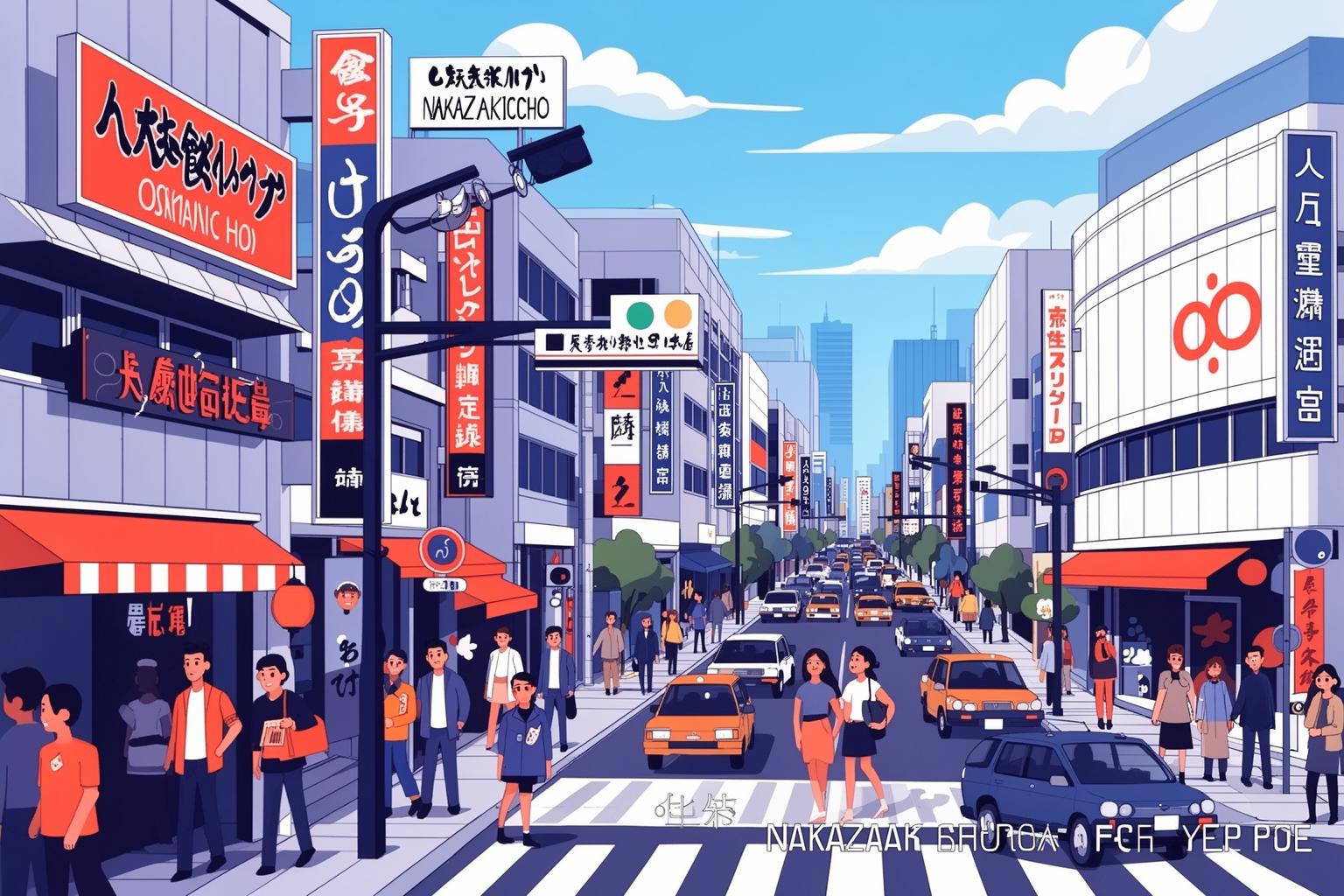
Exploring further, Nakazakicho’s entire existence perfectly embodies the Osaka mindset, which is a complex mix of pragmatism, fierce independence, and a profound appreciation for human connection. It stands as a living demonstration of how the city contrasts with its eastern counterpart, Tokyo.
Practicality Meets Aesthetics
Osakans are well known for their pragmatism, a quality shaped by centuries as a merchant city where common sense and business acumen were essential. At first glance, Nakazakicho’s artsy, bohemian atmosphere might seem contradictory, but it’s not. Preserving the neighborhood is a deeply practical choice. Renovating an old `kominka` into a café often proves more cost-effective than tearing it down and constructing a new concrete building from scratch. Moreover, its unique charm—the old-world character—is a compelling unique selling proposition (USP). In an age of globalized retail, Nakazakicho offers an experience that can’t be duplicated. This is a smart business strategy, turning heritage into a viable economic model. The blend of artistic sensibility and commercial savvy is quintessentially Osaka. It’s not about being artsy for art’s sake; it’s about recognizing that good taste, authenticity, and character are valuable assets.
Close-Knit Community vs. Urban Anonymity
Nakazakicho’s physical design—with its narrow, winding streets and low-rise buildings—naturally nurtures a strong sense of community. Business owners know one another, recommend each other’s shops to customers, and collaborate on local events. There is a palpable sense of mutual support. This sharply contrasts with the anonymity often found in a larger, more sprawling city like Tokyo, where one might live for years without ever speaking to a neighbor. While not impossible in Osaka, there remains a much stronger tradition of local community bonds. Nakazakicho exemplifies this. Relationships hold as much importance as transactions. This reflects a city built on small and medium-sized businesses, where personal reputation and networks have always been key to success. Osakans tend to be more direct, open, and willing to engage with strangers, and Nakazakicho’s environment both reflects and fosters this spirit.
Why This Isn’t Just “Hipsterism”
It’s easy to dismiss Nakazakicho as just another “hipster” neighborhood, Japan’s version of Brooklyn’s Williamsburg or London’s Shoreditch. While there are surface similarities—such as the emphasis on vintage, artisanal coffee, and independent boutiques—the underlying motivation is different. Global hipsterism is often a transnational aesthetic, a set of tastes and consumer habits common to major cities worldwide. Nakazakicho, however, is more deeply rooted in its local context. Its retro style is distinctly Japanese, tied to the Showa era. Its existence is a direct response to the hyper-development of neighboring Umeda. It’s less about following a global trend and more about preserving local identity. It stands as a statement against the homogenization of urban spaces. It insists that Osaka will not simply become another faceless global city but will maintain its unique, sometimes quirky, and profoundly human character—one lovingly restored wooden house at a time.
Living In or Near Nakazakicho: The Reality
For those thinking about settling in Osaka, the choice of where to live reflects the lifestyle they wish to embrace. Nakazakicho and its nearby areas offer a distinctive and appealing option, but one that comes with clear compromises.
The Pros: Peaceful, Convenient, and Rich in Character
The benefits are substantial. The greatest is the unmatched blend of calmness and accessibility. You can reside on a street so quiet that you can hear the birds chirping in the morning, yet be only a ten to fifteen-minute walk from Umeda’s central hub, which connects to almost every train line in the Kansai region. The Nakazakicho subway station on the Tanimachi Line also offers a direct route to key areas like Tennoji and Minami-morimachi. During the day, your neighborhood is filled with charming cafes and unique shops. At night, it becomes a peaceful retreat. It’s the urban equivalent of having your cake and eating it too—you enjoy a village atmosphere without sacrificing metropolitan convenience.
The Cons: Older Buildings, Limited Supermarkets, Early Closing Hours
The reality of living in a neighborhood full of character is dealing with character-rich buildings. Many apartments are housed in older constructions, which can mean less insulation (chilly during winter), outdated plumbing, and fewer modern features such as built-in security systems or delivery boxes. Although many have been tastefully renovated, the basic structure remains old. Additionally, the neighborhood itself isn’t designed for daily shopping needs. While there are small local stores, you’ll likely need to walk closer to Umeda or the nearby Tenjinbashisuji Shotengai (Japan’s longest shopping street) for a large supermarket. And as mentioned, if your lifestyle includes late nights out, you’ll often be commuting back from other areas, as your own neighborhood tends to be asleep early.
What It Reveals About Your Osaka Lifestyle Choice
Choosing to live near Nakazakicho signals your priorities. It shows you value aesthetics and atmosphere over modern convenience. It indicates a preference for a quiet, residential environment rather than a busy, 24/7 entertainment district. It means you’re the type of person who would rather frequent a beloved local cafe than have dozens of chain restaurants on your doorstep. Within the broad spectrum of Osaka living, it places you firmly among the artistic, introspective, and community-focused. Deciding whether you’re a “Nakazakicho person” versus, for example, a “Namba person” is a crucial way to define your life in this diverse and multifaceted city.
Conclusion: Nakazakicho as Osaka’s Soulful Secret
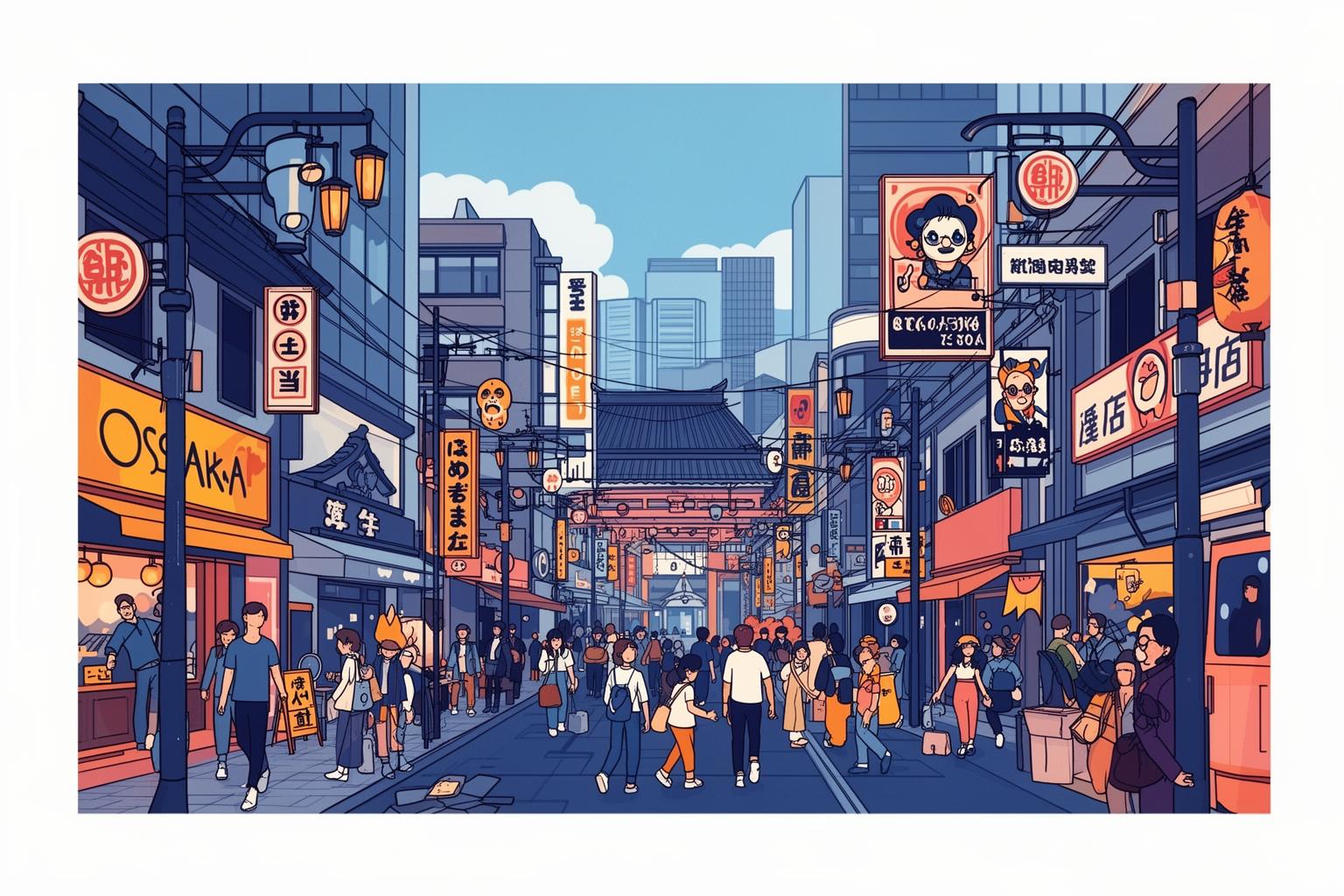
Nakazakicho is more than a charming neighborhood; it serves as a key to unlocking a deeper understanding of Osaka’s complex identity. It reveals a city that, despite its reputation for pragmatism and commercial drive, possesses a profound and lasting affection for things soulful. It exemplifies progress not through demolition and replacement, but through thoughtful adaptation and preservation. It stands as a living testament to Osaka’s spirit of independence—a quiet yet resolute refusal to be just another copy of Tokyo.
Here, in the shadow of one of Japan’s most formidable business districts, a different value system flourishes. It’s a place where the old is not only tolerated but celebrated, where individuality is carefully curated and cherished, and where the hectic pace of modern life is intentionally slowed. For foreigners seeking to see beyond the neon lights and stereotypes, Nakazakicho offers a profound insight: Osaka’s greatest strength lies in its contrasts. It is a city that can both erect gleaming skyscrapers and nurture a labyrinth of wooden houses. It’s a place where you can be at the heart of a bustling metropolis and, simply by turning a corner, feel as if you’ve stepped into a quiet, timeless village. And in that simple turn, you begin to grasp the genuine, beating heart of Osaka.