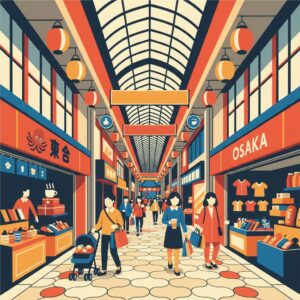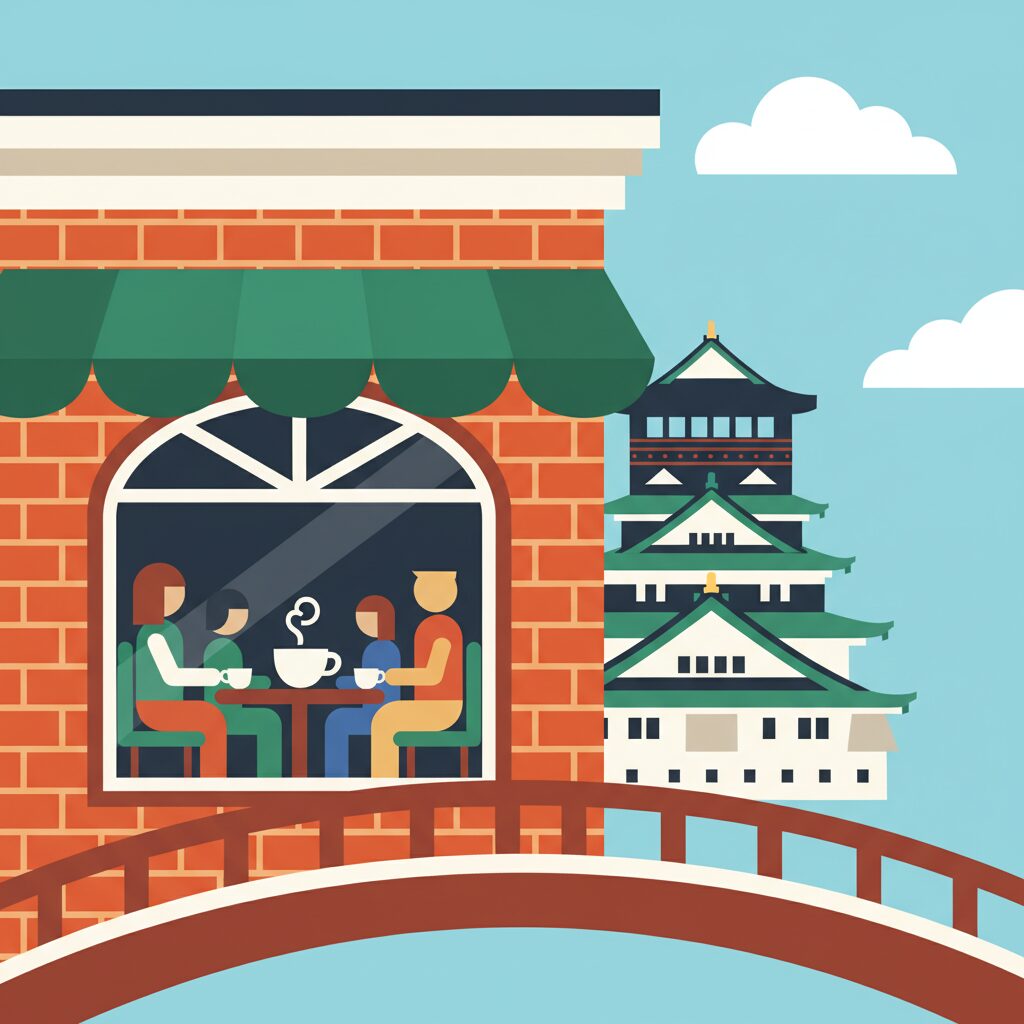
Walk down any of Osaka’s covered shopping arcades, the famed shotengai, just as the city is rubbing the sleep from its eyes. Past the shuttered takoyaki stands and the quiet bicycle shops, you’ll see them: small, unassuming storefronts with names written in elegant, slightly faded katakana. A revolving orange lamp might be spinning lazily by the door, a silent beacon in the pale morning light. Inside, through a glass door softened by a lace curtain, you can see the warm glow of amber lights and the silhouettes of people who seem to have been there forever. These are Osaka’s kissaten, the city’s traditional coffee houses, and they are the stage for a daily ritual that says more about this city’s soul than any towering skyscraper or neon-drenched billboard. The main event? Something deceptively simple called the “morning set,” or as it’s known in Japanese, simply “morning.”
For the uninitiated, the scene can be puzzling. It stands in stark contrast to the globalized café culture of sleek, minimalist interiors, plant-based milk options, and the clatter of keyboards. Here, the air is thick with the scent of dark-roast coffee, toasted bread, and, often, a faint trace of lingering tobacco smoke from decades past. The patrons are not young creatives hashing out a startup idea over a flat white. They are retirees reading sports newspapers, local shopkeepers exchanging neighborhood news in hushed tones, and solitary office workers quietly gathering their thoughts before heading into the urban fray. The ‘morning set’ they’re all enjoying isn’t just a breakfast combo; it’s a social contract, a cultural institution, and a window into the pragmatic, warm, and deeply community-oriented mindset of Osaka. It’s a phenomenon that often gets simplified as a “cheap breakfast,” but to see it that way is to miss the point entirely. This isn’t about scoring a deal. It’s about participating in a rhythm, a daily ceremony that anchors a neighborhood. To understand the world of the kissaten morning set is to begin to understand the unspoken logic of Osaka itself—a logic built on relationships, value, and a fierce loyalty to the local.
Moreover, delving into the cafe seating etiquette that subtly orchestrates daily interactions can further illuminate the rich tapestry of community life in Osaka’s traditional kissaten.
What Exactly is a ‘Morning Set’? The Anatomy of an Osaka Ritual
To understand the importance of the morning set, you first need to know its components. It’s a formula, honed over decades, that harmonizes comfort, tradition, and an almost assertive sense of value. Although variations exist, the classic Osaka morning set is a trio of simple pleasures, offered at a price that challenges modern economic reasoning. It stands as a quiet tribute to a bygone era of hospitality, preserved behind glass much like the plastic food models that often grace the kissaten’s front window.
More Than Just Toast and Coffee
At the heart of the ‘morning set’ is, naturally, the coffee. This is no rushed espresso shot. In a genuine kissaten, coffee is a craft. It’s frequently brewed using a siphon, a captivating, almost alchemical method involving glass globes, open flames, and vapor pressure principles. The result is coffee that is exceptionally smooth, low in acidity, and richly flavorful. Alternatively, it might be a carefully slow nel drip, where the shop’s ‘Master’ pours hot water over grounds through a flannel filter with the patience of a zen monk. The coffee is the anchor, the essential reason to be there. Everything else is an added bonus.
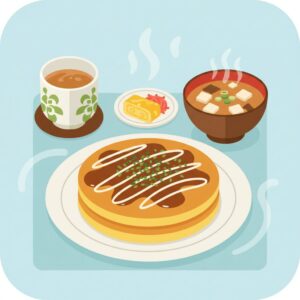
Next comes the toast. This isn’t a flimsy slice of pre-packaged bread. It’s shokupan, Japanese milk bread, sliced into a gloriously thick slab, at least an inch and a half wide. It’s toasted until the outside achieves a perfect golden-brown crispness while the inside remains incredibly fluffy and soft. Accompanied by a pat of butter melting into its nooks and perhaps a small container of strawberry jam, it’s a treat. Almost always alongside the toast is a single warm hard-boiled egg, or yude tamago, ready to be peeled. To complete the set, a small salad often appears—a simple mix of shredded cabbage and lettuce dressed with sesame or vinaigrette. All of this comes together on a single tray, creating a complete, self-contained morning meal. And the cost? In many traditional spots, the toast, egg, and salad all come included with a single cup of coffee, usually priced around 400 to 500 yen. It feels like a magic trick, a culinary sleight of hand that leaves you wondering how the business manages to stay afloat.
The ‘Service’ Mindset: An Unspoken Contract
The secret is rooted in one powerful idea: sābisu. In Japanese-English, ‘service’ doesn’t just mean customer service; it can also mean a ‘freebie’ or ‘on the house.’ The food in a morning set isn’t just a discounted combo. It’s regarded as a gift from the owner to the customer—a gesture of thanks for their patronage. You order the coffee; the meal is the ‘service’ that accompanies it. This reflects a fundamentally different business philosophy from the one guiding modern cafes, which focus on upselling and maximizing the price of every item. The kissaten owner isn’t fixated on the profit margin of a single sale. They’re thinking about tomorrow morning, the morning after, and every morning for years to come.
This mindset embodies pure Osaka merchant DNA. The city’s history as Japan’s commercial hub has fostered a deep appreciation for the value of relationships and loyalty. The morning set is an investment. By offering remarkable value, the owner ensures that their seats are filled each morning with regulars who wouldn’t dream of going elsewhere. This steady, reliable flow of customers forms the financial backbone of the business. It’s a pact: the customer offers loyalty, and the owner provides a welcoming space and a generous breakfast. This unspoken agreement is the engine that has sustained these small, independent shops for generations, even as global coffee chains proliferate on every street corner. It’s a philosophy prioritizing long-term community over short-term profit—a concept that can seem radical in today’s fast-paced world.
The Kissaten as a ‘Third Place’: Osaka’s Living Room
The term ‘third place,’ introduced by sociologist Ray Oldenburg, describes spaces beyond home (the first place) and work (the second place) that are essential for fostering community and civil society. While modern coffee shops are often highlighted as contemporary examples, the Osaka kissaten represents this idea in its most authentic and traditional form. It is not a venue for working, networking, or showing off. Rather, it serves as the neighborhood’s public living room—a place designed for comfort, familiarity, and effortless coexistence.
Decoding the Atmosphere: Showa-Era Nostalgia and Functional Comfort
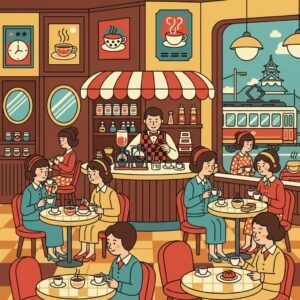
Upon entering a classic kissaten, you are immediately transported to the Showa Era (1926-1989). The design is intentional and cohesive. Dark wood paneling envelops the walls, muffling sound and creating a womb-like atmosphere. Instead of hard, minimalist stools, the seating consists of plush, high-backed booths upholstered in worn burgundy or forest green vinyl or velvet. These booths form intimate, private spaces within the larger room, perfect for quiet conversations or solitary reflection. Soft, low lighting often comes from ornate Tiffany-style stained-glass lamps, casting a warm golden glow. The air is thick with the rich, soothing scent of freshly brewed coffee.
This style isn’t about being retro or fashionable; it serves a purpose. The space functions as a refuge from the outside world. It’s quiet, comfortable, and, most importantly, unchanging. In a city that is always evolving, the kissaten stands as a bastion of permanence. The regulars who visit daily are not seeking novelty but the deep comfort of the familiar. They trust their favorite seat will wait for them, the coffee will taste exactly as it did yesterday, and the atmosphere will offer a calming counterbalance to the sensory overload of modern urban life. It’s a space that demands nothing—it simply allows you to exist.
The ‘Master’: More Than a Barista
At the core of every esteemed kissaten is the ‘Master,’ the owner-operator who acts as curator, host, and silent guardian of the space. Unlike the modern concept of a ‘barista,’ the Master is not a temporary worker focused on latte art or fast service. They are a fixture—a permanent part of the shop’s identity, often running it for decades, sometimes having inherited it from their parents. Their movements are economical, honed by years of repetition: polishing glasses, meticulously preparing coffee, and maintaining a vigilant watch over their domain.
The Master’s role goes far beyond serving food and drink. They are the social hub of the community gathered there. They recognize their regulars not just by their orders but by name, family stories, worries, and small victories. They serve as the neighborhood’s switchboard operator, relaying messages and news. They are a confidant to the lonely, a patient listener, and a steady, reassuring presence. Interactions with the Master are genuine human connections, unlike scripted corporate pleasantries found in chains. They comment on the weather, inquire about family members, or share local gossip. This relationship forms the invisible glue that holds the kissaten community together, elevating a simple coffee shop into a place of true belonging.
The Soundscape of the Osaka Morning
The sounds within a kissaten are as thoughtfully curated as its visual design. It is a gentle symphony of comforting noises: the soft clinking of ceramic cups on saucers, the metallic scrape of a spoon stirring sugar, the subtle rustle of newspaper pages turning. In the background, a low, steady hum of quiet conversation offers a feeling of shared humanity without intrusion. Often, a small television in the corner plays a morning news program or daytime drama, providing a common point of focus and a soothing soundtrack to the morning.
Equally important is what is absent. There is no loud, pounding music. No frequent hissing and grinding of espresso machines. No cacophony of boisterous phone conversations or business calls. The soundscape is designed to be calming, allowing space for thought, conversation, and relaxation. It fosters a special state of being ‘alone together.’ You can sit with your thoughts, read a book, or simply gaze out the window, all while surrounded by the gentle, ambient presence of others. This environment is especially vital for many elderly patrons who might otherwise spend their mornings in silence. The kissaten offers a quiet assurance—a backdrop of life that reminds them they are part of a community.
The Social Fabric: Who Goes and Why?
The clientele of a neighborhood kissaten represents a cross-section of the local community. It is a demographic tapestry made up of different generations and professions, all attracted to the space for reasons that extend well beyond a cheap meal. Understanding who visits and why reveals the multiple, overlapping roles the kissaten plays in the everyday life of Osaka.
The Retirees and the ‘Go-Inkyo-san’
The most prominent and consistent patrons are often the local retirees, known as the go-inkyo-san. For many elderly residents, especially those living alone, the morning visit to the kissaten is the highlight of their day. It offers structure to what might otherwise be an empty day, giving them a reason to get up, get dressed, and leave the house. More importantly, it provides easy, low-pressure social interaction essential for mental and emotional health. The conversations may be simple—about the weather, the Hanshin Tigers baseball team, or vegetable prices—but their combined effect is significant.
This daily routine also acts as an informal neighborhood watch. The Master and regulars keenly observe daily habits. If a regular like Tanaka-san doesn’t appear at his usual 8 AM seat for two consecutive days, it’s quickly noticed. The Master might call, or another regular could check on him at home. In a country facing a rapidly aging population, these informal support systems are invaluable. The kissaten is more than a coffee shop; it serves as a frontline defense against social isolation and quietly provides community care—a role often overlooked but deeply appreciated by its patrons.
The Salaryman’s Pre-Work Ritual
Another significant figure in the morning scene is the local salaryman or office worker. However, their reason for being here sharply contrasts with their counterparts in a busy Tokyo Starbucks. They are not here to work. In fact, pulling out a laptop in many traditional kissaten would be considered a social faux pas. The space is designed for reflection, not productivity. The salaryman comes to enjoy a moment of calm before the workday storm begins. He sits in a booth, often near a window, slowly working his way through the morning newspaper, accompanied by a cup of coffee and a cigarette (since many older kissaten remain smoker-friendly).
This is a transitional space and time—a buffer between the home he just left and the corporate world he is about to enter. It offers a chance to gather his thoughts, read about subjects other than sales reports, and mentally prepare for the day ahead. The quiet, unchanging atmosphere of the kissaten provides a sense of control and tranquility in a professional life often hectic and demanding. It is a small act of rebellion against the tyranny of efficiency, a conscious choice to begin the day at a human pace.
The Local Shop Owners and the Information Exchange
At another table, a group of local business owners from the surrounding shotengai may be gathered. The florist, the fish market vendor, and the small bookstore owner might be meeting for their morning discussion. The kissaten serves as their unofficial boardroom and essential information hub. Here, they exchange news and gossip that directly affect their businesses and the neighborhood’s health. They talk about upcoming local festivals, complain about new city regulations, share supplier tips, and stay informed about the area’s economic climate.
This acts as the analog version of a social network—a hyper-local news feed far more relevant to their daily lives than anything they might find online. It strengthens the tightly knit commercial community of the shopping arcade. These individuals are not just business rivals; they are neighbors who depend on one another for support and information. The kissaten offers a neutral, comfortable space where these vital relationships are nurtured over a simple breakfast, reinforcing the economic and social fabric of the entire neighborhood.
Osaka vs. Tokyo: A Tale of Two Coffee Cultures
To genuinely appreciate the distinctiveness of Osaka’s kissaten culture, it helps to compare it with Tokyo’s predominant café culture. While both cities feature coffee shops, their purposes, atmospheres, and social norms differ greatly. This contrast goes beyond mere aesthetics; it reflects the fundamental psychological and social differences between Japan’s two largest metropolitan areas.
Osaka’s ‘Kiwotsukau’ vs. Tokyo’s ‘Kukioyomu’
This difference can be explained through two essential Japanese social concepts. Osaka’s kissaten culture embodies kiwotsukau, which means being considerate, anticipating others’ needs, and proactively caring for them. The morning set represents the ultimate act of kiwotsukau. The Master doesn’t wait for you to request a good deal; instead, they proactively offer exceptional value as a gesture of hospitality and to foster a warm, personal connection. This approach is direct, generous, and emotionally open in its service, conveying the message: “I see you, I value you, and I want you to feel comfortable and well-fed.”
In contrast, Tokyo’s café culture often follows the principle of kukioyomu, meaning ‘reading the air.’ This involves being socially aware, understanding unspoken rules, and acting in a way that preserves harmony and avoids causing inconvenience. In a typical Tokyo café, the environment is designed for individual efficiency. The social contract emphasizes maintaining polite distance—you don’t engage in conversation with staff or strangers, you keep to yourself, don’t overstay, and respect everyone’s personal space. The service is professional, quick, and anonymous—polite but cool and distant, unlike Osaka’s warm and personal approach.
Community Hub vs. Functional Space
This philosophical difference is reflected in the physical spaces themselves. Osaka’s kissaten is intentionally a community hub. Its layout, featuring cozy booths and a central counter, encourages lingering and socializing. Your presence actively contributes to the atmosphere. On the other hand, in Tokyo—especially in busy areas like Shibuya or Shinjuku—cafés function primarily as practical spaces. They serve as spots to recharge with caffeine, work on your laptop between meetings, or have brief, focused conversations. Designs often prioritize maximizing seating and customer turnover, with less comfortable furniture to discourage long stays. Tokyo cafés are pit stops in a fast-paced city, not destinations in their own right.
Imagine this scenario: As a foreigner entering a neighborhood kissaten in Osaka for the first time, it’s likely the Master will strike up a conversation, asking where you’re from and why you’re in Osaka, showing genuine curiosity. Now picture walking into a busy, minimalist Tokyo café. The staff will greet you with a perfect, polite bow and take your order efficiently, but the interaction usually ends there. Unsolicited personal conversation would be seen as failing to ‘read the air’—an intrusion on both your time and theirs. One is an invitation into a community; the other, a smooth, frictionless transaction.
The ‘Kechi’ Misconception: Frugality as a Virtue
Outsiders, particularly those from Tokyo, often resort to the lazy stereotype that Osaka people are kechi, or stingy, to explain the morning set’s popularity. This is a profound misunderstanding of the local mindset. The appreciation for the morning set isn’t about cheapness; it’s about being smart, pragmatic, and valuing genuine worth. Osakans call this kashikoi kaimono, or smart shopping—and it’s a source of pride.
An Osaka native doesn’t view the morning set as merely a way to save money. They see it as a wise choice. Why pay 800 yen for mediocre coffee and a pre-packaged pastry at a soulless chain when you can spend 450 yen supporting a local family, enjoy a carefully prepared meal in a comfortable setting, and engage with your neighborhood’s daily life? It’s not about spending the least amount possible; it’s about using resources in a way that yields the highest return in quality, comfort, and community connection. This economic philosophy is grounded in logic and a deep appreciation for a good deal—something that in Osaka is regarded as a fine art.
How to Navigate a Kissaten Like a Local
For a non-Japanese resident, entering the traditional, insular world of a kissaten can feel intimidating. The rules are unwritten, and the atmosphere can resemble a private club. However, with some observation and the right approach, these spaces can become a treasured part of your daily life in Osaka, providing a unique connection to the city’s authentic culture.
Finding the Right Spot
First, you need to know where to search. The best kissaten are seldom found on main, glamorous boulevards. They are hidden away in covered shotengai, along quiet residential side streets, or on the ground floors of old, unremarkable buildings. Watch for telltale signs: a hand-painted wooden sign with a charmingly dated font, a display case with sun-faded plastic food models out front, and the iconic revolving orange barber-pole-style lamp. These markers signify authenticity. Avoid places with English menus prominently displayed or sleek, modern branding. You want a spot that seems unchanged since 1975 because it likely hasn’t been.
The Unspoken Etiquette
Once inside, a few etiquette tips will help you fit in. This isn’t your office. Don’t pull out a laptop or plan to stay for hours. The tables are for coffee and conversation, not work. The pace here is slow and intentional. The Master is not a machine; they are an artisan. Your siphon coffee will take five to ten minutes to prepare, and that’s part of the experience. Rushing goes against the entire purpose of the kissaten. Relax and savor the process. Bring a book or a newspaper, or simply enjoy watching the neighborhood life unfold.
Cash is king. Many small, family-run shops don’t accept credit cards, so it’s wise to have cash ready to pay your bill. When you leave, a simple, warm “gochisousama deshita” (a polite way of saying “thank you for the meal”) to the Master is a small gesture with great impact. It acknowledges their hard work and hospitality and shows your respect for the culture of the space.
Trying to ‘Belong’
Don’t expect to be embraced by the inner circle on your first visit. The community of a kissaten is built on regularity and familiarity. At first, you’ll be an outsider, and that’s okay. The regulars and the Master will watch you with polite curiosity. The key is to become a familiar face. Try visiting at the same time a few days each week. Order the same thing. Be a quiet, respectful presence.
Eventually, you’ll notice a change. The Master might start preparing your coffee as soon as you arrive. A regular may nod in greeting. Someone might offer you part of their newspaper. These moments are small but meaningful milestones. They show you’re no longer just a customer; you’re becoming part of the neighborhood’s rhythm. This process takes time. It’s a quiet, gradual integration earned through patience and repeated visits. The reward—a real sense of belonging in a local Japanese community—is priceless.
The Future of the Kissaten: A Fading Tradition?
Despite their cultural importance and the strong affection they evoke within their communities, the future of the traditional kissaten remains uncertain. These cherished establishments confront numerous modern challenges that endanger their survival, prompting questions about whether this distinctive aspect of Osaka’s heritage can endure in the 21st century.
The Challenge of Modernity
The most urgent threat stems from demographic shifts. Many kissaten Masters are now in their 70s or 80s, with their children frequently pursuing different, more contemporary careers. When the Master retires, there is often no successor to continue the family business, leading to the permanent closure of yet another beloved neighborhood institution. The economic landscape is also difficult. Competing against the scale, marketing power, and rapid expansion of global and domestic coffee chains is an enormous challenge for a small, independent shop. Younger generations, influenced by global trends, often prefer the bright, airy, and ‘Instagrammable’ ambiance of modern cafes over the dark, nostalgic interiors of a Showa-era kissaten.
A New Appreciation
Nevertheless, a hopeful sign is emerging from an unexpected quarter. A ‘retro boom’ sweeping Japan has prompted many younger people to rediscover and value the unique charm of these old-fashioned spaces. For a generation raised on minimalist design and digital everything, the analog, time-capsule atmosphere of a kissaten feels fresh, genuine, and exotic. They are attracted to the elegant siphon coffee makers, vintage furniture, and the sensation of stepping into another era. This new wave of younger customers, along with curious international visitors, is revitalizing these long-standing establishments.
Additionally, a small but growing number of young entrepreneurs are embracing the kissaten tradition. Some are taking over their family’s shops, preserving the core spirit while making subtle updates, such as introducing higher-quality specialty coffee beans or adding a non-smoking section. Others are opening new shops that faithfully replicate the Showa aesthetic, honoring the tradition while starting anew. The kissaten may be evolving, but its essential role as a place of comfort, connection, and community remains just as relevant. It serves as a tangible link to Osaka’s past and continues to function as a quiet, steady anchor amid the city’s bustling present.
To sit in an Osaka kissaten early in the morning, savoring a coffee and the simple pleasure of thick toast, is to experience the city at its most fundamental. The ‘morning set’ is more than a meal; it is a ritual, a statement of values, and a microcosm of Osaka’s entire cultural identity. It reflects a city that is practical and value-conscious, yet simultaneously fiercely loyal and deeply committed to human connection. It reveals a mindset that prioritizes community over cold efficiency and relationships over sterile transactions. In the soft clinking of a coffee cup and the warm greeting from the Master, one can hear the true heartbeat of Osaka. It is an invitation, offered daily, to look beyond the surface and discover the soul of a city that, at its core, feels like one large, sprawling, welcoming neighborhood.