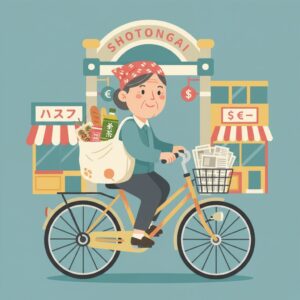
You see it before you understand it. A middle-aged woman and an old shopkeeper in a bustling shotengai, a covered shopping arcade, locked in what looks like a tense standoff over a box of strawberries. Voices rise, hands gesture wildly, heads shake. You brace for an argument, a cultural misstep you’re about to witness firsthand. Then, suddenly, both of them burst into laughter. The woman walks away with the strawberries and a small bag of extra oranges the shopkeeper tossed in, both of them beaming. This wasn’t a fight. This was a performance. This was a conversation. This was Osaka.
What you just witnessed is ‘nebaru’ (粘る), a word that literally means “to be sticky” or “to persevere.” In the context of Osaka commerce, it’s the art of friendly, persistent haggling. It’s a dance of negotiation that feels utterly alien in the fixed-price, politely detached world of modern Japanese retail, especially when compared to the capital. In Tokyo, questioning a price tag is almost unthinkable. In Osaka, it can be the start of a beautiful friendship. But why? Why is this city, just a short bullet train ride from Tokyo, wired so differently? The answer lies in a deep-seated cultural philosophy known as ‘Akinai Seishin’ (商い精神), the merchant mindset. This isn’t just about being cheap; it’s a worldview that prioritizes value, human connection, and the sheer joy of a smart transaction. To live in Osaka is to learn the rhythm of this mindset, a beat that pulses through every market, every conversation, and every bowl of takoyaki. This guide isn’t about teaching you to haggle. It’s about decoding the heart of a city that sees life itself as a grand, vibrant, and rewarding negotiation.
For those captivated by Osaka’s vibrant energy, a nostalgic journey through its Satoyama countryside offers a refreshing glimpse into a more serene side of this dynamic city.
The Merchant’s DNA: Where Akinai Seishin Comes From
To understand Osaka, you need to rewind the clock. For centuries, while Tokyo (then Edo) was the strict, bureaucratic center of the samurai government, Osaka served as the nation’s lively stomach and wallet. Known as ‘Tenka no Daidokoro’ (The Nation’s Kitchen), it was a vast port city where rice, sake, and goods from across Japan were gathered, stored, and traded. The heroes here were not stoic warriors but shrewd merchants, savvy rice brokers, and diligent artisans. Social status wasn’t determined by bloodline but by business savvy. Could you close a deal? Could you recognize value? Could you build a network of trust? These were the questions that counted.
This history shaped a distinctly different urban character. In Edo, social interactions were rigid, hierarchical, and steeped in formal etiquette. In Osaka, communication was straightforward, pragmatic, and focused on the transaction. Money wasn’t a taboo topic to be whispered about; it was the city’s language, a tool for fostering relationships and communities. This ‘Akinai Seishin’ became the city’s core philosophy. It’s a belief that business should be mutually beneficial, human-centered, and, importantly, enjoyable. A good deal wasn’t just profitable; it was a successful social exchange that left both parties feeling clever and respected. This spirit still courses through the city’s veins. Though the samurai have long vanished, the merchant’s spirit—who can laugh, joke, and negotiate toward a win-win outcome—thrives in every corner of Osaka.
‘Nebaru’ in Action: The Unspoken Rules of the Game
Before you storm into a 7-Eleven demanding a discount on your onigiri, pause for a moment. The art of ‘nebaru’ is highly context-dependent, and knowing when and where to practice it is essential. This is not a universal license to haggle everywhere you go. Trying it in the wrong place will not only fail but also brand you as clueless and potentially rude. The game takes place in particular venues where the spirit of ‘Akinai Seishin’ still holds sway.
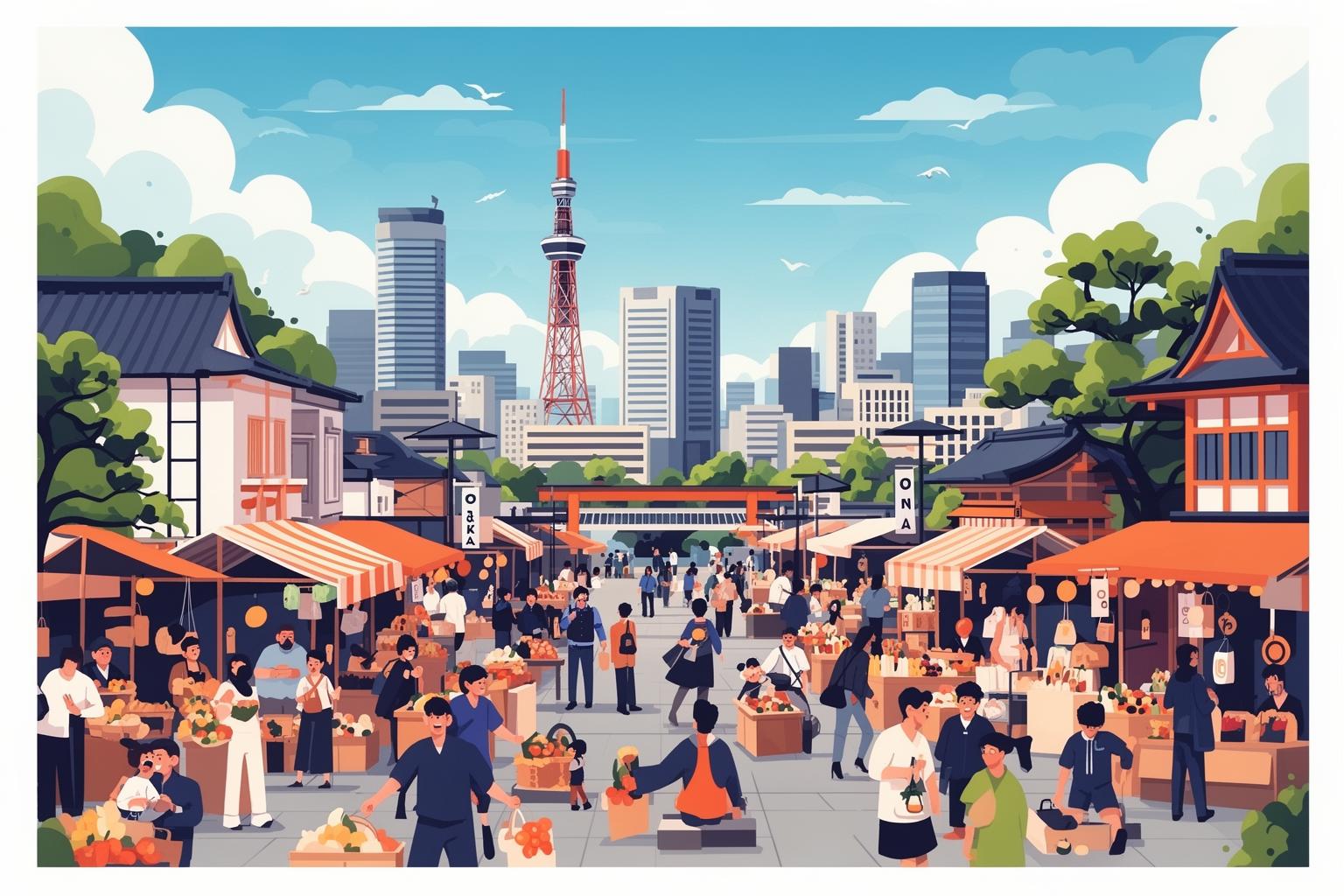
Prime locations include expansive ‘shotengai’ such as Tenjinbashisuji or Kuromon Market, independent ‘mom-and-pop’ shops, the lively electronics stalls of Nipponbashi (Den Den Town), and flea markets. These spots are run by owners, not corporate employees on autopilot. They have the authority to negotiate, and importantly, they often enjoy the exchange. In contrast, attempting to ‘nebaru’ in a department store like Hankyu, a chain supermarket, a convenience store, or any major brand retailer is futile. The price is fixed. Staff lack the power to alter it, and your request will likely be met with puzzled silence.
The Dance of Negotiation
Successful ‘nebaru’ is an artful performance, a delicate dance of words and gestures. It’s never about making aggressive demands. Rather, it’s a conversation wrapped in charm and sincere interest. The first step is to create rapport. Don’t simply point at an item and ask for a lower price. Engage the shopkeeper: ask a question about the product like, “Are these apples sweet?” or “Is this a new model?” Compliment their selection. Show that you appreciate their goods beyond just hunting for discounts.
Once you’ve formed a genuine connection, you can gently probe. The key is to couch it as a friendly request, never a demand. Classic phrases include a slightly playful, “Mou chotto dake makete kureru?” (Could you knock just a little off for me?) or the more strategic, “Kore to kore, matomete kattara dou naru?” (If I buy this and this together, what can you do?). Tone is everything—it should be light, with a smile audible in your voice. You’re not trying to cheat the seller; you’re inviting them to join a game. A successful result might be a modest discount, perhaps 10% off. Often, though, the real prize isn’t a price reduction but an ‘omake’—a small extra given for free. Buy five tomatoes, and after a pleasant chat, you might receive a cucumber as a gift. This is the shopkeeper’s way of acknowledging your skill and rewarding the enjoyable interaction.
It’s Not Just About the Money
This is where most outsiders miss the point. For a true Osakan, saving a hundred yen comes second to the thrill of the negotiation itself. It’s a testament to their street smarts. It’s a moment of connection in which they are recognized not as a faceless customer but as a shrewd individual. For the shopkeeper, it’s a chance to showcase their salesmanship and generosity (‘service’ in the Osaka dialect). They control the interaction, and by offering a small discount or an ‘omake’, they affirm their role as benevolent masters of their domain.
When the deal concludes and both parties are laughing, the exchange is more than just goods for money. It’s mutual respect. The customer feels clever for securing a good deal. The shopkeeper feels fulfilled for making a sale and cultivating a relationship with someone who might become a regular. This shared satisfaction embodies the true spirit of ‘Akinai Seishin’. It’s commerce as a community-building ritual, standing in stark contrast to the sterile, impersonal transactions that dominate much of modern life.
The Psychology of Value: Beyond Just Being Cheap
There’s a persistent cliché that people from Osaka are ‘kechi’ (stingy), but this is a fundamental misconception. While they are well known for being careful with their money, it does not stem from miserliness but from a profound respect for value. A more accurate term to capture the Osaka mindset is ‘shidui’ (しんどい), which can mean tough or severe, but here reflects a ruthless pragmatism regarding money. An Osakan despises waste and hates feeling like they’ve been fooled into overpaying without receiving full worth.
This philosophy fuels an obsession with ‘kosupa’, or cost-performance—a constant, almost subconscious calculation behind every purchase. Is this meal worth the price? Is this jacket durable enough to justify the cost? Will this appliance save me money over time? They will gladly spend a fortune on what they truly value—a spectacular meal (‘kuidaore’ – to eat oneself into ruin), a finely crafted tool, or a ticket to see their beloved Hanshin Tigers. Yet they’ll walk an extra ten minutes to another supermarket to save 30 yen on milk. It’s not about the 30 yen; it’s the principle. It’s about winning the small, daily battles of value.
Cost-Performance as a Way of Life
This mindset permeates every aspect of life. Daily conversations are filled with reports on where the best deals can be found. “Daikon radishes are cheap at the market on Tenjinbashi-suji 6-chome today!” serves as valuable social currency. Scoring a good deal is a story shared with pride, a testament to one’s consumer savvy. This ongoing pursuit of value fosters a deep awareness of the city’s economic landscape. People know the market prices of everything, from seasonal fish to train fares. This isn’t about being poor; it’s about being smart. In Osaka, skillful financial management is a source of personal honor, a direct legacy from the merchant ancestors who built the city one clever deal at a time.
How Osaka’s Value-Seekers Differ from Tokyo’s Brand-Conscious Consumers
The contrast with Tokyo highlights the Osaka mindset distinctly. Tokyo, as the hub of government, corporate power, and modern culture, follows a different set of values. In Tokyo, brand, presentation, and status often dominate. A consumer might select a product based on the elegance of the store, the attractiveness of the packaging, or the prestige of the brand. The purchasing experience itself is part of what you’re paying for. The price serves as a fixed data point, reflecting the brand’s carefully crafted image. To challenge it is to challenge the whole system.
Osaka, on the other hand, is completely different. An Osakan will see past the fancy packaging and ask, “But is the product actually good? And can I get it cheaper elsewhere?” The product’s inherent quality and usefulness are what matter most. The brand name comes second to its ‘kosupa.’ A good analogy is buying fruit. The Tokyo shopper might visit a high-end department store to buy a single, perfect, geometrically flawless mango in a beautiful wooden box at a steep price. They pay for the aesthetics, the brand, and the perfection. The Osaka shopper will head to the local market, find a farmer selling mangoes that are slightly misshapen but sweeter, chat with him for a few minutes, and walk away with three mangoes at half the price of the single store-bought one. For the Osakan, this is clearly the better choice. They get superior value, a personal connection, and a story to share. To them, the Tokyo approach feels illogical, wasteful, and frankly, a bit dull.
What Foreigners Often Get Wrong
Navigating this culture can be challenging. The ‘Akinai Seishin’ follows a set of unspoken rules that can easily confuse newcomers who come armed with a typical “Japan Guidebook” perspective of the country.
The first point is the belief that “Haggling is rude in Japan.” Generally, this holds true. However, Osaka is the notable exception that challenges this notion. The key lies in distinguishing between aggressive, demanding haggling and the playful, relationship-based practice of ‘nebaru’. Don’t just insist on a discount. Smile, engage warmly, be charming, and be prepared to accept a “no” gracefully. The aim is a friendly exchange, not a confrontational negotiation.
The second concern is the ‘kechi’ (stingy) stereotype. It’s easy to misinterpret the persistent focus on price as mere cheapness. But observe how the same person who spent ten minutes bargaining over a hundred yen will then treat a friend to an extravagant dinner without hesitation. Osakans are extremely generous with their friends and on matters they consider important. Their financial caution isn’t about hoarding money; it’s about spending it wisely. They dislike being cheated, not spending money. This is a vital distinction.
For any foreigner looking to try ‘nebaru,’ the best advice is to observe first. Become a regular at a local shop. Let the owner get to know you. Once that relationship is established, you can cautiously test the waters. A flea market is an ideal, low-pressure environment. Keep it lighthearted, be ready to leave without a purchase, and remember that the connection you build is always more valuable than the discount you obtain.
Living the Akinai Seishin: More Than Just Shopping
The merchant spirit extends beyond the marketplace. It’s a philosophy that shapes how people in Osaka communicate and engage with the world. The city’s direct, no-nonsense communication style stems from the merchant’s need to be straightforward and close the deal quickly. Unlike the formal, indirect politeness (‘tatemae’) common in other parts of Japan, people say what they mean, often adding humor to soften the bluntness.
This humor plays a crucial role. In negotiations, it acts as a tool to disarm, build rapport, and transform potentially tense moments into cooperative ones. Osaka’s renowned manzai comedy, with its rapid exchanges, is essentially a swift negotiation of wit. This lively energy is reflected in daily conversations, where jokes and self-deprecation help people navigate social interactions.
In the end, the ‘Akinai Seishin’ nurtures relationships grounded in mutual benefit and sincere human connection, rather than mere polite convention. There is an unspoken understanding of “give and take” within friendships and community life. To grasp ‘nebaru’ is to realize that, in Osaka, a transaction is never just a transaction. It’s an opportunity to connect, perform, showcase wit, and strengthen the community ties that keep the city vibrant. It’s the art of finding value not only in the things you purchase but also in the people you share the city with.