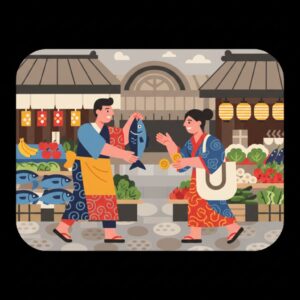
Walk into a covered shopping arcade, a shotengai, anywhere in Osaka, and you’ll eventually hear it. A loud, rapid-fire exchange between a shopkeeper and a customer, usually a woman of a certain age with a sharp glint in her eye. To a newcomer, especially one from the whisper-quiet politeness of Tokyo, it might sound like a heated argument. Voices are raised, hands are gesturing, there’s laughter, a mock sigh of defeat from the seller, and then a transaction. Money and goods change hands, and both parties walk away smiling. This isn’t a conflict. This is a conversation. This is commerce. This is the art of nebiki—the daily dance of price negotiation that defines Osaka’s consumer culture. It’s the public expression of a deep-seated mindset known as the ‘Kechi Spirit,’ a philosophy that, once you understand it, will fundamentally change how you shop, eat, and live in this city. Forget the idea that the price tag is the final word. In Osaka, it’s just the opening line.
For those eager to refine their negotiation skills, a confident shopper’s guide to haggling offers practical strategies for navigating Osaka’s lively markets.
The Kechi Spirit: More Than Just Being Cheap
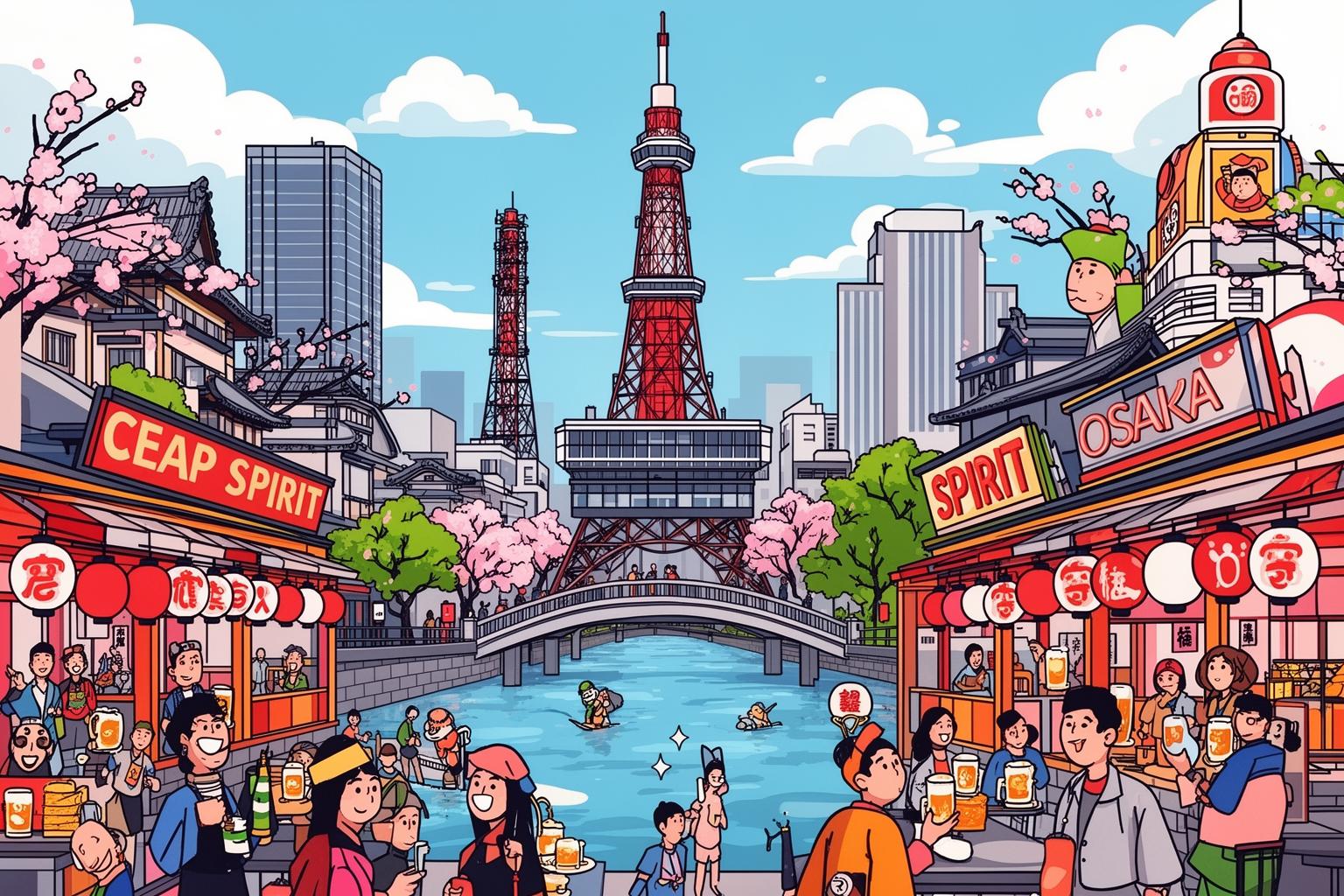
Before we get into the how-to of haggling, we need to explore the core philosophy behind it. The word is kechi (ケチ). In a typical Japanese dictionary, and certainly in the minds of many Tokyo residents, it means ‘stingy,’ ‘miserly,’ or ‘cheap.’ It has a negative implication of someone who selfishly clings to their money. But here, in the merchant spirit of Osaka, the meaning shifts. It’s embraced as a badge of honor. To be ‘kechi’ in Osaka means you’re clever, savvy, and resourceful. It means you recognize the true value of things and refuse to pay a yen more than they’re worth. It’s not about avoiding spending; it’s about spending wisely.
Deconstructing ‘Kechi’
Look at it this way: the ultimate hero in an Osaka tale isn’t the person who pays full price for a brand-name handbag at a department store. The hero is the obachan (a casual term for a middle-aged or older woman) who proudly tells her neighbors she secured a large, perfect daikon radish for 80 yen instead of 100 yen after a lively chat with the greengrocer. The excitement lies in the deal itself. It’s a victory, a small triumph in the game of everyday life. This spirit comes from Osaka’s history. For centuries, it was Japan’s commercial heart, a city of merchants rather than samurai. Status was earned through business skill, not inherited rank. Success and survival depended on sharp negotiation, understanding profit margins, and building relationships with customers and suppliers. That mercantile DNA runs deep. The city was a vast marketplace, and its people learned that everything has a price, but that price is seldom fixed.
The Philosophy of Value
This highlights the key difference between Osaka and Tokyo. In Tokyo, value is often connected to presentation, brand prestige, and impeccable, almost invisible service. The price tag represents quality and consistency, and questioning it would disrupt the harmony of the transaction. You pay for a perfect, predictable experience. In Osaka, value lies in the item itself and the human interaction involved in buying it. The experience isn’t intended to be seamless; it’s meant to be memorable. An Osakan will readily spend generously on a high-quality meal or a finely crafted coat, but they want to feel they earned it—that they engaged with the seller and agreed on a fair price together. A fixed price feels impersonal, like a vending machine. Negotiated pricing reflects a relationship, a brief moment of shared humanity. It’s the difference between a monologue and a dialogue.
‘Nebiki’ in Action: Where and How to Haggle
So, where exactly does this lively culture of negotiation take place? Entering the right setting is the first and most crucial rule. You wouldn’t haggle at the opera, nor would you do it at a Mitsukoshi department store. Knowing the environment is everything. It’s about reading the atmosphere and understanding the unwritten codes of conduct.
The Prime Arenas for Haggling
The core of nebiki lies in the shotengai, the covered shopping arcades weaving through Osaka’s neighborhoods. Locations such as Tenjinbashisuji, the longest in Japan, or the more tourist-centric yet still bustling Kuromon Ichiba Market, are tailor-made for this. These areas typically consist of small, family-run shops. The person selling you the fish is the same one who purchased it at the wholesale market at 4 a.m. They have the authority and personality to negotiate. Listen for shouts like “Yasui de!” (It’s cheap!) and “Mokari makka?” (Making a profit?), the classic merchant greetings. This is your signal.
Another important venue is Den Den Town in Nipponbashi, Osaka’s counterpart to Akihabara. While large chains like Bic Camera have fixed prices, numerous smaller, independent electronics shops welcome bargaining. This is especially true when considering floor models, last year’s stock, or items with slightly damaged packaging. Buying several items at once is your golden opportunity. Bundling a camera, memory card, and case gives the shopkeeper much more flexibility with the price.
Flea markets, antique stores, and any small, owner-run shop are also ideal places. The key sign is seeing the owner actively working. If the person behind the counter is a part-time student in a neat uniform, save your breath. But if it’s a seasoned individual who looks like they’ve been selling pottery for 50 years, you’re in business.
The Unspoken Rules of Engagement
Just as crucial as knowing where to haggle is knowing how to do it. This isn’t a confrontational, Western-style negotiation where you start at half price and aggressively work your way upward. It’s a delicate dance of politeness, humor, and rapport.
First, master the key phrases. The friendliest and most common opener is a simple, smiling “Chotto makete?” (Can you give me a little discount?). It’s gentle and non-demanding. A slightly more advanced version is “Mou chotto nantoka naran?” (Can’t you do a bit better on the price?). Alternatively, you can ask for a bonus item instead of a price cut with “Omake shite!” (Throw in something extra!). This works wonderfully at fruit stalls—buy five apples, and maybe you’ll get a mikan orange free.
Attitude is everything. Be cheerful. Be charming. Show genuine appreciation for the product. Begin by complimenting the quality of the goods. Build a small connection before even asking for a discount. The goal is to make the seller want to give you a deal because they like you. It’s a performance. A bit of theatrical hesitation, a thoughtful stroke of the chin while considering the price—it’s all part of the act.
A Step-by-Step Haggling Scenario
Imagine you’re in a small shop in a shotengai, eyeing a pair of jeans.
- Step 1: Engage. Don’t just point. Pick them up. Admire the fabric. Say something like, “Kore, ii desu ne!” (These are nice!). Greet the owner.
- Step 2: Inquire. Ask the price, even if it’s displayed. This opens the conversation.
- Step 3: React. When told the price, pause slightly with a friendly demeanor. A subtle “Sokka…” (I see…) shows you’re considering it seriously. This is your hesitation moment.
- Step 4: The Ask. Now, with a hopeful smile, launch your appeal: “Gomen, chotto dake makete kureru?” (Excuse me, could you knock just a little off?).
- Step 5: The Result. The shopkeeper might laugh and refuse. They might punch numbers into a calculator and offer a slightly reduced price. They might sigh dramatically, say, “Shoganai naa” (It can’t be helped), and give a 10% discount.
- Step 6: The Close. Whatever happens, accept gracefully. If you get a discount, respond with a big, enthusiastic “Arigato!” or, for extra points, the Osaka-ben equivalent, “Ookini!”. You’re not just buying jeans—you’re creating a memorable positive interaction for the shopkeeper.
Beyond Haggling: The Everyday Hunt for Discounts
The ‘Kechi Spirit’ goes beyond just face-to-face negotiations. It’s a 24/7 mindset woven into everyday life—a continual, low-level quest for maximum value. This is how you, as a resident, can genuinely reduce your living expenses without uttering a single word.
The Supermarket Time Sale (値引きシール – Nebiki Shiiru)
This is the secret tool of the Osaka home economist. Each evening, in every supermarket—from the famously affordable Super Tamade to the more upscale Life—a ritual unfolds. A staff member appears, armed with a pricing gun loaded with yellow and red discount stickers—20% off, 30% off, half price. They target the prepared food section: bento boxes, sushi platters, fried chicken, salads. The stickers indicate that the food is perfectly fine but must be sold before closing time. For the savvy shopper, this is prime opportunity. You’ll find people of all ages—students, salarymen, housewives—quietly circling the aisles, waiting for the sticker person to arrive. It’s a patient, subtle hunt. Mastering the timing of your local supermarket’s discount cycle is a rite of passage for any resident aiming to live well on a budget. The reward: a full, delicious meal for just a few hundred yen.
The Power of Point Cards and Coupons
While point cards are common throughout Japan, Osakans wield them with the skill of a master samurai. Wallets are often comically stuffed with cards from every drugstore, electronics shop, and supermarket. Talks with local friends inevitably turn to which store is having a “pointo bai-day” (double points day). The careful clipping of coupons, scanning of QR codes for discounts, and strategic use of point-based payment systems isn’t seen as a hassle. It’s a challenge to be cracked, a method to game the system and squeeze every last bit of value from a purchase. This is the ‘Kechi Spirit’ in its most modern, digitized form.
“Omoroi” is the Ultimate Value
Here lies perhaps the deepest aspect of Osaka culture. Something being omoroi (interesting, funny, amusing) holds its own inherent value. A transaction is not merely the exchange of goods for money; it’s a chance for entertainment. That’s why Osaka sellers are so talkative and theatrical. They are aiming to create an omoroi moment. The banter, the jokes, the playful haggling—it’s all a performance meant to make the experience more than just a purchase. A shopkeeper who makes you laugh offers a service beyond simply selling you a product. In return, you’re more likely to become a loyal customer. This is why a silent, overly formal shopping experience can feel so strange in Osaka. If it isn’t a bit omoroi, is it even worth doing?
What Foreigners Often Misunderstand
The straightforwardness, volume, and financial emphasis of Osaka’s culture can be startling for outsiders. It’s easy to misread the cues and leave with a mistaken impression. Let’s address a few common misunderstandings.
Is it Aggressive? Is it Rude?
The loud exchanges during a nebiki session can easily be confused with an argument. However, if you observe the body language and facial expressions, you’ll almost always notice a smile by the end. It’s a form of social interaction—a kind of sport. Both parties know the rules and are enjoying the process. The seller isn’t offended by the request for a discount; it’s expected. It signals that the customer is a savvy local, not a tourist willing to pay any price. Participating in haggling shows you grasp the local culture, which is a sign of respect.
The “Cheapskate” Stereotype
It’s important to distinguish being ‘kechi’ from being a cheapskate. An Osakan may haggle intensely over a 100-yen discount on fish but then lavishly treat a friend to a 10,000-yen meal without hesitation. The reasoning is that the fish has a market value, and paying above that is unwise. Meanwhile, friendship and generosity are priceless. The ‘Kechi Spirit’ is about carefulness in impersonal, commercial dealings. When it comes to social obligations, hospitality, and treating friends, Osakans are renowned for their remarkable warmth and generosity. The money saved on everyday expenses allows them to be generous in the aspects of life that truly matter.
Comparing Osaka and Tokyo Mindsets
Tokyo culture often emphasizes wa (harmony). The social contract involves avoiding inconveniencing others, maintaining a calm surface, and following established procedures. Fixed prices are part of this system; they ensure fairness and smooth, conflict-free transactions. Osaka culture values honne (true feelings) and human connection. Its social contract encourages directness, authenticity, and engaging people on a personal level. Negotiation is a way to break formality and foster genuine interaction. Neither is superior; they are simply two distinct approaches to navigating life in a densely populated urban setting.
How to Embrace the Kechi Spirit in Your Osaka Life
Understanding the culture is one thing; actively participating is another. But embracing the ‘Kechi Spirit’ is one of the quickest ways to stop feeling like a tourist and start feeling like a local. It will save you money and, more importantly, help you build connections within your community.
Start Small and Observe
Don’t try to haggle for a new laptop on your very first day. Your initial step is to become a student of the game. Visit a long shotengai like Tenjinbashisuji. Grab a coffee, find a bench, and simply watch. Observe how the locals interact with vendors. Pay close attention to the obachan—they are the true experts. Notice their tone, smiles, and body language. You’ll learn more in an hour of observation than from any guidebook.
Your First ‘Nebiki’ Attempt
Pick a low-risk target. A fruit and vegetable stand is ideal. The items are inexpensive, and the vendors usually enjoy chatting. Maybe you’re buying a few things. When it’s time to pay, just smile and try a gentle, “Chotto omake dekinai?” (Could you throw in a little extra?). The worst outcome is a friendly decline. But you might get an extra onion or a piece of fruit added to your bag. That small win marks your initiation into the club.
Master the Supermarket Run
This is the simplest way to live the ‘kechi’ life—no negotiation needed. Learn the discount schedule at your local market. Does the half-price sticker rush start at 7:30 p.m. or 8:00 p.m.? Plan one or two grocery trips a week around that time. It becomes an enjoyable and rewarding routine, and the savings on your monthly food budget will add up significantly.
It’s About Connection, Not Just Cash
Always keep the bigger picture in mind. Saving a few hundred yen is nice, but the true reward is the relationship you build. When you haggle, you stop being a nameless face. You become the “foreign girl who appreciates a good deal.” The next time you visit that shop, the owner will recognize you. They’ll greet you with a warm “Maido!” (Thanks always!). They might save the best cuts of fish for you or let you know when the freshest vegetables arrive. By taking part in this small cultural ritual, you are weaving yourself into the fabric of your neighborhood. You are creating a home.
The Heart of Osaka’s Economy
The ‘Kechi Spirit’ and the art of nebiki are much more than mere quirks of the local dialect. They serve as the driving force behind the city’s grassroots economy and the heartbeat of its social interactions. This philosophy honors the savvy consumer, values human connection over corporate coldness, and finds delight in the pursuit of value. Living in Osaka means being invited into this game. It encourages you to be more than a passive shopper, to connect with the people you purchase from, and to always be on the lookout for a bargain—not just for the savings, but for the story you gain afterward. Adopting this mindset will not only make life here more affordable but also infinitely richer, more connected, and much more omoroi.