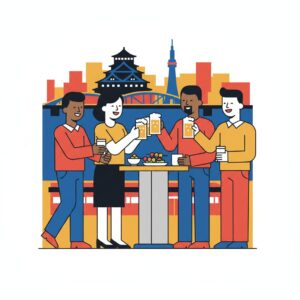
Walk down any residential street in Osaka after the sun goes down. Past the bright, blinking lights of the pachinko parlors, beyond the familiar red lanterns of the izakayas, you’ll see them. Small, unassuming doorways, often on the second floor of a tired-looking building. The windows are frosted glass, obscuring the view but not the sound—a low murmur of conversation, punctuated by a burst of laughter or a strain of slightly off-key karaoke. A simple, sometimes handwritten sign might hang outside, bearing a woman’s name, like “Snack Junko,” or something whimsical, like “Bar Twilight.” This, my friend, is the heart of neighborhood nightlife in Osaka. This is the snack bar, or sunakku.
For many foreigners, these places are a mystery box. They’re not bars in the Western sense. They’re not exactly restaurants. And while there’s singing, they’re a universe away from the private, sterile rooms of a major karaoke chain. It’s easy to walk past a hundred times and never once consider stepping inside. The closed door feels like a barrier, a sign that says “locals only.” And in a way, it is. But it’s not a barrier of exclusion. It’s a curtain separating the public street from a private living room. It’s an invitation that you have to know how to accept. To understand the snack bar is to understand the deep, unspoken social fabric of Osaka. It’s where you’ll find the city’s true personality, unfiltered and unpretentious, poured neat into a highball glass.
While Osaka’s neighborhood snack bars invite you to experience the city’s nocturnal charm, delving into kissaten culture reveals another intimate facet of its urban soul.
Deconstructing the Mystery: What Exactly Is a Snack Bar?
Before you can face the frosted glass, you need to grasp the rules of the game. A snack bar operates by its own unique logic—a system that values community over commerce, loyalty over novelty. It stands in sharp contrast to the transactional nature of most modern establishments. Think of it less as a business and more as a clubhouse with a cover charge.
The System: Fixed Charges and Bottle Keeps
The first thing that surprises people is the pricing. You don’t simply pay for what you drink. When you sit down, you agree to a “set charge,” a cover fee that can range from a couple thousand yen to five thousand or more. This isn’t a scam; it’s your ticket to the community for the evening. The fee usually includes a small dish called otoshi or tsukidashi—perhaps some pickles, edamame, or potato salad—and unlimited karaoke. Most importantly, it also grants you the proprietor’s time and attention.
The true economic engine of the snack bar is the “bottle keep” system. Regulars don’t order drinks by the glass; they purchase an entire bottle of whisky, shochu, or bourbon. The owner—known affectionately as “Mama-san” if she’s a woman or “Master” if he’s a man—will mark your name on the bottle and store it on a shelf behind the bar. For months afterward, when you return, your bottle will be waiting. You only pay the set charge, and Mama-san will pour your drink, adding ice and mixers (mizu-wari for water, oolong-hai for oolong tea, etc.). This system is a clear declaration of intent: “I’ll be back.” It’s an investment in your seat at the bar, your place in this small, carefully curated world. For the budget-conscious Osakan who values good cost performance, or cos-pa, it’s the ultimate deal: a familiar place to enjoy your own liquor with just a small cover each time.
The Atmosphere: Somebody’s Living Room
Step into a typical Osaka snack bar and you’ll feel as if you’ve traveled back to the Showa Era. The décor is often charmingly old-fashioned: dark wood paneling, vinyl-covered stools at a small counter, cozy booths with crushed velvet seats, and perhaps a lava lamp or vintage beer poster on the wall. The lighting is dim and warm, designed for intimate conversation rather than Instagram photos. There’s no pretense here. It doesn’t aim to be cool or trendy. It’s comfortable. It feels lived-in.
The space is intentionally small, typically seating no more than ten to fifteen people. This isn’t a drawback; it’s essential. The intimacy encourages interaction. You can’t hide in a corner with your phone. You sit shoulder-to-shoulder with other patrons at the counter. You’ll hear their conversations, their disagreements, their triumphant karaoke solos. The layout is crafted to transform a group of strangers into a temporary family for the night, with Mama-san or Master acting as the matriarch or patriarch.
The Cast: Mama-san and the Regulars
At the heart of this world is Mama-san. She is the sun around which the little planet of the snack bar rotates. She’s more than just a bartender. She is host, bouncer, therapist, confidante, and conductor of the evening’s social symphony. She remembers your name, your job, your favorite drink, and the story you shared last month about your difficult boss. She knows when to listen, when to offer advice, and when to gently nudge you into singing a song. Her role is to shape the atmosphere, ensure everyone feels welcome and included, and subtly manage the delicate social chemistry of the room. A great Mama-san is why a snack bar can thrive for decades on a quiet backstreet.
Her court consists of the jouren-san, the regulars. These are the people who have made this snack bar their “third place,” an essential social refuge between the pressures of work and home. They include local business owners, office workers, retirees, and neighborhood shopkeepers. They come here to unwind, celebrate small victories, complain about their spouses, and find belonging. To a newcomer, the regulars might seem like an exclusive clique, but more often than not, they are the key to unlocking the experience. Show respect and genuine interest, and they’re often surprisingly eager to welcome you into their circle.
The Osaka Flavor: Where the City’s Soul Comes to Sing
Snack bars are found throughout Japan, but those in Osaka have a uniquely different vibe. They perfectly capture the city’s spirit: loud, straightforward, warm, and deeply human. These spots highlight the qualities that distinguish Osaka from Tokyo’s more reserved and formal atmosphere.
Less Business, More Banter
In Tokyo, particularly in upscale areas like Ginza, a snack bar often serves as an extension of the office. It’s a place where deals are quietly made, hierarchies upheld, and conversations remain polite but cautious. The emphasis is on networking and preserving a professional image, even after work hours.
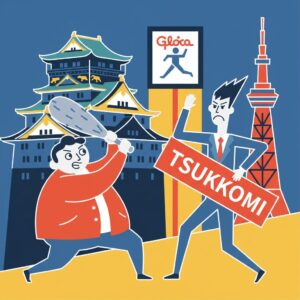
An Osaka snack bar is quite the opposite. It acts as a release valve, a space to drop the day’s formalities. Business rarely comes up. Instead, people chat about baseball (go Hanshin Tigers!), the latest ridiculous news story, this year’s bonito quality, or good-naturedly tease the person who just butchered a classic enka tune. The iconic Osaka comedic interplay of boke (the silly fool) and tsukkomi (the quick-witted straight man) shines here. People talk over one another, laugh heartily, and communicate with the candidness of old friends. It’s less about impressing others and more about truly connecting.
The Language of the Heart: Kansai-ben and Osekkai
This environment is the natural setting for the Kansai dialect. The direct, expressive, and occasionally blunt tone of Kansai-ben flourishes in the cozy space of a snack bar. It’s a language designed to bridge gaps between people. Here, the strict divide between one’s public facade (tatemae) and genuine feelings (honne) fades away. People speak their minds, often laced with humor.
This openness also ties into one of Osaka’s most misunderstood cultural traits: osekkai. Though often translated as “nosy” or “meddlesome,” that misses the essence. Osekkai is a form of caring intrusion. It’s about caring enough to get involved in someone’s life. In a snack bar, this attitude is standard. The Mama-san and regulars will ask personal questions: Where are you from? What do you do? Are you married? Why not? They’re not prying—they’re trying to understand you, find common ground, and place you within their community. For foreigners accustomed to Western privacy norms, it might feel intrusive. But if you relax and respond with a smile, what seems like nosiness is actually an open door. They’re showing that they see you and care enough to ask.
Navigating Your First Snack Bar: A Practical Guide for the Brave
Reading about snack bars is one thing; actually stepping through that door is quite another. It can be intimidating, even for many Japanese people. However, with the right approach, it can become one of the most rewarding experiences you’ll have in the city. Here’s how to navigate your first venture.
The Golden Ticket: Go with a Regular
The easiest and most effective way to enter the world of snack bars is by being invited by a regular. This is like having a VIP pass socially. Your friend’s presence vouches for you, signaling to the Mama-san and other patrons that you’re trustworthy, understand the atmosphere, and won’t disrupt the delicate balance of the bar. Any initial awkwardness quickly disappears. You’ll be properly introduced, and the community will welcome you warmly. If you make a Japanese friend at work or in your neighborhood who mentions their favorite snack bar, dropping a hint that you’d love to visit someday might just earn you that golden ticket.
The Solo Mission: Etiquette for the Adventurous
If you don’t have a guide, going alone is possible but requires courage and cultural sensitivity. Here’s a step-by-step guide for a solo outing.
Choosing Your Target
Don’t just choose any random door. Some bars are genuinely private, almost like secret clubs. Look for small signs indicating openness to newcomers. Is there a price list displayed outside? That’s a good sign. Can you hear laughter and singing from the street? That suggests a lively, welcoming atmosphere. It’s usually better to pick a place in a busier area, such as the backstreets of Tenma or Kyobashi, rather than a quiet residential neighborhood where the same clientele have been coming for decades.
The Approach
Take a deep breath. Open the door just slightly, peek in, and make eye contact with the Mama-san. Politely ask, “Hitori nandesu kedo, ii desu ka?” (I’m alone; is it okay to come in?). Her response will reveal a lot. She might warmly invite you in, or she could kindly say that the place is full (manseki) or reserved (kashikiri), even if it appears empty. Don’t take it personally. She may feel her English isn’t sufficient to host you properly, or she might be preserving a specific quiet ambiance that night. Just smile, thank her, and try another venue.
Inside the Sanctum
If you’re welcomed, the Mama-san will guide you to a seat, usually at the counter. This is prime seating, putting you at the heart of the action and allowing direct conversation with her. She’ll likely begin by asking what you’d like to drink. Avoid complicated cocktails. Stick to basics: beer, highball, or if you feel confident, ask for a recommendation for shochu or whisky mizu-wari.
The key is to be open and engaging. Put your phone away. Chat with the Mama-san. Compliment the bar, the music, the otoshi. When regulars talk to you, respond with a smile. They’re assessing you, but also trying to draw you into the fun.
The Sacred Rite: Karaoke
At some point, you’ll be encouraged to sing. This is not a suggestion but a social obligation. Refusing is seen as poor sportsmanship. Nobody expects you to have a good voice; they just want you to participate. It’s a fundamental act of vulnerability that unites everyone. Have a couple of favorite English songs ready. The Beatles, Queen, Frank Sinatra’s “My Way,” or John Denver’s “Country Roads” are always crowd-pleasers. When you sing, give it your all. When others sing, clap, cheer, and raise your glass, especially if their performance is off-key. The karaoke machine isn’t a stage for talent; it’s a tool for connection.
Clearing the Air: Common Foreigner Misconceptions
The unique nature of snack bars often leads to a great deal of confusion. These misunderstandings can stop people from ever experiencing this delightful aspect of Japanese culture. Let’s clarify a few points.
Misconception 1: “It’s a type of hostess bar.”
This is perhaps the most significant and harmful misconception. A neighborhood snack bar is definitely not a kyabakura or hostess bar. In a hostess bar, you pay for the time and flirtatious attention of a young female employee. The dynamic there is purely commercial. In contrast, at a snack bar, the Mama-san is the owner and proprietor—she is in charge. You are a guest in her establishment. The relationship is built on mutual respect and community, not a transaction for female companionship. While she is a warm and engaging host, her role is that of a matriarch, not a paid flirt. Confusing the two is a serious cultural mistake.
Misconception 2: “They are hostile to foreigners.”
Snack bars are not anti-foreigner; they are pro-regulars. The reluctance to welcome a stranger—Japanese or not—stems from a desire to protect the comfortable atmosphere—the wa or harmony—that the Mama-san and her regulars have nurtured over the years. A newcomer who doesn’t understand the unspoken rules can easily disrupt this balance. The Mama-san’s greatest fear is often not about you personally, but her inability to make you feel at ease due to language barriers, or concerns that the direct questions and teasing from regulars might offend you. The barrier isn’t hostility; it’s a high wall of context. Once you demonstrate understanding and respect for the environment, that wall comes down surprisingly quickly.
Misconception 3: “It’s just a dive bar for old-fashioned karaoke.”
Focusing solely on karaoke is like describing a family dinner by only mentioning the brand of salt used. Yes, there is singing. Yes, the decor might be outdated. But the heart of the snack bar is deeply modern: it serves as a remedy for loneliness. In an increasingly fragmented and digital world, the snack bar offers a real, physical space for multi-generational human connection. It functions as a support network, a place for gossip, celebration, and mourning. Karaoke is not the main attraction; it’s simply the reason everyone lowers their guard and shares a moment together. It’s the campfire around which the tribe gathers.
Your Home Away From Home
In the vast, impersonal cityscape of modern Osaka, the neighborhood snack bar stands as a proud symbol of community. It serves as a stronghold of face-to-face connection, where your worth isn’t measured by your job title or social media followers, but by your openness to share a drink, a story, and a song. It offers a window into an older, more personal Japan that is gradually disappearing, yet fiercely preserved within these small, treasured spaces.
Stepping through that frosted-glass door takes courage. It asks you to be vulnerable, to embrace a different way of socializing, and to accept feeling a bit awkward initially. But the payoff for that bravery is immense. It’s the opportunity to experience the authentic Osaka, not the version marketed to tourists, but the one lived by its residents night after night. Discovering “your” snack bar, with a Mama-san who knows your name and a bottle reserved just for you on the shelf, is a deeply meaningful moment. It’s when you stop being merely a resident of Osaka and begin to truly feel at home.