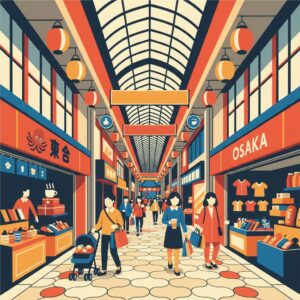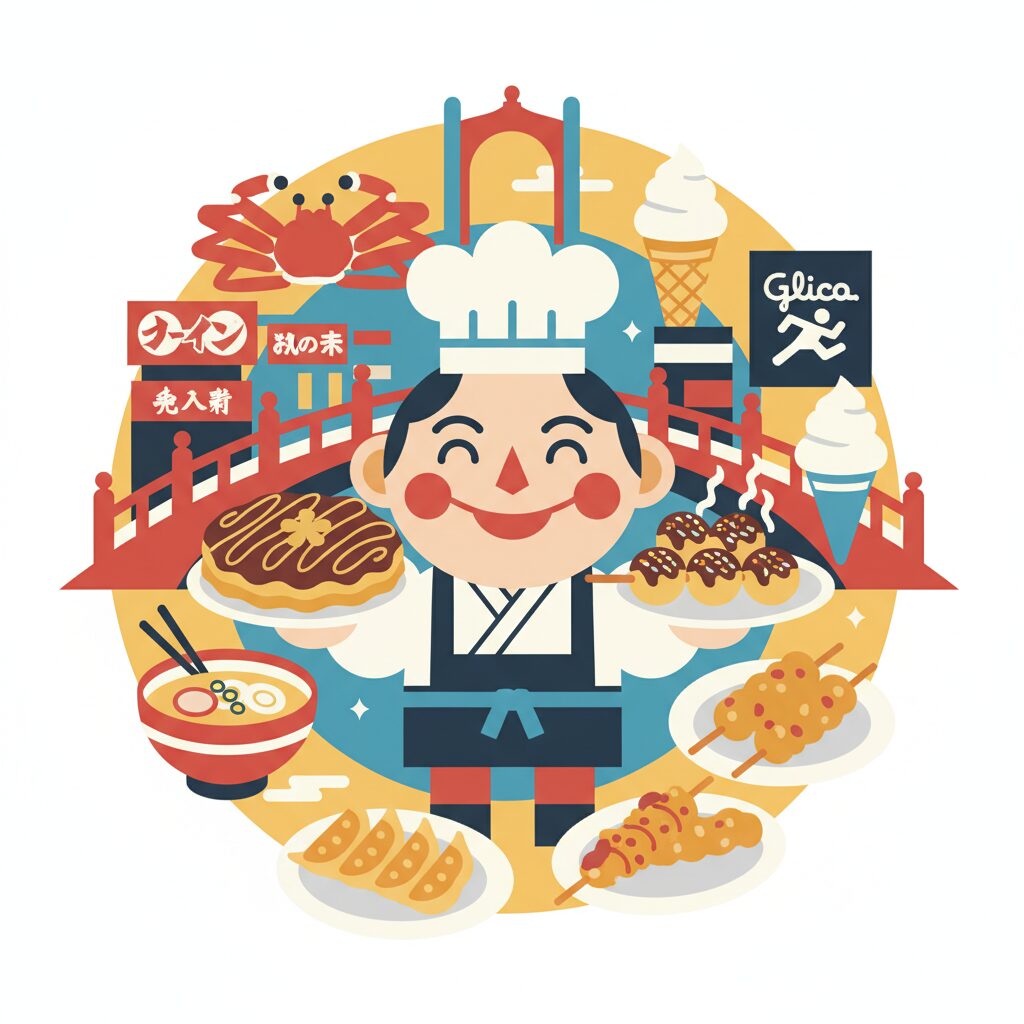
When you first hear the word ‘Kuidaore’, it paints a vivid, almost cartoonish picture. The term, famously slapped onto Osaka like a brand name, translates to ‘eat till you drop’ or, more accurately, ‘to ruin oneself by extravagance in food’. For the tourist, this means a frantic, food-fueled marathon through the neon-drenched streets of Dotonbori. It’s a challenge: how many takoyaki balls, okonomiyaki pancakes, and kushi-katsu skewers can you conquer before your stomach, or your wallet, waves a white flag? But live here long enough, and you start to see the cracks in that glossy, marketable facade. You realize that for the people of Osaka, Kuidaore isn’t a challenge. It’s a philosophy. It’s not about gluttony; it’s about value. It’s not about quantity; it’s about a deeply ingrained economic and social calculus that dictates the rhythm of daily life. As a curator who moved here from the more reserved, image-conscious corridors of Tokyo, decoding this philosophy was like learning a new language—one spoken not with words, but with sizzling griddles, clinking beer mugs, and the communal joy of a perfectly executed, unbelievably cheap meal. This isn’t a guide to the best eats. This is a look under the hood of Osaka’s engine, powered by flour, cabbage, and a relentless pursuit of a good deal.
Immerse yourself in Osaka’s vibrant daily rhythm and discover how even subtle social practices like the after-work tachinomi ritual embody a delicate balance between indulgence and community values.
The Gospel of ‘Kosupa’: Deconstructing Osaka’s Economic Appetite
To truly understand Osaka, you must first grasp the holy trinity of its culinary creed: `umai, yasui, hayai` (delicious, cheap, fast). Yet even this trio is overshadowed by the ultimate god of Osaka dining: `kosupa`. A borrowed term, short for ‘cost performance,’ it stands as the single most crucial measure by which any meal, and by extension any establishment, is evaluated. In Tokyo, conversations about restaurants often revolve around Michelin stars, the chef’s background, or the exclusivity of the reservation list, all wrapped in an air of prestige. In Osaka, however, the discussion is a lively, open debate focused on value. A meal isn’t just ‘good’; it’s ‘good for the price.’ That distinction makes all the difference.
This isn’t about being frugal; it’s about being wise. An Osakan will willingly spend a hefty amount on a meal, but that meal must provide an experience, quality, and portion size that feels like a win. They are not mere consumers; they are savvy investors whose currency is the yen in their pocket. A 1,500 yen lunch that feels like it should cost 3,000 yen is a success. A 10,000 yen dinner that feels exactly worth 10,000 yen might be seen as a failure—or at least a missed chance. The pleasure lies in the gap between the price paid and the value gained. This is the core of Kuidaore. It’s not about eating until you’re stuffed; it’s about finding such a good deal that you feel you could feast endlessly without financial strain.
The Daily ‘Kosupa’ Ritual
This outlook is on display every day throughout the city. Observe the salarymen at noon in business hubs like Honmachi or Yodoyabashi. They don’t wander aimlessly but head straight for lunch sets offering an almost absurd amount of food for less than 1,000 yen. Think of a main dish, rice, miso soup, a small side of pickles, and maybe some salad or tofu. Quality never suffers—the fish is fresh, the tonkatsu crispy. The competition among restaurants for these lunch crowds is so intense that `kosupa` turns into an arms race. A restaurant that raises its 850 yen lunch to 900 yen without adding an extra piece of karaage risks immediate desertion.
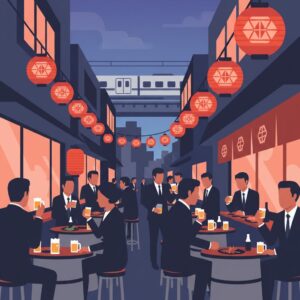
Then there’s the after-work scene. Tokyo has its izakayas, but Osaka perfects the art of the `senbero`—a blend of `sen` (1,000) and `berobero` (drunk). The deal is simple: get mildly intoxicated and enjoy a few snacks for just 1,000 yen. This is possible thanks to the rise of `tachinomi` (standing bars). Freed from seating costs, these spots offer unbeatable value. Around stainless steel counters, you’ll see a diverse mix of Osaka life: construction workers next to office staff, young couples alongside weathered veterans. They all gather for the same reason: a 300 yen beer, a 150 yen skewer, and the quiet satisfaction of a great bargain. It’s a practical, egalitarian style of socializing that contrasts sharply with the more expensive, formal drinking scene found in Tokyo’s Ginza or Marunouchi.
More Than a Meal: Food as Osaka’s Social Language
In Osaka, food serves as the primary means of communication. It acts as the social glue, the lubricant of business, and the bond within families. The phrase, “`Moh karimakka?`” (Making a profit?), a traditional greeting among Osaka merchants, is often quickly followed by “`Meshi kutteru ka?`” (Are you eating?). This is a sincere check-in, a way to ask if business is thriving enough to provide a full meal. Health and prosperity are judged by the ability to eat well. This link between food and life is far more tangible here than in other regions of Japan.
When closing a business deal, it’s more likely to be sealed over the sizzling grill of an okonomiyaki restaurant than in the quiet, tatami-matted room of an upscale `ryotei`. Sharing a meal you cook together—passing the spatula, debating the right moment to flip the pancake, squeezing on the mayonnaise—breaks down barriers. It’s messy, interactive, and loud. This collaborative performance reflects the desired outcome of the business. Formality is often viewed as a hindrance to honesty, and nothing says ‘let’s be honest’ quite like sharing a dish that costs less than a taxi ride across town.
The ‘Takopa’ and the Neighborhood Hub
The best example of this social dynamic is the `takopa`, or takoyaki party. While tourists queue for 30 minutes to get eight octopus balls from a famous street vendor, the real action happens inside people’s homes. Nearly every household in Osaka owns a takoyaki griddle—it’s as common as a rice cooker. A `takopa` is the go-to gathering for any casual social occasion: making new friends, celebrating a child’s birthday, or simply spending a lazy Sunday. The host provides the batter and basic ingredients, while guests bring the fillings—not just octopus, but also cheese, kimchi, sausage, and mochi. Everyone crowds around the hot plate, flipping the batter-filled spheres expertly (or clumsily) with a wooden pick. It’s an activity, not just a meal. It reveals personalities: who is patient, who is perfectionistic, who tends to burn everything. It’s an affordable, rewarding social event that perfectly captures the city’s spirit: resourceful, communal, and unpretentious.
This spirit extends to the neighborhood level. The local takoyaki stand or corner okonomiyaki shop often serves as the unofficial community center. It’s where you catch up on gossip, where kids grab an after-school snack, and where the owner knows everyone by name. These small, family-run shops are the lifeblood of the city’s social fabric. They cultivate a sense of belonging and place that can be missing in the more anonymous, transient neighborhoods of Tokyo. In Osaka, you don’t just live in a district; you belong to the ecosystem of shops and eateries that define it.
‘Konamon’ and the Fierce Pride of the Floury Soul
To truly understand the Osaka mindset, you need to grasp their connection with `konamon`, or flour-based foods. This isn’t just a type of cuisine; it’s a fundamental part of their cultural identity. We’re referring to takoyaki, okonomiyaki, and negiyaki. To outsiders, these might appear as simple, rustic dishes of peasant origin. To Osakans, however, they represent an art form, a fierce source of regional pride, and a topic of endless debate. The key ingredient—flour—reflects Osaka’s history as a merchant city, known as the ‘nation’s kitchen’, where staple goods like flour and rice were collected and distributed. `Konamon` is the clever, delicious outcome of utilizing cheap and abundant ingredients to their fullest.
This pride is evident in several ways. First, there is an obsession with technique. Watch a takoyaki vendor at work— it’s a captivating display of speed and precision, a seamless dance of wrist flicks transforming liquid batter into perfect golden spheres. It’s a craft perfected over decades. Second, there’s intense regional loyalty. An Osakan will fiercely defend their city’s okonomiyaki over the Hiroshima-style version (which layers ingredients and includes noodles) with the same passion as a sports fan backing their home team. It’s not just about flavor; it’s about identity. The Osaka style of mixing all ingredients into the batter is viewed as more soulful, communal, and authentic.
The Okonomiyaki Divide: A Reflection of a Mindset
The okonomiyaki debate offers a revealing glimpse into the Osaka psyche. The name itself means ‘grilled as you like it’, but this freedom is accompanied by a set of deeply held, unwritten rules. There are passionate discussions about the perfect cabbage-to-batter ratio, the necessity of `yamaimo` (mountain yam) for fluffiness, and the correct sequence of condiments. This culture does not accept a single, top-down definition of ‘correct’. Instead, everyone has their own ‘correct’ method—their family’s way, their favorite local shop’s way—and they are eager and vocal about why theirs is best. This is Osaka in a nutshell: a city of proud individuals who value personal judgment and experience over established authority. It’s a confidence that can sometimes be seen as boldness but is grounded in a deep belief in practical, hands-on knowledge. They trust what they can taste, touch, and verify for themselves, whether it’s the fluffiness of a pancake or the merit of a business deal.
The Counter Offensive: Why Dining is a Dialogue
One of the most significant cultural changes for anyone relocating from another region of Japan, especially Tokyo, is the interactive style of dining in Osaka. In many Tokyo dining spots, a quiet respect prevails. The chef acts as an artist behind a stage, with the customer as the audience. Interaction typically consists of a polite order and a quiet thank you. In Osaka, the counter is not a divider; it serves as a bridge. Sitting at a counter in an izakaya, sushi bar, or oden stall invites conversation.
The Role of the ‘Taisho’
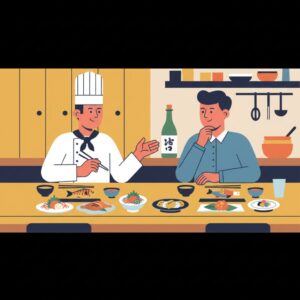
The `taisho` (master/chef) is more than just a cook; they are the host, entertainer, and conductor of the evening’s social symphony. They’ll ask where you’re from, what you do, and what you’d like to eat. They offer recommendations, tell jokes, and encourage conversations among strangers seated nearby. This is not considered an intrusion but part of the service. You pay not only for food but for an experience. A skilled `taisho` can make a solo diner feel like they’re out with friends. This performance is a vital element of the `kosupa` value. The meal gains value through human connection and entertainment. This sharply contrasts with the often anonymous, highly efficient service culture elsewhere, where efficiency is balanced with personality.
Your Role as the Customer
As a customer, you are expected to engage. Being a passive diner can be seen as almost rude. You should ask questions like, “`Taisho, o-susume wa nan desu ka?`” (Chef, what do you recommend?). Express your enjoyment openly. An “`Umai!`” (Delicious!) echoing through the restaurant is the highest praise. This enthusiastic feedback loop fuels the energy of Osaka’s top dining spots. Foreigners accustomed to more reserved dining etiquette may sometimes misunderstand this. They might find the chef’s questions too personal or the atmosphere too lively. But to blend into Osaka’s everyday life, you need to let go of that reserve. You must be ready to engage, laugh with strangers, and become part of the performance. This is perhaps the most genuine expression of the “friendly” Osaka stereotype. It’s not a vague, abstract warmth; it’s a clear, tangible expectation of social participation, most often experienced over a shared meal.
Beyond the Neon River: Locating Authentic ‘Kuidaore’
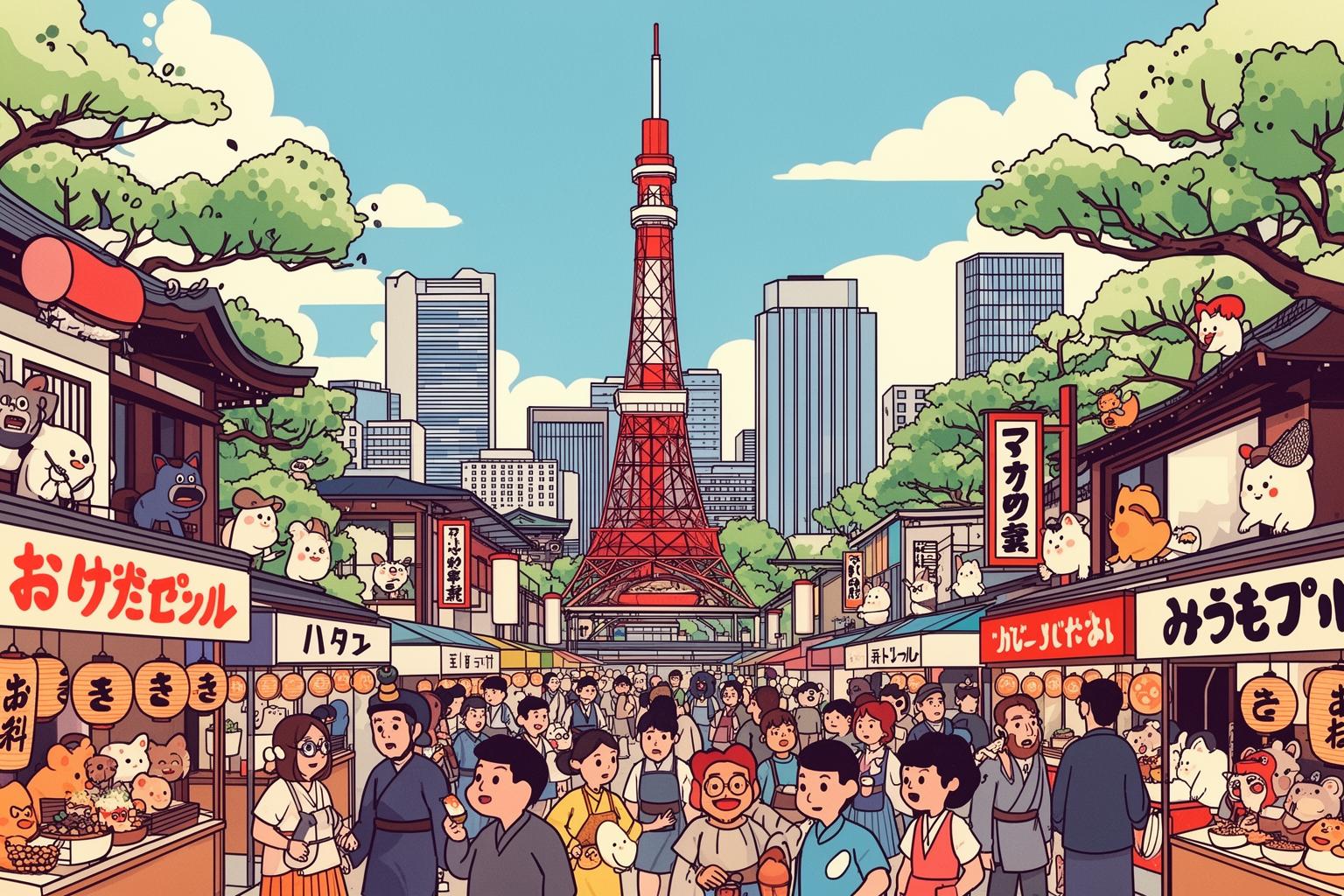
The image of Kuidaore presented to the world is Dotonbori: the giant mechanical crab, the Glico Running Man, and the endless lines for famous street food stalls. While Dotonbori is undeniably a spectacle, it represents Osaka’s food scene much like Times Square represents New York—it’s the showcase, not the soul. Locals seldom eat there unless they’re entertaining out-of-town guests. The lines are too long, prices are somewhat inflated, and the atmosphere feels manufactured. Genuine Kuidaore is found in the city’s lifeblood, in the neighborhoods where people live, work, and drink.
Where the Locals Go
Tenma: Just north of Osaka Station, Tenma is a sprawling, lively maze of food and drink. It features one of Japan’s longest `shotengai` (covered shopping arcades), but the real charm lies in the lantern-lit side alleys. Here, you’ll discover an impressive concentration of tiny izakayas, standing bars, and specialty restaurants packed into every available space. The vibe is electric, noisy, and energized by incredible `kosupa`. You can bar-hop for hours, enjoying small dishes and drinks at each stop, and still spend less than on a single mediocre meal in a tourist spot.
Ura Namba: Literally ‘behind Namba’, this network of backstreets offers a slightly more modern, trendy take on classic Osaka dining. Creative Italian standing bars sit alongside traditional yakitori places and stylish sake bars. It’s where a younger generation of chefs innovate while respecting the `kosupa` philosophy. The atmosphere is vibrant and contemporary, yet fundamentally Osakan in its lack of pretension.
Shinsekai: Often described as gritty and frozen in time, Shinsekai (New World) is the spiritual home of `kushi-katsu` (deep-fried skewers). With Tsutenkaku Tower looming overhead, the area exudes a nostalgic, slightly melancholic charm. The rules are simple and strictly enforced: no double-dipping your skewer into the communal sauce pot. It’s affordable, quick, and unapologetically old-school. Dining here feels like a direct link to Osaka’s post-war history.
Tsuruhashi: Known for its large, long-standing Korean community, Tsuruhashi is an intoxicating sensory experience. The air is thick with the aroma of grilling meat from numerous `yakiniku` restaurants. Market stalls overflow with kimchi, spices, and Korean delicacies. This is where you find some of the best and most authentic Korean barbecue in Japan, often at prices that would be unimaginable in Tokyo.
Exploring these neighborhoods reveals the true diversity of Kuidaore. It’s not just about takoyaki and okonomiyaki; it’s about a city that has absorbed and perfected culinary traditions from around the world while filtering them through its steadfast values of value and community.
The Unspoken Truth of ‘Kuidaore’
So, what does Kuidaore genuinely signify for someone living in Osaka? It means food is never merely fuel. It’s a perspective through which you see the world. It serves as a means to build relationships, a standard for assessing value, and a bold, proud expression of cultural identity. It means embracing the idea that a business meeting might take place amid clouds of barbecue smoke—and that’s a positive thing. It means becoming an engaged participant in your dining experience, not just a passive observer. It means recognizing that the best meal in the city isn’t the one with the highest ratings, but the one that brings the greatest joy for the yen spent.
The tourist’s version of Kuidaore is a quick dash. The local’s version is a marathon, deeply woven into daily life. It’s the 700-yen lunch set that helps you survive a tough Tuesday. It’s the spontaneous `takopa` that turns neighbors into friends. It’s the shared laughter with a stranger at a bustling `tachinomi`. Ultimately, it’s a philosophy combining pragmatism and pleasure. In Osaka, a city built by merchants, the greatest luxury is not extravagance but value. And the finest art is not found in silent galleries but in the simple, profound, and delicious act of sharing an affordably priced meal.