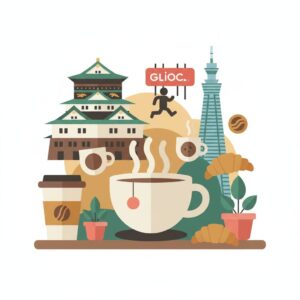
The morning rush in Osaka has a rhythm all its own. It’s a symphony of rattling train doors, the rhythmic tap of leather shoes on pavement, and the cheerful, digitized jingles of convenience store entrances. For the uninitiated, the answer to breakfast seems obvious, shouted from the glowing signs of every FamilyMart, 7-Eleven, and Lawson: a quick onigiri, a plastic-wrapped sandwich, a bottle of cold green tea. It’s efficient, it’s clean, it’s the epitome of modern Japanese convenience. But if you pause for a moment, somewhere between the station and the office, you’ll notice a different current in the morning flow. You’ll see people—sharp-suited salarymen, elderly women with shopping carts, young students with messy hair—bypass the bright, sterile conbini and slip through a darkened doorway, often marked by a faded sign and a swirling, illuminated coffee cup. They’re disappearing into the past, into the warm, smoky embrace of a kissaten, Osaka’s traditional coffee shop. And they’re not just going for coffee. They’re going for “Morning,” a cultural institution that says more about the soul of this city than any skyscraper or famous takoyaki stand ever could. To understand Osaka, you have to understand why, for so many, the day doesn’t truly begin until they’ve sat in a velvet booth, cracked a hard-boiled egg, and taken a sip of dark, bitter coffee in a place where time seems to have stopped around 1975. This isn’t a guide to the best brunch spots. This is an invitation to experience the city’s living room, a deep dive into the pragmatic, community-driven, and wonderfully stubborn heart of Osaka, all for the price of a single cup of coffee.
To fully appreciate the city’s unique daily rhythms, from its morning kissaten to its evening tachinomi, consider exploring another facet of its urban flow by learning about Osaka’s unique bicycle etiquette.
The Anatomy of “Morning Service”: More Than Just a Meal
The concept of “Morning Service,” or mōningu sābisu as charmingly Japanized English calls it, is the foundation of the kissaten experience. On the surface, it’s a simple breakfast special—a straightforward transaction. But in Osaka, it transforms into an art form, a philosophy, and a daily ritual that reflects the city’s fundamental values. It stands in stark contrast to the grab-and-go culture common in modern urban life. This isn’t about rushing to refuel; it’s about beginning the day with value, comfort, and a quiet sense of community. To dismiss it as merely a cheap meal misses the entire point. It’s a cultural package, a perfectly preserved time capsule served on a small plastic tray, with every element telling a story about the city and its people.
The Unbeatable Value Proposition: The “Coffee with Benefits” Mentality
Let’s break down the essence of Morning Service, which is grounded in a distinctly Osakan principle. You enter a kissaten between, say, 7 AM and 11 AM and order a single cup of coffee, typically a burēndo kōhī (house blend), priced around 400 to 550 yen. For that amount, you get the coffee plus a complimentary breakfast. The classic set—the holy trinity of morning—includes a thick slice of toasted bread, a hard-boiled egg, and sometimes a small, simple salad. This isn’t an upsell or a special offer; it’s the standard. The breakfast is an inherent part of the coffee. You’re not buying breakfast alone; you’re purchasing coffee that comes with the added benefit of breakfast.
This idea is deeply tied to the Osaka mindset, especially the concept of otoku. While often translated as “a good deal” or “value,” it holds a deeper meaning: a sense of satisfaction from getting more than you paid for, making a savvy, smart choice. It’s the opposite of feeling cheated. Osakans willingly spend on quality but detest paying for unnecessary extras. To pay 500 yen for only a cup of coffee at a global chain—no matter how stylish the cup or comfortable the chair—feels like poor value to many locals. Why would anyone do that when, for the same price, you can enjoy coffee and a meal nearby? This mindset isn’t about being kechi (stingy) in a negative sense; it’s about economic practicality. It’s the recognition that the core product—the caffeine—can and should come with additional benefits. This merchant city’s heritage, built on shrewd trade and securing the best bargains, remains alive in every kissaten offering Morning Service. It stands as a daily reminder of financial wisdom and the quiet pleasure of a well-made deal.
The Holy Trinity: Toast, Egg, and Coffee
Though the Morning Service components might appear ordinary, their specificity is crucial to understanding the culture. It’s not an American-style diner breakfast with a vast menu, nor a European continental buffet. Instead, it’s a standardized, perfected, and deeply comforting trio that hasn’t changed much over decades. Each element plays a vital role, coming together to form a balanced meal that satisfies both nutritional and emotional needs.
The Toast (トースト)
This isn’t just any slice of bread. The toast in an Osaka kissaten is almost always a thick-cut slice of Japanese milk bread, known as shokupan. Often, it’s yamagata shokupan, or “mountain-shaped bread,” characterized by its fluffy, rounded top. The slice easily measures an inch thick or more. It’s toasted to a perfect golden-brown outside, with a soft, fluffy, and slightly sweet interior. The texture is sublime—a crisp crust giving way to a cloud-like inside. The toast usually arrives pre-buttered (or more commonly spread with margarine, evoking Showa-era nostalgia), often cut into halves or quarters for ease of eating. Occasionally, you might receive a small packet of strawberry jam or a pot of ogura (sweet red bean paste) on the side. This isn’t artisanal sourdough or rustic whole wheat; it’s simple, white, and unapologetically comforting. The thickness expresses generosity—this is no meager portion but a substantial slice meant to fill you. It’s the carbohydrate cornerstone of the morning, a warm and dependable start that feels both indulgent and straightforward.
The Boiled Egg (ゆで卵)
The boiled egg, or yude tamago, is the second cornerstone of Morning Service. Almost always hard-boiled, it’s served unpeeled on a small dish or right beside the toast. It may be warm, just taken from the pot, or at room temperature after being cooked in batches earlier that day. The peeling is part of the ritual: you gently tap it on the table or plate edge, the sharp crack echoing quietly, then peel away the shell to reveal a smooth white orb. A small, elegant glass salt shaker is always available to season to taste. The egg is pure, simple protein—no hollandaise, no fancy herbs. It’s fuel in its most basic form. By including the egg, the toast and coffee are elevated from a light snack to a balanced meal, offering sustenance that carries you through to lunchtime without hunger. The humble boiled egg is the embodiment of straightforward, functional nourishment.
The Coffee (コーヒー)
Last but central is the coffee itself. If you’re used to the bright, acidic, fruity notes common in third-wave specialty coffee, the kissaten brew may come as a surprise. This coffee belongs to another era. Typically dark roasted, it’s brewed to be strong, robust, and low in acidity, with flavor notes often chocolatey, nutty, and unapologetically bitter. The brewing process contributes to the magic. Many kissaten masters are skilled artisans of the siphon method, using glass globes, open flames, and vapor pressure principles in a theatrical ritual. Others employ the meticulous nel drip method, slowly pouring hot water over grounds placed in a cloth filter. The result is a cup of coffee that’s smooth and full-bodied, meant to be savored slowly. Served in a thick, pre-warmed porcelain cup instead of a disposable one, it usually comes with a small pitcher of cream (not milk) and a bowl of sugar cubes. This coffee is not intended as a delicate, nuanced tasting experience; it’s a powerful, traditional, and deeply satisfying brew—a warm, dark embrace in a mug that perfectly complements the sweetness of the toast and the simple savoriness of the egg.
The Kissaten as a “Third Place”: Osaka’s Living Room
While the value proposition of Morning Service draws people in, it’s the atmosphere that keeps them coming back. A kissaten is much more than simply a place to eat and drink. Sociologically, it represents a quintessential “third place”—an environment distinct from the two primary social spheres of home (the first place) and work (the second place). Yet in Osaka, it often feels even more personal, like an extension of one’s home. It serves as the city’s communal living room, a refuge from the relentless pace of urban life where the rules differ and time appears to slow. The unique aesthetic, regular patrons, and the very soundscape of the kissaten combine to create an ambiance of unmatched comfort and steadiness.
Where Time Stands Still: The Showa Era Aesthetic
Entering a traditional Osaka kissaten is akin to stepping into a time machine set to the Showa period (1926-1989), especially the post-war boom decades from the 1950s through the 1970s. This aesthetic is not “retro-inspired”; it is genuinely, steadfastly, and beautifully preserved. Dark wood defines the interior: polished mahogany or walnut panels cover the walls, heavy wooden beams span the ceiling, and tables and chairs are crafted from the same solid wood. Seating typically consists not of individual chairs but plush, high-backed booths upholstered in worn velvet or cracked vinyl, usually in deep shades like burgundy, forest green, or mustard yellow. These booths form cozy private spaces, inviting you to sink in and feel sheltered from the outside world.
Lighting is consistently dim and warm, provided by ornate, slightly dusty chandeliers or table lamps with amber-hued shades. Natural light is often sparse, crafting a snug, den-like atmosphere that remains unchanged from morning till afternoon. The decor is a charming, eclectic mix: framed landscape paintings, vintage pendulum clocks, perhaps a small, murmuring water feature tucked into a corner, or shelves filled with mismatched porcelain cups. The air itself contributes—a layered, persistent scent of dark-roast coffee, caramelized sugar, and often the faint sweetness of stale cigarette smoke. This aesthetic is not a fashionable design choice but the product of decades without renovation, reflecting an Osaka mindset that prizes durability and authenticity over fleeting trends. In a world incessantly chasing the new, the kissaten stands as a tribute to the beauty of constancy, offering a profound sense of stability and permanence.
The “Master” and the Regulars: A Community Hub
Central to every great kissaten is the “Master” (マスター, masutā), the owner—often an elder dressed in a crisp shirt and apron—who has tended this small domain for thirty, forty, or even fifty years. The Master is not an overly cheerful barista but a figure of quiet dignity, moving with deliberate economy honed by decades of experience. They may not indulge in frequent small talk, but they observe everything: knowing regulars by name, recalling their usual orders, and intuitively refilling water glasses without prompts. The Master is the silent cornerstone of the community, the keeper of its spirit.
The clientele reflects a cross-section of the neighborhood’s heart. Mornings bring elderly men, “lifers” who have occupied their usual seats for decades, methodically reading the sports pages. Local business owners from the nearby shotengai (shopping arcade) gather for quick coffee and gossip before opening their shops. Salarymen in suits use the kissaten as a personal buffer, a quiet corner to smoke and mentally prepare before entering the corporate rush. Unspoken rules prevail: lingering is welcomed. No one rushes you out even long after your single cup has cooled. Reading for hours or sitting in quiet reflection is entirely acceptable. It’s a space of minimal social pressure. For many—particularly older residents who may live alone—the kissaten acts as a crucial social lifeline. Brief daily exchanges with the Master and the familiar presence of other regulars foster a deep sense of belonging and connection. Osaka’s “friendliness” is not always loud or boisterous; sometimes, it manifests as the quiet, shared understanding among a room full of strangers choosing to be alone together.
The Soundscape of the Osaka Morning
Close your eyes inside a kissaten and simply listen. The soundscape is as integral to the experience as the coffee itself. It offers a gentle, analog symphony that contrasts sharply with the digital beeps and high-energy pop tunes saturating modern cafes. The dominant sounds are the soft clinking of thick porcelain cups and saucers, and the delicate scrape of metal spoons against ceramic. You’ll hear the quiet rustle of newspaper pages turning—a sound increasingly rare in the digital era. Murmurs of conversation flow steadily but quietly, almost always in the melodic cadence of the local Osaka dialect, Osaka-ben. From behind the counter comes the gentle hiss and gurgle of the siphon brewer, both scientific and almost magical. The door’s bell, a simple mechanical ting-a-ling, signals each new guest. Background music tends toward instrumental pieces—soft classical or mournful old jazz. This blend of sounds is deeply soothing, forming a predictable, stable, comforting auditory environment that invites you to slow down and disconnect from the city’s frantic energy outside. It’s the sound of a city collectively pausing for a quiet breath before the day begins in earnest.
Navigating the Culture: A Practical Guide for Residents
For a non-Japanese resident, the world of the kissaten can seem intimidating at first. The entrances may appear unwelcoming, the interiors dimly lit, and the absence of English menus a potential obstacle. However, overcoming that initial hesitation is one of the most rewarding steps you can take toward truly feeling at home in Osaka. Understanding the practicalities and etiquette of this unique culture will not only earn you a delicious and affordable breakfast but also open the door to a more authentic, neighborhood-level experience of the city.
Finding Your Spot: From Shotengai to Back Alleys
The first rule of finding a great kissaten is that they seldom appear in the most obvious places. You won’t find them on the main floors of gleaming shopping malls or occupying prime real estate at major intersections. Instead, they thrive in the city’s hidden corners. The best places to look are the sprawling covered shopping arcades, the shotengai, that wind through Osaka’s neighborhoods. For example, the Tenjinbashisuji Shotengai, the longest in Japan, is lined with them. Search down narrow side streets (yokocho), in the basements (chika) of old, somewhat rundown office buildings, or hidden away on the second floor above a noodle shop. Your visual cues are essential. Look for old-fashioned, hand-painted signs with elegant, slightly faded kanji. Look for a window display of wax or plastic food models (shokuhin sampuru), showcasing perfect replicas of Napolitan spaghetti, coffee floats, and the Morning Service set. And always watch for the iconic kissaten symbol: a small, illuminated, revolving sign featuring a steaming cup of coffee. These signs guide you to the city’s hidden treasures. Exploring neighborhoods like Nakazakicho, with its bohemian atmosphere, or the gritty, nostalgic streets of Shinsekai, will reveal countless options. The search for a good kissaten is itself a fantastic way to explore the authentic, lived-in parts of Osaka that tourists often overlook.
The Language Barrier and the Unspoken Etiquette
Don’t let your limited Japanese skills discourage you. The kissaten is one of the easiest culinary experiences to navigate. The morning menu is incredibly straightforward. The magic word is “Morning” (Mōningu). You can simply walk in, take a seat, and say “Mōningu, hitotsu” (One Morning, please). If you want coffee, “Hotto kōhī” (hot coffee) or even just “Hotto” will do. The Master has seen it all and will understand you perfectly. Pointing at the plastic food models in the window is also a perfectly acceptable and effective way to communicate.
One of the most important things to know is the smoking culture. Unlike modern cafes, which are almost universally non-smoking, many old-school kissaten still allow smoking throughout the establishment. For some, this is an immediate deal-breaker. For others, it is part of the authentic, unfiltered Showa-era atmosphere. When you enter, be prepared for a hazy air. There are no non-smoking sections. It is all or nothing. If you’re a non-smoker, you either learn to tolerate it for the sake of the experience or seek out the rare older kissaten that has voluntarily gone non-smoking.
When it’s time to pay, the process is also from another era. You don’t ask for the check at your table. The Master will have placed a small bill or slip on your table when serving you. When you’re ready to leave, take that slip to the cash register, which is almost always near the entrance. Payment is overwhelmingly cash-only. Don’t expect to use a credit card. This simple, trust-based system is efficient and adds to the old-world charm.
Why Your Osaka Friends Insist on Their “Usual” Place
If you live in Osaka long enough, you’ll notice that your local friends don’t just go to a kissaten; they go to their kissaten. They have a fierce and unwavering loyalty to one particular spot. They’ll insist on meeting you there, and they’ll talk about the Master as if they were family. This loyalty isn’t just about having the best coffee or the thickest toast. It’s about the relationship. Their kissaten is a place where they are known. It’s a stable anchor in a rapidly changing world. The Master knows how they take their coffee. They have a favorite seat. They have a history there.
This loyalty reflects a fundamental aspect of the Osaka character. This is a city built on relationships, not just transactions. People in Osaka tend to cultivate long-term connections with their local vendors—the butcher at the corner shop, the woman who runs the tofu store, the family that owns the neighborhood bathhouse. The kissaten is the social anchor of this ecosystem. Choosing to spend your 500 yen at your local kissaten instead of a multinational chain is a conscious act of community support. It’s a vote for the personal, the local, and the long-established over the anonymous, the corporate, and the trendy. This preference for deep-rooted connections over fleeting novelty is one of the most significant cultural contrasts you’ll notice between Osaka and the more trend-driven culture of Tokyo. To have a “usual” kissaten is to have put down roots, to be part of the neighborhood fabric.
Beyond Breakfast: The Kissaten’s Role in Osaka Life
The importance of the kissaten doesn’t cease once the Morning Service signs come down at 11 AM. These establishments operate all day, adapting their roles to suit the community’s needs as time passes. They remain a steady, dependable presence in the neighborhood, serving as a backdrop for a variety of daily activities, from business lunches to afternoon meetings. Appreciating their full role highlights how deeply embedded they are in the social and culinary life of the city.
The Lunchtime Shift: Teishoku and Naporitan
As morning fades into noon, the kissaten effortlessly shifts into a lunch venue. The menu broadens to feature a selection of classic yōshoku dishes—a category of Japanese cuisine comprised of Western-influenced foods adapted and popularized during the Meiji and Showa periods. This represents Japanese comfort food at its best. Among the most iconic lunch items at the kissaten is Naporitan spaghetti, a delightfully nostalgic dish featuring soft-cooked spaghetti pan-fried with onions, green peppers, and sausage or bacon, all coated in a sweet, tangy tomato ketchup-based sauce. It is far from authentic Italian pasta, which is exactly what makes it charming.
Other favorites include omurice (a fluffy omelet draped over fried rice, often adorned with a ketchup swirl), Japanese curry rice (karē raisu), and the classic mikkusu sando (mixed sandwich), an intricately assembled sandwich with fillings such as egg salad, ham, and cucumber on soft, crustless shokupan bread. These dishes are frequently served as a teishoku, or set meal, comprising the main dish, a small salad, and a drink. Much like the Morning Service, the lunch sets provide excellent value and a taste of straightforward, home-style cooking. At lunchtime, the kissaten becomes the go-to canteen for local office workers and shopkeepers seeking a filling, affordable, and familiar meal.
A Sanctuary from the Rush: The Afternoon Quiet
The afternoon is perhaps when the kissaten feels most peaceful. The lunchtime bustle fades away, and a calm stillness takes hold. This is a time for different routines. It’s when friends gather for a slow-paced chat, when salespeople pass time between appointments, and when couples enjoy quiet, private meetings. The kissaten offers a neutral, cozy, and discreet environment for these encounters. The high-backed booths provide a sense of privacy, making conversations feel less exposed than they would in a more open, modern café.
This is also the moment to enjoy classic kissaten sweets and beverages. The quintessential afternoon delight is the cream soda—a brilliantly artificial green melon soda crowned with a perfect scoop of vanilla ice cream and a maraschino cherry. It evokes childhood summers and pure, simple happiness. Another beloved choice is the coffee float, a straightforward glass of iced coffee topped with a scoop of ice cream. These drinks aren’t about complex flavors; they’re about nostalgia. They connect directly to a simpler era, offering a sweet, fizzy getaway from the complications of adult life. In the afternoon, the kissaten becomes a refuge, a place to recharge, contemplate, or simply watch the world go by from a safe, comfortable spot.
The Fading Glow?: The Future of Kissaten Culture
Despite its timeless charm and cultural importance, the traditional kissaten faces an uncertain future. Walking through Osaka’s neighborhoods reveals a slow, quiet disappearance. For every cherished coffee shop that has thrived for decades, another stands shuttered with a faded “closed” sign in the window. Modern influences, shifting tastes, and demographic changes pose significant threats to this beloved institution. Yet, even as the old generation wanes, there are hopeful signs of revival.
The Challenge from the Chains
The most apparent challenge stems from the widespread global and domestic coffee chains. Starbucks, Doutor, Tully’s Coffee, and others occupy nearly every major corner, offering products and environments tailored to modern preferences. They provide fast, free Wi-Fi—a must-have for students and remote workers—and are largely non-smoking, appealing to younger and health-conscious customers. Their menus are standardized, service is quick, and they offer bright, airy, and anonymous spaces requiring minimal social engagement.
Additionally, a demographic issue looms. The Masters of the classic kissaten are aging, many in their 70s or 80s, and their children, pursuing other careers, show little interest in inheriting the demanding, low-margin family business. When the Master retires, so often does the kissaten. Economic pressures add to the strain: competing with large corporations on price is nearly impossible, while rising ingredient and rent costs squeeze these small, independent shops. Ironically, the qualities that define a kissaten—its slow pace, resistance to change, and focus on a local clientele—can also make it vulnerable in today’s fast-paced, globalized economy.
A Glimmer of Hope: The Neo-Kissaten and Retro Revival
Nonetheless, the kissaten spirit remains remarkably resilient. A new generation, raised amid the sterile uniformity of chain cafes, is beginning to appreciate the unique charm and authenticity of the Showa-era aesthetic. This “retro boom” has sparked renewed interest in the design, food, and atmosphere of traditional coffee shops, giving rise to the “neo-kissaten.”
These new establishments, often launched by younger entrepreneurs, consciously emulate the classic kissaten model with modern touches. They might showcase elegant siphon coffee makers and serve perfect Naporitan and cream sodas in strictly non-smoking settings. They often use high-quality, single-origin coffee beans. Their interiors are curated, Instagram-friendly takes on the Showa look—designed to feel authentically old without actually being old. While some purists might scoff, neo-kissaten play a vital role in preserving the culture. They introduce the rituals and flavors of the kissaten to new audiences, helping ensure that the legacy survives.
For now, the original, authentic kissaten endures. It remains the living room for many Osaka neighborhoods, embodying values like community, value, and consistency. Though its ornate lamps’ glow may be dimming in parts of the city, its warmth can still be found by those willing to seek it out.
Choosing the kissaten over the conbini for your morning meal is a deliberate choice. It means engaging in a local economy and community ritual rather than passively consuming a standardized product. It’s a preference for slow and steady over fast and fleeting. A morning in an Osaka kissaten is never just about the food—it’s a quiet, profound lesson in the city’s character: an immersion in pragmatism, the joy of a good deal, the comfort of tradition, and the deep, unspoken bonds of community. So next time you’re in Osaka, pass by the glowing convenience store, seek out the darkened doorway and spinning coffee cup sign, step inside, settle into a velvet booth, and order the Morning. You won’t simply be eating breakfast—you’ll be experiencing Osaka’s true, beating heart.