The laptop class, the digital nomads, the permanently remote—we all face the same modern purgatory. Your apartment walls start to close in. The silence is too loud, the distractions too near. You crave a third place, a sanctuary for focus that isn’t your own kitchen table. The globalized solution presents itself on every corner: a sterile, green-logoed coffee chain. It’s predictable, it’s packed, and you’re just another transaction in a long line of them. You’ll fight for a wobbly table, nurse a lukewarm latte for ninety minutes, and feel the silent pressure of a dozen other freelancers glaring at your power outlet. In Tokyo, this is often the beginning and end of the story. But this is Osaka, and Osaka does things differently. Here, the solution isn’t new, shiny, or optimized by a Silicon Valley algorithm. It’s old, it’s a little smoky, and it’s steeped in a history of commerce and community. It’s the Kissaten.
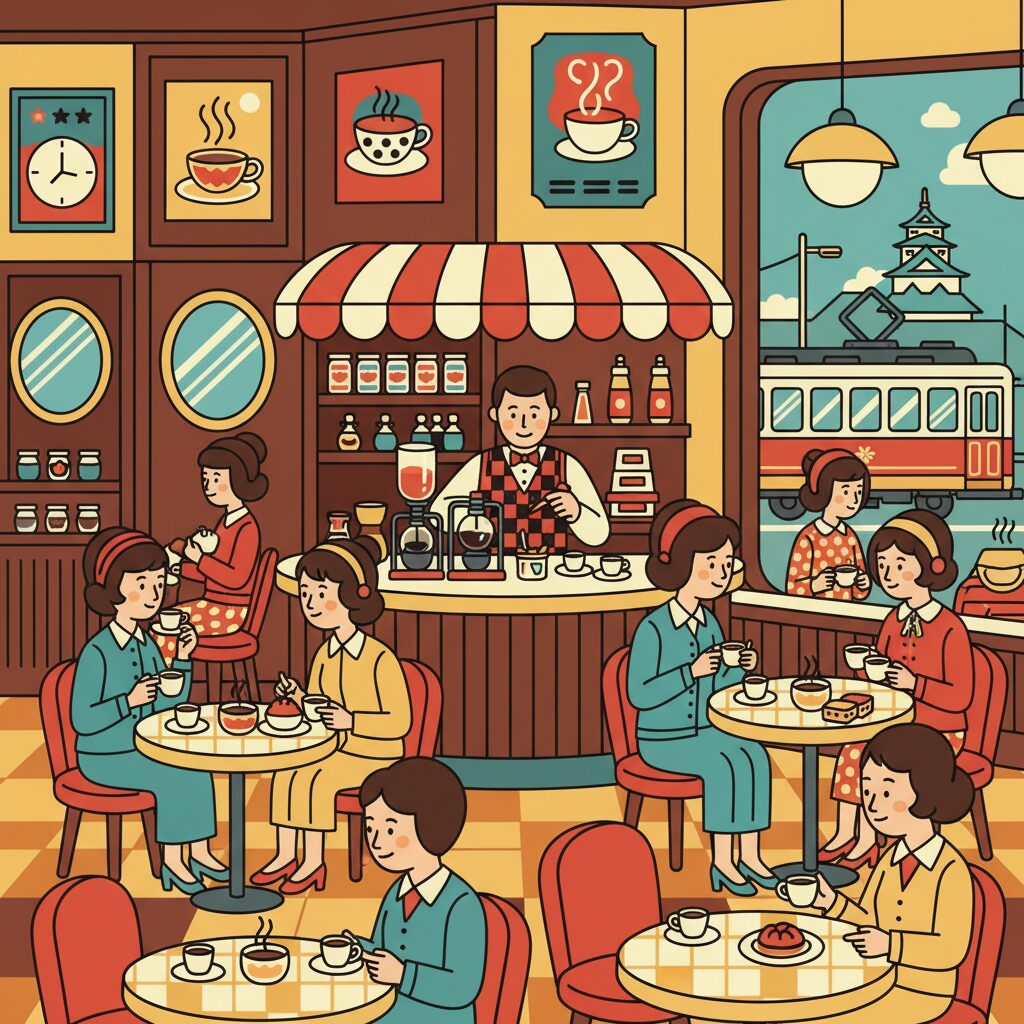
Forget what you think you know about Japanese cafes. We’re not talking about the sleek, minimalist temples to single-origin pour-overs that grace lifestyle magazines. We’re talking about the real deal: the Showa-era time capsules with their velvet seats, syphon coffee makers bubbling like a science experiment, and a thick haze of nostalgia—and often, tobacco smoke—hanging in the air. For the uninitiated, these places might seem like relics, dusty museums of a bygone era. But for those of us navigating the realities of remote work in Osaka, they are something else entirely. They are functional, they are affordable, and they are, without a doubt, the city’s most effective, unintentionally brilliant co-working spaces. They are where Osaka’s past meets its digital present, offering a lesson in the city’s pragmatic, person-to-person culture that no tourist guide could ever provide. To work in a Kissaten is to plug directly into the city’s circulatory system, to understand the rhythm of its daily life from a worn-out vinyl booth. It’s a workspace, a community hub, and a cultural classroom, all for the price of a single, well-brewed cup of coffee.
To further embrace Osaka’s unique charm, explore how a simple breakfast ritual serves as a gateway to the city’s time-honored culture and vibrant community.
Beyond the Velvet Seats and Syphon Coffee

The immediate charm of a Kissaten is visual. The dark wood paneling, stained-glass lamps, and ornate sugar pots all evoke the feel of stepping onto a film set. Yet, focusing solely on the retro allure misses the true point. The real value of these places lies in the intangible system running beneath the vintage decor. It’s a network of unspoken rules and social contracts grounded in pure Osaka pragmatism. This is not a theme park; it’s a highly effective social technology that has endured through decades of changing trends.
A Different Kind of “Third Place”
Sociologists describe the “third place” as a space between home and work where community forms. Global coffee chains have tried to dominate this idea, offering a uniform vision of community-in-a-cup. Their venues prioritize maximum efficiency and minimal friction. You order from a standardized menu, hear your name called, grab your cup, and become just another anonymous face among rows of laptops. It’s a clean, reliable setup, but ultimately devoid of soul.
The Osaka Kissaten embraces a completely different philosophy. It is fiercely unique. Each one reflects its owner, the “Master.” This isn’t a casual summer job for a teenager; it’s a lifelong profession. The Master acts as director, curator, and the quiet heart of the experience. They’ve likely stood behind that same counter for thirty or forty years, perfecting thick-cut toast and observing the neighborhood’s evolution. This ownership brings a sense of stability and individuality. The space has soul because it represents the life’s work of a particular person. You’re not merely a customer; you’re a guest in their territory, and this subtle distinction changes everything.
The Unspoken Contract of the Kissaten Worker
This is where many newcomers—especially those from Tokyo—often misunderstand. In a fast-paced, space-conscious city like Tokyo, lingering feels almost like a minor sin. Table turnover is sacred. You sense the pressure to finish your drink quickly and leave. In an Osaka Kissaten, this pressure disappears. The unspoken contract here is simple: you order one 500-yen coffee, and the table is yours—for two hours, three hours, or longer. No one disturbs you. No one shoots you a dirty look. Why? Because this isn’t about squeezing the maximum profit per square foot per hour. It’s about nurturing a relationship, however subtle.
This reflects a core Osaka value called gōrisei, or rationality. But it’s a long-term, human-centered rationality, not the cold calculation of a quarterly report. The Master understands that a happy, comfortable regular who visits three times a week is far more valuable than a fleeting tourist who feels hurried. They are playing the long game. The Master provides the space and calm; you offer steady, low-key patronage. It’s a beautiful, symbiotic dynamic that fosters deep, uninterrupted work. It’s a form of trust. The Master trusts you not to abuse this privilege, and you trust them to offer a refuge from the city’s chaos. This simple, powerful understanding is what makes the Kissaten the perfect remote office.
The Anatomy of an Osaka Workday Kissaten
Not all Kissaten are alike. Some buzz with social energy, while others provide quiet escapes. However, those that serve as ideal workspaces share a common essence. They deliver a rhythm and a range of services perfectly suited for a productive day, right from the moment you step inside.
The “Morning Service” Launchpad
The tradition of mōningu sābisu, or “morning service,” is the perfect example of Osaka’s obsession with value for money. Between 8 and 11 AM, for the price of a single coffee, you get a small feast. Usually, this includes a thick slice of toasted shokupan, a hard-boiled egg, and sometimes a small cup of yogurt or a little salad. It’s a complete breakfast, a caloric boost to kickstart your workday, all for about 500 yen. This isn’t a gimmick; it’s a cultural cornerstone—a ritual that energizes the city’s workers.
For remote workers, it’s a brilliant convenience. You arrive, get settled, and receive coffee and breakfast simultaneously. There’s no need for extra stops or packing food. It simplifies your morning and lets you jump right into work. This efficient, all-in-one system is quintessentially Osaka. The city’s mercantile roots fostered a culture that rejects waste—of time, money, or effort. The morning service embodies that efficiency. It’s a smart deal that sets the tone for a productive day.
The Soundscape of Productivity
The auditory atmosphere of a workspace is vital. Libraries can be too silent, their quiet overwhelming. Modern cafes often feature loud pop music and boisterous chatter. Kissaten find a perfect, subtle balance. Their soundscape is a gentle, ambient murmur of human activity that encourages focus rather than disruption.
Listen closely. You’ll hear the soft clinking of ceramic cups on saucers, the quiet rustle of an elderly man turning the pages of the morning paper, the low, muted murmur of two salesmen negotiating in a corner booth, the rhythmic hiss and bubble of the siphon on the counter, and the Master’s measured footsteps on the worn wooden floor. It’s a soundscape alive with activity, yet rarely intrusive. There’s no harsh music or shouting baristas. This gentle, consistent background creates a psychological cocoon, allowing your mind to block out distractions and enter a state of flow. It’s the sound of a city working at a human pace.
The Smoking Section Paradox
We must confront the obvious issue. Many of the most authentic, old-school Kissaten still allow smoking. In a world increasingly focused on wellness and global standards, this can be surprising. For non-smokers, it’s an immediate dealbreaker, and rightfully so. Good, old Kissaten that are entirely non-smoking (kin’en) do exist, but they remain relatively rare, though gradually more common.
This anachronism is also telling. It shows these establishments aren’t trying to please everyone or follow trends. They serve their devoted, longtime customers—those for whom coffee and a cigarette are inseparable rituals. It’s a stubborn resistance to modern pressures, a quality woven into Osaka’s identity. The city clings to what it values, even if it’s no longer fashionable. While this limits their appeal to today’s workforce, it reinforces their authenticity. They are unapologetically themselves—take it or leave it.
The Master and the Regular: An Osaka Social Dynamic

The human element is what truly transforms the Kissaten from a simple cafe into a meaningful third place. The dynamic between the Master and the regular customers, the jōren, is a subtle interplay of mutual recognition and respect that shapes the social environment.
More Than a Barista, a Community Anchor
The Master of a Kissaten is more than just a service worker. They are an observer, a guardian, a quiet anchor in the daily rhythms of their patrons. They notice you. After a few visits, they will begin to recognize you. They’ll know you take your coffee black. They might start preparing it the moment you enter, with just a simple nod of acknowledgment. This isn’t the rehearsed, exaggerated friendliness of a corporate training guide. It’s a deeper, more understated form of recognition.
This fosters a profound sense of belonging. In an anonymous city, in the isolating realm of remote work, being recognized holds significant meaning. Your workspace ceases to be an impersonal stop; it becomes a place where your presence is acknowledged and appreciated. The Master may not engage you in long conversations—in fact, they probably won’t—but their consistent presence offers a reassuring sense of stability. They are the human face of your office, the silent overseer who ensures the coffee is always fresh and the atmosphere remains calm.
How to Become a Jōren (常連 – Regular)
Becoming a regular at an Osaka Kissaten is a lesson in local communication style. It’s not about being outgoing or charming. It’s about quiet consistency. The path to becoming a jōren is built on simple, repeated actions.
First, show up. Find a place you like and visit regularly, ideally at the same time each day. Second, be low maintenance. Order simply. Avoid requesting numerous modifications. Third, claim your spot and stick to it. Consistency in where you sit signals your intention to be a fixture, not a tourist. Finally, keep interactions with the Master minimal but respectful. A quiet “ohayo gozaimasu” when you enter, a clear “hotto kohi kudasai,” and a sincere “gochisousama deshita” when you leave. That’s all. Small talk isn’t necessary. In Osaka, reliability and repeated patronage speak louder than words. Trust is built not through conversation, but through showing up. This practical, action-focused approach to social bonds is at the very core of the Osaka mindset.
Why a Kissaten is a Better Window into Osaka than a Castle
Tourists flock to Osaka Castle and the Dotonbori billboards, seeking the city’s essence. However, they are only seeing the surface. The true, living culture of Osaka isn’t in its landmarks; it’s found in the small, everyday places where people live, work, and converse. The Kissaten is one of the most vital of these spaces.
Eavesdropping on the Real Osaka Dialect
To truly understand how Osaka people think, you must first grasp how they speak. Spending an afternoon in a Kissaten is like a free, immersive lesson in Osaka-ben. You are immersed in the raw, unfiltered language of the city. You’ll overhear the frank, direct tone of a business negotiation unfolding in the booth behind you. You’ll catch the warm, teasing banter between two elderly women who have been friends for fifty years. You’ll hear the Master’s distinctive, slightly rough but affectionate expressions.
This is where the city’s authentic voice comes alive. It’s not the polite, standardized Japanese found in textbooks. It’s a language that’s more direct, expressive, and often funnier. It’s a language shaped by merchants, designed for clarity and quick understanding. Simply by listening, you absorb the rhythm, humor, and straightforward attitude that define the local character far better than any museum exhibit could.
A Time Capsule of the Showa Era Economy
These cafes serve as living museums of Osaka’s economic history. Before sterile corporate meeting rooms and sleek co-working spaces became common, the Kissaten was the unofficial office for a generation of salesmen, entrepreneurs, and dealmakers. Known as “salaryman-derens,” these places allowed you to meet a client, negotiate a contract, and seal a deal over a cup of coffee and a slice of cake. The phone booths in the corner, the spacious tables, the patient Masters—it was all thoughtfully designed for business.
Their continued presence is a tribute to an older, more personal way of conducting business that still thrives in Osaka. This city is built by small and medium-sized enterprises, not just giant corporations. Relationships matter here. A handshake deal struck in a trusted Kissaten can still carry more weight than a dozen emails. This contrasts sharply with Tokyo’s relentless cycle of creative destruction, where old buildings and business practices are swiftly replaced by the new. Pragmatically, Osaka holds on to what works. The Kissaten works—it served the Showa-era salesman well, and it serves the 21st-century remote worker just as effectively.
A Practical Guide for the Kissaten Nomad
Exploring the world of Osaka’s Kissaten is a rewarding adventure, but it’s helpful to familiarize yourself with the landscape. Here are some practical tips to make these retro spots your preferred workspace.
Finding Your Spot
The best Kissaten rarely sit on the main, dazzling streets. Instead, they hide within the city’s lifelines: the covered shotengai (shopping arcades), narrow side alleys, and basements of old office buildings. To discover them, you need to roam. Watch for authentic signs—a faded, sun-bleached plastic food display case showcasing dusty models of melon soda floats and spaghetti Napolitan, a simple hand-painted sign bearing the shop’s name, or a revolving, barber-pole-style light by the door. These aren’t signs of neglect; they’re marks of pride, indicating a place that has faithfully served its community for many years. Be bold, push open the heavy wooden door, and step inside.
Kissaten Etiquette for the Modern Worker
Although the unspoken agreement lets you linger, there are etiquette rules to follow to remain a welcome guest. First, manage your power needs. Many of these vintage cafés have few or no power outlets available. Come prepared with a fully charged laptop and a portable battery pack. Don’t be the one who unplugs a decorative lamp to charge your phone.
Second, control your volume. These are quiet environments. Taking a loud video call is a serious faux pas. If you must take a call, step outside. Your work should be as unobtrusive as the gentle clinking of coffee cups around you.
Lastly, be a considerate patron. The one-drink-per-hour rule is genuine, but don’t exploit it. A good guideline is to order something new every two to three hours. If you stay through lunchtime, opt for the lunch set. It’s typically a great deal—a curry rice or a ginger pork plate, with coffee included. This small gesture shows respect for the space and the Master’s livelihood. When it’s time to leave, don’t wait for the bill. Take the check you were given (or simply stand up) and pay at the register by the door. A simple, heartfelt “Gochisousama-deshita” is all the thanks needed. It’s a small price for an office full of soul.