The blue light of the laptop screen burns itself onto your retinas. Another Slack notification pings, a digital whip-crack demanding your attention. Your neck aches, your shoulders are hunched into a permanent question mark, and the boundary between your living room and your office has dissolved into a murky puddle of anxiety and half-empty coffee mugs. This is the global uniform of the remote worker, a life lived through a glowing rectangle. When I first moved to Osaka, I thought the antidote to this modern malaise was the iconic Japanese onsen—those steaming, mountain-flanked hot springs pictured in every travel brochure. I imagined myself a serene snow monkey, soaking away my troubles amidst whispering bamboo and panoramic views. The reality, I discovered, is far more mundane, far more accessible, and infinitely more revealing about the soul of this city. It’s not the onsen you need. It’s the sentō.
The sentō is the onsen’s gritty, urban cousin. It’s the neighborhood public bathhouse, tucked away on a side street between a ramen shop and a bicycle repair stand, its temple-like roof an unassuming landmark in a sea of concrete. It’s not a destination; it’s a routine. It’s not about escaping the city; it’s about diving deeper into its circulatory system. My first visit was a sensory overload. The humid air thick with the scent of soap and steam, the clatter of plastic stools on tiled floors, the booming echo of conversations in the thick, musical dialect of Osaka-ben. There was no serene flute music, only the drone of a baseball game on a television perched precariously above the changing room lockers. This wasn’t a spa. It was a community living room where everyone just happened to be naked. It was here, in this steamy, unpretentious sanctuary, that I found the most effective digital detox imaginable, a forced disconnect that recalibrated my screen-addled brain and offered a profound lesson in the Osaka way of life. The sentō isn’t just a place to get clean; it’s a place to get real.
For a different kind of productive disconnect, consider exploring how Osaka’s historic kissaten cafes function as original co-working spaces.
The Unspoken Contract: Decoding Sentō Etiquette in the Land of Straight Talk
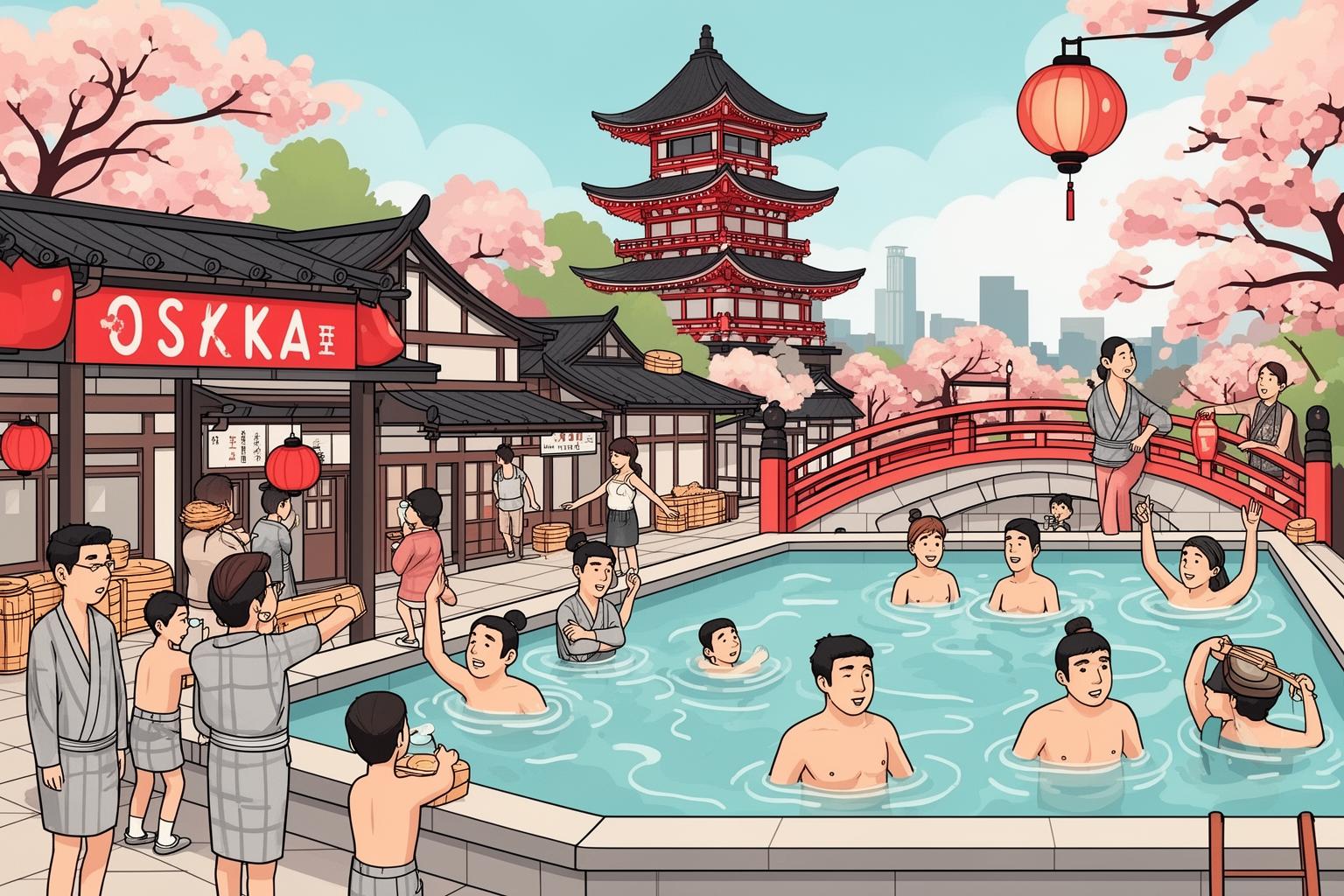
Foreigners in Japan often tread carefully, afraid of violating one of the country’s famously complex social rules. We’ve all heard the horror stories: wearing the toilet slippers outside the bathroom, sticking chopsticks upright in rice, or speaking too loudly on the train. Entering a place like a sentō, with its own unique rituals, can feel like sitting for a final exam you never prepared for. But the intriguing thing about the Osaka sentō is that this anxiety quickly fades. The rules are there, but the atmosphere around them is different—less about strict tradition and more about a practical, common-sense approach to sharing space.
More Than Just Rules: It’s About Reading the Air (But with Less Pressure)
The basic etiquette is straightforward and universal. You pay your fee, receive a locker key, and enter the bathing area carrying only a small towel. The first stop is the washing station, where you sit on a small plastic stool—a surprisingly humbling experience—and scrub yourself clean with soap and a showerhead before ever stepping into the communal tubs. This is about more than hygiene; it’s a core principle of Japanese communal living: you don’t bring your dirt into the shared space. You join the community clean. Similarly, you don’t bring your soap-covered towel into the bath, nor do you splash around as if it were a swimming pool.
In Tokyo, a mistake might draw a cold, silent glance or a passive-aggressive shift away from you. The pressure to be perfect is intense. In Osaka, however, the vibe is different. I recall my first visit, fumbling with a faucet that had a push-button delivering exactly seven seconds of water. I kept pressing it, confused. An older woman with a towel tightly wrapped on her head glanced over, not with irritation, but with amused tolerance. She chuckled softly, pointed at the button, then at her own hand, and pressed firmly once. It was a gesture that said, “Like this, rookie. It’s not that hard.” There was no shame, no judgment—just a straightforward, helpful correction. That’s the Osaka way. Rules matter because they help everyone enjoy the space, not because they are sacred commands. The focus is on the result—a clean, relaxing bath—not on flawless adherence to procedure. It’s a subtle but meaningful distinction that makes the experience feel more human and forgiving.
The Art of “Maido”: The Transactional Warmth of the Bandai-san
Your first contact at a sentō is often with the bandai-san, who oversees the entrance from a raised platform called the bandai. In older establishments, this seat is positioned between the men’s and women’s entrances, allowing a clear view of both dressing rooms—a concept that might feel unsettling at first. The bandai-san, usually an elderly person deeply connected to the building’s history, might be watching a Hanshin Tigers game on a small, crackling TV or reading a newspaper, only glancing up when the sliding door rattles.
The greeting you receive rarely resembles the high-pitched, overly formal “Irasshaimase!” (Welcome!) typical of Tokyo department stores. Instead, you get a nod and a low, gravelly “Maido.” This term embodies Osaka dialect. Technically, it’s short for “maido arigatou gozaimasu,” meaning “thank you for your continued patronage.” In practice, it serves many purposes: “Hello,” “Thanks,” “See you later,” and “You’re one of us.” It’s steeped in the city’s merchant history, originally a transactional phrase that has grown into a familiar acknowledgment. It’s not overly warm or effusive; rather, it’s grounded, efficient, and comfortable. This word echoes the neighborhood’s everyday rhythm—verbal shorthand that signals belonging. That simple “maido” feels worlds apart from the performative politeness common elsewhere. It’s a straightforward sign of recognition, nothing more, nothing less—and in its simplicity, remarkably welcoming.
Naked and Unafraid: The Great Equalizer
Let’s confront the obvious: nudity. For many Westerners, being completely naked among strangers is a major social anxiety trigger. We spend our lives curated, clothed, and presenting crafted versions of ourselves. The sentō strips all that away, quite literally. Your clothes, watch, hairstyle, even job title, are left crumpled in a locker outside. And surprisingly, it’s freeing.
What you soon realize is that nobody cares or looks at you. Everyone is absorbed in their own routines of washing, soaking, and steaming. Obachan chat about the price of daikon radishes, while salarymen stare blankly at the tiled walls unwinding from the day. In this space, the social hierarchies of the outside world vanish. The company president and the plumber are just two men easing the knots in their shoulders in the jet bath. This is a deeply Osakan idea. The city harbors a healthy skepticism of authority and pretense. What matters here isn’t your title or your brand of suit, but your ability to hold a conversation, tell a good joke, and be a decent person. The sentō embodies this spirit. By removing all external markers of status, it puts everyone on the same level playing field. It’s a raw, unfiltered, deeply democratic space—an increasingly rare concept in today’s hyper-stratified world.
The Sentō as a Social Hub: Where Conversation Flows as Freely as the Water
If you buy into the stereotype, Japanese people are quiet, reserved, and indirect. However, the sentō in Osaka loudly, steamily, and joyfully refutes that cliché. While a bathhouse elsewhere might be a place for silent, solitary reflection, in Osaka it often bubbles with lively social interaction. The high-ceilinged, tiled rooms have acoustics that amplify sound perfectly, filling the space with the energetic rhythm of chatter and laughter. It’s a spot where the community gathers not just to bathe, but to connect.
Eavesdropping on Osaka-ben: The City’s Soundtrack
The sentō is perhaps the ideal place in the city to get a quick immersion in authentic Osaka-ben. This isn’t the polite, standardized Japanese found in textbooks or news broadcasts. This is the genuine article: a dialect that’s faster, more direct, and far more expressive than standard Japanese. Sentence endings rise in a musical lilt, words are shortened and merged, and the vocabulary bursts with colorful, earthy expressions.
You’ll overhear debates about the Hanshin Tigers, gossip about the new family down the street, and detailed appraisals of local supermarket deals. It’s a torrent of information, a snapshot of neighborhood life served fresh and unfiltered. Listening to these talks, you grasp what truly matters to the community. It’s not abstract national politics; it’s the cost of electricity, the wellbeing of an elderly neighbor, the upcoming local festival. This constant flow of conversation isn’t seen as noise or intrusion. It’s the heartbeat of the city. It’s a communal performance, a way of reinforcing social bonds through the simple act of sharing air and stories. In a world where so much communication is filtered through screens, the raw, unpolished sound of people simply talking to each other feels like a bold, radical act.
“Anata Doko Kara?” (Where Are You From?): The Friendly Interrogation
As a foreigner, especially at a neighborhood sentō off the tourist trail, you will be noticed. But the reaction is rarely suspicion or avoidance. More often, it’s frank, enthusiastic curiosity. Don’t be shocked if an elderly man soaking beside you in the herbal bath turns and, without any introduction, asks where you’re from, what you do, and if you can withstand the water’s heat.
This can feel abrupt if you’re used to the polite indifference of larger cities. In Tokyo, the general approach is to give foreigners space, avoiding intrusion or making them uncomfortable by drawing attention. The intention is kind, but it can sometimes feel isolating. In Osaka, it’s quite the opposite. Ignoring you would be the rude move. These questions come from sincere interest and a wish to include you in the social fabric. They see a new face and want to know the story behind it. This straightforwardness is a hallmark of the Osaka personality. There’s less pretense, less beating around the bush. People say what they think and ask what they want to know. Responding often sparks delightful, unexpected conversations—local tips on the best okonomiyaki spots, stories about the neighborhood’s history, or shared laughter over a language mix-up. This is how connections form in Osaka: not through formal rituals, but through spontaneous, direct, and curious engagement.
The Silent Language of Shared Space
Amid all the chatter, there’s also a profound, unspoken communication in the sentō. It’s a physical dialogue among strangers who share a deep cultural understanding of the space. It’s in the way someone angles the showerhead away to avoid splashing you, without a word. It’s the subtle nod exchanged when entering or leaving a hot tub—a silent “excuse me” and “go ahead.” It’s the collective, audible sigh of relief when a group soaks in the burning atsuyu (hot bath), a shared moment needing no words.
This expresses jō (情), a concept difficult to translate but encompassing empathy, camaraderie, and shared feeling. It’s the invisible bond that knits the community together. At the sentō, this principle is vividly alive. People instinctively make space for each other, honor each other’s rituals, and move together in an uncoordinated, synchronized dance of mutual consideration. This silent understanding powerfully reminds us that community isn’t just about talking; it’s about sharing an experience and space with a foundation of mutual respect. It’s a lesson in embodied empathy, absorbed not through explanation, but through lived practice.
A Forced Disconnect: Why the Sentō is the Ultimate Digital Detox
The single most important rule of the sentō for the modern remote worker isn’t about washing or towels. It’s the unspoken, inviolable law: you cannot bring your phone into the bathing area. Humidity would ruin it, yes, but more crucially, it would be a serious breach of privacy and the sanctity of that space. This simple fact makes the sentō one of the last genuine sanctuaries away from the digital world.
The Tyranny of the Smartphone Left in the Locker
Closing your locker door on your smartphone is a potent ritual. You are physically and symbolically shutting out the endless flood of emails, notifications, and news updates that consume your day. At first, you may feel a pang of withdrawal, a kind of digital phantom limb syndrome. Your thumb might twitch, instinctively reaching for a screen to scroll. An underlying anxiety or fear of missing out lingers.
But then something extraordinary occurs. As the steam fills your lungs and the hot water surrounds your body, your mind gradually begins to release its grip. The digital tether is snapped. Your focus, no longer scattered across countless streams of information, can finally turn inward. You start to perceive the world around you with a clarity impossible to achieve through a screen. You see light catching the steam drifting in the air. You notice the intricate Kutani-yaki tile patterns on the wall, the heroic portrayal of Mount Fuji or a carp leaping up a waterfall. You hear the steady drip of a faucet—a sound that would be drowned out by a podcast or playlist elsewhere. You are compelled to be present, to simply exist in the here and now. For a mind accustomed to constant stimulation, this enforced calm can feel like a revelation.
Reclaiming Your Brain: From Multi-tasking to Mono-soaking
Remote work is a continuous exercise in multitasking. You’re drafting a report while monitoring a chat channel, listening to a conference call, and keeping an eye on your email inbox. Your brain becomes like a web browser with too many tabs open, constantly shifting focus and never fully concentrating on any one task. The sentō offers the opposite. It demands, and rewards, mono-tasking. Your only job is to get clean and get warm. Nothing else.
This radical simplification is deeply restorative. It allows your brain to shift out of its high-alert, problem-solving mode and into a more diffuse, contemplative state. This is often where true insight arises. The solution to a complex work problem you’ve been struggling with for days might suddenly come to you while lying back in the electric bath (denki buro). The spark for a new project may emerge from the quiet space you’ve created. This isn’t wasted time; it’s essential processing time. The sentō provides the “enforced boredom” our overstimulated brains desperately need to organize information, make creative connections, and genuinely rest. You don’t solve problems by staring more intently at a screen; you solve them by giving your mind room to breathe.
The Physicality of the Experience: A Counterpoint to the Virtual World
Much of a remote worker’s life feels disembodied. We exist as avatars, as text on a screen, as voices through a headset. Minds floating in the digital ether, we often forget the bodies they inhabit. The sentō yanks you back into the physical world with a sharp, unapologetic jolt. The experience is overwhelmingly sensory.
It’s the shock of the mizuburo, the ice-cold plunge pool you enter after a hot soak, sending a lightning bolt through your nervous system and leaving you feeling electric and alive. It’s the weight of water in the deep tubs, the gentle but firm pressure of massage jets on your lower back. It’s the rough, exfoliating texture of the small nylon towels locals use to scrub their skin. It’s the sensation of steam opening your pores and lungs. This flood of physical sensation acts as a powerful anchor. It grounds you in your own body, reminding you that you are a physical being in a real, tangible world. For anyone navigating abstract data and virtual meetings daily, this return to the physical self is not a luxury; it’s essential for mental and emotional balance.
The Sentō’s Place in the Osaka Landscape: More Than Just a Bath
To understand the sentō is to grasp something fundamental about Osaka’s character. These bathhouses are more than just practical facilities; they serve as architectural landmarks, economic equalizers, and essential community centers. They stand as resilient, beautiful remnants of a bygone era, preserved not out of nostalgia but from a deep-rooted appreciation for their ongoing usefulness.
An Architectural Time Capsule
Many sentō in Osaka are striking examples of mid-century Showa-era architecture. They are often recognized by their magnificent karahafu, an intricate, temple-style curved gable above the entrance. Step inside, and you are transported back in time. The changing rooms feature high, latticed ceilings to vent steam, rows of wooden lockers with chunky, old-fashioned keys, and lovely, often cracked, tile floors. The walls may be decorated with vintage advertisements for long-discontinued soap or milk brands.
These buildings function as living museums, but don’t feel like sterile exhibits. They are worn, lived-in, and cherished. The wood is scuffed, paint peels in places, and some tiles may be chipped. This preservation of the past marks a key distinction between Osaka and Tokyo. While Tokyo reinvents itself constantly, tearing down the old to build the sleek and new, Osaka tends to hold onto its history with practical, unpretentious pride. A sentō stands not because it is a protected landmark, but because people keep coming every day to use it. Its value lies not in historical significance but in its continuing role in community life.
The Economics of Everyday Indulgence
A visit to an Osaka sentō typically costs about 520 yen. It is among the most affordable forms of recreation and self-care available. This price is crucial, as it keeps the sentō a democratic space, open to students, pensioners, laborers, and office workers alike. It is a small luxury affordable to all.
This reflects Osaka’s deeply pragmatic and value-conscious mindset. As a city built by merchants, its people have a keen sense of worth, valuing quality and function over flash and branding. A trip to the sentō offers remarkable value: for the price of a fancy coffee, you get an hour of relaxation, social connection, and a full-body refresh. The experience often ends with another small, affordable ritual—purchasing a bottle of cold milk or coffee-flavored milk from a classic glass bottle, enjoyed standing in the entryway after your bath. It’s a simple, perfect conclusion, reinforcing the idea that the best things in life don’t have to be pricey or complicated.
A Fading Tradition? The Fight for Survival
It’s impossible to discuss sentō without acknowledging the challenges they face. With most modern Japanese homes now equipped with private baths, the number of public bathhouses has been declining for decades. Owners are aging, maintenance costs rise, and the customer base shrinks. Yet, in Osaka, a strong sense of resilience remains.
A new generation of younger Japanese, along with curious foreigners, is rediscovering the sentō’s value. They see it not just as a place to bathe but as a vital “third space”—a zone apart from home and work where community can thrive. In response, some sentō are innovating to survive. You’ll find bathhouses beautifully renovated with modern design, venues that host live music or art events, and sentō that double as “running stations,” where joggers can pay a fee to store belongings, go for a run, and return for a rewarding soak. This spirit of adaptation—finding practical ways to keep an old tradition relevant today—is quintessentially Osaka. It’s not about clinging to the past out of sentiment; it’s about rolling up your sleeves and making it work in the present.
From Sentō to Daily Life: How the Bathhouse Mindset Explains Osaka
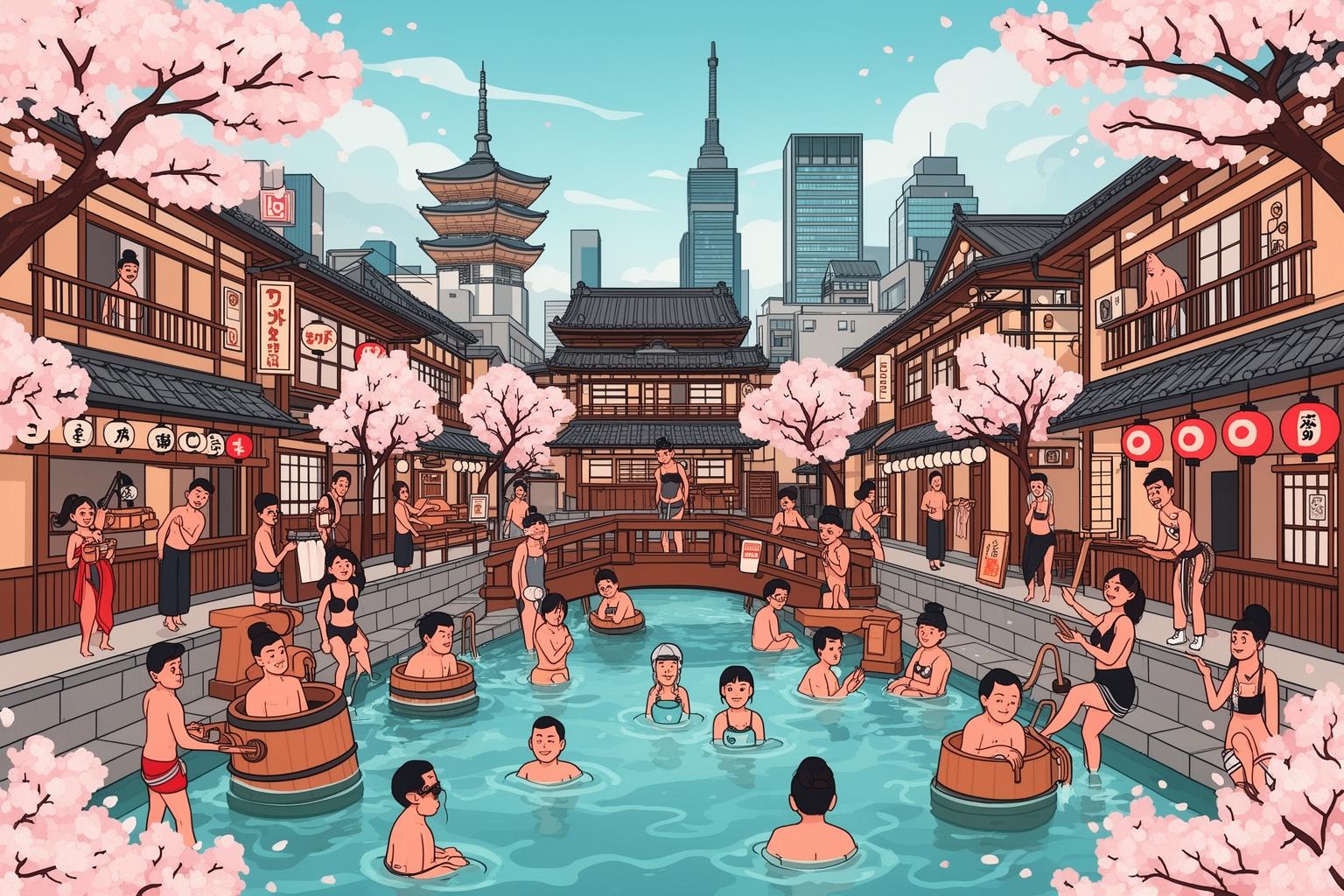
A regular visit to the local neighborhood sentō does more than just detox your digital life; it attunes you to the fundamental rhythm of Osaka culture. The attitudes and behaviors observed within the steamy walls of the bathhouse reflect a microcosm of how the city functions on a broader scale. It serves as a key to understanding the city’s distinctive social code.
The “Akan Yattara, Shaanai” Philosophy
During every sentō visit, as you sink into a tub of nearly unbearable hot water, there comes a moment when your body and mind must surrender. You can’t resist the heat; instead, you have to relax into it. You release the day’s stresses, the persistent concerns about work, and the mental to-do lists.
This physical act of letting go embodies a core Osaka philosophy often summed up as “Akan yattara, shaanai.” Loosely translated, it means, “If it’s not working, it can’t be helped.” This isn’t a pessimistic resignation but a practical acceptance of reality and an invitation to stop worrying over things beyond your control. You can’t solve a complex coding issue or negotiate a business deal while boiling like a lobster in a sentō tub. So you let it go. You accept the situation and focus on the present moment. This ability to compartmentalize, understanding when to push and when to yield, is a crucial survival skill in this bustling, high-energy city. The sentō is the training ground for this mental discipline.
The Community is Your Safety Net
The easy, casual conversations between strangers in the sentō mirror the city’s dense social fabric. In many Osaka neighborhoods, especially the older, more traditional ones, the sense of community is palpable. People know their neighbors, look after each other’s kids, and aren’t reluctant to get involved in each other’s affairs—for better or worse.
This can sometimes feel intrusive to a foreigner used to urban anonymity. Yet, it also creates a strong, informal safety net. The elderly woman who scolds you for placing your trash out on the wrong day is also the one who will notice if you haven’t left your apartment in a while and come around to check on you. The sentō is the engine room of this community spirit. It’s where information is shared, relationships are nurtured, and the neighborhood’s wellbeing is observed, one naked, candid conversation at a time.
Why “Friendly” Isn’t the Right Word
People often describe Osaka as “friendly.” It’s the first cliché you hear. But after spending time in places like the sentō, you realize that “friendly” doesn’t quite fit. Osaka’s friendliness is not the polished, courteous performance of customer service omotenashi. It’s something rawer, more direct, and more genuine.
Words like “curious,” “unpretentious,” “direct,” and “gregarious” might be more accurate. The people in the sentō are not there to serve you or ease your comfort. They are there for their own bath. The social connection that arises is a natural byproduct of a shared, practical purpose. It’s not a performance. This is the essence of Osaka’s social contract. People engage with you not out of politeness but genuine interest. They help not out of obligation, but because it’s the sensible and human thing to do. Soaking in the sentō, stripped of all pretense, you’re not a tourist or a customer. You’re simply another body in the water, another neighbor in the city, taking part in a ritual as vital to Osaka’s life as water itself.